
The fire is out, but the house still doesn’t feel safe. You smell smoke in every room. A gray film sits on the counters. Your AC kicks on, and suddenly that burnt odor spreads again. In Phoenix, that moment hits hard because heat, dust, and constant HVAC use can make smoke settle deeper and travel farther than homeowners expect.
Anyone standing in that doorway wants the same answer. What do I do first, what can wait, and what mistakes will make this worse?
There is a right order for smoke damage cleanup. The first steps are about safety and preserving evidence for insurance. The next steps are about stopping soot from spreading, figuring out what can be cleaned, and using the right methods for the type of residue left behind. If you rush in with paper towels, a shop vacuum, or household spray cleaner, you can turn a manageable cleanup into a bigger restoration problem.
Your First Hour After the Fire Is Out
When the fire crew leaves, the silence is strange. You notice the smell first, then the fine black or yellow residue on walls, trim, countertops, and vents. A lot of homeowners in Phoenix tell me the same thing: they thought the main danger was over once the flames were gone. In reality, smoke damage cleanup starts immediately, because smoke residue keeps reacting with surfaces after the fire.
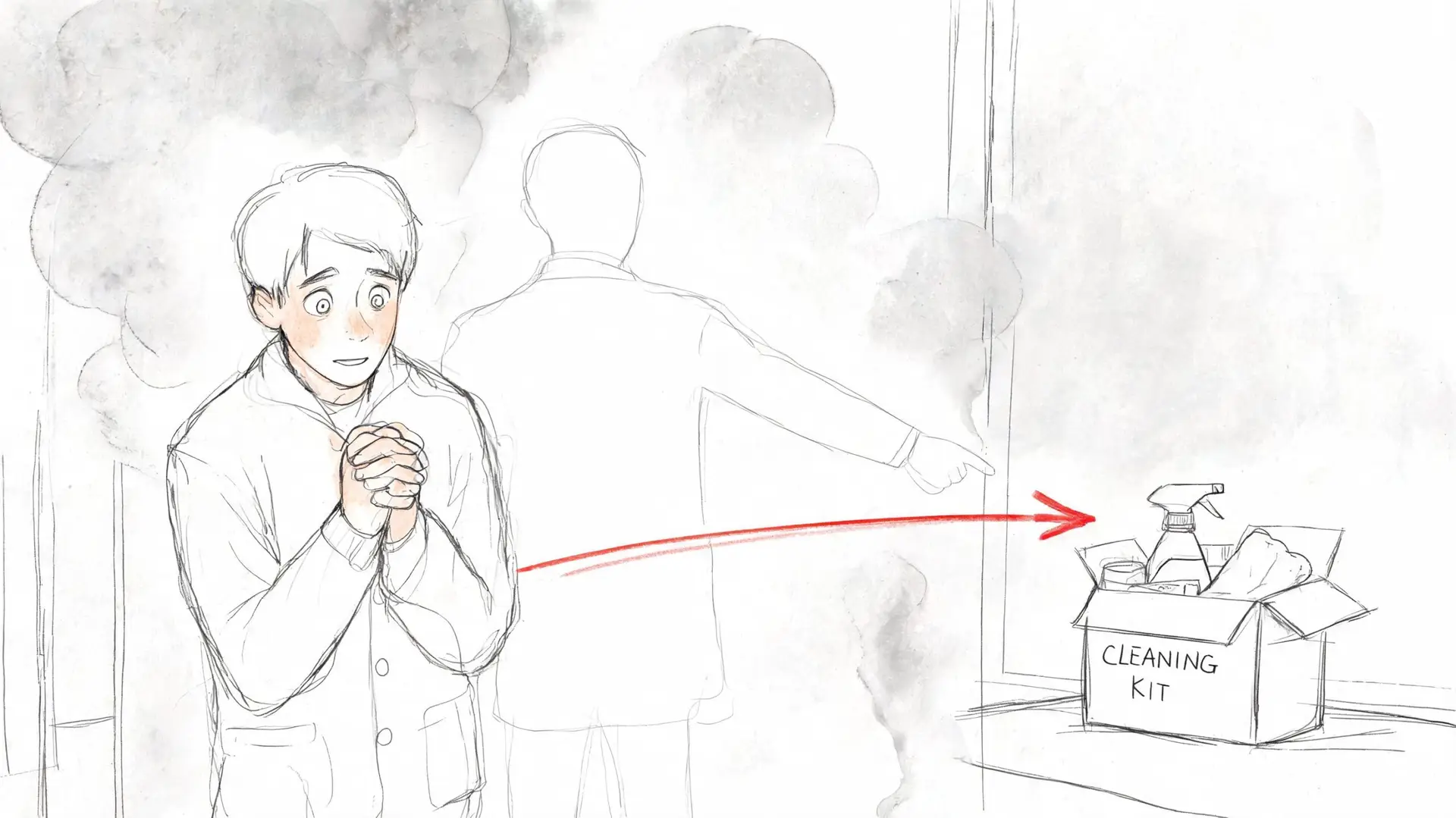
Smoke damage represents the leading cause of fire-related deaths and requires immediate professional intervention to prevent material degradation. Acidic residues in smoke penetrate deep into materials and bond more strongly to surfaces as hours pass, making early intervention essential, as explained in this fire aftermath overview from Paul Davis.
That’s why the first hour matters so much. Not for deep cleaning. For control.
What to focus on right away
Start with people and pets. If anyone has irritated eyes, coughing, headaches, or trouble breathing, keep them out of the house until the space is evaluated. Even a small kitchen fire can send residue into nearby rooms and into the return side of the HVAC system.
Then shift to simple, calm actions:
- Confirm entry is safe: Don’t assume every room is ready to walk through just because the fire is out.
- Take wide photos first: Capture each room before moving items, opening drawers, or wiping surfaces.
- Touch as little as possible: Soot smears easily. One handprint on painted drywall can become a larger refinishing issue.
- Use a reliable checklist: If you need a practical sequence, this what to do after a house fire checklist is a good starting point.
Practical rule: In the first hour, protect people, document conditions, and avoid amateur cleaning.
Homeowners often feel pressure to “do something” right away. That urge is understandable. The best first move is not aggressive cleaning. It’s preventing residue from getting ground into carpet, upholstery, and painted finishes.
Securing Your Home Before Cleanup Begins
The first day after a fire is about stabilizing the property. This is where good decisions save money, protect your health, and make the actual smoke damage cleanup more effective.
The non-negotiable first-day checklist
Before you clean anything, handle these items in order:
- Shut off or verify utilities if needed. If the fire affected electrical, gas, or mechanical areas, get confirmation before restoring normal use.
- Document every affected room. Take photos of walls, ceilings, contents, appliance exteriors, flooring transitions, closets, and vents.
- Limit foot traffic. Soot transfers from shoes to clean rooms fast, especially on tile grout, carpet, and area rugs.
- Separate unaffected items carefully. Only move belongings that are clearly outside the damaged zone and won’t brush against contaminated surfaces.
- Use basic personal protection for brief entry. If you must enter, wear protective gloves, respiratory protection, and clothes you can wash separately.
If you’re dealing with visible fire or structural impact in addition to smoke, it helps to understand the broader scope of fire damage to a house, because smoke cleanup is only one part of the recovery picture.
What not to do
Some of the worst cleanup outcomes start with well-meant shortcuts.
- Don’t use a regular household vacuum: It can blow fine particles back into the air and across surfaces.
- Don’t scrub soot off walls or ceilings: Dry soot often smears, and oily soot can sink deeper into the finish.
- Don’t run the HVAC system normally unless cleared: Smoke can circulate through ductwork and keep redepositing odor and particulates.
- Don’t use random cleaners from under the sink: Different residues react differently. The wrong chemistry can set stains or dull finishes.
- Don’t wash electronics in place: Smoke residue on electronics is a specialty cleaning issue because moisture and corrosion are real concerns.
If you can write your name in the soot, it’s already too much residue for casual wiping.
Why ventilation has to be done carefully
Homeowners often ask whether they should open every window. Sometimes that helps. Sometimes it doesn’t. In Phoenix, outside dust and heat can complicate the situation, especially if the AC system is pulling air across contaminated surfaces.
A safer approach is controlled airflow, not random airflow. You want smoke-laden air moved out without blowing residue deeper into unaffected rooms. That’s one reason professional crews set containment before serious cleaning starts.
Think like preservation, not housekeeping
The best mindset for the first 24 hours is simple: preserve the scene, protect your lungs, and stop cross-contamination. Smoke damage cleanup works best when the house is treated like a controlled work area, not like a messy room that just needs elbow grease.
How Professionals Tackle Soot and Smoke
A proper smoke damage cleanup job follows a sequence. That sequence matters because each step supports the next one. If someone starts with wet wiping before removing loose residue, they can turn dry soot into smeared staining. If they deodorize before cleaning, the odor usually returns.
The industry-standard five-stage cleaning process starts with assessment and containment, then moves through dry removal, wet cleaning, odor treatment, and final sealing, as outlined in this five-stage smoke and soot restoration process.
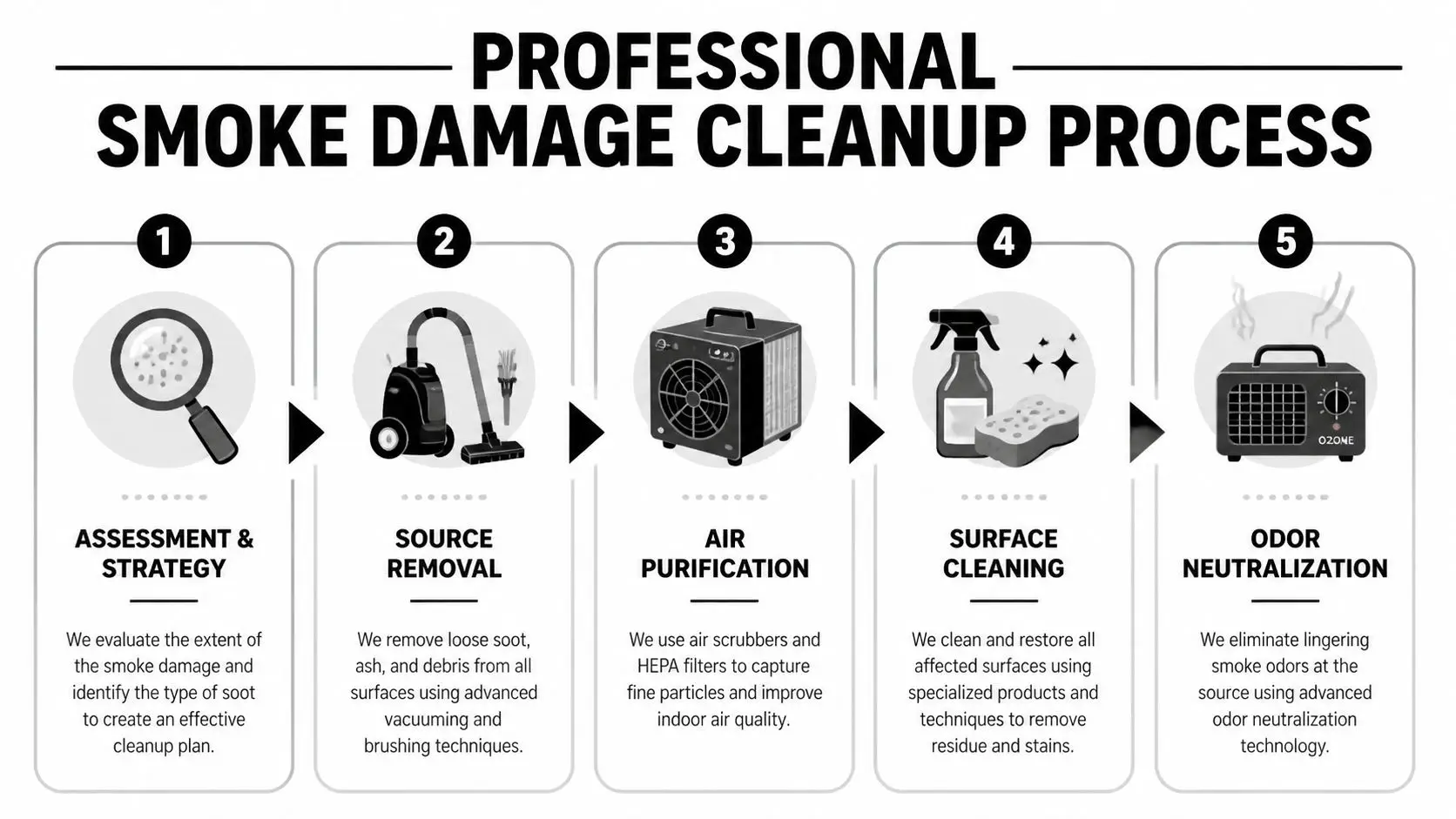
Stage one and two assessment then dry removal
First, technicians identify what kind of residue they’re dealing with. Dry soot from a fast-burning fire behaves differently from greasy residue created by synthetic materials or protein-based smoke from cooking fires. That distinction changes the cleaning chemistry and the order of work.
Containment comes next. Crews isolate affected zones so soot doesn’t drift into clean rooms while air scrubbers and vacuums are running.
Then they remove loose material using HEPA vacuums and dry cleaning tools such as chemical sponges. The goal is to lift and capture residue, not grind it into the surface.
Here’s where homeowners often get tripped up. Wiping first feels productive, but it usually isn’t. On painted walls, unfinished wood, acoustic textures, and upholstery, early wiping can create larger permanent marks.
Stage three and four wet cleaning then odor treatment
After dry removal, crews move to wet cleaning with products chosen for the residue type and the surface below it. A glossy cabinet door, a sealed stone countertop, and a latex-painted wall don’t all get the same treatment.
Typical tools and methods can include:
- Residue-specific cleaners: Alkaline products for certain soot types, solvent-based options for oily contamination.
- Low-moisture application: Enough to break residue loose, not enough to over-wet drywall, trim, or subfloors.
- Detail cleaning: Registers, light fixtures, window tracks, cabinet interiors, and door tops. These areas hold odor longer than people expect.
For odor, essential work isn’t a masking spray. It’s source removal plus targeted deodorization. Depending on the structure and residue load, crews may use thermal fogging, ozone in controlled conditions, hydroxyl treatment, or duct-focused odor work.
If you want a plain-language breakdown of one tricky part of the job, this article on how to clean soot from walls explains why wall cleaning goes wrong so often.
Professional smoke cleanup is less about “clean harder” and more about “match the method to the residue.”
For a non-local example that also helps explain why HVAC and hidden surfaces matter, this guide for Baltimore homeowners is useful reading. The climate is different from Phoenix, but the principle is the same. Smoke moves into ducts, returns through vents, and keeps reintroducing odor if that part of the system is ignored.
Stage five sealing and final verification
Some surfaces can be restored by cleaning alone. Others need sealing after cleaning to block residual odor bleed-through. That often applies to porous building materials where smoke has penetrated beyond the surface film.
Final verification is part of a professional job. Rooms should be checked for visible residue, odor persistence, and overlooked reservoirs like attics, closets, HVAC components, and soft contents. A house can look clean and still not be fully clean.
Deciding Between DIY and Professional Restoration
This is usually the question behind every phone call. Can you handle it yourself?
Sometimes, for a very limited smoke event, you can do a small amount safely. But many homeowners underestimate where smoke travels and how long fine particulates remain. According to a 2025 EPA-related wildfire smoke cleanup discussion, 40% of homes with “cleaned” smoke damage still had higher PM2.5 levels six months later, correlating with a 25% increase in asthma exacerbations among children. That’s the part people don’t see when the wall looks better and the smell fades for a few days.
Smoke Damage Tasks DIY vs Professional Scope
| Task | Recommended DIY Approach | When to Call a Professional |
|---|---|---|
| Light residue on washable non-porous items | Clean gently only if residue is minimal and doesn’t smear | If soot is oily, widespread, or keeps returning after cleaning |
| Laundry from an unaffected or lightly affected area | Wash salvageable items separately and avoid mixing with clean loads | If clothing has persistent odor, visible soot, or delicate fabric care issues |
| Refrigerator exteriors, sealed containers, metal items | Wipe carefully after dry residue is removed from the surrounding area | If nearby fire heat affected appliances or residue is heavy |
| Walls and ceilings | Usually avoid DIY except for very minor isolated spots | If you see more than a trace film, any staining, or textured surfaces |
| Carpet, rugs, upholstered furniture | Don’t deep scrub or use rental machines | If odor or soot reached soft goods at all |
| HVAC vents, returns, duct interiors | Replace an accessible filter only if safe to do so | If smoke entered the system, which is common in occupied homes |
| Odor treatment | Avoid sprays that only mask smell | If odor remains after source cleaning or appears stronger when AC runs |
| Electronics and appliances | Power off and leave them alone | If residue settled inside openings, vents, or control panels |
A practical way to decide
A homeowner can sometimes handle a narrow task if all three are true:
- The contamination is small
- The surface is non-porous
- There is no lingering odor or air quality concern
Once one of those stops being true, the risk changes. Drywall, insulation, upholstery, ductwork, and textured ceilings are not forgiving. The same goes for homes with kids, older adults, pets, or anyone with asthma.
A good comparison is specialty floor work. People often assume sanding or refinishing a smoke-affected wood floor is a simple DIY upgrade, but hidden residue and finish damage can complicate it fast. That’s why a resource like this guide to hardwood floor refinishing in Denver is helpful as a parallel. The city is different, but the lesson is familiar. Surface appearance doesn’t tell you the whole story.
What professional restoration changes
Professional crews bring three things most homeowners don’t have:
- Containment discipline
- HEPA-grade particle capture
- Residue-specific cleaning and deodorization
If you’re unsure what the broader role includes, this overview of what a restoration company does gives a good picture of how cleanup, documentation, and recovery fit together.
Smoke damage cleanup stops being a DIY project when health risk, hidden spread, or odor persistence enter the equation.
Managing Insurance Claims and Restoration Costs
The paperwork can feel worse than the cleanup. You’re already dealing with a damaged home, temporary living adjustments, and decisions about what stays or goes. Insurance adds another layer because the claim depends on documentation, timing, and clear scope.
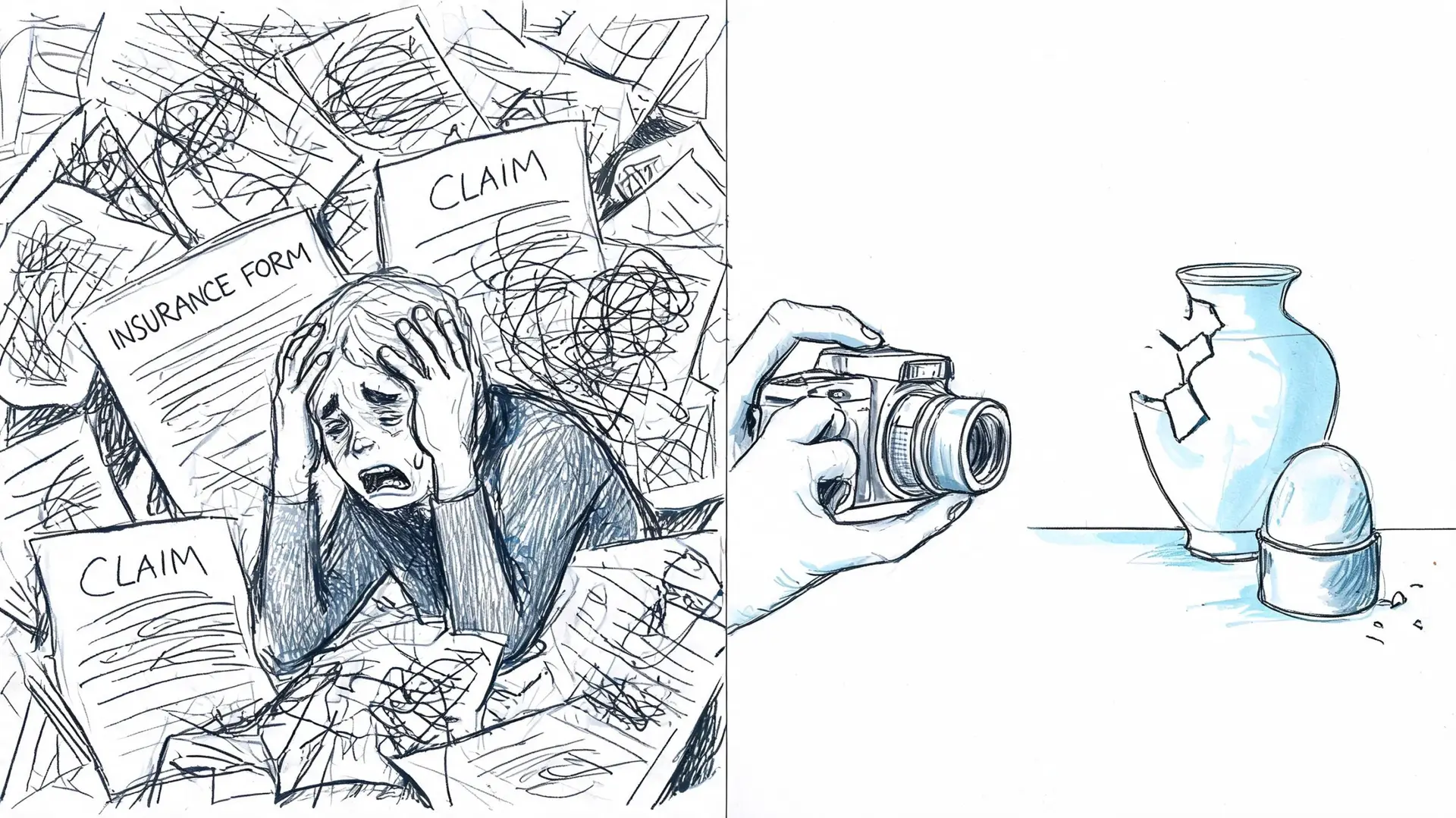
What helps your claim from day one
Start with photos before cleanup starts. Take overview shots of each room, then close-ups of soot deposits, damaged contents, vent covers, electronics, cabinets, and soft goods. If something looks minor, photograph it anyway. Smoke claims often involve both visible residue and harder-to-document odor contamination.
Build a room-by-room contents list as you go. Don’t worry about perfect formatting at first. Simple notes are better than trying to recreate everything later from memory.
For homeowners who need the claims process laid out clearly, this guide on how to file a homeowners insurance claim is a solid reference.
What adjusters usually need to understand
Claims often separate the loss into categories such as structure, contents, cleaning, and replacement. That distinction matters. A cabinet exterior may be cleanable while the porous contents inside need a different evaluation. A room may have little flame damage but significant smoke impact.
New documentation tools are changing this part of the process. According to this overview of smoke damage restoration technology, emerging 2025-2026 tech integrations like LiDAR floorplans and AI odor detection are reducing damage assessment times by up to 60%, helping to speed up insurance claims processing in fire-prone areas.
That matters because better documentation usually means fewer gray areas. When scope is mapped clearly, there’s less back-and-forth about what was affected and why.
Keep records that answer basic claim questions
Use a simple folder, digital or paper, and keep:
- Claim number and adjuster contact
- Photos by room
- Emergency service receipts
- Temporary housing or meal receipts if applicable
- A running list of cleaned, discarded, and questionable items
Later in the process, it helps to understand how technology is changing field documentation and review.
The practical trade-off on cost
Homeowners often want one simple number early. That’s rarely realistic after smoke damage because the final scope depends on material type, residue spread, HVAC involvement, and what responds to cleaning versus what doesn’t.
The smart move is to focus first on complete documentation and a defensible scope. Cheap early assumptions can create expensive disputes later, especially when odor remains after partial cleaning.
Phoenix-Specific Smoke Damage Challenges
Phoenix homes have their own smoke behavior. National advice often misses that.
The first issue is wildfire exposure without direct flame damage. A house can avoid burning and still end up with smoke intrusion through doors, attic pathways, and HVAC systems. That matters here because wildfire-related smoke damage costs exceeded $11.2 billion across the United States in 2021-2022, with Arizona and surrounding western regions facing escalating property risk due to arid climates and minimal rainfall, according to this western smoke damage risk report.
Why desert heat changes the cleanup picture
High heat can make soot and oily residues harder to remove once they’ve sat. In Phoenix, that’s not just an outdoor issue. A closed-up home heats up fast, especially if power is off or the HVAC is down after a fire. Residue can cling more stubbornly to painted walls, blinds, synthetic flooring, and plastic fixtures.
Then there’s the air system. Many Phoenix homeowners run cooling equipment for much of the year, so return air pathways matter more than people realize. Smoke drawn into the system doesn’t just stay in one room. It can settle in registers, around filters, and on interior surfaces that keep reintroducing odor.
Dust complicates the diagnosis
Phoenix also adds a layer of confusion because smoke residue and desert dust don’t look the same, but they can collect in the same places. Homeowners sometimes clean visible dust and assume the problem is solved, while the smoke odor source remains in porous materials, duct interiors, or insulation.
A few local realities make smoke damage cleanup more demanding here:
- Attic heat: Odor reservoirs in insulation get worse when the attic bakes.
- Frequent HVAC cycling: Even a mild residual odor gets redistributed fast.
- Dry materials: Some finishes and soft goods absorb smoke differently after long exposure to very dry indoor air.
In Phoenix, the smell returning when the AC starts is often a clue, not a mystery.
That’s why local judgment matters. The house may look lightly affected, but the pattern of odor and residue often tells a different story in desert conditions.
Common Questions About Smoke Damage Recovery
How long does the smoke smell last after cleaning
If the source is fully removed, odor should keep improving, not come and go in waves. If the smell returns when the house heats up or the AC runs, some residue likely remains in porous materials, ducts, insulation, or enclosed cavities.
Is it safe for pets to be in the house
Use caution. Pets spend time close to floors, fabrics, and vents where residue settles. If you still smell smoke, see visible soot, or the HVAC has not been addressed, it’s better to keep pets elsewhere until the environment is properly cleaned and evaluated.
Can smoke-damaged clothes be saved
Some can. Washable items from lightly affected areas may respond well to careful laundering. Items with deep odor, visible soot, or delicate fibers often need specialty cleaning, and some won’t be worth saving.
Can furniture be restored
Sometimes yes, sometimes no. Non-porous or lightly affected items usually have the best chance. Upholstered furniture, unfinished wood, foam cushions, and pieces stored near the fire are harder because smoke settles below the surface.
Should I repaint right away to cover the smell
No. Paint should never be the first fix for smoke odor. Surfaces need cleaning first, and some need sealing before repainting. If you skip that order, the smell often pushes back through later.
What’s the most common homeowner mistake
Trying to make the house smell better before making it clean. Air fresheners, candles, and random sprays don’t solve smoke contamination. They usually make the job harder by hiding the true condition of the space.
If you’re dealing with smoke residue, odor that won’t leave, or uncertainty about what can be saved, Restore Heroes serves the Phoenix metro with IICRC-certified restoration support for fire and smoke damage. They can help assess the damage, document the scope, and guide the next steps so you can move from confusion to a workable recovery plan.