
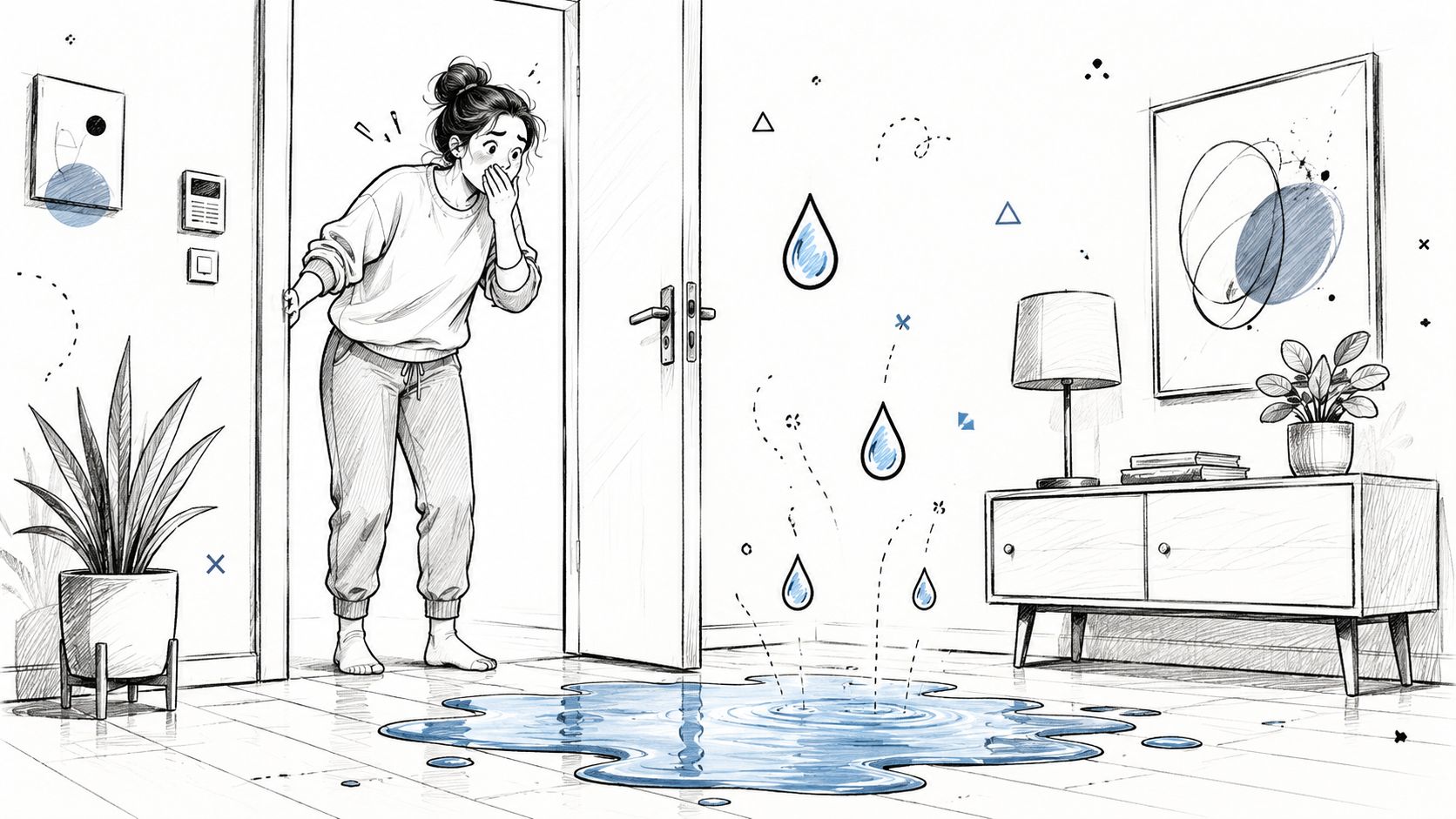
You open the apartment door, step onto the floor, and your shoe lands in water. Maybe it's spreading from under the sink. Maybe it's dripping through a ceiling light. Maybe your downstairs neighbor is already knocking.
That moment feels chaotic because apartment water damage is chaotic. Water doesn't stay politely in one room. In a multi-unit building, it can move through shared walls, under flooring, into ceilings, and across units before anyone sees the full picture. In Phoenix, that gets even trickier. Monsoon-driven roof leaks can show up fast, and hard water can imperceptibly wear on supply lines, angle stops, water heaters, and appliance connections until a “small drip” turns into a real loss.
What To Do The Moment You Find Water
The first job is to slow the problem down. Don't start by worrying about blame, lease language, or whether the carpet can be saved. Start with safety, communication, and documentation.
Water losses are common enough that insurance and property managers treat them as urgent from the start. Water damage and freezing are the second most common homeowners insurance claim category, with an average claim cost of $13,954, and about 1 in 67 insured homes files such a claim each year, according to iPropertyManagement's water damage statistics summary. In apartments, the stakes can climb faster because one leak can affect several homes at once.
Start with the three priorities
If the water is near outlets, power strips, appliances, or a sagging ceiling, assume there's an electrical hazard until proven otherwise. If you can safely avoid the area, do that first.
Then contact building management or your landlord immediately. In an apartment, that call matters more than it would in a detached house because the source may be in another unit, in a common plumbing line, above your ceiling, or on the roof.
After that, document before you disturb too much.
- Take wide photos first so the full area is visible.
- Record where the water appears to start if you can see it.
- Capture damaged belongings in place before moving them.
- Save texts, emails, and call times with management.
Practical rule: The first photos should show the scene as you found it, not after towels, mops, and fans have changed it.
Don't make the classic apartment mistake
A lot of residents focus only on the puddle they can see. The harder part is the water they can't. In apartments, moisture often spreads behind baseboards, into shared wall cavities, under vinyl plank flooring, and through the ceiling below.
If an area rug got wet, pull it off the floor if it's safe to do so. Rugs trap moisture against the surface underneath, especially over engineered wood, laminate, or pad. For a practical look at what proper rug drying involves, this guide on Birmingham rug drying with Rubber Ducky is useful because it shows why quick pickup and airflow matter.
If you need a clearer picture of what professional mitigation usually includes, this overview of water damage mitigation helps explain what happens after the emergency call.
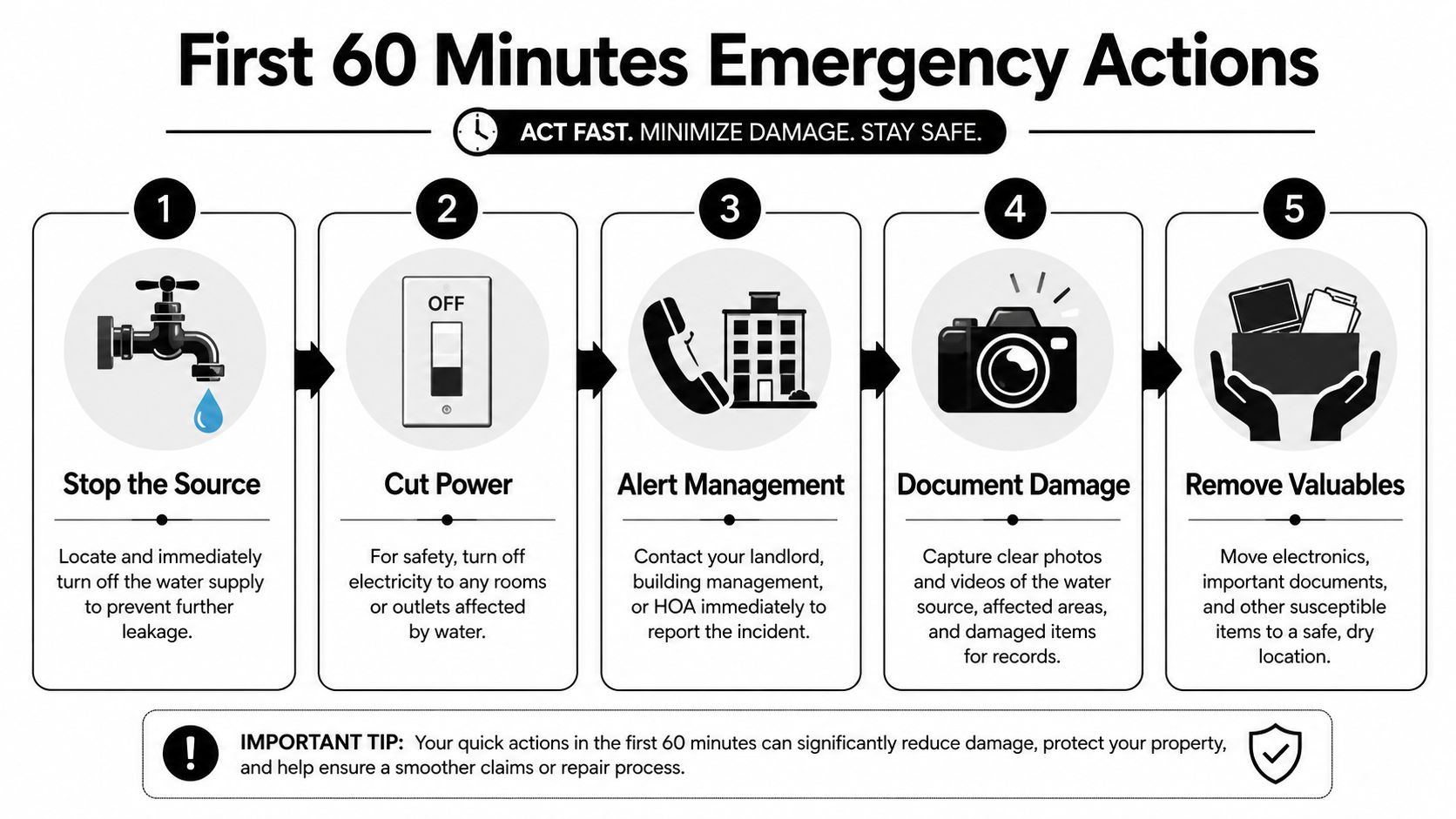
First 60 Minutes Emergency Actions
The first hour is about control. Not perfect cleanup. Not deciding what insurance will do. Control.
Step one is safety
If water is touching anything electrical, turn off power to the affected area only if you can do it without stepping into danger. In many apartments, the panel may be in a closet, hallway, or exterior utility area. If you can't reach it safely, stay out of the wet zone and tell management exactly what you're seeing.
Watch for these red flags:
- Ceiling fixtures with active dripping
- Extension cords on wet flooring
- Appliances sitting in water
- A humming or buzzing sound near wet walls
Stop the source if it's local
Some apartment leaks come from fixtures inside your unit. If it's a supply line under a bathroom sink, a toilet shutoff, or a washing machine hose, closing that local valve can stop the spread. If the leak is coming from above, through a wall, or from a ceiling seam, your unit may not have the shutoff you need. That's when building maintenance needs to get into the chase, riser space, roof access area, or neighboring unit.
If water is coming from above, don't assume the problem is directly above. In apartment buildings, water often travels before it shows itself.
Make the right calls in the right order
Call building management or your landlord first. Then call your renters insurance carrier if your belongings are affected. If water is actively moving into multiple rooms, near electricity, or coming from contaminated sources, call a restoration company as soon as management authorizes access or as your lease allows.
A flooded apartment scene often looks smaller than it is. This walkthrough of what a flooded house looks like inside is helpful because the same hidden-moisture issues apply in apartments, just with more shared surfaces and neighboring units involved.
A short visual can make these first steps easier to follow under stress:
Know when cleanup is not safe
Not all water is the same. The IICRC defines three categories of water damage; Category 3, which includes sewage and other highly contaminated water, requires strict containment and professional decontamination due to health risks, as explained in Advanced DRI's apartment water damage guide.
That distinction matters in apartments because backups can involve shared waste lines, drain overflows, or contaminated water moving from another unit.
Here's the simple field version:
- Clean water might come from a supply line or sink connection.
- Gray water may involve appliance discharge or used water with more contamination risk.
- Black water or Category 3 water includes sewage and other heavily contaminated sources.
If you suspect sewage, toilet backup beyond a simple bowl overflow, or water that smells foul or carries debris, don't wade in, don't run fans across it, and don't try to save porous items yourself.
How to Document Damage for a Strong Claim
Strong documentation is boring when things are calm and extremely valuable when they aren't. In apartment water damage, it helps with two separate tracks at once. The landlord or property manager needs a record of structural damage, and you need a record of damage to your belongings.
Capture the scene before cleanup changes it
Use your phone in this order:
First, take a slow video from the entry of each affected room. Show the floor, lower walls, baseboards, furniture, and ceiling if the source is above. Then switch to photos.
Get close-up shots of:
- The source area if visible
- Water lines on walls or furniture legs
- Warped flooring, bubbling paint, or stained ceilings
- Labels or model tags on damaged electronics and appliances
- Wet clothing, books, bedding, and soft goods
Keep damaged items until the insurer or property manager tells you otherwise, unless they create a health issue.
Build a simple loss list
A written inventory doesn't need to be fancy. It needs to be clear. Make a list with the item, room, what happened, and whether it's wet, stained, swollen, or no longer working.
Write down what the item was, where it was, and what water did to it. That's far more useful than “miscellaneous damage.”
If you need guidance on organizing photos, notes, and insurer communication, these water damage insurance claim tips can help you stay structured.
Understand the coverage split
One of the biggest misunderstandings in apartments is assuming the landlord's policy covers the tenant's property. Usually, it doesn't work that way.
Standard renters insurance often covers personal belongings damaged by sudden plumbing failures, but may not cover costs for temporary housing unless the policy explicitly includes loss-of-use coverage, according to Drico Restoration's apartment complex water damage overview.
That means your damaged sofa, laptop, clothing, or kitchen gear may fall under your renters policy if the cause is covered. Your hotel, storage, and related living costs may depend on whether your policy includes loss of use and whether the cause of loss is covered.
What residents forget most often
Residents usually remember to photograph the wet carpet. They often forget to document the things that support the claim:
- Screenshots of messages to management
- The exact date and time you discovered the leak
- Receipts for emergency purchases
- Notes on when rooms became unusable
- A list of items moved to prevent further damage
Those details help show that you responded quickly and tried to limit the loss.
Landlord vs Tenant Who Pays for What
Most apartment water damage disputes come from confusion, not bad intent. The resident sees wet drywall and ruined shoes and assumes one insurance policy handles all of it. The building owner focuses on the pipe, the wall, and the flooring. Both are looking at real damage, but they're looking at different parts of the loss.
The usual split in apartment losses
Building components like walls, ceilings, and flooring are generally considered structural, and repairs are typically the landlord's responsibility after the source of the leak is fixed and damage is mitigated, based on Obie's rental property water damage guidance.
That usually means the owner or property policy deals with the structure. The tenant generally looks to renters insurance for personal belongings, and sometimes liability if the tenant caused the overflow or failed to report an obvious leak.
Here's the practical version:
| Item Damaged | Typically Landlord's Responsibility | Typically Tenant's Responsibility |
|---|---|---|
| Drywall and ceiling cavities | Yes | No |
| Subfloor and installed flooring | Yes | No |
| Building plumbing behind walls | Yes | No |
| Tenant furniture and clothing | No | Yes |
| Electronics and personal décor | No | Yes |
| Damage caused by tenant overflow or misuse | Sometimes not | Often yes |
Phoenix-specific trade-offs
Phoenix apartments bring a few patterns that residents don't always expect.
A monsoon roof leak may show up as a ceiling stain in your bedroom, but the actual entry point can be far away on the roof assembly. A hard-water plumbing failure may start at a valve, connector, or appliance line that looked fine from the outside until scale, corrosion, or wear gave way. In larger complexes, building-wide HVAC systems can also create water issues through drain line problems, overflow conditions, or condensation where it shouldn't be.
None of that automatically tells you who pays. It tells you why quick reporting matters. In apartment losses, a delay can turn a simple repair into a wider dispute about preventable damage.
Good communication solves a lot of apartment water claims before they turn into finger-pointing.
Mold concerns change the conversation
If wet materials sit too long, the question shifts from “Who fixes the leak?” to “How far did the damage spread?” That's one reason property managers watch water events closely in multi-family buildings. For owners and managers trying to understand the longer-term side of that risk, this guide on managing rental property mold is worth reading.
If you're trying to make sense of what different property policies typically address, this explanation of how to read a homeowners insurance policy is useful for understanding the structure side of coverage, even if you're a tenant looking at the bigger picture.
What to Expect from Restoration Professionals
Once the emergency calls are made, most residents want to know two things. What are these technicians going to do in my apartment, and how long is this going to feel disruptive?
A proper mitigation crew doesn't just drop a few fans and leave. In apartment water damage, the job is to find the full moisture footprint, remove what can't be saved, and dry the structure in a controlled way.
The equipment is there for a reason
Industry guidance says water-damaged areas should be dried quickly because water-damaged areas are recommended to be professionally dried within 24 to 48 hours to reduce the chance of mold growth starting, as noted by Renu's guidance on the first 24 hours after water damage.
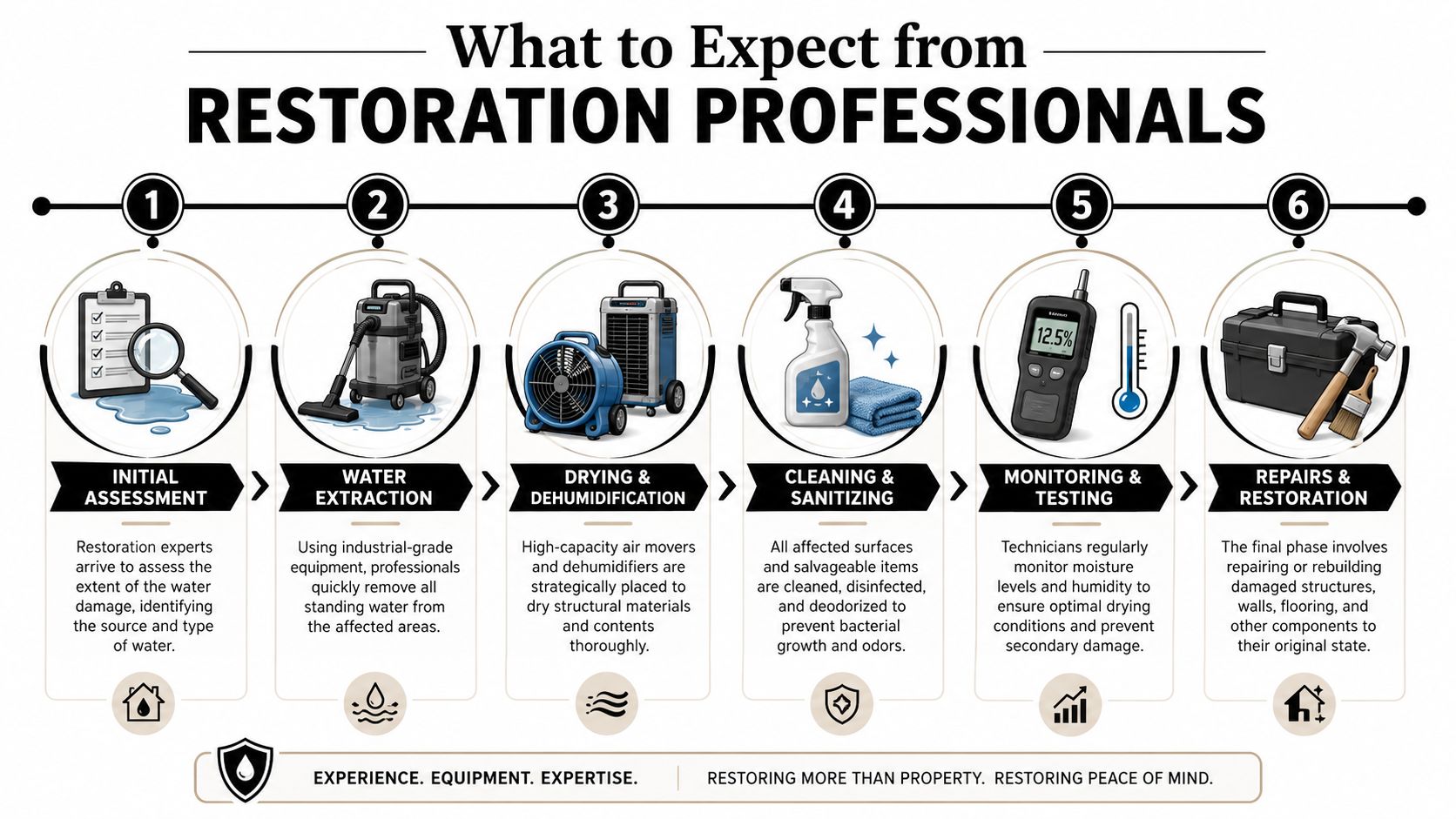
That's why technicians use moisture meters, thermal imaging, extraction tools, air movers, and dehumidifiers instead of relying on open windows or household box fans.
A typical visit looks something like this:
- Inspection and mapping. They identify the source, the likely path of travel, and what materials are wet.
- Extraction. Standing water comes out first.
- Selective demolition if needed. Baseboards, wet pad, swollen drywall, or trapped materials may need removal.
- Drying setup. Air movers and dehumidifiers are placed to target the structure, not just the room air.
- Monitoring. Moisture readings are checked until materials return to dry standards.
What works and what doesn't
What works in apartments is controlled drying with measurement. What doesn't is assuming the visible surface tells the whole story.
A floor may look dry and still hold moisture underneath. A wall may feel normal while insulation behind it is still wet. A restoration crew should be checking, not guessing.
For residents, this is often the most frustrating part because the apartment can feel noisy and cluttered while drying equipment runs. That inconvenience is usually preferable to leaving hidden moisture behind and dealing with odor, swelling, staining, or microbial growth later.
If you're wondering what happens after the first inspection, this page on what a restoration company does gives a practical overview of the mitigation and rebuild sequence. In the Phoenix area, companies such as Restore Heroes handle water extraction, structural drying, and decontamination for this kind of loss.
Floors deserve extra attention
Apartment flooring often takes the hardest hit because water spreads low and wide. Vinyl plank can trap moisture underneath. Laminate swells. Engineered wood may cup or separate. If you're trying to understand the repair side of that specifically, Savera's guide to water damaged floors gives a useful breakdown of what floor materials tend to recover and what often has to be replaced.
Surface dry is not dry. In water mitigation, meter readings matter more than appearances.
Phoenix Apartment Water Damage Questions
Can I stay in my apartment during drying
Sometimes yes, sometimes no. It depends on where the water went, what category of water is involved, how much equipment is needed, and whether bathrooms, kitchen areas, or sleeping spaces are usable. If contamination is involved, or if major ceiling or wall work is underway, staying put may not be wise.
What if the water came from the unit above me
Report it to management right away and document your unit thoroughly. In apartment buildings, the source unit, the affected unit, and the building itself may all be part of the same loss. Don't wait for neighbors to sort it out informally. Get management involved early so access, mitigation, and records start quickly.
How long does drying usually take
Residents are often surprised that drying is not a same-day event. A multi-day drying period is normal, especially when water got into walls, under flooring, or into shared structural spaces. The exact timeline depends on materials, contamination level, and how fast the source was stopped.
Do Phoenix monsoons change anything
They can. Monsoon-driven rain can push water through roofs, window assemblies, and exterior transitions that don't show problems in dry weather. In ground-level or lower areas, storm runoff can also complicate cleanup. Hard water is the quieter Phoenix issue. It can shorten the life of plumbing connections and appliance lines, so small leaks deserve attention early.
What can I do to lower the risk later
Keep a close eye on supply lines under sinks, around toilets, behind the washer, and at the water heater if your unit has one. Report slow drips, ceiling stains, and musty odors early. In apartments, early reporting is one of the few risk controls residents fully control.
If you're dealing with apartment water damage in the Phoenix area and need a clear next step, Restore Heroes can inspect the loss, handle mitigation, and help you understand what needs immediate drying versus what can wait for repairs. The key is to act early, keep the area safe, and document everything before the damage spreads further.