
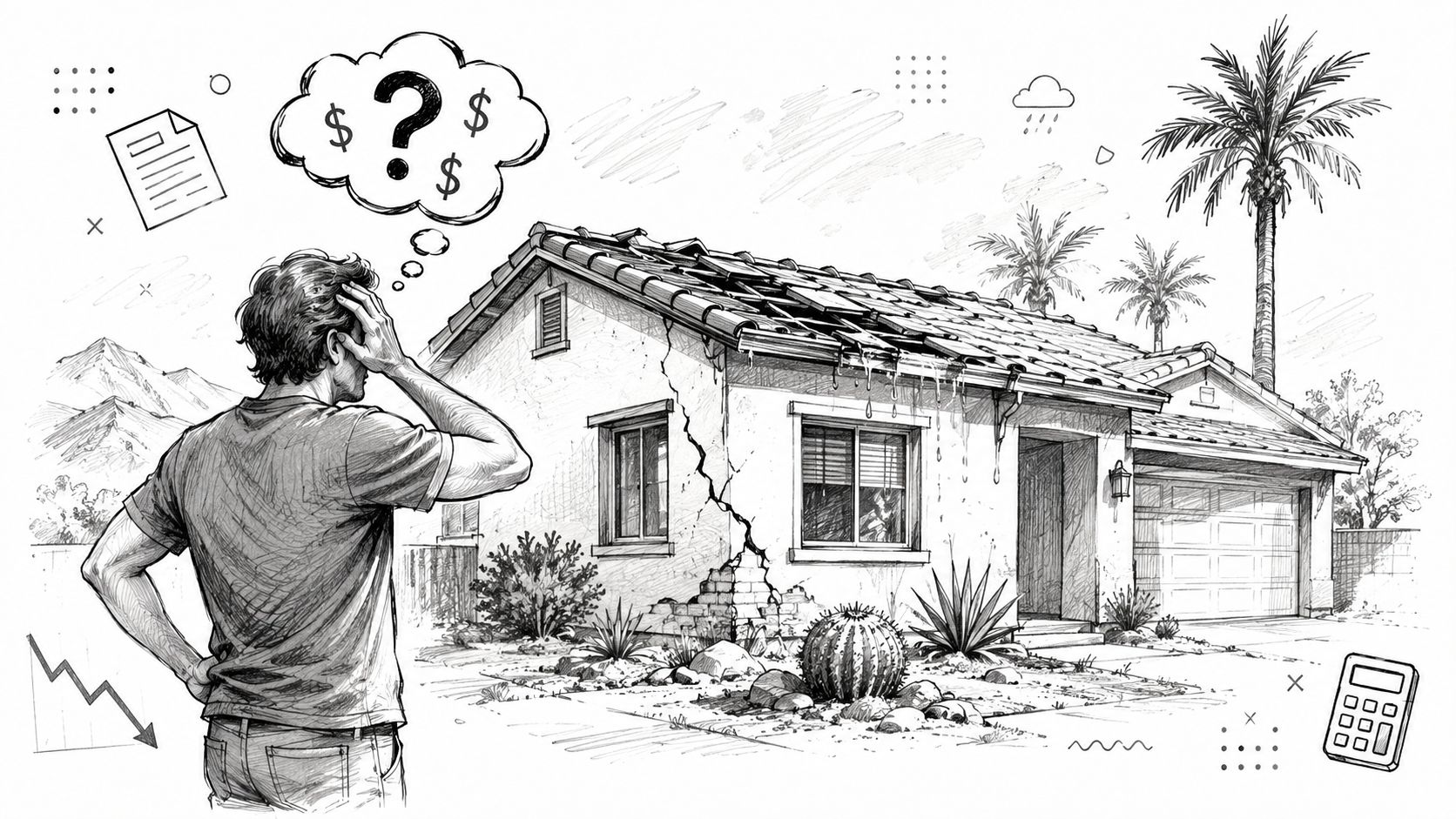
Water is dripping from the ceiling, the smoke smell won't leave, or a mold issue just turned from a small stain into a serious problem. In that moment, most Phoenix property owners aren't just asking, “How bad is this?” They're also asking, “How am I supposed to pay for this right now?”
That second question can feel just as heavy as the damage itself.
A lot of people see the phrase payment plans available and assume it means a simple monthly payment like a furniture store or appliance loan. Disaster restoration usually doesn't work that way. In many cases, insurance is the main payer, the contractor bills through the claim process, and the primary issue is how to keep the project moving while everyone waits on approvals, paperwork, and reimbursement.
When Disaster Strikes Your Phoenix Property
A common Phoenix scenario starts fast. A monsoon pushes water under a back door. A supply line behind the washing machine bursts while you're at work. A kitchen fire gets put out quickly, but smoke and water still spread through the house. By the time you catch your breath, you're staring at wet drywall, damaged flooring, and a growing list of questions.
Money worries usually show up right away. You may have insurance, but you still don't know what's covered, when the carrier will respond, or whether you'll need cash before any work can start. If the property is unlivable or your business has to shut its doors, every hour feels expensive.
What homeowners usually need first
Individuals don't need a lecture on finance. They need clear answers.
- Can work start before the insurance check arrives? In many situations, the answer depends on the scope of loss, claim status, and provider policies.
- What does no upfront payment mean? It may mean the company is willing to begin mitigation while billing through insurance, not that every possible cost disappears.
- What if part of the claim isn't covered? Then you may need a separate path for deductibles, exclusions, or upgrades.
When you're under stress, the best financial explanation is the one that uses normal language and tells you what happens next.
Some property owners also need outside guidance beyond restoration itself. If the damage is severe enough that selling becomes part of the conversation, this overview of Phoenix AZ fire damaged house solutions can help you understand the options available for an as-is sale after a major fire event.
For immediate mitigation questions, many owners first look for 24/7 emergency response support so they can stop further damage before the paperwork catches up.
The real purpose of payment options
In this industry, financial flexibility often exists to solve a timing problem. Emergency work needs to happen now. Insurance decisions, claim processing, and reimbursement often take longer. Good payment planning helps bridge that gap without making promises nobody can legally make about coverage, price, or final approval.
How Payment Works for Emergency Restoration
The money side of restoration makes more sense if you think about it like an emergency room visit. You don't go to the hospital, stop at the front desk, and fully settle the bill before treatment starts. Care begins, documentation gets created, insurance is contacted, and billing follows a process. Restoration often works in a similar way.
Here's the visual version of that process.
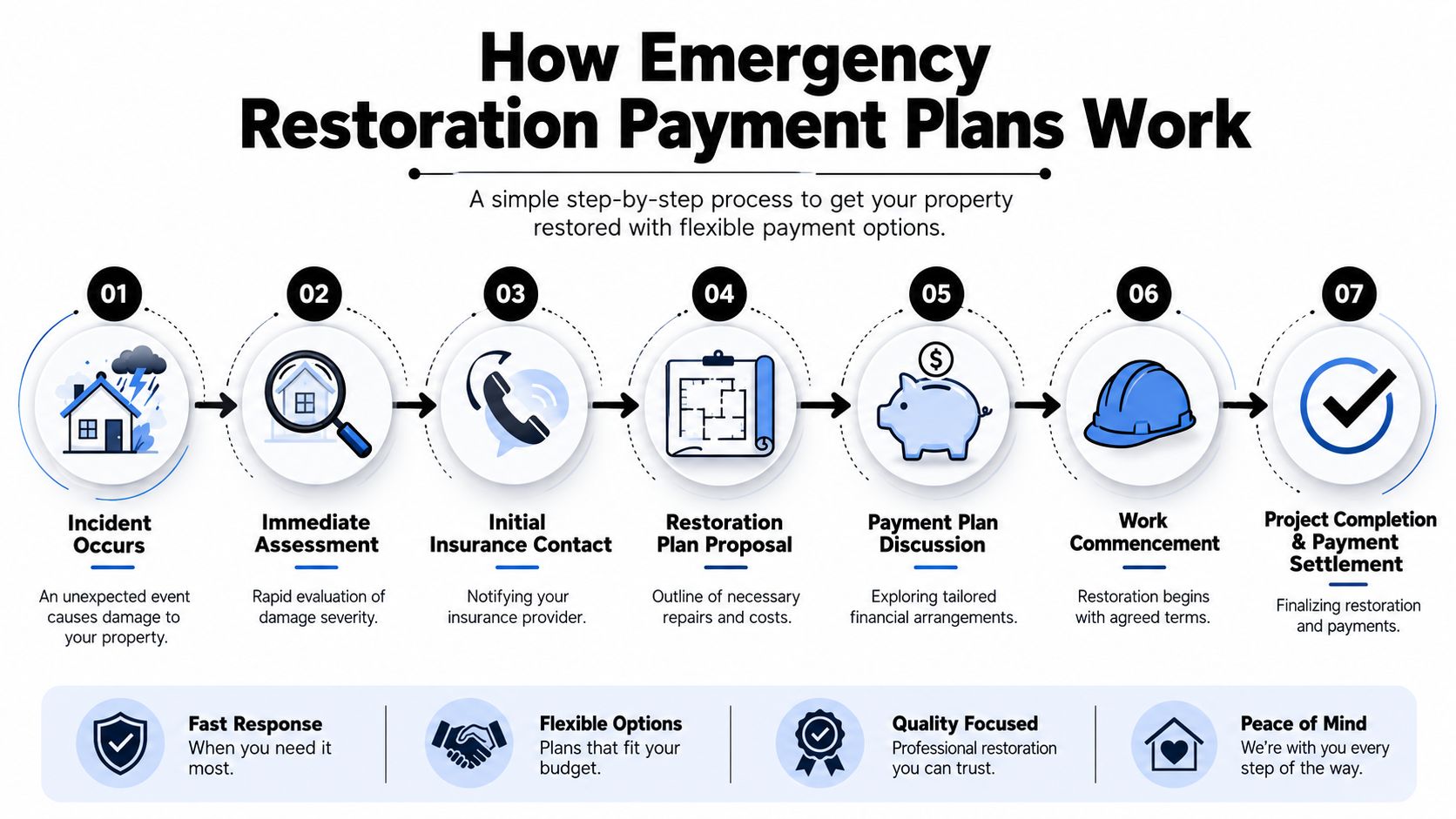
The standard payment path
In disaster restoration, direct billing means the contractor documents the loss, prepares estimates, and submits information to the insurance carrier so payment can flow through the claim process instead of relying only on the owner paying everything out of pocket on day one.
A large share of the industry runs on that model. Typically 85% to 96% of revenue for established restoration companies comes from insurance claims rather than direct out-of-pocket payments, and that often creates a 30 to 90 day payment delay according to Mordor Intelligence's disaster restoration market report. That's why the phrase payment plans available often means the company has a way to work around insurance timing, not just offer a retail-style installment loan.
A simple step-by-step example
Emergency loss happens
Water, fire, mold, or another event damages the property.Mitigation starts
The contractor inspects, stabilizes the scene, and documents conditions with photos, moisture readings, and notes.Insurance is notified
The claim gets opened and the carrier assigns a claim number and adjuster.Scope and estimate are prepared
The contractor identifies what needs to be dried, removed, cleaned, or rebuilt.Billing follows the claim path
Approved charges may be paid through insurance, while owner-responsible costs are handled separately.Final settlement happens later
Payment may arrive well after the emergency work begins.
The deductible often causes confusion. A deductible is the portion of the covered loss the policyholder is responsible for before insurance pays its part. It isn't a penalty from the contractor. It's part of the insurance agreement between the owner and the carrier.
Here's a practical resource if you're trying to understand the broader financing side of major repairs and rebuilds. Some owners compare restoration financing with home renovation loan programs when the project includes repairs outside normal claim coverage.
Later in the process, many people also want a plain-language cost baseline. That's where a guide to water damage repair cost factors can help you understand what drives the invoice.
A short walkthrough can also make this easier to visualize.
Terms that matter
| Term | Plain meaning | Why it matters |
|---|---|---|
| Direct billing | The contractor coordinates billing through the insurance claim process | Reduces the need for full immediate payment from the owner |
| Deductible | Your share under the policy before insurance contributes | You may still need a plan for this amount |
| Mitigation | Emergency work to stop further damage, like extraction, drying, board-up, or smoke cleanup | This often has to begin before the claim is fully resolved |
| Coverage gap | A cost your policy doesn't pay | This is where financing or a payment schedule may come in |
Your Financial Relief Options with Restore Heroes
When people hear “financial help,” they often lump everything together. In restoration, it helps to separate the options by what problem they solve. One option helps work start quickly. Another helps with insurance paperwork. Another addresses deductibles or uncovered portions. A different option may be used for larger balances over time.
This breakdown is easier to follow visually.
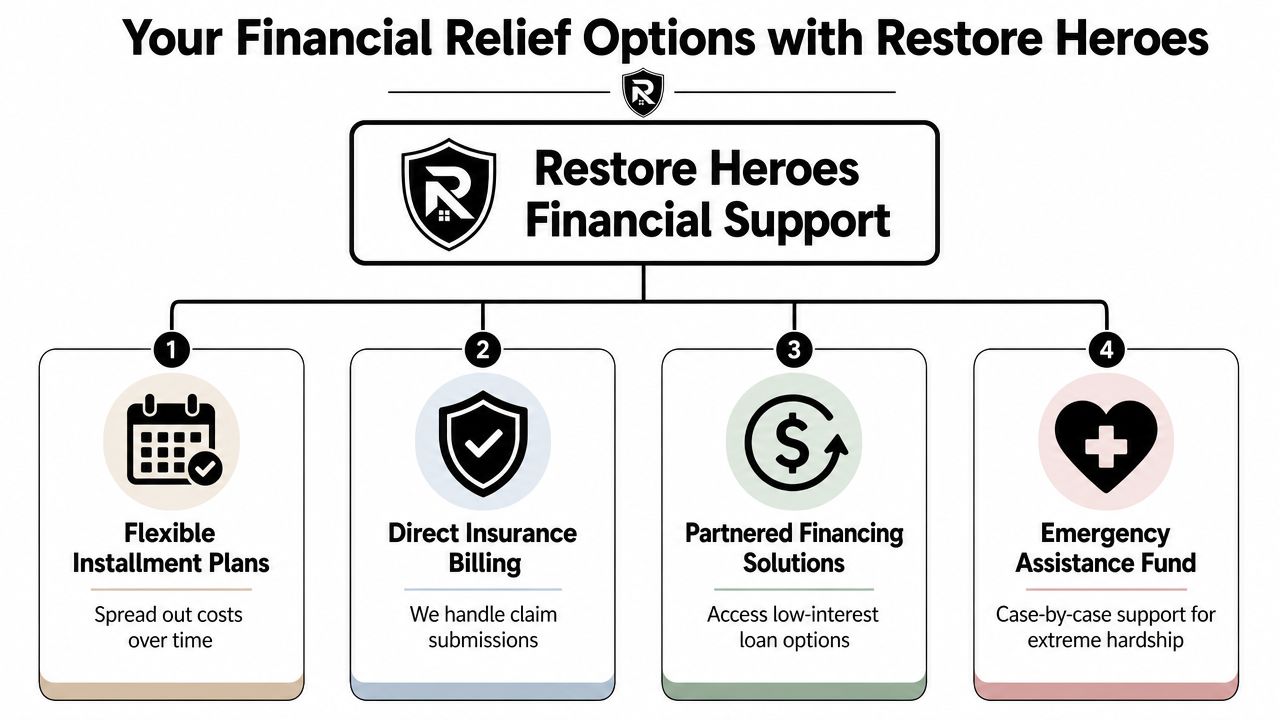
No upfront payment and what that usually means
A no-upfront policy is often about speed. It can allow mitigation to begin without waiting for a full payment at intake, which matters when water is still spreading or smoke residue is still settling into surfaces.
That said, it's smart to ask two direct questions before signing:
- Which parts of the job can start immediately under this arrangement?
- Which costs, if any, may still remain my responsibility later?
Those questions protect you from misunderstanding the phrase payment plans available. It may be a practical bridge, not a blanket promise that every dollar is deferred.
Direct insurance coordination
This is one of the most valuable forms of financial relief, even though it doesn't look like financing.
A restoration company that coordinates directly with the carrier can help organize the scope, photos, moisture logs, and estimate so the claim file is easier for the adjuster to review. That reduces friction at a time when you're already juggling temporary housing, work, family routines, or business interruption.
A well-run restoration company typically collects revenue in about 45 to 60 days, and financing tools that bridge that gap help keep mitigation moving while insurance reimbursement is still pending, as explained in this overview of financing in disaster restoration.
Practical rule: The smoother the documentation is on day one, the fewer billing surprises you're likely to face later.
If you're trying to understand how that paperwork support works in practice, review this guide to insurance claim assistance.
Flexible payment schedules for owner costs
Not every bill falls neatly inside the policy. You may still face:
- A deductible
- Non-covered materials or conditions
- Betterment or upgrade choices
- Work the carrier disputes or delays
For those balances, some companies offer a scheduled payment arrangement. The exact structure varies, so ask for written terms in plain language. You want to know when payments begin, whether any deposit is required, and what happens if the insurance decision changes.
This option is often best for moderate owner-responsible balances that don't justify a long loan process but still need breathing room.
Third-party financing for larger gaps
Some losses create expenses that are too large for a short payment schedule. That's where a separate financing partner may come in. This is different from direct insurance billing. It's a formal credit product with its own application, approval standards, and repayment terms.
A few things matter here:
| Question to ask | Why it matters |
|---|---|
| Is this financing separate from my insurance claim? | You need to know whether you're borrowing regardless of claim outcome |
| When does repayment start? | Some plans are structured differently at the beginning than later on |
| What part of the project should this financing cover? | It may be smarter to reserve financing for clearly uncovered costs |
One more point deserves extra attention. Financial assistance should never be described as guaranteed. Even outside restoration, organizations handling disaster recovery and hardship support avoid absolute promises. The American Red Cross says it “does not guarantee funding, services, or specific outcomes” in its disaster relief and recovery guidance. That same caution applies here. No contractor can responsibly guarantee coverage, approval, or final pricing before the claim and project details are fully known.
How to Access Restoration Payment Assistance
When people are overwhelmed, they need a checklist. Not a sales pitch. Just the next few moves in the right order.
Start with this basic path.
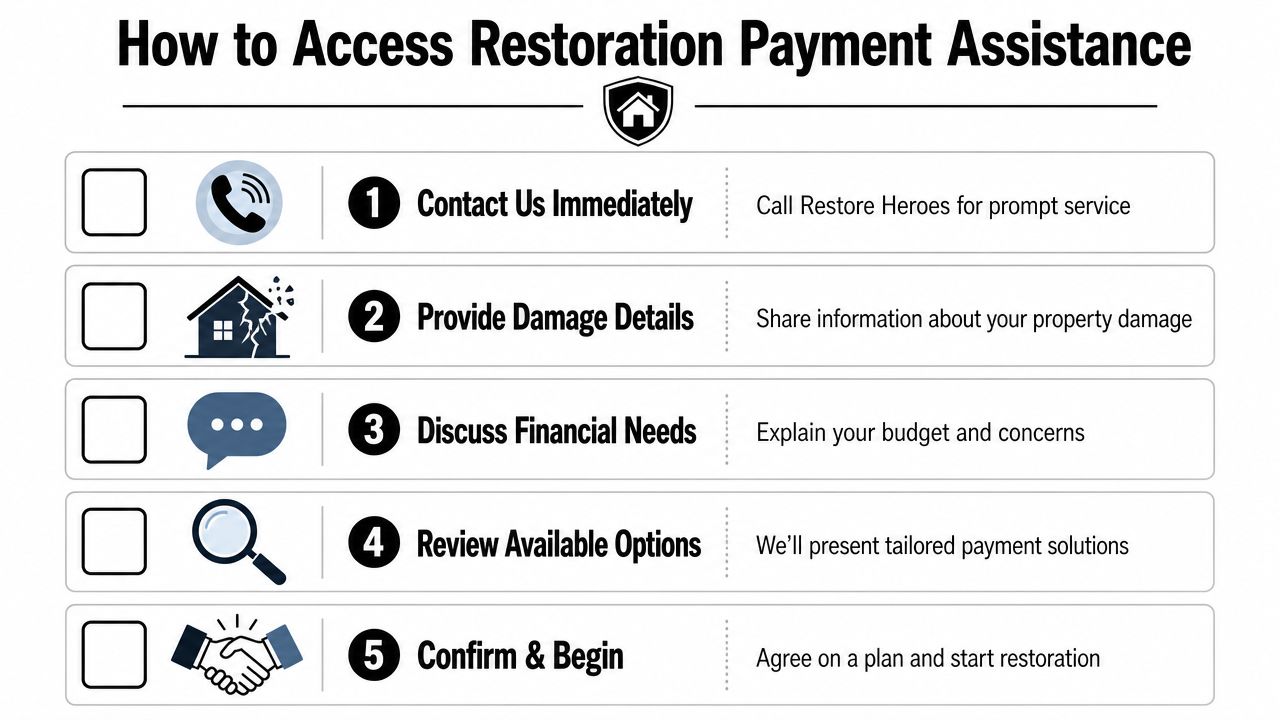
The first call
Your first conversation should focus on the loss itself. What happened, when it happened, whether the water is still active, whether the structure is safe to enter, and whether power or utilities are affected. That helps the contractor decide how urgent the response is and what kind of crew or equipment may be needed.
You should also say early if cash flow is a concern. Don't wait until the paperwork is in front of you.
Tell the contractor about the damage and the money stress in the same call. Those two issues affect each other from the start.
What to have ready
You don't need a perfect file. A few basics help a lot:
- Insurance details such as carrier name, policyholder name, and claim number if you already opened one
- Photos or videos of the damage if it's safe to take them
- A rough timeline of when the incident started and what has changed since then
- Questions about costs you already know might be your responsibility
If you haven't opened the claim yet, a guide to filing a homeowners insurance claim can help you get the sequence right.
Work authorization and payment discussion
The work authorization matters because it gives the contractor permission to begin mitigation and coordinate with the carrier. Read it carefully. From it, seek plain answers on billing, deductibles, and any owner-responsible costs.
If outside financing is being considered, that usually happens through a separate application with a financing partner. Third-party financing agreements for restoration can run from 12 to 144 months. As a benchmark, a plan might cost around $21.11 per month for every $1,000 borrowed over a 60-payment term, according to OK Disaster's financing overview. That benchmark can help you estimate what a larger uncovered balance may feel like month to month.
A short decision checklist
Before you agree to any payment option, ask these questions out loud:
- What part of the job is expected to go through insurance?
- What part, if any, am I expected to pay directly?
- Is there any deposit or upfront amount required?
- If financing is offered, who is the lender and what are the written terms?
- Can I get copies of the estimate, authorization, and billing terms today?
Those five questions clear up most of the confusion people have around payment plans available.
Restoration Payment Plans in Action
Real understanding usually comes from examples. Not because every job is identical, but because most owners can recognize pieces of their own situation in somebody else's.
A Gilbert homeowner with a standard water claim
A homeowner in Gilbert finds a leaking refrigerator line that has soaked the kitchen and part of the living room. The carrier is notified quickly, and emergency drying needs to begin before the cabinets and drywall worsen.
The restoration company documents the loss, starts mitigation, and coordinates through the insurance claim. The owner still expects a deductible, but doesn't have the full amount ready that day. Instead of delaying the drying setup, the billing arrangement separates the insurance-billed portion from the likely owner-responsible amount. The owner gets clear paperwork and knows which part still needs attention later.
Many people benefit from reviewing a basic water restoration cost guide so they can see what types of charges usually appear on these projects.
A Scottsdale commercial property with non-covered improvements
A Scottsdale business has a sprinkler discharge after hours. The emergency cleanup and drying appear to fall within the claim, but the owner also wants to replace some finishes with upgraded materials during the rebuild.
Insurance may pay for like-kind restoration, not elective improvements. So the project gets split into two financial lanes. The covered emergency work follows the claim process. The elective upgrade portion is discussed separately, and financing becomes relevant only for that owner-selected work.
This kind of split is common in commercial settings because owners often use the disruption as a chance to improve the space, not just restore it.
A Mesa homeowner with a coverage gap
A homeowner in Mesa discovers a mold issue tied to a long-running moisture problem. Part of the loss may not fit the policy the same way a sudden water event would. The owner hears “payment plans available” and assumes that means no money is needed to begin.
Then comes the important clarification. In some industries, up to 19.1% of third-party financing arrangements may still require an upfront deposit, according to this analysis of payment plan access and deposit barriers. While that figure doesn't describe every restoration plan, it's a useful reminder to ask for specifics before relying on the phrase “no upfront payment.”
The safest approach is simple. Treat every payment promise as a conversation starter, then get the exact terms in writing.
In this Mesa example, the owner asks the right questions before work begins. Which portions are immediately billable. Which portions might be excluded. Whether financing is separate from insurance. Whether any deposit applies. That turns a vague promise into a workable plan.
What these examples have in common
Each scenario uses a different mix of tools, but the pattern is steady:
- Insurance usually handles the covered lane
- The owner still needs clarity on deductibles or exclusions
- Financing works best when tied to a clearly defined uncovered balance
- Written terms matter more than marketing phrases
That's the heart of financial planning during a restoration loss.
Your Restoration Payment Questions Answered
Three questions come up almost every time.
Will using a payment plan delay the restoration work
Not necessarily. The point of many payment arrangements is to prevent delay, especially when emergency mitigation can't wait for claim reimbursement. But timing still depends on the loss, safety conditions, signed authorization, and whether the financial path is clear enough to begin work responsibly.
If the contractor needs documents from you, send them quickly. That's one of the few parts you can control right away.
What if my insurance company denies part of the claim
That happens sometimes, and it doesn't always mean the whole project stops. It may mean the financial responsibility shifts. Covered work may still move through one billing path, while denied or excluded items need a different solution such as a direct payment schedule, project revision, or third-party financing.
The important thing is to avoid assuming anyone can promise the final claim outcome. Following industry best practices, organizations such as the American Red Cross state they do not “guarantee funding, services, or specific outcomes.” The same principle applies in restoration. Contractors can support the process, document the damage, and communicate with carriers, but they can't guarantee coverage decisions or final pricing outcomes before the claim is resolved.
Does exploring financing affect my credit
It depends on the financing partner and the type of application they use. Some providers describe early inquiry steps in a way meant to reduce friction, while full approval may still require more formal review. Ask exactly what kind of credit check applies before you submit anything.
This is also why it helps to compare any financing option with your larger financial picture. For readers dealing with broader debt pressure after a property emergency, this article on Chapter 7 bankruptcy fees and plans gives a useful example of how to evaluate payment obligations carefully instead of focusing only on the initial monthly figure.
What paperwork should I keep from day one
Keep every document tied to the loss in one folder:
- Photos and videos
- Claim communications
- Authorization forms
- Estimates and change orders
- Invoices and receipts
- Any financing disclosures or payment terms
If you're unsure what records matter most, review these documentation requirements for restoration claims. Good records make billing questions easier to resolve and help you understand what was approved, what changed, and what still needs a decision.
The best financial protection during a restoration job isn't guessing. It's documentation.
If your home or building in the Phoenix metro area has water, fire, mold, or biohazard damage, Restore Heroes can help you understand the next steps, explain how insurance coordination and payment options may fit your situation, and get you moving without adding confusion to an already stressful day.