
A burst pipe in a Phoenix office building rarely stays a plumbing problem for long. Water moves into wall cavities, under flooring, into baseboards, and through shared air space. If the leak sat overnight or mixed with dirt, insulation, or building debris, what looks like a drying job can quickly become a contamination job.
That's where people often get misled. They see wet carpet, soot on a wall, or a musty odor and assume a general cleanup crew can handle it. Sometimes basic cleaning helps appearance. It doesn't always make the property safe for occupants, staff, tenants, or vendors returning to work.
A proper decontamination process is the structured path from visible damage to a controlled, verified condition. It's the difference between wiping down a surface and following a sequence designed to stop cross-contamination, reduce exposure, and document that the work reached the right endpoint.
Your First Step After a Property Disaster
If you walked into your Phoenix building this morning and found a burst supply line above a suite, the first priority is simple. Stop the source, keep people out of the affected area, and avoid spreading the damage with well-intended cleanup.
For owners who need a practical primer on what usually causes these failures and what immediate actions help, this homeowner's guide to burst pipes is useful background. Once the water is under control, the next move is getting a qualified mitigation team on site for an emergency mitigation response.
The reason speed matters isn't panic. It's sequence. In a detailed analysis of medical sterile processing, a 9.3% defect rate was found in the decontamination process, highlighting that this multi-step protocol requires rigorous adherence to sequence to prevent cross-contamination and ensure safety, according to this medical sterile processing analysis.
That hospital statistic matters because the same principle applies in buildings. Decontamination isn't one action. It's a chain of actions. Miss the order, skip the isolation step, or clean the wrong surface first, and contaminants can move into clean areas.
What to do before the crew arrives
- Shut off the source if you can: Stop active water flow or isolate the impacted utility.
- Limit foot traffic: Every pair of shoes can track contamination farther into the property.
- Don't start tearing out materials randomly: Unplanned demolition often spreads debris, moisture, soot, or microbial growth.
- Document the scene: Photos help both the restoration plan and any later insurance discussion.
Practical rule: The first hours should reduce spread, not just remove mess.
When owners understand that, they make better decisions. The goal isn't to make the room look cleaner by tonight. The goal is to move the property back toward safe occupancy in the correct order.
What Decontamination Really Means for Your Property
A kitchen counter can look clean and still not be decontaminated. A surgical suite can't rely on appearance at all. That's the easiest way to understand the difference.
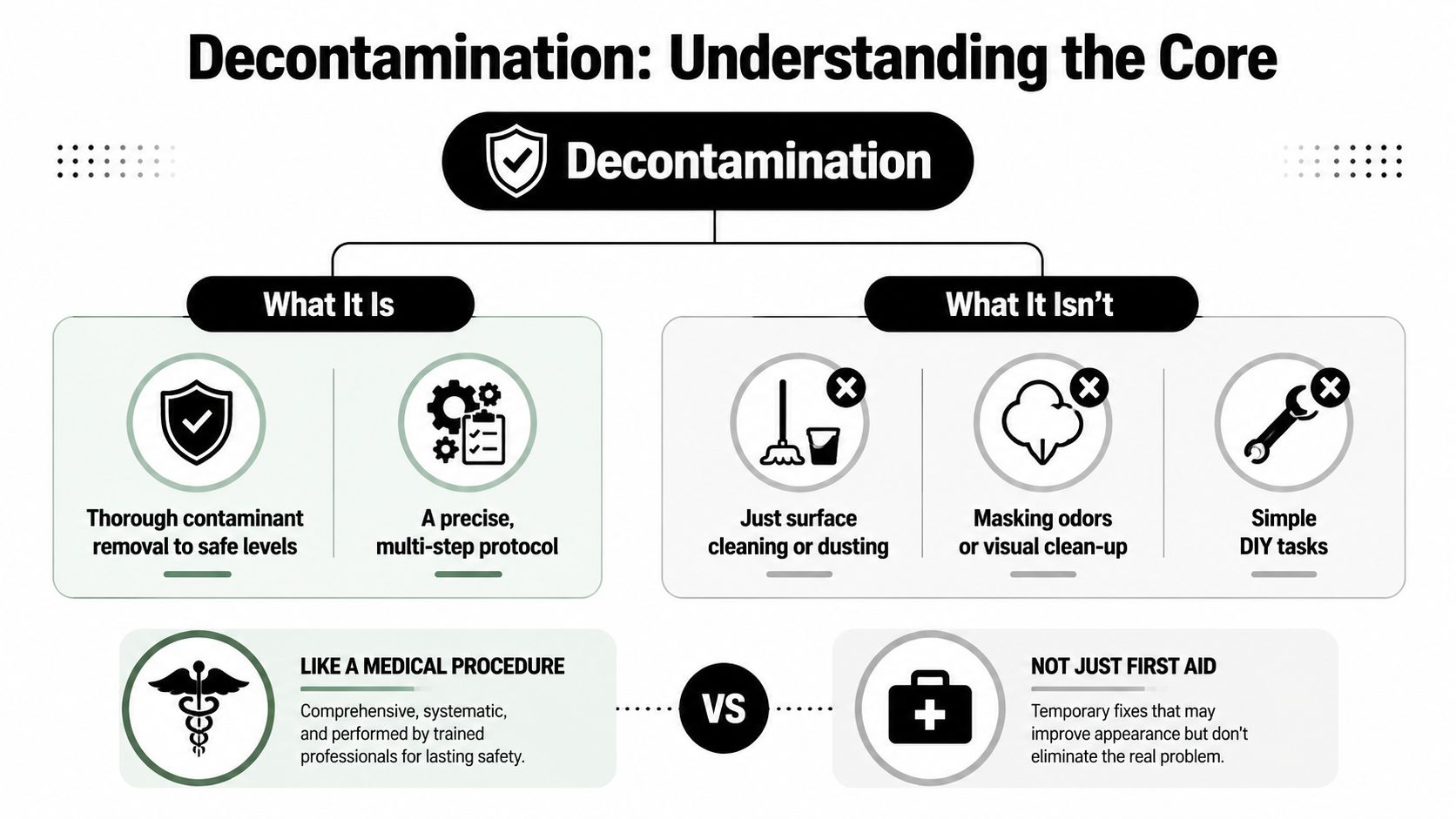
In property restoration, decontamination is the larger strategy. It can include cleaning, sanitizing, disinfecting, removal of unsalvageable materials, air cleaning, drying, and controlled disposal. It's not a synonym for housekeeping.
If you want a broader overview of where this work fits within professional property cleanup, this explanation of what remediation services include gives helpful context.
The pyramid of clean
Think of the work in layers:
- Cleaning: Removes visible dirt, residue, and debris.
- Sanitizing: Reduces certain microbial loads on appropriate surfaces.
- Disinfecting: Uses products and methods intended to inactivate specified pathogens on suitable materials.
- Decontamination: Coordinates all necessary steps so the property, contents, tools, and air pathway are handled in a safe sequence.
The key point is that the lower layers come first. The sterile processing workflow mandates that reducing bioburden by removing visible soil and organic matter is the first step, as organic material can act as a physical barrier that inhibits the effectiveness of any subsequent disinfection or sterilization, as explained in this sterile processing overview.
What decontamination is not
Owners get into trouble when they mistake cosmetic improvement for contaminant control.
- It isn't odor masking: Fogging fragrance into smoke damage doesn't remove soot residue.
- It isn't quick wipe-down work: Sewage splash, mold growth, and biohazard residue require more than surface treatment.
- It isn't random product use: The wrong chemistry on the wrong surface can lock in staining, spread residue, or damage finishes.
- It isn't automatically a DIY job: Household tools usually can't create containment, pressure control, or verified drying conditions.
A property is safer when the contaminant load is reduced in the right order, not when the room simply looks better.
That's why professionals separate affected zones, remove source material, clean gross contamination first, and only then move to targeted treatment. Negative air pressure, HEPA capture, and controlled disposal aren't technical extras. They're what keep spores, soot, and dirty aerosols from migrating into hallways, offices, or adjacent units.
Four Common Scenarios Requiring Decontamination
Not every loss calls for the same playbook. Water, smoke, mold, and biohazards behave differently, contaminate differently, and require different endpoints. A crew that treats all four the same is usually relying on habit, not standards.
The table below gives the quick comparison property owners need when deciding how serious the response should be.
Decontamination needs by damage type
| Damage Type | Primary Contaminants | Decontamination Goal | Governing Standard |
|---|---|---|---|
| Water damage | Dirty water, debris, possible pathogens depending on source | Remove contaminated materials where needed, clean affected surfaces, dry assemblies to proper goals | ANSI/IICRC S500 for water damage restoration |
| Fire and smoke damage | Soot, smoke residues, char debris, odor-causing particles | Remove residues safely without spreading them, clean air and surfaces, address odor at the source | ANSI/IICRC S700 for fire and smoke damage restoration |
| Mold growth | Mold spores, contaminated dust, impacted porous materials | Contain spread, remove growth and affected materials where required, clean settled contamination | ANSI/IICRC S520 for mold remediation |
| Biohazard or trauma | Bloodborne or other potentially infectious materials | Isolate area, remove hazardous waste correctly, clean and disinfect compatible surfaces | Site-specific biohazard procedures and applicable regulations |
The reason these standards are separated is straightforward. The IICRC maintains separate, ANSI-accredited standards for different types of damage, such as S520 for mold and S700 for fire, because the decontamination techniques for microbial growth versus fire soot require different protocols than those for general water damage, as outlined by the IICRC S520 standard resource.
Water damage and sewage exposure
Clean water from a supply line and contaminated water from a backup are not the same event. Once water carries waste, debris, or heavy contamination, removal and cleaning decisions change fast. Flooring, insulation, and lower drywall may no longer be candidates for simple drying.
If the warning sign started in a bathroom fixture, this explanation of bathtub sewage backup causes and warning signs helps owners understand why those losses need a different level of caution. For heavily contaminated water intrusions, a team familiar with Category 3 water damage cleanup is the right fit.
Fire and smoke losses
Soot is fine, mobile, and easy to spread with the wrong touch. Dry wiping can grind residue deeper into paint, plastic, and porous contents. Turning on HVAC equipment too soon can also circulate particles into areas that weren't originally affected.
The goal here is controlled residue removal, not aggressive scrubbing everywhere. Fire losses often need HEPA vacuuming, material-specific surface cleaning, odor source removal, and air cleaning before general repairs begin.
Mold contamination
Mold projects are often mishandled because people focus only on the visible patch. The underlying issue is usually the moisture source plus the disturbed spores. Tear into a wall without containment, and the cleanup area gets larger.
For mold, decontamination is about isolating the workspace, removing compromised materials where needed, cleaning settled particulates, and keeping spores from spreading into occupied areas.
Biohazard and trauma scenes
These scenes demand discipline. The risk isn't only what you can see. It's also what may have penetrated porous materials, what must be disposed of correctly, and what surfaces can or can't be reliably cleaned.
In these projects, sequence, PPE, isolation, and documentation matter as much as the surface treatment itself.
The Decontamination Process Step by Step
Professional decontamination follows a sequence because sequence controls spread. OSHA mandates that decontamination must be an organized process where contamination levels are reduced through a specific sequence, ensuring that personnel and equipment are fully decontaminated before leaving a hazardous zone, according to OSHA decontamination guidance.
That same logic carries directly into property restoration. You don't start demolition and hope contamination stays put. You establish control first.
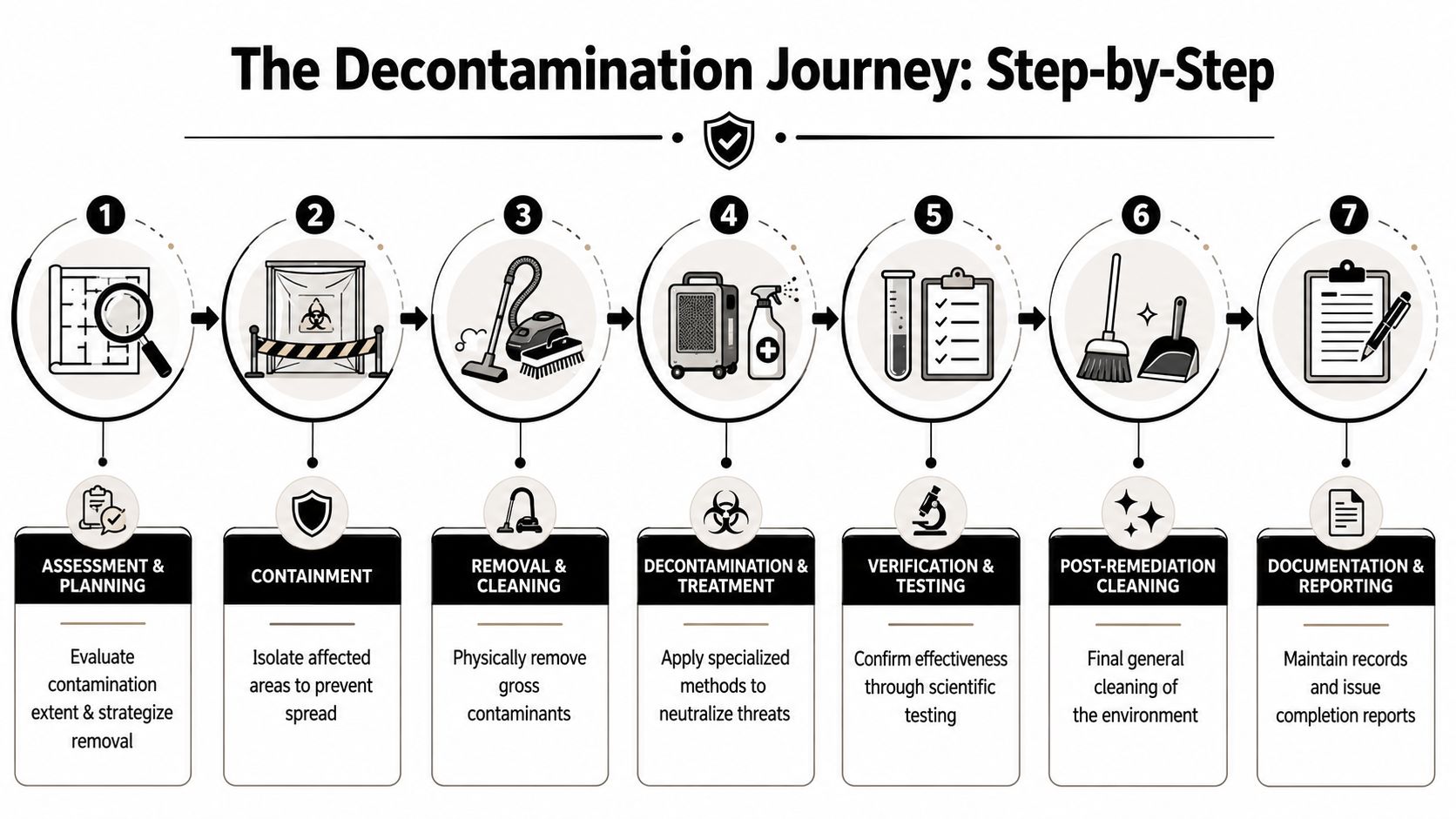
Assessment and safety planning
The first task is identifying what's present, where it traveled, what materials are affected, and what risks the crew and occupants face. Water source, soot type, visible growth, odors, occupant sensitivity, and HVAC pathways all affect the plan.
This is also where the team decides on PPE, containment layout, disposal needs, and whether materials are salvageable. Good assessment saves time later because it prevents rework.
Containment before disturbance
Containment is one of the most misunderstood steps. Owners sometimes see plastic barriers and negative air machines and think the crew is overbuilding the job. In reality, that setup keeps the problem from becoming a bigger problem.
Negative air pressure matters because it pulls airflow into the work area rather than letting contaminated air drift outward. That's how mold spores stay out of adjacent offices and soot stays out of return air pathways.
If demolition starts before containment is stable, the cleanup area often expands.
Removal and detailed cleaning
Once the area is controlled, crews remove gross contamination and any materials that can't be restored safely. That might include sections of drywall, insulation, pad, porous contents, or heavily impacted debris.
Then comes detailed physical cleaning. HEPA vacuums, damp wiping, extraction tools, and surface-specific methods remove the load that chemistry alone can't solve. If you're trying to understand why drying equipment is chosen so deliberately after water losses, this breakdown of water damage fans and air movers is a good reference for owners.
A useful overview of the workflow appears below.
Treatment, verification, and closeout
After physical removal, the team applies the appropriate treatment to compatible surfaces. Depending on the loss, that may involve disinfection, odor treatment, air scrubbing, or continued structural drying.
The job is only finished when the project reaches its defined endpoint. In practical terms, that means not just “looks clean,” but “meets the project goals, with records to support it.” Equipment decontamination, worker exit procedure, waste handling, and final cleanup all sit inside that closeout stage.
Professional Standards and Essential Equipment
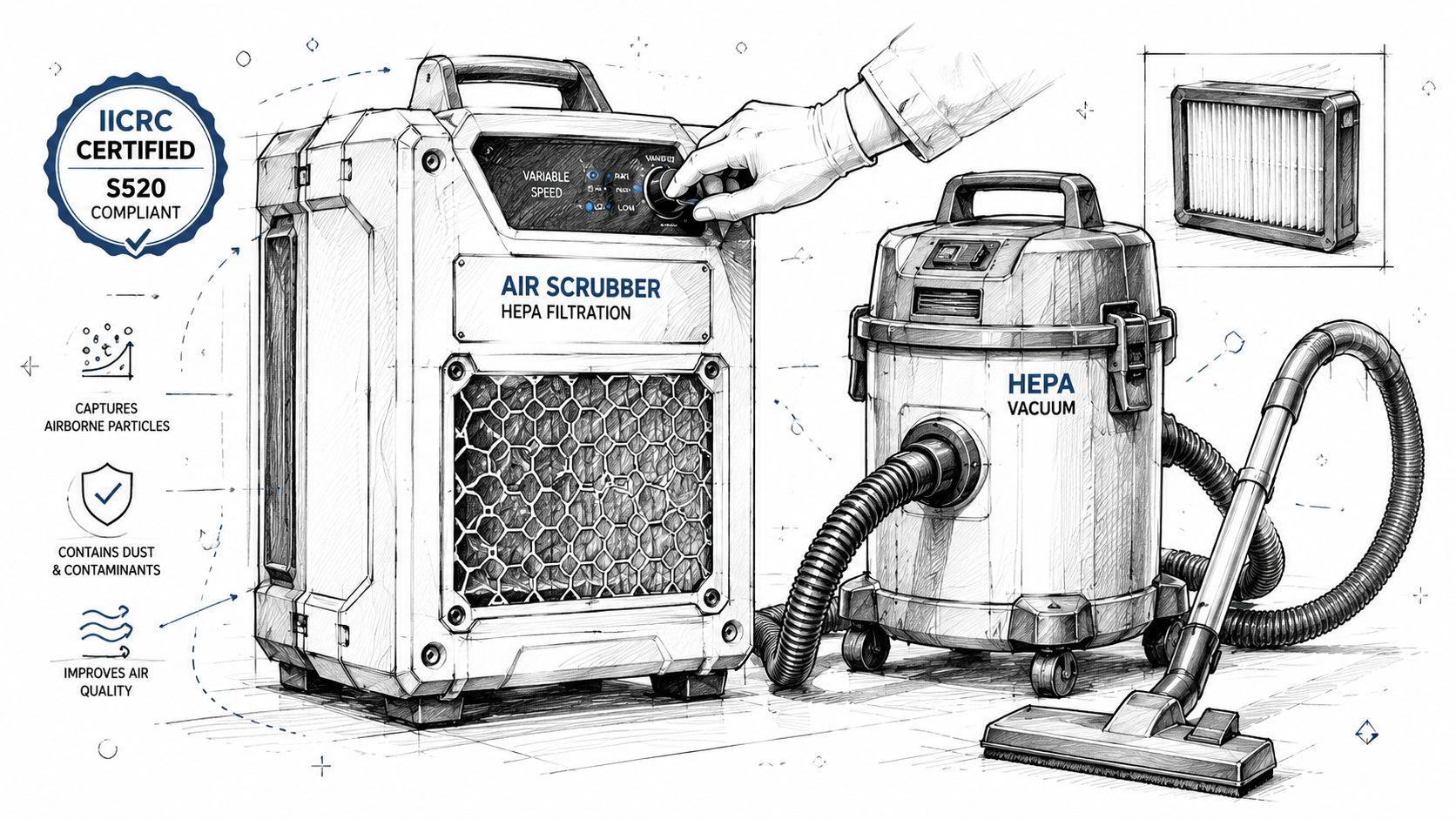
A real decontamination project doesn't run on shop vacs, box fans, and household cleaners. It runs on equipment chosen for a specific contaminant, a specific material, and a specific objective.
What the equipment actually does
Here are the tools owners most often see, and why they matter:
- HEPA air scrubbers: These capture airborne particulates during demolition, mold remediation, and fine-residue cleaning. Their value is simple. They address what occupants can inhale but can't see.
- HEPA vacuums: These remove settled particles from surfaces without recirculating them back into the room.
- Commercial dehumidifiers and air movers: These drive structural drying after water intrusion. Drying isn't separate from decontamination when wet materials can support microbial growth.
- Moisture meters and hygrometers: These tell the crew what's still wet and whether conditions are moving in the right direction.
- Containment barriers and negative air setups: These control spread while invasive work happens.
- Specialized cleaning agents and application tools: Surface chemistry has to match the material and the contaminant. Stronger isn't always better.
One practical example from industry guidance is equipment itself. The ANSI/IICRC S500-2021 Standard for Professional Water Damage Restoration mandates decontamination of equipment when tools have contacted contaminated water, as discussed in this S500 decontamination overview. That's an important distinction. Dirty tools can re-contaminate a clean area if crews treat them like they're exempt from the process.
What IICRC standards change on the job
An IICRC-certified firm isn't just using a badge for marketing. Certification means the crew is expected to work from recognized standards instead of improvising the endpoint.
According to the ANSI/IICRC S500 standard, the decontamination and drying process is not complete until all affected materials reach or fall below established drying goals, which are verified through daily monitoring and documentation before equipment is removed, according to this summary of IICRC S500 drying verification.
That requirement matters to property owners because it defines “done” in measurable terms. Not dry enough for touch. Not dry enough for appearance. Dry to the project goal, with readings.
Why this protects owners and managers
When a contractor skips documentation, the owner is left with opinion. When a contractor follows standards, the owner gets a work record.
That record usually includes:
- Daily condition tracking: Temperature, humidity, and moisture progress.
- Scope support: Notes showing why materials were removed, cleaned, or retained.
- Equipment logs: What was used, where, and for how long.
- Project closeout evidence: Information useful for property records and claim discussions.
For owners comparing providers, Restore Heroes is one local Phoenix option that states it provides IICRC-certified restoration services for water, fire, mold, and biohazard losses. The larger point is to ask any contractor the same questions. What standard are you following? How are you containing the area? What readings or documentation define completion?
The right equipment isn't there to look specialized. It's there because the building needs controlled air, controlled drying, and controlled removal.
Navigating Insurance and When to Call for Help
Some losses are too risky to treat as a weekend cleanup. If the water came from sewage, if soot is present in multiple rooms, if mold is visible, if odors persist after the source is removed, or if anyone had to wear protective equipment just to enter safely, it's time to bring in a qualified restoration team.
Commercial properties have another layer of risk. Occupant exposure, tenant complaints, interrupted operations, and shared HVAC systems can turn a small-looking incident into a management problem fast. In those cases, delay usually costs more than an early inspection.
Clear signs the job is beyond DIY
- Contaminated water is involved: Backups and overflows can carry harmful contamination.
- Porous materials are affected: Drywall, insulation, ceiling tile, and carpet pad often trap contamination.
- You see or smell spread outside the original area: That usually means the impact isn't isolated.
- HVAC may have been exposed: Air movement can distribute particulates farther than expected.
- The cleanup requires containment: Once you need pressure control and waste segregation, this is professional work.
Insurance is a separate issue from cleanup science, but the two meet in documentation. A certified contractor can help by creating a record of site conditions, photos, moisture or contamination findings, daily progress notes, and scope decisions tied to standards. That doesn't promise coverage. It does give the carrier and adjuster a cleaner factual file to review.
If you're preparing for that conversation, these water damage insurance claim tips can help you organize the claim side more effectively.
What owners should ask on the first call
Ask direct questions:
- What type of contamination do you think this is?
- How will you contain it before work starts?
- What materials are likely salvageable?
- What documentation will you provide for the file?
- When can someone inspect the property?
In the Phoenix area, fast response matters because heat changes drying behavior, but it doesn't remove contamination. A quick inspection by a qualified team gives you a safer basis for deciding what happens next.
Frequently Asked Questions About Decontamination
How long does the decontamination process take
It depends on the contaminant, the material, and how far the impact traveled. FEMA guidance clarifies that the duration of effective decontamination is not based on a fixed time but is highly dependent on the type of chemical or contaminant, the surface material, and the contamination route, requiring assessment rather than a simple “5-minute rinse,” according to FEMA guidance on decontamination duration factors. In building work, that means a small hard-surface cleanup may move quickly, while porous materials or hidden cavities can extend the timeline.
Is it safe to stay in the building during cleanup
Sometimes yes, sometimes no. The answer depends on the contaminant, who occupies the property, whether containment is stable, and whether HVAC systems are shared with unaffected areas. In commercial settings, partial occupancy can be possible, but only when the work zone is properly isolated.
Is decontamination the same as full restoration
No. Decontamination makes the environment safer by removing or reducing contamination to the project goal. Full restoration may also include rebuilding drywall, replacing flooring, painting, and reinstalling finishes after the decontamination and drying work is complete.
If you're dealing with water, fire, mold, or biohazard damage in the Phoenix area, Restore Heroes can be your first call for an on-site assessment and a standards-based plan for containment, cleanup, and documentation.