
You're standing in the kitchen after a monsoon storm, and the floor near the slab feels damp when it shouldn't. Maybe the door at the back of the house is suddenly sticking, or there's a musty smell coming from the low side of the property. In Phoenix, that's the moment to stop guessing and start checking the foundation, because small water intrusion can become a big repair fast.
The hard truth is that foundation water damage repair isn't just about sealing a crack and moving on. A shallow leak can soak drywall, insulation, flooring, and structural materials around a slab or crawlspace, and mold can begin within 24 to 48 hours if wet materials aren't dried properly, according to foundation-water-damage guidance compiled with FEMA and NFIP context in this homeowner reference on water damage. That's why the first move is always to figure out what kind of problem you're really looking at, a waterproofing issue or a structural one.
Recognizing Foundation Water Damage Before It Escalates
A Phoenix homeowner usually notices it in stages. First comes a damp line along the base of a wall, then white powdery residue on concrete, then a smell that doesn't leave even after the carpet dries. By the time a few hairline cracks show up or a door begins to rub, water has usually been active long enough to deserve a serious look.
The signs that matter most
Efflorescence is one of the earliest clues. It looks harmless, but it tells you water has moved through masonry and left minerals behind as it evaporated. Pair that with pooling water near the perimeter, and you're not dealing with normal humidity anymore, you're dealing with a pathway for water to keep coming back.
Cracks need context. A small, stable crack can be a maintenance item, but a crack that grows, leaks, or shows up with bowing walls deserves more attention. Sticking doors, separated trim, and uneven floors can also point to movement below the surface, not just moisture on it.
Practical rule: If the symptom changes after rain, snowmelt, or irrigation cycles, treat it as an active water entry problem until proven otherwise.
One useful reference point is this sign-focused basement water damage guide, which helps homeowners compare cosmetic staining to active intrusion. If you want a second opinion on where the leak might be coming from before opening walls or breaking concrete, a service like DIY leak detection for Las Vegas homes shows the kind of targeted inspection that can narrow down the source without guessing.
The reason speed matters is simple. According to the homeowner data summary linked above, 1 inch of water can cause up to $25,000 in damage, and about 1 in 60 insured homes files a water damage or freezing claim each year, with an average claim around $13,954 over 2018 to 2022. Even if your case is smaller, those numbers explain why a “tiny” leak can turn into a major repair event before the weekend is over.
Immediate Steps to Mitigate Water Intrusion Safely
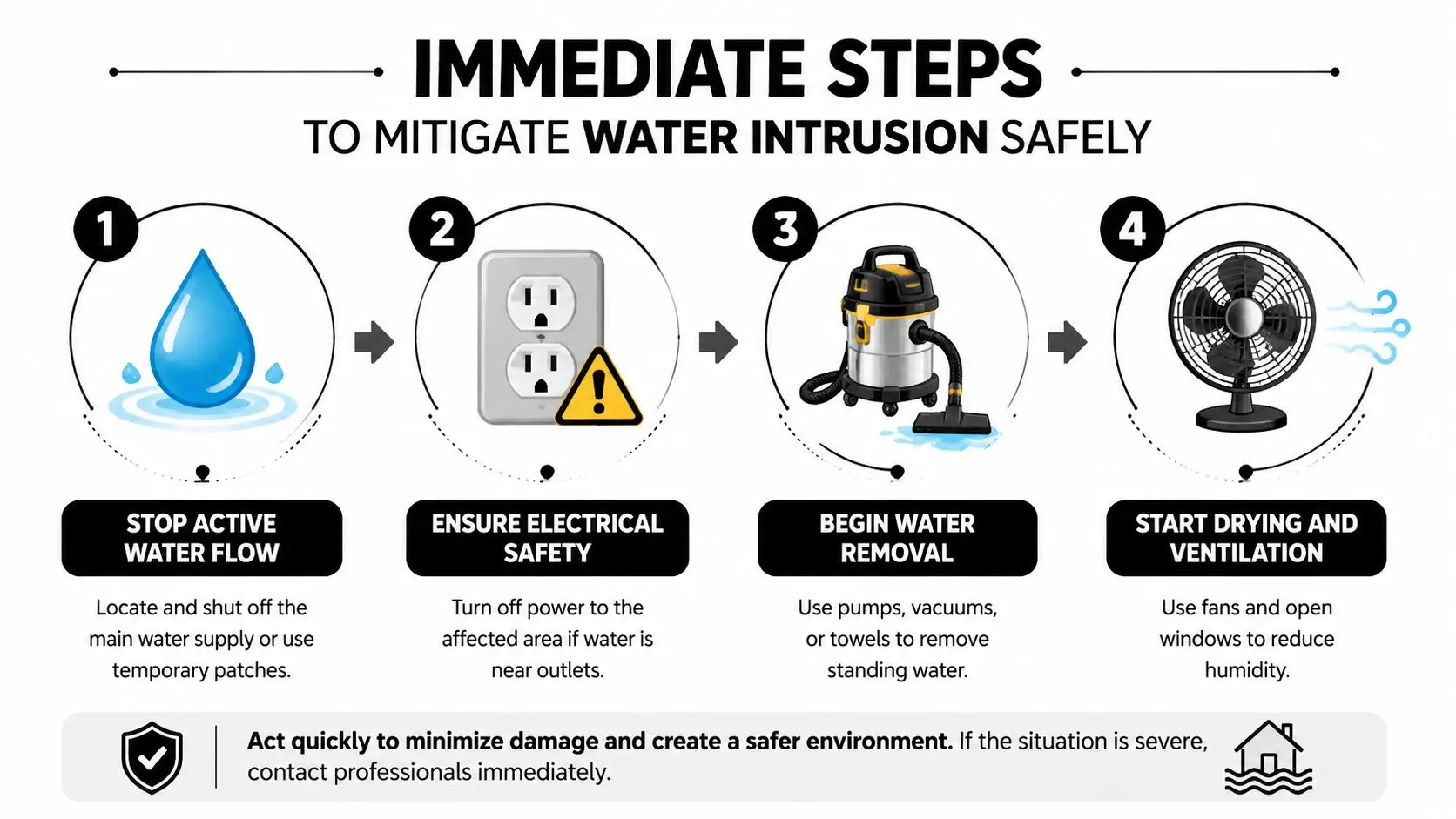
When water is still entering the foundation, don't start with patching. Start with containment, safety, and documentation. A quick response helps you protect the structure, protect the people in it, and preserve what an adjuster will need to see later.
Do these four things in order
Stop active water flow. If it's a plumbing source, shut off the main water supply or isolate the line if you know how. If it's stormwater, focus on temporary barriers, sandbags, or redirecting runoff away from the house.
Ensure electrical safety. If water is near outlets, appliances, or the panel area, stay out of the zone until power is shut off by a qualified person. Water and electricity don't mix, and wet slab conditions can spread risk farther than homeowners expect.
Begin water removal. Use a pump for standing water, then a wet-dry vacuum for smaller pockets and edges. Towels help with corners and low spots, but they're not enough by themselves if water has already soaked into finishes or the slab edge.
Start drying and ventilation. Set industrial fans to move air across wet surfaces and bring in dehumidification as soon as conditions allow. Opening windows can help in some weather, but in monsoon humidity or dust-heavy conditions, controlled drying equipment usually does the work.
Drying after extraction isn't optional. If wet materials stay damp, you can trap moisture behind repairs and create a mold problem you didn't have before.
Take photos and short videos before moving furniture or tearing out materials. Capture the water line, the crack, the floor covering, and any visible staining. If sewer backup is suspected, treat it differently from clean groundwater, because contaminated water calls for sanitation, not ordinary drying.
A detailed walkthrough of temporary mitigation steps is available in this water damage mitigation guide. It's also smart to avoid sealing cracks while the structure is still damp, because a patch on a wet wall can hide the problem instead of solving it.
Determining Whether You Have a Waterproofing or Structural Problem
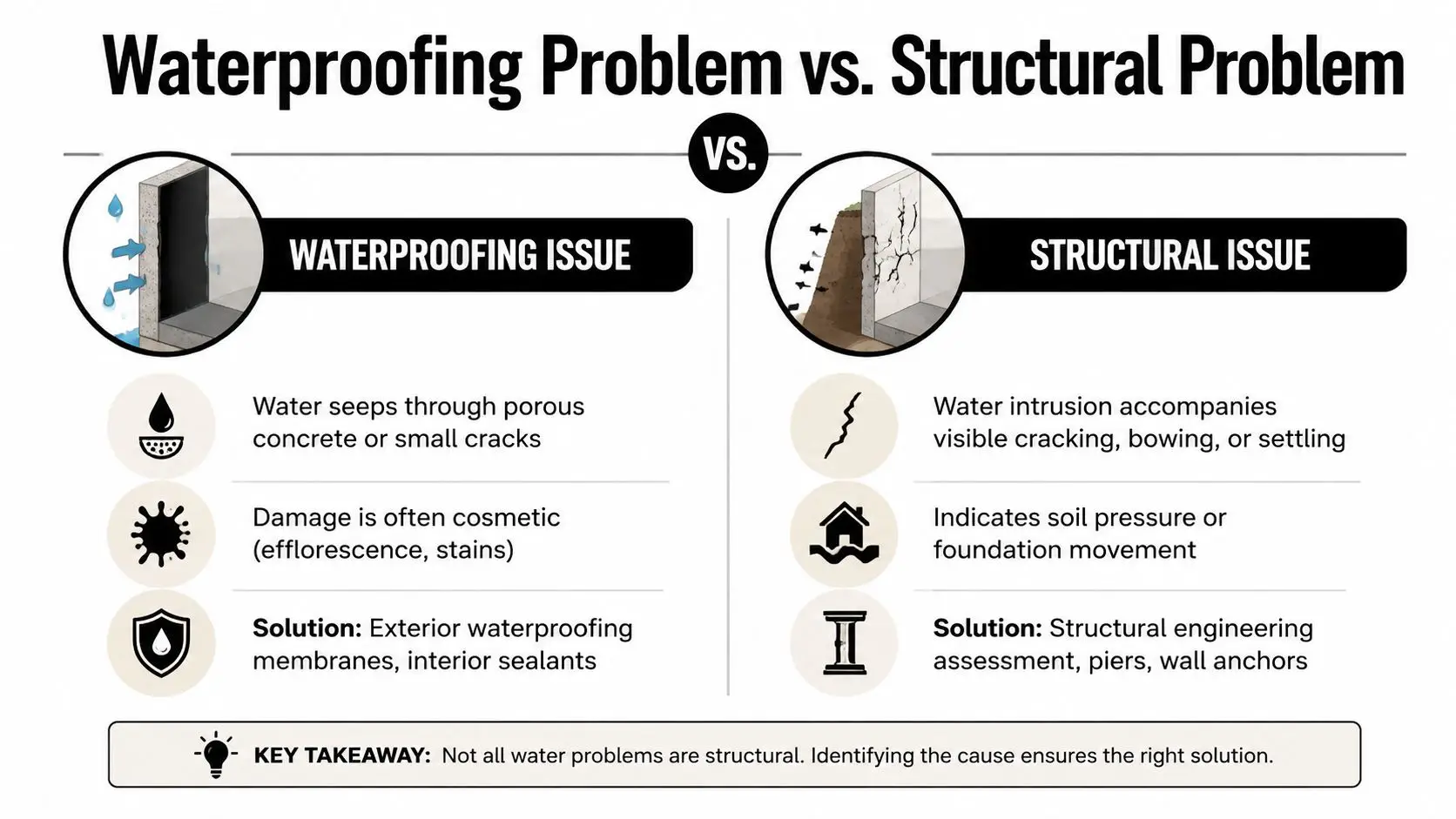
This is the decision that saves homeowners the most money and the most frustration. A waterproofing problem means water is finding a route into a fairly stable foundation. A structural problem means the foundation, wall, or footing itself is moving, and water may be both a symptom and a cause.
What points to waterproofing
Water stains, surface seepage, and powdery residue usually point toward moisture moving through concrete or through a crack that isn't actively opening. In those cases, exterior drainage, membranes, sealants, or interior water management may solve the issue when they're paired with drying and cleanup. The problem here is usually water entry, not loss of load-bearing capacity.
What points to structural movement
When you see wall bowing, widening cracks, uneven floors, or settlement that changes over time, the repair class changes. That's where solutions like underpinning, helical piers, push piers, wall anchors, or slabjacking come into play, because they address load transfer and support, not just leakage. A sealant-only repair on a moving foundation is the classic mistake.
Government guidance from Canada's flood-risk foundation maintenance page recommends checking cracks at least yearly and watching them after heavy rainfall or snowmelt, which is a useful habit even in desert climates with monsoon cycles. If the crack behaves differently after weather events, or if the wall shape changes, a structural look is warranted. This structural integrity assessment resource is the kind of reference homeowners can use to understand when a waterproofing contractor is no longer the right first call.
If the problem is changing the shape of the structure, don't let anyone talk you into a cosmetic fix.
For broader drainage and hardscape context, the hardscapes category overview is useful because grading, surface runoff, and site drainage often reveal why one wall keeps getting wet while the others stay dry. That's the distinction to make, water management versus structure. If the soil has washed out, the footing has moved, or the wall is carrying pressure, sealing alone won't hold.
Comparing Common Foundation Repair Methods
Once the problem is categorized, the repair method should match the failure mode. The wrong fix is expensive in a quiet way, because it can look successful on day one and fail after the next storm. The right fix usually combines water control, drying, and the correct structural or sealing technique.
| Foundation Repair Methods at a Glance | Best For | Typical Cost Range | Key Limitation |
|---|---|---|---|
| Hydraulic cement | Active seepage through small cracks or holes | Varies by scope | Doesn't solve movement or exterior pressure |
| Epoxy injection | Structural crack bonding where the wall is stable | Varies by scope | Not for flexible leaks or moving joints |
| Polyurethane injection | Flexible water-tight sealing in wet cracks | Varies by scope | Doesn't restore strength like structural bonding |
| Exterior waterproofing membrane | Preventing water entry from the outside face | Varies by scope | Requires excavation and proper drainage |
| French drain | Redirecting water away from the foundation | Varies by scope | Fails if discharge or grading is ignored |
| Sump pump | Collecting and removing interior water | Varies by scope | A pump alone doesn't stop the source |
| Helical piers / push piers | Settlement and load transfer problems | Varies by scope | Needs engineering-level evaluation |
| Slabjacking | Raising settled slab areas | Varies by scope | Not a fix for ongoing drainage failure |
Hydraulic cement is often used when water is actively weeping, and repair guidance commonly notes a 24 to 48 hour cure before sealing over the surface. Epoxy is for bonding a structurally meaningful crack, while polyurethane gives more flexible water-tight sealing where movement is minor but leakage continues. Exterior membranes and drainage systems work on the pressure side of the problem, which matters because hydrostatic pressure can reopen a patch from the outside.
The failure mode to watch is simple. If the foundation is moving because soil support is weak, or if water pressure is still building outside the wall, sealant-only work won't last. That's why site drainage, gutters, downspouts, and soil conditions matter as much as the patch itself.
In the Phoenix market, a repair crew may use one method, or several together, depending on what the wall and soil are doing. The right order still matters, though. Water management first, drying second, structural work or crack repair after that.
Understanding Costs Timelines and Insurance Coverage
Foundation repair is a capital expense, not a quick cosmetic touch-up. Market research projects the foundation repair services market to grow from USD 2.9 billion in 2025 to USD 4.4 billion by 2035, a 4.4% CAGR, which reflects the long-term nature of these problems rather than a short-term maintenance trend source. On the homeowner side, one 2025 to 2026 estimate puts average foundation repair around $5,100, with most homeowners spending between $2,200 and $8,100, while full replacement can run $20,000 to $100,000 source.
How the budget gets pushed up
The bill rises when damage reaches load-bearing elements, when excavation is needed, or when the repair has to include both drying and stabilization. Hidden moisture behind finished walls, contaminated water, and repeated recurrence also add labor and material complexity. The cost is rarely just “the crack,” it's the diagnosis, access, drying, and correction of the cause.
Project time depends on scope. Extraction and initial drying can begin fast, but controlled structural drying may take days to weeks depending on saturation level, and structural repair work takes longer when engineering or exterior excavation is involved. A homeowner with a small seepage problem may be looking at a short mitigation phase, while a settlement case moves into a much longer repair cycle.
Homeowners insurance usually covers foundation damage only when a sudden covered peril causes it, such as a fire, windstorm, fallen tree, vehicle impact, or a burst pipe under the slab. Gradual settling, expansive clay soil, seepage, tree roots, and poor construction are generally excluded, and flood or earthquake damage usually requires separate policies coverage summary. That distinction matters when you're documenting the loss, because the cause often determines whether the claim has a path forward.
The most useful move is to document early and thoroughly. Save photos, keep repair receipts, and write down the date you noticed active water, because adjusters and contractors both work better when the chain of events is clear. For a homeowner trying to estimate the financial side of the job, this repair cost resource is worth reviewing alongside an onsite inspection.
Preventing Future Foundation Water Damage in Phoenix Properties
Phoenix properties need a prevention plan built around two realities, monsoon runoff and dry-soil movement. Water doesn't need to flood a home to cause trouble, because repeated wetting at the perimeter can push moisture where it doesn't belong and make soil conditions less predictable. The fix is to keep water moving away from the structure and keep the perimeter from cycling between overly dry and overly saturated.
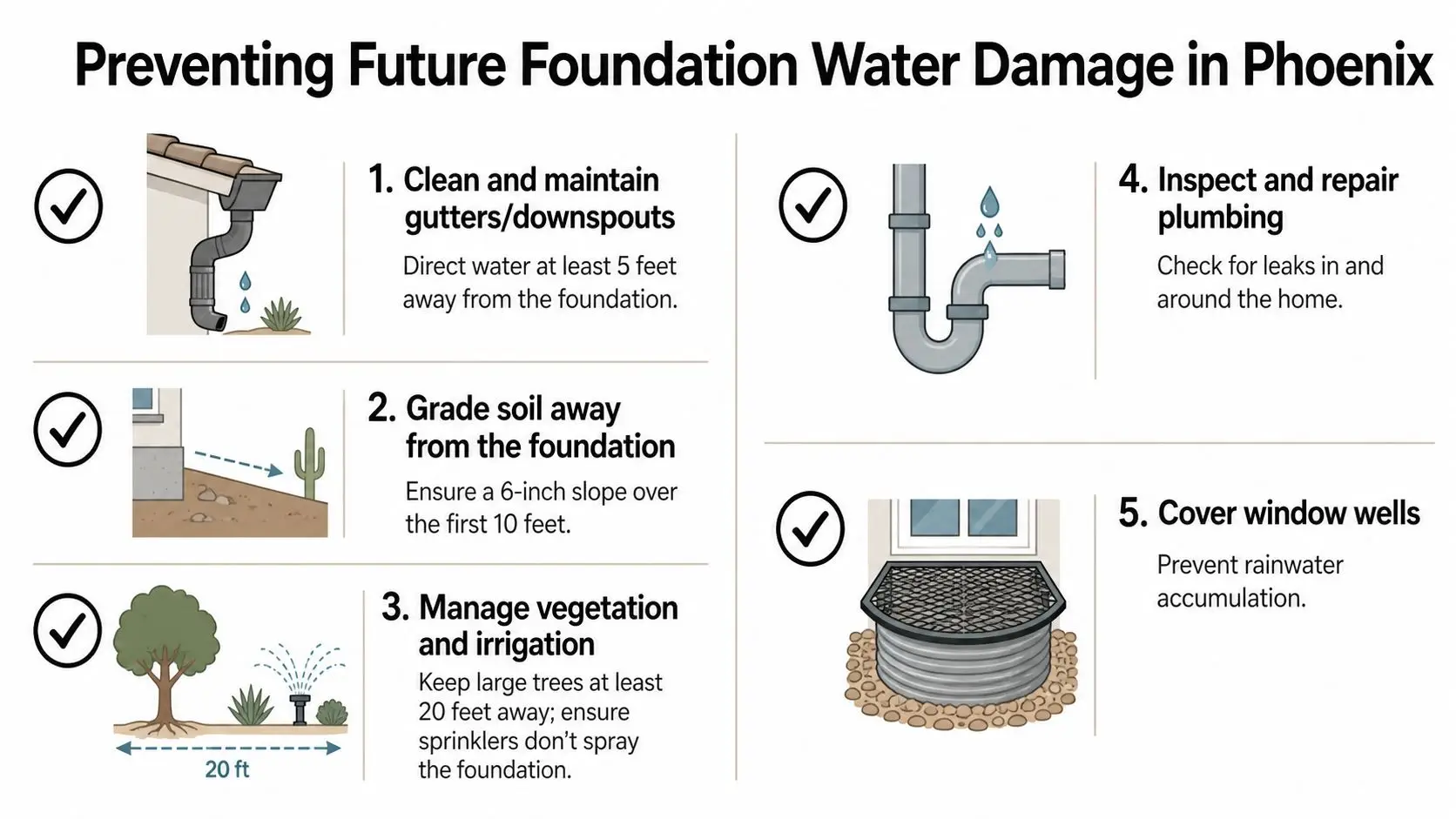
What to keep on the maintenance list
- Clean gutters and downspouts regularly. Direct runoff away from the house instead of letting it dump at the base.
- Grade soil away from the foundation. Keep the slope moving water outward instead of back toward the slab.
- Manage irrigation and vegetation. Sprinklers that hit the foundation create the same problem as a small leak, just more slowly.
- Inspect plumbing and hose bibs. A slow interior leak can mimic exterior foundation seepage for weeks before anyone notices.
- Cover window wells and openings. These catch monsoon water fast if they're left exposed.
A dry perimeter is easier to maintain than a wet one is to recover.
French drains, vapor barriers, and crawlspace encapsulation help when they're matched to the site conditions, but they're not substitutes for grading and discharge control. If downspouts end too close to the foundation or the soil slopes back toward the house, the rest of the system is fighting an uphill battle. That's especially true after storm cycles, when one heavy runoff event can undo months of neglect.
The smartest habit is seasonal inspection. Look at cracks, runoff patterns, gutters, and damp spots after major weather changes, then correct small issues before they become structural ones. In Phoenix, prevention is less about one magic product and more about keeping water from getting enough time and pressure to do damage.
When to Call a Certified Restoration Professional
Call a pro when the water is contaminated, when the structure is moving, when mold is spreading, or when the electrical risk feels uncertain. Those are not judgment calls for a homeowner on a wet floor with a flashlight. They're the point where mitigation, sanitation, and structural assessment need to happen together.
A certified restoration company brings more than drying equipment. It brings moisture mapping, extraction, structural drying, sanitation, and coordination with the insurance process so the job doesn't stall between vendors. For a homeowner comparing options, a basement waterproofing expert can be a helpful reference point for what a specialized waterproofing assessment should cover, especially when the question is drainage versus structural movement.
If you're in the Phoenix metro area, a locally based team like Restore Heroes can handle water damage restoration, drying, and related remediation for properties that need fast intervention and documentation. The right contractor should be able to explain why they're recommending waterproofing, structural work, or both, instead of pushing a one-size-fits-all patch. Their water damage restoration contractor page is a good place to compare that scope with what you're seeing in your own home.
The clear line is this. If the crack is growing, the wall is bowing, or the water source isn't fully understood, don't wait for the next storm to answer the question for you.
If you're dealing with damp walls, recurring seepage, or signs of movement around your foundation, contact Restore Heroes and get a professional read on the damage before it spreads. Restore Heroes can help with assessment, extraction, drying, and remediation across the Phoenix area, so you can stop guessing and start protecting the structure.