
At 140°F (60°C), hot water can cause third-degree burns in children in 1 second and adults in 5 seconds. A hot-water situation is an emergency when it's causing ongoing harm right now, whether that means burning skin, flooding the home, or creating an electrical, gas, or structural danger.
You may be standing beside a shower with someone holding a painful arm under the faucet, staring at water spreading across the utility-room floor, or hearing a heater hiss while an alarm sounds. The question, “Is hot water an emergency?” has three different answers because scald injury, active water intrusion, and dangerous heater failure require different responses.
If no one is hurt, the water is contained, and the heater has stopped producing hot water, you usually need a scheduled repair, not an emergency response. If harm is happening now or could worsen before help arrives, act immediately.
When Hot Water Counts as an Emergency
Hot water needs an emergency response for three different reasons: a scald injury, a continuous leak, or a dangerous water-heater failure. Choose the response based on what is happening now.
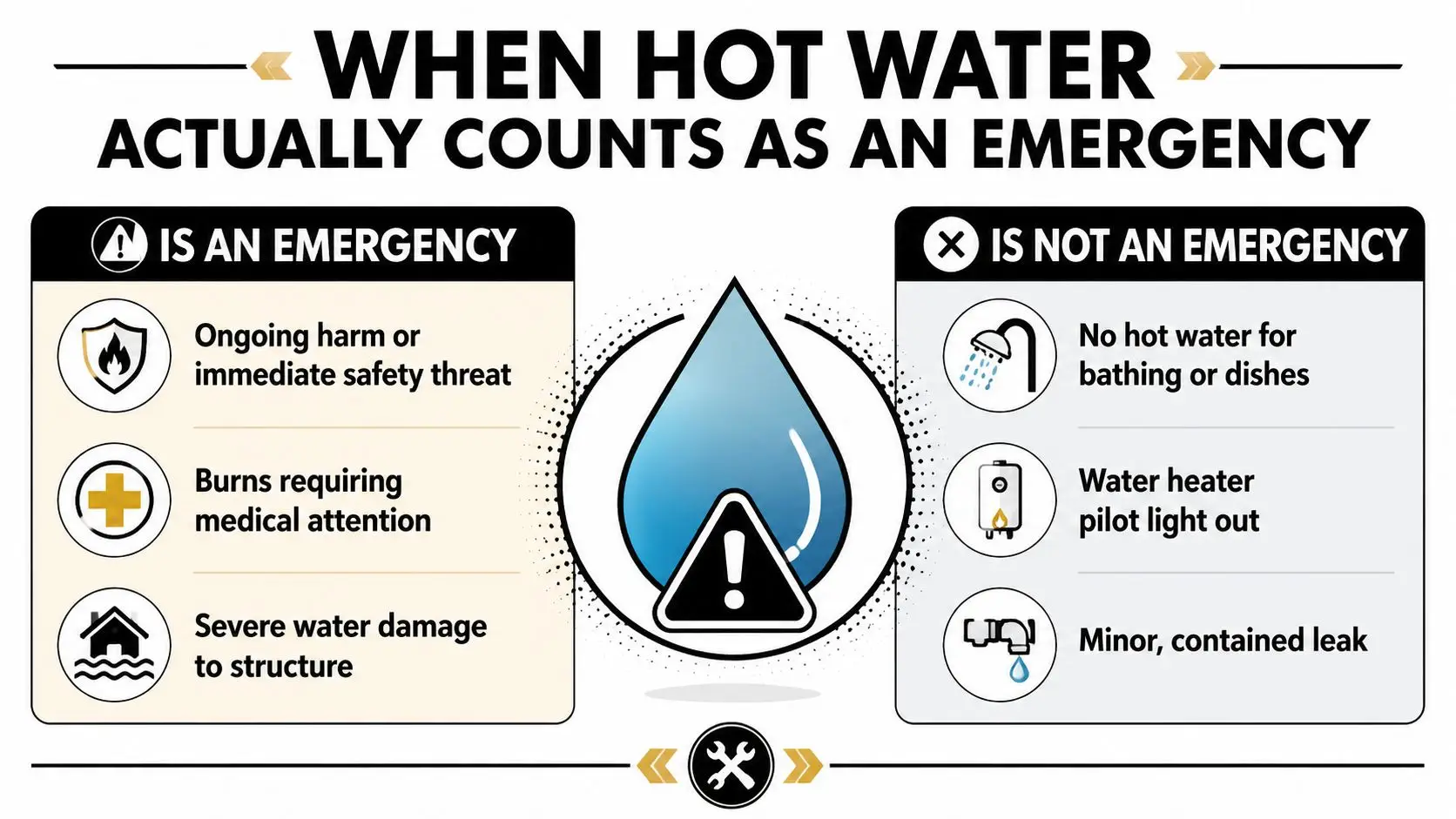
A scald or burn
Move the person away from the water and cool the injury immediately. Blistering, pale or charred skin, severe pain, broad involvement, or burns affecting a child, older adult, or person with reduced mobility require urgent medical attention. Burns on the face, hands, feet, genitals, or major joints also need prompt evaluation. A small surface area can still involve a high-risk location.
A continuous hot-water leak
Treat an uncontrolled leak as urgent when water spreads quickly, reaches wiring, ceilings, or stairs, or has no usable shutoff. Water behind drywall or beneath flooring can keep damaging the home after the visible puddle appears contained. Arrange a water damage mitigation assessment when moisture may have moved into hidden materials.
If the leak is safe to approach, close the water-heater supply valve or the home's main shutoff. Keep away from wet electrical equipment, and do not enter standing water near outlets or appliances.
A dangerous heater failure
A leaking tank beside electrical equipment, smoke, gas odor, hissing, or a carbon-monoxide alarm requires immediate action. Leave the area if gas may be present. From a safe location, call emergency services for active electrical arcing or suspected gas danger. Do not open the heater cabinet or attempt a tank repair.
If the heater has stopped producing hot water, the system is dry, and no danger is developing, schedule a qualified repair rather than requesting emergency response.
Practical rule: Injury means medical help first. An active leak means isolate water and protect the home. A hazardous heater means leave and call from safety.
For homeowners seeking hot water repair for western suburbs, use a qualified plumbing service and keep the failed heater isolated until it is inspected.
How Hot Is Too Hot The Numbers That Decide
A shower that feels merely hot can still cause a serious scald. Temperature and exposure time decide the danger. At 120°F, prolonged contact can cause a third-degree burn in roughly 5 minutes. At 130°F, serious burning can occur in about 30 seconds. At 140°F, the same injury can occur in about 3 seconds, while 150°F water can cause a serious burn in about 2 seconds.
| Water temperature | Approximate exposure concern |
|---|---|
| 120°F | A serious burn remains possible with prolonged exposure, including roughly 5 minutes of contact |
| 130°F | A serious burn can occur in about 30 seconds |
| 140°F | A serious burn can occur in about 3 seconds, and third-degree burns can occur very quickly |
| 150°F | A serious burn can occur in about 2 seconds |
Set household hot tap water at or below 120°F, or 49°C, as recommended by Parachute hot-tap-water guidance. Check the temperature before placing a child, older adult, or anyone with limited sensation into a bath. A safe water-heater setting reduces risk, but it does not make hot water harmless.
Why the person matters
Children have thinner skin and may not escape quickly. Older adults, people with limited mobility, and anyone with reduced sensation may not recognize the heat or pull away fast enough. St. Louis Children's Hospital notes that 140°F water can burn a child in 2.5 to 3 seconds, while 125°F water allows more than 30 seconds before burning occurs.
A brief splash from a cooler tap is different from prolonged contact with very hot water. Judge urgency by the injury and the person's condition, not redness alone. Blisters, extensive redness, facial or genital involvement, breathing trouble, numbness, or pale, leathery, or charred skin require immediate medical help.
What to Do in the First 10 Minutes After a Scald
Hot water has already injured someone. Use the first ten minutes to stop contact, cool the skin, and decide whether emergency help is needed.
Move away from the source. Get the person out of the shower, bath, sink, or leaking area. If they feel weak or dizzy, have them sit or lie down.
Remove hot, wet items. Take off soaked clothing, jewelry, watches, and diapers before swelling begins. Leave anything stuck to the skin in place. Pulling it away can remove damaged tissue.
Cool the burn. Hold the injured area under cool, not icy, running water for 10 to 20 minutes. Keep the rest of the person warm while the burn cools. Medical guidance on scald treatment supports prompt cooling and careful assessment of the injury.
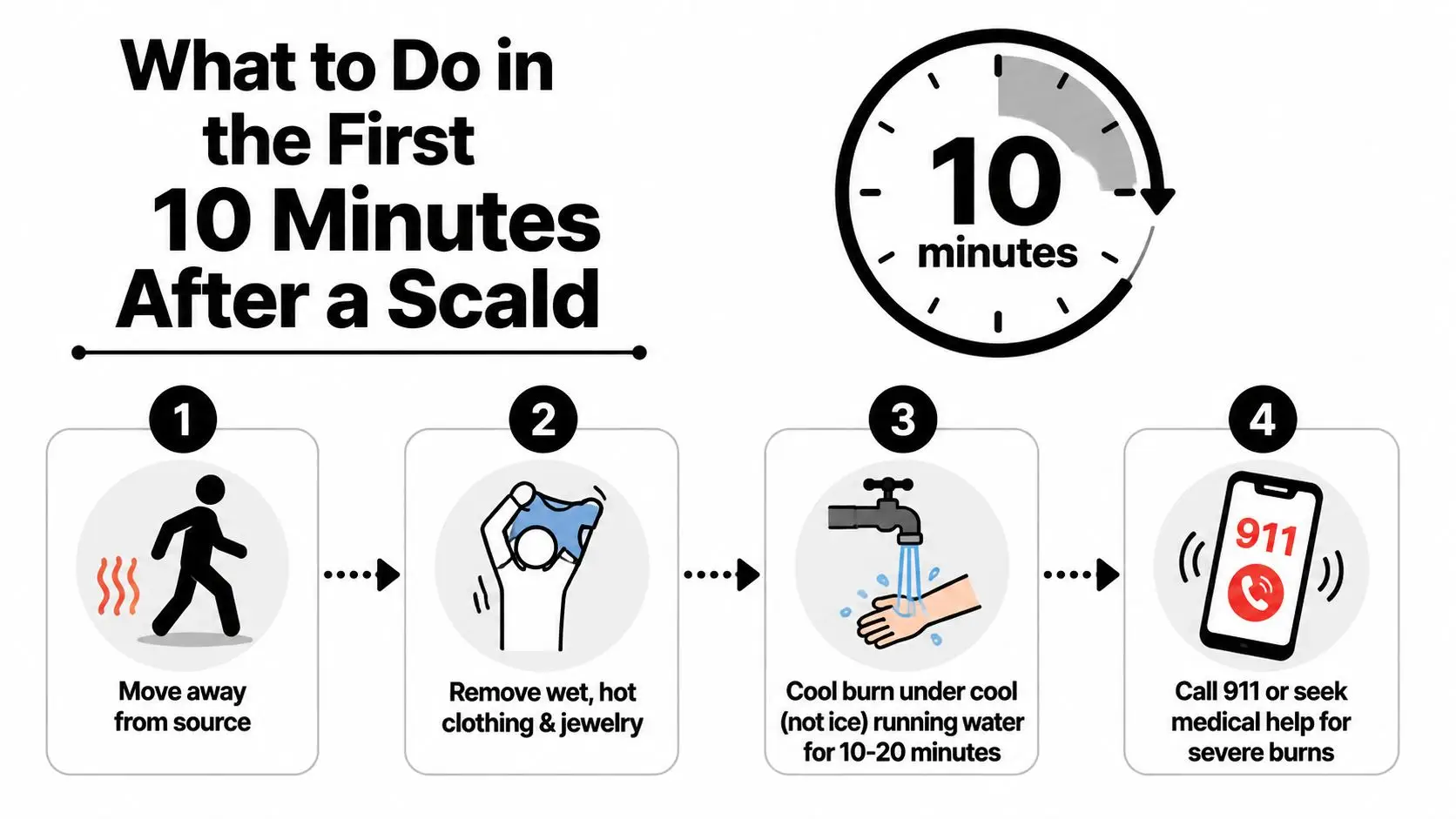
Do not use ice, butter, toothpaste, oil, or ointment. Do not break blisters. After cooling, cover the area loosely with clean, dry gauze or plastic wrap. If another adult is present, have them call for help while you start cooling the burn.
Keep basic first-aid supplies together with this emergency kit essentials guide.
Call 911 immediately for a large or deep burn, white, leathery, charred, or numb skin, smoke or inhalation exposure, circulation problems, or burns to the face, eyes, ears, hands, feet, genitals, or major joints. Call immediately when the injured person is a child, frail, confused, or showing shock signs such as sweating, dizziness, fast shallow breathing, or cold, clammy skin. Children under 10, people with diabetes, and people with weakened immune systems also need prompt medical assessment.
Seek urgent care for blistering burns or significant pain that continues after cooling. Note the suspected water temperature, exposure time, affected areas, and first-aid steps for medical responders.
Hot Water Leaks and Water Heater Failures at Home
A hot-water leak can injure skin, damage flooring, and create an electrical hazard at the same time. Don't step into pooled water if an outlet, appliance, extension cord, or electrical panel may be energized.
Start with the cold-water supply valve on top of the heater and turn it to OFF. If water continues, close the main house shutoff. This stops incoming water from feeding the tank or connected piping, although water already inside the system may remain hot.
Shut down the energy source safely
For a gas heater, use the gas control valve to shut off the gas before dealing with the pilot. Don't create a spark, operate electrical switches, or remain in the room if you smell gas or hear hissing. Ventilate only if you can do so without exposing yourself to the suspected leak, then leave and call 911 or the gas emergency service from outside.
For an electric heater, switch off the dedicated 30- or 40-amp breaker. Don't touch the breaker if water is on or near the electrical panel. Call 911 for active electrical arcing, sparks, smoke, or any situation where you can't safely reach the shutoff.
Never cap, block, or redirect the temperature-and-pressure relief valve discharge path. That valve protects the tank from dangerous pressure, and a discharge can indicate a problem requiring a licensed plumber.
Once the water and energy sources are isolated, contain a small safe leak with a bucket or towels. Don't open the tank, move a damaged heater, or enter contaminated standing water. A failed tank calls for a plumber, while standing water calls for a restoration company that can follow a documented property restoration process explained here.
For moisture spreading through flooring, walls, or cabinets, arrange water heater leak repair and professional drying rather than waiting for visible materials to dry on their own.
Preventing the Next Hot Water Emergency
Prevention addresses all three emergency categories. Lowering the temperature reduces scald exposure, a mixing valve adds protection for vulnerable occupants, and routine heater checks can reveal a leak before it becomes a flooring and drywall problem.
Set the household hot-water temperature at or below 120°F, or 49°C, to reduce scald risk, as recommended by Parachute's hot-tap-water safety guidance. Households with children, older adults, or people with mobility limitations should consider a thermostatic mixing valve, which blends hot and cold water before it reaches fixtures. Have a licensed professional select and install the valve so it works correctly with the heater and plumbing system.
The storage-temperature tradeoff deserves a deliberate decision. 140°F is often cited for sanitary storage, while 120°F is widely recommended at fixtures to reduce scald risk, so don't change a heater setting casually without understanding how your system controls delivery temperature. The hot-water safety overview from Cash Acme explains why households must balance sanitation concerns against rapid burn risk.
A practical inspection routine
Use a short quarterly check to look for:
- Anode rod condition: Ask a plumber to assess the anode rod around the five-year mark.
- Temperature-and-pressure valve: Test the T&P valve annually, following the manufacturer's directions.
- Drain path: Keep the heater pan drain line clear and directed to a suitable location.
- Expansion tank: Have the expansion tank charge checked when the system is serviced.
- Early moisture: Look around fittings, the tank base, nearby drywall, and flooring for dampness or staining.
Keep a written record of the heater's age, service visits, shutoff locations, and breaker or gas-control labeling. A detailed plumbing inspection checklist can help you organize that information before a failure occurs.
| Setpoint temperature | Time to second-degree burn on adult skin | Recommended for |
|---|---|---|
| 120°F | A burn can still occur with prolonged exposure, including about 10 minutes in some guidance | General household risk reduction |
| 125°F | Reaction time is longer than at 140°F, especially important for children | Homes needing extra scald margin |
| 140°F | Severe burns can occur in seconds | Not appropriate at exposed household fixtures without effective temperature control |
Who to Call Plumber Restoration Company or 911
Call based on the active hazard, not the appliance label. 911 comes first for a serious burn, suspected gas leak, smoke, active electrical arcing, or any immediate threat to life. A plumber repairs the water-heating system. A restoration company handles water that has already spread through the building.
| Option | Can handle | Cannot handle |
|---|---|---|
| DIY response | Shut off an accessible, safe supply valve, place a container under a small drip, and dry a small surface area with fans | Replace a failed tank, find hidden structural moisture, pull permits, or make unsafe electrical and gas repairs |
| General plumber | Isolate leaks, repair or replace the heater, and complete code-required plumbing work | Extract standing water, dry drywall and subfloors, or document restoration work |
| Certified restoration company | Extract water, dry structural materials, treat affected areas, and document damage for insurers | Repair the failed heater or replace gas and electrical components |
| 911 | Respond to serious burn injuries, active electrical arcing, smoke, or suspected gas leaks | Perform routine plumbing repair or ordinary water extraction |
Handle a small, contained drip yourself only if the shutoff is accessible and the area is electrically safe. A wrench may help with a minor supply connection. Do not improvise around a pressurized heater, relief valve, gas control, or energized water.
Call a plumber first for a failed tank or a leak you have safely isolated. If water is on the floor or has entered walls, cabinets, ceilings, or subfloors, call a restoration company next. Visible evaporation does not confirm that hidden materials are dry, so professional extraction and structural drying may be needed.
Review what a restoration company does before you need one. Look for extraction, structural drying, appropriate antimicrobial treatment, and damage documentation. In the Phoenix metro area, Restore Heroes is one option for water-damage response. Confirm availability, service scope, coverage, and pricing directly before work begins.
Quick Reference Before You Act
Use this decision sheet when you're stressed and need one clear next step.
Scald or burn
- Cool immediately: Move away from the source and place the injury under cool running water for 10 to 20 minutes, as recommended by the American Burn Association.
- Judge exposure: Water at 130°F can seriously burn in about 30 seconds, and 140°F can do so in about 3 seconds, according to the CPSC scald chart.
- Call 911: Do so for deep, large, white, charred, numb, or high-risk-location burns, breathing problems, smoke exposure, shock, or a vulnerable injured person.
- Next action: Keep cooling while another adult calls for emergency help.
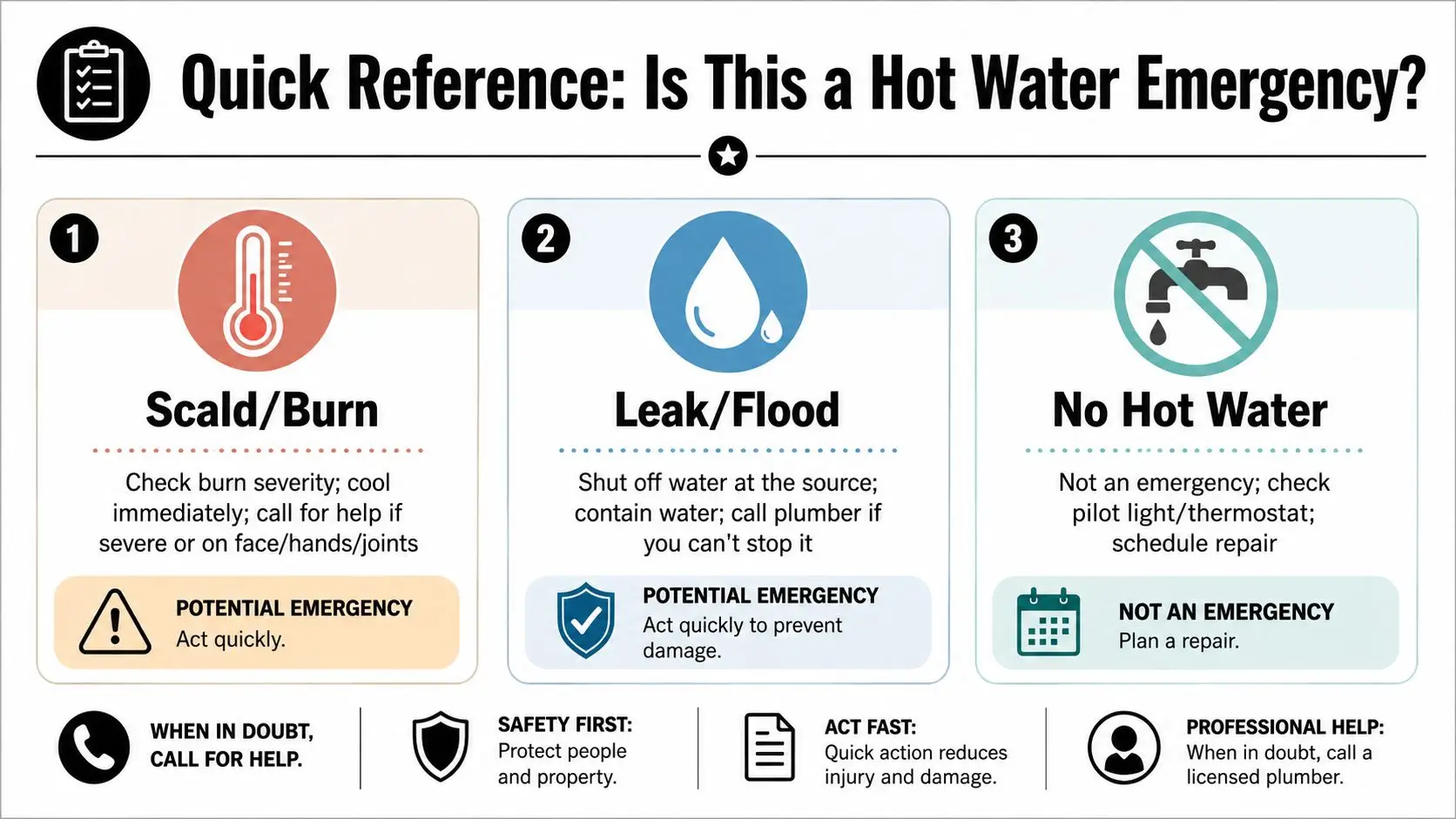
Leak or flood
- Stop the source: Turn the heater's cold-water supply valve to OFF, then close the main house shutoff if water continues.
- Protect people: Stay out of pooled water near outlets, appliances, panels, or damaged ceilings.
- Contain safely: Use buckets and towels only where there's no electrical or structural danger.
- Next action: Call a plumber for the failed system and a restoration professional once standing water or hidden moisture is present.
Heater failure
- Gas unit: Shut the gas control valve only if you can do so safely. Leave immediately for gas odor, hissing, or a carbon-monoxide alarm.
- Electric unit: Turn off the dedicated breaker only when the panel and surrounding floor are dry and safe to approach.
- Stable outage: A pilot light that's out or a heater that isn't producing hot water can generally wait for scheduled repair if there's no leak, smoke, gas odor, or electrical danger.
- Next action: Shut off the cold-water supply at the heater if the tank is leaking, then arrange a licensed repair.
Photograph the heater, valves, flooring, walls, and visible damage before cleanup begins, provided doing so doesn't delay first aid or create danger. The core rule remains simple: ongoing harm means emergency action; a stable, contained problem can wait. If you're uncertain, move people away from the hazard and contact a certified restoration professional rather than guessing.
Restore Heroes provides water-damage mitigation for incidents such as failed hot-water systems and leaks, including extraction, structural drying, and documentation. Visit Restore Heroes to request help assessing water damage in your Phoenix-area property.