
The water is rising, or it already has, and you're trying to make fast calls while everything around you feels uncertain. Stop thinking about cleanup for a minute. Help with flooding starts with people, power, and contamination, in that order, because a soaked house can be repaired, but a bad decision in the first hour can hurt someone.
If you need flood assistance right now, use a simple rule: move people up, keep vehicles out, and treat every wet area as unsafe until you know what kind of water entered the building. FEMA says as little as 6 inches of moving water can cause a person to lose control of a vehicle, and 1 foot of moving water can sweep a vehicle away (FEMA flood safety tips). That's the kind of threshold that turns a “quick look” into a rescue call.
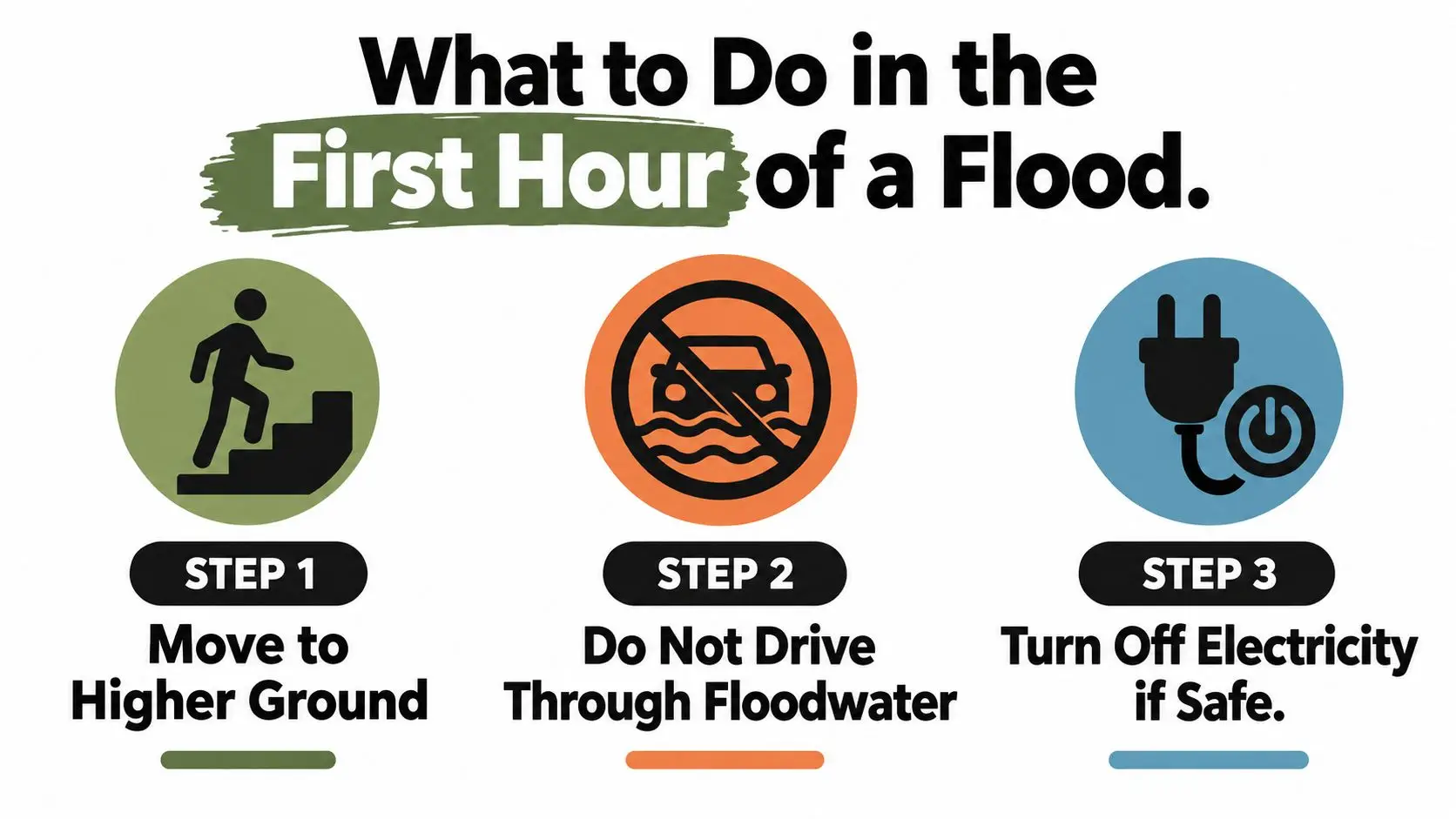
What to Do in the First Hour of a Flood
Water is entering the property, and you have limited time to make safe decisions. Start by identifying the water type, contamination risk, and affected area. Clean water from a supply line may support limited DIY work. Gray water from appliances or plumbing requires protective gear and careful removal. Black water from sewage, floodwater, or unknown sources requires professional cleanup. A small, contained area may be manageable. Widespread saturation, soaked drywall, or water across multiple rooms is a restoration call.
Move everyone to higher ground and keep people away from basements, crawl spaces, and low exits. Stay out of floodwater on foot and out of vehicles. Follow FEMA guidance, and do not risk belongings before people are safe.
Watch vs. Warning vs. Flash Flood Emergency: what each one demands from you
A Flood Watch means flooding is possible. Secure people, pets, medications, and essential documents while conditions allow. A Flood Warning means flooding is happening or expected soon, so leave low areas and follow local instructions. A Flash Flood Warning demands immediate caution because water can rise quickly. A Flash Flood Emergency signals an extreme threat. Stay off the roads unless officials direct you to evacuate.
Practical rule: as alerts escalate, stop gathering belongings and move people first.
If you can reach the shutoff without stepping into water, turn off electricity before water reaches outlets, appliances, or wet floors. Never touch flooded electrical components. Have the system inspected before power returns, as advised by the CDC floodwater safety guidance.
Reentry has a high bar
A lower water level does not make a damaged structure safe. Do not reenter until authorities or qualified professionals check for structural, electrical, gas, and other hazards. The CDC reentering your flooded home guidance supports that standard. If you are trapped inside, move to the highest accessible level. Avoid a closed attic, where rising water can remove your exit.
Use this guide to inspect conditions inside a flooded house while deciding your next move. The order stays simple: people, power, gas, and only then contents. When contamination is unknown or the affected area is large, professional help is the safer and cheaper choice.
Why the First 48 Hours Decide Everything
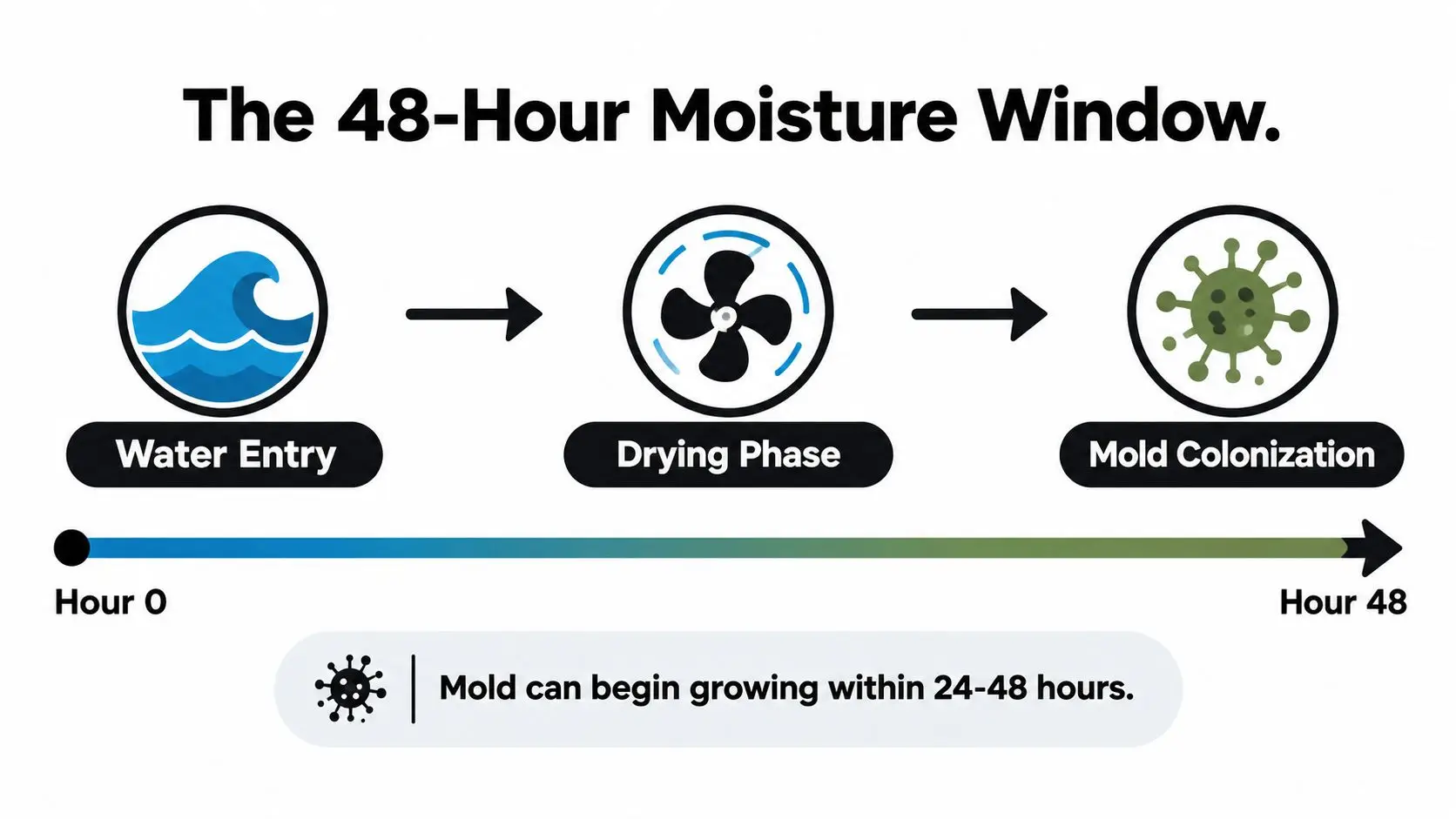
By lunchtime, a flooded room can look dry while its subfloor, wall cavity, insulation, and cabinet bases remain saturated. That concealed moisture causes mold and material failure. The practical deadline is 24 to 48 hours after water enters the building, when wet porous materials can begin supporting mold growth, according to CDC guidance on drying flooded homes safely.
What that window really means
The clock starts at water entry, not when staining appears. Drywall, carpet padding, insulation, upholstered furniture, mattresses, and paper products absorb water and are difficult to clean after saturation. If those materials remain wet, removal and replacement is often safer and less expensive than trying to preserve them.
Your first decision should be based on three facts: water type, contamination, and affected square footage. A small, clean leak with no hidden spread may suit controlled cleanup. Sewage, stormwater, contaminated floodwater, or moisture across several rooms requires professional containment and drying. The cost of professional water damage mitigation is often lower than replacing flooring, drywall, and contents after moisture remains trapped.
Professional drying involves extraction, structural drying, dehumidification, and contents manipulation. Extraction removes standing water. Dehumidification lowers moisture in the air. Technicians measure floors, walls, and other concealed areas until the structure reaches acceptable drying conditions.
Surface dryness is not the same as structural dryness.
Fans help only after contamination is controlled. If visible mold is present, aggressive air movement can spread spores, per the same CDC guidance. Crews should exhaust moisture outdoors when practical and avoid turning a localized problem into a larger one.
Act quickly because wet porous materials can turn a manageable leak into demolition. Speed matters when it prevents hidden moisture from becoming a mold and replacement problem.
When DIY Cleanup Is Safe and When It Is Not
A burst supply line in one room may be manageable. Sewage, stormwater, or floodwater from outside demands a different response. Decide using three facts: water type, contamination, and affected square footage. Floodwater can carry sewage, bacteria, chemicals, and debris even when it looks clear, according to CDC floodwater safety.
Use this decision tree before moving equipment:
| Water Source | Typical Area Affected | DIY Possible? | Call a Professional If |
|---|---|---|---|
| Clean supply-line leak | Small room, limited spread | Sometimes | Water reached drywall, insulation, carpet pad, or electrical systems |
| Appliance overflow | Small to moderate area | Sometimes | Water soaked porous materials or spread beneath cabinets |
| Stormwater or monsoon intrusion | Often broader and less predictable | Usually limited | There is contamination, hidden moisture, or recurring intrusion |
| Sewer backup | Any area it enters | Rarely | Almost always, because contamination control matters |
| Floodwater from outside | Any exposed room or lower level | Rarely | More than a small patch is affected, or HVAC and wiring became wet |
DIY is reasonable only when the water is clean, the affected area is small and visible, and drying can be completed without disturbing contaminated materials. Remove standing water, clean hard surfaces, and monitor moisture. If water moved beneath flooring, behind walls, under cabinets, or into insulation, the apparent size of the spill no longer reflects the actual problem.
If water touched electrical components, keep the power off in the affected area and arrange an inspection before restoring it. FEMA guidance requires flooded electrical components to be inspected. Flood-prone systems may also need to be raised, sealed, or protected with ground-fault protection where applicable. Do not test the system yourself.
The cutoff points I trust
Call a professional when the affected area exceeds a small contained spill, drywall or insulation is wet, contaminated air entered the HVAC system, or a musty odor remains after initial drying. Sewage, outside floodwater, and any water unsafe to touch belong on the professional side of the decision tree. The same safety guidance referenced earlier also advises keeping children, pregnant people, people with asthma, and people with weakened immune systems away from mold cleanup. Limited cleanup requires at least an N95 respirator, goggles, and gloves.
Square footage changes the economics. A small clean leak may need controlled extraction and drying. Several rooms require moisture mapping, containment, and equipment that can prevent hidden moisture from becoming a larger replacement problem.
What usually can be cleaned
Hard, nonporous surfaces can often be cleaned and disinfected after soil is removed. Contaminated porous items, including food, cosmetics, bedding, and toys, should be discarded when complete cleaning and drying are not possible. The same CDC guidance supports that approach.
If you are sorting a home in the gray zone, review category 3 water damage before starting cleanup. If you cannot confidently identify the water as clean, contain the area and call a professional. That decision is safer and often cheaper than correcting hidden contamination later.
What to Document Before and During Cleanup
If water has entered the home, stop cleanup long enough to create a record. Photograph the property before moving contents, then contact your insurer and begin safe mitigation promptly. FEMA advises this approach because wet materials can develop mold within 24 to 48 hours (FEMA damage and mold guidance).
Capture the property in order
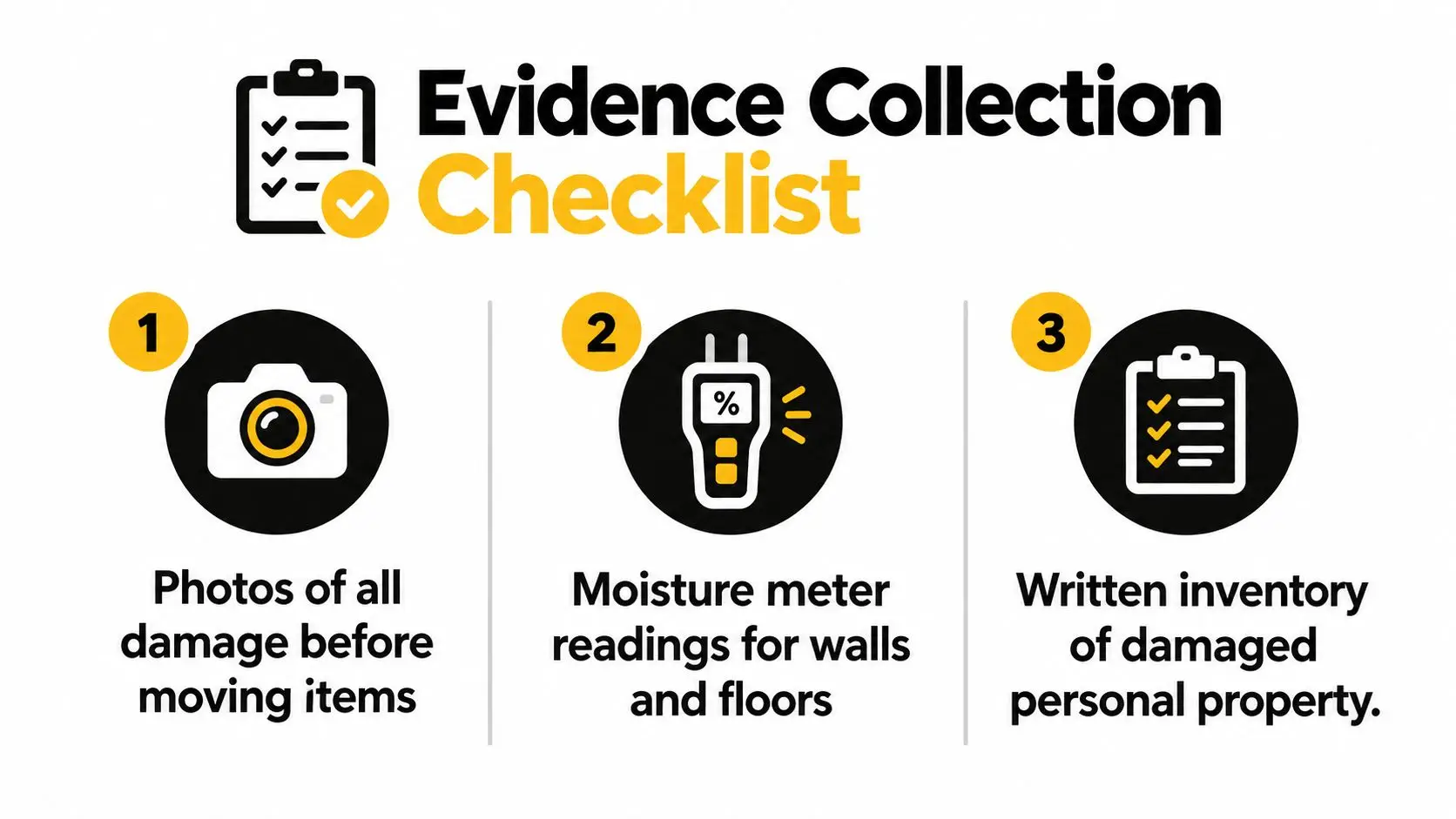
Begin outside and move through the property room by room. Photograph the visible water source, entry path, affected rooms from doorways and corners, and close-ups of warped flooring, wet drywall, buckled baseboards, swollen cabinets, damaged contents, and staining. Include wide shots that show the scale of the loss.
Use a moisture meter if available. Record each reading with the room name and date, and keep the original photos. Create a written inventory of damaged personal property before items are discarded or moved to the garage. Save receipts for pumps, dehumidifiers, dumpsters, protective equipment, and temporary housing.
Mitigation is not the same as a permanent repair.
Remove wet materials, dry the structure, and protect the home first. Set the final repair scope after the property is stable.
A documented loss also helps if a sale is on the horizon. This guide to selling your home after water damage explains how buyers and agents evaluate what happened, what was repaired, and what was replaced.
Keep responsibility clear
Renters should notify the landlord immediately and photograph the unit before moving belongings. Landlords should separate records for common areas, the structure, and individual units. In an HOA-managed property, document which damage belongs to the owner, the association, or shared infrastructure.
The same separation helps prevent disputes over responsibility and speeds the insurance review. Keep copies of photos, inventories, readings, receipts, notices, and contractor records in one folder. For a more detailed checklist, follow these documentation requirements.
Preserve evidence while stopping further damage. Do not wait for perfect conditions or a complete cleanup before documenting the loss.
Insurance, Flood Policies, and Federal Assistance
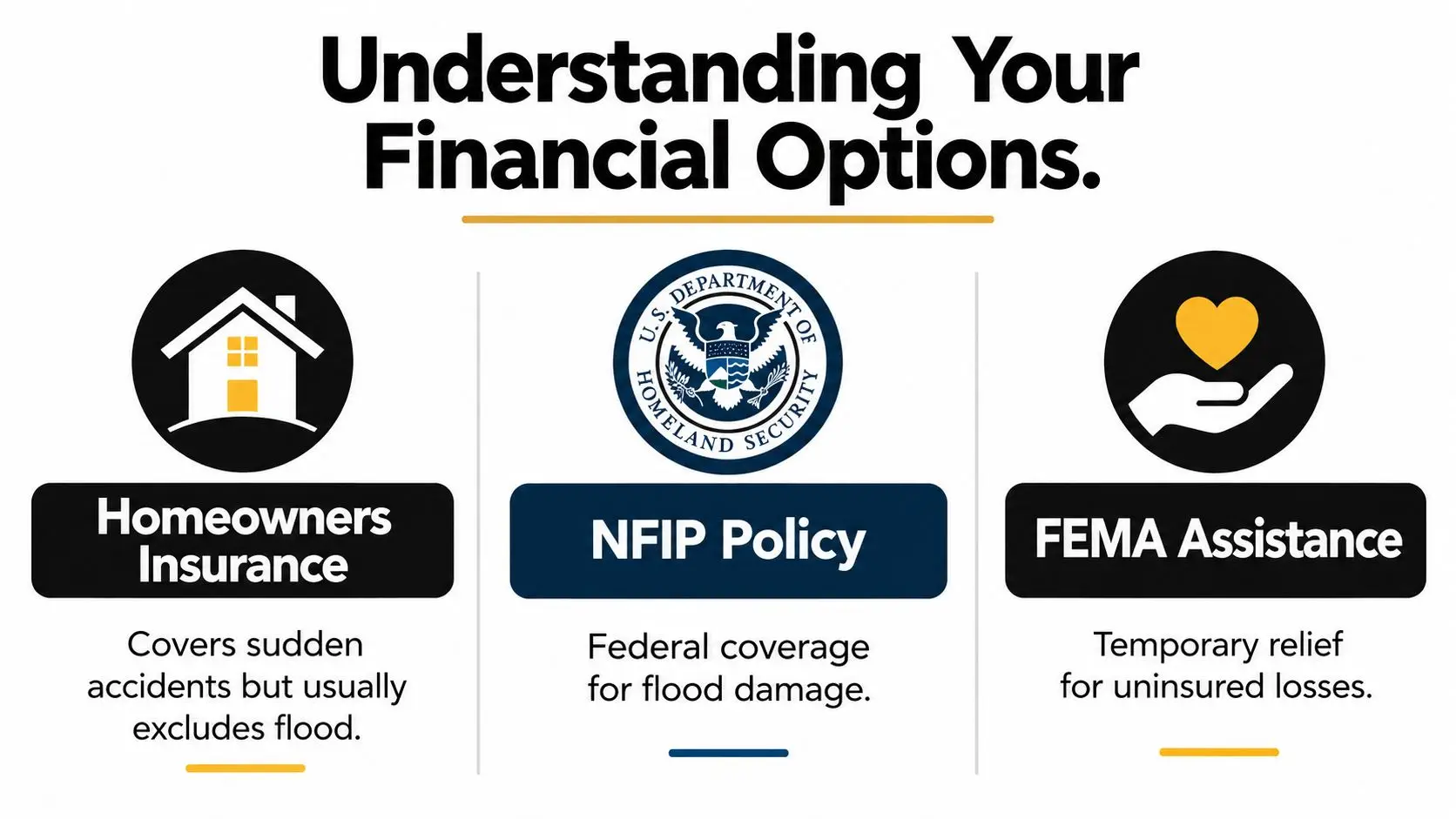
A flooded Phoenix-area home can produce three separate questions: what homeowners insurance covers, what a National Flood Insurance Program policy covers, and whether FEMA assistance applies. Treating those sources as interchangeable creates delays and unrealistic expectations. Identify the water source and affected materials first, then match each loss to the correct funding path.
What NFIP does and does not cover
NFIP residential building coverage is limited to $250,000, and residential contents coverage to $100,000. Non-residential properties are limited to $500,000 each for building and contents, according to FEMA NFIP chapter 11. Building and contents coverage use separate limits, so repairs to the structure do not automatically pay for damaged furnishings.
The same chapter excludes or limits categories such as jewelry, artwork, furs, money, valuable papers, animals, livestock, and licensed vehicles. Photograph these items and retain ownership records, but do not assume an NFIP claim will reimburse them.
That distinction matters when floodwater damages drywall, flooring, cabinets, furniture, and personal belongings at the same time. Homeowners insurance may respond to sudden internal water events, while outside floodwater is commonly treated differently. For a plain-language explanation, read this guide to whether insurance covers water damage.
Where FEMA assistance fits
FEMA's April 2025 guidance says disaster-caused mold may qualify for Individuals and Households Program help when the home is unlivable. Homeowners or renters whose homes remain safely habitable may qualify for limited clean-and-sanitize assistance. NFIP policies generally do not cover mold damage, so separate eligibility rules can affect the available claim route (FEMA mold coverage guidance).
Do not budget from the policy limit alone. Under NFIP rules, actual cash value pays based on an item's depreciated value, while replacement cost value is tied to the cost of replacing eligible property under the policy's conditions. That difference can materially change what you receive for older flooring, appliances, furniture, and other contents.
Ask the adjuster which valuation applies to each category before approving permanent repairs. If the loss involves contaminated water, extensive contents, or a large affected area, professional documentation can cost less than an under-supported claim or an incorrect cleanup decision.
What a Rapid Response Restoration Team Actually Does
A good crew doesn't start with a sales pitch, it starts with a map. The first visit should identify the water source, the materials affected, and the hidden wet areas before anyone tears out a wall. In practice, that means moisture mapping, extraction, selective demolition, drying equipment placement, and daily checks until the structure is back under control.
| Phase | What the Crew Does | Homeowner Deliverable |
|---|---|---|
| Inspection | Confirms source, scope, and safety issues | Clear initial assessment |
| Moisture mapping | Checks walls, floors, cavities, and contents | Written drying plan |
| Extraction | Removes standing water | Reduced immediate saturation |
| Selective removal | Takes out unsalvageable porous materials | Smaller contamination footprint |
| Drying setup | Places air movers and dehumidifiers | Active structural drying |
| Treatment and monitoring | Applies antimicrobial measures when appropriate and checks progress | Updated status until dry |
You want a crew that can explain why certain materials are coming out and why others can stay. You also want one that communicates with the insurer without making you play telephone between the adjuster and the job site. If a company can't explain its drying plan in plain English, keep looking.
What to ask before you sign
Ask whether the technicians are IICRC-certified, whether the company is licensed and bonded, and how it handles direct billing or no-upfront-payment arrangements. Those details matter more than the logo on the truck. If the job goes sideways, you want paperwork, standards, and a clear contact person, not vague promises.
Restore Heroes is one Phoenix-area option that handles water extraction, structural drying, dehumidification, and flood-related sanitation for residential and commercial properties, with insurance coordination built into the process. If you're comparing crews, compare the steps, the communication, and the documentation, not just the first number that answers the phone.
Your Short-Term Flood Action Plan
Use this as the version you keep on your phone or fridge.
- Move people to safety. Get everyone to higher ground and away from floodwater.
- Don't drive through it. Turn around before water reaches the wheels.
- Shut off power only if it's safe. Never step into standing water to do it.
- Identify the water type. Clean leak, stormwater, or sewage changes everything.
- Check the size and materials. Wet drywall, insulation, carpet pad, or electrical systems push you toward a pro.
- Photograph first, then clean. Capture every room before demolition starts.
- Call the insurer and start mitigation. Don't wait for mold to show up.
- Save receipts and notes. Keep every cost tied to cleanup and temporary displacement.
Before the next storm, learn where your gas and water shutoffs are, keep emergency contacts in one place, review your insurance and flood coverage, and identify a restoration company before you need one. That preparation is boring, and it pays off immediately when the water comes in. The cheapest flood response is the one you plan before the first drop hits the floor.
If you're dealing with water in your home or business right now, Restore Heroes can help with extraction, drying, sanitation, and insurer coordination across the Phoenix metro area. Visit Restore Heroes to get a fast, local response and move from panic to a clear plan.