
You've found water spreading across the floor, and every minute feels expensive. The instinct is to grab a mop, pull up carpet, and start cutting into drywall. Slow down for a moment. The safest approach to DIY water damage restoration begins with two actions in the right order: document the conditions, then mitigate the damage without creating an electrical, health, structural, or insurance problem.
A small, quickly controlled clean-water leak may be manageable with careful extraction and drying. Sewage, floodwater, visible mold, hidden saturation, energized equipment, and extensive damage require a professional assessment. The goal isn't to do everything yourself. It's to make the right decision before a wet surface turns into a concealed building problem.
Documenting Water Damage for Insurance Claims
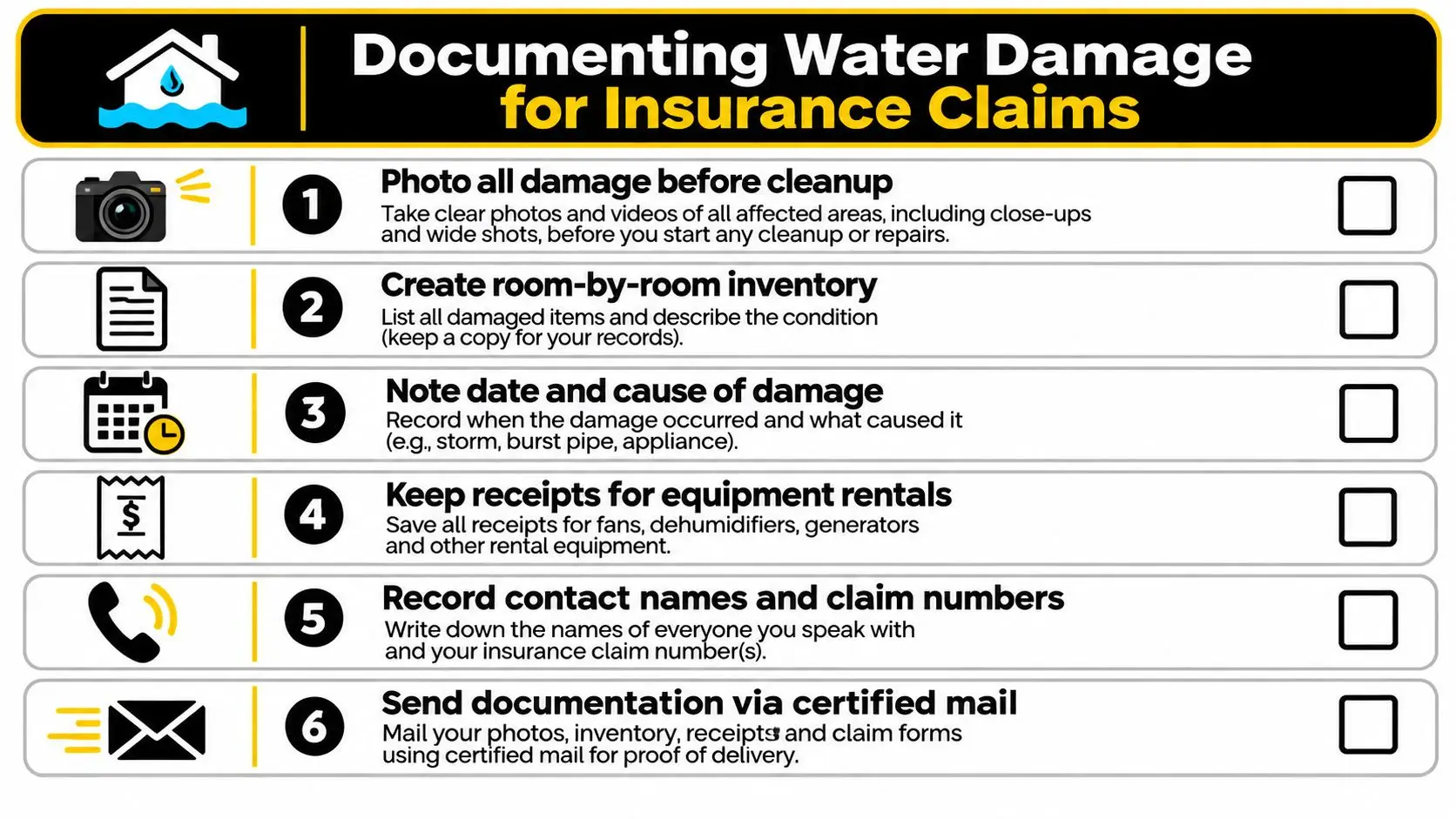
Start with document first, mitigate immediately. Before moving furniture or tearing out wet drywall, photograph and video the source of the water, the affected rooms, the highest visible waterline on walls, flooring transitions, ceilings, cabinets, and belongings. Take wide room views, then close-ups that show damage clearly. For electronics and appliances, record model information and serial numbers if they're visible and safe to access.
Create a room-by-room inventory. Include furniture, rugs, electronics, clothing, building materials, and anything that may need disposal. A quick video walkthrough can preserve context that individual photographs miss, while written notes help connect each item to its location and condition.
Preserve evidence while stopping further damage
Write down when you discovered the loss, what caused it, when the water was stopped, and which rooms were affected. Keep records of initial moisture readings, equipment rentals, disposal costs, invoices, and conversations with your insurer. Record contact names, claim numbers, dates, and instructions. If you send important documentation, retain proof of delivery.
FEMA tells homeowners to contact their insurer and photograph the home and belongings before cleanup. The same guidance emphasizes that drying and removing water-damaged items are the most important mold-prevention actions, while documentation helps protect the claim.
You can take reasonable emergency steps without waiting for an adjuster, especially when water is still spreading. Stop the leak, remove standing water when it's safe, and move portable belongings out of the affected area. But separate temporary mitigation from permanent reconstruction. Removing unsalvageable material may be necessary, while replacing drywall, cabinets, flooring, or paint before inspection can make the original condition harder to evaluate.
For property-specific records, homeowners may also find it useful to find siding and door docs, particularly when exterior water entry or damaged building components need to be identified. For additional guidance on organizing the claim itself, review insurance claim documentation.
Stopping the Water Source and Securing Electrical Safety
Once the conditions are recorded, stop the water. Close the fixture shutoff if the leak comes from a toilet, sink, appliance, or supply line. If you can't isolate the source, use the main water shutoff. A leaking water heater, burst pipe, or failed washing-machine hose can continue adding moisture while you work, so source control comes before extraction.
Electricity is the other immediate hazard. Don't step into standing water near outlets, cords, appliances, service panels, or wet ceilings. If you can safely reach the breaker panel from a dry location, shut off circuits serving the affected rooms. If the panel, wiring, or electrical equipment is wet, stay away and call a qualified electrician or restoration professional.
Safety rule: Never operate a wet vacuum, fan, dehumidifier, extension cord, or other powered equipment in a wet area until electrical safety has been confirmed.
Water type determines whether DIY cleanup is appropriate. A broken clean supply line is materially different from a toilet backup, sewage release, roof flooding, or stormwater intrusion. The IICRC S500 framework emphasizes that water category, material type, and contamination level affect the correct response. EPA guidance also says fans shouldn't be used until the water is known to be clean or sanitary.
If you need help locating the correct valve, use this guide to find the emergency water shut-off. Don't handle contaminated water as though it were ordinary household moisture.
Extracting Standing Water and Removing Saturated Materials
With the leak stopped and power made safe, remove bulk water quickly. A wet-dry vacuum suits shallow localized water, while a sump pump may help with a larger volume where safe drainage is available. Mops and towels have a place for small amounts, but they're slow and can leave water trapped at flooring edges. Never use an ordinary household vacuum for water.
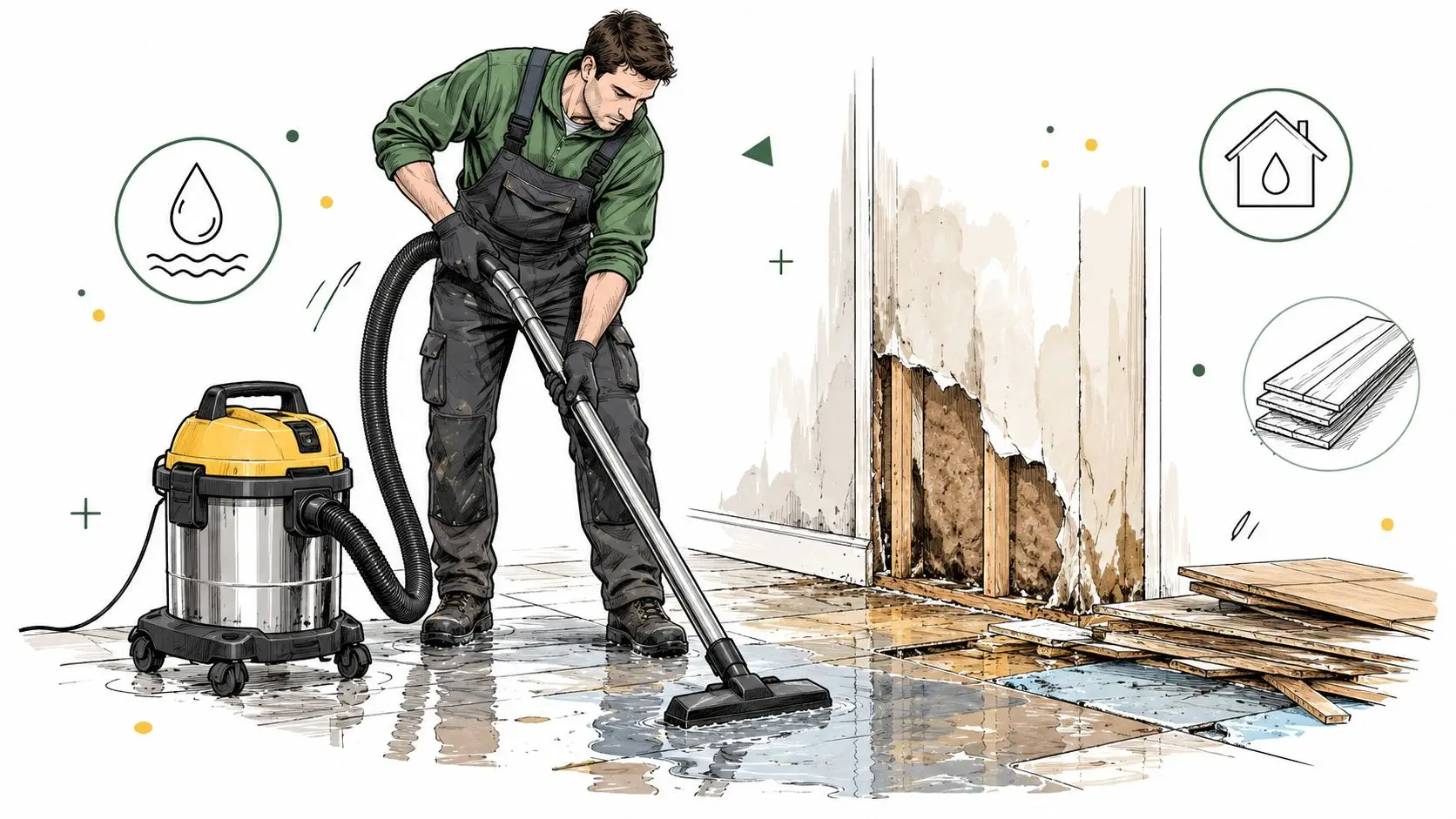
Pull wet contents away from walls and separate textiles so air can reach each surface. Remove rugs, cushions, boxes, and other portable items to a dry, ventilated location only if carrying them won't spread contaminated water. Photograph items before disposal, and keep a discard log for the claim.
Expose the places that stay wet
Carpet can look nearly dry after extraction while the pad and subfloor remain saturated. EPA guidance explains that carpet should be extracted and dried within 24–48 hours, and that the subfloor beneath it must also be cleaned and dried. Wood needs prompt moisture removal with dehumidification, fans, and gentle heat. Concrete can also hold moisture at seams and beneath coverings.
Remove baseboards carefully where appropriate, and lift flooring edges only when you can do so without causing additional structural or finish damage. Small openings can provide airflow into concealed edges, but cutting into walls or floors requires caution around wiring, plumbing, insulation, and load-bearing components.
Porous materials are difficult to restore when they're heavily waterlogged or remain wet. Saturated carpet padding, compromised drywall, and wet insulation may need removal so framing and cavities can dry. Don't demolish indiscriminately. Mark the waterline, photograph each stage, and retain samples or removed materials when practical until your insurer has had an opportunity to inspect.
A wet area that looks clean on top may still contain moisture underneath. Water extraction equipment should match the volume and material, not just the tool already available in your garage.
Here's a visual reference for the extraction stage:
Drying the Space and Monitoring Moisture Levels
Air movement removes moisture from surfaces, but drying isn't proven by touch. Phoenix's hot, dry conditions can evaporate water from the face of gypsum, trim, or flooring quickly while moisture remains inside wall cavities, insulation, cabinets, and subfloor assemblies. A room can feel comfortable before its concealed materials are ready for reconstruction.
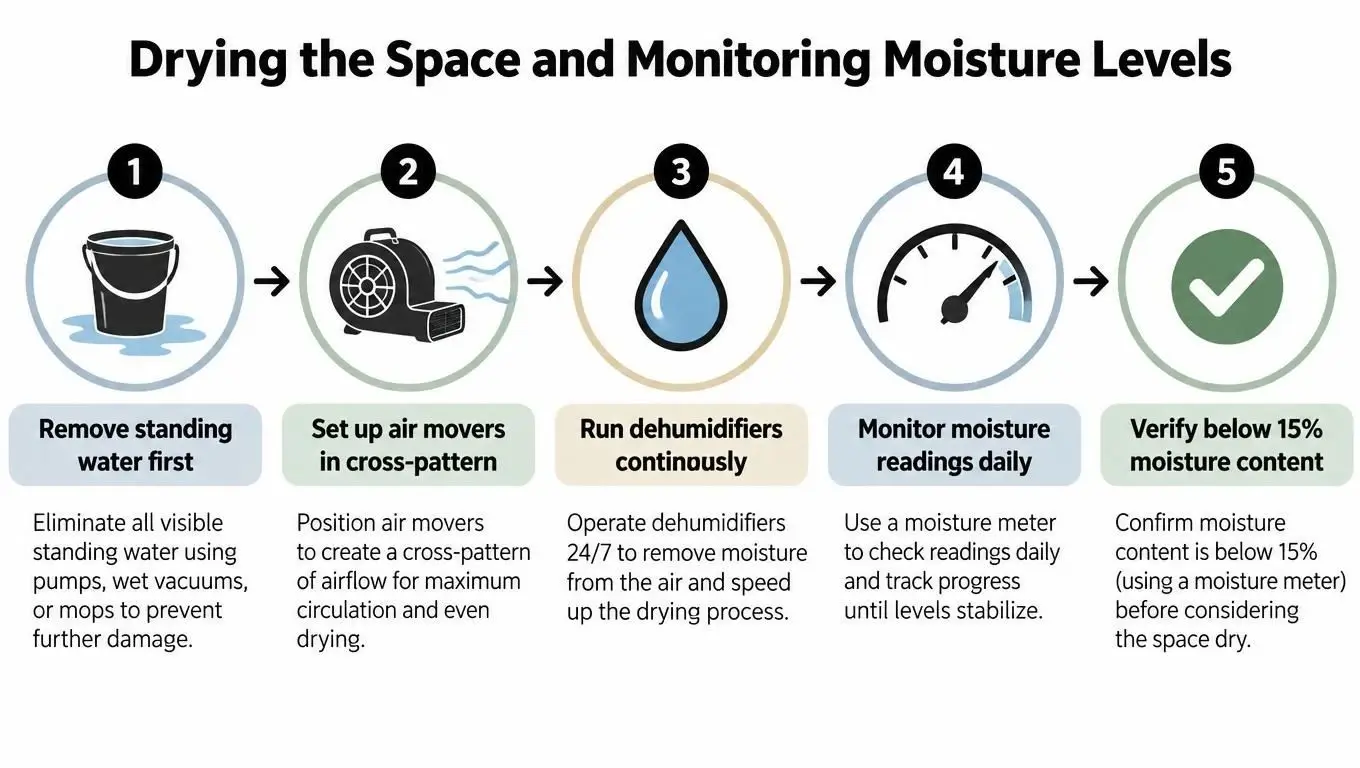
Set up fans to move air across wet surfaces and toward safe exhaust routes. Use dehumidifiers to remove moisture from the air, keeping doors and windows positioned according to outdoor humidity and contamination conditions. The CDC recommends opening doors and windows when outdoor conditions permit, using fans and dehumidifiers, and positioning fans to blow air outdoors rather than deeper into the home, particularly when contaminated air or mold particles may be present. Follow the safety restriction already described before connecting equipment.
Measure damaged and unaffected materials
Take baseline readings in an unaffected area made from similar materials. Then measure affected walls, flooring edges, subfloor, cabinetry, and adjacent areas. A pin-type meter can identify moisture inside materials where a surface reading or hand test gives false confidence.
FEMA specifically recommends an intrusive pin-type moisture meter and says wetted materials can be presumed dry at 15% moisture content or less, with materials rechecked before reconstruction. Read the moisture meter readings guide for practical measurement considerations, but don't treat a single reading as proof that an entire assembly is dry.
Record the location, material, date, and reading each time. Consistent readings that approach the unaffected baseline provide stronger evidence than a single low number. Pay special attention to corners, plumbing penetrations, cabinet backs, flooring seams, wall bottoms, and areas where insulation may block airflow.
Know what equipment can't tell you
Fans and dehumidifiers can improve the drying environment, but they can't confirm that a cavity is dry. A household humidity display also doesn't prove that a wet subfloor or wall assembly has reached a safe condition. If you can't access concealed materials, find recurring readings, or detect a persistent odor, stop before closing the structure.
The IICRC's technical framework includes assessment, material science, psychrometry, drying technology, monitoring, and safety. Its development, including the publication of S500-94 in 1994 and a second edition in 1999, reflects why restoration relies on measurement rather than appearance. For a homeowner, the practical standard is simple: document readings, recheck concealed areas, and don't rebuild until the evidence supports it.
Cleaning, Sanitizing, and Preventing Mold Growth
Clean only after bulk water has been removed and materials are sufficiently dry to assess. Hard, cleanable surfaces can generally be washed with mild detergent and water, then dried thoroughly. For flooded or storm-affected areas, the CDC recommends cleaning wet surfaces and belongings with hot water and laundry or dish detergent before drying them completely.
Use separate cleaning tools for affected and unaffected areas. Wear waterproof gloves, eye protection, and suitable footwear. If mold or contaminated water is involved, use at least an N95 respirator and avoid carrying dirty materials through clean rooms. Keep children, pets, and vulnerable occupants away from the work area.
Treat the drying window as a deadline for action
The EPA advises drying wet materials within 24 to 48 hours whenever possible because prompt drying substantially reduces the likelihood of mold growth, and it recommends keeping indoor relative humidity below 60%. The guidance also notes that this window isn't a guarantee. Mold may already be present, or it may still develop when hidden moisture remains or drying is incomplete. See the EPA mold and moisture guidance for the distinction between cleanable hard surfaces and absorbent materials that can't be thoroughly dried.
If visible mold is present, don't use fans to speed up the work. FEMA and CDC guidance warns that airflow can disperse spores, and EPA advises against fans when mold contamination is suspected. Contain the area as much as practical and obtain an assessment, especially if the affected area is large or connected to the HVAC system.
Never paint or caulk over mold or water staining. Coatings hide the visible evidence but don't remove contamination or dry the material underneath. They can also make later inspection more difficult.
Porous belongings that stayed wet beyond 48 hours and can't be thoroughly cleaned and dried may need to be discarded, particularly when contamination is involved. Photograph them before disposal and retain the inventory record. Cleaning is successful only when the source is controlled, the material is dry, and the affected surface can be safely cleaned.
Knowing When to Stop DIY and Call Professionals
DIY work fits a narrow situation: a small, clean-water incident that has been stopped quickly, affects a limited accessible area, and doesn't involve electrical equipment, HVAC systems, structural concerns, visible mold, or vulnerable occupants. You also need a way to remove water, create safe airflow, and verify material moisture with appropriate readings.
The following matrix gives a practical boundary between manageable mitigation and professional intervention:
| Condition | DIY Appropriate | Call Professionals |
|---|---|---|
| Water source | Small, clean supply-line or appliance leak that's fully stopped | Sewage backup, toilet overflow with contaminated contents, floodwater, or stormwater |
| Affected materials | Limited, accessible surfaces that can be cleaned and dried completely | Saturated drywall, insulation, framing, cabinets, subfloors, or concealed cavities |
| Electrical safety | Power is confirmed off and equipment is dry and safe to use | Standing water near energized equipment, wet panels, wiring concerns, or wet ceilings |
| Mold | No visible mold and no persistent musty odor after drying | Visible mold, recurring odor, or suspected HVAC contamination |
| Occupants | No one needs to enter the work area who has heightened respiratory risk | Occupants with asthma or weakened immune systems may be exposed |
| Verification | You can document readings and confirm affected materials are dry | You can't inspect cavities or establish reliable moisture readings |
| Scope | A contained cleanup with no structural concern | Extensive saturation, movement of walls or floors, sagging ceilings, or suspected structural damage |
EPA guidance says contaminated-water cleanup requires PPE, containment, and expertise, and fans shouldn't be used until the water is known to be clean or sanitary. FEMA also advises people with asthma or weakened immune systems to stay away from moldy sites. Those aren't minor cautions. They define when the work has moved beyond ordinary household cleanup.
The water damage restoration contractor you choose should be able to explain the water category, drying plan, moisture readings, containment approach, and documentation process. Restore Heroes is one Phoenix metro option that handles assessment, extraction, structural drying, sanitation, and insurance coordination for residential and commercial losses. Don't wait for a cosmetic repair when the real problem may be inside the assembly.
Restore Heroes can assess water damage, extract standing water, dry concealed materials, and coordinate documentation with your insurer across the Phoenix metro area. If your loss involves contaminated water, hidden moisture, electrical concerns, mold, or extensive saturation, visit Restore Heroes to request help with the next safe step.