
You're standing in a laundry room or bathroom watching dirty water rise from a drain, and your first question isn't about mops. It's whether your insurance will help pay for any of this. The short answer depends less on how wet things look and more on where the water came from, how it entered, and what your policy says.
When Water Comes Back Up Inside
You hear gurgling from a floor drain, then dark water spreads across tile and soaks into baseboards and stored boxes. A neighbor down the street has the same wet floor that night, but from rain that pushed under a door. Your homes look alike in photos, yet your insurers may treat the two losses very differently.
That difference is the starting point for understanding what water backup coverage covers. It's generally an optional homeowners-insurance endorsement rather than a standard part of the policy, designed for water or sewage entering through a backed-up sewer, drain, or sump pump. If you didn't add that endorsement, you can't assume it's there, even if your main policy covers other kinds of water damage.
Why two wet rooms get two different answers
Adjusters don't start with the damage. They start with the cause and entry point, then match those facts to your declarations page, endorsements, exclusions, and limits.
- Water pushed backward: Sewage or drain water reverses direction and comes up inside.
- Water that escaped forward: A supply line or appliance releases clean water where it shouldn't.
- Water that arrived from outside: Surface water moves across the ground and enters the structure.
A wet floor tells an adjuster what happened to your home. It doesn't tell them which part of your policy, if any, responds to it.
So don't assume full coverage because water touched expensive materials, and don't assume no coverage because the loss involves a drain. Identify the source first, then read the exact wording that governs that source. No general explanation, including this one, promises that a particular loss will be covered.
How Water Backup Protection Works
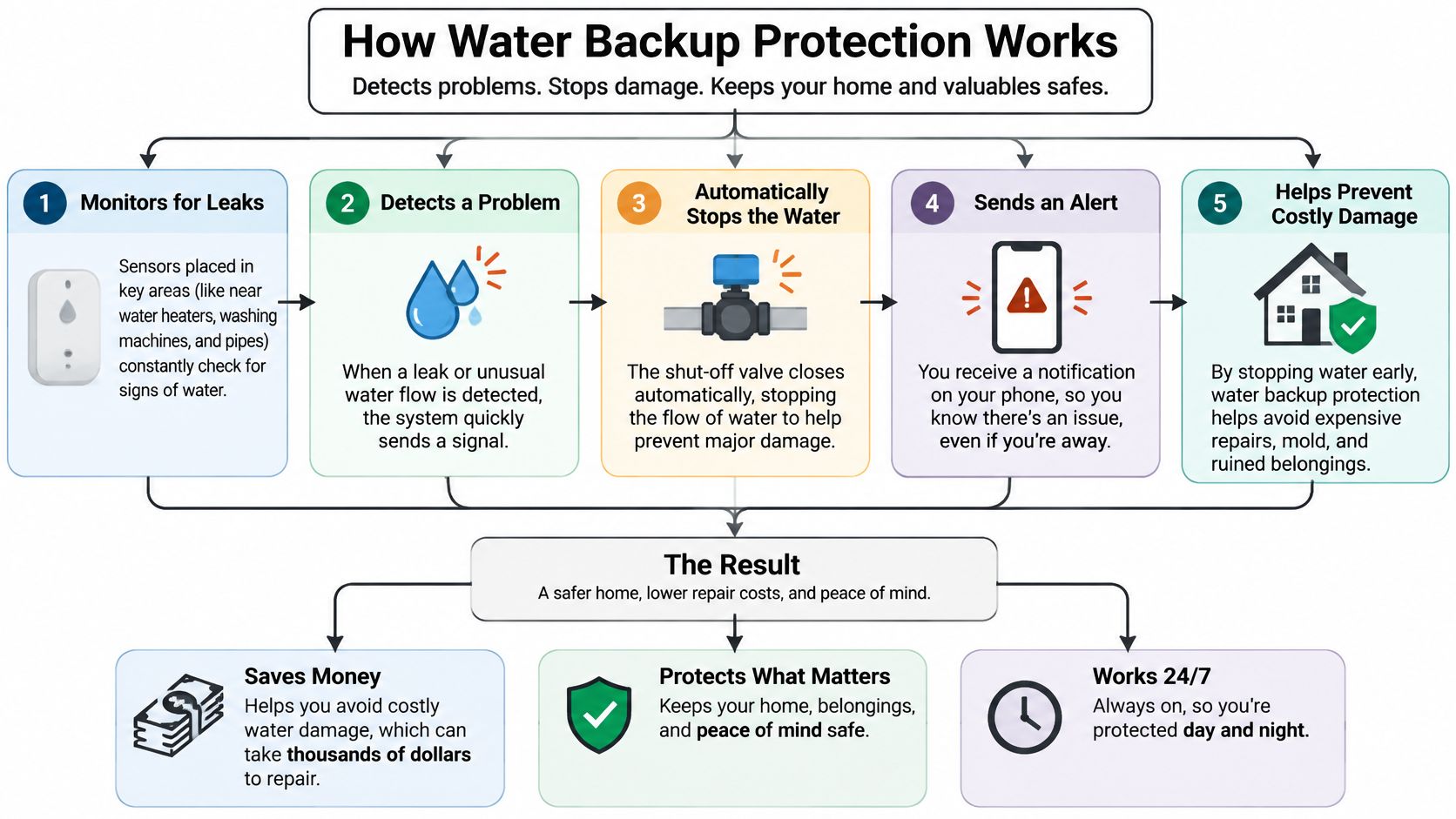
A burst pipe and a sewer backup can both ruin drywall, but they're different events in policy language. A burst pipe is a sudden internal plumbing failure that releases water outward. A backup means water that's supposed to leave your home can't, so it returns through a sewer, drain, or a sump pump system that overflows.
Standard homeowners policies commonly cover sudden internal plumbing losses, such as that burst pipe, but typically exclude backup caused by a sewer, drain, or failed sump pump. The endorsement fills that specific gap. It doesn't turn every water loss into a covered loss.
A narrow lane, not the whole road
Think of the endorsement as a valve that opens one narrow lane. When the listed trigger occurs, it can help pay for resulting damage to the building and, when your policy includes it, to personal property. Cleanup, removal of damaged materials, and replacement of affected contents may fall in that lane, subject to your deductible, exclusions, and per-occurrence limit.
The source itself often sits outside that lane. Your policy may respond to flooring ruined by a sump overflow without paying to repair or replace the pump that failed. Those are two separate questions, and mixing them up causes much of the confusion after a loss.
Where to confirm the lane exists
Coverage only exists if you bought it and it's active. The NAIC-published sample endorsement illustrates that water backup protection applies only when the endorsement appears on the declarations page and a specific limit is shown, with payment reduced by the applicable deductible.
Check the effective date, too. Some wording imposes waiting periods or effective-date restrictions, so coverage purchased after an incident is already developing may not respond. If the endorsement isn't listed, a phone conversation with an agent months ago won't create it.
Covered Events and Common Exclusions
Sorting a loss into the right category prevents the most common mistakes. The table below shows typical patterns, but your declarations and endorsement wording govern every row.
Water Backup Coverage Decision Guide
| Incident | What the endorsement may address | Policy point to verify | Useful documentation |
|---|---|---|---|
| Sewage up through a drain | Resulting damage to floors, walls, contents | Sewer backup listed as a trigger | Photos of drain, plumber findings |
| Sump pump overflow | Resulting water damage in affected rooms | Sump failure included or excluded | Pump condition, power records |
| Failed pump or blocked line itself | Usually not the equipment repair | Maintenance and wear exclusions | Service invoices, age of equipment |
| Backup plus outside flooding | Depends on causation wording | Flood exclusion and concurrent cause language | Rainfall, entry point, water path |
What the endorsement typically targets
When it's listed, the trigger is water or sewage backing up through a sewer or drain, or water overflowing from a sump pump, sump-pump well, or similar system designed to remove subsurface water around the foundation. The covered loss is usually the direct physical damage that follows, not every cost connected to the event. If you're unsure which category your loss fits, reading about whether homeowners insurance covers busted pipes helps separate forward plumbing failures from backward events.
Where coverage commonly stops
Normal deterioration, plumbing maintenance, and replacement or repair of a failed sump pump are typically excluded, while resulting water damage may still be covered subject to the policy. Gradual seepage, wear, and routine upkeep fall on the homeowner under most wording. Root intrusion, a blocked pipe, or a defective pump can therefore remain your expense even when ruined flooring is addressed.
Other gaps need attention before a loss. Mold or microbial remediation may carry a sublimit or separate conditions. A backup that occurred before coverage took effect may not respond. And when several causes act together, such as heavy rain and a drain failure, the policy's concurrent-causation language can change the analysis.
Practical rule: Ask two questions for every invoice. Is this the damage, or is this the thing that caused the damage? Insurers often answer those differently.
Flood and Plumbing Coverage Compared
Three separate protections get blended together in conversation. Separating them by trigger makes the distinctions clear.
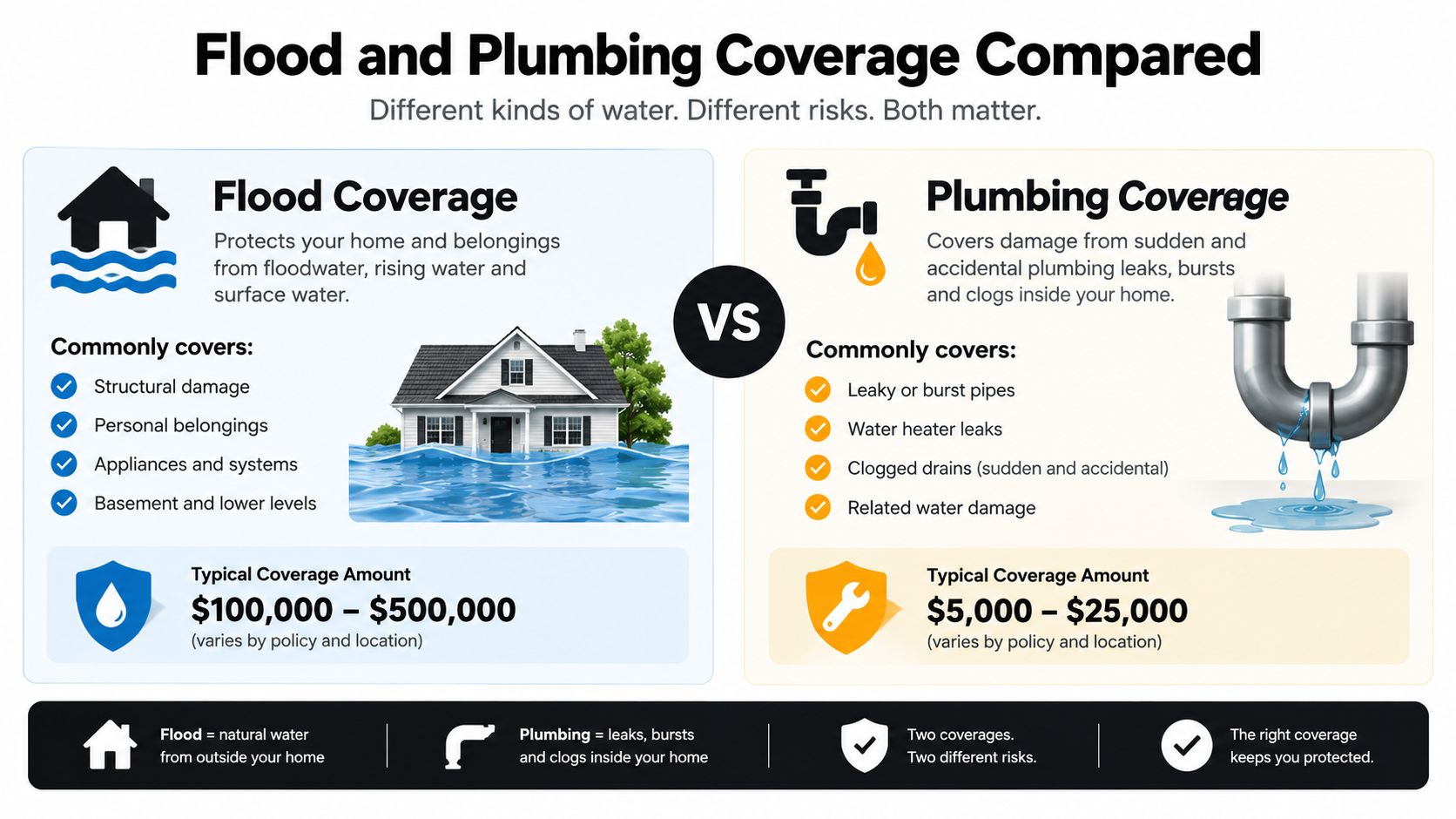
Standard homeowners coverage may address sudden internal plumbing losses, such as a burst pipe inside a wall. A water backup endorsement addresses specified sewer, drain, or sump events. Flood insurance addresses qualifying flood conditions, generally involving water outside the home affecting the surrounding area. They're not interchangeable.
Why Phoenix monsoon losses get complicated
During an intense monsoon storm, heavy rain, surface runoff, overwhelmed storm systems, and sewage backup can happen in the same hour. You might correctly point to sewage coming up through a drain, yet your insurer may still examine whether flood was a direct or indirect cause.
Endorsement wording varies on this point. Some policies cover sewer backup even when flooding occurs, while others exclude backup if flood caused it. Standard flood exclusions generally still apply to overland water entering from heavy rain or surface runoff, even when you carry backup protection.
Flood insurance doesn't fill the gap either. National Flood Insurance Program coverage for sewer-backup damage is tied to qualifying flood conditions affecting the surrounding area. It doesn't generally cover a backup caused by an isolated plumbing or sump-pump problem. For a broader starting point on these boundaries, see how insurance treats different kinds of water damage.
Documentation that helps sort the cause
- Entry point: Photograph the drain, pump well, door, or wall where water entered.
- Water path: Record which rooms it reached and in what order, if you know.
- Outside conditions: Note rainfall, street water, and whether neighbors had similar problems.
- Professional findings: Keep plumber or municipality reports on clogs, line condition, or system overload.
- Policy wording: Ask your insurer for the exact concurrent-causation language in writing.
Limits Deductibles and Policy Review
Having the endorsement is only step one. The amount available depends on a separate limit that often looks small next to your dwelling coverage.
A review sequence you can do today
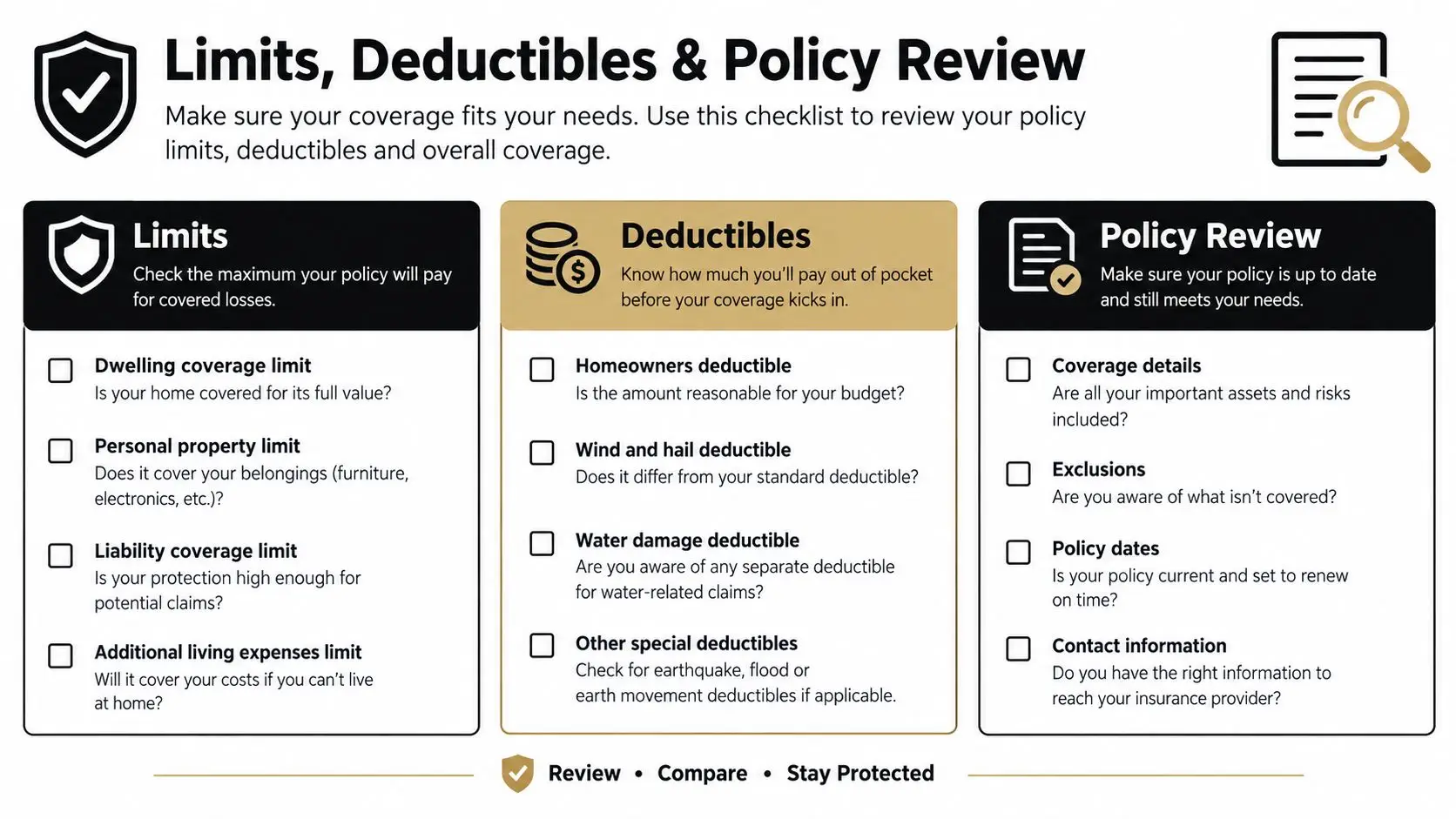
- Open the declarations page. Confirm the endorsement is listed and note its effective date.
- Record the limit and deductible. Don't assume either matches your main policy.
- Check structure versus contents. A building-only limit doesn't automatically protect furniture, appliances, or stored belongings.
- Look for sublimits. Check mold or microbial remediation, personal property, and additional living expenses.
- Read the exclusions beside the endorsement. The trigger language and the limits only tell half the story.
If any of those terms feel unfamiliar, a walkthrough of how to read a homeowners insurance policy can help you locate declarations, endorsements, and exclusions before you call your agent.
Why the separate limit matters
A NAIC shopping-tool example lists sewer and water backup coverage of $10,000 with a $500 deductible, illustrating that the protection can carry a separate limit rather than automatically match the dwelling limit. That's an example, not a benchmark for your home, and it isn't a price or coverage promise.
Compare your actual limit with what's at risk where a backup would strike. Finished rooms, cabinets, appliances, and stored contents can consume a modest limit quickly. If the numbers don't line up, ask your insurer or agent to explain your options and confirm any change in writing.
Examples of Covered Resulting Damage
Scenarios show how one event splits into several coverage buckets. None of these examples decides a real claim, because wording and facts control the outcome.
Sump overflow in a finished lower room
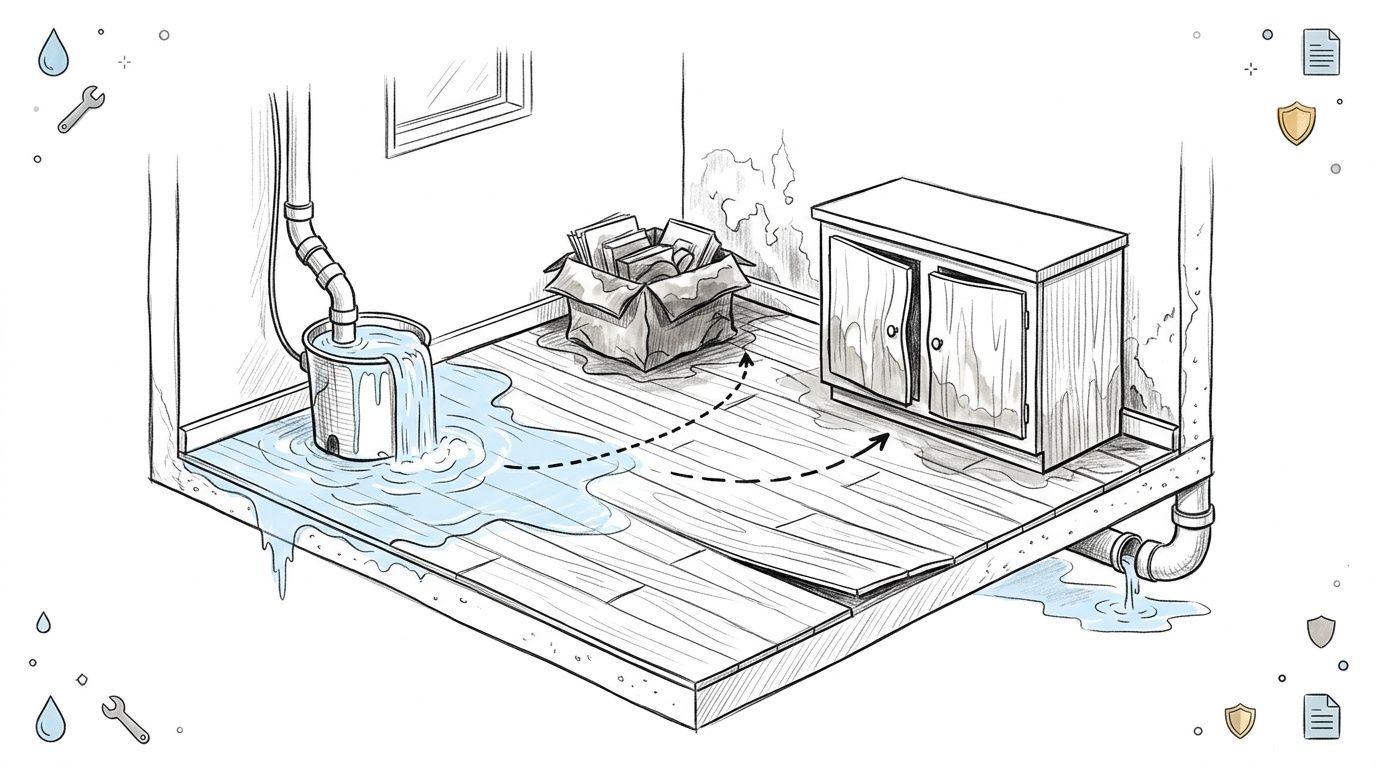
A pump stops during a storm and water spreads across flooring, wicks into drywall, and reaches cabinets and stored belongings. A single water incident may involve contaminated water, flooring, drywall, cabinets, electrical components, and personal property, making the endorsement limit financially important. The resulting-damage question concerns those materials and contents. The pump replacement is a separate equipment question, and anything above the limit is a separate budget question.
Sewer backup into occupied rooms
Sewage enters through a bathroom or laundry drain and contaminates floors, furniture, and appliances. Because sewage carries contamination concerns, cleanup scope can differ sharply from a clean-water loss, which is why understanding Category 3 water damage matters when professionals assess what's salvageable. Your policy may treat extraction and sanitation as mitigation, demolition and rebuild as repair, and the blocked line as excluded maintenance, each under different conditions.
Monsoon backup with mixed causes
Rain floods the street, surface water reaches the house, and a drain backs up indoors. Here the central question isn't only what got wet. It's whether the adjuster classifies the loss as backup, flood, or a combination, and what your concurrent-causation wording says about that mix.
Emergency work that prevents further damage and permanent repair of the failed source aren't the same thing, and your policy may not treat them the same way.
Filing a Claim and Coordinating Restoration
Start with safety, not paperwork. Sewage can carry contamination, and water near electrical components creates hazards you shouldn't test. If you can stop the source safely, do so, and keep people and pets out of affected areas until professionals assess conditions.
First hours
- Photograph before cleanup where feasible. Capture entry points, water lines, and damaged contents.
- Notify your insurer promptly. Ask what's needed and whether emergency mitigation should proceed.
- Keep damaged materials when appropriate. Don't discard items the adjuster may need to inspect unless safety requires it.
- Save every receipt and message. Organized records support your claim, and thorough insurance claim documentation reduces back-and-forth later.
Prompt extraction and drying may be necessary to limit further harm even when the underlying mechanical failure isn't insured. That urgency doesn't convert every proposed repair into a payable item. Restoration professionals should document moisture, contamination, affected rooms, contents, and demolition needs rather than assume the full scope will be approved.
Who does what during the claim
The adjuster evaluates the source, policy wording, and resulting damage, then applies limits, deductibles, and exclusions. The restoration team documents conditions, performs mitigation, and communicates findings and scope. You stay in the middle, approving work and asking questions, but approving an estimate doesn't itself promise coverage or payment.
Phoenix-area owners sometimes coordinate with an IICRC-certified company such as Restore Heroes, which handles water mitigation and communicates documentation to insurers while keeping the client informed. Whoever you hire, ask how they'll record moisture readings, photograph demolition, and separate emergency mitigation from permanent plumbing repairs. Clear separation on invoices helps everyone evaluate the claim against the policy.
Make a Coverage Decision Before a Loss
You don't need to memorize your policy. You need five answers written down where you can find them during a stressful night.
Your pre-loss checklist
- Trigger: Does your endorsement list sewer, drain, and sump-pump events, or only some of them?
- Property covered: Does the limit apply to structure only, or to contents as well?
- Money terms: What's the per-occurrence limit, and does a separate deductible apply?
- Sublimits and extras: Are mold remediation and additional living expenses included, limited, or absent?
- Mixed causes: What happens when flood and backup contribute to the same loss?
Save your declarations page and endorsements together, digitally and on paper. When wording is ambiguous, ask your insurer or agent to explain it in writing, and keep that explanation with the policy. If contamination, structural damage, or a disputed cause is involved after a loss, get professional advice early rather than guessing.
The core answer: Water backup coverage may help with specified resulting damage from a covered backup. It isn't automatic replacement of every affected item, and it usually isn't repair of the pump, line, or drain that failed.
That distinction, cause first and damage second, is the key to what water backup coverage covers in practice. Read your endorsement now, compare its limit with what a backup would reach in your home, and close gaps before water tests them. No article can guarantee service, coverage, or pricing, and your individual policy controls the outcome.
If sewage or drain water has already entered your Phoenix-area home, Restore Heroes provides emergency extraction, drying, sanitation, and documentation support for water backup losses, coordinated with your insurer throughout the process. Visit Restore Heroes to request help and get your property assessed promptly.