
Hot water extraction is a wet-cleaning method that injects heated cleaning solution into carpet or upholstery under pressure and vacuums it back out right away, often called steam cleaning. The carpet itself typically receives water at about 160–170°F, not necessarily the temperature displayed on the machine.
If hot water alone made carpet clean and sanitary, why would the vacuum and drying equipment matter so much? Because heat, moisture and recovery do different jobs, and confusing them can leave you with carpet that looks better but stays wet underneath.
What Hot Water Extraction Means in Plain Terms
Hot water extraction washes the fibers and carries the dirty liquid away. It isn't just a hot spray across the surface, and its everyday name, steam cleaning, doesn't mean the technician cleans with steam vapor.
Say your hallway carpet has gray traffic lanes. The technician loosens the oily soil, rinses it through the pile and immediately pulls the dirty solution into a recovery tank. The intended result is removal of soil, detergent residue, allergens and biological material, not just a cleaner-looking surface.
Think of a rinse and a squeegee
A warm rinse helps loosen grime on a car. A squeegee then moves the dirty water off the glass; an extraction vacuum performs a similar removal job in fabric, although it can't leave carpet completely moisture-free.
The Carpet and Rug Institute's carpet-cleaning science guide explains that heat lowers water's surface tension and speeds cleaning chemistry, while truck-mounted equipment can exceed 200°F at the machine and water reaching carpet is generally about 160–170°F. Hoses, valves and dispersal into the material account for that temperature difference.
The diagram separates applying the solution from recovering it.
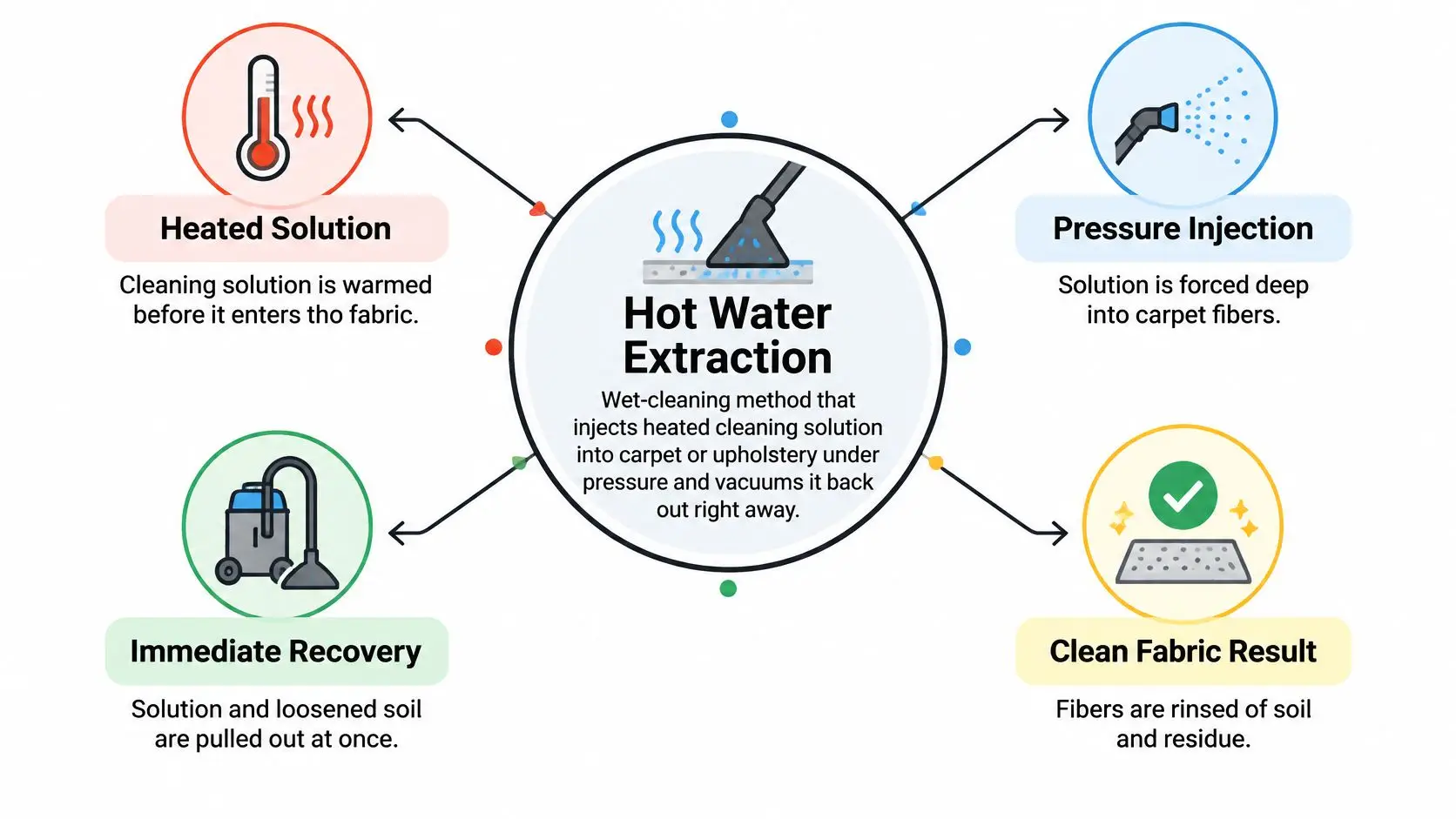
Why recovery matters
During restoration, technicians also use extraction equipment to pull water from soaked materials. That doesn't mean they should add heated cleaning solution to a freshly flooded room. Emergency water removal and carpet washing are different tasks, even when the tools look similar.
Practical rule: A rinse followed by immediate vacuum recovery is extraction. Applying steam vapor to a surface is a different process.
That distinction answers what is hot water extraction more usefully than the word steam: liquid goes in, and a vacuum brings liquid and suspended contamination back out.
Where Extraction Fits in Water Damage Restoration
Say a supply line bursts overnight and soaks a bedroom carpet and a living room sofa. Before anyone starts cleaning, someone needs to stop the leak, check for electrical hazards and assess where the water traveled.
Technicians remove standing water, extract recoverable moisture from suitable materials, then dry the affected structure with air movers and dehumidifiers. Extraction is a middle step, not the whole restoration job. Adding hot rinse water isn't the first response to an already saturated floor.
This scene shows why access to the wet floor matters.
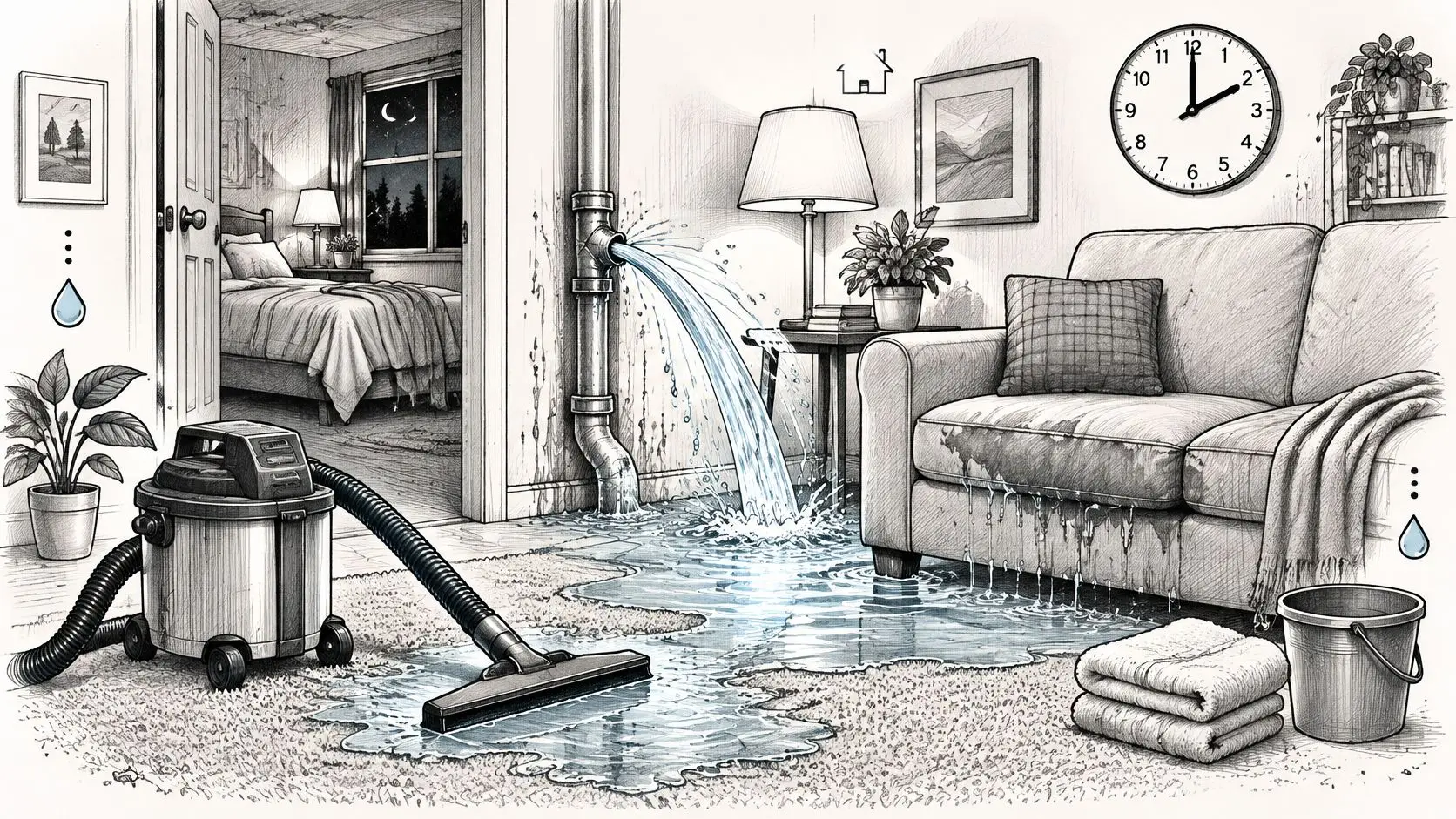
Decide what can be saved
A burst pipe, leaking washing-machine hose and storm flood can all wet carpet, but they don't create identical conditions. The water's contamination, how far it spread and the material's condition affect whether cleaning is appropriate.
- Synthetic cut-pile carpet: Often a candidate for extraction when the water conditions and backing allow salvage.
- Wool and natural fibers: Require a more cautious assessment, reduced heat where appropriate and careful moisture control.
- Upholstery: The face fabric, lining, frame and cushion fill all need inspection. A sofa cover can feel dry while foam remains wet inside.
- Carpet padding: Often needs replacement after heavy saturation because it retains water beneath the carpet.
- Hardwood and subfloors: Need material-specific drying rather than a carpet-cleaning rinse. Technicians may use specialized water-removal tools before structural drying.
Grossly contaminated water, such as sewage, usually calls for removing affected porous materials rather than trying to wash them back into service. A household extractor isn't a substitute for contamination assessment.
Ask for the whole drying plan
Restore Heroes serves the Phoenix area, including Mesa, Gilbert, Scottsdale and Chandler, and offers carpet water-damage restoration as part of assessment, mitigation and structural drying. It's one local option; ask any provider to document its relevant certifications and explain the proposed drying work.
A useful plan identifies what will be extracted, what needs removal and how the crew will check hidden moisture. It should also explain how furniture, baseboards and adjacent rooms will be evaluated.
The sooner water is removed safely, the more options may remain for saving affected materials.
How the Extraction Process Works Step by Step
A professional cleaning starts with inspection, not with the machine switched on. The technician needs to know what the material can tolerate and what kind of soil needs removal before any water touches it.
The whole job works like rinsing shampoo out of hair. Soap loosens the dirt, water carries it, and a proper rinse takes it out. Skip the rinse, and the residue stays behind. Extraction follows the same logic, with a vacuum doing the work that a faucet would do in the shower.
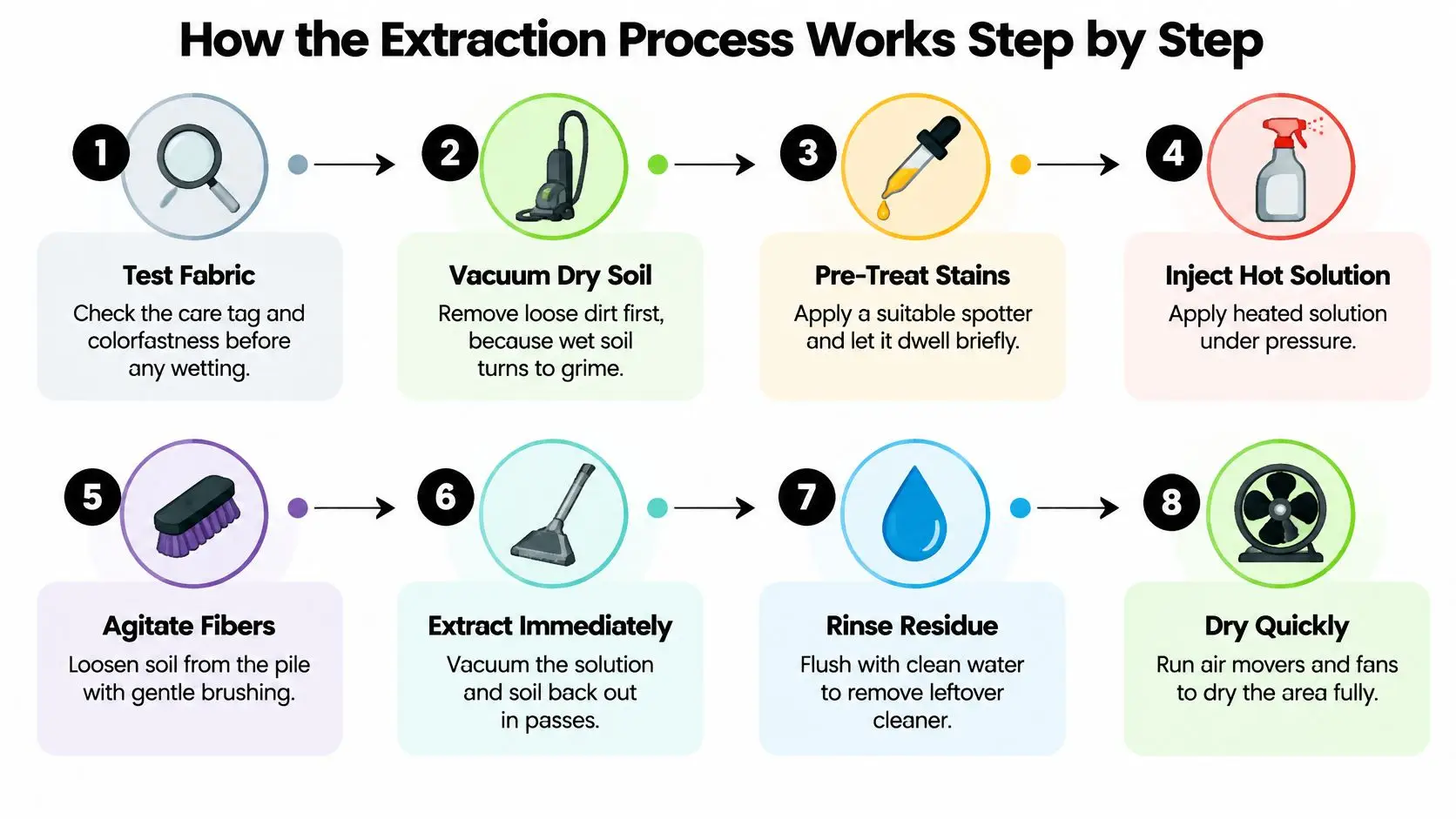
Follow a controlled sequence
Test the material. Check the care tag, manufacturer guidance and colorfastness in an inconspicuous area, because the visible face fabric alone doesn't reveal whether wet cleaning is permitted.
Vacuum dry soil first. Remove loose grit with a suitable vacuum before adding liquid. Once grit gets wet it clings to the pile, and every later step has to fight it.
Apply preconditioner and allow dwell time. Choose a fiber-compatible product for oily and particulate soil, keeping it active for the product's specified working time so the chemistry can loosen deposits.
Inject a controlled heated rinse. The IICRC upholstery-cleaning draft standard describes the rinse-and-recovery principle behind this step: solution goes in under control and comes straight back out. The technician sets temperature and pressure for the specific fiber, backing and manufacturer guidance, because settings that suit one carpet can damage upholstery, wool or delicate construction.
Agitate where appropriate. Gentle brushing helps release bonded soil, although technicians commonly work preconditioner into the pile before the extraction rinse rather than waiting until afterward.
Extract immediately with controlled passes. Keep the vacuum operating during rinse passes, then use additional vacuum-only passes until little more water is recovered, rather than repeatedly spraying the same patch.
Inspect for residue. Check traffic lanes, spots and the feel of the pile, then use a compatible corrective rinse where needed. Leftover detergent acts like a dirt magnet and attracts fresh soil.
Begin managed drying. Position air movers and use dehumidification when conditions require it. Warm weather outside doesn't prove that an indoor carpet assembly will dry properly on its own.
Watch what comes back out
The recovery stage separates a proper extraction job from a simple wet rinse. Three things are easy to confuse here: the heat that loosens soil, the water that carries it and the vacuum that removes it. Only the last one takes soil out of the carpet. Water and loosened soil left in the backing haven't gone anywhere, even when the surface looks brighter.
Heat also has limits worth knowing. A warm rinse softens oily deposits, but it doesn't sanitize the carpet, and the wand isn't releasing steam vapor into the room. It is applying heated water under pressure and pulling it back in the same motion.
A technician should control the wand rather than rush it across the room. Slow, overlapping passes give the vacuum time to lift the rinse water. Spraying again without effective recovery adds to the moisture load without improving the result, so extra vacuum-only passes matter more than extra water.
The video offers a moving view of the equipment and cleaning action.
A sound job has a clear preparation sequence, visible recovery and a drying plan. If one is missing, ask why before the technician continues.
The Four Variables That Decide the Result
Think about washing a greasy pan. Warm water, dish soap, gentle scrubbing and a short soak each help; turning up the tap temperature alone doesn't replace the other work.
Carpet cleaning follows the same principle. Technicians balance temperature, agitation, chemistry and dwell time, then recover what those actions loosen.
Balance the work instead of maximizing heat
Heat makes the solution less viscous, lowers surface tension and speeds detergent action. Agitation separates attached soil, while chemistry breaks down deposits that water alone may struggle to release.
The four variables and what goes wrong when each is off
| Variable | Job in the process | If too low or skipped | If too high or misapplied |
|---|---|---|---|
| Temperature | Lowers surface tension and speeds detergent action | Soil loosens slowly and needs more passes | Browning, dye bleeding, fiber distortion |
| Agitation | Physically frees bonded soil from fibers | Soil stays in the pile | Pile damage or fuzzing from aggressive brushing |
| Chemistry | Breaks down oily and particulate soil with preconditioner and detergent | Film and residue remain and attract new soil | Sticky residue if not fully rinsed, or damage from the wrong product |
| Dwell time | Gives chemistry time to act before recovery | Chemistry is pulled out before it works | Extended wet contact can increase moisture exposure |
| Vacuum recovery | Lifts loosened soil and water out of the material | Slow drying and higher odor or microbial risk | Little added risk with proper passes and a suitable tool |
Recovery appears alongside the cleaning variables because loosening contamination isn't the same as removing it. More detergent or longer soaking won't compensate for poor vacuum technique.
Understand what a finding does and doesn't prove
Research summarized in the Carpet and Rug Institute's effective-cleaning case studies used hot water alone at an estimated 170–190°F and found that the cleaned carpet samples didn't support mold growth under prolonged high temperature and humidity. That finding concerns the tested samples and conditions, not a promise that extraction sanitizes every carpet or remedies existing mold.
Higher heat isn't automatically appropriate. Wool, unstable dyes, glued seams and moisture-sensitive backing can require lower settings and tighter control of applied liquid.
Ask whether the crew vacuumed first, selected fiber-appropriate chemistry and recovered the rinse. For a restoration job, also ask how technicians interpret moisture-meter readings against suitable dry comparison areas rather than relying on touch.
Truck-Mounted and Portable Equipment Compared
The temperature displayed on a machine doesn't tell you the temperature inside the carpet. Equipment comparisons are useful only when the provider identifies where a reading was taken and how the system performs during use.
A truck-mounted unit stays outside, with solution and vacuum hoses brought indoors. A portable extractor travels into the building, which can make it more practical where parking, access or hose routing prevents truck-mounted work.
Compare the equipment without mixing measurements
Good Carpet Guide's cleaning-method comparison reports truck-mounted operation around 180–200°F, with vacuum lift exceeding 300 inches of water, while portable units commonly operate around 120–160°F with less vacuum power. Those reported ranges describe equipment classes, not guaranteed performance from every model.
Truck-mounted versus portable extraction equipment
| Equipment | Typical solution temperature | Vacuum power | Best fit | Main limit |
|---|---|---|---|---|
| Truck-mounted system | Heated at the machine; distinguish machine readings from wand readings | Generally higher; check the model's specifications and operating setup | Large areas, heavy soil, suitable flood-affected floors | Needs truck parking and hose access |
| Portable extractor | Heated solution; some models need a separate heat source | Lower than truck units; check the specific model | Small rooms, stairs, upper floors, spot jobs | Generally less capable on heavy soil or large floors |
Published temperature and vacuum figures aren't interchangeable across machines. Water lift describes suction capability, but airflow, hose condition, tool design and the operator's technique also affect actual recovery.
Match the machine to access and workload
For a large, heavily soiled room with easy exterior access, a truck-mounted system may be practical. For an upper-floor apartment or an interior suite beyond a usable hose route, a portable can be the sensible choice.
Neither label tells you whether the technician will test the fabric, avoid overspraying or make adequate recovery passes. A suitable machine operated carefully matters more than a sales pitch about maximum heat.
When discussing water-extraction equipment, ask:
- Machine selection: What equipment will you use, and why does it fit this property?
- Working temperature: What reaches the wand during cleaning, rather than only at startup?
- Recovery checks: How will you confirm that the material isn't retaining excessive water?
Hot Water Extraction Against Other Cleaning Methods
Hot water extraction is useful for deep soil and detergent residue, and for suitable upholstery or salvageable flood-affected carpet after assessment. Its trade-off is a greater moisture load than low-moisture approaches, so drying needs deliberate planning.
Dry compound cleaning uses an absorbent powder worked into the pile and vacuumed away. Low-moisture foam cleaning uses foam to loosen light to moderate soil, followed by the system's specified removal process.
Bonnet cleaning transfers surface soil onto an absorbent rotating pad. It can improve appearance between deeper cleanings, but it doesn't flush the full carpet pile.
Choose by soil depth and water tolerance
Hot water extraction against other carpet cleaning methods
| Method | How it works | Best for | Moisture left behind | Main limit |
|---|---|---|---|---|
| Hot water extraction | Heated solution injected and vacuumed out right away | Deep soil, suitable flood-affected carpet, permitted upholstery | Higher; requires managed drying | Drying time and fabric restrictions |
| Dry compound cleaning | Absorbent powder worked into the pile and vacuumed | Light soil, quick turnaround, suitable moisture-sensitive areas | Very low | Limited on deep or wet soil |
| Low-moisture foam cleaning | Foam agitated into the pile, then removed or allowed to dry before vacuuming | Light to moderate soil, routine care | Low to moderate | Less effective on heavy soil or water-damaged areas |
| Bonnet or spin-pad cleaning | Cleaner and an absorbent rotating pad remove surface deposits | Surface soil and interim maintenance | Low | Doesn't flush deep soil |
For a drying benchmark, the EPA's school indoor-air-quality guidance advises against carpet cleaning when it can't dry within 24 hours. That's operational guidance for schools, not a universal residential deadline or a drying guarantee.
Make the choice for the situation
Deep traffic soil may justify extraction when the carpet permits it. Flood-soaked carpet first needs a restoration decision; a cleaning-method menu can't determine whether contaminated padding or damaged backing should remain.
Routine care on dry, lightly soiled carpet may call for a low-moisture method. Delicate or moisture-sensitive materials may need a compatible dry process and an inconspicuous test.
For facility managers building an interim-care schedule, Facility Management Insights' executive carpet cleaning strategies offers a related maintenance resource. Choose the process by the soil and allowable water load, not by which method sounds most thorough.
Limits and Drying Risks in Hot Water Extraction
Is the job done when the wand leaves?
No. The carpet face can feel only slightly damp while the backing or padding still holds water. That hidden moisture can contribute to odor, backing damage and microbial growth.
Air movement helps water evaporate, but evaporation also adds moisture to indoor air. Dehumidification and appropriate ventilation need to suit the room's conditions; opening windows during humid weather may work against the drying effort.
Does hot mean sanitized?
No. Cleaning removes soil and some biological material, but hot rinse water alone doesn't establish a validated sanitizing or disinfection result. Machine temperature doesn't prove the whole material received an effective treatment.
Pet contamination, visible mold and sewage require separate assessment. Extraction also can't reliably reverse permanent dye loss, fiber wear or damage already present in the backing.
Can every carpet tolerate the process?
No. Wool and other natural fibers may need gentler treatment, while unstable dyes, glued seams and moisture-sensitive backing can restrict the method. Manufacturer instructions may rule out wet cleaning altogether.
Overwetting is a technique problem as well as an equipment problem. Too many wet passes, poor recovery or spraying unsuitable upholstery can put liquid where the tool can't readily retrieve it.
Before work begins, ask:
- Moisture load: How much wetting does this material need, and how will you limit it?
- Recovery method: Which tool and vacuum passes will remove the rinse?
- Expected drying: What conditions could delay drying, and when should I call back?
- Manufacturer permission: What care instructions support this method?
Positioning water-damage fans is part of a drying setup, not proof that the backing or subfloor is dry. Ask how the provider will check those areas.
A method is only as good as its drying plan.
Care for Carpets and Choose a Certified Technician
Keep everyday care light and controlled
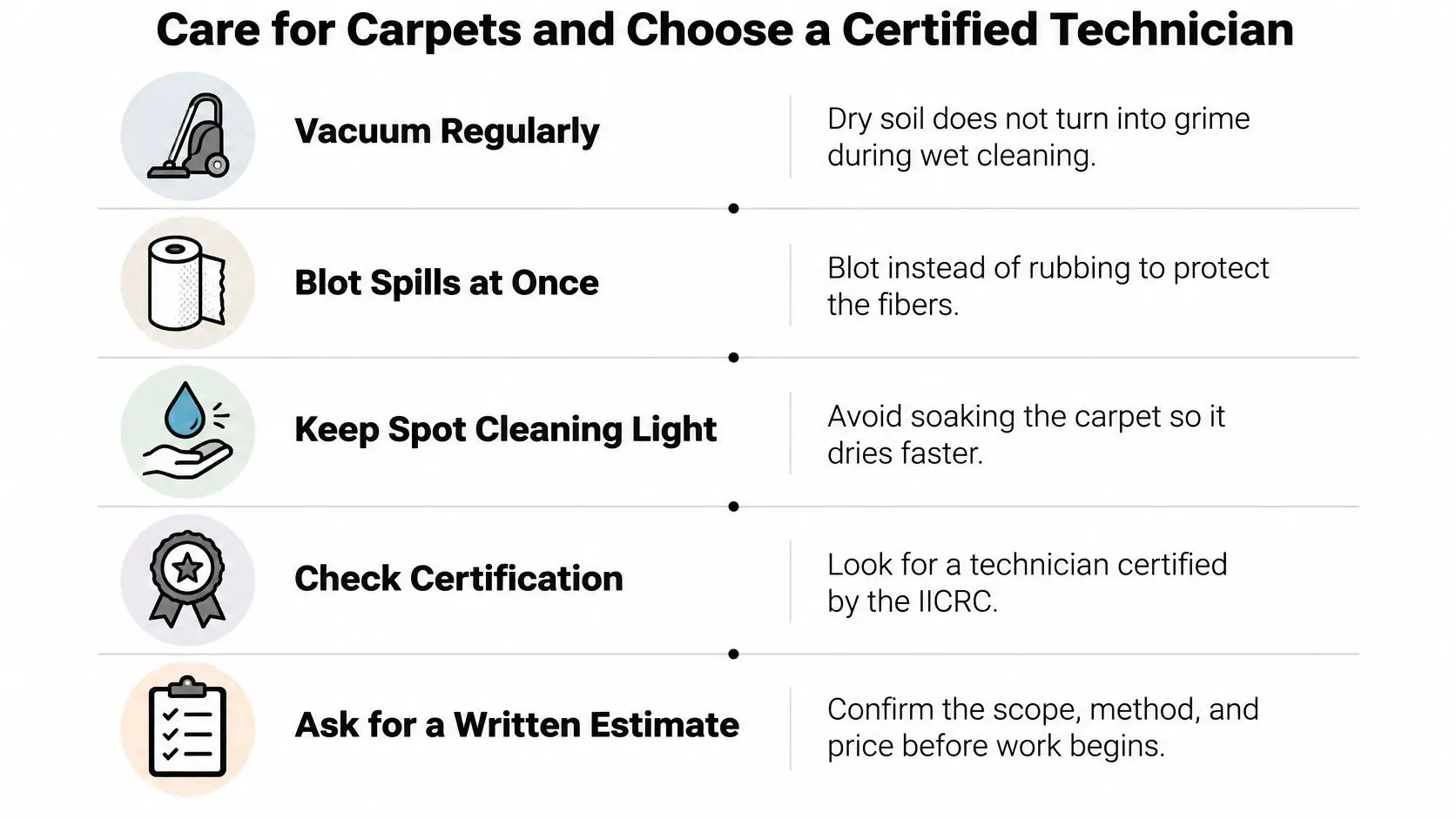
Vacuum regularly so loose soil doesn't become embedded grime during wet cleaning. Blot spills promptly with a clean, absorbent white cloth instead of rubbing the fibers.
Keep spot cleaning light, apply the compatible product to the cloth when appropriate and avoid soaking the backing. After cleaning, use appropriate airflow and check the room rather than assuming that an apparently dry surface tells the whole story.
These habits support both maintenance and better hiring decisions.
After a leak, act promptly rather than waiting for an odor. Watch for a musty smell, discolored patches, bubbling or lifting carpet, and dampness near baseboards; each warrants investigation, not another application of deodorizer.
Check credentials and the proposed work
Look for relevant IICRC credentials, such as Carpet Cleaning Technician for cleaning work or Water Damage Restoration Technician for water losses. Ask the provider to confirm who holds the certification and whether that person will oversee your job.
A provider describing itself as an IICRC-certified restoration company should be able to explain its relevant qualifications in writing. Also ask whether the business is licensed where required, bonded and insured for the proposed work.
Request a written scope that identifies:
- Equipment and settings: The extractor type, proposed wand temperature and material-specific adjustments.
- Moisture checks: Where the technician will measure, including backing or adjacent materials when relevant.
- Drying arrangements: Air movement, humidity control, expected drying conditions and follow-up.
- Cost and exclusions: What work is included, what may require separate authorization and which materials may not be salvageable.
Before authorizing work: Ask what the technician will do if the carpet still feels damp or develops an odor after the expected drying period.
A qualified technician should answer questions about fiber type and manufacturer restrictions without treating every carpet alike. After a leak, call a licensed, IICRC-certified restoration company as soon as possible and ask for the drying plan before work starts.
Restore Heroes offers water-damage assessment, extraction and structural drying for affected properties in the Phoenix metro area. Visit Restore Heroes to discuss the wet materials in your home and ask how the team would assess recovery, cleaning needs and drying before work begins.