
You've probably seen it start the same way. A faint dark line in the shower grout. A small spot on the ceiling above the tub. Maybe a musty smell that seems to show up after the morning shower and fade later in the day.
In Phoenix, that catches people off guard. We live in a dry climate, so many homeowners assume mold is a coastal or rainy-weather problem. It isn't. Bathrooms create their own weather indoors, and once moisture lingers on drywall, caulk, grout, or painted ceilings, mold doesn't care that you live in the desert.
Bathroom mold prevention comes down to one thing more than anything else. Keep the bathroom dry enough, often enough, that mold never gets a foothold. Cleaning matters. Ventilation matters. Maintenance matters more than generally recognized. If you handle moisture quickly and consistently, you avoid a lot of expensive and frustrating problems later.
Why Your Bathroom is a Magnet for Mold
A bathroom gives mold what it wants in a very small space. Warmth. Repeated moisture. Condensation. Dust and soap film. Surfaces that stay damp longer than they should.
I see the same pattern in homes across the Valley. A homeowner notices staining in the shower corners and assumes the grout just needs a stronger cleaner. They scrub it, it looks better for a week or two, then it comes back. That usually means the problem was never the surface. The problem was the moisture load in the room.
Why the first spot matters
That first patch on grout or caulk is often the warning sign, not the whole problem. Steam from showers rises, then cools on the ceiling, walls, mirrors, windows, light fixtures, and even metal supply lines under the sink. If those surfaces stay wet, mold spores already present in normal indoor air can settle and grow.
Bathrooms also hide moisture better than most rooms. It gets trapped behind a vanity backsplash, inside a caulk seam, under a toilet base, or around the edge of a tub where water slips past a failed joint. By the time you see visible staining, the room may have had a drying problem for a while.
Practical rule: If mold keeps showing up in the same place, stop treating it like a cleaning issue and start treating it like a moisture issue.
Why Phoenix homes still get bathroom mold
Phoenix homeowners often hear “dry heat” so often that they assume indoor mold risk is low. But hot showers can create a burst of humidity inside a closed bathroom fast. Add a weak fan, a family using the same bathroom back-to-back, or a slow plumbing drip, and you've created ideal conditions.
If you want a deeper look at how dark staining develops indoors, this overview of what causes black mold in homes gives helpful context on the moisture patterns behind it.
The main point is simple. Mold grows where moisture stays. If you control drying time, airflow, and leaks, you control the problem much earlier and with far less work.
Mastering Moisture and Airflow in Your Bathroom
Most bathroom mold prevention advice stops at “turn on the fan.” That's incomplete. The main issue is whether the bathroom dries out after use.
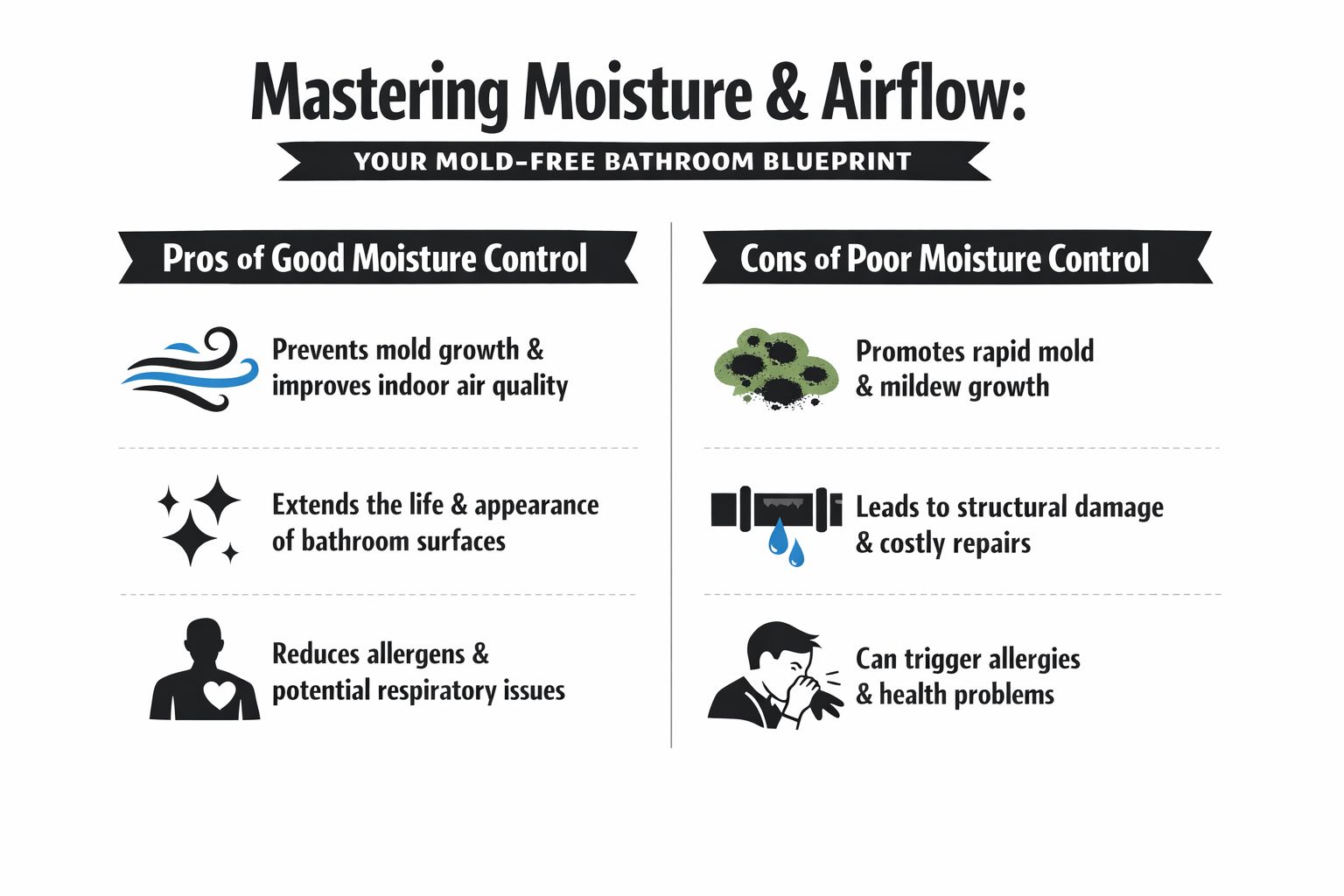
The best prevention plan is boring on purpose. It relies on a few repeatable habits that keep moisture from lingering on surfaces or inside materials.
The non-negotiable daily habits
Run the exhaust fan every time someone showers. Start it when the bathroom starts getting steamy, not long after. Then leave it running after the shower until the room feels dry again.
Wipe or squeegee the wettest surfaces. Glass shower panels, tile walls, tub edges, and any shelf that catches standing water are worth drying by hand. That habit lowers the amount of moisture that has to leave the room through the air.
Keep fabrics from staying wet in the bathroom. Towels bunched on the floor and damp bath mats hold moisture in the room longer than people realize.
Here's the benchmark that matters most. The EPA says wet or damp building materials should be dried within 24–48 hours to prevent mold growth, and the CDC recommends keeping indoor humidity no higher than 50%, with an ideal range of 30% to 50% according to CDC mold guidance. That's why moisture control does more for bathroom mold prevention than stronger cleaning products ever will.
Don't assume the fan is working
A lot of bathrooms technically have ventilation but still dry poorly. I've seen fans that make noise but move very little air, fans that vent poorly, and fans so dirty they can't do their job well.
Check for these signs:
- Slow mirror clearing: If the mirror stays fogged long after a shower, airflow may be weak.
- Persistent ceiling spotting: Repeated staining above the shower often points to moisture hanging high in the room.
- Peeling paint or swollen trim: That usually means humidity is condensing and staying on finishes.
- Recurring mold despite cleaning: If the same area keeps growing mold back, airflow may be underperforming.
If you want a practical buying and design reference, the Western Bathroom Renovations advice is useful for understanding what separates a fan that merely exists from one that effectively clears moisture.
For homeowners who like objective checks, moisture tools can help confirm whether a wall, vanity toe-kick, or baseboard is staying damp longer than it should. This guide to moisture meter readings helps explain what those tools are telling you.
Later in the section, it helps to see the airflow basics in action:
What works and what doesn't
What works is consistent drying. Fan use. Surface drying. Leak repair. Keeping the room open to air circulation once the heavy steam is gone.
What doesn't work is relying on paint, fragrance sprays, or occasional deep cleaning to solve an ongoing moisture problem. Mold comes back when the room keeps giving it the same damp conditions.
A bathroom doesn't need perfect sterility. It needs a reliable path from wet to dry.
A Proactive Cleaning and Maintenance Schedule
The homeowners who stay ahead of bathroom mold usually aren't doing dramatic cleanups. They're doing small checks on a schedule and catching problems early.
That matters because mold prevention is easier when you respond to early signs. A little discoloration at a caulk line is manageable. A hidden leak under a sink that keeps a cabinet base damp for weeks is a different story.
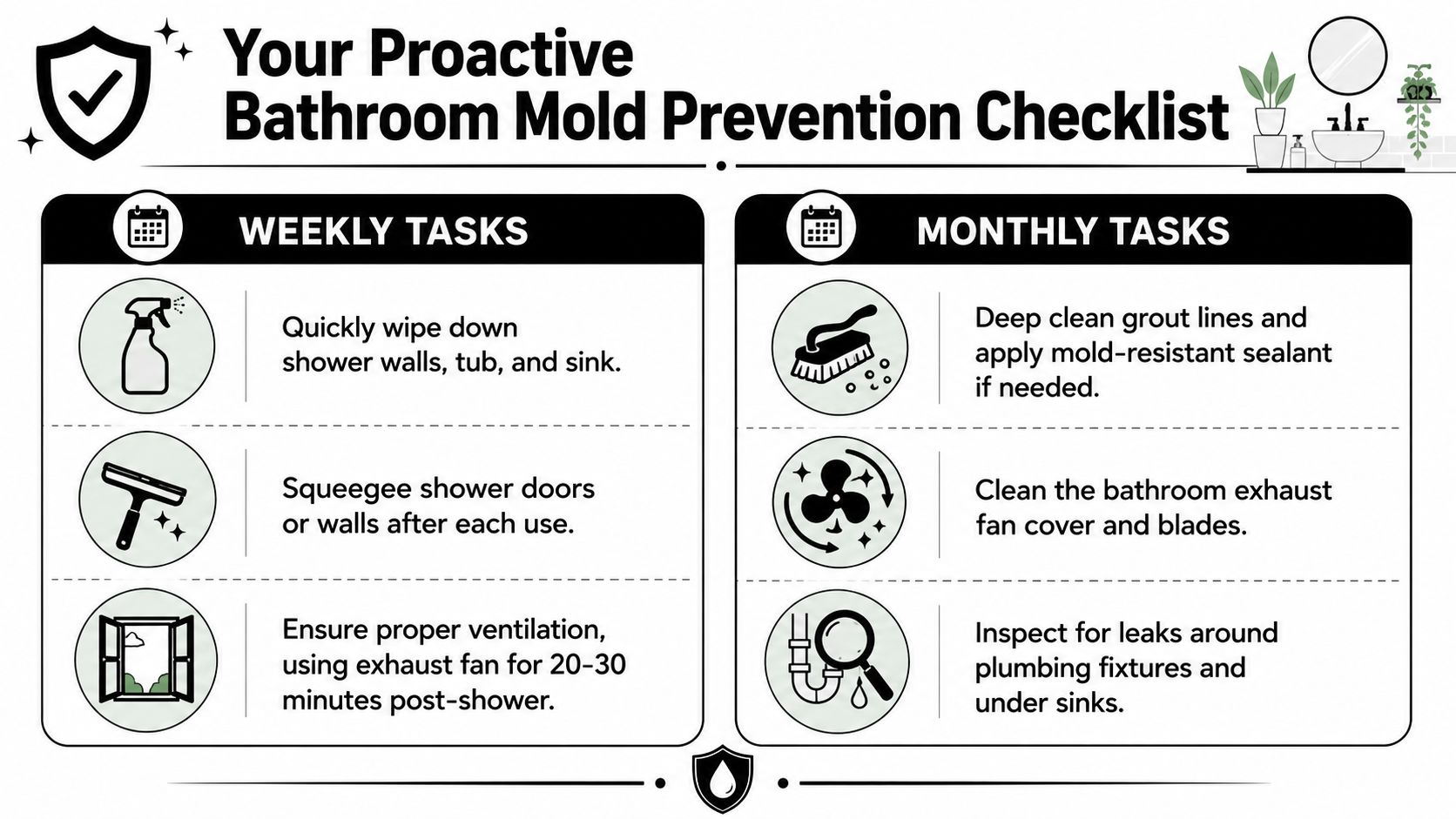
Weekly tasks that keep moisture from building up
Once a week, do a fast reset of the bathroom. This isn't a white-glove cleaning session. It's a moisture-control routine.
- Wipe shower walls and corners: Focus on places where water sits or soap film builds up.
- Check grout and caulk visually: You're looking for fresh dark specks, separation, or cracking.
- Clean around the sink base and faucet line: Splashing water can keep those surfaces damp.
- Wash or dry bath mats and damp towels: Don't let wet fabric live in the room.
- Look up, not just down: Ceiling corners above the shower often show the first signs of a drying problem.
Monthly checks that prevent bigger issues
Once a month, inspect the parts of the bathroom people usually ignore. In these areas, small failures turn into recurring mold calls.
Inspect seals and hidden moisture points
Caulk doesn't last forever. Grout can crack. Toilet bases can shift slightly. Sink supply lines can sweat or drip slowly without drawing attention.
Open the vanity and look underneath with a flashlight. Feel for dampness at the trap, shutoff valves, and cabinet floor. Check around the tub apron and behind the toilet if those areas are accessible.
Clean the fan and surrounding surfaces
A dusty exhaust fan can't move air as well as a clean one. Remove the cover if it's safe to do so and clean buildup from the grille and nearby ceiling area. If the cover is stained repeatedly, that's a clue the room is staying humid too long.
If your bathroom includes natural stone, routine sealing and the right care products matter because porous surfaces can hold moisture and staining differently than standard ceramic tile. This guide from Tiles Mate Pty Ltd can help you protect your natural stone investment without using the wrong products.
A structured inspection also helps you catch trouble before it spreads. This mold inspection checklist is a useful reference for the areas homeowners tend to miss.
Bathroom mold prevention checklist
| Frequency | Task | Purpose |
|---|---|---|
| Weekly | Wipe shower walls, tub edges, and splash zones | Remove moisture and residue that hold dampness |
| Weekly | Check grout, caulk, and ceiling corners | Catch early signs of recurring mold |
| Weekly | Dry or launder bath mats and towels | Reduce moisture trapped in fabrics |
| Monthly | Inspect under sinks and around plumbing | Find slow leaks before they feed mold |
| Monthly | Clean the exhaust fan cover and nearby ceiling | Help ventilation work properly and spot humidity staining |
| Monthly | Review grout, caulk, and finish condition | Identify repairs before water gets into materials |
Maintenance note: The best cleaning schedule is the one you'll actually repeat. Short, consistent checks beat occasional marathon scrubbing.
Phoenix Specific Tips for a Dry Bathroom
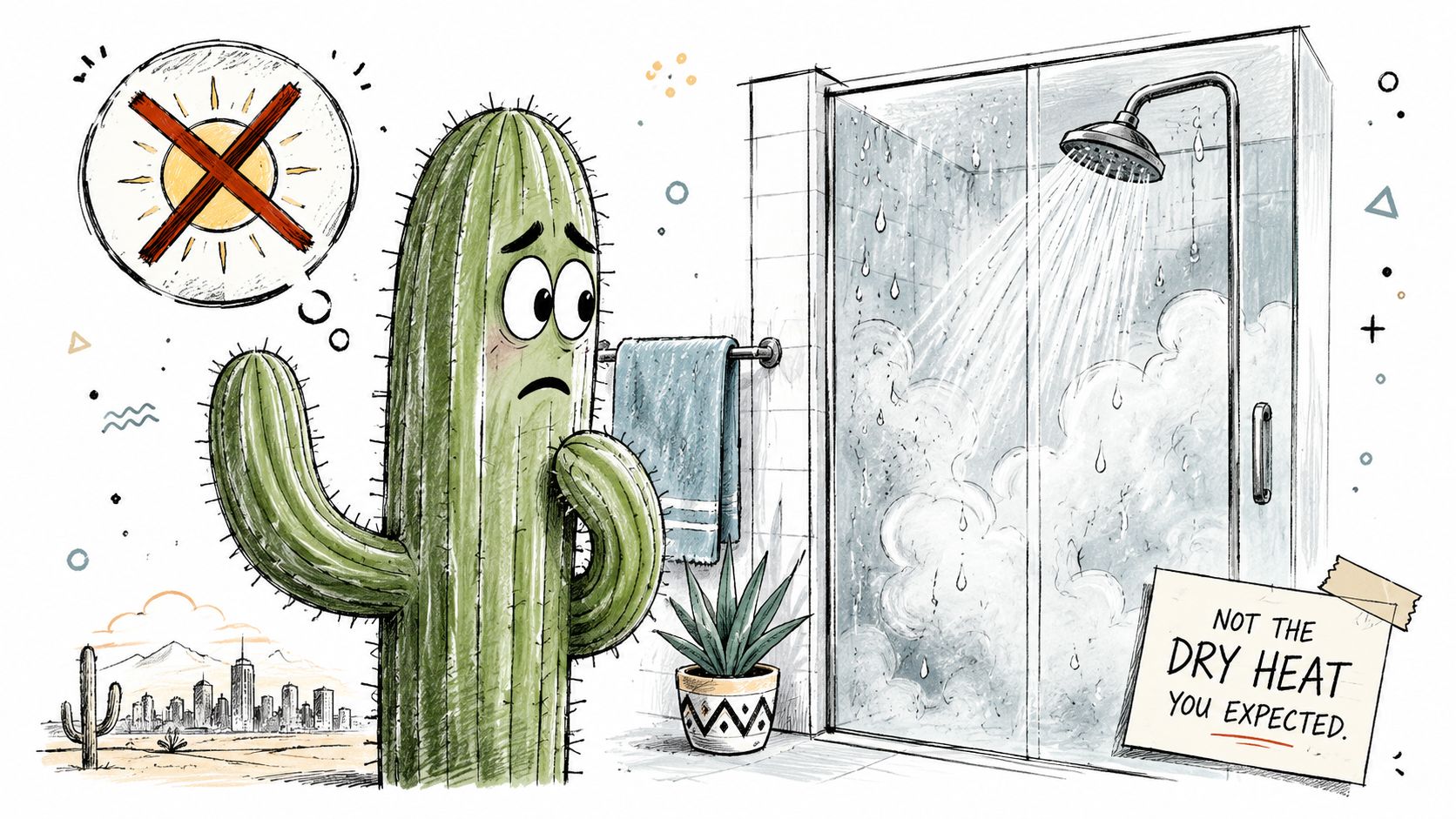
Phoenix creates a strange kind of confidence around moisture. Because the air outside is often dry, people assume the bathroom will dry on its own. Sometimes it does. Sometimes it absolutely doesn't.
The bathrooms that struggle in the Valley usually do so for local reasons, not generic national ones. Monsoon season changes indoor moisture conditions. Air conditioning changes surface temperatures. Some homes also deal with evaporative cooling or building layouts that trap damp air in interior bathrooms.
The dry heat myth breaks down indoors
A closed bathroom after a hot shower isn't “Phoenix dry.” It's a small humid room inside a Phoenix house. If the fan is weak, the door stays shut, and multiple people shower close together, moisture can hang around much longer than expected.
Monsoon season makes this worse. Outdoor air gets heavier, and the house may already be carrying more indoor humidity than it does in cooler, drier months. That means the bathroom starts with less drying capacity before the shower even begins.
Watch for seasonal changes in how the room behaves. If mirrors stay fogged longer in summer storms or ceiling spots appear only during that season, that's useful information. It points to a moisture balance problem, not random staining.
Air conditioning can help and complicate things
Air conditioning removes moisture from indoor air as part of normal cooling. That helps. But strong cooling can also create cooler surfaces where condensation forms more easily when a steamy shower hits the room.
That matters in Phoenix bathrooms with supply vents aimed directly at a ceiling or wall near the shower. Cool painted drywall meeting hot steam can become a repeat condensation zone. Homeowners often mistake that for a cleaning issue when it's really a moisture pattern.
Check these Valley-specific trouble spots:
- AC vents near the shower: Cool air on warm, wet surfaces can create repeat condensation.
- Interior bathrooms with no window: These rooms rely heavily on mechanical ventilation.
- Homes using evaporative cooling: Added indoor moisture can change how bathrooms dry.
- Condensate or drain issues nearby: Mechanical water sources can feed humidity problems.
If bathroom mold keeps returning after basic prevention steps, broaden the search. The issue may be part of a larger moisture pattern in the home. That's where a proper water and mold mitigation approach becomes more useful than repeatedly cleaning the same spot.
What Phoenix homeowners should pay attention to
In practical terms, keep an eye on bathroom behavior during summer storms, after HVAC service, and during any season when the house feels slightly clammy indoors. The bathroom often shows whole-house humidity problems before other rooms do.
In Phoenix, outdoor dryness doesn't protect a bathroom that stays wet inside.
Long Term Solutions and Mold Resistant Materials
If you're remodeling a bathroom or replacing damaged materials, smart choices then pay off. Daily habits matter, but some bathrooms keep fighting their own design. Better materials and better ventilation reduce how much maintenance the room needs in the first place.
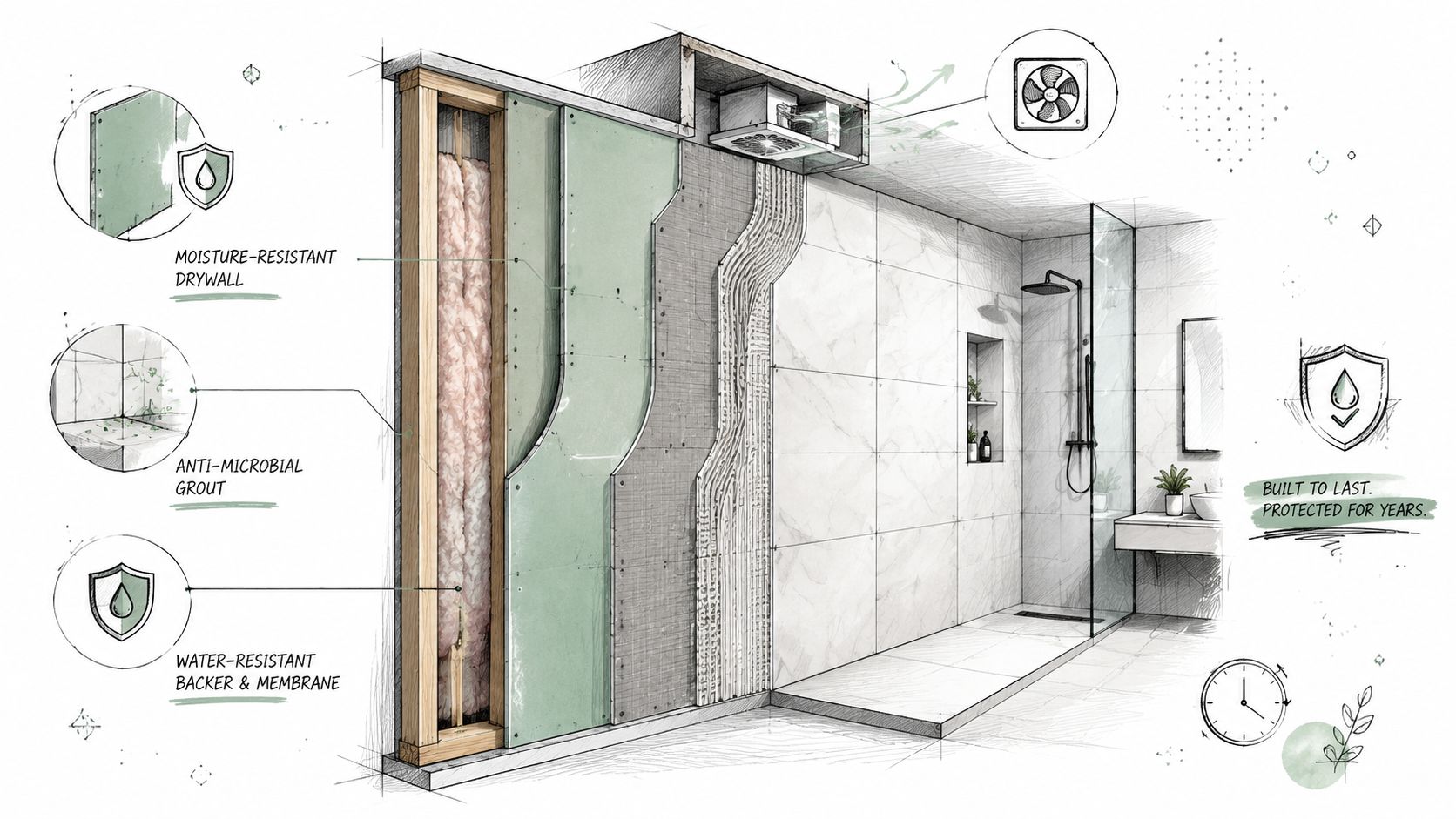
A bathroom built with moisture in mind is easier to keep clean, easier to dry, and less likely to trap water where you can't see it.
Materials that make prevention easier
Some finishes absorb and hold moisture more readily than others. In a bathroom, that difference matters over time.
Better wall and ceiling finishes
Use paint finishes that tolerate wiping and moisture exposure better than flat paint. In many bathrooms, a higher-sheen finish performs better because it sheds moisture more easily and doesn't hold grime as readily.
If walls are being opened during repair or renovation, moisture-tolerant backing materials are worth considering in wet areas. The goal isn't to make the room mold-proof. Nothing does that. The goal is to make it less vulnerable when normal bathroom humidity happens.
Smarter grout and seal choices
Traditional porous materials require more maintenance. High-performance grout systems and well-maintained sealants can reduce water absorption and make cleanup easier.
That matters most in shower corners, horizontal ledges, bench seats, niches, and transitions where water tends to sit. These are the points where mold usually wins first.
Ventilation upgrades are often worth it
A weak fan costs homeowners time every single day. A properly selected and properly vented fan improves drying after every shower, not just when someone remembers to deep clean.
When I look at bathrooms with recurring mold, I often find one of two things. The room has no meaningful airflow, or it has moisture-sensitive finishes that stay damp too long. Upgrading either one helps. Upgrading both changes the room entirely.
Long-term improvements that usually make sense include:
- A stronger exhaust setup: Especially in bathrooms that see heavy daily use.
- Durable, moisture-tolerant finishes: Better for ceilings, walls, and trim near shower zones.
- Improved shower detailing: Better caulk joints, better slope, fewer water-trapping ledges.
- Less absorbent surface choices: Helpful where repeated splash and steam are unavoidable.
For homeowners dealing with active damage or recurring mold after a leak, Restore Heroes is one local option that handles inspection, drying, mitigation, and mold-related restoration work in Phoenix. That kind of service becomes relevant when the problem has moved beyond ordinary housekeeping and into damaged materials.
Think in terms of effort over time
A one-time upgrade often beats repeating the same cleaning battle for years. If a bathroom needs constant scrubbing to stay presentable, that's usually a sign the room isn't drying well or the materials are working against you.
Good bathroom mold prevention isn't just about cleaning harder. It's about making the room easier to keep dry.
Knowing When to Call a Mold Remediation Professional
DIY cleaning has limits. Homeowners can handle many minor surface issues, especially when they also correct the moisture source. But there comes a point where recurring bathroom mold is no longer a housekeeping problem.
The clearest warning sign is recurrence. When homeowners follow solid ventilation and cleaning habits but mold still returns, it often points to a deeper issue such as poor ventilation performance, a hidden plumbing leak, or persistent indoor humidity that a basic fan can't overcome, as noted in Consumer Reports on preventing bathroom mold.
Red flags that deserve a professional assessment
Some warning signs are straightforward. Others are subtle.
- The mold keeps returning in the same area: That usually means the moisture source was never found.
- You suspect mold inside a wall, ceiling cavity, or vanity chase: Surface cleaning won't solve hidden growth.
- There's a musty odor with little visible staining: Odor often means moisture is sitting where you can't see it.
- The bathroom has had a leak or overflow that affected materials: Drywall, trim, subflooring, and cabinetry may have absorbed water.
- The affected area is larger than 10 square feet: That's the commonly cited threshold where homeowners should be more cautious about cleanup scope and containment.
Why recurring mold needs a different response
A lot of people waste time cleaning the symptom. They bleach, scrub, repaint, and recaulk, but the mold returns because the root cause is under the sink, behind the tile, inside the fan duct path, or somewhere else moisture keeps collecting.
That's where a professional inspection helps. An IICRC-certified restoration professional looks for the moisture source first, then the extent of damage, then the right cleanup approach. That sequence matters. If you skip the source investigation, you risk cosmetic work over an active problem.
For readers comparing how remediation is approached in other major markets, this overview of Los Angeles water damage remediation is a useful example of how water problems and mold problems often overlap in practice.
A simple decision framework
Handle it yourself if the issue is small, clearly on the surface, and stops returning once the bathroom dries properly and the leak or ventilation issue is corrected.
Call a professional when any of the following are true:
- You can't identify the moisture source.
- The mold returns after repeated cleaning.
- Materials feel soft, swollen, or damaged.
- The odor suggests hidden growth.
- You want a documented evaluation before repair or sale.
If you're weighing options locally, this guide to finding mold removal companies near me can help you understand what to look for in a qualified provider.
No honest contractor should promise a result, scope, or price without seeing the bathroom and identifying the moisture source first. That's especially true in Phoenix homes, where AC-related condensation, monsoon humidity, plumbing leaks, and past water events can all produce similar-looking symptoms for very different reasons.
If your bathroom mold keeps coming back, or you suspect the problem goes beyond surface cleaning, Restore Heroes can inspect the moisture source and help you understand the next practical step for your Phoenix home.