
A blood spill in a hallway, restroom, vehicle, or living room can stop a property owner in their tracks. The immediate questions are usually simple but difficult under stress: Is the area safe? Can someone wipe it up? What happens to the carpet, gloves, towels, or any sharp objects left behind?
Bloodborne pathogen cleanup isn't ordinary janitorial work. It combines exposure control, decontamination, regulated-waste handling, and documentation. The visible stain may be small, but the cleanup can become a serious incident when blood has entered porous materials, a sharp is present, or other people can access the area.
What Bloodborne Pathogen Cleanup Actually Means
A property manager enters an office after an incident and sees blood on the floor near a doorway. The stain looks contained, but the manager doesn't know whether anyone stepped through it, whether a broken object is mixed into the debris, or whether the flooring absorbed liquid below the surface. Calling a janitorial worker to mop the area may remove what can be seen, but it doesn't necessarily address the exposure route or the contaminated materials.
Bloodborne pathogen cleanup is the controlled removal and decontamination of blood and other potentially infectious material. The process is designed to protect workers and occupants from exposure to pathogens such as HIV, hepatitis B, and hepatitis C, while also managing contaminated surfaces, equipment, and waste. OSHA's Bloodborne Pathogens Standard made this work part of a formal occupational safety system rather than an improvised cleaning task.
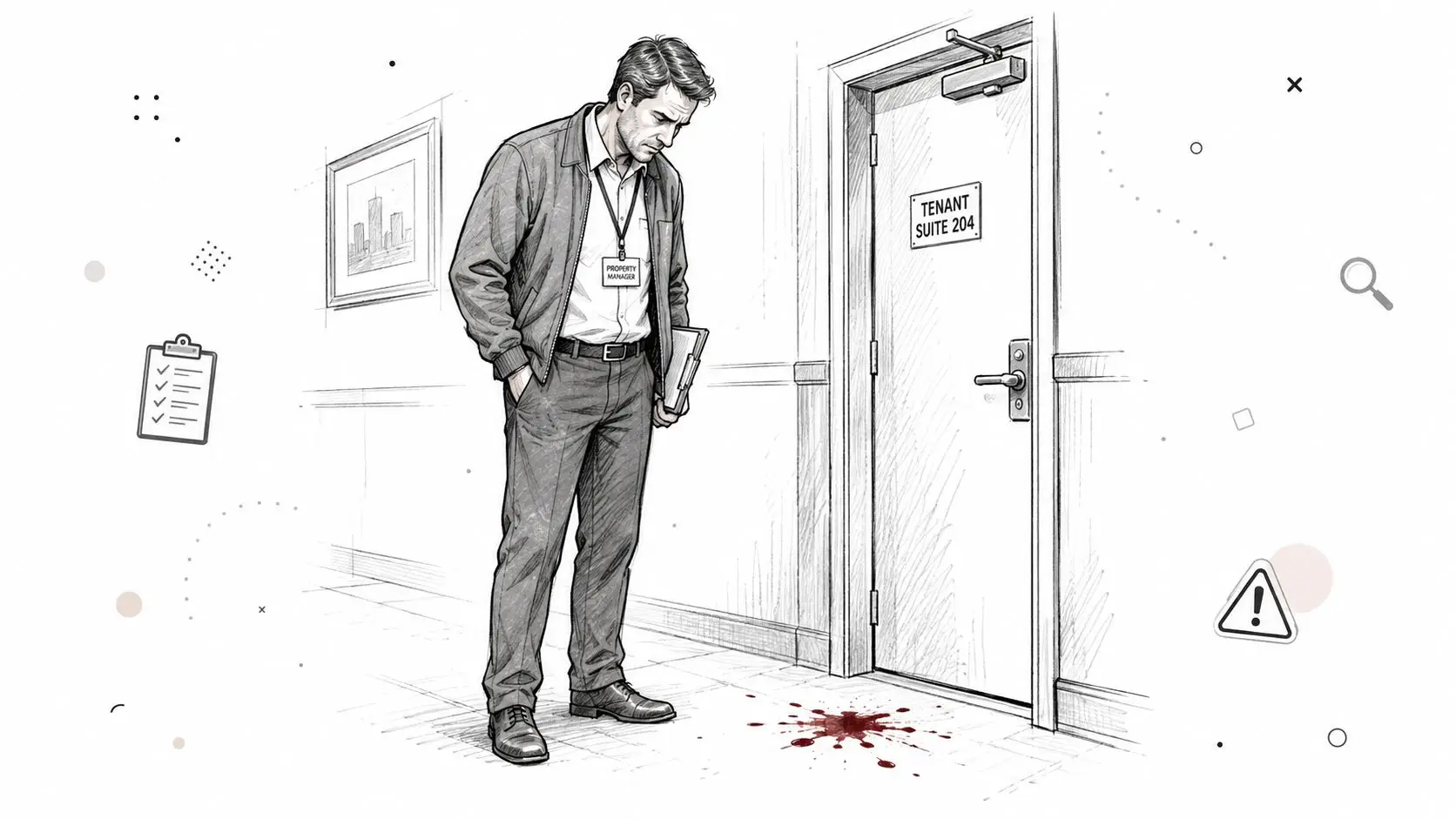
Routine cleaning generally focuses on dirt, appearance, and ordinary microbial control. Biohazard remediation focuses on how contamination moves, how workers can be exposed, which materials can be decontaminated, and how waste must be contained. A technician may need to restrict access, use forceps for sharps, remove affected carpet or padding, apply an approved disinfectant, and document the work.
Practical rule: A surface that looks clean isn't necessarily a surface that's been decontaminated.
The stain itself is only one part of the problem. Blood can reach grout lines, carpet backing, upholstery, drywall, floor transitions, and cleaning tools. A person can also be exposed through a puncture, broken skin, or a splash to the eyes, nose, or mouth. For property owners who need a closer look at the service scope, professional biological cleanup is distinct from standard housekeeping because it addresses the whole contamination pathway.
This distinction also protects the property owner. A rushed wipe-down can leave hidden contamination, place a tenant or employee at risk, and create uncertainty about whether the site was returned to a safe condition. Professional cleanup doesn't erase every responsibility, but it gives the incident a documented, methodical response.
The OSHA and CDC Rules That Govern Every Cleanup
The modern U.S. framework begins with OSHA's Bloodborne Pathogens Standard, 29 CFR 1910.1030. It governs occupational exposure to blood and other potentially infectious materials and establishes the need for exposure controls, appropriate PPE, training, decontamination, and regulated-waste procedures. Commercial employers can't treat a blood spill as an informal housekeeping issue when employees may be exposed.
OSHA also emphasizes immediate cleanup and decontamination with suitable disinfectants and PPE. In February 1997, OSHA clarified that EPA-registered disinfectants labeled effective against HIV and HBV could be used for decontaminating blood-contaminated surfaces, replacing earlier reliance on tuberculocidal-only approaches. That change helped align product selection with the pathogens and label claims relevant to the actual task.
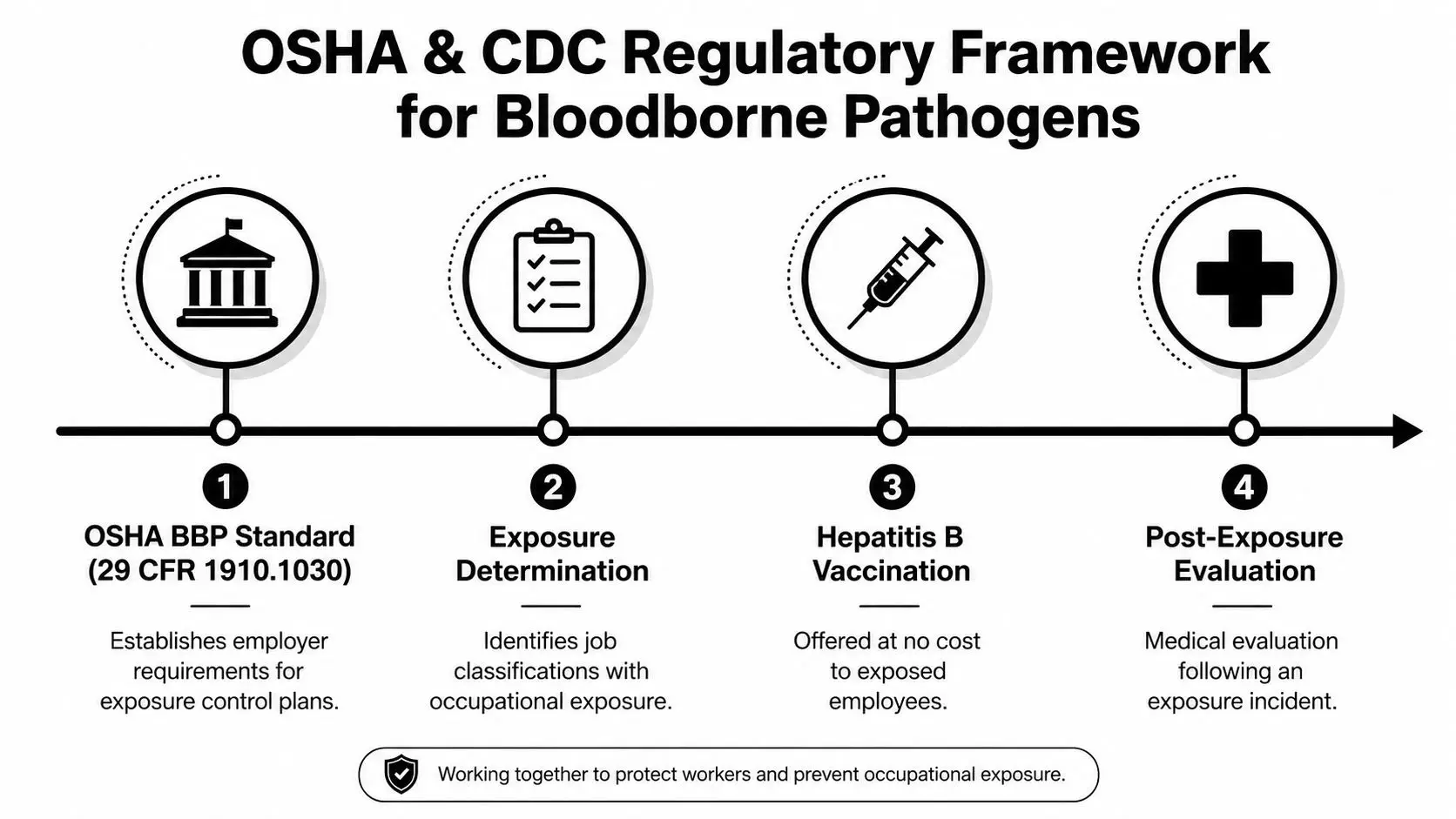
What the rules require in practice
CDC guidance turns the legal framework into field procedures. A useful spill response may include:
- Spill kit supplies: Keep absorbent materials and appropriate cleanup tools ready rather than improvising with household items.
- Barrier protection: Use gloves and eye protection when splashing or contact is possible.
- Sharp-object control: Use forceps or another tool for sharps, never bare hands.
- Surface preparation: Clean with detergent before applying disinfectant when the protocol calls for it.
- Disinfectant contact: CDC guidance describes a 10% household bleach solution with a 15-minute contact time for spill decontamination, while product-specific instructions may differ. The CDC environmental cleaning procedures emphasize keeping disinfectants visibly wet for the required contact time.
The exact product label and workplace protocol matter. A chemical can't work if it dries before the required dwell period, and stronger concentration doesn't excuse poor preparation or unsafe application.
For managers building a broader workplace safety program, the My Safety Manager OSHA guide offers useful compliance context beyond the immediate cleanup task. Property owners can also review hazmat cleanup services when a spill involves materials or exposure conditions that exceed routine facility procedures.
The historical shift matters because it established a repeatable baseline. Cleanup now connects occupational safety law, infection control, PPE, chemical selection, contact time, waste containment, and records. Those principles also influence infection-control practices in other major markets.
The scale of the issue reinforces why this discipline exists. CDC reporting documented 57 HIV transmissions and 140 possible cases among U.S. healthcare workers from 1981 through December 2006, with 48 documented cases linked to percutaneous injury. The same CDC material reports approximately 400 healthcare workers infected with hepatitis B in 2001, compared with an estimated 17,000 new infections in 1983, a 95% decline associated with vaccination and universal precautions. OSHA's enforcement history recorded more than 77,000 bloodborne-pathogen-related citations between 1991 and 2015, most commonly involving exposure control plans and recordkeeping deficiencies. These figures come from the CDC occupational safety reporting, and they show why documentation and prevention belong alongside cleaning.
How Professional Decontamination Works Step by Step
A professional team doesn't begin by spraying the stain. The first job is to understand the scene and prevent a second exposure while the work is underway.
The sequence matters
Assess the area. Technicians identify the source area, affected surfaces, possible tracking, sharps, access points, and materials that may need removal.
Isolate and contain. People and pets stay out of the work zone. The team limits movement through the area and places tools and waste controls where they won't create additional contamination.
Put on PPE. Gloves, eye protection, protective clothing, and other task-appropriate equipment go on before handling contaminated material.
Absorb and pre-clean. Visible blood is removed with absorbent material while technicians minimize splashing, spraying, and droplets. OSHA's blood cleanup response protocol stresses this order because organic material can reduce disinfectant effectiveness.
Apply an approved germicide. The team uses an EPA-registered disinfectant labeled for the relevant pathogens or a 1:10 bleach-to-water solution when that protocol is appropriate.
Maintain wet contact. The surface must stay wet for the product's required dwell time. CDC guidance commonly describes approximately 10 minutes for many EPA-registered products, while one OSHA and EPA response protocol specifies about 20 minutes after bulk soil removal. Some chlorine-based spill procedures use a 15-minute dwell. The label and protocol control the decision.
Complete the final cleanup and records. Technicians wipe or rinse as appropriate, decontaminate reusable equipment, package waste, and record the work performed.
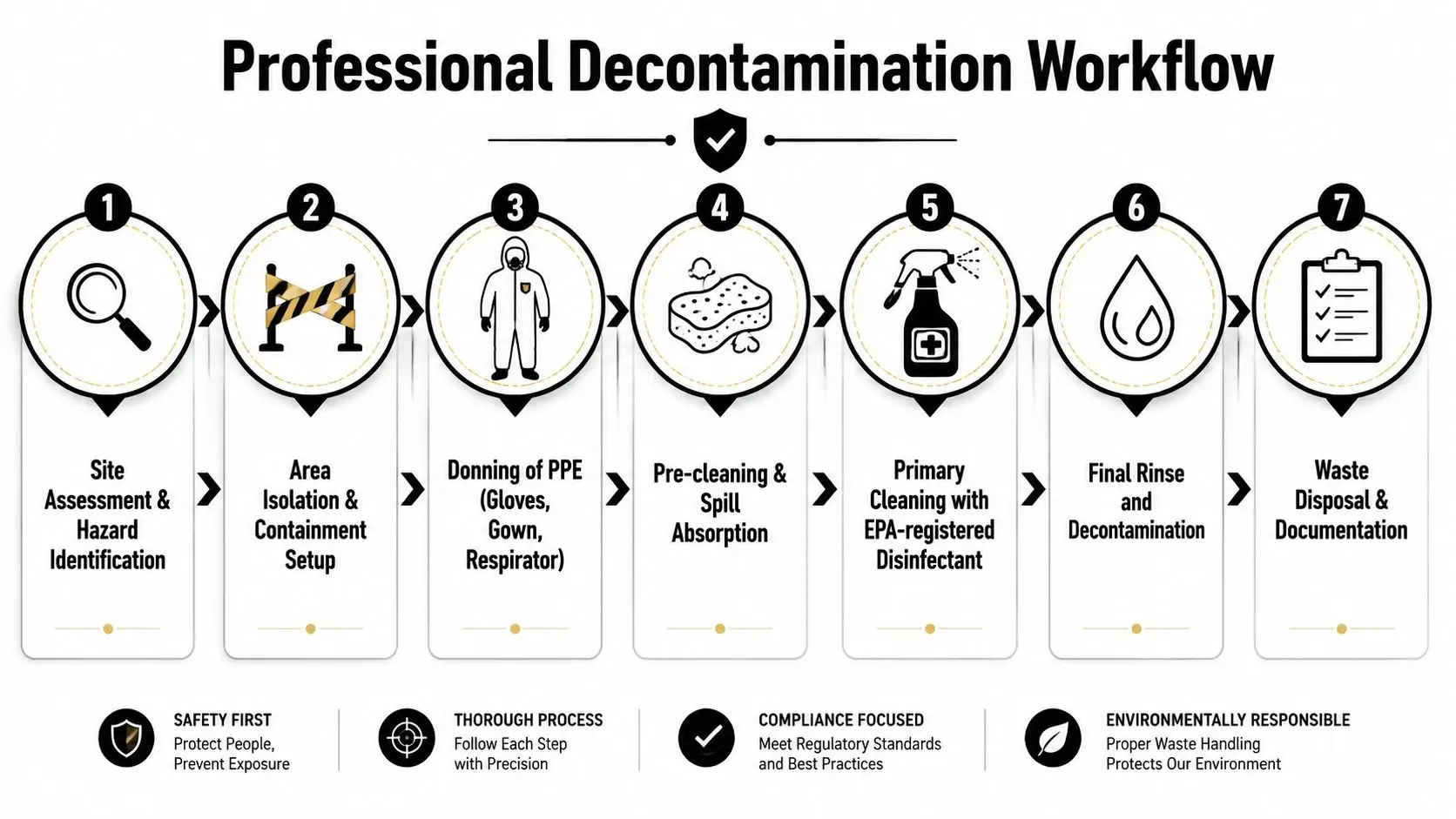
The most common shortcut is applying disinfectant over visible blood and wiping immediately. That approach may spread liquid, trap organic material under the chemical, and fail to provide the required wet contact. More chemical isn't a substitute for correct sequencing.
A credible professional decontamination process should make these stages understandable to the property owner. The job isn't complete because the floor looks brighter. The technician must address contaminated materials, sharps, tools, access control, and disposal.
This video provides a visual overview of the workflow and the equipment involved:
A final verification is practical, not theatrical. It means confirming that affected surfaces were cleaned and disinfected according to the selected product and protocol, that porous materials were evaluated rather than casually covered, and that waste left the site in the required containment.
Why the Visible Stain Is Not the Real Danger
A clean-looking floor can still conceal the hardest parts of the job. Blood may have soaked into carpet fibers, padding, upholstery, unfinished wood, drywall, or seams that a surface wipe can't reach. Those materials may need controlled removal because a disinfectant applied only to the top layer won't reliably treat contamination below it.
Porous materials also complicate drying and access. Cutting into carpet or removing padding can disturb contaminated material, so the work requires containment, PPE, careful packaging, and a plan for what happens after removal. Covering the stain with new flooring before evaluating the affected substrate only hides the problem.
Sharps change the risk calculation
A needle, razor, broken glass fragment, or other sharp object can turn a simple-looking spill into a puncture hazard. OSHA treats contaminated sharps as regulated waste, and technicians use tools such as forceps rather than reaching through debris with gloved hands.
The danger isn't limited to the person who discovers the spill. A cleaner, maintenance worker, tenant, child, pet, or later contractor may encounter the object after the original incident. That is why access control and sharps inspection matter even when the blood itself appears dry.
Disposal is part of cleanup
OSHA interpretation materials explain that blood cleanup waste may require leak-resistant, closable, labeled or color-coded containers before transport, storage, or shipping. Disposable PPE, absorbent towels, carpet, padding, soft goods, and contaminated tools may not all follow the same disposal path.
The job isn't finished when the stain disappears. It's finished when contaminated material is controlled from removal through disposal.
Small operators and property owners often focus on the visible cleaning and overlook the chain of custody. A bag that leaks, a container that can't close, or waste placed in an ordinary dumpster can create a new exposure and a compliance problem. The body fluids cleanup resource is useful for understanding why removal, containment, and sanitation must be considered together.
Reusable bins, pails, cans, and similar receptacles also need attention. OSHA-aligned guidance requires contaminated equipment and work surfaces to be cleaned and decontaminated after contact with blood or potentially infectious materials, with reusable receptacles inspected and decontaminated regularly and cleaned promptly after visible contamination. Appearance is only one checkpoint. Containment, decontamination, and disposal complete the safety process.
When DIY Cleanup Is Unsafe and You Need a Professional
The right question isn't whether the spill is large. The threshold depends on surface, access, sharps, exposure routes, and responsibility for other occupants.
A small, fresh spill on a sealed, non-porous surface may be manageable for a trained person who has suitable PPE, absorbent material, an appropriate disinfectant, and a clear waste plan. The area should be isolated first, and the person cleaning it shouldn't have open cuts or an exposure that requires medical evaluation. A fresh 1:10 bleach solution appears in independent safety guidance aligned with OSHA cleanup practices, but the user still needs to follow safe handling and the applicable product or workplace protocol.
Professional intervention is the safer choice when any of these conditions apply:
- Porous materials: Carpet, padding, upholstery, mattresses, unfinished wood, and drywall can hold contamination below the visible surface.
- Sharps or mixed debris: Needles, blades, broken glass, and unknown objects increase puncture risk.
- Unknown origin: You may not know what caused the spill, how far it traveled, or who has already contacted it.
- Multiple occupants: Hallways, restrooms, vehicles, apartment buildings, offices, schools, and shared facilities create more opportunities for exposure.
- Trauma or death: The scene may involve extensive contamination, emotional distress, structural damage, and regulated disposal.
- Workplace compliance: Employers need to consider exposure control, employee protection, records, and training rather than relying on an informal cleanup.
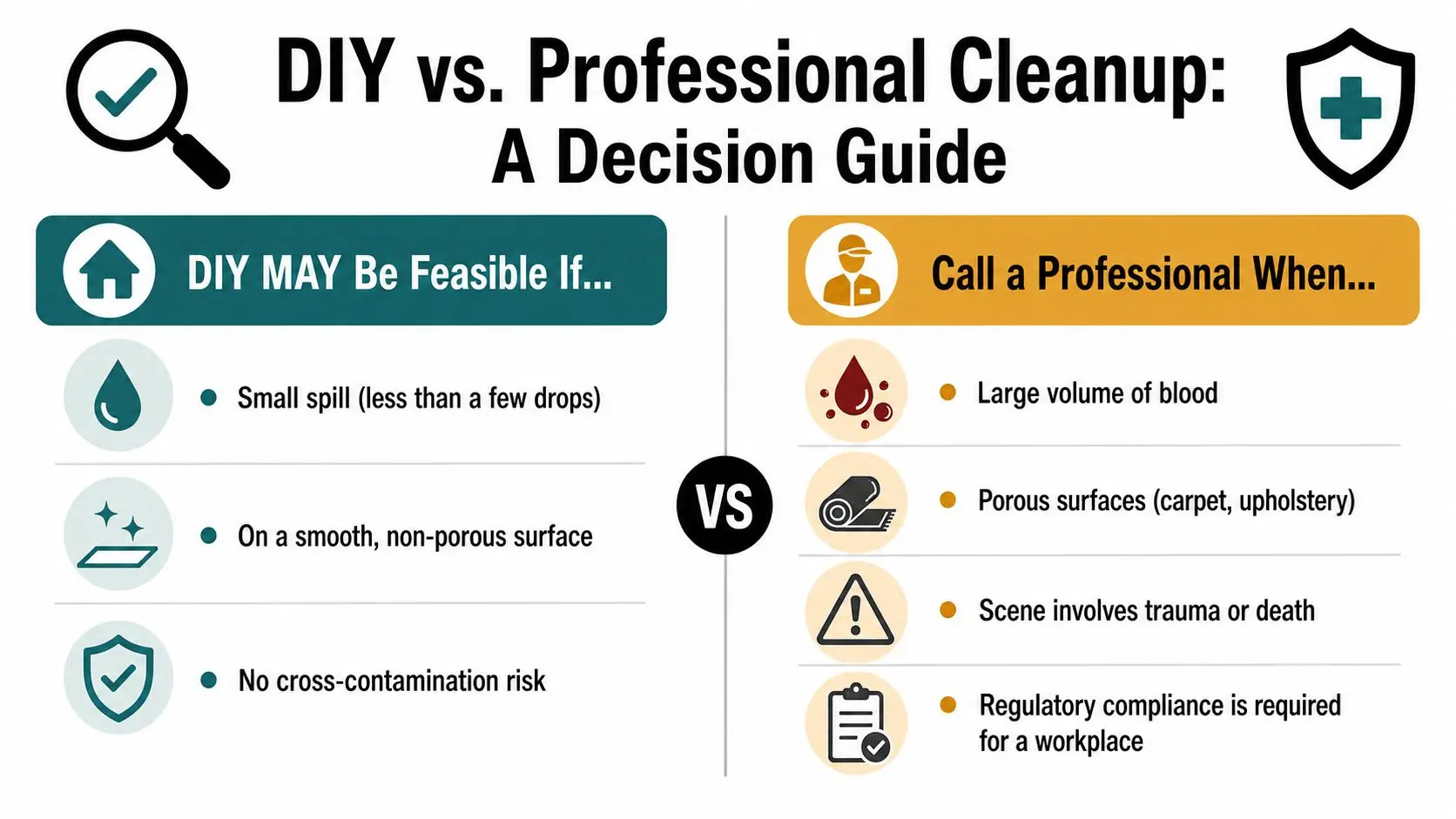
OSHA's public materials center on employer duties, exposure response, reporting, and medical attention. They don't give homeowners and landlords a simple decision tree for every spill size or surface type. That leaves property owners to make a practical judgment under pressure.
A useful comparison is straightforward:
| Manageable in-house situation | Professional response is warranted |
|---|---|
| Sealed hard surface | Carpet, upholstery, padding, or drywall |
| Small, contained spill | Broad spread, tracking, or saturation |
| No sharp objects | Needles, blades, glass, or unknown debris |
| One controlled work area | Shared hallway, restroom, vehicle, or commercial site |
| Clear cleanup and waste plan | Uncertainty about regulated disposal |
If the person cleaning is unsure whether the waste can enter an ordinary trash stream, that uncertainty itself is a reason to stop and call a qualified contractor. Trauma cleanup solutions address the broader combination of contamination, affected materials, and disposal requirements.
What to Expect When You Hire a Certified Restoration Contractor
Hiring a contractor should reduce uncertainty, not replace it with vague promises. Start by asking whether the company is licensed, insured, and IICRC-certified for the type of restoration and biohazard work involved. Certification doesn't eliminate the need for site-specific judgment, but it signals that the contractor works within recognized restoration practices and understands containment, cleaning, documentation, and safety.
A reputable company will inspect the site before defining the scope. The assessment should consider the amount of contamination, affected materials, access conditions, removal needs, disposal requirements, odor concerns, and whether other areas were exposed. The contractor should explain what can be cleaned, what may need removal, and what records you'll receive.
Insurance and documentation
Licensed and insured contractors can often coordinate with your insurer and provide photographs, work descriptions, invoices, disposal records, and other documentation requested during a claim. Coverage depends on the policy and the facts of the incident, so no contractor should guarantee payment or coverage before the insurer reviews the loss.
Costs also vary. The main factors include the scope of contamination, materials affected, regulated-waste requirements, equipment, containment, and after-hours response. A phone description rarely captures all of those variables, and responsible contractors shouldn't guarantee a price before an onsite inspection.
Response timing matters because access, odor, tracking, and material absorption can complicate the job. Ask when a technician can assess the property, what to do while waiting, and whether the company handles the work from initial inspection through decontamination, odor removal, sanitation, and waste coordination.
For Phoenix-area property owners, Restore Heroes is one local option that provides trauma and biohazard cleanup, onsite assessment, documentation, and coordination with insurers. Compare any contractor by its credentials, written scope, safety procedures, disposal plan, and communication, not by a promised outcome.
Next Steps and Common Questions for Phoenix Property Owners
Start by keeping people and pets away from the area. Close doors or use temporary barriers, don't touch blood or sharps, and avoid sweeping, vacuuming, pressure washing, or spraying in a way that could spread droplets. Cleanup should begin promptly, but protecting people from exposure comes first.
If someone was punctured, splashed, or exposed through broken skin, follow workplace exposure procedures immediately, report the incident, and seek medical attention. Don't wait for the property cleanup to address a medical concern.
For insurance and property records, photograph the area from a safe distance, note when the incident was discovered, record who had access, and preserve relevant incident reports. Ask the contractor for a written scope, documentation of affected materials, disinfectant information, waste records, and confirmation of the areas addressed.
A small, isolated spill on a sealed surface may be manageable with proper protection and procedure. Porous materials, sharps, unknown contamination, trauma scenes, and shared properties deserve professional evaluation. Phoenix homeowners, landlords, and facility managers can contact a certified local contractor for a free onsite inspection, then make a decision based on the actual condition rather than guesswork.
Restore Heroes provides professional trauma and biohazard cleanup for Phoenix-area homes, businesses, vehicles, and shared properties, including bloodborne pathogen decontamination and regulated-waste coordination. If you're facing a spill or need help deciding whether the situation exceeds in-house cleaning, visit Restore Heroes to request an onsite assessment and discuss the next safe step.