
You're standing in a quiet Phoenix house when the room lights flicker, a breaker trips, and a faint plastic smell hangs in the air near the panel. Maybe you found a blackened outlet cover, maybe the smoke was small, and maybe the fire was already out by the time you realized what happened. The hard part starts after that, because electrical fire damage isn't just the burned spot you can see, it's the heat, soot, and hidden wiring damage that can keep creating risk long after the flames stop.
What Electrical Fire Damage Really Means for Your Home
A small electrical event can look over fast and still leave a complicated mess behind. In a Phoenix home, that often means a scorched receptacle, a tripped breaker, a burnt smell that returns when the HVAC kicks on, and soot that settles into places no one notices on first glance. The visible mark is only the start, because the wire, insulation, and nearby building materials may have been stressed even if the room doesn't look badly burned.
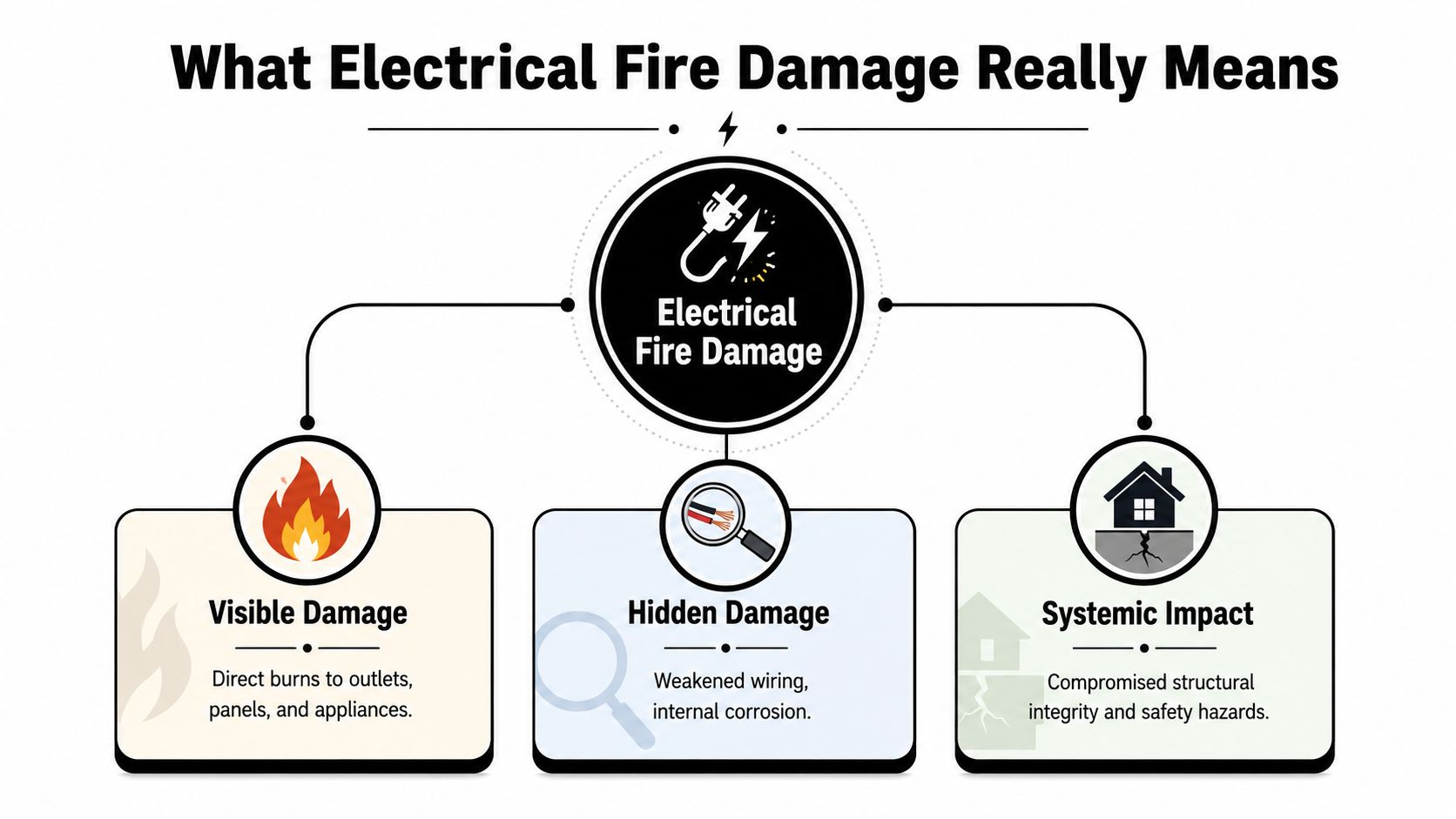
Visible damage isn't the whole story
The burn on an outlet or panel cover is the part homeowners recognize first. What's harder to see is the heat path inside the wall, especially where insulation, conductors, or junctions were exposed to abnormal current and temperature. A homeowner searching for local cleanup help may start with finding local smoke cleanup contractors, but the important question is whether the fire left contamination beyond the room where it started.
A useful way to think about it is this. Electrical fire damage is a chain, not a single event. First comes the fault in the wiring or appliance. Then comes ignition. After that, smoke and soot spread their own damage into drywall, trim, and contents.
Practical rule: If the outlet, breaker, or appliance looks repaired by appearance alone, that doesn't mean the circuit is safe again.
Why the damage category matters
Fire damage from electricity gets handled differently because the source can remain hidden inside walls, cabinets, or panels. The fire may be small, but the contamination can travel farther than the flame. That's why restoration crews treat this class of loss as both a fire event and a systems problem.
It also helps explain why a minor-looking incident can still trigger a broader response from insurers and restoration teams. The issue isn't just the char mark. It's the possibility that the circuit, nearby materials, and indoor air were all affected at the same time.
The Three Ways Electrical Fires Start
Electrical fire origin is not one single pattern. Investigators usually look for arcing, excessive ohmic heating without arcing, or external heating of nearby combustibles (source). Each one leaves different physical clues, and each one points to a different kind of repair.
A homeowner may see only a blackened outlet, a scorched panel cover, or a damaged appliance cord. The fire can start somewhere more hidden, then travel through materials around it. That is why restoration teams and investigators look at the burn pattern, the wiring condition, and the nearby materials together, rather than treating the most visible damage as the whole story.
Arcing, the tiny lightning bolt
Arcing is like a tiny lightning strike inside a wall or panel. A damaged conductor, loose connection, or failed component can jump current across a gap and create intense heat in a very small spot. That usually leaves localized pitting and melted conductor surfaces, which is why investigators look closely at service conductors, meter bases, breakers, and bus bars.
For a homeowner, the practical clue is often a breaker that keeps tripping, buzzing, or a smell that appears and disappears around one outlet or fixture. That is more than a nuisance. It can mean current is finding a path it should not take, and the heat may be building in a place you cannot see.
Resistance heating without arcing
Resistance heating works more like a clogged hose. Current still moves, but not cleanly, and the heat builds where the connection is bad or the insulation has failed. The damage pattern is broader, often showing discoloration and insulation breakdown over a longer stretch of cable or equipment (source).
That is the pattern homeowners miss most often because there may be no dramatic flash. A warm outlet cover, a dimming light, or a cord that feels hotter than it should can point to a problem that has been developing over time. In a restoration job, this often means the visible scorch mark is only part of the affected area, and the surrounding wiring or insulation may need testing before anyone decides what can be cleaned and what must be replaced.
External heating of combustibles
Sometimes the electrical part does not start the flame directly, but it heats something nearby until that material ignites. A light fixture too close to stored items, or equipment pressed against combustibles, can do this. The wiring may not look obviously destroyed, which is why investigators trace outward from the origin area instead of assuming the first burned object is the cause.
A breaker that trips repeatedly is the system asking for attention, not an annoyance to reset and forget.
The key point is simple. Different start patterns leave different repair needs. If the origin was arcing, the fault path may be too damaged to trust. If it was resistance heating, the hidden insulation damage can be broader than the black mark suggests. If nearby combustibles were heated first, the electrical source may need only limited repair while the surrounding contents and finishes take the larger hit.
Common Causes in Phoenix Homes and Rental Properties
A Phoenix home can look fine on the surface and still be carrying hidden electrical risk. Older branch circuits, heavy summer demand, attic heat, and cords tucked behind large appliances all create the kind of slow buildup that can turn a small fault into electrical fire damage. For a homeowner or landlord, the hard part is separating what can be cleaned from what has to be replaced, and that decision usually starts with where the fire began and how much heat reached the wiring, insulation, and nearby materials.
Where the trouble usually starts
In real homes, the same areas keep showing up, and each one tells investigators something different about the repair path.
- Panels and breakers: Loose connections, worn breakers, or a panel that has been pushed too hard can generate heat long before anyone sees burning.
- Kitchen and garage circuits: Window units, freezers, chargers, and countertop appliances can overload a single circuit faster than many owners expect.
- Appliance cords: Refrigerator cords and laundry hookups often get pinched, bent, or hidden behind heavy equipment, where damage can stay out of sight.
- Attic fixtures: Heat around fixtures and junctions can weaken insulation and expose connections that were already stressed.
Phoenix heat makes those weak points less forgiving. A system that was only borderline in milder weather can tip into failure once summer demand rises and the insulation around it has less room to resist heat.
That matters because fire risk is not abstract for residential electrical systems. The U.S. Fire Administration estimated 23,700 residential building electrical malfunction fires in 2023, with 305 deaths, 800 injuries, and $1.5016 billion in direct property loss, and over the 10-year period from 2014 to 2023 those fires showed a 2% increase in incidents and a 28% increase in dollar loss (USFA).
For a restoration crew, those numbers translate into a practical question. Is the wiring still sound enough to clean and verify, or has the heat traveled far enough that replacement is safer than repair?
What warning signs deserve fast action
Some signs are easy to ignore because the home still works. That is exactly why they deserve attention.
- Frequent breaker trips: Repeated trips usually mean the circuit is under stress or has a fault.
- Warm covers or buzzing: Heat and sound often point to loose or failing connections.
- Discoloration around outlets: Brown staining can signal past overheating.
- A burnt smell that returns: Odor that comes back after ventilation often means residue or hidden heat remains.
These clues matter because they help draw a line between surface cleanup and deeper electrical work. A discolored outlet cover may be replaceable on its own, but a recurring smell or a breaker that keeps tripping can mean the problem is still active inside the wall or panel. If you are trying to sort out next steps after a fire, a homeowner checklist like this guide for what to do after a house fire can help you keep the scene organized while the damage is being assessed.
The pattern is simple. Phoenix homes see a mix of heat, load stress, and aging components, and that combination can hide fire conditions until a trained inspection finds the source.
First Steps to Take Right After an Electrical Fire
The first rule is clear: Never use water on suspected electrical fires because water conducts electricity and can shock or electrocute the person responding, and government fire-safety guidance specifically says, “Never use water on suspected electrical fires” (guidance). If the fire is still active or spreading, get out and tell 9-1-1 that it's presumed electrical.
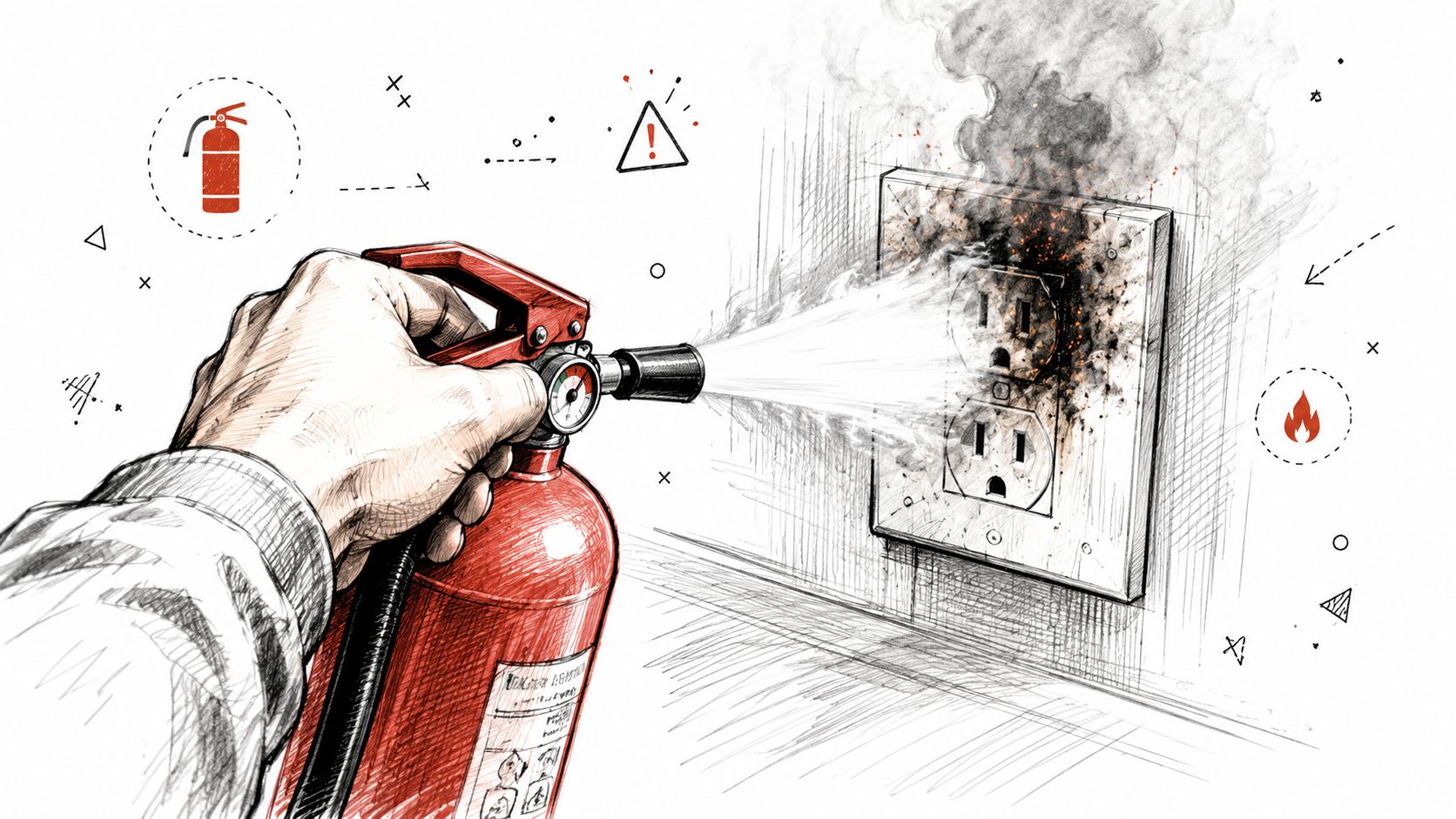
What to do while the scene is still hot
For a small electrical fire that is already contained and safe to approach, one safety guide says it may be smothered with baking soda or, if it's safe to do so, by removing the oxygen source with a heavy blanket or clothing item. It also classifies these fires as Class C, which means the extinguisher must be rated for electrical use, and many home units are ABC multipurpose extinguishers (safety guide).
After the flames are out, shut off power at the main breaker only if you can do that without exposure to smoke, heat, or falling material. Then keep everyone away from the damaged area until the system is checked. The wiring should stay de-energized until a qualified inspector verifies it's safe.
What to document right away
Photos matter because fire scenes change fast. Take pictures of the damaged outlet, panel, appliance, breaker position, soot patterns, and any nearby items that were affected. If you can safely do it, record the room from multiple angles before cleanup starts.
That file helps later when you're explaining the loss to insurance. It also helps a restoration team understand whether the damage is isolated or spread through the room. A homeowner checklist can keep that process organized, and this fire recovery checklist is a practical place to start.
Important: Don't switch power back on just to test whether “everything seems fine.” Hidden damage can turn a second time into a worse problem.
Hidden Damage That Keeps Working After the Flames Are Out
A burned outlet is visible. The smoke smell that lingers in the hallway, the discoloration inside a cabinet, and the residue on a wire tucked into a wall cavity are harder to spot, but they're often the bigger issue. A proper response has to account for hidden damage, not just the charred part everyone can see.
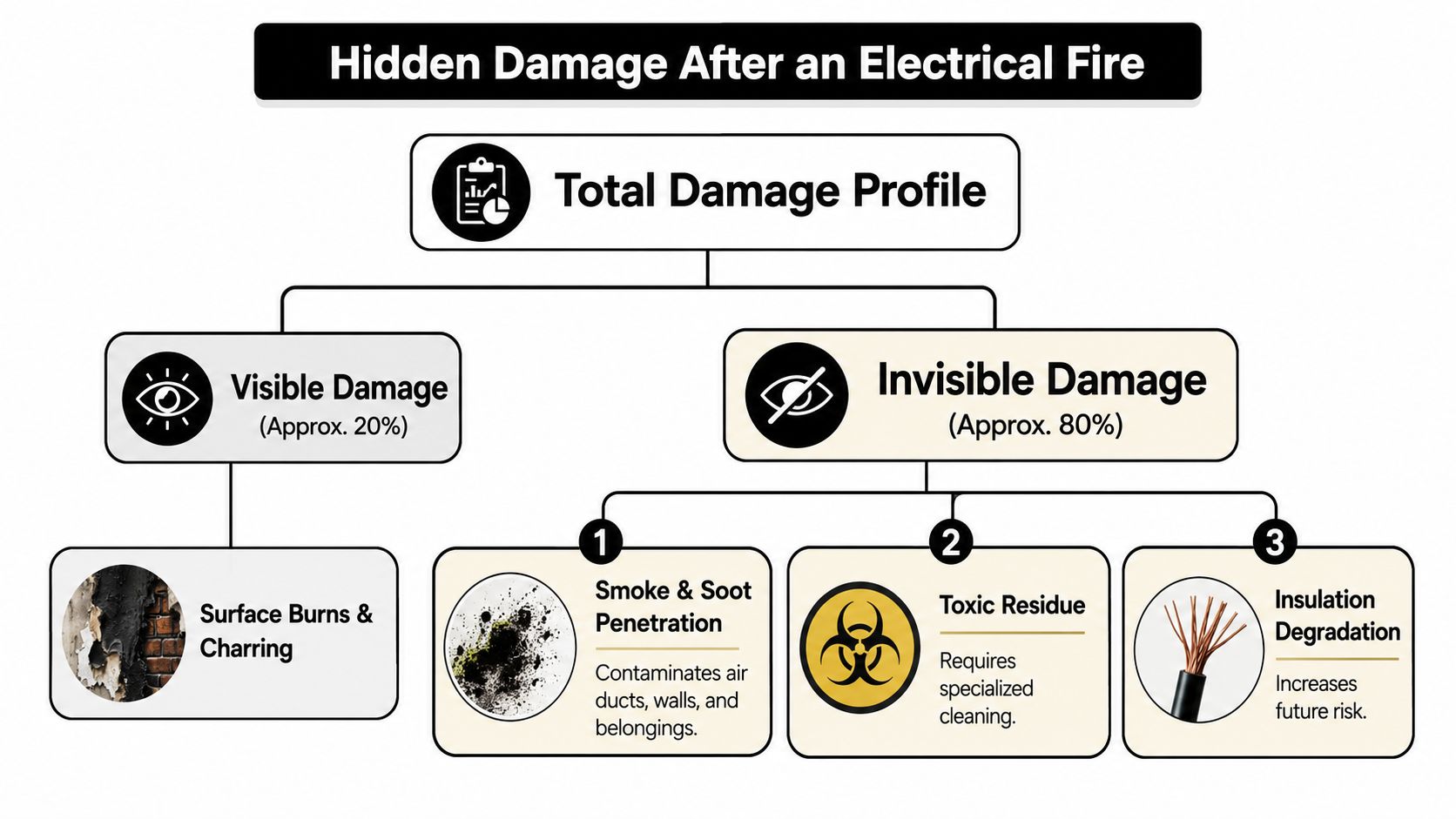
Why soot matters so much
Forensic guidance notes that soot is carbon-based and can create conductive leakage paths across insulation surfaces, which is why post-fire testing has to include insulation-resistance measurement and not just a visual check (forensic guidance). In plain language, soot can make a circuit behave differently even after the flames are gone.
That matters because the circuit may look intact while contamination is still sitting on surfaces that should be clean and nonconductive. Hidden residue can also keep feeding odor problems long after the scene looks tidy. If you've ever cleaned a room and still smelled smoke the next day, that's usually the part you're noticing.
Hotspots inside walls and cavities
Electrical damage doesn't always stop when the visible flame stops. A loose connection or damaged conductor can keep radiating heat inside a wall cavity, especially where insulation has already failed or shifted. That's one reason restoration teams use a combination of inspection tools rather than relying on touch or smell.
The technical cause behind that hidden heating is often insulation breakdown under overload, short-circuit, or high-resistance connection conditions. Industry guidance identifies short-circuiting as a leading cause in low-voltage systems, with deteriorated insulation and loose or damaged connections creating unintended current paths that generate intense heat and sparks (technical guidance).
Why cleanup alone can miss the hazard
A room can be wiped down and still stay unsafe if the electrical path hasn't been traced. That's why homeowners should think in terms of contamination, heat, and damage to the conductor itself, not just the stain on the wall. If you're looking for a plain-language cleanup reference, this soot cleaning guide can help you understand what surface cleaning can and can't solve.
How Professional Restoration Works
A good restoration response starts with separating what can be saved from what has to go. The first decision is not about paint color or flooring. It is about whether the affected materials can be cleaned without leaving behind contamination or hidden electrical risk.
Assessment comes before cleaning
Technicians look at the burn pattern, the soot load, the wiring path, and the condition of nearby materials. They also test whether smoke residue has created conductive paths, because visual appearance alone can be misleading. A switch plate or cord can look clean and still be unsafe.
A second layer of judgment comes in when the item still looks intact but is no longer trustworthy. Soot, heat, and arcing can leave a component degraded in ways you cannot see from the outside. For homeowners, that is often the hardest part, because the damage feels minor until a professional explains why it is not.
Mitigation and odor control
Once the hazard is isolated, mitigation begins. That can include board-up, debris removal, drying any water used during firefighting, and stabilizing the site so the damage does not spread. Odor control may involve treatments such as thermal fogging, ozone, or hydroxyl methods, depending on what was affected and how far the smoke traveled.
If the electrical damage reached building materials, the crew may also remove contaminated drywall, insulation, or trim rather than trying to cover over it. For Phoenix homeowners who want a clear picture of how that sequence usually unfolds, the fire damage restoration process shows how a professional crew moves from assessment to final repair.
Repair and verification
Repair is not just cosmetic. It can include electrical re-termination, replacement of damaged materials, drywall repair, and final safety checks before the space is returned to use. A transparent process matters here, because the homeowner needs to understand why one item was cleaned and another was replaced.
Practical rule: If contamination, heat, or arc damage has changed the material's safety, replacement is the cleaner decision even when the surface still looks usable.
The insurance side usually becomes clearer when the restoration scope is written in plain language and supported with photos. That is also when homeowners often need a practical way to organize records, including if they want to compare data destruction services for documents or devices that cannot stay in the home. If Restore Heroes is involved, the value is in having one team track what was cleaned, what was removed, and what needs to be documented for the claim.
Navigating Insurance and Documentation After the Fire
Insurance goes smoother when the story is organized early. The homeowner who documents the loss clearly, keeps damaged materials in place until the adjuster sees them, and works from one written scope of work usually has fewer avoidable delays. The main job is to turn a stressful event into a clear record.
What to capture and what not to throw away
Start with photos, then keep receipts for emergency work, temporary fixes, and any items that had to be removed. Don't toss damaged outlets, cords, breakers, or appliance parts before they've been documented. Those objects can matter later when the cause and scope are reviewed.
A written estimate from the restoration company matters more than verbal reassurance because it gives the adjuster something concrete to review. A single point of contact also helps, since claims slow down when too many people are sending mixed updates.
If you need a place to organize evidence, these documentation requirements are worth using as a reference during the first few days.
What insurance conversations usually hinge on
Homeowners often need to show what was damaged, what was cleaned, and what had to be replaced. That can include contents cleaning, board-up, and temporary living arrangements if the home can't be occupied safely. I'm not promising any outcome here, because coverage depends on the policy and the facts, but clarity usually helps.
For items that can't be restored safely after smoke contamination, it's better to document the condition than argue over appearance alone. If you also need to manage secure disposal of files or media that were exposed to smoke, it can help to compare data destruction services before anything leaves the property.
The strongest claim file is the one that shows the condition of the home before cleanup changes the evidence.
Preventing the Next Electrical Fire in Your Home
A burned outlet cover or scorched breaker panel can make prevention feel obvious after the fact, but the useful question is what to watch before that point. Start with the panel, then work outward through outlets, cords, appliances, and smoke alarms. The NFPA analysis of 2015 to 2019 U.S. home structure fires found that electrical problems caused 13% of all home structure fires and 21% of direct property damage costs, with electrical distribution equipment alone accounting for an annual average of 17,700 fires in that period (NFPA analysis). That is a strong reason to treat electrical maintenance like routine home care, not something to handle only after a failure.
What to prioritize this week
- Panel inspection: Schedule a licensed electrician to inspect older homes, especially if the house has had frequent tripping, remodel work, or new heavy appliances.
- Outlet protection: Test GFCI outlets and look into AFCI protection where appropriate, because those devices help catch fault conditions earlier.
- Cord and appliance checks: Replace damaged cords and unplug chargers that run hot.
- Load management: Don't stack too many high-demand devices on one circuit, especially during the hottest months.
- Detector checks: Test smoke alarms and keep them working, because early warning still matters most.
A fire safety inspection checklist can help you review the basics before monsoon season or a summer load spike puts extra strain on the system.
The Phoenix habit that helps most
Homes in Phoenix deal with heat, dust, and long cooling cycles, so small electrical problems can sit unnoticed until they worsen. A quick visual check behind appliances, around the panel, and near the garage or laundry area can catch wear before it turns into a loss. For rental properties, turnover is a practical time to review outlets, detector function, and damaged cords, because a fresh set of eyes often catches what daily use hides.
Prevention also means knowing what belongs in the repair plan and what belongs in the replacement pile after a fire. A melted cord, a discolored outlet, or a breaker that no longer behaves normally usually needs more than a cosmetic fix, while surfaces with light soot may be cleanable if the underlying materials were not overheated. That decision is easier when you have a written inspection record and a restoration team that can explain the difference in plain terms.
Electrical fire damage is disruptive, but it becomes easier to handle once you know how the evidence, the cleanup, and the insurance file fit together. If you're dealing with soot, odor, or wiring concerns after a fire in the Phoenix area, contact Restore Heroes for restoration help that starts with assessment, mitigation, and clear documentation for the next step.