
You wake up after a Phoenix monsoon and find a tree limb across the roof, water pooled beside the sofa, and ceiling paint beginning to bubble. Outside, a window is cracked, the power is out, and you're not sure whether to call your insurer, a roofer, an electrician, or a water-removal company first. That confusion is normal, but the order of your next steps matters.
Storm damage restoration in Phoenix isn't just a cleanup job. It can involve roof and window repairs, water extraction, structural drying, debris handling, electrical safety, mold prevention, and insurance documentation. The most reliable recovery process starts with safety, identifies how the water entered, preserves evidence, and dries the building before hidden moisture creates a larger problem.
When Monsoon Season Hits Your Phoenix Home
Phoenix monsoon losses often involve several hazards at once. A downburst can strip roof tiles, wind-driven rain can enter through a damaged roof edge, hail can break windows, and runoff can collect against doors or garage walls. One property may therefore have roof damage, interior water intrusion, fallen landscaping, and localized flooding before the storm clears.
Phoenix has a clear historical reminder of how severe wind losses can become. On August 14, 1996, a major storm in the northwest Phoenix metro area produced a severe thunderstorm and downburst that ripped off tile roofs and caused $160 million in damage, according to the National Weather Service history of Arizona storms. Wind-driven roof damage is a recurring concern when monsoon outflows intensify.
Flooding creates a separate coverage and restoration question. During the 1977 to 1980 flood period, Phoenix was declared a disaster area three times, with 18 deaths and $310 million in damage, according to the U.S. Geological Survey's Arizona flood history. The September 5, 1970 Labor Day flood also produced severe Valley impacts, including water reaching 4 feet deep in some Phoenix intersections and the evacuation of 250 homes in Scottsdale.
Field perspective: A dry-looking ceiling can conceal wet insulation, framing, and electrical components. Surface appearance shows where to investigate, not whether the structure is safe to rebuild.
The water's entry point affects both the work and the insurance discussion. Wind-driven rain entering through storm-damaged roofing or windows is often treated differently from surface flooding that enters from rising runoff, streets, or drainage paths. Policies vary, so document the roof, openings, waterline, and surrounding drainage before cleanup changes the evidence.
Recovery proceeds in practical phases: control hazards, identify the source, remove water, map moisture, dry affected materials, clean the area, and repair or replace what cannot be salvaged. Insurance coordination runs alongside this work because the cause and entry point may affect coverage.
Homeowners can begin with a flood risk assessment to review how terrain, drainage, roof condition, and nearby flow paths may affect future losses. It cannot change a current policy, but it can expose vulnerabilities before the next storm.
Immediate Safety Steps and Damage Mitigation
A monsoon leak can leave a Phoenix home with several hazards at once. Hail may break skylights, wind can displace tiles or flashing, and runoff may enter at floor level. Treat each entry point separately, because wind-driven rain and surface flooding can require different cleanup decisions and insurance documentation.
Before touching wet materials, make three checks. Confirm that power is isolated if water reached outlets, appliances, electrical panels, or extension cords. Stay away from downed lines and anything contacting them. FEMA warns that lines can re-energize unexpectedly, so never touch, cut, move, or place debris on them. Leave chemicals, propane tanks, and other hazardous debris to the fire department, utility, or emergency crews.
Check the structure from the ground. Do not climb onto an unstable roof. Photograph missing tiles, a punctured membrane, broken windows, displaced flashing, fallen trees, and other visible openings with the phone's location and time enabled if possible. These images can help establish how wind-driven rain entered, especially if later cleanup removes the visible path.
What to avoid before cleanup
Do not restore power until a qualified professional assesses affected electrical systems. Do not walk through standing water when its depth, source, or electrical exposure is uncertain. Do not discard damaged contents, cut into walls, or begin major tear-out before documenting the condition. A waterline at the floor, wet insulation, and staining around a roof opening may each support a different explanation of the loss.
Use protective equipment for any permitted handling. FEMA's flood cleanup guidance calls for long pants, sturdy shoes, goggles, gloves, and masks. EPA guidance specifically recommends an N95 respirator, goggles, long sleeves, gloves, pants, and boots. Regular household shoes and a basic paper mask do not provide adequate protection for flood cleanup.
What to do while the property is secured
If conditions allow, place containers beneath active leaks and move undamaged belongings away from wet areas. Photograph the interior and exterior, label files by room, and preserve original images. For appliances and major equipment, record the make, model, and serial number. Photograph furniture, electronics, cabinets, flooring, and personal property before moving or discarding anything. Save repair receipts and separate damaged items from unaffected property.
The CDC's mold prevention guidance recommends cleaning and drying wet materials within 24 to 48 hours to reduce mold risk. Keep salvageable wet items ventilated, while materials that cannot be repaired should be removed appropriately. Moisture can remain inside wall cavities, subfloors, cabinets, and insulation even after surfaces appear dry.
Never mix cleaning products. EPA guidance warns against combining chemicals or adding bleach to other cleaning products. For larger losses, a water damage mitigation team can extract water, set up drying equipment, and maintain a clearer record of the work performed.
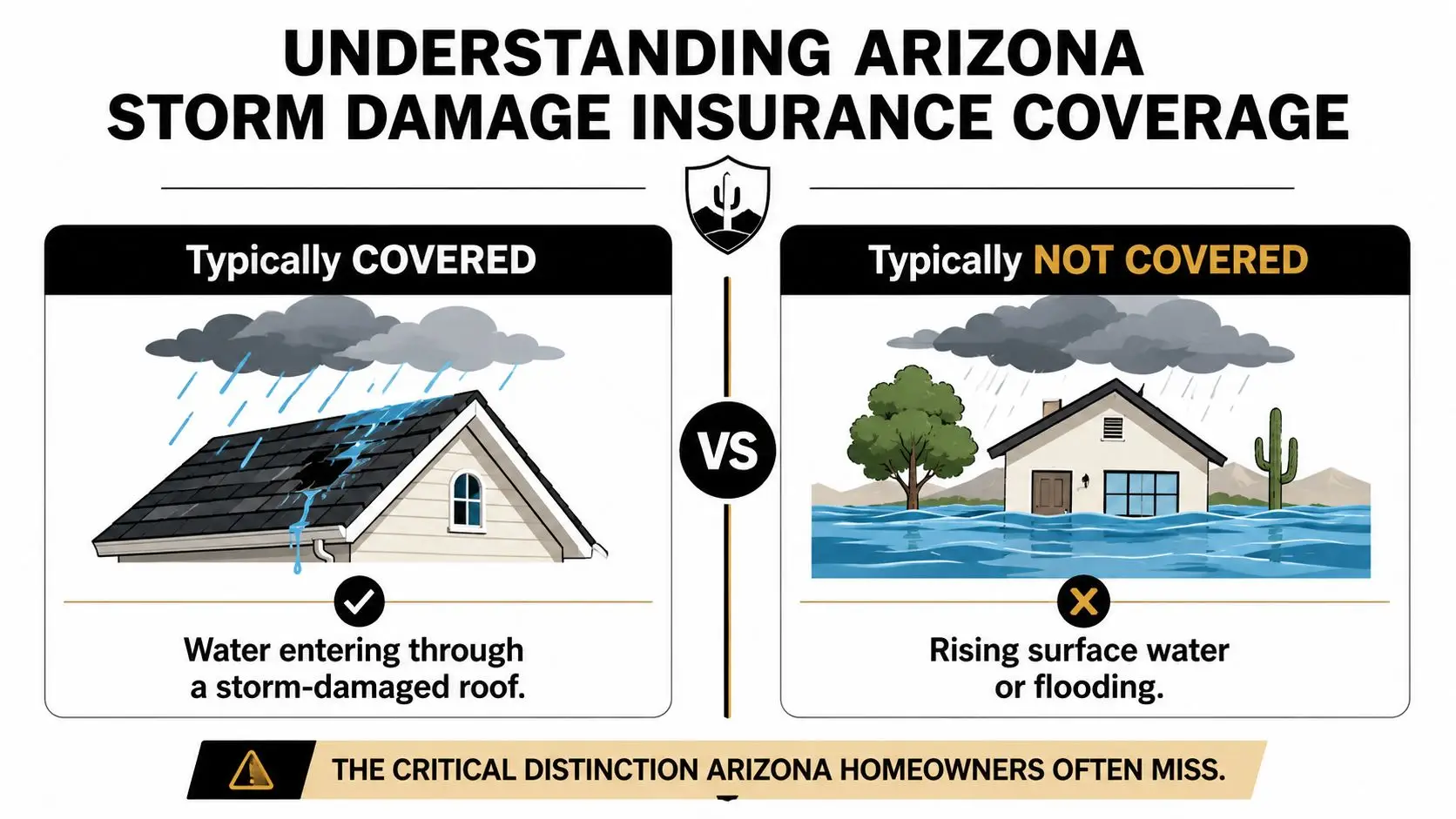
Understanding Insurance Coverage for Storm Damage
A Phoenix monsoon can damage one home in several ways at once. Wind may lift tiles or tear flashing, hail may damage roofing or exterior surfaces, and rain may enter through those openings. At street level, surface water can also flow toward doors, garages, and low areas. Insurance may treat each source differently.
Water entering through a storm-damaged roof is often covered under a homeowners policy, while rising surface water is generally excluded from standard homeowners insurance. Flood insurance is purchased separately and typically has a 30-day waiting period, according to the Arizona insurance information summarized in this Phoenix storm coverage report.
The entry point and sequence matter. If a room has water from a roof opening and water that entered at floor level, the claim may involve separate causes, exclusions, and policy provisions. Wind-driven rain that follows a covered opening is not the same insurance question as surface flooding that rises from outside the building.
Build the claim file around cause and sequence
Give the adjuster evidence that explains what happened, not only a total-loss description. Include exterior roof, gutters, windows, doors, walls, flooring, ceilings, and visible water lines, followed by room photographs from multiple angles. Preserve original files and label them by room. A dated weather report or service record can help connect the damage to the storm, but the photographs should show the actual entry points and affected materials.
For appliances and major equipment, record the make, model, and serial number. Photograph furniture, electronics, cabinets, flooring, and personal property before disposal or permanent repair. Keep damaged property separate from unaffected items, and retain receipts for emergency protection, extraction, temporary repairs, and replacement purchases.
Phoenix rainfall can vary sharply from one neighborhood to another. Recent local storm reporting described differences in flooding, downed power lines, and outages, so a nearby property may have experienced a different water source. “The house flooded” is too broad for a claim file. Identify whether water entered through a roof opening, failed window, door threshold, or rising surface water.
Coverage reminder: A restoration company can document physical conditions and explain the work performed, but only your policy and insurer determine coverage.
Avoid authorizing permanent reconstruction before the damaged areas are documented and the insurer has had a reasonable opportunity to inspect, unless emergency work is needed to protect people or prevent further loss. Ask for a written scope separating emergency mitigation, demolition, drying, cleaning, testing, and reconstruction. Those records show what work was performed and why, without treating every repair as automatically covered.
Homeowners with roof losses can use this guide to navigating insurance claims for roof damage when organizing roof evidence and communicating with the carrier. For the wind-driven rain versus surface flooding distinction, review this insurance coverage guide for water damage and use it to frame questions without assuming that every form of water intrusion receives the same treatment.
Professional Structural Drying and Moisture Control
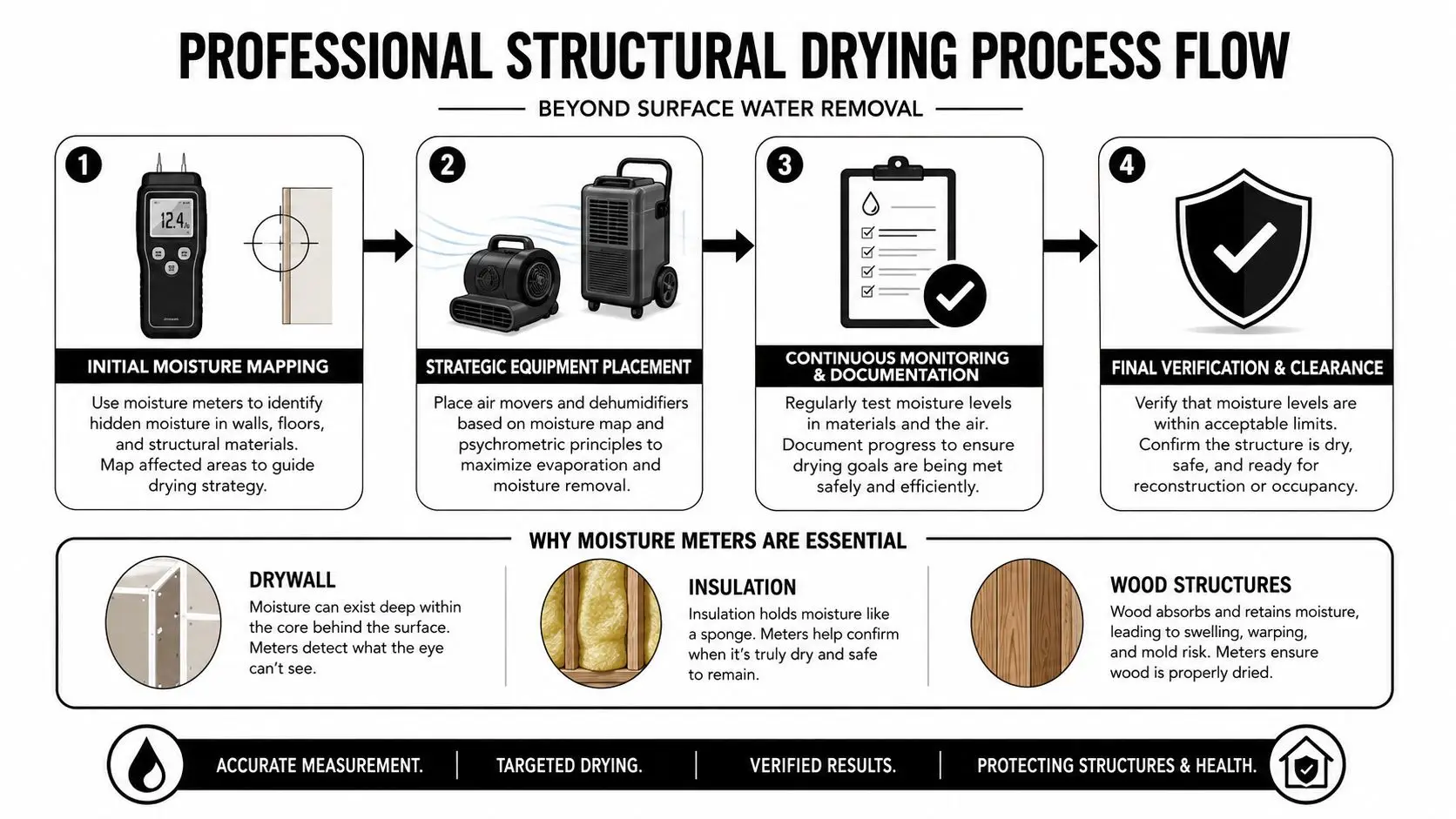
Extraction removes standing water. Structural drying removes moisture that extraction can't reach. That difference explains why a room may feel dry while drywall, insulation, wood framing, cabinetry, and subfloor assemblies remain wet.
Restoration technicians use moisture meters to map affected materials and establish a drying baseline. Visual inspection is unreliable for porous materials because the surface can dry first while the interior remains saturated. A meter reading also helps identify areas that were not obviously affected, such as the opposite side of a wall, the toe-kick beneath cabinets, or flooring near a damaged doorway.
How technicians control hidden moisture
A practical drying setup combines air movement with dehumidification. Air movers move moisture out of material surfaces, while industrial dehumidifiers remove that moisture from the indoor environment. Phoenix's hot, dry outdoor air can help in some conditions, but opening windows isn't a complete strategy when outdoor humidity rises during a monsoon or when air movement pushes moisture into another part of the building.
Technicians monitor the affected materials repeatedly rather than leaving equipment in place without measurements. The technical benchmark is to bring salvaged building surfaces and materials below about 18% moisture content, with restoration and extension guidance recommending tighter targets such as 15% or 13% in wood before rebuilding or reinstalling coverings, as explained by North Dakota State University Extension. The correct target depends on the material, surrounding conditions, and the professional standard being applied.
The process usually follows this pattern:
- Map the affected assemblies: Readings identify wet and dry zones across walls, flooring, cabinets, and framing.
- Create an equipment plan: Air movers and dehumidifiers are positioned to reach the affected materials without spreading contamination.
- Track the trend: Technicians record readings and adjust equipment when progress slows.
- Confirm before rebuilding: Materials must meet the agreed drying criteria before insulation, drywall, flooring, or trim goes back in.
Materials that remain wet can support fungal growth and create odor or deterioration problems. Drywall, insulation, and saturated wood deserve particular attention because they can hold moisture internally after surface water disappears.
For Phoenix properties, structural drying also has to account for tile roofs, stucco exteriors, concrete slabs, wood framing, cabinetry, and mixed flooring systems. Each material releases moisture differently. A competent crew doesn't use the same equipment arrangement for every room or declare the structure dry because a fan has been running.
This structural drying service approach is designed around measurement, controlled equipment placement, and verification rather than guesswork.
A short visual explanation can also help homeowners understand why surface drying isn't enough:
Choosing a Certified Storm Restoration Contractor
Phoenix homeowners often receive several kinds of help after a storm. A roofer may repair the exterior opening. An electrician may address unsafe circuits. A restoration contractor handles extraction, drying, contents protection, cleaning, and coordination between emergency work and reconstruction. The right choice depends on the damage, but the contractor should explain where its responsibility begins and ends.
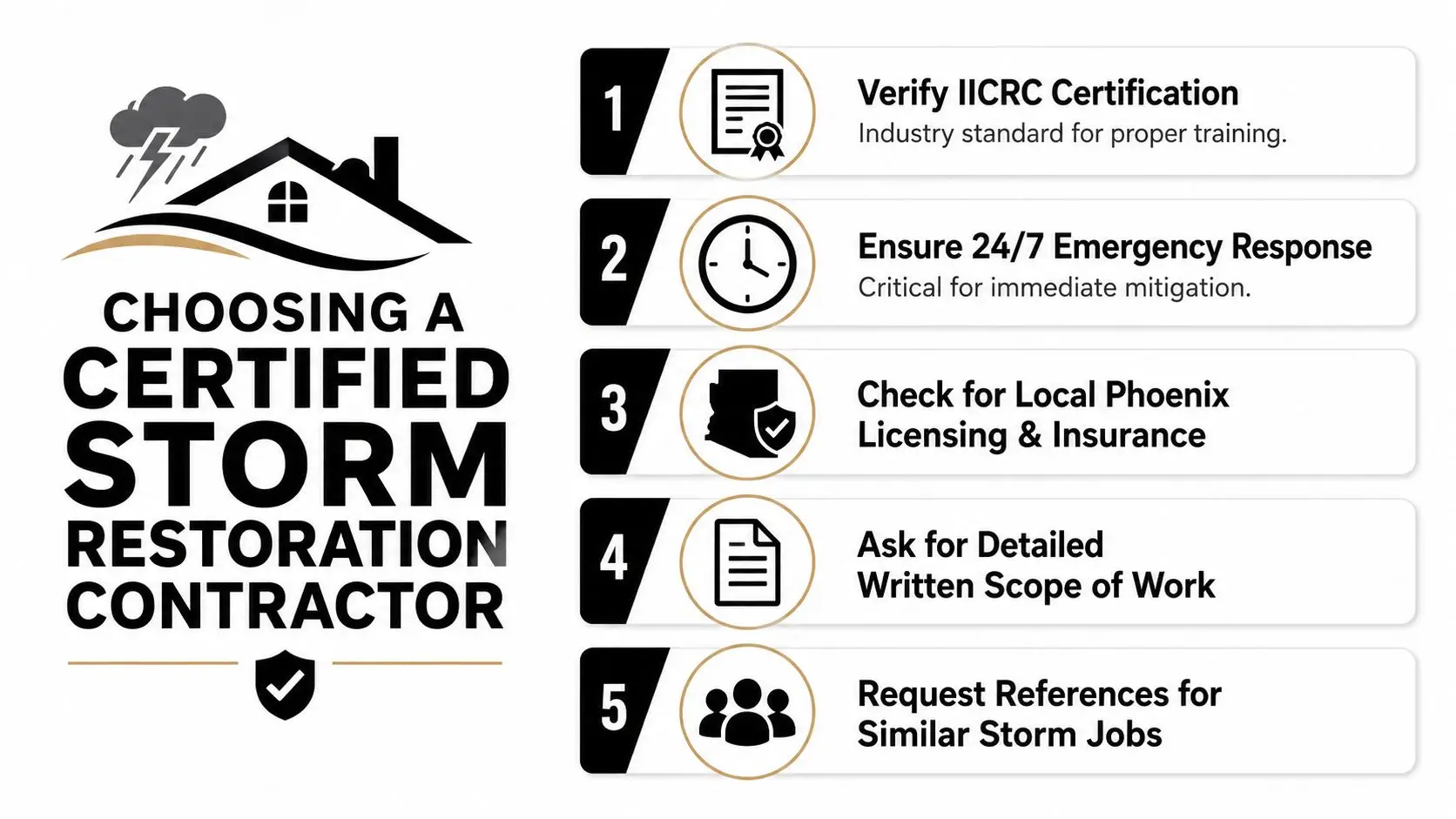
Look for IICRC certification, which indicates training in recognized restoration methods. Certification alone doesn't settle every hiring decision, but a contractor that can explain moisture mapping, drying targets, containment, equipment use, and documentation is easier to evaluate than one that offers only a fast verbal estimate.
Compare the practical safeguards
| What to check | Why it matters |
|---|---|
| Emergency availability | Water damage can worsen before a normal appointment is available. Ask how the company handles after-hours calls and whether response timing is written clearly. |
| Licensing and insurance | Confirm that the business is properly licensed, bonded, and insured for the work it proposes. |
| Written scope | The scope should separate extraction, demolition, drying, cleaning, and reconstruction instead of combining everything into one vague total. |
| Payment terms | Understand deposits, deductibles, direct billing, and what happens if the insurer disputes part of the work. |
| Local experience | Phoenix crews should understand monsoon outflows, roof tile failures, stucco, slab construction, and Valley-area drainage patterns. |
| References | Ask for references involving comparable roof, hail, wind, and interior water losses. |
A company offering an Immediate Response Guarantee may be useful when the critical drying window is running, but read the actual terms. No contractor should promise coverage, pricing, or a final outcome before inspecting the property and reviewing the conditions.
Be cautious if a contractor demands full payment before work begins, refuses to provide a written scope, pressures you to sign over insurance benefits without explanation, or lacks verifiable licensing, bonding, and insurance. “We'll handle everything” isn't a substitute for clear documentation.
Property owners sometimes need adjacent services while coordinating a broader recovery. For example, if a damaged HVAC system also requires attention, a separate resource on the best AC repair companies in Mesa may help with that specialized decision. Keep the restoration scope and HVAC work clearly separated for communication and claim records.

The Complete Storm Restoration Timeline
Storm restoration follows a fixed sequence. Each phase enables the next, and skipping ahead is a common cause of callback work, repeated drying, or repairs that must be opened again.
Emergency response and assessment
The first visit should identify immediate hazards, locate the water source, protect openings, and document visible damage. Depending on conditions, the crew may recommend temporary roof covering, board-up work, controlled access, or electrical isolation. The immediate goal is a safe, documented plan, not a premature promise about the final repair cost.
Extraction and mitigation
Technicians remove standing water, protect contents, and decide which materials can be dried in place. Saturated carpet pad, damaged drywall, insulation, and other materials may require removal when drying them safely is not practical. The written scope should separate emergency mitigation from reconstruction, especially when wind-driven rain, hail, and surface flooding affect different areas or involve different coverage questions.
Drying and monitoring
Air movers and dehumidifiers remain in place while technicians track moisture readings in affected materials and nearby areas. Equipment settings may change as conditions improve. Drying records should show the readings used to confirm that rebuilding can begin, rather than relying only on how surfaces feel.
Cleaning and debris handling
The crew removes storm debris, cleans affected surfaces, and addresses contamination according to the water source. A roof leak caused by wind-driven rain may require a different cleaning approach from surface floodwater, which can carry soil, chemicals, and other contaminants. Phoenix monsoon events can involve both conditions, so the affected areas should not be treated as one uniform loss.
Repairs and reconstruction
After the structure is dry and the insurer has reviewed the documented loss, repairs can address roofing, drywall, insulation, flooring, cabinets, paint, windows, and related finishes. Permits, specialty materials, adjuster decisions, and subcontractor availability can extend this phase. Permanent work may also wait while the parties resolve whether a damaged area resulted from covered wind-driven rain or excluded surface flooding.
Final walkthrough
The final review should confirm that the agreed scope is complete, affected areas are clean, equipment is removed, and unresolved questions are recorded. Homeowners should receive relevant drying documentation, invoices, repair records, and warranty information where applicable.
Project duration depends on the depth of water intrusion, affected rooms, material availability, permit requirements, and insurance review. Waiting for an adjuster visit can delay permanent repairs, while safe emergency measures to prevent further damage generally should not wait. The water damage restoration timeline provides useful expectations without treating every Phoenix loss as identical.
Good communication includes updates about moisture readings, equipment changes, newly discovered damage, insurer requests, and decisions requiring homeowner approval. A controlled project should make clear what happened yesterday, what technicians are measuring today, and what must happen next.
How Restore Heroes Serves Phoenix Homeowners
Restore Heroes operates as a Phoenix metro restoration provider for residential and commercial storm losses. Its stated service model combines IICRC certification, 24/7 availability, an Immediate Response Guarantee, free onsite inspections, no upfront payment, and acceptance of all insurance, subject to the actual policy and claim circumstances.
The team's role can cover assessment, mitigation, structural drying, cleaning, sanitation, and coordination with insurers. That full-process approach addresses a common problem after monsoon damage, where the homeowner has to coordinate a roofer, water-removal crew, contents handler, and reconstruction contractor without a single documented scope.
Restore Heroes serves Phoenix, Mesa, Gilbert, Scottsdale, Chandler, and surrounding communities. Local familiarity matters because crews encounter the area's tile roofs, stucco walls, slab foundations, intense downbursts, hail, wind-driven rain, and neighborhood-specific drainage conditions.
A 100% satisfaction guarantee is part of the company's stated service offering, but homeowners should still review the written scope, payment terms, insurance decisions, and repair documentation. Those records remain important regardless of which restoration contractor you choose. For broader guidance on how to find storm damage restoration near your property, compare licensing, certification, emergency procedures, and documentation practices before signing.
If a Phoenix monsoon has damaged your roof or flooded part of your property, Restore Heroes can provide a free onsite inspection, emergency mitigation, structural drying, and insurance coordination with no upfront payment stated in its service model. Visit Restore Heroes to request help and start documenting the loss before hidden moisture creates a larger restoration problem.