
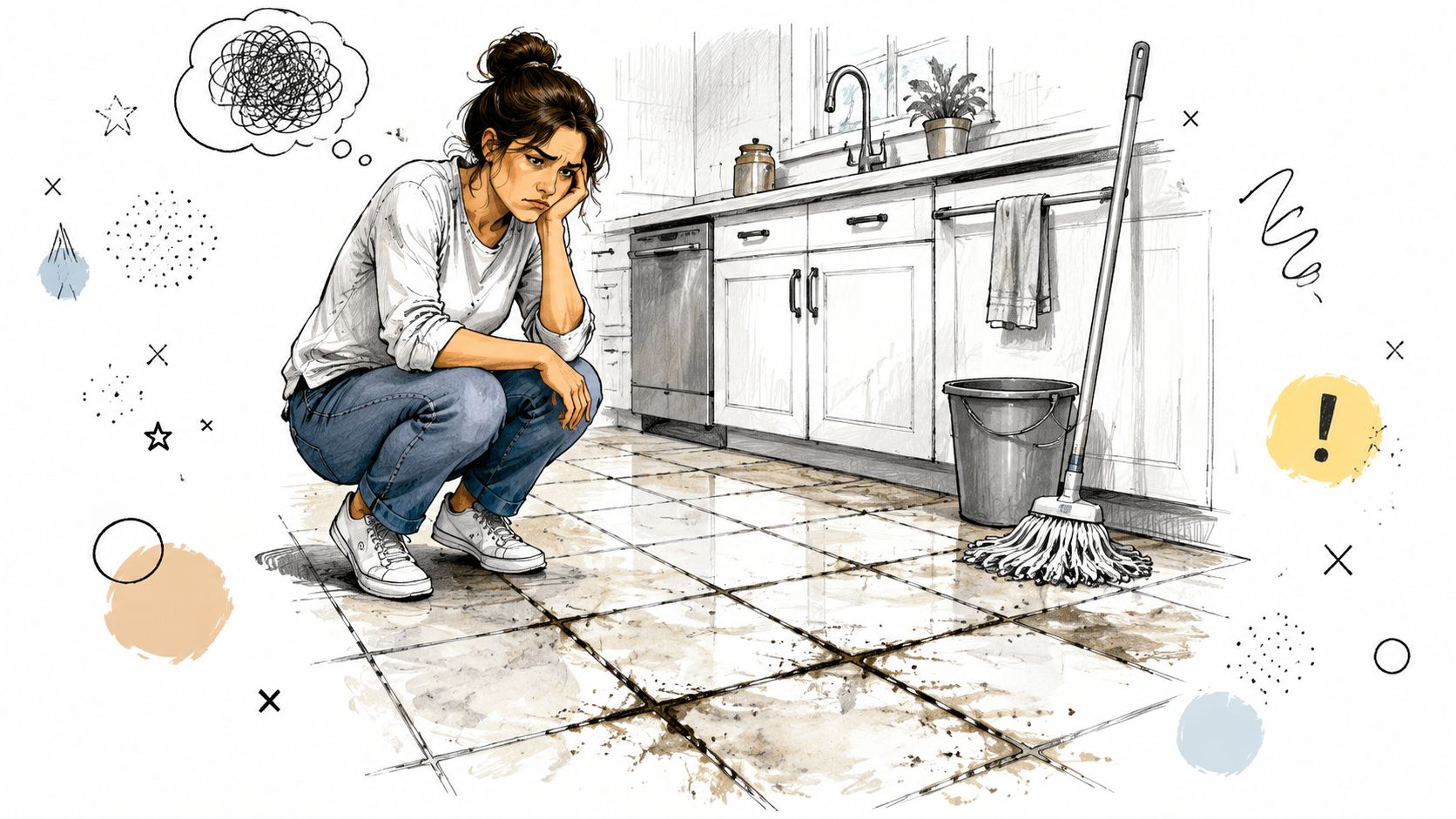
You've probably seen it yourself. The tile still looks fine from across the room, but up close the grout lines look dull, blotchy, and stubbornly dirty no matter how hard you scrub. In Phoenix, that frustration often gets worse because hard water leaves mineral residue behind, and monsoon season can add moisture problems that don't show up until the grout has already changed color.
Tile and grout restoration is the point where cleaning stops being enough and diagnosis starts mattering. Good work doesn't just make a floor look better, it helps answer a bigger question, whether you're dealing with surface soil, mineral buildup, mold, or a hidden moisture issue under the tile. That distinction matters because the wrong fix can waste time and leave the actual problem untouched.
If bathroom moisture is part of the picture, this guide to bathroom mold prevention is a useful companion piece.
When Mopping Is No Longer Enough
A Phoenix homeowner usually notices the problem in the same way. The kitchen floor or shower still feels clean after mopping, but the grout line by the vanity, the entryway, or the tub keeps looking gray, orange, or speckled. That's when people start trying stronger cleaners, harder scrubbing, and more frequent wiping, only to find the floor still looks tired.
What the floor is telling you
Dirty grout doesn't always mean dirty habits. Grout is porous, so it can hold onto soil, soap residue, minerals, and moisture much longer than the tile face does. That's why a floor can look acceptable from five feet away and still read as neglected in natural light.
In Phoenix, I also watch for a second pattern, the kind that looks like a film or crust along the grout edges. That can be mineral residue from hard water, or it can be a symptom of water moving through the system and carrying dissolved material to the surface. If the discoloration keeps coming back after cleaning, the issue may not be on the surface at all.
Practical rule: if the grout changes color quickly after cleaning, don't assume the cleaner failed. The floor may be telling you there's a moisture path, a substrate issue, or a sealer problem underneath.
Tile and grout restoration matters because installed tile is part of a much larger market of hard-surface finishes that eventually need cleaning, repair, regrouting, sealing, or replacement. The tile grout market is estimated at USD 2.73 billion in 2024 and projected to reach USD 5.141 billion by 2035, which reflects long-run demand for maintenance across residential, commercial, and industrial spaces (Market Research Future). That demand makes sense in older homes too, where bathrooms, kitchens, and laundry rooms take years of wear before anyone calls a professional.
A practical Phoenix example is a shower that gets wiped down often but still looks shadowed at the base. Surface cleaning may remove soap scum, but if the grout has absorbed moisture or mineral residue, the stain won't behave like a normal dirt problem. In those cases, restoration becomes less about scrubbing and more about figuring out what the floor is made of, how it's been exposed, and whether the discoloration is telling the truth.
Diagnosing Common Tile and Grout Problems
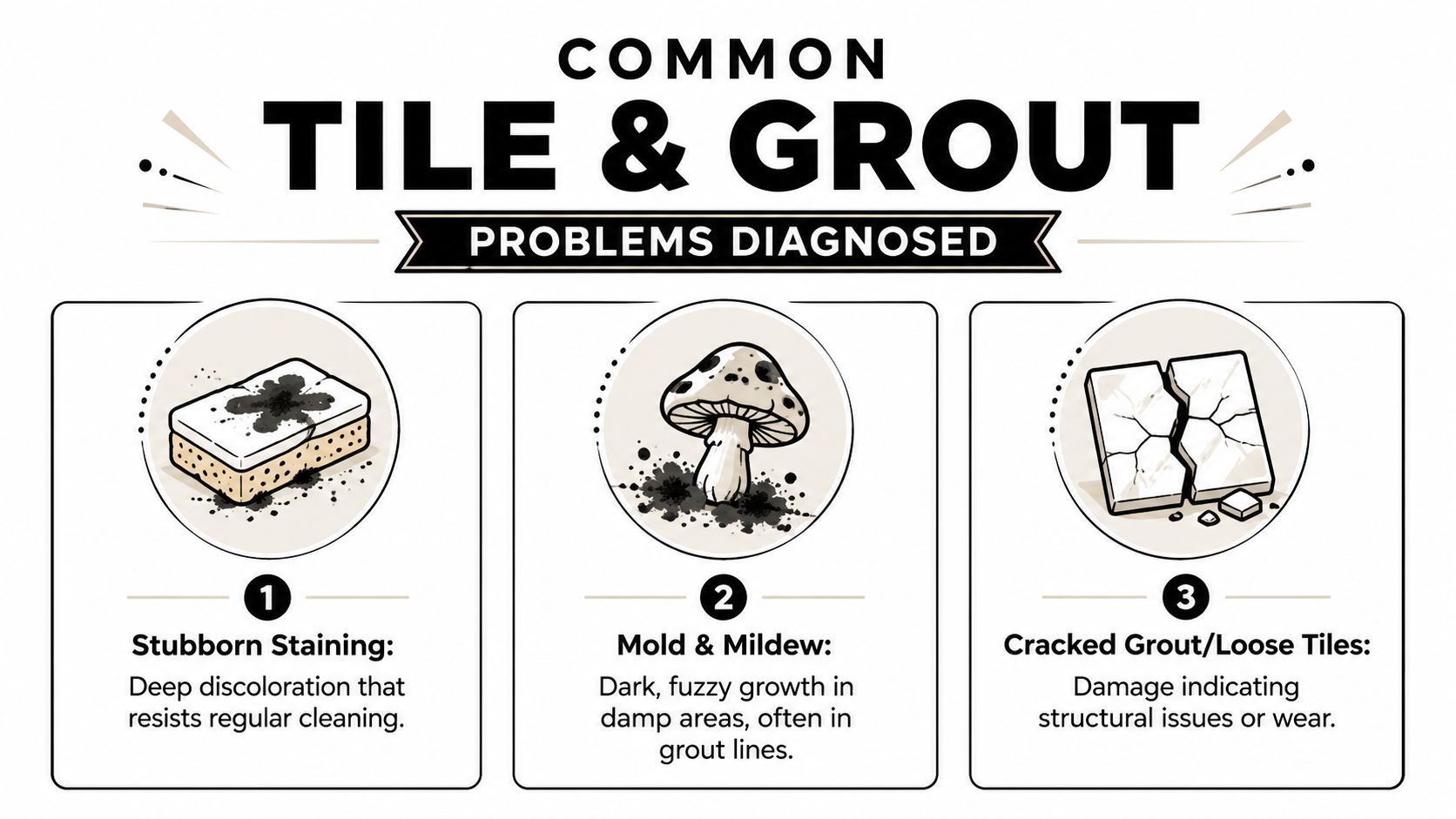
The fastest way to waste money is to treat every grout problem like a cleaning problem. The visible symptom matters, but the cause matters more. A floor can look dirty for three very different reasons, staining, efflorescence, or mold and mildew, and each one behaves differently under the brush.
Staining versus mineral buildup
Staining usually looks like deep discoloration that doesn't lift with normal mopping. It can come from tracked-in soil, soap residue, cooking grease, or repeated use of the wrong cleaner. In kitchens and entryways, the grout may darken first because it's more absorbent than the tile itself.
Efflorescence looks different. It's the pale, chalky, or crusty mineral deposit that often appears when water moves through masonry or grout and leaves dissolved salts behind. In a Phoenix home, hard water can make this problem more obvious, especially around showers, sinks, and floors that see frequent rinse water.
A simple way to think about it is the film that builds up on a glass shower door. The surface didn't “get dirty” in the usual sense, it collected minerals. Grout can do the same thing, only the residue gets trapped deeper and often returns after one cleaning cycle.
Mold and mildew need a moisture story
Dark or fuzzy growth in grout lines is a different category. Mold and mildew tend to show up in damp rooms, along failed caulk lines, around shower pans, or anywhere moisture lingers. Phoenix bathrooms can still have this issue, especially when monsoon humidity or poor ventilation keeps surfaces damp longer than they should stay wet.
If you're unsure whether discoloration is a cleaning issue or something deeper, this discussion of moisture meter readings is worth a look because hidden moisture can change the whole restoration plan. That's the part many homeowners miss, and it's also where professional judgment matters.
For a useful tile-material comparison while you're sorting out what you have, SouthRay Kitchen & Bath tile insights offers helpful context on how different tile types behave in real homes.
One more thing matters before any corrective work starts. The S520 mold remediation standard applies to mold work in residential, commercial, and institutional buildings, and it treats the building and its contents as part of the remediation scope, not just the visible surface (S520). That's a reminder that moisture-related grout problems can point to a larger building issue, not just a cosmetic nuisance.
The Professional Restoration Process Explained
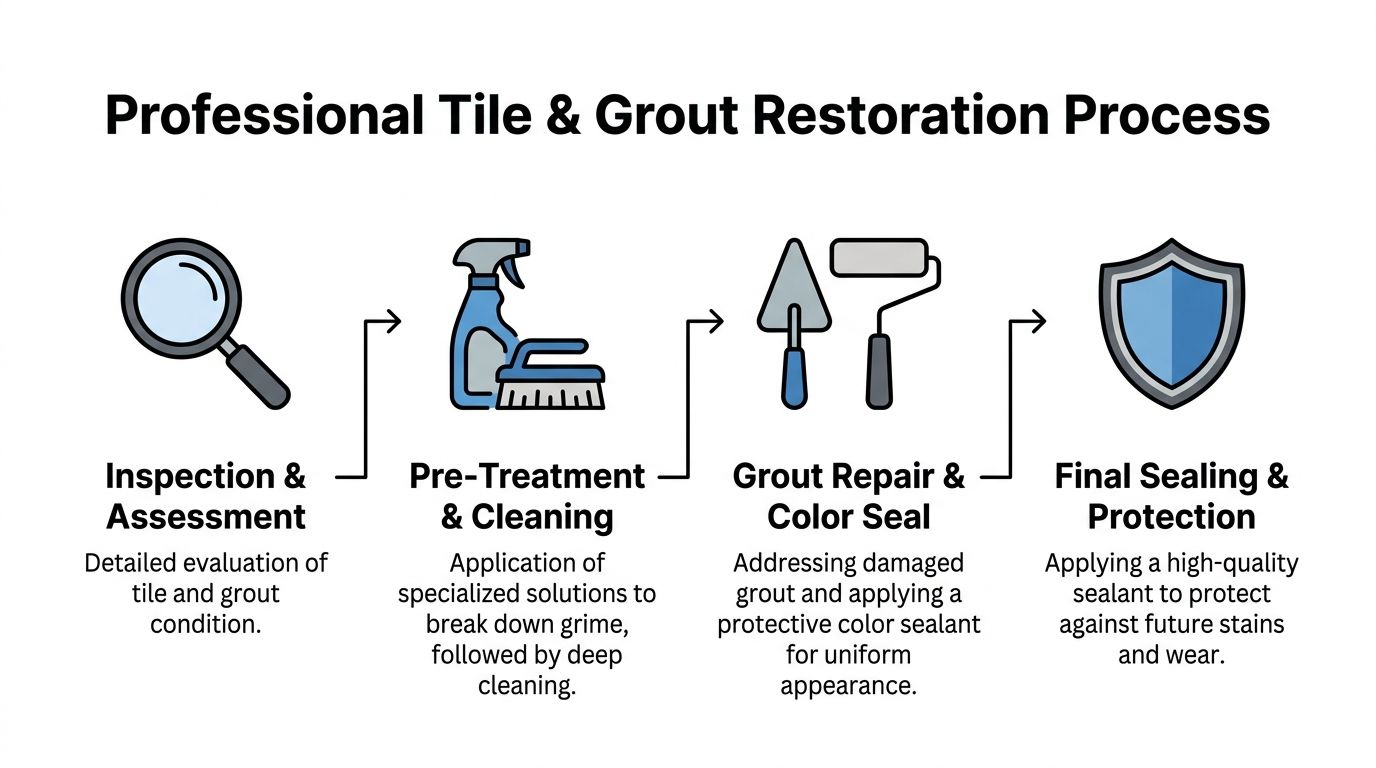
A proper tile and grout restoration job starts with diagnosis, not with a bucket and a brush. In Phoenix, that matters because hard water can leave mineral buildup that looks like dirt, monsoon humidity can feed mold in damp grout lines, and a problem that looks cosmetic may point to moisture moving where it should not.
Inspection and cleaning choices
The first step is a careful inspection. A technician should check for cracked grout, hollow spots, loose tiles, failed caulk, mineral deposits, and any sign that moisture is still present. That inspection drives the rest of the job, because the wrong chemistry can leave a glazed surface dull, etched, or streaked.
Acid cleaners are a poor match for many glazed tile surfaces because they can damage the glaze. When lime or cement mortar staining calls for acid cleaning, the surface should be wetted first and the cleaner tested carefully. Moisture helps reduce the risk of over-etching and localized glaze failure, which is why the ASC specification/Volume%20II%20Book%201/Section%20B-%20Specifications/09%2030%2099%20Restoration%20of%20Marble,%20Terrazzo%20and%20Tile%20Flooring.pdf) treats surface condition and chemical selection as part of the same decision.
Regrouting and protection
If grout is loose, missing, or weak, restoration moves into repair. The U.S. General Services Administration notes that damaged grout should be removed to at least 1/8 inch deep, the joints should be brushed or vacuumed clean, and the new grout should be packed firmly into the joint. After installation, damp curing for at least 72 hours and avoiding detergent for about 30 days helps reduce pinholes, discoloration, shrinkage cracks, and early weakness in Portland-cement grout (GSA regrouting guidance).
That curing discipline separates a repair that lasts from one that looks finished too soon and then breaks down later. If grout is exposed to traffic or cleaning chemicals too early, it can fail from within even when the surface looks acceptable.
A good restoration crew also understands where cleaning ends and structural diagnosis begins. The practical steps in what a restoration company does matter here, especially when the floor needs both surface work and judgment about possible moisture issues.
The best restoration work leaves the floor looking cleaner, and it leaves the materials easier to maintain.
Phoenix homeowners also need to account for the trade-offs between cleaning power and material safety. The guide to Melbourne tile cleaning shows how much the result depends on matching the method to the tile, the grout, and the condition of the surface. That same principle applies here, where the wrong process can preserve the stain while damaging the finish.
DIY Restoration vs Hiring a Certified Professional
A light layer of soil in a small bathroom is a reasonable DIY job. A fresh floor that only needs maintenance cleaning can also stay in homeowner hands. Once you see mineral buildup, recurring discoloration, damaged grout, or staining tied to moisture, the job changes. At that point, a consumer cleaner may brighten the surface for a day, then the problem comes back.
Diagnosis is the dividing line. A homeowner can scrub a grout line until it looks better, but that does not show whether the grout is failing, the sealer has worn off, or moisture is still moving through the substrate. In Phoenix, that matters because hard water can leave efflorescence, and monsoon humidity can feed mold behind a floor that still looks clean on top.
Here is a practical comparison of the two approaches.
| Factor | DIY Approach | Professional Service |
|---|---|---|
| Diagnosis | Visual guesswork, limited moisture checking | Inspection of grout condition, moisture signs, and repair needs |
| Cleaning power | Store-bought products and hand scrubbing | Specialized chemistry and controlled extraction |
| Repair ability | Limited to light touch-up work | Regrouting, color correction, and repair of damaged joints |
| Risk | Can worsen glaze, spread residue, or miss hidden damage | Lower risk when methods match the material and problem type |
| Best use | Light maintenance, small cosmetic issues | Stains, efflorescence, mold concerns, or failing grout |
A helpful outside reference is the guide to Melbourne tile cleaning, which shows how much the result depends on matching the method to the material and condition. The principle carries over to Phoenix tile, even though our water chemistry and climate create different problems.
DIY works when you already know the floor is dealing with routine soil. It also makes sense if the grout is sound and the discoloration is light enough to clear with normal maintenance. The moment the stain returns, the grout feels soft, or the floor hints at hidden moisture, the work is no longer routine cleaning. It becomes restoration, and that calls for a trained eye.
The broader disaster restoration market shows why that line matters. The global disaster restoration services market was valued at USD 46.0 billion in 2025 and may hit USD 89.1 billion by 2036, and water intrusion, mold risk, and post-loss repairs often speed up grout failure (Verified Market Reports). In practical terms, some grout problems are really water-loss jobs, and they need the same kind of inspection you would expect from a water damage restoration contractor.
How to Choose a Restoration Contractor in Phoenix
A good contractor should be easy to verify before they ever set foot in your home. I'd start with licensing, bonding, and insurance, then ask whether the company is IICRC-certified and whether they have real water damage experience, not just general cleaning claims.
The IICRC is an ANSI-accredited standards development organization that publishes widely used restoration standards, including S500 for water damage restoration, S520 for mold remediation, S700 for fire and smoke damage restoration, and S540 for trauma and crime scene remediation. Those standards become binding when they're written into a contract, insurance policy, or scope of work, and otherwise they serve as the benchmark for the trade (IICRC standards overview). The IICRC also states that WRT certification shows knowledge of remediation work, the effects of water damage, and drying techniques, which is exactly the kind of background that helps when grout damage might be moisture-related (IICRC).
What to ask before you hire
Ask how they'll tell the difference between surface staining and hidden moisture. Ask whether they use moisture meters, whether they inspect the substrate, and what they do if grout discoloration keeps returning after cleaning. Those questions separate a surface cleaner from a restoration professional.
A second check is insurance and accountability. A firm that is bonded and insured is giving you a layer of protection if something goes wrong on site, which matters in bathrooms, kitchens, and occupied commercial spaces.
Good credentials don't guarantee a perfect outcome, but weak credentials raise the odds of avoidable mistakes.
Phoenix homes also bring a local reality that matters. Tile problems here aren't just about age, they're tied to hard water, seasonal humidity, and the possibility of water intrusion behind walls or under floors. That's why restoration contractors should be able to explain whether the grout issue is cosmetic, environmental, or structural before they start cutting or sealing anything.
Maintaining Your Restored Tile and Grout
Once the floor is restored, the goal is to keep it from sliding back into the same condition. The routine doesn't need to be complicated, but it does need to be consistent.

A simple care schedule
- Daily sweeping: remove abrasive grit before it gets dragged across the tile and into grout edges.
- Weekly mopping: use a pH-neutral cleaner, not an acidic or soap-heavy product that can leave residue.
- Annual inspection: check whether grout sealer still beads water and whether any joints need attention.
The reason for this schedule is straightforward. Dry grit scratches. Harsh chemistry leaves residue. Neglected sealer lets stains soak back in.
For shower glass and adjacent wet areas, tips for shower door maintenance can help you reduce the mineral buildup that often spreads into tile edges and grout lines. That's especially useful in Phoenix, where hard water can leave behind visible deposits quickly.
The maintenance conversation isn't only residential. Recent industry guidance points to structured preventive schedules such as daily pH-neutral cleaning, weekly machine scrubbing in high-traffic zones, quarterly coating checks, and annual inspection or resealing evaluation, while also noting that restoration can cost roughly 20-40% of full replacement in some cases (SaniGlaze guidance). Even if a homeowner doesn't need that level of routine, the logic is the same. Consistent upkeep is cheaper and easier than undoing years of neglect.
If you remember one thing, remember this. A restored floor stays beautiful when you protect the grout from abrasion, standing moisture, and the wrong cleaner.
Tile Restoration FAQs and Next Steps
Can restoration change my grout color? Yes, in some cases it can. If the grout is sound but uneven in color, color sealing or similar restorative work can create a more uniform appearance. If the joints are failing or contaminated, repair may matter more than color correction.
How do I know whether I need cleaning, regrouting, or a moisture inspection? If the discoloration stays put after cleaning, returns quickly, or looks patchy near showers, tubs, or exterior walls, ask for a diagnostic inspection. Hidden moisture, substrate problems, and voids in the grout can look like ordinary dirt from the surface.
Is the process messy? A well-run job should control dust and slurry, protect adjacent surfaces, and leave the area clean at the end. The amount of disruption depends on whether the work is limited to cleaning and sealing or includes grout removal and repair.
How long does it take? That depends on the size of the area and the condition of the floor. A small cosmetic project is very different from a shower with loose grout or moisture-related damage.
The safest next step is to have the floor inspected by someone who can tell the difference between a surface stain and a deeper failure. If you're in Phoenix and your tile still looks dirty after repeated cleaning, a clear diagnosis is the only way to know whether restoration, repair, or deeper moisture work makes the most sense.
A CTA for Restore Heroes.