
You hear the washer still running, then notice water spreading across the laundry room floor. A supply hose has split behind the appliance, and the spray may continue until someone reaches the valves. In Phoenix homes, that short delay matters. Water can move under flooring, through baseboards, into drywall, and toward adjacent rooms before the visible puddle tells you how far it has traveled.
I've worked enough laundry floods to know that the washer itself is often the easy part. The difficult work involves stopping pressurized water, protecting people from electrical hazards, finding hidden moisture, and deciding whether household cleanup can handle the loss. The first 30 minutes should focus on control, safety, extraction, and evidence, not on making the room look tidy.
When a Washing Machine Hose Bursts Without Warning
You may find water moving across the laundry floor before you locate the break. A washing machine hose burst can release water far faster than a slow connection leak. An industry guide estimates roughly 4 to 8 gallons per minute for a failed hose (washing machine hose replacement guidance). That flow can pass beneath the washer pan, enter flooring seams, and reach a hallway or adjacent room while the laundry room still appears to contain the problem.
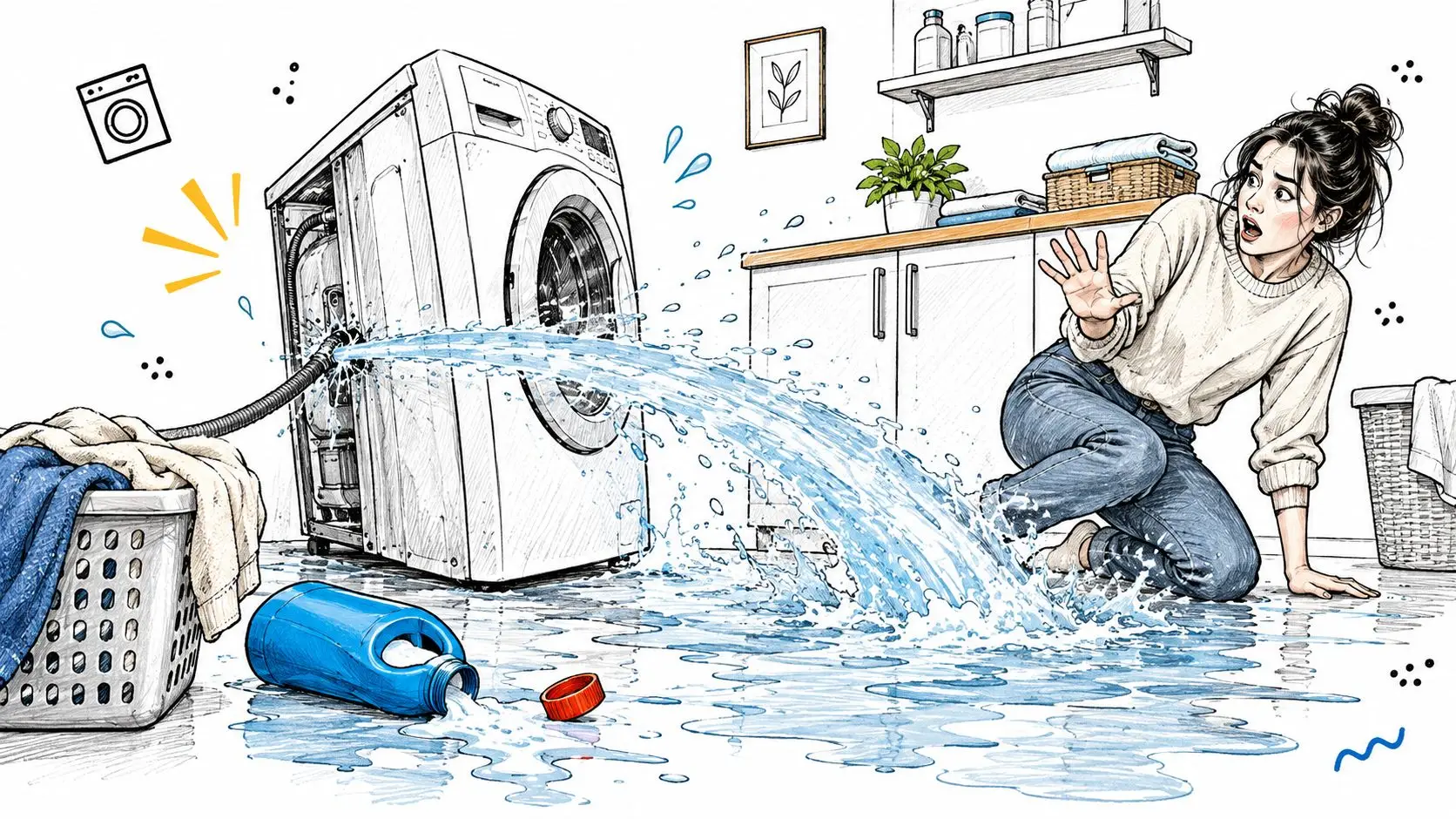
The greatest losses often occur when no one is home. A washer running during work, errands, or vacation can keep supplying water until someone finds it. An industry analysis citing State Farm reported nearly $30 million in homeowner claims during 2020 related to washing machine hose failures, with an average claim of about $10,200 (State Farm washing machine hose loss guidance). The same analysis describes hose pressure of about 70 pounds and an average release of 650 gallons after failure. Those figures come from the linked industry source, not directly from a State Farm publication.
Why the damage travels
Water crosses room boundaries through flooring, subfloors, baseboards, drywall, cabinets, penetrations, and framing cavities. On a multistory home, staining or dampness may show below the laundry area before the source or full travel path is clear.
The first 30 minutes set the drying difficulty. Fast shutoff limits the water released, and prompt extraction reduces the chance of swelling, delamination, staining, and microbial growth in wet materials. Use a simple decision point: DIY drying may be enough when the leak is contained to a small, accessible area, power is safe, and hard surfaces can be dried promptly. Call an IICRC-certified restoration professional when water has reached subfloors, walls, adjacent rooms, insulation, lower levels, or concealed spaces, or when the affected area cannot be dried and verified.
Stop the source, protect occupants, and treat the incident as a home water loss until moisture checks show where the water traveled.
How to Stop the Water and Stay Safe Right Now
A burst hose can send water under the washer, across the laundry floor, and into an adjacent room before you finish finding a towel. Keep children and pets away. Do not enter standing water if outlets, power strips, cords, or appliances are nearby.
Follow the shutoff sequence
Close both washer valves. Turn the hot and cold handles clockwise only from a dry, stable position. Reach behind the machine only when you can avoid wet electrical equipment. If a handle or fitting is stuck, stop rather than twisting the hose connection or pulling the washer forward.
Shut off the main supply when necessary. Use it if one valve will not close, the valves are inaccessible, or water keeps spraying. If you are unsure where the valve is, review this emergency water shutoff guide before an incident occurs.
Treat electricity as a separate hazard. Do not wade through water to unplug the washer. Turn off the appropriate breaker only if you can reach the panel from a dry surface. If the panel or surrounding floor is wet, leave it alone and contact an electrician or emergency responder.
Stay clear of the spray. Hot water can burn skin, and a failed connector may shift suddenly. Do not grab the broken hose, touch metal objects while standing in possibly energized water, or pull the appliance through the spill.
Limit the spread after shutoff. Place towels or absorbent barriers at doorways and openings when power conditions are safe. A wet-dry vacuum is appropriate only when the machine and electrical supply can be used safely. Do not cover wet flooring with plastic, which can trap moisture.
Safety rule: If you cannot confirm that power is isolated, treat the water as electrically hazardous.
The first 30 minutes affect whether the loss stays manageable. Water can move beneath flooring and through subfloor seams, baseboards, walls, and doorways while the surface still looks only damp. DIY drying can be reasonable when the water is contained to a small, accessible area, electricity is safe, and hard surfaces can be dried promptly. Call an IICRC-certified restoration professional if water has reached subfloors, walls, adjacent rooms, insulation, a lower level, or any concealed space, or if you cannot verify that materials are dry.
After the flow stops, photograph the failed hose and surrounding damage if it is safe. Leave the hose in place for inspection, and do not restart the washer to test it. A plumber can replace the hose set and check the valves, threads, seals, and fittings for related damage.
Removing Water and Starting the Drying Process Correctly
After the water stops, separate removal from drying. Towels can lift surface water, but they won't remove moisture from carpet backing, pad, subfloor seams, baseboards, or wall cavities. Start by moving portable belongings to a dry area, removing wet rugs, and placing furniture legs on foil or plastic blocks when appropriate.
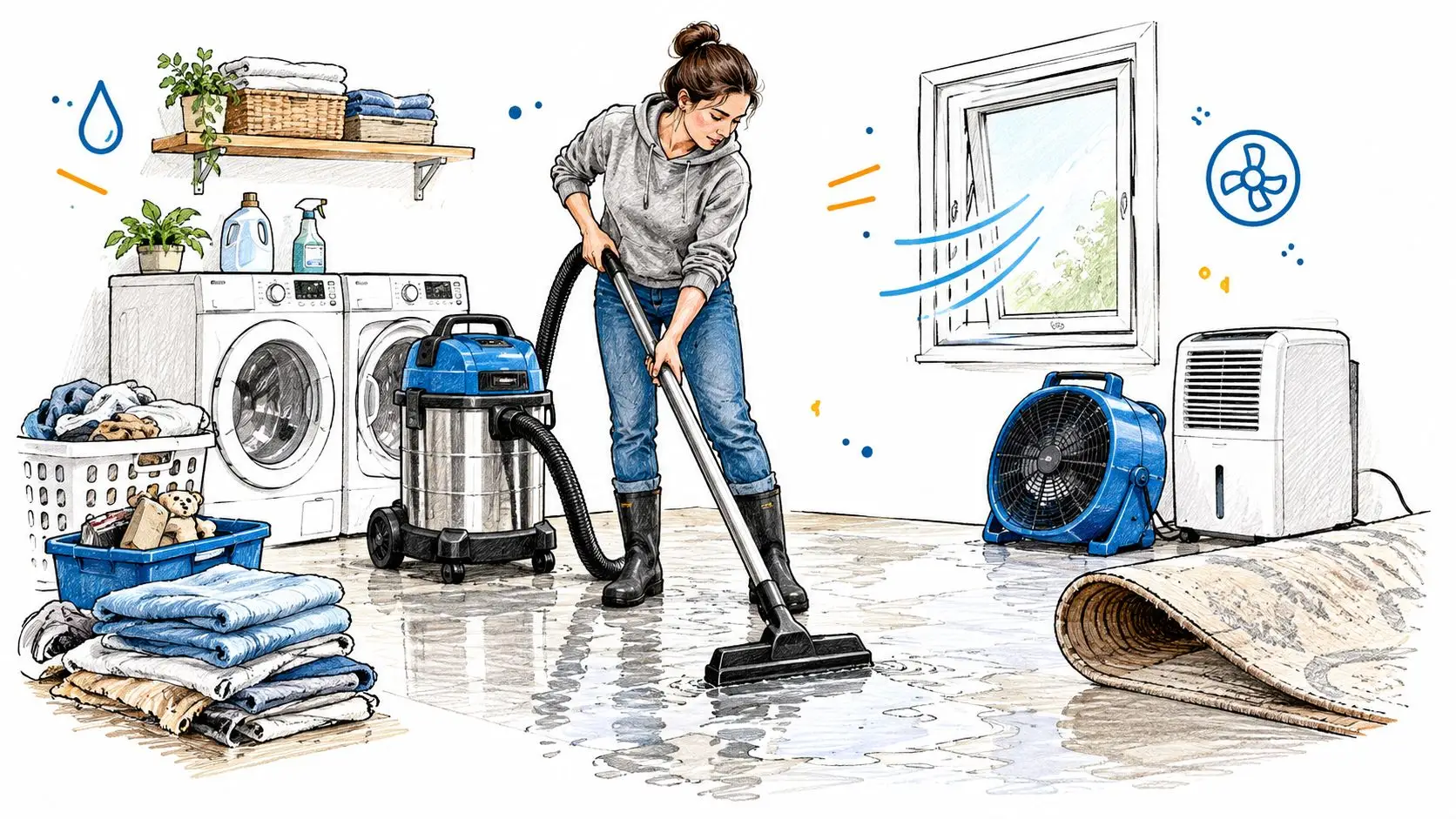
A wet-dry vacuum can help with shallow standing water when the power supply is safe and the machine is rated for that use. Empty it often, work from the cleanest edge toward the wettest area, and stop if water is coming from beneath flooring or through a wall. Don't use a household vacuum for water.
Protect materials while moisture is still accessible
Lift carpet edges only if you know how the floor assembly is built and you can do it without tearing the carpet or disturbing contaminated material. Remove saturated pad where appropriate, separate wet boxes and fabrics, and photograph contents before disposal. Laminate and engineered flooring may swell at joints, while wood can hold moisture below the visible surface.
Fans can help move air across hard, clean surfaces, but they aren't a complete drying plan. Blowing forcefully at saturated drywall can spread moisture into adjacent cavities, and running fans in a humid room may just move damp air around. In Phoenix, dry outdoor air can help, but indoor temperature, humidity, material type, and hidden moisture still determine whether drying is working.
Keep the washer at least 4 inches from the wall so the supply lines aren't crushed or kinked, as recommended in a prevention guide (washing machine hose warning signs and placement). Once the failed hose is accessible, inspect it for bulging, cracking, rust at fittings, dampness, kinks, stiffness, or brittleness. A clean-looking exterior doesn't prove that the inner rubber core is sound.
Drying mistake to avoid: “It looks dry” only describes the surface. It doesn't tell you whether the subfloor, pad, baseboard, or wall cavity remains wet.
Don't wait several days to see whether the floor dries on its own. Extract what you safely can, increase appropriate airflow, and arrange an assessment when water has moved beyond a small, clean, easily reachable area. Guidance for drying wet carpet quickly can help with limited surface water, but it isn't a substitute for structural moisture checks.
Documenting Damage for a Smoother Insurance Claim
The first 30 minutes can determine how clearly the loss is understood later. Photograph the room before moving items, starting with a wide view from the doorway, then capture the split hose, fittings, valve positions, water paths, swollen flooring, wet baseboards, and affected contents. Record a slow video showing connections to hallways, cabinets, bedrooms, stairs, or rooms below. Water can reach subfloors and adjacent rooms before the visible puddle looks extensive.
Build a simple evidence file
- Record the timeline: Note when the washer last worked normally, when the leak was found, when the water was shut off, and when cleanup began.
- Photograph identifying details: Capture the washer model and serial number, hose markings, damaged materials, and any visible installation issue.
- List affected property: Include furniture, flooring, electronics, stored boxes, and personal items. Record approximate age and condition without guessing replacement values.
- Save emergency receipts: Keep invoices for a plumber, extraction equipment, protective materials, temporary repairs, and other reasonable emergency purchases.
- Preserve the failed part: If a plumber removes the hose or fitting, place it in a clean container. Photograph it first, and ask the insurer whether it should be retained before discarding anything.
Describe the spread as well as the source. Note which rooms were reached, how far water traveled, and whether flooring, baseboards, cabinets, or contents were affected. This helps distinguish a contained surface spill from water that may have entered the subfloor or wall edge.
A single evidence folder saves time. Combine photos, video, the item list, receipts, plumber notes, and timeline rather than scattering them across text messages and email. For an example of organizing proof by damaged property, review insurance documentation for Boston movers. The situation differs, but the same record-keeping method applies.
Send the initial facts to your insurer promptly and ask what they want preserved. Policy terms vary, and sudden water damage, maintenance conditions, exclusions, deductibles, and remediation requirements can affect claim handling. Insurance claim documentation guidance can help organize records and questions, but it cannot determine coverage.
If the affected area is small, clean, and fully accessible, careful homeowner documentation may be enough for the claim file. Call an IICRC-certified restoration professional when water has crossed rooms, reached carpet pad or subfloor, affected wall materials, or remains hidden after surface cleanup. Their moisture readings and drying records address evidence that photographs cannot show.

How to Prevent the Next Washing Machine Hose Burst
Replacement timing should reflect the hose material and the home's occupancy pattern. Standard rubber hoses are inexpensive, but the inner core can deteriorate under pressure and temperature cycling while the outside still appears acceptable. Braided stainless construction can contain a failed liner better than plain rubber, but it isn't immune to corrosion, damaged fittings, kinks, or age.
| Hose Type | Replace Every | Key Risk Factor |
|---|---|---|
| Standard rubber | 3–5 years (independent plumbing replacement guidance) | Inner rubber degradation can remain hidden |
| Braided stainless | 5–10 years (independent plumbing replacement guidance) | The liner and fittings can still weaken or corrode |
The table is a planning benchmark, not a guarantee. Replace immediately if you find a bulge, crack, soft area, rust around a connector, dampness, or severe stiffness. If you can't remember when the current set was installed, age uncertainty is a reason to replace rather than rely on appearance.
Match the decision to the home
A vacant property deserves a more conservative approach because a leak can run unnoticed. Before leaving for an extended trip, close the washer supply valves, and consider a whole-home shutoff strategy that your household can operate safely. A property-insurance risk guide recommends turning off washing machine supply valves when the appliance isn't in use or the home will be empty (washing machine water damage prevention guidance).
Inspect annually, check behind the machine without crushing the hoses, and keep connections straight. Replace the complete hose set when one side fails unless a qualified plumber advises otherwise. A water alarm or smart shutoff can add another layer of detection. Homeowners comparing options can review this explanation of water leak detector sensor integration, especially for laundry rooms located above finished spaces.
A practical plumbing inspection checklist can help you record hose age, valve condition, clearance, and signs of corrosion during routine maintenance.
When to Call Restoration Professionals in Phoenix
The first 30 minutes after a washing machine hose bursts determine whether cleanup stays manageable. Shut off the water, keep people away from electrical hazards, remove accessible water, and photograph the affected areas. Water can move beneath flooring and into subfloors or adjacent rooms before the surface puddle looks serious.
DIY drying is reasonable when the water stayed on a small, hard, nonporous surface, the source was clean, power is unquestionably safe, and you can remove all visible water without disturbing walls, flooring, cabinets, or insulation. Use towels, a wet vacuum, and airflow only where electricity and equipment are safe. Continue checking for swelling, odor, staining, or returning dampness.
Call an IICRC-certified restoration provider when water reached carpet pad, subfloor, baseboards, drywall, cabinets, stairs, a lower level, or another room. Call sooner if the washer ran unattended, the affected area exceeds your equipment, the source may be contaminated, or you cannot confirm that hidden materials are dry. In Phoenix homes, warm conditions do not make trapped moisture safe to ignore.
What a professional assessment should answer
A qualified technician should identify the water source and category, map affected materials, check moisture beyond the visible puddle, and explain what can be dried, cleaned, removed, or replaced. The work may include controlled extraction, targeted air movement, dehumidification, monitoring, material removal, cleaning, and sanitation.
This water damage restoration contractor information explains assessment, structural drying, and communication during a loss. Restore Heroes is a Phoenix-area company providing water extraction, drying, sanitation, and insurance communication. Ask for a written scope before work begins, because coverage and repair needs depend on the property and circumstances.
Restore Heroes can assess a burst hose, extract standing water, check building materials, and coordinate drying in the Phoenix metro area. Visit Restore Heroes to request an onsite inspection and discuss the next safe step.