
You've wiped the black residue from the wall, but a gray film remains around the ceiling, the room still smells burned, and the air conditioner keeps pushing the odor into other rooms. After a kitchen flare-up, electrical fire, or wildfire smoke event, that situation is common in Phoenix-area homes and businesses. The visible soot may be only the part you can see.
Soot cleaning services aren't a matter of wiping walls until they look clean. The right method depends on the residue, the surface, the ventilation system, and the order of work. Dry removal usually comes first. Wet cleaning may follow, but using water too early can turn loose soot into a smear that bonds to porous materials. A careful restoration assessment helps separate what can be cleaned on site from what needs specialized contents restoration, deodorization, or HVAC attention.
What Soot Really Is and Why It Is Hard to Clean
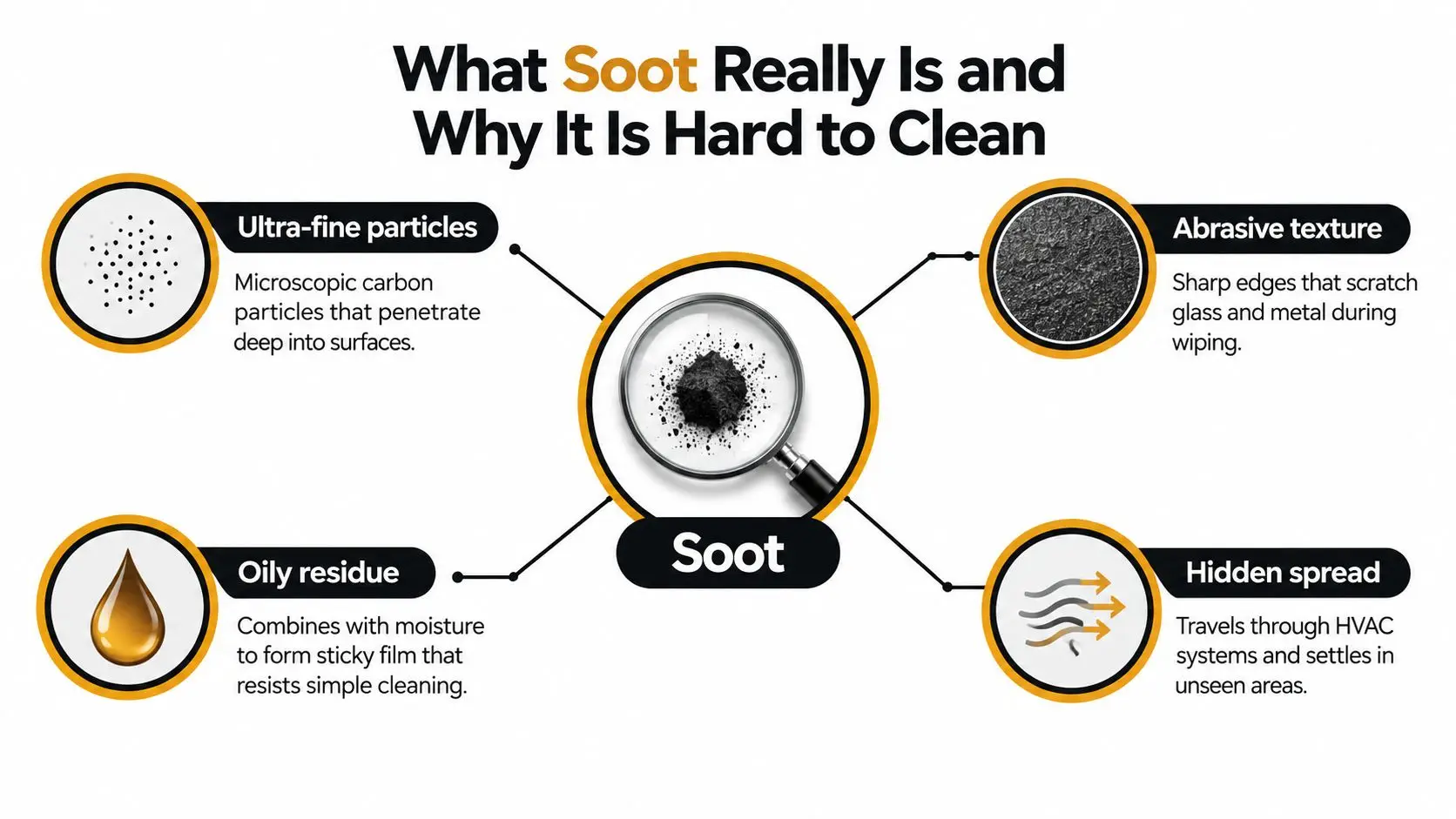
A homeowner may see soot as black dust on a television stand or a painted wall. Technicians see something more difficult. Fire soot particles are extraordinarily small, averaging about 20 to 24 nanometers in diameter, and fire residues can be abrasive, acidic, and carcinogenic, as described in this overview of soot properties and removal challenges.
That particle size changes the entire cleanup strategy. Think of ordinary dust as flour scattered on a counter. You may be able to lift much of it with a careful vacuum. Soot behaves more like an ultra-fine powder that can drift into seams, fabric fibers, wall texture, return-air grilles, and porous finishes. If moisture or oily combustion residue is present, the powder can behave more like a thin sticky film.
Practical rule: Treat visible soot as a contamination problem first and a cosmetic cleaning problem second.
Why wiping can make the damage worse
Suppose a small fire leaves a dark band on an upper wall. A wet towel may appear to work for the first few inches. Then the towel drags the residue sideways, presses it into the paint texture, and leaves a larger gray-brown mark. Water can also cause acidic or alkaline residues to bond more strongly to some surfaces, which is why restoration guidance begins with dry removal rather than household spray.
Soot's abrasive quality creates another risk. Rubbing can scratch delicate glass, polished metal, painted finishes, and electronics. A brush that seems useful on a fabric chair may force soot deeper into the fibers. County smoke-damage guidance specifically warns against upright vacuums and vacuum attachments with brushes because the brushes can push soot into fabrics. If a homeowner must perform limited removal, the guidance recommends holding the nozzle slightly above the surface rather than pressing it into the material, as explained in this smoke-damage handling document.
Why Phoenix homes can have hidden spread
Phoenix properties often rely heavily on air conditioning, so smoke and fine residue may move through supply and return pathways even when the fire was limited to one room. Wildfire smoke can also enter through outdoor air pathways and settle across mixed materials, including drywall, upholstery, electronics, documents, and unfinished or porous surfaces.
For a plain-language explanation of how fire residue differs from ordinary household dust, see what soot from a fire can do to a property. The central idea is simple: particle size, residue chemistry, and airflow determine the cleaning method. A surface that looks clean after wiping may still hold residue in its texture, behind an appliance, inside a cabinet, or within the HVAC system.
How Professionals Compare Soot Cleaning Methods
Professionals don't choose a cleaning product first. They identify the residue and substrate, then select the least aggressive method that can remove the contamination without spreading or damaging it.
HEPA vacuuming is commonly used to lift loose particles before contact with a surface. A HEPA-filtered machine helps capture fine material instead of redistributing it through the room. On fabrics, vents, ledges, and other areas with loose deposits, the nozzle may be kept just above the surface to avoid grinding soot into the material.
Dry chemical sponges work like specialized erasers. They're useful for reducing loose soot on painted walls, ceilings, and other surfaces where adding water too early could create a smear. The sponge generally moves in controlled passes rather than aggressive scrubbing, and it becomes less effective as its surface loads with residue.
Wet cleaning has a narrower role. Once dry methods have removed loose material, technicians may use chemistry selected for the residue and the substrate. Oily soot on a washable, stable surface may need a degreasing or detergent-based process, while delicate paint, paper, textiles, and electronics require a different decision. Wet cleaning isn't automatically a deeper or better version of dry cleaning. It's a later-stage tool with greater potential to spread staining or affect finishes.
HVAC cleaning addresses a different pathway. Surface cleaning can remove soot from room finishes while residue remains on grilles, registers, duct interiors, air handlers, or nearby insulation. Whether ductwork needs cleaning depends on the inspection, the path of smoke movement, and the equipment involved.
| Method | Best For | When to Avoid |
|---|---|---|
| HEPA vacuuming | Loose soot on ledges, fabrics, vents, and contents | Pressing the nozzle into delicate or heavily stained surfaces |
| Dry chemical sponges | Initial soot reduction on compatible walls and ceilings | Using water first, or scrubbing fragile finishes |
| Wet cleaning | Residual oily film on stable, washable materials | Unsealed, porous, delicate, or untested surfaces |
| HVAC assessment and cleaning | Soot that has moved through air pathways | Treating ducts as the only cleanup step when contents and surfaces remain contaminated |
The decision that matters most
The dry-versus-wet decision is a sequence, not a permanent category. A painted drywall surface may start with HEPA vacuuming and a dry sponge, then receive carefully selected wet chemistry after testing. A document or electronic device may need contents specialists rather than either method applied casually.
Homeowners can use a practical guide to cleaning soot from walls to understand why wall material and residue type matter. The most useful question for a provider is, “What will you do before introducing moisture, and how will you test the surface?” A confident answer should explain the order, not just name a product.
Inside a Professional Soot Cleaning Process From Start to Finish
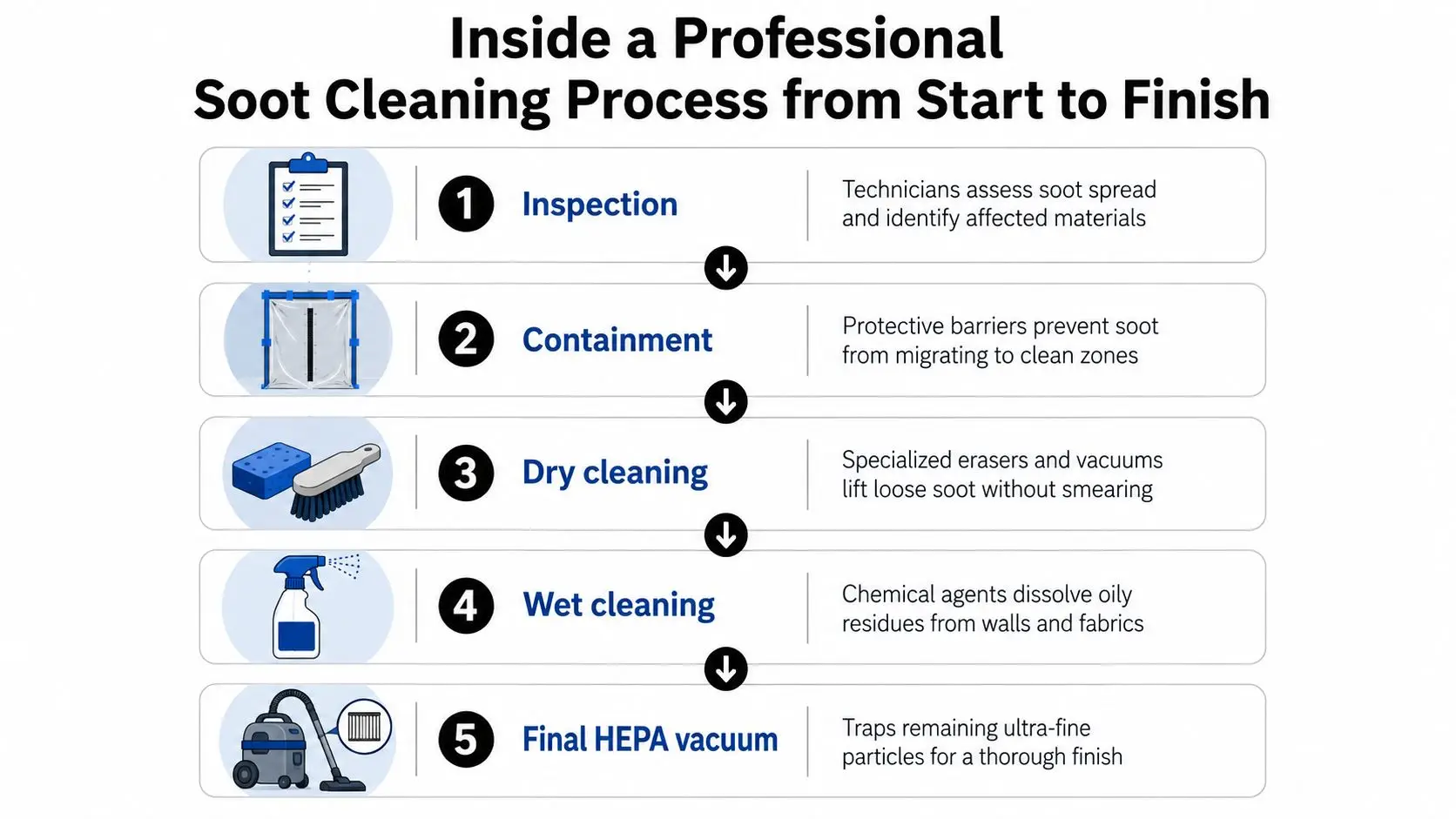
A professional job should feel controlled rather than improvised. Technicians first determine where soot traveled, which materials are affected, and whether the building is safe to enter. They also classify the residue, because dry loose soot, oily smoke film, and embedded staining don't respond the same way.
Inspection and containment
Inspection includes ceilings, upper walls, room transitions, cabinets, soft contents, appliances, and HVAC openings. The team may document conditions with photographs and notes so the property owner, manager, and insurer can understand the scope.
Containment protects areas that weren't affected. Plastic barriers, controlled access, air filtration, and careful movement of equipment help reduce migration while technicians work. In a commercial property, the plan may also account for occupied offices, customer areas, inventory, and operating equipment.
Dry removal before wet work
Technicians usually work from ceilings and upper walls downward. That order follows gravity and prevents cleaned lower surfaces from receiving residue loosened above them. HEPA vacuuming and dry chemical sponges lift loose soot without adding moisture that could smear it.
Wet cleaning comes after dry reduction when the material can tolerate it. The chemistry should match both the residue and the surface. A painted wall, upholstered chair, metal fixture, paper file, and circuit board can't be treated as interchangeable objects.
Water is useful only after the surface and residue can safely accept it.
Deodorization is separate from visible cleaning. Smoke odor can remain in porous contents, insulation, wall cavities, and HVAC components even after black residue is no longer obvious. A final HEPA pass helps collect remaining fine particles, while the technician documents what was cleaned, what was moved off site, and what still needs repair or replacement.
For homeowners comparing the broader scope of intensive cleaning, these deep cleaning pricing tips can help clarify why labor, materials, access, and documentation belong in an estimate discussion.
A provider may also coordinate structural work, odor treatment, contents handling, and insurance communication as part of a wider fire damage restoration process. The important standard is transparency. You should know which rooms are included, which materials are being tested, whether HVAC is in scope, and how the team will verify progress.
What Results to Expect After Soot Cleaning in Homes and Businesses
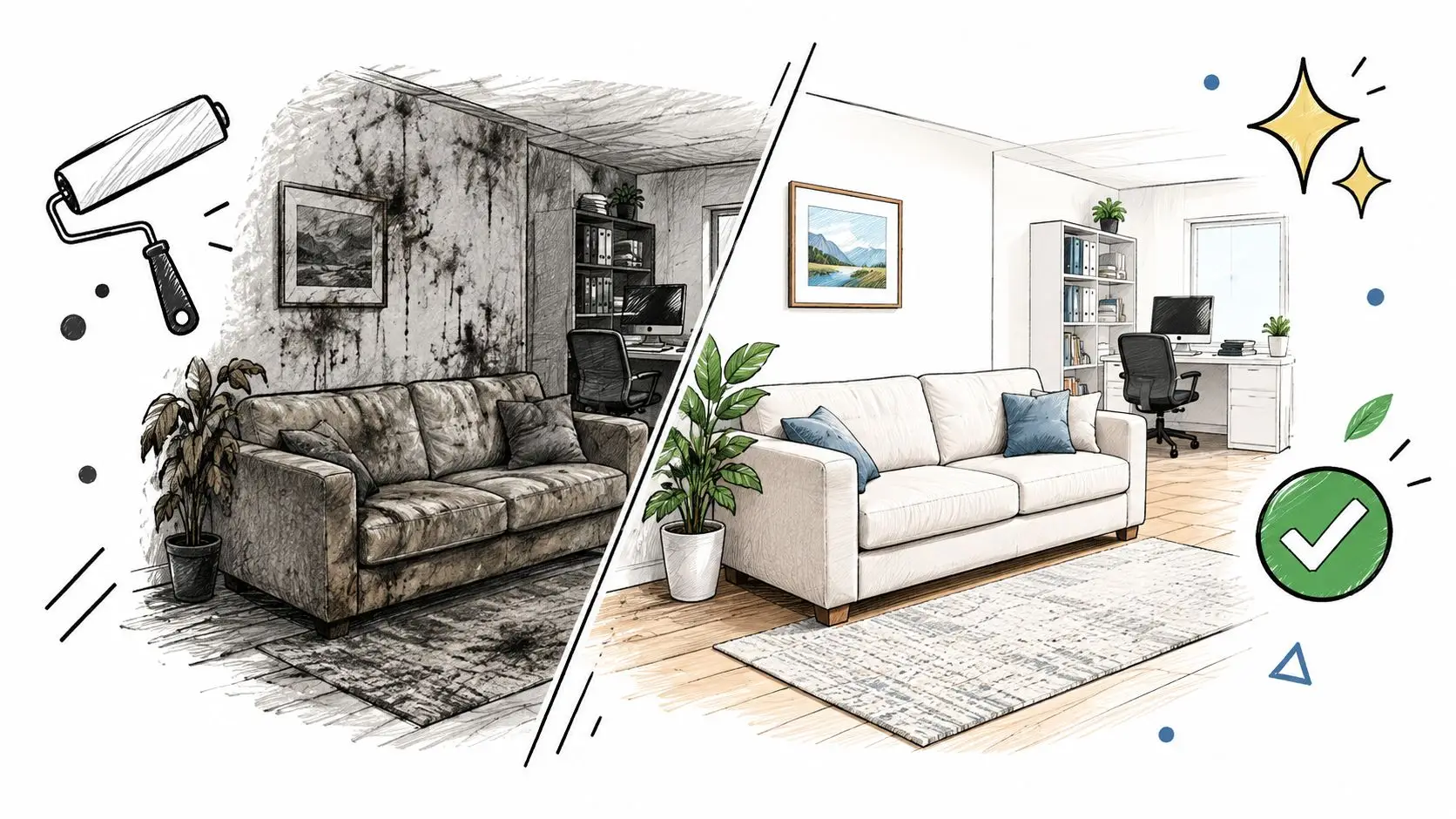
A soot-cleaning result can look different from room to room because materials respond differently. A painted drywall wall may regain a more even appearance after dry removal and carefully tested cleaning. If the paint has absorbed staining or heat has changed the finish, cleaning alone may not return it to its previous appearance. Repainting or refinishing may become part of the restoration plan.
How common materials respond
A fabric sofa can hold both particles and odor. HEPA vacuuming may address loose residue, while upholstery cleaning, deodorization, or off-site contents treatment may be considered based on the fabric and level of exposure. A porous wood cabinet may show a cleaner surface but still need additional treatment if residue entered the grain.
Electronics require caution because soot can settle inside vents and components. Turning on a contaminated device may spread particles internally or create an electrical concern, so a qualified technician should determine whether it can be cleaned, tested, repaired, or replaced. Documents and photographs are similarly sensitive. Dry cleaning methods may remove soot with different levels of effectiveness and may alter paper surfaces, so contents specialists should evaluate valuable or fragile materials.
Visible cleanliness isn't the whole outcome
A room can appear brighter while odor remains in carpet backing, drapes, insulation, or air-handling components. Odor control therefore needs its own assessment. The team may inspect contents, HVAC pathways, cavities, and soft materials rather than relying on air fresheners or surface fragrance.
Property owners should ask how the result will be checked. Useful documentation can include before-and-after photographs, a room-by-room scope, notes about materials that couldn't be cleaned, and a list of remaining repairs. For odor-specific guidance, review how to remove smoke smell from a house. No cleaning company should promise that every item will be restored. A responsible assessment identifies likely salvageable materials, uncertain items requiring testing, and contents that may need replacement.
Health Safety and Hidden Contamination After Visible Soot Is Gone
The black film can disappear before the contamination does. Soot contains fine carbon particles and combustion byproducts, including toxic chemicals and carcinogens such as polycyclic aromatic hydrocarbons, often called PAHs. Exposure can occur through inhalation or contact with skin and eyes, so visible appearance isn't a sufficient reoccupancy test.
Air movement creates a second cleanup problem
HVAC systems can redistribute fine residue after a fire or smoke event. Soot may remain on registers, inside duct pathways, around air handlers, or in filters and adjacent components. Soft contents can also act as reservoirs, releasing particles or odor when moved.
That doesn't mean every property needs the same HVAC scope. It means the system should be assessed instead of ignored. A provider should explain whether supply and return paths were inspected, whether filtration was used during work, and whether air-quality concerns require another qualified professional.
The regulatory context also shows why fine-particle control matters. On February 7, 2024, the U.S. EPA finalized a national fine particulate matter standard that lowered the annual primary PM2.5 standard from 12 micrograms per cubic meter to 9 micrograms per cubic meter, as described in the agency's statement on the stronger soot pollution standard. This outdoor-air standard isn't a property-specific clearance test, but it reinforces the importance of reducing fine particle exposure.
Questions to ask before reoccupancy
- Air pathways: Ask whether HVAC components, registers, filters, and nearby hidden areas were included in the assessment.
- Contents: Confirm how textiles, documents, electronics, and porous belongings were handled.
- Filtration: Ask what equipment controlled airborne particles during and after cleaning.
- Odor: Determine whether deodorization was evaluated separately from surface cleaning.
- Documentation: Request a written record of areas inspected, methods used, and unresolved conditions.
For insurance-related organization, these tips for smoke damage claims with For The Public Adjusters, Inc. may help you keep photographs, inventories, and scope records together. If microbial concerns arise because water was used during firefighting or cleanup, ask whether antimicrobial treatment is relevant to the property. That decision requires an inspection, not an automatic add-on.
Understanding Soot Cleaning Costs and What Drives the Price
Soot cleaning estimates vary because the work is based on scope, not a universal room rate. A small area with loose residue on washable surfaces may require a different plan from a full property with oily soot, affected contents, HVAC involvement, and persistent odor.
The estimate should account for several practical variables:
- Residue condition: Loose dry particles usually require different labor and tools than smeared, oily, or embedded residue.
- Surface mix: Painted drywall, masonry, wood, textiles, documents, and electronics each require different handling.
- Property size: More rooms and higher ceilings increase inspection, containment, cleaning, and documentation needs.
- Contents volume: Shelves, furniture, clothing, files, and equipment can add sorting, packing, transport, and off-site restoration.
- HVAC involvement: Ducts, registers, air handlers, and filters may expand the scope when smoke traveled through the system.
- Odor treatment: Deodorization can require separate assessment because odor may remain after visible soot removal.
- Access and operations: Businesses may need work scheduled around employees, inventory, customers, or sensitive equipment.
How to compare estimates fairly
Ask each provider to describe the same categories. An estimate that includes only wall wiping isn't comparable with one that includes containment, contents handling, HVAC assessment, deodorization, and final documentation.
A proper inspection should identify affected rooms, materials, residue type, access limitations, safety concerns, and recommended sequencing. It should also distinguish cleaning from repair or replacement. Insurance coordination may require photographs, inventories, invoices, and a clear record of what happened to damaged contents, but coverage decisions belong to the policy and insurer.
Don't choose solely by the lowest number. Ask what has been excluded, whether testing is included, and what conditions would change the scope. A clear estimate helps you plan without turning uncertain restoration conditions into a false promise.
How to Choose a Certified Soot Cleaning Company You Can Trust
Look for a provider that can explain the work in technical and plain language. Professional soot cleaning is governed by the ANSI/IICRC S700 standard, which defines minimum acceptable practices for inspection, assessment, cleaning, deodorization, and documentation after smoke or soot exposure. The standard also addresses practical methods, equipment, tools, and materials, so residue classification and method selection should be part of the conversation. You can review the IICRC standards frequently asked questions for context.
A practical provider checklist
- Certification: Ask whether the company maintains relevant IICRC credentials and follows ANSI/IICRC S700 practices.
- Method clarity: Confirm that the plan starts with assessment and dry removal before wet cleaning where appropriate.
- Containment: Ask how technicians will protect unaffected rooms and limit soot migration.
- HEPA controls: Find out how airborne particles will be captured during cleaning.
- Material expertise: Check how the team handles electronics, documents, textiles, painted surfaces, and porous finishes.
- HVAC review: Ask whether smoke movement through ducts and air-handling equipment will be evaluated.
- Documentation: Request photographs, written scope, contents records, and notes about items needing repair or replacement.
- Communication: Choose a company that explains changes in scope before proceeding and identifies what it can't determine without testing.
For Phoenix homeowners, landlords, facility managers, and commercial property owners, Restore Heroes is one local option. The company states that it is licensed, bonded, insured, and IICRC-certified, serves the Phoenix metro area, and handles fire and smoke damage cleanup alongside related restoration services. Any response time, inspection, payment, or insurance arrangement should still be confirmed directly for the specific property.
The right provider won't reduce every soot problem to a spray bottle and a rag. They'll look at how the residue traveled, what it touched, where it may be hidden, and which sequence protects the materials. That approach gives you a clearer basis for deciding what happens next.
Restore Heroes provides fire and smoke damage restoration, soot removal, odor control, and property assessment for homes and businesses across the Phoenix metro area. Visit Restore Heroes to request an evaluation and discuss a cleaning plan based on your surfaces, contents, and HVAC conditions.