
You've wiped the kitchen wall twice, but a sharp smoky smell still returns when the Phoenix afternoon warms the room. The stovetop may look clean while a gray film remains on cabinet tops, inside vents, or in porous drywall. After a small cooking fire, or after wildfire smoke enters through an open window or HVAC system, that lingering residue can leave a homeowner unsure what to touch, what to avoid, and whether a household cleaner is enough.
Soot removal services address more than visible ash. Soot is a fine residue that can smear, bond to finishes, enter porous materials, and travel through building systems. The right response depends on how the residue formed, where it settled, and whether the HVAC system circulated it.
This guide explains the difference between soot types, the health and structural concerns, the professional cleaning sequence, and the factors that shape project scope. It also shows where a Phoenix homeowner may need an evaluation rather than another round of surface wiping. Restore Heroes is one local Phoenix resource for assessing fire and smoke contamination and discussing practical next steps.
Introduction Why Soot Lingers Long After Flames Are Out
A homeowner may see only a dusty wall after a pan fire. The visible mark can look minor, especially once the fire department has cleared the property and the smoke has dissipated. Yet the smell may remain in curtains, cabinet interiors, air registers, and unfinished wood because smoke particles settle in places a quick wipe doesn't reach.
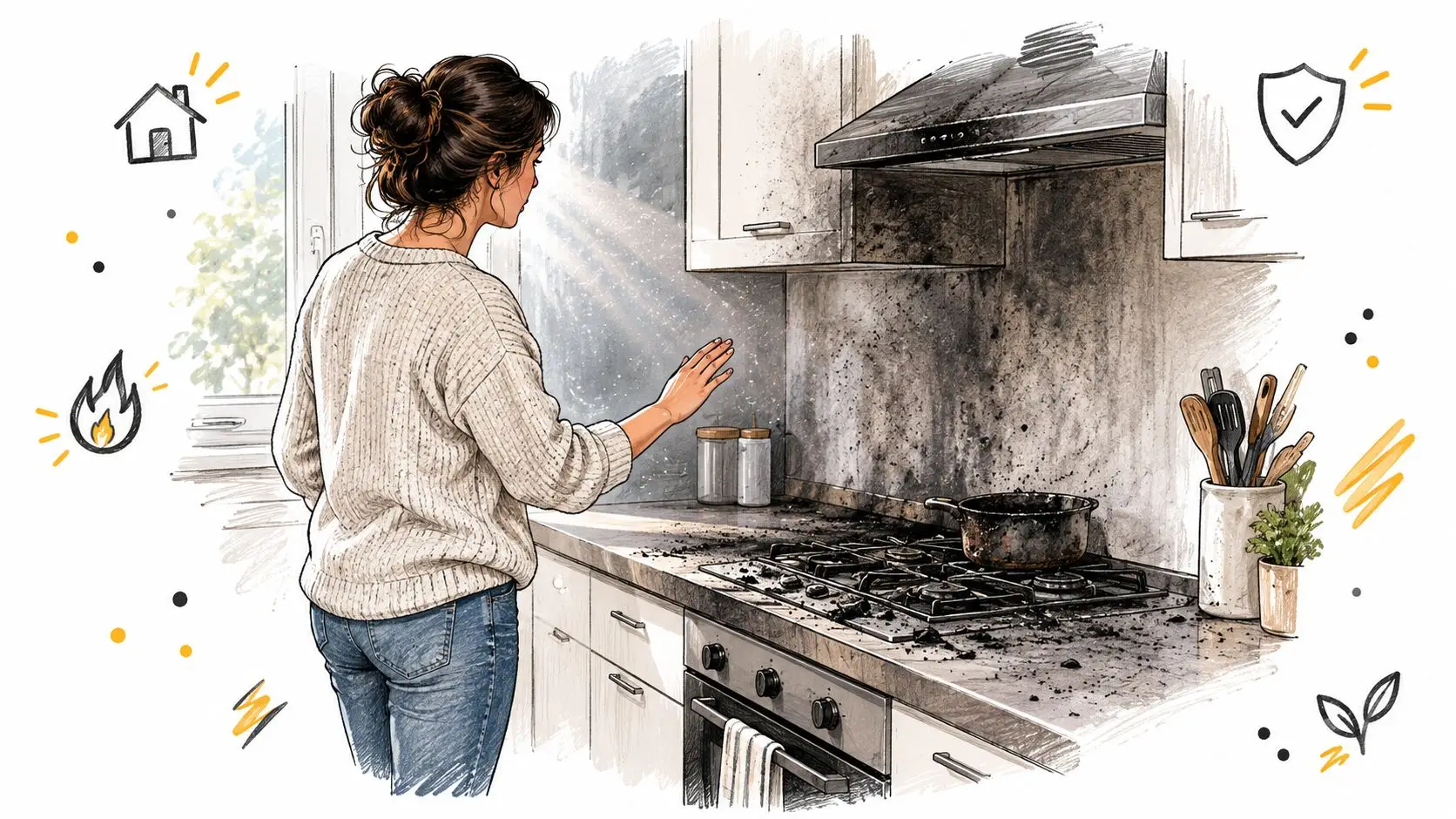
Soot isn't ash left behind by flames. It can contain fine particles and oily residues that cling to surfaces. If someone scrubs too early, the action can spread residue across paint, press it into textured walls, or move it into fabric and unfinished wood. A clean-looking surface doesn't always mean the contamination has been removed.
Start with a calm visual check
Before cleaning, look for the pattern of spread:
- Visible film: Check walls, ceilings, cabinet faces, trim, glass, and light fixtures.
- Odor pockets: Notice whether the smell is strongest near vents, closets, upholstery, or stored belongings.
- Air movement: Consider whether the furnace, heat pump, or air conditioner ran during or after the smoke event.
- Material changes: Look for discoloration, tackiness, corrosion, or marks that appear after wiping.
Keep people away from heavily contaminated areas until the residue has been assessed, especially children, older adults, and anyone with respiratory sensitivity. Don't use a household fan to blow across a sooty surface, and don't dry sweep loose residue into the air.
Practical rule: Treat soot like a contaminant that needs to be controlled, not like ordinary dust that can be chased from room to room.
Professional help becomes more important when smoke traveled beyond the room of origin, when porous materials carry an odor, or when the HVAC system may have distributed residue. The immediate objective isn't to promise a particular result. It's to prevent a small-looking problem from being made harder through uninformed cleaning.
What Soot Really Is and How Different Residues Behave
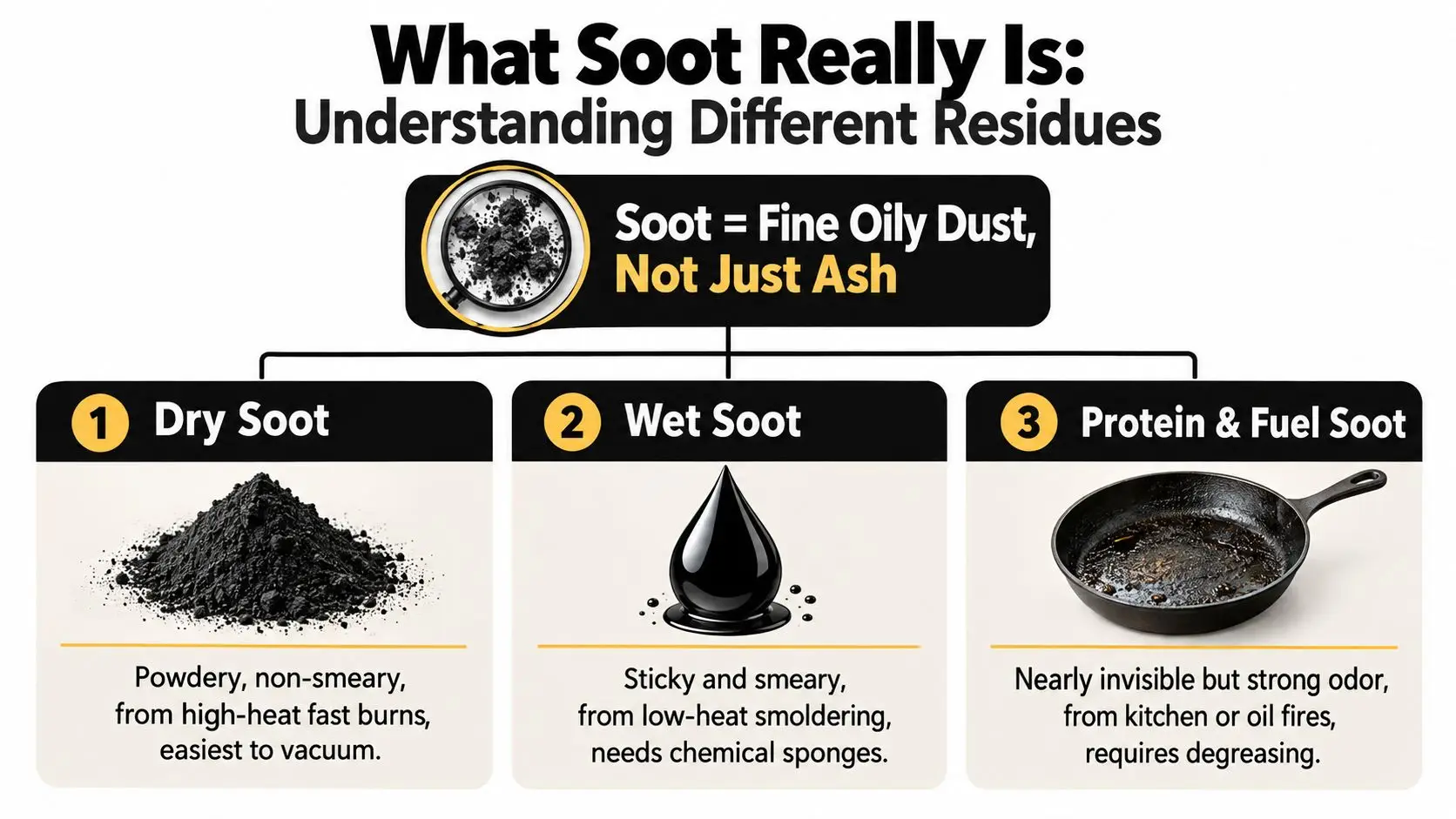
Think of soot as fine oily dust, not one uniform powder. A dry, powdery residue may lift with the right dry-removal technique, while a sticky residue can behave more like a thin layer of grease. The difference matters because a cleaner that works on one surface can smear another residue and make the damage harder to remove.
The ANSI/IICRC S700 fire and smoke restoration standard treats dry, wet, protein, and fuel-oil residues as distinct categories. It also addresses cleaning equipment, materials, and odor management. Technicians therefore inspect the residue before selecting chemistry or applying moisture.
Dry soot behaves differently from wet soot
Dry soot often comes from a fast, high-heat burn. It may look powdery and lift more readily with controlled HEPA vacuuming or a dry cleaning sponge. That doesn't mean it can be brushed casually. Loose particles can become airborne and settle elsewhere.
Wet soot forms in lower-heat, smoldering conditions. It tends to feel sticky or greasy and can smear when touched. Wet soot often needs a chemical dry sponge and carefully selected cleaning agents rather than an aggressive wet cloth.
Protein residue can follow a kitchen fire. It may be light or nearly invisible, but it can carry a strong odor and behave differently from ordinary smoke residue. Fuel-oil residue, including contamination associated with heating equipment, can also be oily and persistent, requiring degreasing and more extensive cleaning.
Surface and material change the result
Metal, glass, sealed countertops, painted drywall, unfinished wood, carpet, and upholstery each hold residue differently. Porous materials have small pathways that can trap smoke particles and odor. A painted wall may accept one method while an unfinished cabinet side needs another.
Color and texture provide clues, but they don't establish a safe cleaning method by themselves. Homeowners who see dark lines or patches may also confuse candle soot with microbial growth. The guide on ghosting on walls candle soot vs mold offers useful context for distinguishing common wall patterns, although a fire-related inspection may still be needed.
For Phoenix properties, a useful starting point is soot from fire cleanup guidance. The central idea is simple: identify the residue first, then match the removal method to the residue and substrate. That sequence reduces the risk of spreading oily material or damaging the finish underneath.
Health and Structural Risks When Soot Stays Untreated
Soot creates concern through several contact routes. People can inhale airborne particles, transfer residue from surfaces to their mouths through hand contact, or experience skin exposure while handling contaminated belongings. The National Cancer Institute explains that soot can contain carcinogens such as arsenic, cadmium, and chromium, making containment and careful cleanup more important than ordinary dusting. (National Cancer Institute guidance on soot)
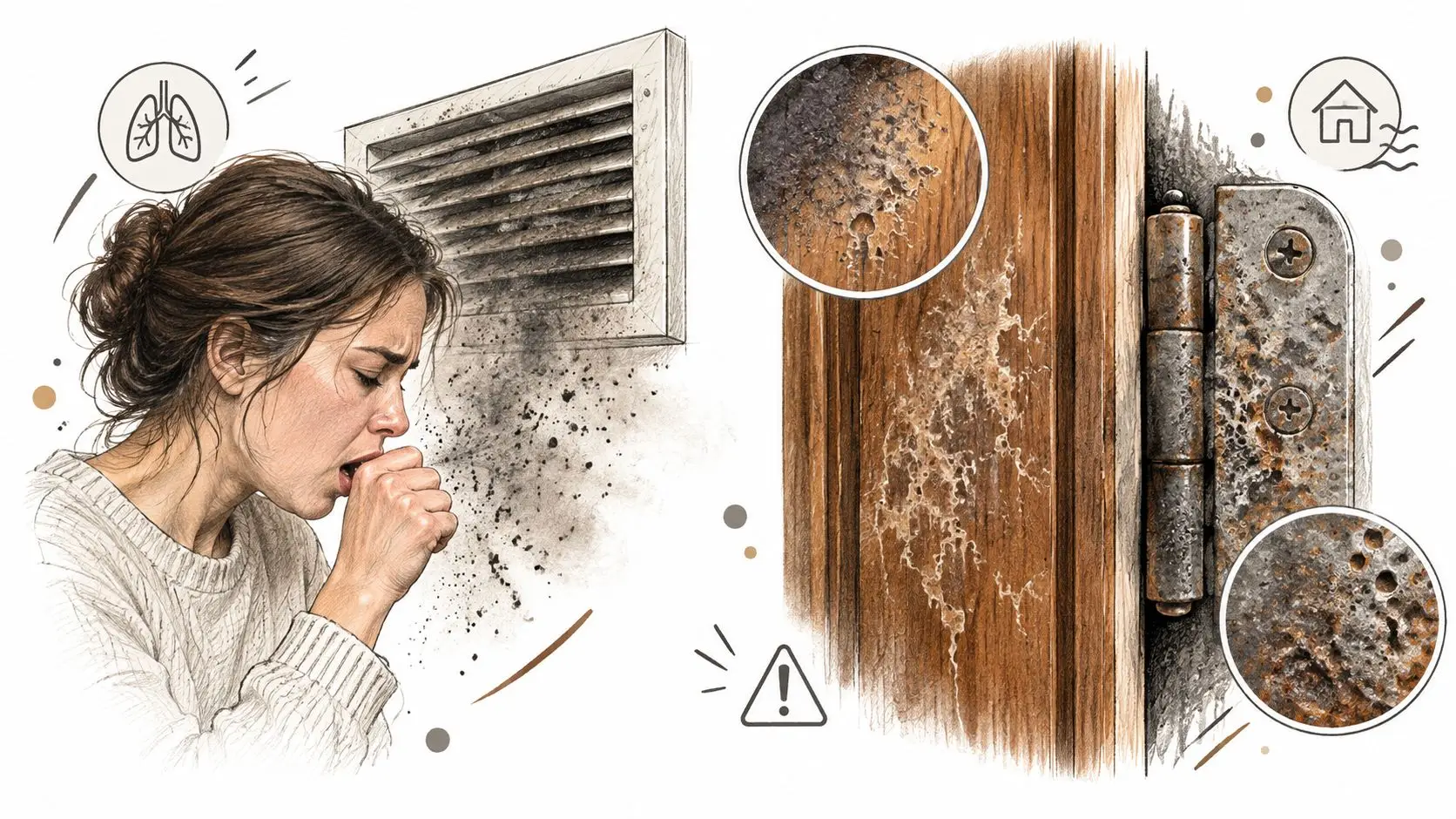
A surface can look lightly affected while hidden contamination remains in porous materials. Drywall, unfinished wood, textiles, insulation, and some contents can hold particles and odor after the visible film has been removed. Smoke residue may also react with finishes and metals, causing discoloration, etching, or corrosion over time.
Why HVAC changes the scope
An HVAC system can move contamination beyond the original room. If smoke entered a return grille or passed through the system while residue was present, technicians may need to inspect filters, grilles, ducts, coils, and blower components. Replacing a filter can be appropriate, but it doesn't automatically address residue deposited elsewhere in the system.
This consideration also matters when fire damage intersects with heating and cooling equipment. A homeowner researching Arizona inverter heat pump installers may be making a separate equipment decision, but any contractor working around a smoke-affected HVAC system should understand that replacement, repair, and decontamination are different questions.
Decide who should stay away
Vulnerable occupants should avoid affected spaces until the area has been evaluated and cleaned appropriately. That includes people with respiratory conditions, young children, older adults, and anyone who develops coughing, irritation, dizziness, or breathing difficulty after exposure. If symptoms are significant or persistent, contact a medical professional or emergency service.
The EPA advises against dry sweeping ash because it can put particles back into the air. For lightly dusted hard surfaces, its guidance recommends misting with water and wet-mopping, while dusty surfaces should be vacuumed with a HEPA-type vacuum rather than an ordinary household vacuum. (EPA guidance on wildfires and indoor air quality)
How Professional Soot Removal Services Clean Safely and Thoroughly
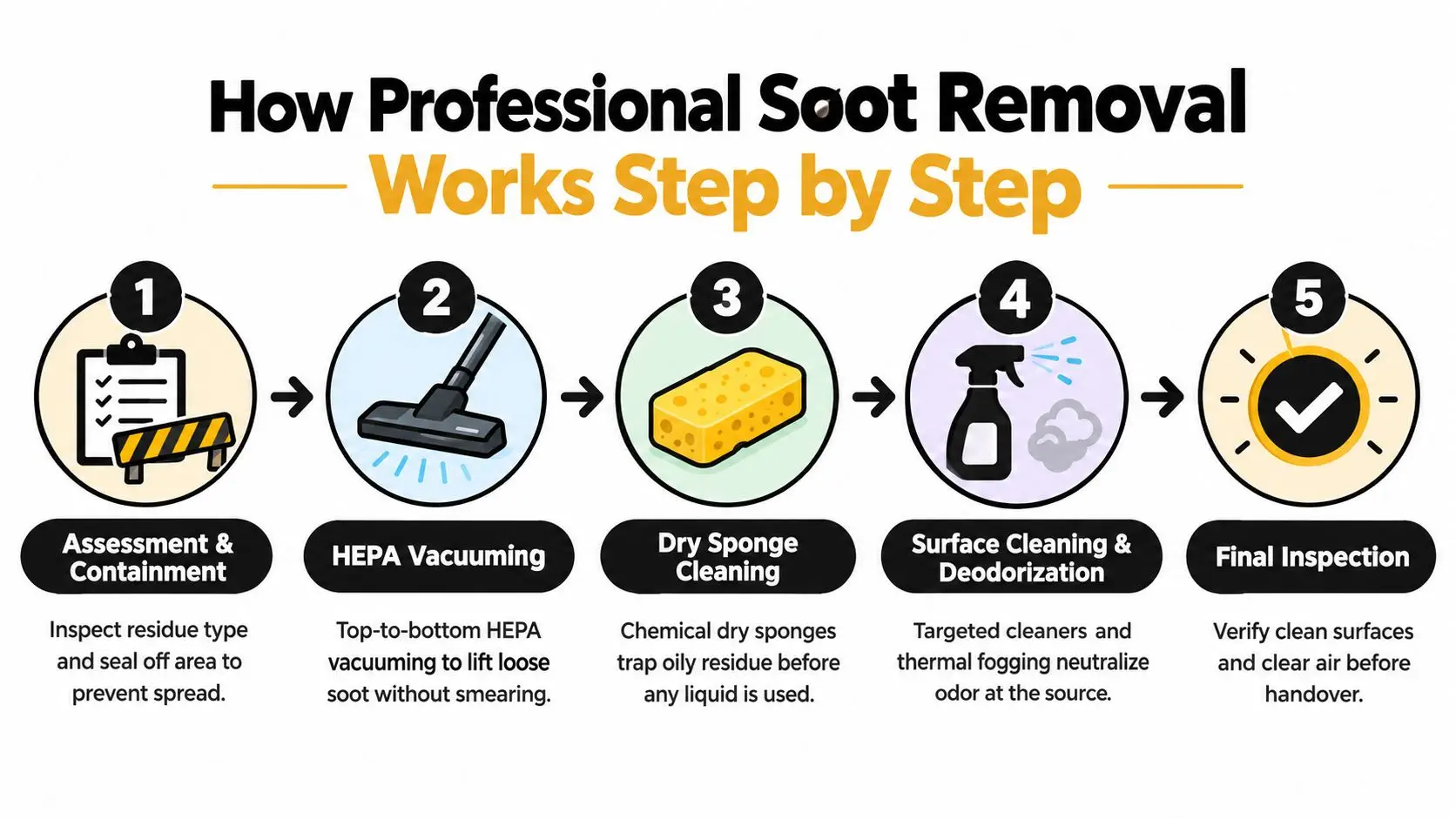
A professional cleaning plan follows a sequence. The crew doesn't begin by spraying every surface with the same product. They first determine what settled, how far it traveled, and which materials can be cleaned, treated, or may require removal.
1. Assessment and containment
Technicians inspect walls, ceilings, contents, vents, and air-handling components. They may use visual inspection, surface testing, odor evaluation, and documentation to map the affected area. Containment separates the work zone from clean areas and reduces the chance that foot traffic or airflow will spread residue.
2. Dry removal comes first
The professional soot removal process generally starts with HEPA filtration and dry removal before wet chemistry. The reason is practical. Touching or wetting loose soot too soon can compact particles and drive them deeper into drywall, wood, and historic materials.
A top-to-bottom pattern helps keep cleaned areas from being recontaminated. Technicians may use HEPA vacuums with controlled attachments and chemical dry sponges that lift residue without spreading it across the finish.
3. Chemistry follows classification
After loose material is removed, the crew selects cleaning chemistry based on residue and substrate. Dry residue, wet smoke residue, protein residue, and fuel-oil residue don't respond identically. A technician may use a degreasing product for oily contamination, a targeted cleaner for a durable surface, or a controlled process for materials that could stain or swell.
The crew should test an inconspicuous area before broad application. Dwell time, agitation, rinsing, and drying all affect whether a surface cleans safely.
4. Contents and HVAC receive separate attention
Furniture, textiles, electronics, kitchen contents, and personal belongings may need individual handling. Some items can be cleaned in place, while others require packing, controlled cleaning, or specialized deodorization.
When residue entered the HVAC system, the scope may include duct cleaning, coil cleaning, blower-motor cleaning, and filter replacement. One explanation of S700-related practice describes HEPA vacuuming as an early step for loose soot before wet chemistry and identifies these HVAC components as potential cleaning targets. (HVAC and fire-smoke restoration guidance)
5. Odor treatment and verification
Odor management should address the source, not cover the smell with fragrance. Depending on the material and contamination, a team may use cleaning, ventilation, sealed-surface treatment, or specialized deodorization such as thermal fogging. See thermal fogging and odor removal for an explanation of where that technique may fit.
Before handover, the crew should review cleaned surfaces, affected contents, HVAC findings, and any remaining limitations. Ask what was tested, what was cleaned, what was removed, and what documentation supports the final scope.
Scope Timelines and What Drives Soot Cleaning Costs
Soot cleaning doesn't follow a single schedule or price because the project depends on the residue, the number of affected areas, the materials involved, and whether contamination moved through the HVAC system. Light powder on sealed surfaces is a different assignment from oily puff-back residue inside ducts and porous building materials.
Use the comparison below as a planning tool, not a quote.
| Scenario | Residue and Spread | Key Cost and Time Drivers |
|---|---|---|
| Light smoke dusting | Limited dry residue on hard, sealed surfaces | Room count, access, containment, testing, and final inspection |
| Kitchen fire | Protein or mixed residue around the cooking area, with possible odor in contents | Cabinet interiors, textiles, appliances, wall finishes, and deodorization |
| Heavy wet-soot contamination | Sticky residue on walls, ceilings, contents, and porous materials | Specialized chemistry, repeated cleaning passes, material sensitivity, drying, and disposal |
| Furnace puff-back | Fuel-oil residue that may move through HVAC registers and connected rooms | Ducts, coils, blower components, filters, odor treatment, and system access |
| Wildfire smoke intrusion | Fine smoke residue and odor across exposed rooms or the HVAC pathway | Air movement, filtration, porous contents, exterior dust control, and documentation |
The main planning variables
Spread determines labor. One room with isolated surface residue requires less setup than a home where smoke moved through open doors and air returns. Containment, protective equipment, and careful movement of contents add work before cleaning begins.
Porosity determines difficulty. Glass and sealed metal can be more straightforward to clean than unfinished wood, drywall, carpet, and upholstery. Some materials may retain odor even after surface residue is gone, which can lead to additional evaluation or treatment.
HVAC involvement expands the inspection. Ductwork, coils, blower assemblies, filters, and registers can connect rooms that appear unaffected. A crew should explain whether the system was inspected and why any proposed HVAC work belongs in the scope.
Documentation affects claim discussions. Take photos before moving items, preserve receipts, record dates, and keep written notes about odor and visible residue. Coverage varies by policy and event, so ask your insurer and restoration contractor to separate confirmed damage from proposed work. A practical overview of fire damage restoration costs can help you organize questions without treating an online estimate as a guaranteed price.
Why IICRC Certified Immediate Response Matters in Phoenix
Certification matters because soot cleanup requires judgment, not just equipment. An IICRC-certified technician should understand residue classification, substrate sensitivity, containment, odor management, and the order of dry and wet cleaning methods. That training gives a homeowner a clearer basis for evaluating a provider than a broad promise to “wipe everything down.”
Phoenix conditions add practical complications. Dry outdoor air and dust can make particle control important during an already disruptive cleanup. A crew should protect unaffected areas, explain how air movement is being managed, and distinguish smoke residue from ordinary household dust.
What to ask before work begins
- Ask about classification: What type of residue appears to be present, and how was that determined?
- Ask about porous materials: Which drywall, wood, textiles, or contents may hold contamination below the surface?
- Ask about HVAC: Was the return side, supply side, filter, and equipment inspected?
- Ask about chemistry: Which products will be tested, and how will the crew protect finishes?
- Ask about documentation: Will photos, readings, inventories, and cleaning notes be provided?
Insurance coordination can also reduce confusion, but it doesn't change the terms of a policy. The insurer determines coverage, while the restoration team documents observed conditions, proposed tasks, and completed work. Homeowners should request clear explanations rather than assume every odor, replacement, or reconstruction item will be covered.
Restore Heroes describes its Phoenix-area service as IICRC-certified fire and smoke restoration, with assessment, soot cleanup, odor removal, and communication with insurers among its restoration activities. Its IICRC-certified restoration company information can help homeowners understand what to ask during an evaluation. The same questions are useful when comparing any qualified local provider.
Soot Removal FAQs and Next Steps for Homeowners
When can sensitive occupants re-enter?
There isn't a universal re-entry time. Keep sensitive occupants out while visible contamination, strong odor, active cleaning, or airborne residue remains, and follow guidance from the restoration team and medical professionals. A written safety determination or post-remediation verification can provide a more useful basis than a calendar estimate.
Is a wipe-down enough for porous materials?
Usually, a basic wipe-down can't answer what happened inside drywall, unfinished wood, carpet, upholstery, or insulation. Those materials may hold particles or odor below the surface, so ask for a substrate-specific assessment before deciding whether cleaning, sealing, or removal is appropriate.
What should I do with HVAC filters and vents?
Don't shake a dirty filter indoors. Photograph the filter and grilles, limit system operation until the HVAC pathway has been assessed, and ask whether coils, ducts, blower components, and registers need attention. A replacement filter alone may not address residue elsewhere in the system.
What helps with an insurance discussion?
Keep photographs, an itemized contents list, cleaning proposals, invoices, odor notes, and written communication with the insurer. Smoke, soot, and odor coverage can depend on policy language and the event, so ask the adjuster to explain disputed items in writing. The what to do after a house fire checklist can help you organize the first steps.
If soot remains visible, odor returns, or contamination may have entered porous materials or HVAC equipment, schedule an inspection before attempting more cleaning.
Restore Heroes provides Phoenix-area assessment and fire and smoke restoration services, including soot cleanup, odor control, and coordination around documented damage. Visit Restore Heroes to request an evaluation and discuss the appropriate scope for your home or business.