
Water on the floor has a way of making time feel strange. One minute you are starting your day, and the next you are standing in socks near a leaking water heater, a dripping ceiling, or a wall that suddenly looks darker than it did an hour ago.
If you are dealing with this in Mesa, you are not overreacting. Water damage is stressful because it affects more than materials. It disrupts routines, creates safety concerns, and raises immediate questions about cost, cleanup, and how bad it might get if you wait.
A calm response matters more than a perfect one. The right first steps can protect your home, your belongings, and your options.
A Water Emergency in Your Mesa Home
A common Mesa scenario starts small. You notice a soft spot near the baseboard in the laundry room. Maybe the washing machine supply line leaked overnight. Maybe a monsoon pushed water through a weak spot near a window. Maybe a pipe under the slab has been leaking for days and only now shows itself through warped flooring.
At first, many homeowners hope it is minor. They wipe up what they can, turn on a fan, and tell themselves they will check it later. That instinct is understandable. It is also where simple water problems often become larger restoration jobs.
Water damage is not just the puddle you can see. It is the moisture that moves into drywall, insulation, cabinets, subflooring, and framing. Consider spilled ink on a paper towel. The visible center is only part of the problem. The moisture spreads outward and downward, often into places you cannot inspect without tools.
This is why speed matters. In the United States, many insured homes file a water damage claim each year, and in Mesa, restoration costs average $1,200 to $5,000, with many homeowners paying around $3,000 depending on severity and response speed (TrueFixr). Fast action does not make the event less frustrating, but it can limit how far the damage spreads.
If water is actively entering the home, the first priority is stopping the source if you can do so safely. After that, the goal is simple. Remove water, start drying, and document everything.
For homeowners who need immediate extraction help, this overview of 24/7 water extraction can help you understand what an emergency response usually involves.
Key takeaway: The biggest mistake is treating water damage like a surface cleanup problem when it is really a moisture migration problem.
What to Do Right Now and What to Avoid
The first hour after you discover water damage is usually messy, noisy, and confusing. A clear checklist helps.
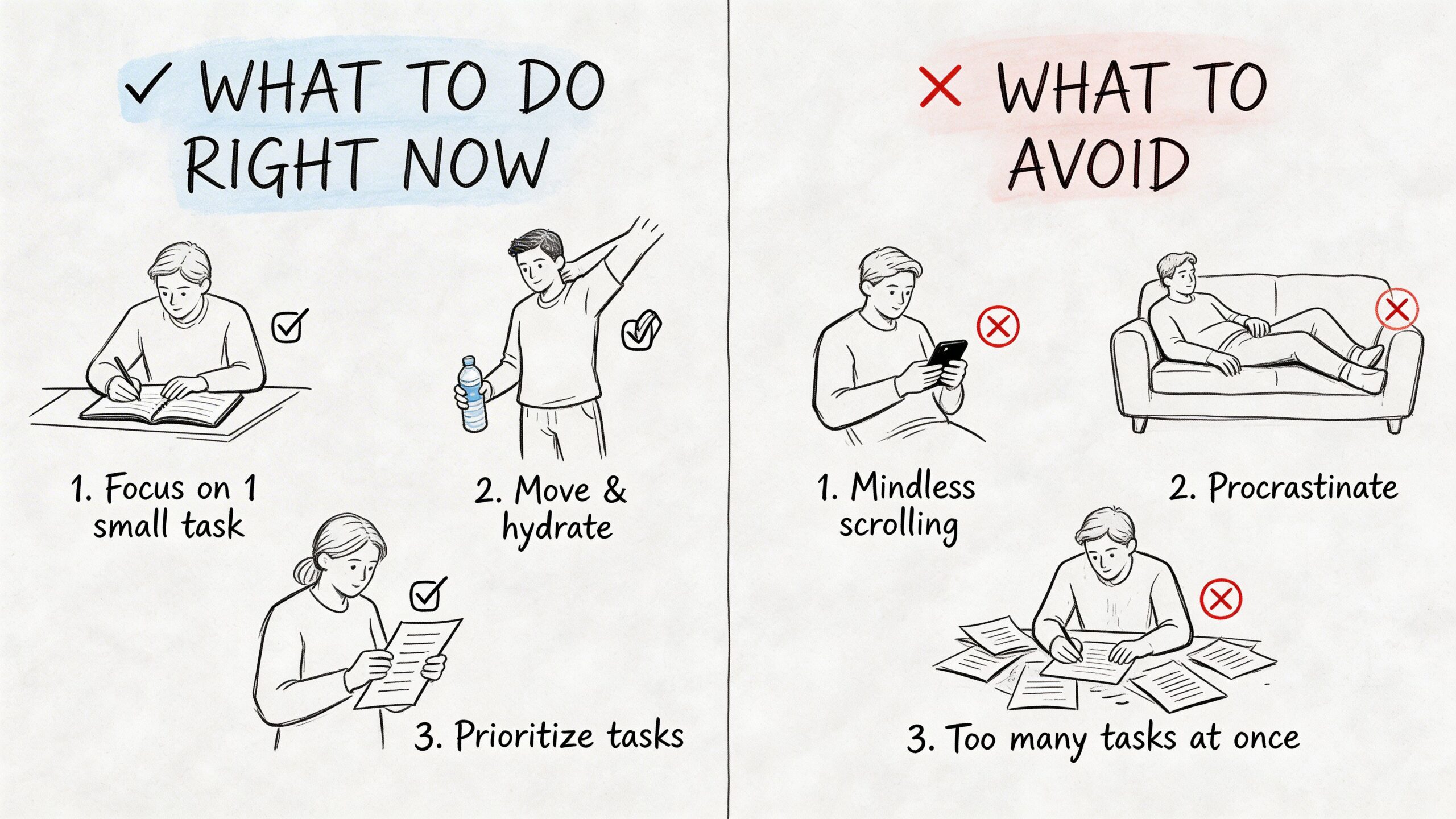
Start with safety first
Before you think about flooring, drywall, or insurance, ask a few basic safety questions:
- Is electricity involved: If water is near outlets, appliances, power strips, or a sagging ceiling with light fixtures, stay out of that area until power can be shut off safely.
- Can you stop the source: If a supply line burst, turning off the local valve or main water supply may prevent more damage.
- Does the water look contaminated: If the water came from a toilet overflow, sewer backup, or outside flood entry, avoid direct contact.
If you can move through the area safely, start reducing loss.
What to do
Use the list below as your short-term action plan.
| Do | Don't |
|---|---|
| Shut off the water source if it is safe and obvious | Do not ignore slow leaks because the floor still feels mostly dry |
| Turn off power to affected areas if water is near electrical systems | Do not step into standing water where electrical hazards may be present |
| Take photos and video before moving too much | Do not throw away damaged items too quickly unless they are unsafe to keep |
| Move rugs, paper goods, electronics, and valuables to a dry area | Do not leave wet fabrics and boxes stacked together |
| Blot or mop small amounts of clean water if it is safe | Do not use a household vacuum on water |
| Call a mitigation professional early | Do not assume fans alone will dry inside walls or under flooring |
A quick professional assessment can also help you decide whether the issue is surface-level or whether moisture has moved into hidden building materials. If you want a practical overview of how mitigation works, this page on water damage mitigation is useful.
What many homeowners get wrong
The most common mistake is waiting for visible signs. Water rarely stays where it started. It travels along baseboards, under vinyl planks, into cabinet toe-kicks, and through insulation.
Another mistake is trying to save time with the wrong equipment. A box fan can help air movement in open areas, but it cannot tell you whether the wall cavity is still wet. A shop towel can dry the tile surface, but not the subfloor underneath.
If your water issue began at the roofline after a storm, it helps to review these immediate steps to take if your roof is leaking because roof leaks often spread behind walls before the stain becomes visible indoors.
Here is a short visual walkthrough of emergency water response basics.
What to avoid while waiting for help
- Do not peel back flooring aggressively: You can make later repair harder if you rip materials before documenting conditions.
- Do not paint over stains: A stain is not the problem. It is the symptom.
- Do not close up the room: Keeping the area shut tight can trap humidity.
- Do not trust smell alone: Some wet materials do not smell bad until damage is already well underway.
Tip: If you have to choose between cleaning up neatly and documenting thoroughly, document first. Photos of the source, affected rooms, damaged contents, and water lines can be helpful later.
The Professional Water Damage Restoration Journey
Homeowners often expect restoration to be one thing. In reality, it is a sequence, akin to an emergency room visit: first comes triage, then stabilization, then treatment, then recovery.
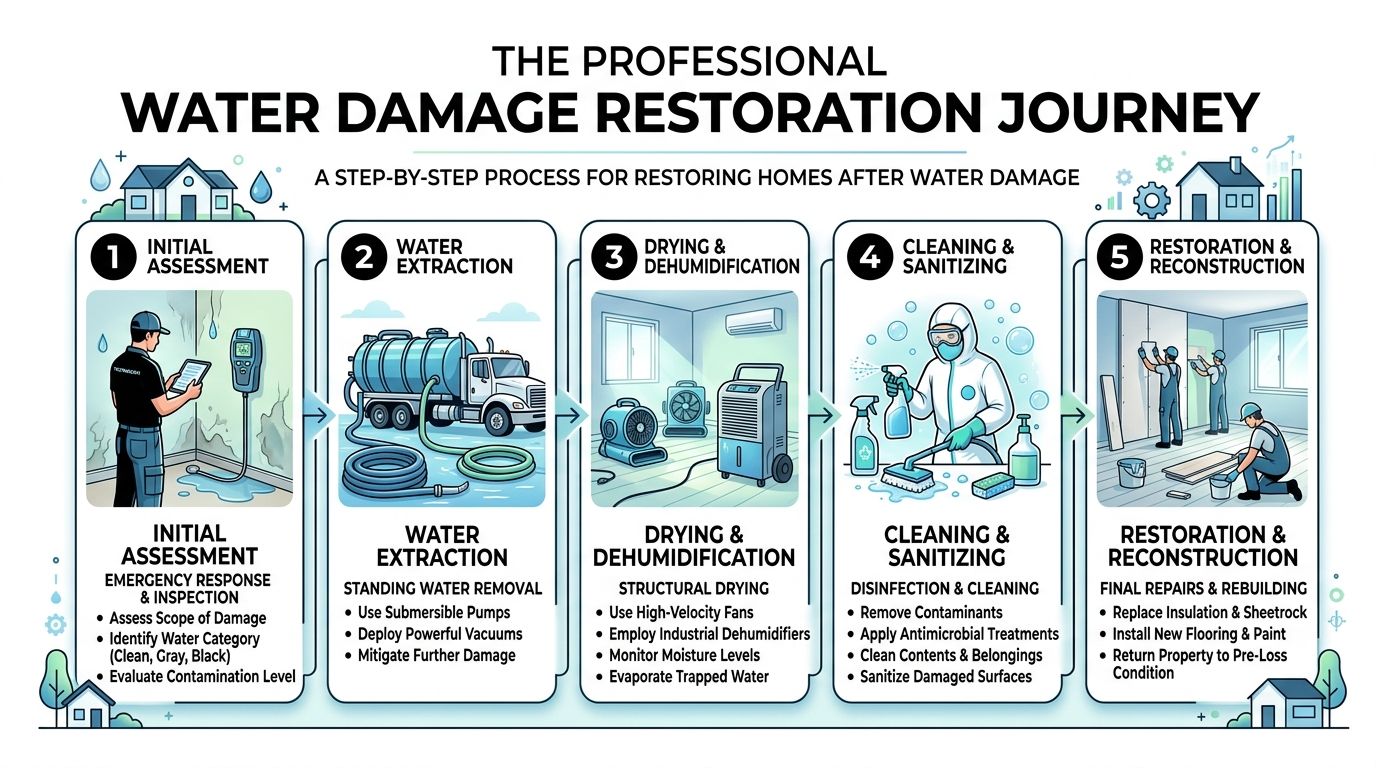
Step one begins with triage
The first job is not demolition. It is diagnosis.
A crew usually starts by identifying the source, mapping the affected areas, checking material types, and separating obvious damage from hidden moisture. Tile, drywall, hardwood, insulation, and cabinetry all behave differently when they get wet. Clean water from a supply line is a different situation from contaminated backup water.
This early assessment shapes every decision that follows. If the team misses moisture behind a vanity, inside a wall, or under floating floors, the drying plan can fail even if the room looks dry from the doorway.
A homeowner usually sees meters, probes, thermal tools, and careful note-taking. That can feel slow when you want action. This prevents guesswork.
Water removal is the stabilization phase
Once the affected area is assessed, standing water has to come out quickly. That is where professional extraction changes the situation.
Professional protocols mandate using industrial-grade extractors capable of removing up to 100 gallons per minute, followed by psychrometric analysis to deploy targeted drying equipment. The goal is to get materials to an equilibrium moisture content below 12% within 72 hours to inhibit mold growth (NAU water damage guideline).
That sounds technical, but the idea is simple. Extraction removes bulk water first. Then the crew measures how moisture is behaving in the air and in materials so drying equipment is placed where it will work.
A mop handles what is visible. An extractor handles volume.
Drying is more scientific than typically assumed
The next stage is structural drying and dehumidification. This is the part homeowners often picture as “putting out fans,” but that description misses the point.
Drying is a balance of air movement, humidity control, temperature, and material monitoring. If you dry the air without moving enough air across wet materials, progress slows. If you move a lot of air without controlling humidity, moisture can shift elsewhere.
What psychrometric drying really means
Psychrometric analysis is just a formal way of asking the right questions:
- How much moisture is in the air
- What temperature is the environment
- Which materials are still releasing moisture
- Whether the room is moving toward dry or staying stuck
Crews use these readings to place air movers and dehumidifiers with purpose. Walls, floor assemblies, cabinets, and framing dry at different rates. A room can feel comfortable to you and still hold too much moisture in the materials.
Practical takeaway: “Looks dry” and “tests dry” are not the same thing.
For homeowners comparing providers, a water restoration company should be able to explain how it verifies drying, not just how it removes visible water.
Cleaning and sanitation depend on the source
After extraction and active drying are underway, the next question is whether cleaning is enough or whether sanitation and selective removal are needed.
Clean water from a supply line may allow more materials to be saved if the response is prompt. Water from appliances, roof intrusions, or long-standing leaks can be more complicated because dust, debris, and time change the condition of the affected surfaces. Contaminated water calls for a stricter approach, and crews may clean hard surfaces, remove unsalvageable porous materials, address odors, and isolate affected sections of the home so the rest of the house is not pulled into the problem.
Repair is the recovery phase
Restoration is not always finished when the materials test dry. Drying is often the turning point between mitigation and repair.
Once moisture levels are under control, the work may include:
- Drywall replacement
- Baseboard and trim repair
- Cabinet work
- Flooring replacement or reinstallation
- Painting and finish work
Some jobs require only targeted repairs. Others involve a fuller rebuild of affected rooms.
That is why homeowners often feel confused by the word “restoration.” It includes both emergency response and the path back to normal living conditions.
Why the process matters in Mesa homes
Mesa homes present a mix of challenges. Some have slab foundations where hidden moisture can move below finished surfaces. Some see monsoon-related entry points at roofs, windows, or stucco transitions. Some deal with appliance failures in garages, laundry rooms, or under-sink cabinet spaces where damage can spread before anyone notices.
The process works when the team matches the drying plan to the actual building, not to a generic checklist.
One option homeowners in the area may encounter is Restore Heroes, which offers water extraction, structural drying, and restoration services in the Phoenix metro area. The key thing to evaluate with any provider is whether the scope is based on actual moisture mapping and documented drying progress, rather than assumptions.
Decoding the Costs of Water Damage Repair in Mesa
Cost is usually the question sitting in the back of every homeowner’s mind, even while they are still moving wet boxes and calling for help.
The honest answer is that pricing depends on scope. Water damage restoration mesa jobs vary because the source, the material type, the contamination level, and the response speed all change what has to be done.
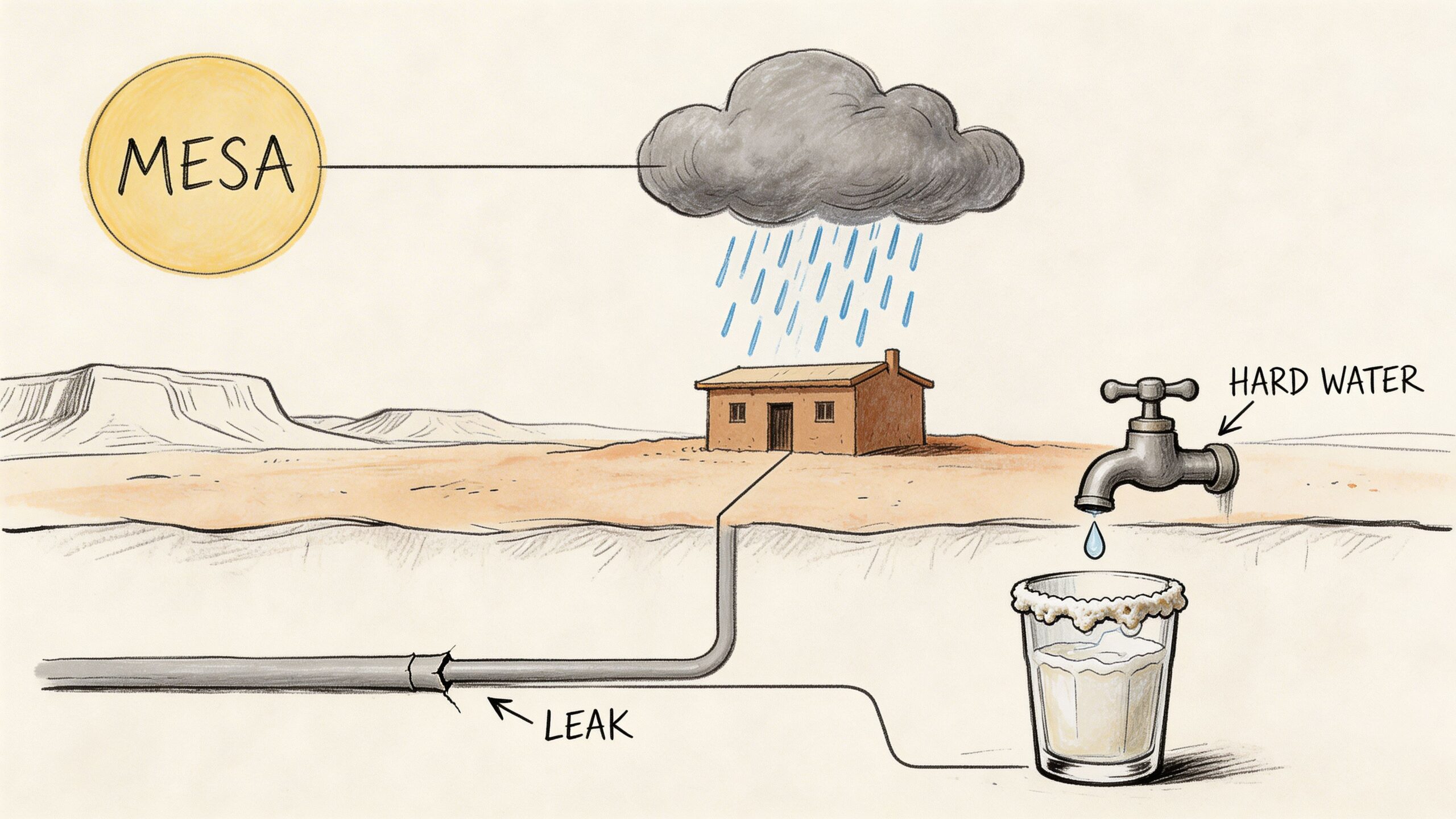
What the local numbers tell you
In the Phoenix metro area, the average water damage restoration expense is around $4,623, with a typical range of $1,834 to $7,598. Labor rates run from $80 to $200 per hour, and clean and gray water remediation costs about $3.50 to $5.25 per square foot (Steamy Concepts).
Those figures are useful for context, not as a quote. A laundry room leak with quick drying access is a different project from a kitchen supply line failure that ran into adjacent rooms and under flooring.
Why one water loss costs more than another
Several factors usually drive the final scope.
Water category matters
The cleaner the source, the simpler the cleanup may be. Once water is dirty, long-standing, or contaminated, more materials may need removal and sanitation standards become stricter.
Materials change the plan
Carpet, pad, laminate, hardwood, drywall, insulation, and cabinets all absorb and release water differently. A wet tile floor may be more salvageable than swollen engineered wood. A painted wall may look fine while wet insulation behind it says otherwise.
Time changes everything
A fresh leak and an older leak can look similar from across the room. They are not the same job. Delayed response can turn a drying project into a removal and repair project.
Cost control often starts with speed. Fast mitigation can reduce how many materials have to be removed later.
A simple way to think about pricing
Think of the bill in layers, not as one mysterious number.
| Cost layer | What it usually includes |
|---|---|
| Emergency work | Inspection, moisture checks, extraction, setup |
| Drying phase | Air movers, dehumidification, monitoring visits |
| Cleanup phase | Surface cleaning, disposal, odor treatment, sanitation if needed |
| Repairs | Drywall, trim, flooring, paint, cabinetry, finish work |
That layered view helps homeowners ask better questions. Are you paying only for mitigation right now, or for mitigation plus repairs? Has the source issue been fixed, or is that outside the restoration scope?
Insurance questions homeowners often have
Policies often distinguish between sudden and accidental water damage and long-term maintenance issues. That is why documentation matters so much. Photos, notes about when the damage was discovered, and a clear description of the source can help the claims conversation.
No contractor should promise coverage, because that decision belongs to the insurer and the policy language. Still, a detailed estimate, moisture documentation, and photo record can make the process easier to understand.
If you want a breakdown of the cost factors that often appear on estimates, this guide to water damage repair cost is a practical reference.
Monsoons Slab Leaks and Hard Water Woes in Mesa
Generic water damage articles usually talk about burst pipes and flooding in broad terms. Mesa homes deserve a more local explanation because the risks here are different.
Monsoon storms, slab foundations, mineral-heavy water, sun exposure, and older plumbing lines can combine in ways that homeowners do not always catch early. Local knowledge matters because the cause affects both the cleanup plan and the chance of recurrence.
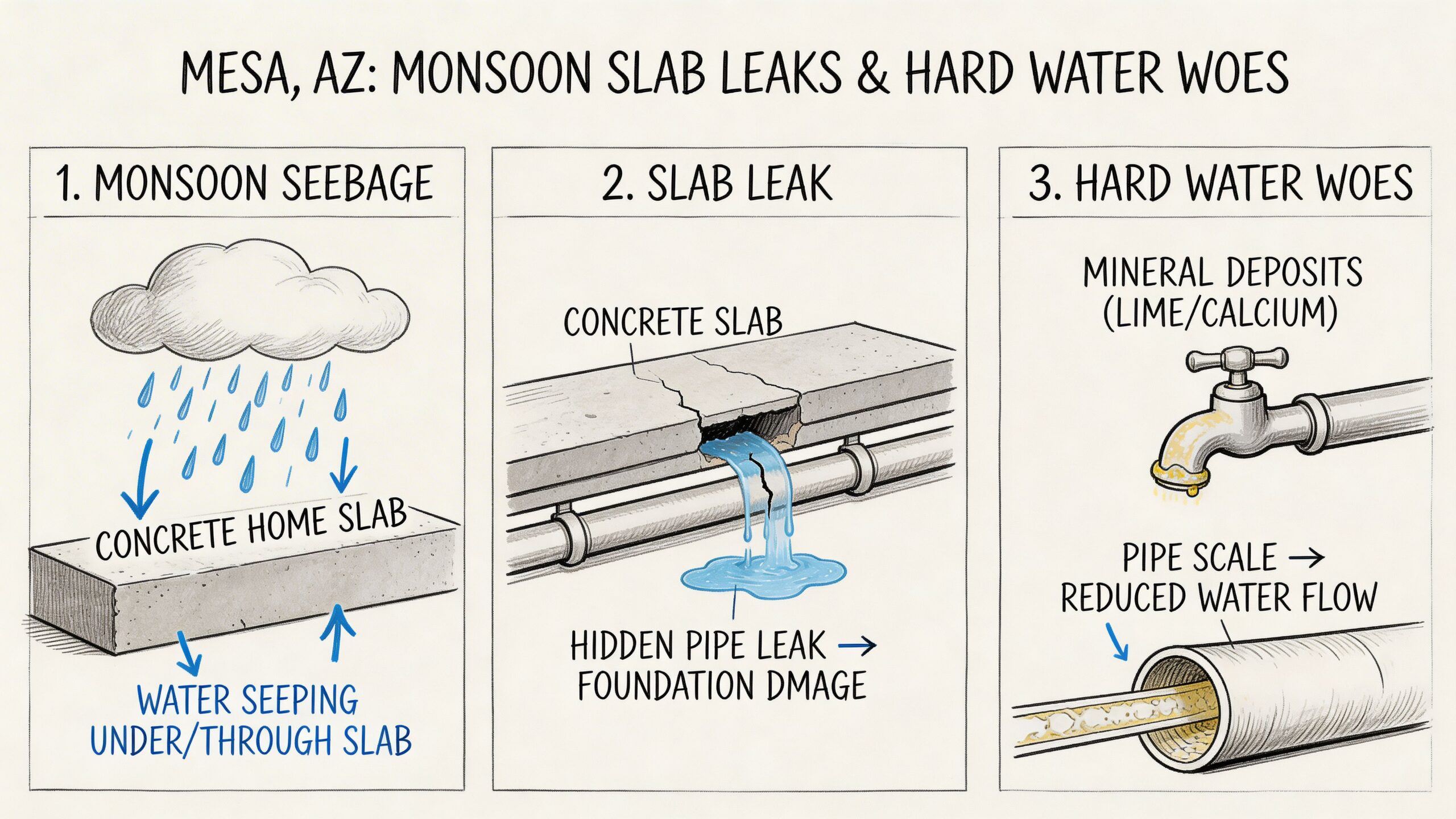
Monsoons do not need a major flood to cause damage
A lot of Mesa water damage starts without dramatic standing water in the living room. Wind-driven rain can enter around roof transitions, flashing details, windows, stucco cracks, patio door thresholds, or garage seals.
The homeowner may first notice a ceiling stain, peeling paint, damp carpet near an exterior wall, or a musty closet. By then, the water may have already moved behind finishes.
What makes monsoon issues tricky is that they often appear intermittent. The stain dries. The room seems normal. Then the next storm hits and the cycle repeats. That pattern leads many people to delay a full inspection.
Slab leaks are easy to miss and expensive to ignore
Slab leaks are a major, underdiagnosed issue in Mesa, accounting for a significant share of undetected water losses. They are often tied to corrosion in aging pipes within the foundation, a problem made worse by local housing stock and water composition. Early detection through thermal imaging or acoustic sensors is important and often overlooked (AZ Total Home Restoration).
That is one of the most Mesa-specific water damage problems because slab leaks usually stay out of sight. Homeowners may notice warm or damp flooring, a persistent sound of running water, unexplained staining, or a water bill that seems off. In many cases, the visible symptom shows up far from the actual leak point.
If you are trying to decide whether your symptoms fit that pattern, this guide on signs of a slab leak gives a useful homeowner-level checklist.
Why hard water matters in real homes
Hard water sounds like a plumbing maintenance issue, but it often becomes a restoration issue later.
Mineral buildup can stress appliance lines, valves, connectors, and fixtures. Over time, that wear can contribute to leaks under sinks, behind refrigerators, near water heaters, and at washing machines. Homeowners sometimes focus on the final failure point without realizing the system had been under stress for a long time.
What local experience changes
A company that understands Mesa-specific loss patterns is more likely to ask the right questions early:
- Did the issue begin after a monsoon storm or after plumbing use
- Is the moisture concentrated near an exterior wall or in the center of the home
- Does the home sit on a slab with no obvious above-floor pipe route
- Are there mineral deposits, corrosion signs, or recurring leaks at fixtures
- Did the stain appear gradually over time rather than all at once
Those questions shape the next move. Roof-related intrusion needs a different investigation than a supply-line leak. A slab leak concern may call for plumbing diagnostics before repair decisions are made. If the loss appears tied to a hidden plumbing issue, homeowners often want to understand slab leak insurance coverage before authorizing larger repair work.
Local takeaway: In Mesa, the visible water is often the end of the story, not the beginning. The underlying problem may be under the slab, behind stucco transitions, or inside plumbing lines affected by mineral buildup.
Restoring Your Home and Your Peace of Mind
Most homeowners do not need a lecture in the middle of a water emergency. They need clear thinking, safe next steps, and a process they can understand.
The core ideas are simple. Stop the source if you can do so safely. Protect people before property. Document the damage. Get the home evaluated before hidden moisture turns into a larger repair problem.
Mesa adds its own complications. Monsoon intrusion can be deceptive. Slab leaks can stay hidden. Hard water can wear down plumbing connections over time. That is why local context matters in water damage restoration mesa work.
Professional restoration should feel less mysterious once you know the sequence. Assess first. Extract water. Dry with measurements, not guesses. Clean and sanitize based on the source. Repair only after the structure is dry.
If you are standing in a wet room right now, the next best step is usually not another towel or one more fan. It is getting the property evaluated by an IICRC-certified restoration team that can tell you what is wet, what can be saved, and what needs to happen next.
A water loss can make your home feel unfamiliar for a while. With a careful response, it does not have to stay that way.
Frequently Asked Questions About Water Restoration
How long does water restoration usually take
It depends on the source, how far the water traveled, and which materials are wet. Some jobs are mostly extraction and drying. Others involve removal, sanitation, and repairs.
Drying and repairs are also different phases. A room may stop feeling wet before the structure is fully dry and ready for reconstruction.
Can personal belongings be saved
Often, yes. Hard goods, some furniture, and some personal items can sometimes be cleaned and dried if the response is quick and the water source is not heavily contaminated.
Porous items are harder. Cardboard, particleboard furniture, insulation, and some textiles may not recover well depending on how long they stayed wet and what kind of water was involved.
How do I know if mold might become a problem
Watch for musty odors, recurring staining, warped materials, and rooms that still feel damp or stuffy after the obvious water is gone. Hidden moisture is the bigger concern.
In Mesa’s climate, post-restoration mold regrowth can be tied to HVAC issues. EPA Southwest reporting notes that up to 25% of restoration failures in the region stem from overlooked HVAC contamination, especially when dust storms introduce mycotoxins and residual moisture remains (RestoreMaster). That is one reason thorough drying and HVAC attention matter.
Does every water-damaged wall need to be opened
No. Some materials can be dried in place if moisture readings, material condition, and water type support that approach.
Other times, opening the wall is the safer path because insulation is wet, the moisture spread is broader than expected, or contaminated water is involved. Good restoration work relies on measurement and inspection, not automatic demolition.
What if the water came from sewage or another contaminated source
Treat it as a health issue, not a cleaning chore. Avoid contact, keep people and pets away, and do not try to handle it like a normal spill.
Contaminated water changes the restoration scope. Materials that might be salvageable under clean-water conditions may need removal and sanitation under contaminated conditions.
Will fans from the hardware store solve the problem
They can help with airflow in minor surface situations, but they do not replace extraction, moisture mapping, dehumidification, or verification. They are a support tool, not a full restoration plan.
What if the floor looks dry now
That is where many homeowners get tripped up. Surface appearance is not proof of a dry subfloor, dry wall cavity, or dry base plate. Flooring systems can trap moisture underneath where you cannot see it.
Should I wait to see if the stain comes back
Usually not. A recurring stain often means the source is unresolved or hidden moisture remains. Waiting may make the eventual repair larger and more disruptive.
If you need help sorting out a water emergency in Mesa or anywhere in the Phoenix area, Restore Heroes provides 24/7 disaster restoration services, including water extraction, structural drying, and cleanup. If nothing else, use this moment to get a clear assessment of the source, the moisture spread, and the safest next step for your home.