
The leak usually announces itself at the worst time. You hear dripping at 2 a.m. Or you step onto a wet floor near the laundry room and realize a hose has let go. Or a monsoon storm pushes water where it has never gone before.
Your mind jumps fast. Is the ceiling about to fall? Is this covered by insurance? Can I clean this up myself? Do I need to leave the house?
Take a breath. The first job is not rebuilding. The first job is stopping the spread.
That is what people mean when they search for water mitigation services near me. Mitigation is the urgent work that reduces damage, lowers health risks, and gives the property a chance to dry correctly before repairs begin. In Phoenix, that matters even more because a room can feel dry on the surface while moisture stays trapped inside drywall, insulation, baseboards, and subfloors.
A Homeowners First Guide to Water Damage Emergencies
A lot of homeowners think water damage starts with a dramatic flood. Often, it starts smaller than that.
A toilet supply line drips behind the wall. A fridge line leaks under cabinets. An AC issue sends water into a ceiling cavity. Then one day, the signs become impossible to ignore. The paint bubbles. The floor edges lift. A musty smell shows up. Then panic follows.
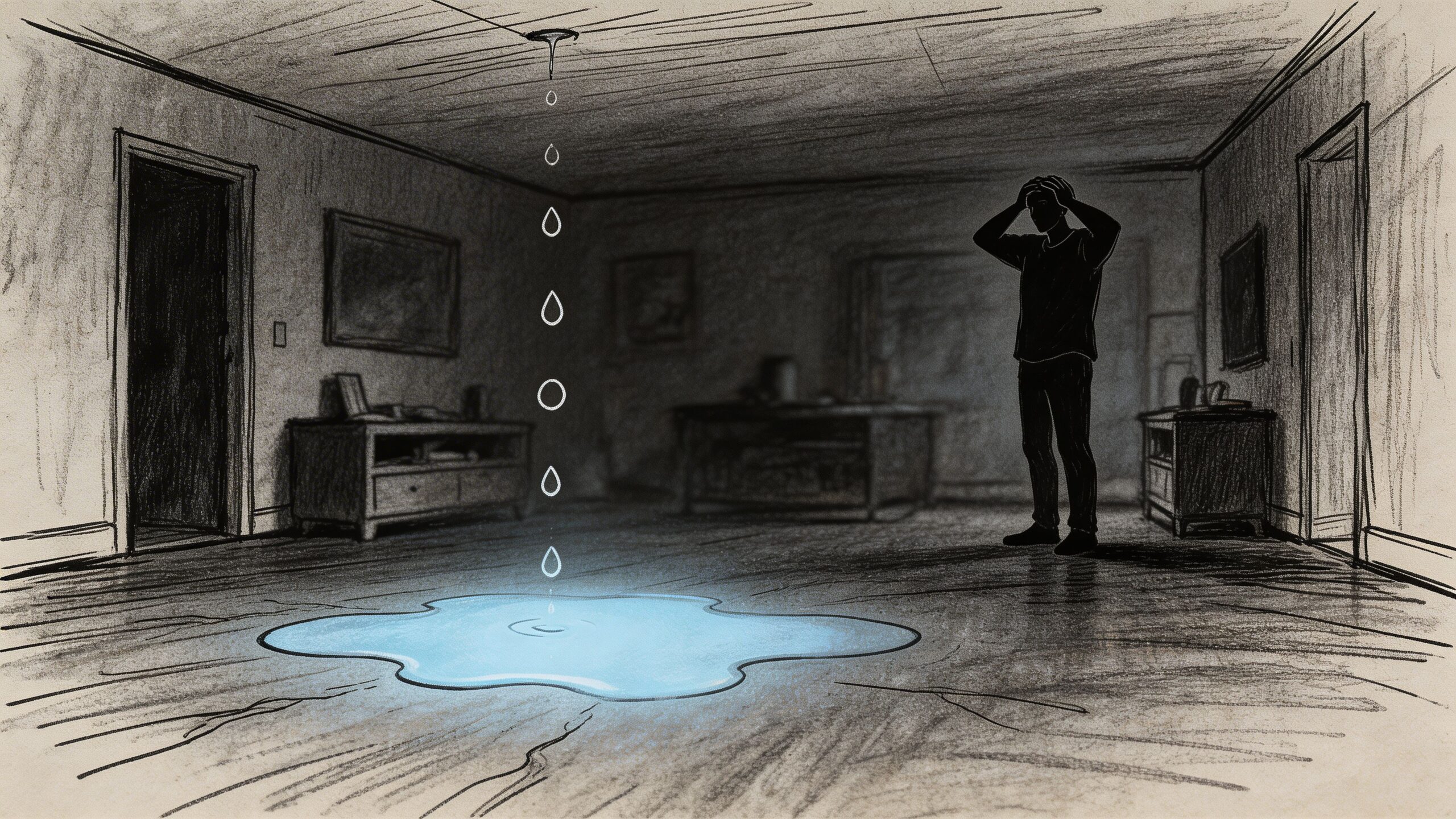
You are not overreacting if you feel stressed. Home water damage emergencies affect approximately 14,000 people in the U.S. every single day, and water damage was the second most common home insurance claim, accounting for 23% of all property damage claims between 2017 and 2021 according to industry statistics summarized here.
What mitigation means in the first hours
Think of mitigation as the emergency room for your house.
It is not the paint, trim, drywall texture, or final flooring replacement. It is the urgent response that helps prevent the situation from becoming much worse. That can include stopping the source, extracting standing water, pulling moisture from materials, and checking places you cannot see.
If you are in the Phoenix metro area and need a practical example of what emergency response looks like, this page on emergency water damage response shows the type of immediate service homeowners usually look for when damage happens outside normal business hours.
Why calm action matters
Homeowners often lose valuable time because the damage does not always look severe at first.
A single wet room can affect adjoining walls, underlayment, cabinets, and nearby air systems. Water does not stay politely where it started. It moves by gravity, absorption, and wicking. In plain terms, it spreads into anything porous and keeps moving until someone stops it.
Tip: If you just found water, focus on safety and containment first. Questions about repair finishes, paint colors, and replacement materials can wait until the structure is stable and dry.
In the next few sections, I will walk through what mitigation includes, what professionals do when they arrive, what you should do while waiting, and why Phoenix homes need careful follow-up even after everything seems dry.
What Exactly Are Water Mitigation Services
Water mitigation means limiting further damage after a leak, overflow, pipe break, or flood.
The simplest way to picture it is this. If full restoration is rebuilding after the crisis, mitigation is first aid for the building. The purpose is to stabilize the property, remove as much water as possible, dry affected materials correctly, and reduce the chance of contamination, odor, and mold.
A good overview of the service itself appears on this page about water damage mitigation.
Mitigation versus restoration
Homeowners often use these terms as if they mean the same thing. They do not.
| Service | Main purpose | Examples |
|---|---|---|
| Mitigation | Stop additional damage | Water extraction, moisture mapping, drying, dehumidification, removal of unsalvageable wet materials, sanitation |
| Restoration | Repair what was damaged | Drywall replacement, flooring replacement, paint, trim, cabinetry work, reconstruction |
If your kitchen floor is soaked from a dishwasher failure, mitigation deals with the water and the wet materials. Restoration deals with making the kitchen look normal again.
The water itself is not always the same
Professionals also think about water category, which affects safety decisions.
- Category 1 is clean water, such as a fresh supply line leak.
- Category 2 is gray water, which may contain contaminants from appliances or other sources.
- Category 3 is black water, such as sewage backup or heavily contaminated floodwater.
That matters because drying a clean pipe leak is different from handling water that may carry bacteria or other contaminants. The tools may look similar, but the cleaning and safety approach changes.
The four classes of damage
Water damage also gets classified by how much material has absorbed moisture and how hard it will be to dry.
Professionals classify water damage into four IICRC-standard classes. Class 1 involves minimal moisture, while Class 4 signifies deep saturation in low-permeability materials like hardwood and plaster, requiring specialized drying techniques and equipment, as described in this water damage restoration process overview.
Here is the plain-English version:
Class 1
A limited amount of water. Few materials are wet. Drying is usually more straightforward.
Class 2
Water has affected a broader area and moved into carpet, pad, drywall, or similar materials.
Class 3
A heavy water loss. Walls, insulation, flooring, and larger portions of the room may be saturated.
Class 4
Water has gone deep into dense materials like hardwood, plaster, brick, or specialty assemblies. These jobs often require more specialized drying methods and more monitoring.
Key takeaway: The visible puddle does not tell you the full story. Professionals look at where the water went, what it touched, how contaminated it is, and how difficult the materials will be to dry.
That is why a homeowner with a shop vacuum may remove some water but still miss the part that causes trouble later.
The Professional Water Mitigation Process Step by Step
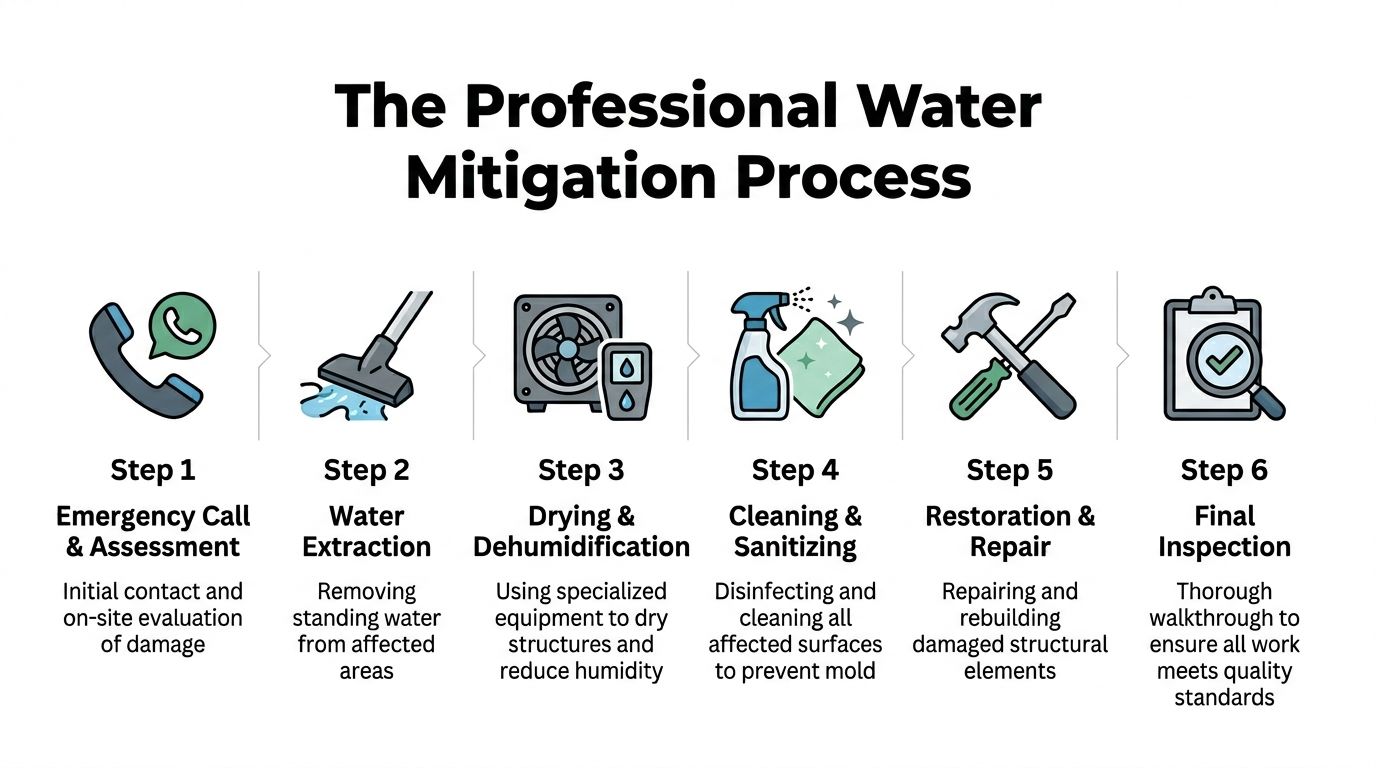
Once a mitigation crew arrives, the work follows a sequence. Good teams may adjust details based on the loss, but the logic stays the same. Find the water. Remove the water. Dry what cannot be seen. Clean what may be unsafe. Verify the structure is dry.
If you want to compare providers while searching water mitigation services near me, look for a company that also handles the broader restoration workflow. One example is this water restoration company overview, which shows how mitigation fits into the full recovery process.
Emergency inspection and moisture mapping
The first step is not hauling in fans.
A professional starts by identifying the source, the affected materials, and the likely travel path of the water. That includes checking obvious damage and hidden areas. Technicians commonly use moisture meters and infrared or thermal imaging cameras to locate moisture behind walls, under flooring, or inside ceiling cavities. Water behaves like spilled coffee on a paper towel, spreading farther than the stain visible on the surface. A wall can feel dry on the painted side while insulation behind it is still wet.
Water extraction
After the inspection, the crew removes standing water as fast as possible.
Professional extraction equipment, such as truck-mounted pumps, can remove hundreds to thousands of gallons of water, reducing subsequent drying time by up to 60%. This rapid removal is critical to halt moisture from wicking into structural elements like drywall and framing according to this water repair process reference.
That line about wicking is important. Drywall, framing, trim, and some flooring materials act like a sponge or candle wick. If water sits, it keeps traveling upward or outward.
What extraction equipment does
- Truck-mounted pumps: Used for large volumes of standing water.
- Portable extractors: Useful in tighter interior spaces.
- Weighted extraction tools: Helpful for pulling water from carpet and pad.
- Trash pumps: Used when water contains debris.
The goal is simple. Get liquid water out before it turns into a much larger drying problem.
Controlled drying and dehumidification
After extraction, crews place air movers and dehumidifiers in a planned pattern.
Homeowners sometimes misunderstand the process of machine placement. The machines are not there just to make air blow around. The air movers increase evaporation from wet materials. The dehumidifiers then pull that moisture out of the air so it does not settle somewhere else in the house.
Why placement matters
A fan pointed randomly into the room is not the same as a drying plan.
Technicians think about:
- which materials are wet,
- how dense those materials are,
- where airflow should move,
- whether wall cavities need attention,
- and how to keep humidity under control during the dry-out.
In Phoenix, the dry outdoor air can mislead people into thinking this part is easy. It helps in some cases, but it does not replace monitoring. Moisture trapped behind tile, under vinyl planks, or inside wall assemblies can stay put if nobody opens the right areas or checks the right spots.
Removal of unsalvageable materials
Some materials can be dried in place. Others cannot.
Wet baseboards, swollen particleboard cabinets, contaminated insulation, and badly affected drywall may need partial removal to allow the structure behind them to dry and to prevent odors or microbial problems from taking hold.
This is one reason professional mitigation can look disruptive at first. Controlled removal now may prevent much larger reconstruction later.
Cleaning and decontamination
Not every water loss calls for the same cleaning approach.
If the water came from a clean source and was addressed quickly, the emphasis may be drying and preventive cleaning. If the water involved appliance discharge, backups, or outside contaminants, technicians may need to sanitize affected surfaces and address contents differently.
Common cleaning tasks
- Surface cleaning of hard materials that can be saved.
- Targeted antimicrobial treatment where appropriate for the type of loss.
- Odor control if water has been sitting or contamination is present.
- Air quality support in some situations, especially when demolition or contaminated water is involved.
Tip: If a company treats every water loss exactly the same, that is a warning sign. Clean supply-line water and contaminated backup water do not require the same safety response.
Daily monitoring
The best crews do not set equipment and disappear.
They come back, check moisture readings, inspect progress, and adjust equipment as materials dry. If one wall is drying well but a subfloor is not, the setup changes. If a hidden cavity still shows moisture, they investigate further.
This monitoring phase is where a lot of value lives. It is also where DIY drying usually falls apart. Homeowners can see when a floor looks dry. They cannot easily tell whether the framing below it has returned to an acceptable moisture level.
Final verification
Before mitigation wraps up, the team confirms the structure has dried to an appropriate target for the materials involved.
That confirmation is based on readings, not guesswork. A room that feels normal is not always done drying. A proper finish line is measured, documented, and compared against unaffected areas when possible.
The full process can seem technical when you are standing in a wet room, but the principle is simple. A professional crew is not just removing water. They are managing how water moves through a building.
What You Must Do Immediately After Discovering Water Damage
When homeowners search for water mitigation services near me, they usually need two things at once. They need professional help on the way, and they need a short list of safe actions they can take right now.
Start with safety. Then containment. Then documentation.
If you need immediate service, a page like this one for emergency water mitigation shows the type of response homeowners typically contact after discovering active damage.
Your first priority is personal safety
Do not walk into standing water if electricity may still be active in that area.
Wet floors also create slip hazards. Sagging ceilings can fail without much warning. If the source may involve sewage or contaminated water, avoid direct contact and keep children and pets away.
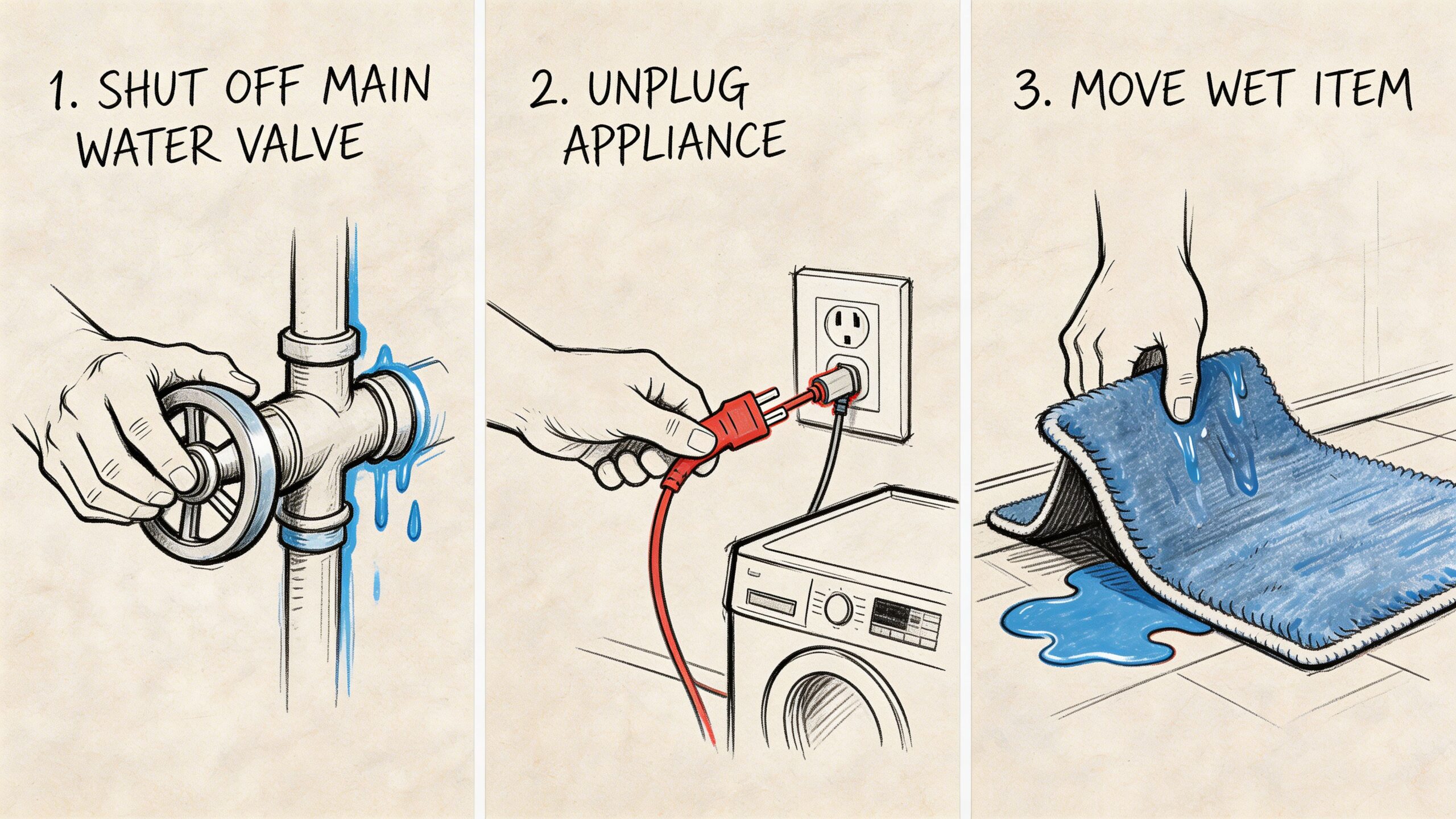
Five actions to take while help is on the way
- Shut off the water source: If the loss comes from plumbing, appliance lines, or a fixture, turn off the local valve or the main supply if needed.
- Cut power if safe to do so: Only do this if you can access the panel without stepping into water.
- Move valuables and soft goods: Pick up rugs, documents, electronics, and small furniture items that can be moved safely.
- Blot or contain what you can: Towels, bins, or a wet vacuum may help with minor surface water, but do not rely on them as the full solution.
- Take photos and video: Capture the source, wet materials, damaged contents, and any visible staining or swelling.
Document before you throw things away
This part is easy to skip when you are upset.
Photograph the damaged area wide and close-up. Open a cabinet and photograph the swelling. Record the underside of the sink. Show the wet flooring, the baseboards, the ceiling stain, and the affected belongings. If a hose burst or a valve failed, keep that part if you can do so safely.
A short visual guide can help if you are doing all of this under stress:
What not to do
Some well-meant actions make the loss worse.
- Do not use household fans blindly: They can spread contamination if the water is not clean.
- Do not assume dry surface equals dry structure: That mistake is common in Phoenix homes.
- Do not delay the call while waiting for perfect documentation: Basic photos are enough to get started.
- Do not tear out materials unless safety requires it: Premature demolition can complicate the claim and the drying plan.
Tip: If you can safely stop the source and document the damage, you have already done the most important homeowner tasks. The next step is getting the structure professionally assessed.
Navigating Timelines Insurance and Potential Costs
After the initial panic settles, most homeowners ask three questions.
How long will this take?
Will insurance help?
What will drive the final bill?
The honest answer is that water losses vary widely. A small clean-water appliance leak in one room behaves very differently from contaminated water affecting several rooms and dense materials.

What affects the timeline
The drying clock depends on a handful of practical factors.
| Factor | Why it matters |
|---|---|
| Water source | Cleaner water losses are handled differently from contaminated ones |
| How long water sat | Longer exposure usually means more absorption and more removal work |
| What materials got wet | Carpet, drywall, hardwood, insulation, and cabinets all dry differently |
| How far water traveled | Hidden spread into walls and subfloors often extends the job |
| Whether demolition is needed | Removing trapped wet materials can speed drying but adds steps |
In many residential losses, mitigation may take several days. The drying portion often takes less time when water is extracted quickly and the wet area is limited. Reconstruction, if needed, is separate and can extend the overall project.
Why insurers care about prompt action
A lot of mitigation websites talk about emergency response but say very little about what happens with the claim. That gap leaves homeowners feeling stuck.
Many mitigation websites don't detail how they help with insurance claims, yet water damage represents about 23% of all homeowner claims. Companies that coordinate directly with adjusters can often begin work immediately, preventing costly secondary damage that might not be covered if mitigation is delayed, as discussed in this overview of water damage services and claims help.
That last point matters. Waiting too long can create a second problem. The original leak may be one issue. Preventable added damage from delay may be treated differently.
What homeowners usually need from a mitigation company
Homeowners typically do not need a lecture on policy language. They need help with the practical steps.
Common insurance support tasks
- Damage documentation: Photos, moisture readings, equipment logs, and notes from the site
- Scope communication: Explaining what was affected and why certain drying steps were necessary
- Adjuster coordination: Sharing records and answering job-specific questions
- Billing workflow: Clarifying whether the company bills insurance directly, collects from the homeowner, or uses a mixed approach
If you want a homeowner-friendly primer on that process, this guide on water damage insurance claim tips for Phoenix homeowners covers the documentation side in more detail.
What drives cost
No responsible company can quote a real price without seeing the loss.
Still, homeowners can understand the main cost drivers:
- Category of water: Cleaner losses are generally simpler than contaminated ones.
- Class of damage: Deep saturation usually needs more equipment, more labor, and more monitoring.
- Affected materials: Hardwood, built-ins, insulation, and specialty finishes complicate drying and repair.
- Access challenges: Tight crawlspaces, behind-tile moisture, and multi-level spread increase labor.
- Contents handling: Furniture, electronics, rugs, and stored items can add complexity.
A simple way to think about budget risk
The cost is rarely just about the amount of visible water.
It is about how much of the building absorbed that water, how safely the materials can be saved, and how much labor it takes to prove they are dry. That is why a “small” leak under a cabinet sometimes turns into a larger mitigation job than a bigger puddle on a sealed surface.
Key takeaway: Fast mitigation usually saves money indirectly. It limits spread, reduces the amount of demolition needed later, and gives both the homeowner and insurer a clearer record of what happened.
Why Choosing a Certified Phoenix Mitigation Expert Matters
Not every company that shows up with a few fans is doing full mitigation.
Water losses need process, documentation, and training. That is why IICRC certification matters. It signals that the technicians are working from recognized industry standards for inspection, extraction, drying, and cleaning instead of guessing based on appearance alone.
Phoenix creates a misleading kind of water damage
In humid climates, moisture often announces itself quickly. Materials stay damp to the touch. Odors build faster. Homeowners know they still have a problem.
Phoenix can be trickier.
In arid climates like Phoenix, low ambient humidity can mask moisture trapped in wall cavities. This can lead to delayed mold growth appearing 60+ days after the incident, making professional monitoring with thermal imaging and moisture meters essential even when surfaces feel dry, as noted in this discussion of hidden moisture risk in dry climates.
That is the part many homeowners miss. The room may feel better long before the structure is dry.
Local experience helps with the parts you cannot see
A Phoenix technician who deals with monsoon intrusion, slab-related moisture paths, stucco assemblies, and tile-heavy interiors has a better chance of spotting the less obvious trouble areas.
That can include:
- moisture behind lower wall cavities,
- trapped water under floating floors,
- dampness beneath cabinets,
- and hidden pockets around HVAC-adjacent spaces.
One local option homeowners may encounter is Restore Heroes, an IICRC-certified company serving the Phoenix metro area for emergency mitigation and restoration work. The broader point is not the brand name. It is that the company you hire should have the training and tools to verify hidden moisture rather than relying on touch alone.
Search results are not the same as qualifications
When people type water mitigation services near me, they often choose the first business that answers the phone.
Speed matters, but so does verification. Check for certification, documentation practices, insurance coordination, and whether the company explains how it confirms dryness. If you manage a service-area business yourself and want to understand why some local companies appear more clearly in those searches, this guide to Local SEO for Service Area Businesses gives a useful explanation of how that visibility works.
Tip: A dry-looking room is not the finish line in Phoenix. The finish line is measured moisture levels, documented checks, and a drying plan that accounted for hidden areas.
Frequently Asked Questions About Water Mitigation
Can't I just use a shop vac and fans myself
Sometimes you can remove some visible water that way, especially from a small clean-water spill.
The problem is what those tools do not show you. They do not tell you if moisture moved under baseboards, into wall cavities, beneath flooring, or into insulation. They also do not address contaminated water safely. DIY cleanup may help with surface control, but it does not replace professional assessment when building materials got wet.
Will my homeowners insurance cover water damage
It depends on the cause and on your policy terms.
In general, sudden and accidental water events are often handled differently from long-term neglect, maintenance issues, or separate flood situations. The safest move is to document everything, report the loss quickly, and ask your insurer how your specific policy applies. A mitigation company can often help organize the job records, but it should not give legal advice about coverage.
How do you know when my home is dry
Professionals do not rely on touch or appearance alone.
They use tools such as moisture meters and thermal imaging cameras to track hidden moisture and compare affected materials with dry reference areas. Equipment is adjusted as readings change. The decision to stop drying should be based on measured results, not on whether the room feels comfortable again.
If you are dealing with active water damage in the Phoenix area, contact Restore Heroes to request professional mitigation help, ask what documentation they provide, and confirm how they evaluate hidden moisture before the job is considered dry.