
Basements and dangerous molds go hand-in-hand. Their high humidity, poor ventilation, and lack of sunlight create a perfect storm for hazardous species like Stachybotrys, Penicillium, and Aspergillus to take hold. If left unchecked, these invaders can cause serious health issues and damage your home's structure.
Why Basements Are a Perfect Habitat for Mold
Think of your basement as a petri dish just waiting for the right ingredients. It only takes a bit of moisture, some stagnant air, and a little darkness to turn a useful underground space into a prime breeding ground for fungus.
Even here in a dry climate like Phoenix, a surprise monsoon storm or a slow, hidden leak can introduce just enough water to kickstart a mold colony. It's the nature of the beast—basements are just naturally prone to dampness.
The Three Ingredients for Mold Growth
Mold spores are basically microscopic seeds that are floating around in the air all the time, both inside and out. For those seeds to sprout into a full-blown problem, they just need a few things:
- A Source of Moisture: This is the big one. Moisture is the trigger. It could be from a leaky pipe, condensation building up on cool foundation walls, a crack in the foundation letting groundwater seep in, or just high humidity. A major plumbing failure, like a broken sewer line, can dump a huge amount of moisture and contaminants, creating a five-star resort for dangerous molds.
- Stagnant, Poorly Ventilated Air: Without good airflow, that moist air just gets trapped. Humidity levels spike, and wet surfaces never get a chance to dry out. This gives mold all the time it needs to settle in and start growing.
- A Food Source: Mold isn't a picky eater. It happily feeds on almost any organic material it can find, including the wood in your framing, drywall, carpeting, cardboard storage boxes, and even the dust bunnies in the corner.
When these three elements come together, your basement becomes the perfect incubator. This is why knowing how to avoid mold in the basement is one of the most important things a homeowner can learn.
Basements are such hotspots for dangerous molds that the statistics are pretty eye-opening. The Penicillium/Aspergillus group is the most common, showing up in a staggering 71% of all basement air tests. After that, you have Chaetomium and the infamous "black mold" Stachybotrys, which each appear in 17% of cases.
Identifying the Most Common Dangerous Basement Molds
Finding a strange, discolored patch in your basement is always unsettling. While not every spot is a sign of disaster, some types of mold can pose serious risks to both your house and your family's health. Think of this as your field guide to the most common—and most dangerous—molds you might encounter down there.
Knowing what to look for is the first real step. After all, not all mold is created equal. Some patches are just harmless mildew, but others are far more sinister. The key to telling them apart often starts with understanding what lets them grow in the first place.
At its core, mold needs just three things to thrive: moisture, a food source (like wood or drywall), and darkness. It's a simple recipe for a big problem.
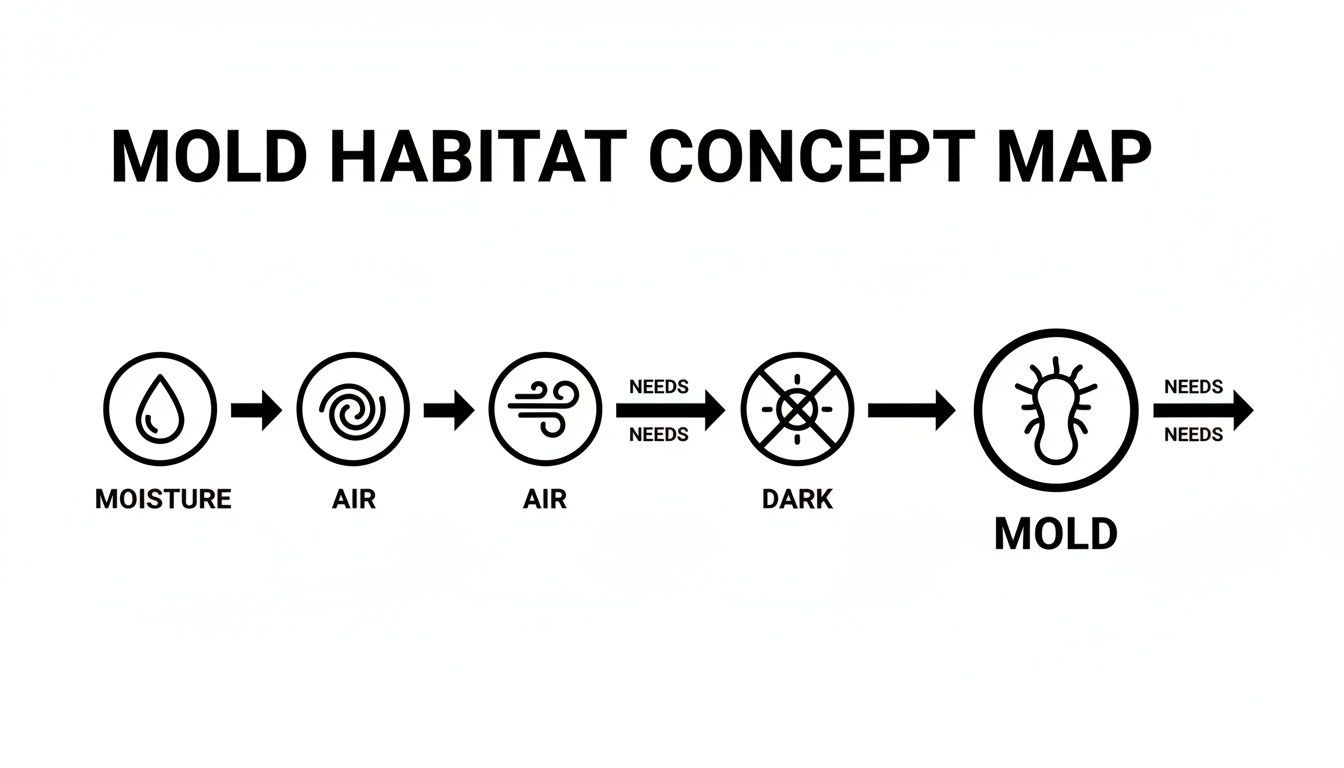
As you can see, if you take away just one of those elements—especially the moisture—you can stop mold before it ever gets a foothold.
Now, let’s get into the specifics of what you might find lurking in the corners of your basement.
The Four Most Unwanted Guests
While there are countless species of mold out there, a few notorious ones show up in basements time and time again. They absolutely love feasting on common building materials, especially when there’s been a leak or constant humidity. Here are the ones to watch out for.
Stachybotrys Chartarum (Black Mold)
This is the one everyone knows as "toxic black mold," and it has a nasty reputation for a reason. It typically looks slimy and has a dark, greenish-black color. You’ll find it in places that are almost always wet, like around a slow pipe leak or on drywall that’s been soaked. It loves high-cellulose materials, which makes your walls a prime target. If you think you've found it, you should proceed with caution. We go into more detail in our guide on what mold on drywall looks like.
Aspergillus
Aspergillus is incredibly common and can show up in a whole palette of colors—green, yellow, and even black. It often looks fuzzy or hair-like. While many of its species are harmless, others are known to cause pretty severe allergic reactions and even respiratory infections, especially for people with compromised immune systems.
Penicillium
You’ve probably seen this one before on spoiled food. In a basement, Penicillium has a distinct blue or green color with a velvety, fuzzy texture. It thrives in water-damaged materials like carpets, insulation, and even old mattresses. For most people, it triggers allergies, but it can also lead to sinus infections and lung inflammation.
Cladosporium
This mold can grow in both warm and cool conditions, making it a versatile threat. It usually appears olive-green or brown and has a suede-like texture. You'll spot it on painted wood surfaces, fabrics, and the backs of drywall. While it's mainly an allergen that can cause asthma flare-ups and skin rashes, it's not something you want hanging around.
Common Dangerous Basement Molds at a Glance
Telling these molds apart by sight alone can be tough, as their appearance often changes based on the environment. This quick-reference table breaks down the key characteristics to give you a better idea of what you might be dealing with.
| Mold Type | Typical Appearance | Where to Look | Potential Health Risks |
|---|---|---|---|
| Stachybotrys | Slimy, dark green or black patches; can look powdery if it dries out. | Water-damaged drywall, wood, and ceiling tiles near chronic leaks. | Severe respiratory issues, headaches, fatigue, and neurological symptoms from mycotoxins. |
| Aspergillus | Long, fuzzy chains that can be green, white, yellow, or black. | Damp walls, insulation, dusty corners, and HVAC systems. | Allergic reactions, asthma attacks, and serious lung infections in sensitive individuals. |
| Penicillium | Fuzzy and velvety texture, usually in shades of blue or green. | Water-damaged carpets, wallpaper, insulation, and mattresses. | Allergic reactions, sinus infections, and inflammation of the lungs. |
| Cladosporium | Olive-green to brown or black with a suede-like texture. | Wood surfaces, fabrics, carpets, and the back of unpainted drywall. | Asthma triggers, allergic reactions, and sinus problems. |
Just remember, looking at a patch of mold is only the first step. You can never be 100% certain of the species without professional lab testing. But if you see any of these signs, take it as a clear warning: you have a moisture problem that needs to be fixed right away.
The Hidden Health Effects of Mold Exposure
That musty smell in your basement isn't just an annoyance. It’s often the first clue that a hidden leak has turned into a hidden health crisis, connecting what seems like a minor water problem to persistent, unexplained sickness in your family.
I’ve seen it countless times. A family calls us, worried about their youngest child's nagging cough or their teenager's constant headaches. They’ve chalked it up to allergies or school stress. Then, while cleaning out the basement, they find a patch of black mold behind some old boxes, right under a window that’s been leaking for months. Suddenly, it all makes sense—the strange symptoms started right after the last big rain.
From Allergies to Serious Illness
Most of us think of mold as a simple allergy trigger, causing sneezes and a runny nose. But with long-term exposure, especially to certain types of mold, the health risks can become much more serious. The real culprits are mycotoxins, which are toxic compounds produced by molds like Stachybotrys (black mold) and Aspergillus.
When mold spores become airborne, you’re not just breathing in the spores themselves—you're inhaling these invisible toxins. Over time, this constant exposure can lead to a whole host of symptoms that are far worse than a case of the sniffles.
"A musty basement smell should never be ignored. It's often the first warning sign of an invisible health threat. What starts as a minor irritation can escalate into chronic respiratory and neurological conditions if the underlying mold problem isn't addressed."
The health toll is genuinely alarming. Studies have linked fungal illnesses to over 75,000 hospitalizations and 7,000 deaths in the U.S. every year. The global numbers are even more staggering, with indoor air pollution—often made worse by mold—contributing to millions of deaths annually. If you want to dig deeper into the data, you can explore detailed statistics on mold's impact.
Who Is Most at Risk
While mold can affect anyone, some people are far more susceptible to its effects. Their bodies simply can't fight off the constant assault from airborne spores and mycotoxins as effectively.
The most vulnerable groups include:
- Children and Infants: Their immune and respiratory systems are still developing, making them incredibly sensitive. Early mold exposure can dramatically increase the risk of developing asthma.
- The Elderly: A naturally weakening immune system makes seniors more prone to the respiratory infections that mold can cause.
- Individuals with Compromised Immunity: Anyone with a condition like HIV/AIDS or undergoing chemotherapy is at a high risk for severe, systemic fungal infections.
- People with Pre-existing Respiratory Conditions: For someone with asthma or COPD, a moldy environment can trigger severe attacks and make their daily symptoms much worse.
Understanding these risks makes it clear why you can't afford to wait when you see signs of mold. If you're worried about what you've found in your home, it helps to know what professionals do. You can learn more by reading our guide on what to expect during mold damage restoration.
How to Reliably Detect and Test for Hidden Mold
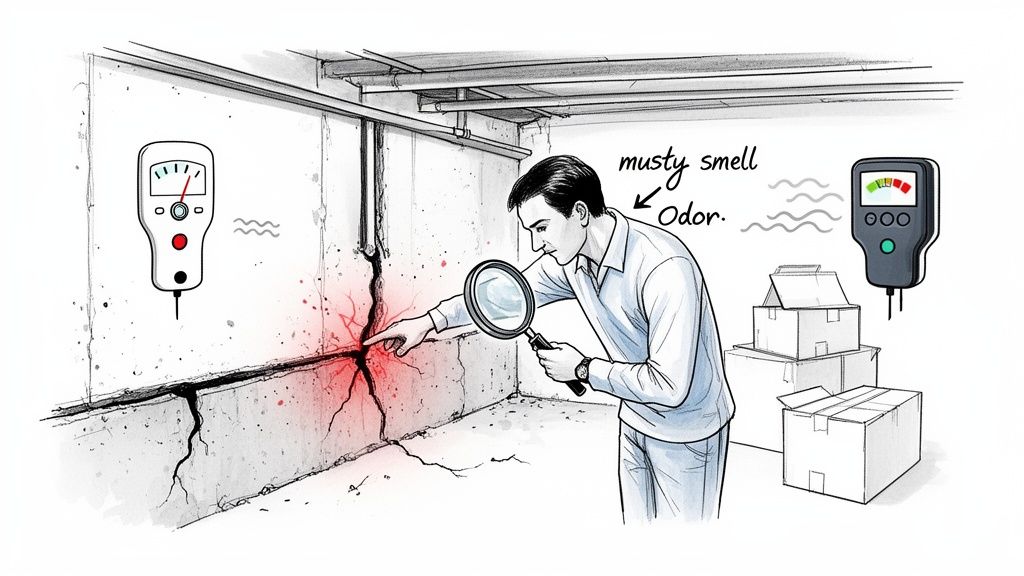
Often, the first sign of a mold problem in your basement isn't what you see—it's what you smell. That unmistakable earthy, musty odor is a dead giveaway that a mold colony is active somewhere nearby, even if it's completely out of sight. Trust your nose; it's your best early detection tool.
If you smell that damp, old-book scent, it's time to put on your detective hat and start a thorough visual inspection. You’ll need to do more than just a quick scan; mold loves to hide.
Where to Look for Visual Clues
Mold isn’t going to grow out in the open. It thrives in dark, damp, and undisturbed corners. When you’re searching your basement, be sure to pay extra attention to these common hotspots:
- Around Water Sources: Get a good look at the base of your sump pump, water heater, and any visible plumbing. Discoloration, stains, or fuzzy spots are huge red flags.
- Behind Anything Stored Against a Wall: You have to move those boxes, old couches, and storage bins. They trap moisture against the wall and block airflow, creating the perfect breeding ground for mold.
- On Foundation Walls: Scan the base of your concrete or block walls for dark stains, peeling paint, or fuzzy patches, especially near cracks or where the wall meets the floor.
- Under Flooring: If you have carpet, vinyl, or any other flooring, peel back a corner or two. Look and feel for any dampness or dark growth underneath.
Finding any of these signs is clear proof you have a moisture issue that's feeding a mold problem. But remember, what you can see is often just the tip of the iceberg. A small patch could signal a much larger colony, particularly if you have mold lurking behind your drywall.
DIY Test Kits vs Professional Testing
When people spot what looks like mold, their first instinct is often to grab a DIY test kit from the local hardware store. They seem like a quick, easy answer, but they can be incredibly misleading. These kits will almost always show a positive result because mold spores are naturally everywhere, both indoors and out. What they can't tell you is the species, how concentrated it is, or where it's actually coming from.
A DIY test is like taking a single snapshot in a busy city; it shows you that cars exist but tells you nothing about the traffic problem. Professional testing, on the other hand, is like having a complete traffic analysis report.
A certified mold inspector brings in the right tools and expertise for a scientific assessment. They take air samples to compare the spore count inside your home to the levels outside, giving you a clear picture of the problem's severity. They also use professional gear like moisture meters and thermal imaging cameras to find hidden moisture inside walls without tearing them apart. This level of detailed data is the only way to truly understand the scope of the problem and plan an effective remediation.
Your Action Plan for Dealing with Basement Mold
Finding mold in your basement can definitely set off some alarm bells, but a clear head and a solid plan are your best tools. The first priority is always safety and containment. Whatever you do, don't just grab a sponge and start scrubbing. The biggest mistake homeowners make is disturbing a mold colony, which can send a massive cloud of spores airborne and spread the problem everywhere.
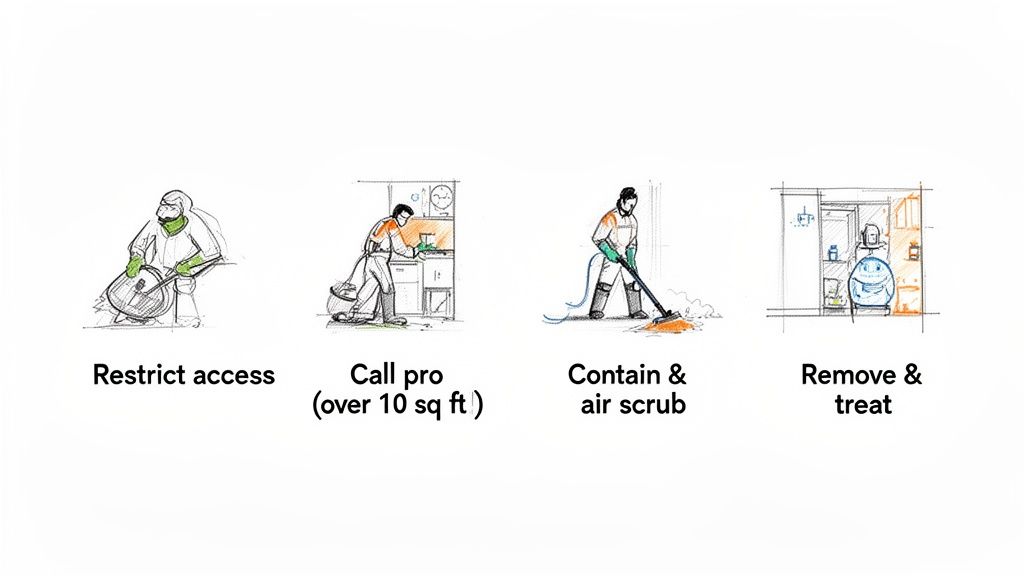
Your very first move should be to lock down the area. Keep kids, pets, and anyone with health sensitivities far away from the basement. If your HVAC unit pulls air from the basement, shut it down immediately to stop it from circulating spores throughout your house.
The DIY Limit: When to Call for Help
It's tempting to try and tackle a mold problem yourself, but there's a clear line you shouldn't cross. My rule of thumb is this: if the mold covers more than 10 square feet, it’s time to call a professional. That's a patch roughly 3 feet by 3 feet.
A tiny spot of mold on a non-porous surface like a pipe might be a simple cleanup. But once you see extensive growth, especially on drywall, insulation, or wood, you're looking at a problem that has sunk its roots deep into the material. The risk of accidentally making things worse is just too high. It's also important to recognize when a cleaning job turns dangerous for anyone involved, which is why large-scale jobs are best left to trained experts.
What to Expect from Professional Mold Remediation
Hiring a certified remediation company isn't just about cleaning. It’s a systematic, scientific process designed to get rid of the mold. While the specifics can change depending on your situation, every professional job typically follows a proven playbook. You can get a good feel for what this involves by checking out these mold remediation services near me.
Here's a breakdown of what a proper remediation looks like:
- Full Containment: The crew will start by completely sealing off the contaminated area with heavy plastic sheeting. They'll then set up a negative air pressure system, which basically turns the area into a vacuum so no dust or spores can escape into the rest of your home.
- Air Scrubbing: Powerful HEPA filtration machines will run throughout the process. These "air scrubbers" are designed to pull microscopic mold spores right out of the air, which is essential for getting your home's air quality back to normal.
- Safe Removal: This is where the hard work happens. Technicians wearing protective gear will carefully cut out and remove all materials the mold has ruined, like drywall and carpet. They bag everything securely for proper disposal.
- Antimicrobial Treatment: After the contaminated materials are gone, everything left behind—like the wood framing or concrete foundation—gets thoroughly cleaned and treated with an EPA-registered antimicrobial solution. This step kills any lingering mold and helps stop it from coming back.
A true remediation isn't just a surface clean. It's about tackling the problem you can't see—the spores in the air and the moisture that let the dangerous molds in basements grow in the first place.
Frequently Asked Questions About Basement Mold
When you find mold in your basement, a million questions probably start racing through your mind. It's completely normal. Let's walk through some of the most common questions we hear from homeowners so you can get clear, no-nonsense answers.
Can I Just Use Bleach on Black Mold?
This is probably the number one question people ask, and it comes from a place of wanting to fix things quickly. Unfortunately, reaching for the bleach is one of the biggest mistakes you can make.
Think of mold on drywall or wood like a weed. The dark spot you see on the surface is just the "leaves," but the real problem—the "roots"—is growing deep inside the material. Bleach might wipe away the surface stain, but it can't penetrate porous surfaces to kill the root system.
Not only will the mold almost certainly grow back, but you’re also adding more moisture to the area with the bleach solution, which is exactly what mold loves. Professionals use specialized, EPA-registered antimicrobial agents that are designed to kill mold at its source.
Will My Homeowners Insurance Cover Mold Removal?
This is where things can get tricky. Insurance coverage for mold really hinges on what caused it in the first place. If the mold grew because of a "covered peril"—like a pipe that suddenly burst—your policy may help cover the cost.
However, most standard policies will not cover mold that results from slow, gradual problems. Things like a tiny drip under a sink that went unnoticed for months, high humidity, or general lack of maintenance are often excluded.
Your best bet is to pull out your insurance policy and read the fine print on mold coverage. A professional remediation company can also give you detailed documentation that explains the source of the water damage, which can be crucial for supporting an insurance claim.
How Do I Prevent Mold from Returning?
Once the professionals have cleared out the existing mold, keeping it from coming back boils down to one simple thing: moisture control. This is non-negotiable, especially here in Phoenix, where any moisture in a dark basement can kickstart new growth.
Here’s your game plan for staying mold-free:
- Control Humidity: Get a good dehumidifier and keep the humidity level in your basement below 50%.
- Improve Drainage: Make sure the ground around your house slopes away from the foundation. You don't want rainwater pooling against your basement walls.
- Fix Leaks Immediately: Don't put off fixing even the smallest leak. A tiny drip today can become a massive mold problem tomorrow.
- Promote Airflow: A little bit of air circulation goes a long way. Use fans and try to avoid packing boxes or furniture tightly against the walls.
How Long Does Professional Mold Remediation Take?
The timeline for a professional job really depends on two main factors: how widespread the mold is and how deep it's gotten into the building materials.
For a small, contained problem—say, on a single patch of drywall—the whole process might only take two or three days. But if you’re dealing with extensive contamination after something like a flood, it could easily take a week or more. A certified inspector will be able to give you a much more accurate timeline after they’ve had a chance to assess the situation fully.
When you’re facing water, fire, or mold damage, you need a team that responds fast and handles the job right. Restore Heroes is an IICRC-certified restoration company offering 24/7 emergency services across the Phoenix metro area. We manage the entire process, from inspection and cleanup to coordinating with your insurance provider, to get your home back to normal. If you need immediate assistance, visit us at https://www.restoreheroesaz.com.