
Water damage recovery is a whole lot more than just mopping up a puddle. It’s the professional, science-driven process of cleaning, drying, and putting your property back together after water gets in. This isn't just cleanup; it’s a race against time to prevent long-term structural problems and the serious health risks of dangerous mold growth.
The Clock is Ticking: Why Water Damage is an Emergency
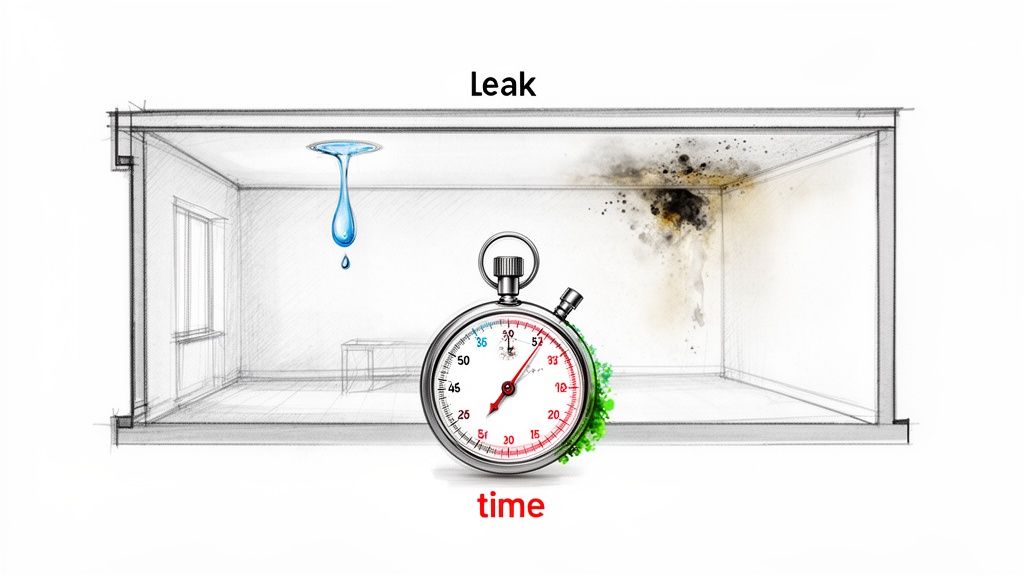
The moment water shows up where it shouldn't—from a burst pipe, a faulty dishwasher, or one of our Phoenix monsoon storms—a clock starts ticking. The visible water on your floor is only the beginning of the problem. The real threat is the water you can't see, as it quickly soaks into drywall, insulation, and the wood framing of your home.
Think of your home's building materials like a collection of sponges. Drywall, wood, and insulation are surprisingly absorbent, creating a damp, dark environment that’s a perfect breeding ground for mold. Here in the Phoenix area, our warm climate can put that process into overdrive.
It's a shocking fact, but in these damp conditions, mold can start growing and spreading in as little as 24 to 48 hours. A simple water issue can quickly spiral into a major contamination problem, bringing potential health issues and a much bigger, more expensive repair job.
This is exactly why professional water damage recovery is so critical. The question isn't if the damage will get worse, but how fast. Every hour you wait allows moisture to creep further, weakening your home’s structure and rolling out the welcome mat for mold.
Why a Fast, Scientific Response is a Must
A true professional restoration isn't just about bringing in fans. It’s based on the science of psychrometry—which is a fancy way of saying professionals understand the relationship between air, temperature, and moisture. They use that knowledge to create an effective drying environment, pulling moisture not just from the surface, but from deep inside the materials of your home.
The goal is to stop the damage right away and head off what we call "secondary issues." These secondary problems are often far worse than the initial water leak itself. We're talking about:
- Structural Damage: Wood studs twisting and warping, floors buckling, and drywall literally crumbling.
- Widespread Mold: Hidden moisture becomes a feast for mold inside your walls and under your floors.
- Electrical Hazards: Water plus electricity is a recipe for disaster, creating a serious safety risk you can't ignore.
- Poor Indoor Air Quality: That musty smell is a red flag. It’s often caused by airborne mold spores that can affect your family's health.
For a deeper dive into the specific services, you can learn more about what water damage restoration entails in our complete guide.
What to Expect During Recovery
The recovery process isn't random; it's a methodical series of steps designed to stabilize your home and restore it correctly. While every water loss is different, the core phases typically follow a logical path, from the first inspection and water extraction to the final, advanced drying phase.
Each step sets the stage for the next one. The process starts by removing the standing water, then bringing in specialized equipment like industrial-grade dehumidifiers and high-velocity air movers. This systematic approach is the difference between a DIY cleanup and a professional restoration—it tackles the entire problem, both seen and unseen, to help make sure your home is safe, dry, and clean again. Taking swift action and calling a certified pro is the single most important thing you can do.
The First 48 Hours: Your Immediate Game Plan for Water Damage
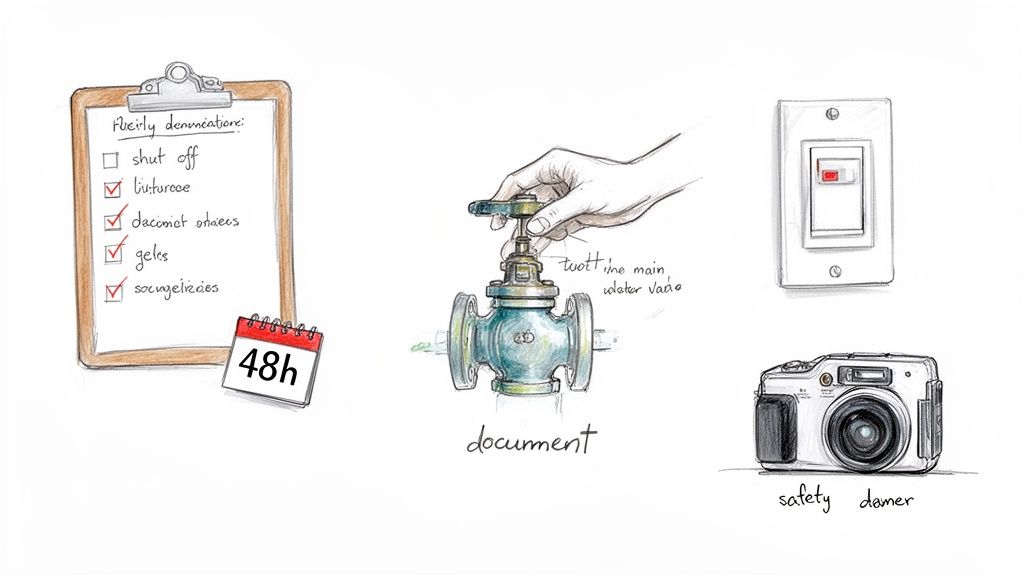
That sinking feeling when you discover a leak or standing water in your home is unmistakable. What you do in the next 48 hours is a very important factor in how this story ends. It can be the difference between a manageable cleanup and a full-blown disaster. Your immediate goals are simple: keep everyone safe and stop the water from causing any more harm.
First thing’s first: find the source. If you’re looking at a burst pipe or an overflowing appliance, your top priority is shutting off the main water valve to your house. This one move stops the bleeding, containing the problem before it gets any worse.
With the water off, turn your attention to the electrical risk. Water and electricity are a dangerous mix. If you see water anywhere near outlets, power strips, or your home’s breaker panel, shut off the power to those rooms immediately. If you’re not sure which breaker controls what, or if you'd have to step in water to reach the panel, don't even think about it. Leave it for the professionals.
Document Everything Before You Touch Anything
Once the immediate hazards are under control, grab your smartphone. Before you move a single thing, you need to become a detective and document the scene. This is a non-negotiable step for your insurance claim and gives everyone a clear "before" picture.
Walk through and take extensive photos and videos of everything. Be sure to capture:
- The source of the water, if you were able to find it.
- The extent of any standing water and soaked flooring.
- Any furniture, electronics, or personal belongings that got wet.
- Telltale water stains or fresh discoloration on walls, ceilings, and baseboards.
This proof is your best friend when talking to your insurance adjuster. It provides a clear, timestamped record of the initial damage and helps justify the restoration work to come.
Why Time Is Your Worst Enemy
That 48-hour window isn't just a random number. It’s a ticking clock based on how materials in your home react to being wet. Drywall, for instance, wicks up moisture like a sponge, pulling water deep inside the wall where it gets trapped. This hidden moisture is the real threat, kicking off a chain reaction of secondary damage.
Within just 24 to 48 hours, that trapped moisture creates the perfect breeding ground for mold. What started as a clean water problem from a supply line can quickly turn into a serious contamination issue, bringing health risks and a much bigger repair bill.
This isn’t just a local problem; it's a massive global issue. Floods are responsible for 35-40% of all weather-related disasters worldwide, causing incredible economic damage. To get a better handle on your immediate response, it helps to review these critical steps to take immediately after water damage occurs.
Thinking you can just "wait and see if it dries on its own" is one of the costliest mistakes a homeowner can make. The damage escalates quickly and quietly. Taking these first steps yourself protects your property and sets the stage for a much smoother and more effective professional cleanup. Getting fast, professional help is key, and knowing your options for emergency water mitigation can truly save the day.
A Look Inside the Professional Recovery Process
When a professional restoration crew pulls up to your home, they're bringing order to chaos. This isn't just about mopping up a mess; it's a science. The entire water damage recovery process is a step-by-step operation designed to find every last drop of moisture, get it out, and help make sure it doesn't cause bigger problems down the road. It’s what separates a true fix from a temporary patch-up.
It all starts with a deep dive to understand the full extent of the problem, which is almost always worse than it looks. Using specialized gear, technicians map out exactly where the water went, creating a blueprint for an effective recovery. Every step builds on the one before it, helping to ensure nothing gets missed.
First Things First: Sizing Up the Damage
The very first step is a thorough inspection. A certified professional uses equipment that lets them "see" the water you can't, finding moisture hiding behind walls or under floors. The main tools for this are:
- Moisture Meters: These have probes that are pushed directly into materials like drywall, baseboards, or flooring to get a precise reading of how wet something really is.
- Thermal Imaging Cameras: These infrared cameras are a game-changer. They show temperature differences on a surface, instantly highlighting the cold spots that indicate hidden moisture without having to tear anything apart.
This isn't just a quick glance. It's a forensic investigation that creates a "moisture map" of your home. This data is what helps classify the water—from Category 1 (clean water from a supply line) to Category 3 (contaminated "black water")—which dictates all the safety and cleaning steps that follow.
Getting the Water Out and Removing Ruined Materials
With a clear map of the damage, the next job is to remove all the standing water. Restoration companies use powerful, truck-mounted extraction units that are in a different league than a shop vac. Getting this bulk water out immediately is the single most important first move in the drying process.
At the same time, they will start removing materials that are too far gone to save. Think soaked carpet padding, soggy insulation, and drywall that's started to crumble. Taking these materials out does more than just get rid of the junk; it opens up wall cavities and exposes the subfloor, letting the air get to where it needs to go.
The Science of Drying and Dehumidifying
Now for the next phase. Once the standing water is gone, the hidden moisture that’s been absorbed by your home’s structure has to be tackled. This is done by creating a very controlled drying environment inside your home.
It's a simple concept: a damp sponge will never dry in a humid jungle. To get the water out of the sponge, you need warm, dry, moving air. The affected area of your home is basically turned into a high-powered drying chamber with a combination of two key tools:
- Industrial Dehumidifiers: These are beasts. They pull massive amounts of water vapor right out of the air, making it incredibly dry. This super-dry air is "thirsty," and it starts aggressively pulling moisture from deep inside the wood, drywall, and concrete.
- High-Velocity Air Movers: You might know them as "snails" or just "blowers." These fans are placed strategically to create a powerful, circular airflow across all wet surfaces. This speeds up evaporation, lifting the moisture off the surfaces and into the air, where the dehumidifiers are waiting to grab it.
This one-two punch of dehumidification and airflow is what makes professional drying work. It's a carefully managed system that runs 24/7, actively pulling moisture out of your home until everything is back to normal, safe levels.
Deep Cleaning, Sanitizing, and The Final Touches
Once the structure is confirmed to be completely dry, the job shifts to cleaning and safety. Every remaining surface that got wet is meticulously cleaned. Depending on the water category, this phase includes applying professional-grade antimicrobial treatments to stop any potential mold growth in its tracks.
This isn't a step to be skipped. It’s what helps ensure your home’s air is healthy again and gets rid of any contaminants or lingering musty odors. If you want to dig deeper into what a full-service team handles, our blog offers a complete rundown of what a restoration company does.
Finally, with the property clean, dry, and sanitized, the last phase begins: restoration. This is when the craftsmen come in to put your home back together. They'll hang new drywall, lay new flooring, install new baseboards, and paint—whatever it takes to get your home back to the way it was before the disaster. This systematic approach is why hiring an IICRC-certified firm is the gold standard; it provides a framework for getting the job done right from the ground up.
Navigating Costs and the Insurance Claims Process
After the initial shock of finding water in your home, the next thought is almost always the same: "How much is this going to cost?" There’s no single price tag for water damage, but the final bill isn't pulled out of thin air. It’s a direct result of the specific situation you’re facing.
Understanding what drives these costs is the first step toward getting a handle on the situation. The scope of the project, from a small leak to a major flood, is determined by a few key variables. Think of it less as a flat fee and more as a project built from a few essential components.
Key Factors That Influence Recovery Costs
The cost of water damage restoration is unique to every home and situation. Below are the primary variables that are assessed to determine the scope and potential price of the work needed.
| Influencing Factor | Description | How It Affects Cost |
|---|---|---|
| Water Contamination Level | Water is classified into three categories: Category 1 (clean), Category 2 (gray), and Category 3 (black). | Clean water is the least expensive to mitigate. Gray and especially black water require specialized safety gear, disinfection, and controlled demolition, which increases labor and material costs. |
| Size of the Affected Area | This is the total square footage of floors, walls, and ceilings that have been impacted by water. | The larger the area, the more labor, time, and industrial-grade equipment (like air movers and dehumidifiers) are needed to dry the structure completely. |
| Types of Materials Affected | Different materials absorb and release water differently. Porous materials like carpet, drywall, and insulation often hold moisture. | Non-porous materials like tile may just need cleaning. Porous materials, however, often need to be removed and replaced. Hardwood floors require specialized drying systems to save them, which is a more involved process. |
Each of these factors combines to create a custom recovery plan. It's why a quick phone quote is often impossible—a true professional typically needs to see the situation to understand what it will take to make it right.
Understanding the Insurance Claims Process
For most homeowners, navigating the insurance claim can be the most daunting part of the entire experience. The best thing you can do is call your insurance provider as soon as you've stopped the leak and made sure everyone is safe.
Your adjuster will immediately talk about mitigation. This isn't just industry jargon; it's a critical concept. Mitigation refers to all the immediate steps taken to prevent the damage from getting worse—think water extraction, removing soaked carpet, and setting up professional drying equipment. Your policy likely requires you to take reasonable steps to mitigate the damage, which is why calling a restoration company right away is so important.
A professional restoration company can be your biggest advocate during the claims process. They often use the same estimating software that insurance carriers use, so their pricing is standardized and recognized. They also speak their language, providing the detailed documentation, moisture maps, and photos needed to justify every step of the work.
This direct line of communication between your restoration team and your adjuster can help keep the process moving smoothly.
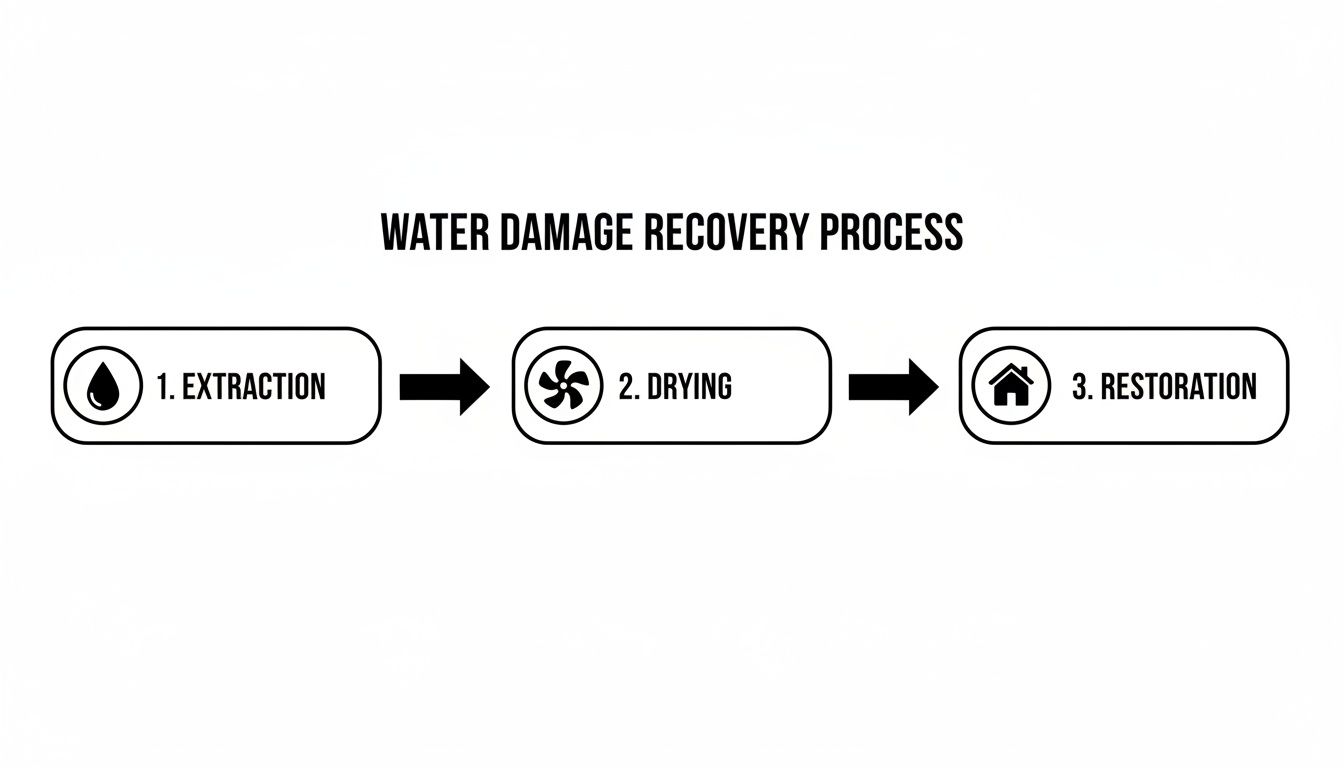
The claims process essentially follows these three phases: the initial emergency service (extraction), the structural drying phase, and finally, the restoration or "put-back" phase.
By documenting everything and working with a certified pro who knows the ropes, you can turn a confusing process into a manageable one. For a deeper dive, our guide on water damage insurance claim tips offers even more practical advice to help you feel confident and in control.
Common Water Damage Scenarios in the Phoenix Area
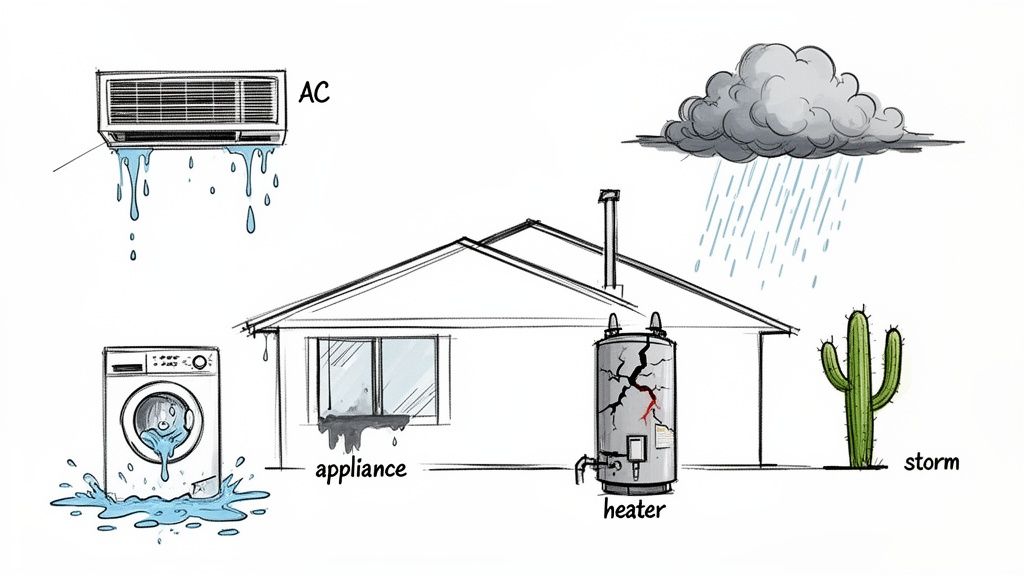
Here in the Valley, we don't just have one type of water damage. Our desert climate—with its scorching summers, hard water, and wild monsoon season—creates a unique set of problems for homeowners. Knowing what to watch for is the best way to protect your home.
From Scottsdale to Mesa, we see the same issues pop up again and again. These aren't just fluke accidents; they're often predictable failures caused by the strain our environment puts on a home’s plumbing and appliances. Effective water damage recovery starts with understanding these local culprits.
The Summer Strain: Leaks from AC Units and Appliances
Nowhere do air conditioners work harder than during a Phoenix summer. Your AC is constantly running, pulling a surprising amount of moisture from the air. This water flows into a drip pan and out through a condensate line.
Over time, that line gets clogged with dust, algae, and other gunk, causing a backup. The pan overflows, and since most AC units are tucked away in attics or closets, the leak can go unnoticed for days. It silently soaks ceilings, drywall, and insulation. A sudden water stain appearing on your ceiling in July? That's a classic sign of a clogged AC line.
Other appliances are also working under constant pressure:
- Water Heaters: Arizona’s mineral-rich hard water creates sediment buildup in water heater tanks. This leads to corrosion and, eventually, a ruptured tank that can dump dozens of gallons of water in minutes.
- Washing Machines: The dry heat makes rubber supply hoses brittle. One day they're fine, the next they can burst without warning, flooding a laundry room and nearby areas in no time.
Monsoon Mayhem and Foundation Issues
Our summer monsoon season is known for short, powerful downpours that our hard, dry soil simply can't absorb fast enough. This sudden rush of water creates two big risks for homeowners.
First, flash floods can overwhelm storm drains, sending water right toward your foundation. Second, even a lighter storm can saturate the ground around your home. If your property isn't graded properly, that water will pool against the foundation and find its way through tiny cracks into your basement or crawlspace. Thinking ahead and installing a French drain system can make a huge difference in directing that water away from your house.
The combination of extreme heat and sudden moisture is a serious concern. The high temperatures can dramatically accelerate mold growth after a leak, turning a simple water problem into a major contamination issue faster than in cooler climates.
This "climate whiplash" of intense heat followed by heavy rain is a growing concern globally. Research on how hydrological extremes are increasing worldwide shows that these events are causing more damage than ever, which is why a fast, professional response is so critical.
Whether it’s a flooded basement after a monsoon or a slow leak from your AC, a quick response is your best defense. If you're currently dealing with standing water, our guide on how to dry out a flooded basement can walk you through the immediate steps.
Your Water Damage Recovery Questions Answered
When you find water damage in your house, your mind starts racing with questions. It's a confusing and stressful situation, but getting clear answers can make all the difference. We're here to walk you through the most common concerns homeowners have during the water damage recovery process, so you can feel confident about the road ahead.
How Long Does Water Damage Recovery Usually Take?
Honestly, there's no one-size-fits-all answer. The timeline really depends on how much water there was, what got wet, and how far the damage spread. A small leak from a supply line that was caught quickly might only take a few days to handle.
But for a bigger problem, like a burst pipe that flooded multiple rooms, you could be looking at a few weeks. It helps to think of the process in phases:
- Initial Mitigation (1-3 Days): This is the emergency response. Professionals will extract all the water, tear out materials that can't be saved, and get professional drying equipment set up.
- Structural Drying (3-7+ Days): This is where the big fans and dehumidifiers do their work. They'll run nonstop to pull moisture out of everything. Denser materials like hardwood floors or concrete can take longer to dry completely.
- Restoration and Repairs (Variable): This is the final step, and its timeline varies the most. It all depends on the repair work needed, from replacing drywall and flooring to rebuilding cabinets and painting.
Can I Stay in My House During the Process?
Whether you can stay put really comes down to safety and comfort. If the damage is small and isolated to one room—say, a bathroom with a tile floor—it’s often fine to stay.
However, if the damage is significant, if there's any chance the water is contaminated (like from a sewer line), or if the power must be shut off for safety, you may need to relocate temporarily. You also have to consider the noise. The industrial-grade equipment used is loud and runs 24/7, which makes it tough to live and sleep comfortably. A certified professional will assess the situation and give you a clear recommendation.
Think of it this way: Mitigation is the paramedic stopping the bleeding to prevent further harm. Restoration is the surgeon who comes in later to repair the damage and get you back to normal.
What Is the Difference Between Water Mitigation and Water Restoration?
People often use these terms interchangeably, but they're two very different stages of the recovery process. Knowing the difference helps you understand what's happening and why.
Water mitigation is the emergency part. The first priority is to stop the damage from getting worse. This involves:
- Getting all the standing water out.
- Removing soaked materials that are a lost cause, like carpet padding or insulation.
- Placing specialized drying equipment to pull moisture out of the structure itself.
Water restoration is the rebuilding part. This phase can't start until everything is completely dry and verified with meters. Restoration includes all the repairs needed to put your home back together—hanging new drywall, laying new floors, painting, and making it feel like home again.
Why Is Hiring an IICRC-Certified Professional Important?
When you see that IICRC (Institute of Inspection, Cleaning and Restoration Certification) logo, it means the technician or company has been trained to meet high industry standards. It's not just a fancy badge; it's your proof that they have been educated on the proper procedures.
An IICRC-certified pro understands the science of drying, knows how to handle contaminated water safely, and uses specialized equipment the right way. This expertise is critical for a few reasons:
- Health and Safety: They know how to address mold before it starts and get rid of dangerous contaminants, helping to keep your family safe.
- Property Value: Doing the job right helps prevent long-term problems like wood rot or musty smells that can tank your home's value.
- Insurance Claims: Insurance companies prefer working with IICRC-certified firms because they trust the work will be done to a professional standard. This can make for a much smoother claims process.
Ultimately, bringing in a certified expert is the best way to ensure the water damage recovery is done right the first time, giving you peace of mind that your home is truly restored.
When disaster strikes, you need a team you can trust to respond quickly and manage the entire recovery process with expertise. Restore Heroes is an IICRC-certified company providing 24/7 emergency services across the Phoenix metro area. To get a free onsite inspection and immediate help, visit us at https://www.restoreheroesaz.com.