
When a pipe bursts or a storm floods your basement, who do you call? A water restoration company is your first line of defense. Think of them as the emergency first responders for your property—a team of specialists who arrive with the right training and heavy-duty equipment to handle the crisis.
Their job isn't just to clean up the mess. It's to stop the damage in its tracks and bring your home back from the brink.
What a Water Restoration Company Does for Your Home
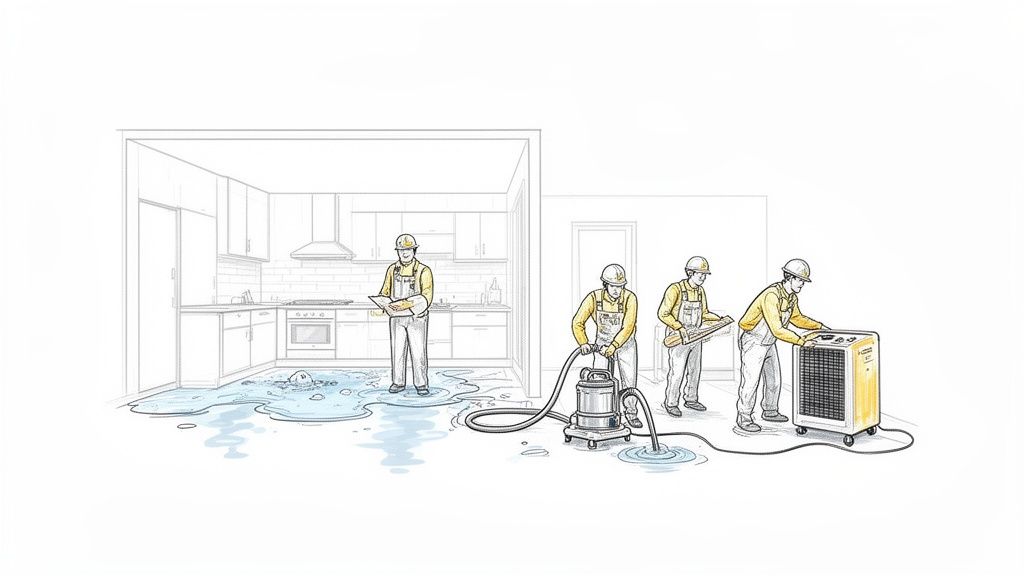
Let’s use an analogy. If your house suffers a major water incident, it's like it has a critical injury. A water restoration company acts as a team of paramedics and surgeons combined. They don’t just put a bandage on the problem; they rush in to stop the bleeding, assess the full scope of the damage, and perform the necessary work to prevent long-term issues like mold or structural rot.
The main mission is to prevent the damage from spreading. Water is sneaky. It quickly soaks into drywall, gets trapped under flooring, and wicks up into your home’s wooden frame. If left unchecked, it creates a perfect breeding ground for mold and can seriously compromise your home's integrity. These professionals are trained to mitigate those risks and protect your property’s value.
More Than Just a Cleanup Crew
It’s important to understand that these specialists are not the same as a standard cleaning service or a general contractor. You call them when a mop and bucket simply won't cut it.
Their expertise is critical for situations like:
- Major Appliance Failures: A busted washing machine hose or a faulty dishwasher can dump gallons of water across your floors in minutes, saturating everything in its path.
- Plumbing Disasters: When old pipes give way or freeze and burst, you're looking at widespread flooding that can affect multiple rooms and levels of your home.
- Storm Damage: Heavy rainfall can easily overwhelm gutters, leading to roof leaks or a flooded basement. This often involves contaminated water that needs professional handling.
- Sewer Backups: This is the worst-case scenario. "Black water" from a sewer line contains dangerous bacteria and pathogens, making it a biohazard situation that demands certified cleanup protocols.
To give you a better idea of when to make that call, here’s a quick guide.
Common Causes of Water Damage and When to Call Professionals
| Water Damage Source | Typical Severity | When to Call for Help |
|---|---|---|
| Minor Sink Overflow | Low | If water is contained to the floor and cleaned up within an hour. |
| Leaky Faucet | Low to Moderate | If the leak has been slow and hidden, causing potential mold or rot. |
| Washing Machine Overflow | High | Immediately. Large volume of water can quickly soak subfloors and drywall. |
| Burst Pipe | High | Immediately. This is an emergency that causes rapid, widespread damage. |
| Basement Flooding (Storm) | High | Immediately. Floodwater is often contaminated and requires extraction. |
| Sewer Backup | Severe | Immediately. This is a biohazard ("black water") and needs professional decontamination. |
As you can see, the moment water goes beyond a small, manageable spill, it's time to bring in the experts.
And the numbers back this up. It’s a surprisingly common problem—in the U.S., more than 14,000 people deal with a water damage emergency at home or work every single day. Between 2020 and 2024, water-related incidents made up roughly a quarter of all homeowner’s insurance claims, with the average claim costing $15,400.
The Role of Certified Experts
The real difference-maker is the training. Reputable restoration technicians are certified by organizations like the Institute of Inspection, Cleaning and Restoration Certification (IICRC). This isn't just a fancy title; it means they follow a strict, science-based standard for every step of the process, from the initial assessment to the final drying.
Their goal is not just to make things look dry, but to prove they are scientifically dry. Using tools like moisture meters and thermal imaging cameras, they hunt down hidden moisture that the naked eye would miss—the kind that leads to disaster down the road.
By taking charge of the entire ordeal, from the emergency response to the final repairs, these professionals bring order to a chaotic and stressful time. This methodical approach is the key to getting your home—and your life—back to normal. You can see how our certified teams manage both water and fire restoration here.
Recognizing the Hidden Signs of Water Damage
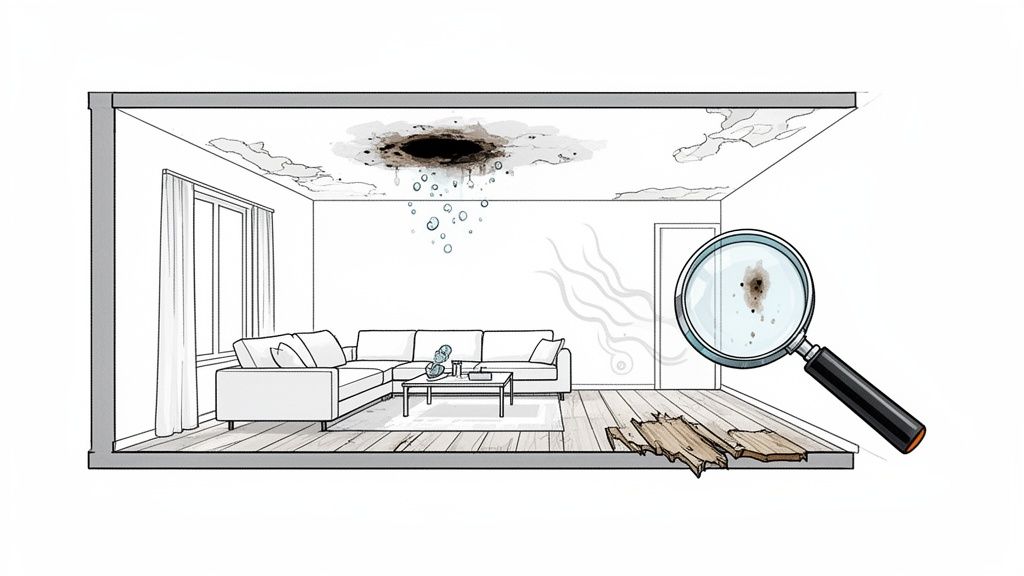
When you hear "water damage," you probably picture a disaster scene—a flooded basement or water gushing from a burst pipe. And while those are certainly emergencies, the truth is, the most common and destructive water problems start small and out of sight. They creep in behind your walls, seep under floors, and pool in ceilings, silently causing rot and setting the stage for mold long before you ever spot a puddle.
Think of it like a quiet illness in your home. That small, dark stain on the ceiling isn't just an eyesore; it's a symptom of a bigger issue hiding just above, much like a persistent cough can signal something deeper. Learning to recognize these subtle clues turns you into a home detective, giving you the power to catch problems before they become catastrophes.
It’s why calling a water restoration company isn't just for big floods. Their expertise is invaluable for sniffing out these hidden threats and stopping them in their tracks.
Look Beyond the Obvious Leaks
The first clues of water damage are rarely a puddle on the floor. Instead, they’re subtle hints that something is amiss. Training your senses to pick up on these changes can save you a fortune in repairs down the road.
One of the biggest red flags is a persistent, musty smell. That earthy odor is the classic calling card of microbial growth, which loves to fester in dark, damp spaces. If a closet or a corner of a room always smells stale no matter how much you air it out, you likely have a hidden moisture problem.
These signs might seem minor, but they tell a story of water intrusion. To get better at reading the signs, it's helpful to learn how to spot a hidden water leak from all the different sources in your house.
Visual Clues Hiding in Plain Sight
Once moisture has been hanging around for a while, it starts to leave physical evidence on your home's surfaces. You just have to know what you’re looking for. The trouble is, these signs appear so gradually that it's easy to write them off as normal wear and tear.
- Stains and Discoloration: Keep an eye out for faint, yellowish-brown rings on ceilings and walls. These are the tell-tale signs of a slow leak from a roof or pipe.
- Bubbling or Peeling Surfaces: When moisture gets behind a wall, it will cause paint to bubble, crack, or flake off. Wallpaper will do the same, starting to lift at the seams.
- Warped Materials: Wood and drywall act like sponges, swelling as they absorb water. Look for baseboards pulling away from the wall, floorboards that feel soft underfoot, or cabinet bases that look swollen.
A classic mistake is to just paint over a ceiling stain. That only hides the symptom. Meanwhile, the water keeps collecting, rotting the wood and creating a perfect environment for mold to thrive. The problem isn't the stain; it's the source of the water.
These visual cues are your home's cry for help. Since the ceiling is one of the most common places for issues to appear, you might want to learn more about the specific signs of water damage on a ceiling.
Signs You Can Feel or Hear
Sometimes, the best evidence of water damage isn't what you see, but what you feel or hear. These clues are easy to miss but can point directly to a hidden problem.
Pay close attention to:
- A Change in the Air: A damp area often feels noticeably cooler or more humid than the rest of the house.
- Unusual Noises: During quiet moments, you might hear the faint, steady sound of dripping coming from inside a wall.
- Spongy Floors: If a section of your floor feels soft or gives way when you walk on it—especially around a bathroom or kitchen—it’s a major red flag that the subfloor is wet and potentially rotting.
Recognizing these warnings allows you to be proactive. Instead of waiting for a wall to crumble, you can call in a professional to find the source of the problem before it spirals out of control. That one step can be the difference between a small repair and a massive restoration project.
Your First Steps After Discovering Water Damage
That sinking feeling when you spot water creeping across your floor or dripping through the ceiling is something no homeowner wants to experience. It’s a moment of pure panic. It’s easy to feel overwhelmed and just freeze, but what you do in that first hour is absolutely critical.
Taking a few immediate, focused actions can make the difference between a minor headache and a full-blown disaster. This is your emergency game plan to help you take control, protect your home, and minimize the damage while you wait for the pros to arrive.
1. Safety First, Always
Before you do anything else, stop and think about safety. Water plus electricity is a deadly mix. Never, ever wade into standing water if there's any chance the power is still on. You could be risking serious electrical shock.
Your number one priority is to cut the power to the wet parts of your home. If you can get to your breaker box without stepping in water, flip the breakers for the affected rooms. If you’re not sure which is which, or if the box itself is in a damp area, play it safe and shut off the main power to the entire house. Nothing you own is worth risking your life.
2. Stop the Source of the Water
Okay, with the power off, your next move is to stop more water from coming in. If you're dealing with a rogue appliance like a washing machine or dishwasher, you can usually find a small shutoff valve on the wall right behind it. Just turn the handle clockwise to close it.
If you have a burst pipe or can't immediately find the source, go straight for your home's main water valve. This is your master switch. It’s usually located where the main water line enters your house—check the basement, a crawl space, or a utility closet. Turning this off will cut water to every faucet and pipe, stopping the damage from getting worse by the second.
Think of it like applying a tourniquet. You're stopping the "bleeding" to buy yourself precious time. This one move can prevent a small cleanup from turning into a massive, expensive renovation.
3. Call a Professional Restoration Company Immediately
Once you’ve handled the immediate electrical and water threats, your very next phone call should be to a certified restoration company. You're on the clock now. Mold can start growing in as little as 24 to 48 hours, and it loves hiding in places you can't see.
Don’t make the costly mistake of thinking it will just "dry on its own." Moisture gets trapped inside drywall, insulation, and under your floors, leading to rot, serious structural problems, and a major mold infestation. Getting experts on the way is a crucial step towards proper water damage mitigation. If you want to know what that emergency process looks like, our guide on the water damage mitigation process breaks it down.
4. Protect Your Belongings
While you're waiting for the restoration team, you can start saving your personal items from further damage. Your goal is to get things off the wet floor and into a dry, safe spot.
- Move Furniture: Get sofas, tables, and chairs out of the water if you can. If something is too heavy, slide small wood blocks or even aluminum foil under the legs. This lifts them off the wet carpet and prevents the finish from bleeding and staining.
- Remove Rugs and Valuables: Roll up any area rugs. Get important things like photo albums, electronics, books, and other sentimental items off the floor and away from the water.
- Save Your Curtains: Don't let your drapes sit in a puddle. A simple trick is to loop the bottoms through a coat hanger and then hook the hanger back onto the curtain rod.
5. Document Everything
Before anyone starts moving things around or cleaning up, grab your phone and become a detective. Take tons of photos and videos of the damage.
Get wide shots of the entire room, then move in for close-ups of soaked carpets, damaged walls, and affected furniture. This visual proof is gold when you file your insurance claim. It establishes exactly what the damage looked like from the start and can help make the whole claims process go much more smoothly.
What to Expect: The Professional Water Restoration Process
When a restoration team arrives at your home, it can look like controlled chaos. You'll see uniformed technicians, a lot of specialized equipment, and immediate, focused action. But rest assured, there's a proven method to the madness. Every step taken follows a specific, industry-tested sequence designed to stop the damage in its tracks, prevent future problems like mold, and get your home back to normal.
Knowing how the process works can make a stressful situation feel a lot more manageable. It’s not just about cleaning up a mess; it's a science. The team is working to restore your home to a safe, dry, and healthy condition from the ground up.
This infographic covers the three most important things you can do before help even arrives. Getting these right sets the stage for a successful restoration.
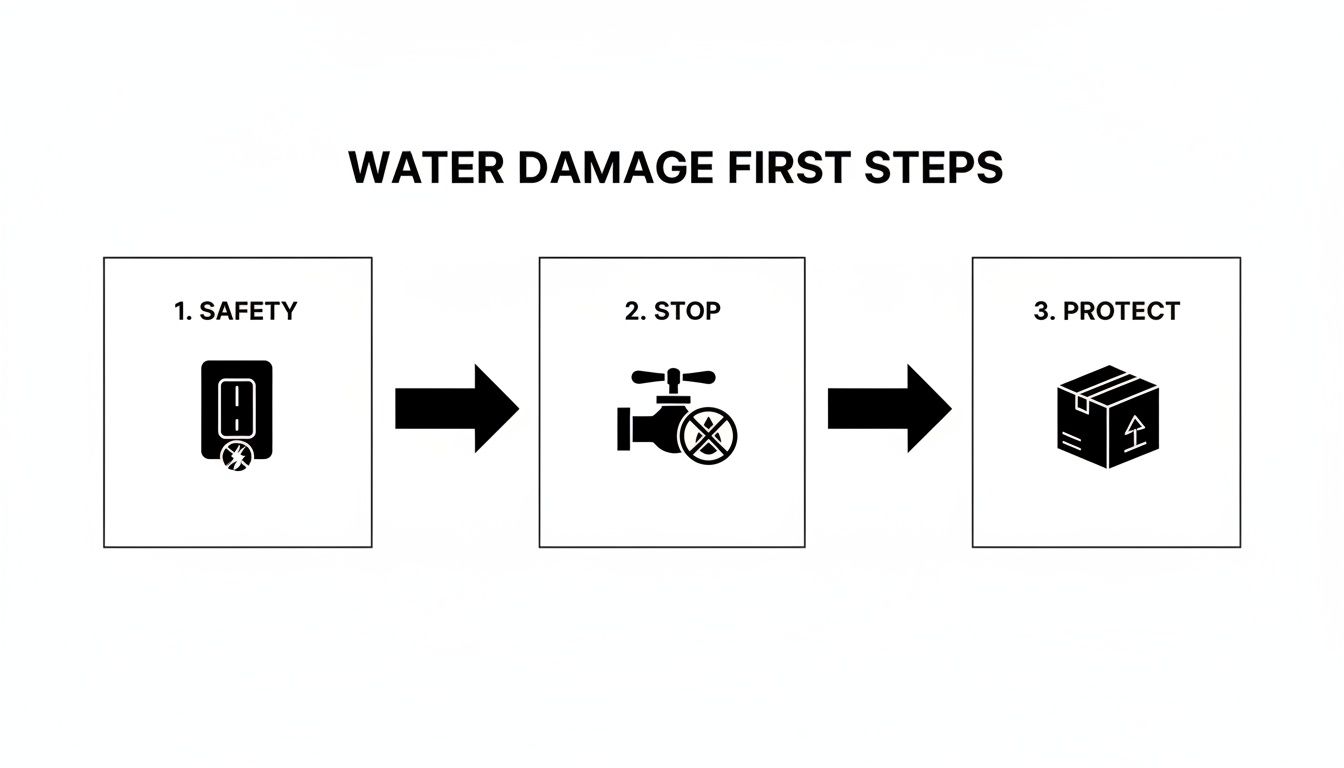
The big takeaway here is that your first moves matter. By focusing on safety, stopping the leak, and moving your valuables, you’re already helping to minimize the overall damage.
Step 1: A Detailed Inspection and Damage Assessment
The very first thing a team does isn't grabbing a mop. It’s a full-scale assessment. Think of it like a doctor diagnosing a patient before starting treatment. The project manager or lead technician will walk through your home to understand the complete picture.
They use tools like moisture meters and thermal imaging cameras to see what the naked eye can't. These devices let them find hidden water behind walls, under floors, and in ceilings. This step is absolutely critical because it allows them to create a precise action plan that addresses the entire problem, not just the visible parts.
Step 2: Immediate Water Removal and Extraction
With a solid plan in place, the number one priority becomes removing any standing water. The clock is always ticking. The longer water sits, the more it soaks into materials like wood and drywall, increasing the risk of structural damage and creating a perfect breeding ground for mold.
This is where the heavy-duty equipment comes out. Teams use powerful, truck-mounted extraction units that can remove thousands of gallons of water in a surprisingly short amount of time. These aren't just beefed-up shop vacs; they're industrial-grade machines built for speed and power.
The goal in this phase is to get the bulk water out as fast as possible. The sooner the standing water is gone, the sooner the all-important drying process can start, helping to prevent more expensive secondary damage.
This rapid-response approach is the foundation of the modern restoration industry. It's a surprisingly large field, projected to be a $7.1 billion industry in the U.S. by 2026, and it's been growing at a rate of 4.5% since 2021. With over 35,000 companies out there, the work is in constant demand, and it's this certified, scientific process that sets professionals apart. You can discover more about these industry trends and their impact.
Step 3: Strategic Drying and Dehumidification
Once the standing water is gone, the real science of restoration begins: drying everything out. This is where a professional water restoration company earns its stripes. It’s not enough to just remove the visible water; they have to pull every last bit of moisture out of porous materials.
To accomplish this, a carefully planned array of specialized gear is set up:
- Industrial Air Movers: These are high-speed fans, but they do more than just blow air. They are placed strategically to create a circular airflow that lifts moisture from wet surfaces into the air.
- Commercial Dehumidifiers: As the air movers do their job, these powerful machines pull that moisture-laden air in, trapping the water and pumping it out as a liquid. They’re like giant moisture magnets for your home.
Technicians will visit daily to take moisture readings and adjust the equipment, ensuring your home’s structure reaches its "dry standard"—a scientific measurement that tells us it's safe and truly dry. If you're curious, you can learn more about the different types of water damage fans and how they work together.
Step 4: Thorough Cleaning and Sanitizing
After confirming everything is completely dry, the focus shifts to cleaning and sanitizing. Depending on the source, floodwater can leave behind silt, bacteria, and all sorts of unpleasant contaminants.
Every single surface that the water touched—from floors and walls to personal belongings—is professionally cleaned. EPA-approved antimicrobial agents are used to stop mold before it can start and specialized equipment like thermal foggers can neutralize any lingering musty odors. The goal is a home that isn't just visually clean, but hygienically clean.
Step 5: Final Restoration and Repairs
This is the last and most rewarding step: putting your home back together. The goal is to make it look like the damage never even happened. For some, this might just mean some new paint and replacing a patch of carpet.
For more severe water events, this phase can involve major reconstruction, like hanging new drywall, installing new floors, or even rebuilding entire rooms. A good water restoration company will manage this entire process from start to finish, working to return your home to its pre-damage condition.
How a Restoration Company Helps with Insurance
Let's be honest, dealing with an insurance claim is often as stressful as the flood itself. The mountain of paperwork, the confusing phone calls, the back-and-forth—it’s exhausting to manage when your home is in chaos. This is where a professional restoration company can become a valuable ally.
While the restoration company works for you, a reputable team speaks the same language as your insurance provider. Their job is to translate the physical damage in your home into the precise, documented evidence your adjuster needs to process the claim. Think of them as the bridge between your water-logged living room and a successful insurance payment.
From Chaos to Clear Documentation
Insurance carriers don’t just take your word for it; they need proof. Cold, hard facts. As the team gets to work, they are simultaneously building the case file for your claim.
This isn't just a few quick photos. It's a comprehensive file that often includes:
- Detailed Photo and Video Evidence: Everything is documented. From the initial disaster to every single step of the restoration, a visual timeline is created that leaves little room for questions.
- Scientific Moisture Readings: Technicians use specialized meters to get objective data on moisture levels in your drywall, subfloors, and framing. These numbers prove exactly what’s wet and why it needs to be dried or removed.
- Itemized Lists of Damaged Contents: They carefully inventory every personal belonging that has been damaged beyond repair, creating a detailed list for your contents claim.
This thorough approach takes the guesswork out of the equation. It hands your insurance company the factual evidence they need, which frees you up to focus on your family.
A common misconception is that the restoration company works for the insurance company. The truth is, you hire them. Their loyalty is to you, the property owner. Their goal is to restore your home and simply provide the insurer with the professional proof they require to cover the work.
Using Industry-Standard Tools for Estimates
One of the biggest advantages of hiring a pro is their estimating software. The vast majority of restoration contractors and insurance adjusters across the country use programs like Xactimate.
This is a huge benefit for you. Why? Because it means they are all playing from the same rulebook. The software uses standardized, regional pricing for every single task, from tearing out wet drywall to running a dehumidifier. The estimate built isn't just a number pulled out of thin air; it's a detailed, line-by-line report based on pricing the insurance industry already accepts.
This shared platform streamlines the approval process dramatically. It cuts down on the frustrating negotiations between the contractor and the adjuster, which are notorious for causing delays. To get a better handle on this, take a look at our helpful water damage insurance claim tips.
An Advocate for Proper Restoration
At the end of the day, their expertise is your biggest asset. Professionals understand what it truly takes to dry a structure correctly and prevent secondary problems like mold—which can lead to much bigger headaches and more complex claims down the line.
While no contractor can guarantee what your specific policy covers, their meticulous process ensures all necessary work is documented and justified. By presenting a clear, evidence-based plan, they make it simple for an adjuster to understand and approve the work needed to get your home back to being safe, sound, and whole again.
Choosing the Right Water Restoration Company
When you’re facing a water emergency, your first thought is to get help—and fast. It's completely understandable. But in that rush, it’s so easy to just hire the first company that picks up the phone. Taking a few extra minutes to choose the right partner can be the single most important decision you make for your home's recovery.
The truth is, not all restoration companies are created equal. Far from it. Choosing a trustworthy and highly qualified water restoration company means the job gets done right the first time. It's the difference between a full recovery and discovering hidden mold or structural decay months down the road.
Your Vetting Checklist: The Non-Negotiables
When you start making calls, there are a few things that are simply not up for debate. These are the absolute must-haves—the signs of a true professional who can handle the job correctly and protect your interests.
- IICRC Certification: Think of the Institute of Inspection, Cleaning and Restoration Certification (IICRC) as the gold standard for our industry. A certified firm and its technicians aren't just winging it; they follow a strict, science-based playbook for every step of the job.
- Proper Licensing and Insurance: The company absolutely must be licensed, bonded, and fully insured. This isn't just red tape; it protects you from any liability if someone gets hurt on your property.
- A Proven Local Track Record: You want a company with deep roots in your community. A local team knows the specific building codes and weather challenges of the area, and they can get to you a whole lot faster.
- Immediate 24/7 Response: A burst pipe or a flooded basement doesn't care if it's 3 AM on a Sunday. A reliable company has to be available around the clock, ready to dispatch a team immediately.
Without these essentials, you’re gambling with your home. Don't take that risk.
Digging Deeper: What Separates the Good from the Great
Once you've confirmed those basics, you can start looking for the little things that signal real quality and a commitment to their customers.
Start with online reviews, but don't just glance at the star rating. Actually read what people are saying. Are there common threads? Look for comments that specifically mention good communication, professionalism, and punctuality. These details give you a real sense of the customer experience you're likely to have.
That first phone call tells you a lot. A pro will be calm and empathetic. They’ll ask smart questions to understand your situation and clearly explain what happens next, all without using confusing jargon or pressuring you into a decision.
Questions to Ask Before You Hire
Before you give anyone the green light, have a few key questions ready. A contractor who is confident in their work will be happy to answer them.
Key Questions for a Potential Contractor:
- Are your technicians IICRC-certified?
- Can you show me proof of your license and insurance?
- Do you work with industry-standard estimating software like Xactimate? (This is crucial for insurance claims.)
- Who will be my single point of contact during this project?
- What’s your typical response time for an emergency like mine?
Their answers will tell you everything you need to know about their standards and their transparency. Making an informed choice now empowers you to find a partner who will not only fix the physical damage but also restore your peace of mind.
Common Questions About Water Damage Restoration
When your home is flooded, your head is probably swimming with questions. It’s a stressful, confusing time, and knowing what to expect can make a world of difference. We get it. Here are some straightforward answers to the questions we hear most often from homeowners facing water damage.
How Long Does Water Restoration Take?
This is usually the first thing people ask, and the honest answer is: it depends. The timeline is tied directly to how much water there is and where it went.
For a small leak, like an overflowing sink that was caught quickly, the area can often be completely dry and repaired in just 2 to 4 days.
But for a major problem—think a burst pipe that floods the basement or water damage that affects multiple floors—the process will take longer. If water has soaked deep into your home's structure, the job could take several weeks. A trustworthy project manager will walk you through the property and give you a realistic, step-by-step timeline once they’ve assessed the situation.
Can I Stay in My Home During the Process?
Your family's safety is always the top priority. Whether you can stay in your home really comes down to the extent of the damage. If the issue is small and contained to one room (like a bathroom), it's often possible to seal off the work area so you can live in the rest of the house without disruption.
However, for larger jobs, it’s often safer and more practical to relocate temporarily. Here’s why:
- Serious Hazards: Extensive damage can expose your family to electrical risks, structural instability, or dangerous contaminants like mold and bacteria.
- Constant Noise: The equipment used is powerful and loud. Air movers and industrial dehumidifiers may need to run 24/7 to work effectively, which makes sleeping or just relaxing nearly impossible.
- A Cleaner, Faster Job: Keeping foot traffic out of the affected area prevents cross-contamination and helps the drying equipment work as efficiently as possible.
A professional will always give you a clear recommendation based on safety standards to help you make the best decision for your family.
What Is the Difference Between Mitigation and Restoration?
You’ll hear these two words a lot, and it's easy to get them mixed up. The simplest way to think about it is that mitigation is the emergency response, and restoration is the rebuild.
Water mitigation is about stopping the bleeding. It’s all the immediate work done to prevent the damage from getting worse. This includes stopping the leak, pumping out standing water, and setting up drying equipment. The goal is to stabilize your home.
Water restoration, on the other hand, is the process of putting everything back together. This phase starts after the structure is completely dry. It involves repairs like replacing drywall, laying new carpet, installing cabinets, and painting—making your home look like it did before the damage ever happened.
Can I Just Use Fans to Dry a Wet Area Myself?
It’s tempting to point a few box fans at a wet spot and hope for the best, but this is one area where a DIY approach can backfire badly.
Household fans only move air across the surface. They can't pull out the moisture that gets trapped deep inside porous materials like drywall, wood studs, and subflooring. This hidden dampness is a perfect breeding ground for mold and can lead to wood rot, which compromises the structural integrity of your home. Professional equipment is designed to create a low-humidity environment that pulls moisture out from the inside, ensuring the structure is dried completely.
When disaster strikes, you need a team you can trust to show up fast and handle the entire process with care and expertise. Restore Heroes is here for you with 24/7 emergency services to tackle any water damage situation, big or small. If you need immediate help, contact us for a free, no-obligation inspection at https://www.restoreheroesaz.com.