
You go down to the basement to grab a storage bin, and the smell hits first. It’s earthy, stale, and familiar in the worst way. A lot of homeowners treat that odor like a housekeeping issue, but in restoration work, a musty basement usually means moisture has been active long enough to change the materials in the space.
In Phoenix, that can be especially confusing. People assume the desert climate means basements stay dry by default. They don’t. Monsoon humidity, foundation seepage, pipe condensation, and moisture moving through soil can all create a basement that looks fine at a glance but smells wrong for a reason.
Why That Musty Smell Is A Critical Warning Sign
A musty odor is more than trapped stale air. In many basements, the smell comes from microbial volatile organic compounds, often shortened to MVOCs. These are gases released by mold and mildew activity. If your basement smells musty, something in that space has likely stayed damp long enough to support microbial growth, even if you can’t see it yet.
That matters because basement air doesn’t stay in the basement. According to Indoor Doctor’s basement air quality guidance, basement air typically carries ten times the pollution levels as upper floors, and those pollutants can rise into the main living areas above. In practical terms, the smell downstairs can become an air quality problem upstairs.
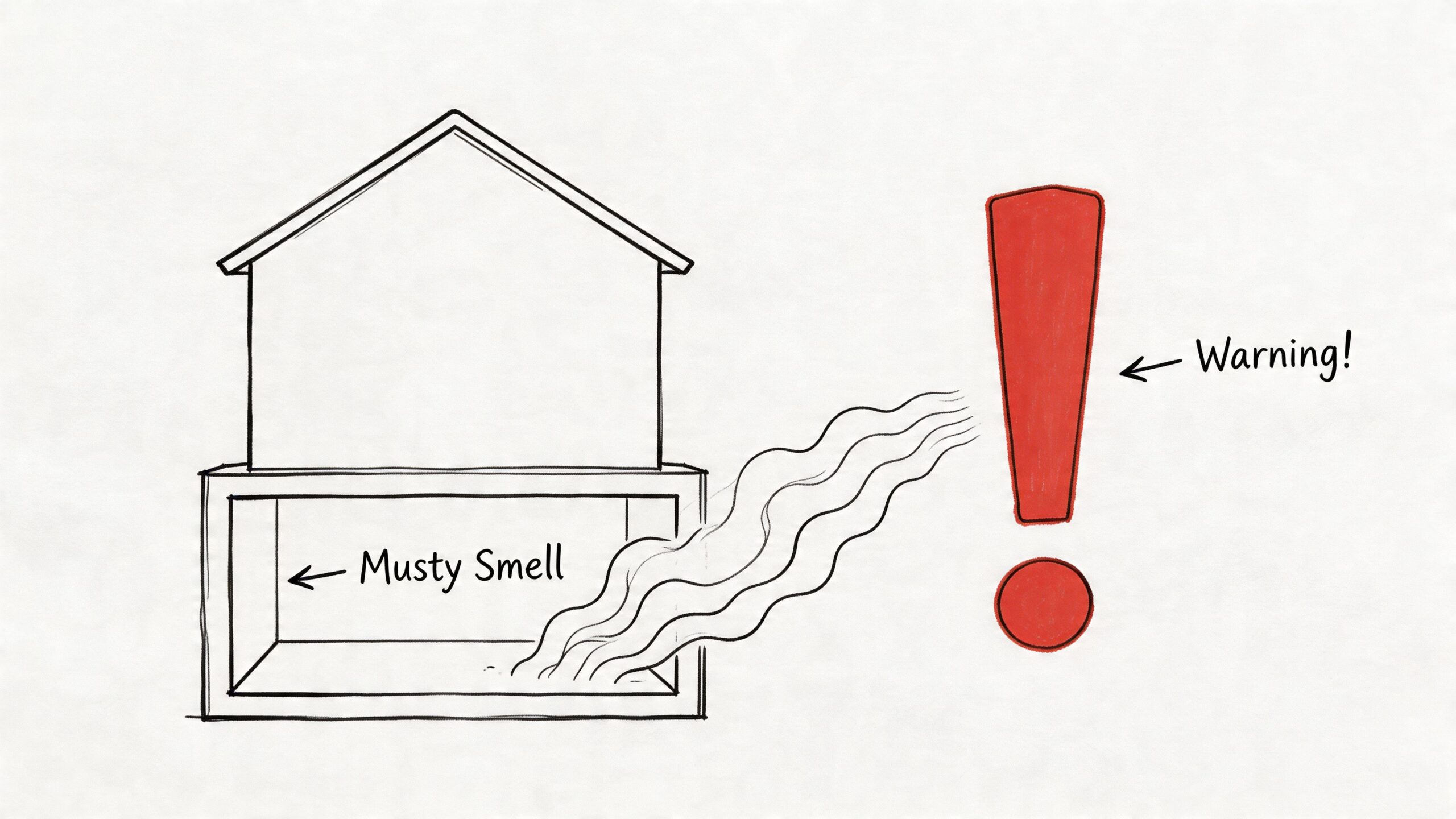
What the smell usually means
A musty basement often points to one or more hidden conditions:
- Moisture behind finished surfaces. Drywall, baseboards, and insulation can hold moisture where you won’t spot it during a quick walkthrough.
- Air movement carrying odor from a concealed area. The source might be behind a wall, under flooring, or around stored contents.
- Organic material staying damp. Wood framing, cardboard boxes, fabric bins, and dust buildup all give mold and mildew something to live on.
Practical rule: If you can smell it consistently, treat it as evidence. Odor is often the first warning sign, not the last.
Why homeowners miss it
People usually wait for staining, bubbling paint, or visible mold. By then, the problem has had time to spread. Musty odor shows up earlier than many obvious visual clues, which is why it deserves attention even when the basement appears mostly clean.
If you’re trying to understand how hidden growth can affect the home, this overview of the dangers of mold in basement areas gives useful background. The big point is simple. Smell is information. It tells you the basement environment has shifted away from dry and stable.
Finding the Source of Your Musty Basement Smell
Finding the source is where homeowners either solve the problem or waste time treating the symptom. Sprays, odor absorbers, and open windows can make the basement seem better for a short while. They won’t tell you where the moisture started.
Start low and work methodically. Basements collect moisture at the floor, at wall joints, around penetrations, and in corners with poor airflow. If the basement smells musty, inspect the room in a pattern instead of wandering until something looks suspicious.
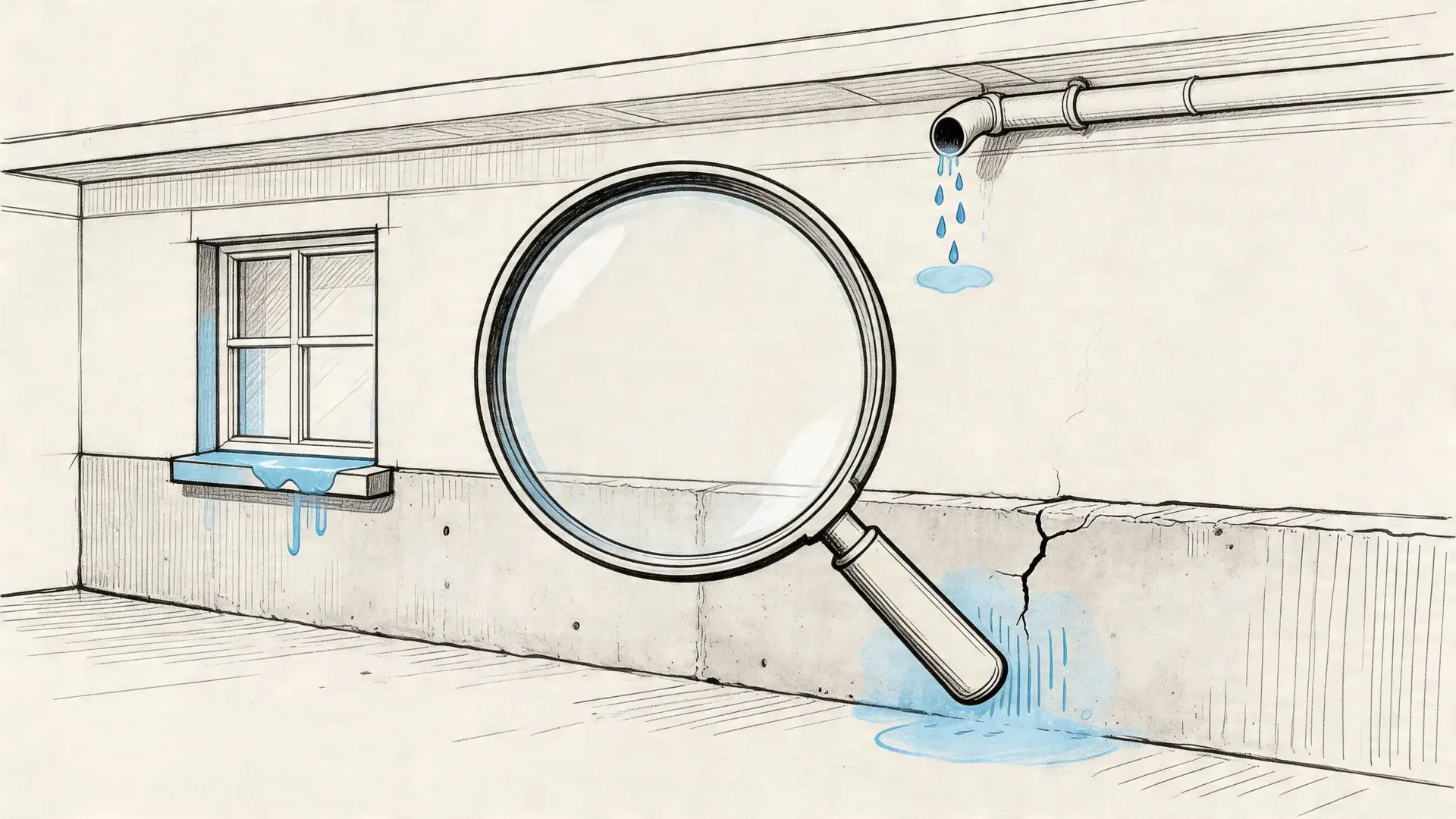
Start with the common problem spots
Walk the perimeter first. Pay attention to where slab meets wall, around basement windows, near sump areas if you have one, and around any visible plumbing.
Then check these locations:
- Cold water lines and valves. Condensation can drip slowly and keep nearby surfaces damp.
- Water heater and HVAC equipment. Drain lines, fittings, and pans can leak without creating a dramatic puddle.
- Foundation walls. Look for darkened concrete, efflorescence, or recurring damp patches.
- Stored contents. Cardboard, paper, old rugs, and fabric bins often absorb odor before walls do.
- Window wells and exterior grade. Water entry around below-grade windows is a common source after storms.
What Phoenix homeowners should watch for
Phoenix creates its own version of basement moisture problems. Outdoor air may be dry much of the year, but monsoon weather can push humidity up fast. On top of that, some local homes deal with caliche soil, which can contribute to moisture movement around foundations after seasonal rains.
A basement can also smell musty when the source isn’t obvious because moisture traveled through masonry or slab materials and dried unevenly. The room may look dry on the surface while hidden pockets stay active.
Don’t trust appearance alone. A basement can feel dry underfoot and still hold enough hidden moisture to keep producing odor.
What a professional inspection adds
A thorough diagnosis goes beyond looking and sniffing. Under IICRC-based guidance for musty basement investigations, technicians use thermal imaging to spot temperature differences linked to hidden moisture and moisture meters to map intrusion paths, and this methodical approach is over 85% successful in identifying the source. That’s a major step up from visual inspection alone.
Here’s the practical difference between homeowner checks and instrument-based inspection:
| Approach | What it can reveal | Main limitation |
|---|---|---|
| Visual walk-through | Stains, rust, obvious leaks, visible mold | Misses moisture inside walls and under finishes |
| Odor tracing | General area where smell is strongest | Odor can travel away from the source |
| Moisture meter | Damp materials and spread pattern | Requires the right tool and proper interpretation |
| Thermal imaging | Hidden temperature differences that suggest moisture | Needs confirmation with other readings |
If you want a structured way to inspect the area before calling anyone, this basement mold inspection checklist is a helpful starting point.
Signs the source is probably concealed
You’re more likely dealing with hidden moisture when:
- The smell is strongest after rain
- The odor comes and goes with HVAC use
- Paint or finishes look fine, but stored items smell damp
- You’ve cleaned visible surfaces and the smell keeps returning
Those are the jobs where people often lose time. They clean what they can see while the underlying source stays active behind the wall or under the flooring.
Immediate Steps for Cleaning and Drying Your Basement
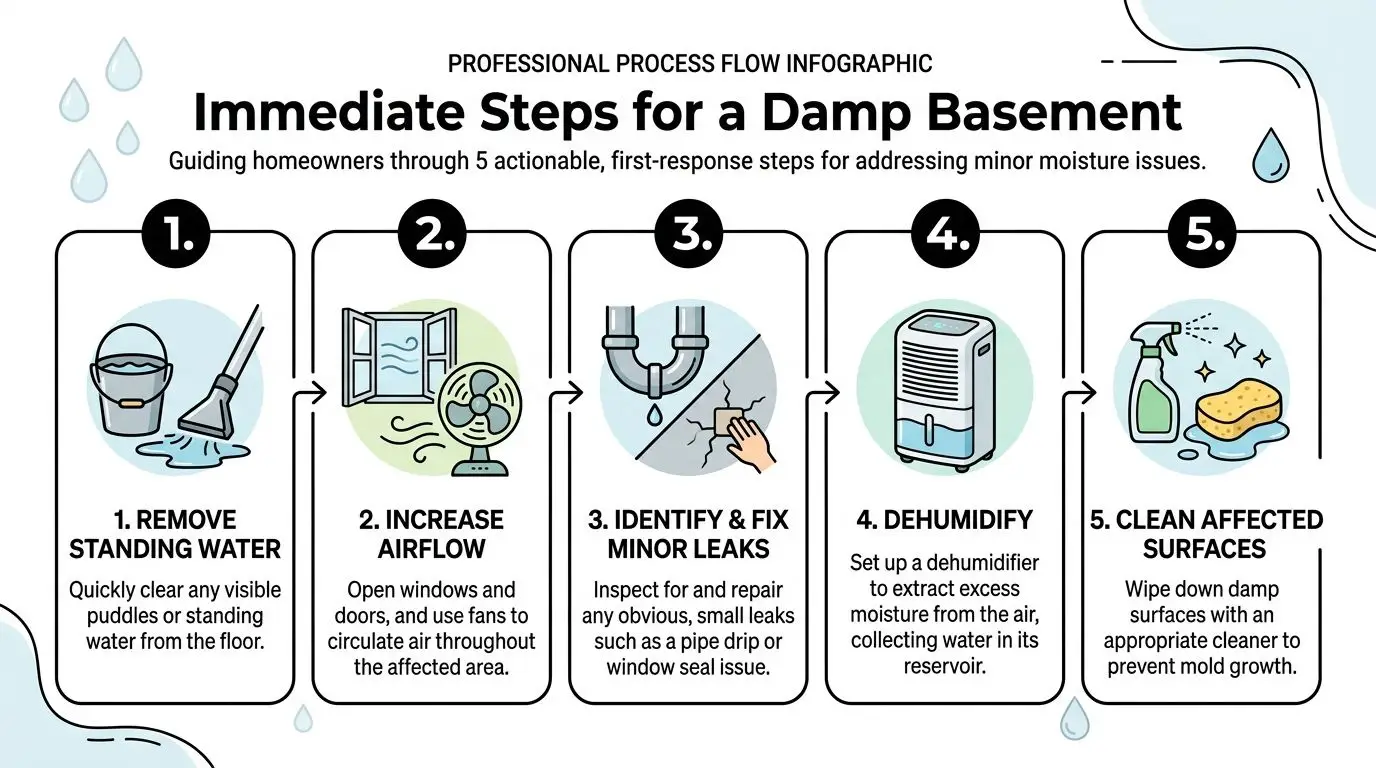
If the issue is small and you’ve found a minor source, act quickly. Time matters with basement moisture. According to Foundation Restoration’s guidance on musty basement odors, mold spores can begin to colonize damp surfaces within 24 to 48 hours. That’s why the first response is always about removing water and drying materials, not masking odor.
Use the sequence below for a limited, manageable issue. If the basement has major water intrusion, contaminated water, or widespread growth, skip the DIY approach and move to professional help.
Clean safely first
Before touching anything, protect yourself. Wear gloves, eye protection, and at minimum an N95 mask if you’re cleaning visible mildew or dusty materials that may contain spores.
Focus on non-porous surfaces first, such as sealed concrete, metal shelving, plastic bins, and finished surfaces that haven’t softened or deteriorated. Wipe them down with an appropriate cleaner, then dry them completely. The cleaning step matters, but drying matters more. If moisture stays behind, the smell usually comes back.
For contents, be selective:
- Keep plastic and metal items if they can be cleaned and dried fully.
- Sort porous items carefully. Damp cardboard, paper goods, and some fabrics often hold odor even after surface cleaning.
- Pull items away from walls so air can circulate while you inspect the structure behind them.
Dry the structure, not just the air
Many homeowners stop too early. They remove the puddle, run a fan for a few hours, and assume the problem is handled. In restoration work, that’s where callbacks come from.
Drying has to reach the materials that got wet. That means moving air across the affected area, reducing indoor humidity, and checking whether nearby baseboards, drywall edges, or wood trim stayed damp. A dehumidifier helps most when the room is closed enough for it to control conditions.
This video gives a useful visual overview of basement drying principles:
A practical first-response sequence
Remove standing water
Use towels, a wet vac, or a pump if needed. Don’t leave shallow puddles sitting along wall edges.Increase airflow
Run floor fans to move air across wet surfaces, not just into the center of the room. If outdoor conditions are favorable, open access points to help exchange stale air.Fix the obvious small source
Tighten a loose supply line, reseal a minor window leak, or address a visible drip. Don’t start cosmetic cleanup while water is still entering.Run a dehumidifier
Let it keep pulling moisture from the room after surfaces feel dry. Basements often hold moisture longer than they appear to.Recheck after drying
Smell the room again after a day or two of continuous drying. If the odor remains, you likely missed hidden moisture or affected porous materials.
A basement that smells cleaner after wiping but still smells musty the next day usually isn’t cleaned. It’s still wet somewhere.
For more involved water cleanup steps, this guide on how to dry out a flooded basement is worth reviewing.
What doesn’t work well
Some products help with perception but not with cause. Air fresheners only cover odor. Scented candles do the same. Leaving baking soda around the room might make the space feel attended to, but it won’t solve a moisture problem inside drywall, behind shelving, or at the slab edge.
Avoid painting over damp surfaces or sealing them before they’re dry. That traps the issue and makes later remediation more difficult.
When You Should Call a Professional Restoration Company
Some basement odor problems are small enough to manage. Others need containment, moisture mapping, material removal, and controlled drying. The hard part for homeowners is knowing where that line is.
Call a professional when the smell persists after cleaning and drying, when moisture appears to be inside walls or under finishes, or when the source involves contaminated water. At that point, the job is no longer basic cleanup. It becomes remediation.
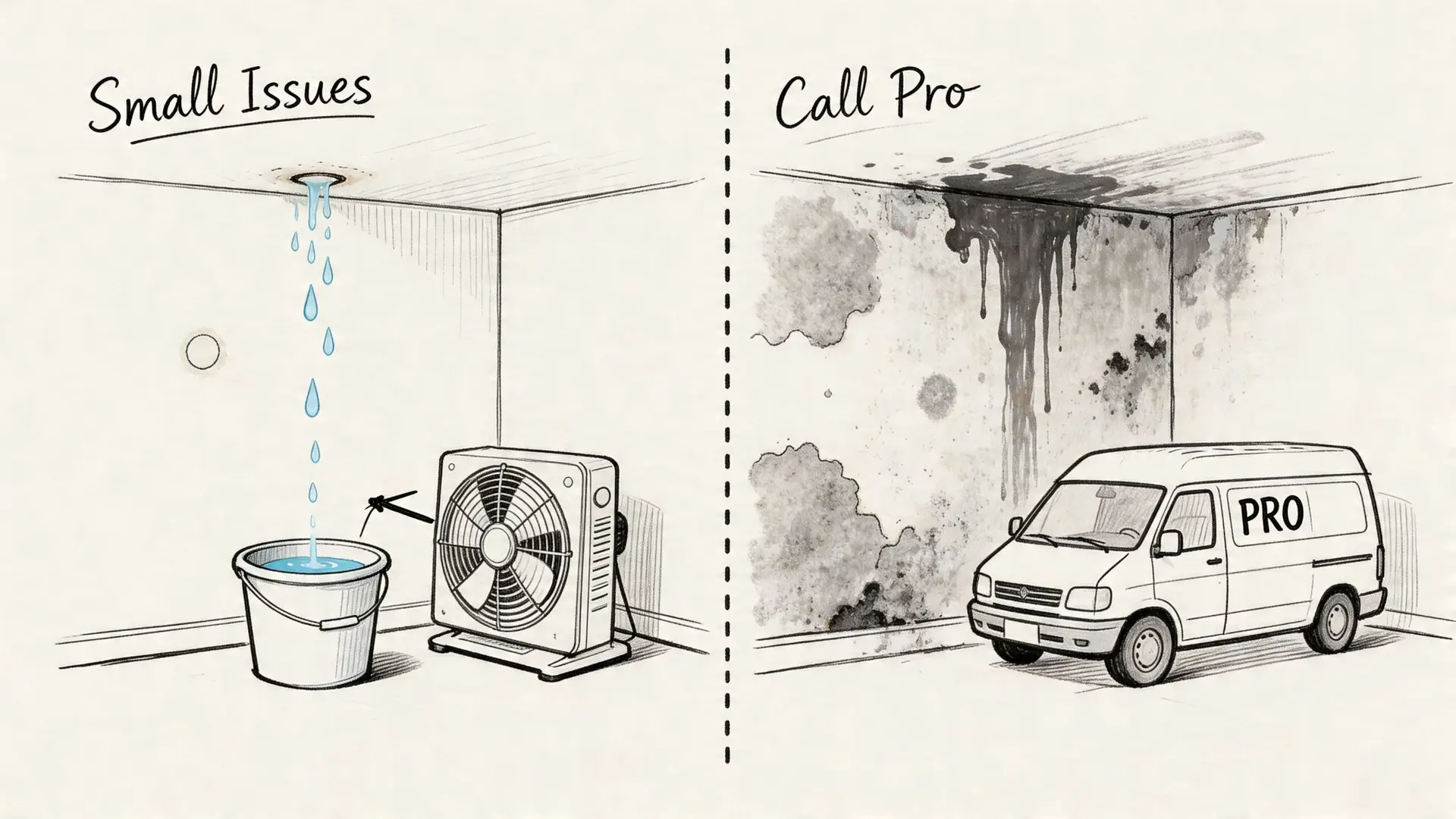
Situations that usually need expert help
Here are the clearest triggers:
- The odor keeps returning after you’ve cleaned surfaces and run drying equipment.
- You suspect hidden damage because the smell is strongest near finished walls, ceilings, or built-in cabinetry.
- Materials are deteriorating. Soft drywall, swollen trim, stained framing, or recurring damp spots usually mean more than surface moisture.
- Water entered from a serious event such as flooding, drain backup, or sewage contamination.
Contaminated water is the easiest call to make. If sewage or waste water is involved, homeowners shouldn’t try to clean that themselves. For a general explanation of what those jobs involve, this resource on sewage damage clean up gives useful context.
What professionals do differently
A restoration crew doesn’t just make the room smell better. They identify the wet materials, isolate affected areas when needed, use air filtration and drying equipment appropriately, and remove materials that can’t be saved.
That matters when the basement smells musty but the source is buried. If moisture sits inside insulation or behind a finished wall, surface cleaning won’t solve it. The correct fix may involve opening the assembly, drying the structure, and cleaning or removing impacted materials under controlled conditions.
The question isn’t whether you can wipe the odor away. The question is whether the building materials behind the odor are dry and stable.
If your situation has crossed into active water intrusion or structural moisture concerns, a water damage restoration contractor is the right type of specialist to bring in.
Preventing Musty Smells in Your Phoenix Basement
Prevention in Phoenix isn’t about assuming the climate will do the drying for you. It’s about controlling the moisture that forms indoors and the water pressure that shows up around the home during seasonal weather swings.
The target for a basement is steady, controlled dryness. According to the basement air quality guidance cited earlier, the ideal humidity range is 30% to 50% year-round, with levels above 60% indicating excess moisture and higher mold and mildew risk. That’s why a hygrometer is one of the most useful low-cost tools a homeowner can keep downstairs.
Build your prevention around moisture control
A good prevention plan usually includes these habits:
- Track humidity instead of guessing. Use a hygrometer and pay attention during monsoon season, after storms, and when the HVAC system is working hard.
- Keep air moving around stored contents. Don’t pack boxes tight against exterior walls.
- Inspect plumbing and condensate lines regularly. Small drips create long-running odor problems.
- Watch the exterior drainage pattern. Water should move away from the foundation, not settle beside it.
Why Phoenix homes need a local approach
Phoenix basements don’t always fail the same way basements do in wetter climates. Local soil and weather matter. Some homes sit in areas where caliche soil affects how water moves after rain, and monsoon conditions can put sudden moisture stress on walls, slabs, and below-grade spaces that stay quiet for much of the year.
That means homeowners here should pay close attention to seasonal transitions. A basement that seemed fine through the dry months may show odor, condensation, or seepage once humidity rises and the ground gets saturated in bursts.
House systems matter too
Basement odor prevention isn’t only about the basement. HVAC performance affects indoor moisture balance, airflow, and how quickly humid air gets removed from the house. If your system struggles during humid weather, getting professional HVAC services in Phoenix can help you rule out airflow and conditioning issues that contribute to stale lower-level air.
A few long-term practices make a noticeable difference:
| Prevention move | Why it helps |
|---|---|
| Use a dehumidifier when humidity rises | Keeps basement air in a healthier range |
| Store contents off the slab | Reduces moisture transfer into boxes and fabrics |
| Maintain gutters and drainage paths | Limits water pressure around the foundation |
| Check wall edges and penetrations seasonally | Catches small entry points before they become odor sources |
If you want a prevention-focused checklist for basement moisture issues, review these steps on how to avoid mold in basement areas.
Frequently Asked Questions About Musty Basement Odors
Is a musty basement smell always mold
Not always, but it almost always means moisture has been present long enough to change the environment. Sometimes the odor comes from mildew, damp contents, or materials that absorbed moisture and never dried properly. The main takeaway is that a healthy basement shouldn’t have a persistent musty odor.
Why does my basement smell musty even though it looks dry
A basement can smell dry and still have hidden odor sources. According to this discussion of dry basements that still smell musty, musty smells can persist because dormant mold releases MVOCs even at 40% humidity, long before visible growth appears. That’s why “looks dry” and “is dry” are not the same thing.
Will a dehumidifier solve the problem by itself
Sometimes it helps a lot. Sometimes it only manages the symptom. If the odor is caused by humid air alone, a dehumidifier may improve conditions. If water is getting in through the wall, slab, window area, or hidden pipe leak, the machine won’t fix the source.
A dehumidifier is a control tool. It isn’t a substitute for finding where moisture started.
Can I just clean the smell away
You can clean residue and treat some surface mildew, but you can’t clean away active moisture inside materials. If the basement smells musty again soon after cleaning, the cause is probably still present.
Are Phoenix basements less likely to have this problem because the climate is dry
No. Phoenix has long dry stretches, but that doesn’t protect a basement from indoor leaks, condensation, foundation seepage, or monsoon-related humidity. In fact, the dry-climate assumption is one reason some homeowners wait too long. They don’t expect a moisture problem, so they treat the smell as a nuisance instead of a building warning.
What’s the smartest first step if I’m unsure
Inspect for obvious leaks, move stored items away from walls, check humidity, and pay attention to where the smell is strongest. If you want a practical cleanup reference before deciding what to do next, this guide on how to clean basement mold can help you sort out what’s reasonable to handle and what probably needs expert evaluation.
If your basement smells musty and you want a clear answer on what’s causing it, Restore Heroes can help assess the moisture source, explain the next steps, and handle remediation when the problem goes beyond basic cleaning and drying.