
The fire department has left. The smell is still in the house. You can see dark marks on a wall, but the bigger problem is the one you can’t fully see yet. Smoke has a way of getting into everything, and that’s why these first hours feel so unsettling for so many Phoenix homeowners.
It's common to be caught between relief and confusion. You’re grateful the fire is out, but now you’re looking at cabinets, vents, ceilings, clothes, and furniture wondering what can be saved, what’s dangerous, and what needs professional smoke damage repair right away. If that’s where you are, slow down and take this one step at a time.
After the Fire Is Out What Happens Next
A typical first scene looks like this. The kitchen fire was contained quickly. The flames stayed in one area. At first glance, it doesn’t seem catastrophic. Then you walk into the hallway and smell smoke there too. You open a closet on the other side of the house, and the odor is inside. You notice a gray film on picture frames and air vents. That’s when most homeowners realize the damage didn’t stay in the room where the fire started.
That reaction is normal. Fire damage feels visible. Smoke damage feels sneaky.
In Phoenix homes, especially ones running air conditioning much of the year, smoke can move through return vents and settle into areas that seem untouched. A house can look mostly intact and still need a careful, room by room evaluation. What matters now is protecting your health, preventing more damage, and understanding what happens next.
The first few hours matter
Start with the basics. Make sure everyone is safe, follow the fire department’s instructions, and avoid turning this into a cleaning project. Soot is easy to smear, and smoke odor usually means residue is still present.
A short checklist helps when your mind is racing. If you need a practical starting point, this house fire checklist lays out the first actions in a simple order.
The house may be quiet now, but the restoration process has already started. What you do in the first day affects how much can be cleaned, repaired, and preserved.
What most homeowners miss
People usually look at the burned area first. Professionals also look at the path smoke took through the home. That includes attic access points, wall cavities, insulation, soft contents, and especially the HVAC system.
That hidden spread is why smoke damage repair isn’t just wiping black residue off a wall. It’s a methodical process that identifies where smoke traveled, what type of residue it left behind, and which materials can be cleaned versus replaced. Once you understand that, the situation starts to feel more manageable.
Understanding Smoke Damage Beyond Visible Soot
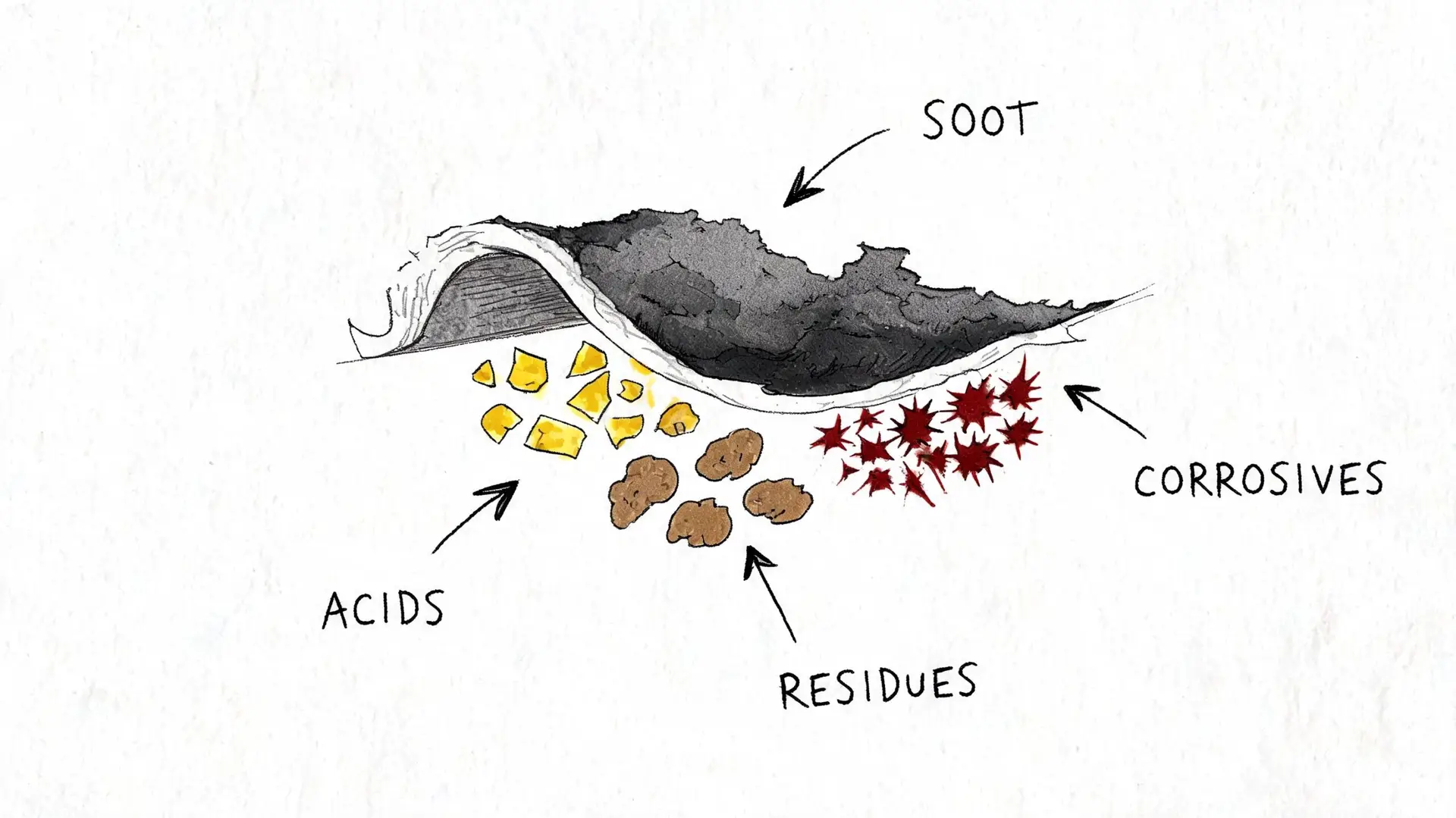
Smoke damage isn’t just “black stuff on the wall.” It’s a mix of particles and residues created by whatever burned. Wood, plastics, insulation, fabrics, and food all produce different byproducts. Those residues settle differently and react differently when you try to clean them.
According to U.S. Fire Administration fire statistics, there were 1,389,000 fires in 2023, causing $23.2 billion in property damage. That matters because smoke damage often extends well beyond the visibly burned area, permeating porous materials and leaving behind acidic residues and persistent odors that need specialized remediation.
Smoke acts like different kinds of stains
A simple way to think about smoke is to compare it to kitchen messes.
Some smoke is more like flour. It looks dry and powdery, and it can spread easily with the slightest touch. Other smoke is more like cooking grease. It clings, smears, and resists ordinary cleaning. If synthetic materials burned, the residue can be especially stubborn and corrosive.
That’s why one-size-fits-all cleaning causes trouble. A homeowner may see soot and reach for a wet rag. On the wrong surface, that can push residue deeper into paint, drywall, or fabric. What looked like a cleanup shortcut becomes a bigger repair.
Why the residue keeps causing damage
Smoke residues don’t just sit there harmlessly. Some residues are acidic, which means they can keep reacting with surfaces after the fire is out. Over time, that can affect metal finishes, glass, appliances, plastics, and painted materials.
You may notice:
- Metal discoloration: Handles, hinges, and fixtures can tarnish or corrode.
- Etching on smooth surfaces: Glass and glossy finishes can develop a dull or damaged look.
- Yellowing or staining: Walls, ceilings, and plastics may change color even if the room wasn’t directly burned.
- Lingering odor: Smell usually means particles are still present somewhere in the structure or contents.
Practical rule: If smoke odor is still there, assume some residue is still there too.
Hidden smoke is often the real problem
What worries restoration professionals most isn’t always the soot you can see. It’s the smoke that drifted into wall cavities, insulation, attic spaces, and ductwork.
Phoenix homes add a local wrinkle. Air conditioning systems run often, and that airflow can pull smoke into returns and distribute fine particles through the house. If you’re dealing with persistent odor or widespread dust-like residue, this guide on how to remove smoke smell from a house can help you understand why smell removal takes more than deodorizer.
A proper assessment identifies the type of smoke, the materials affected, and how far the residue has penetrated. That diagnosis drives every cleaning and repair decision afterward.
Health Risks and Immediate Safety Steps
The part that makes homeowners uneasy is often the part they can’t see. Fine smoke particles can remain in the air, settle on surfaces, and collect inside vents long after the fire is extinguished. That’s why a room can look calmer than it really is.
One local concern matters a lot in Phoenix. Smoke residues can seep into HVAC systems and ductwork, spreading contaminants through the building. In dry climates like Phoenix, higher air circulation can accelerate residue accumulation, and incomplete duct remediation can lead to long-term respiratory issues when the system turns back on and recirculates trapped particulates, as described in this guide to smoke damage recovery best practices.
Why people feel worse after going back inside
Many homeowners assume the danger ended with the flames. But when someone re-enters a smoky home, they may stir up settled particles just by walking around, opening doors, or moving belongings.
Children, older adults, and anyone with breathing sensitivity often react first. Even without obvious symptoms, it’s smart to limit exposure until the home has been properly assessed. A smoke-damaged house can behave like a dusty attic combined with a greasy kitchen exhaust system. Every movement can send particles back into the air.
Immediate Actions After a Fire
| Safe To Do ✅ | Avoid Doing ❌ |
|---|---|
| Wait for clearance: Re-enter only when fire officials say it’s safe. | Don’t run the HVAC: It can pull residue into ducts and redistribute contaminants. |
| Document visible damage: Take photos of rooms, contents, vents, ceilings, and affected belongings. | Don’t wipe soot with household cleaners: That often smears residue and makes staining worse. |
| Limit foot traffic: Walk only where needed to avoid spreading residue through the home. | Don’t use box fans or ceiling fans: Air movement can spread particles to cleaner areas. |
| Protect important items: If safe, gather medications, IDs, wallets, phones, and essential paperwork. | Don’t wash smoke-damaged textiles with unaffected laundry: Odor and residue can transfer. |
| Keep windows and access controlled: Follow official guidance and avoid unnecessary opening and closing of doors. | Don’t eat exposed food or use exposed cookware: Smoke residue may have settled on them. |
| Write down what you notice: Odor locations, discolored vents, and rooms with the strongest smell help during inspection. | Don’t assume one room means one-room damage: Smoke often traveled farther than the eye suggests. |
Small choices can make cleanup harder
A well-meaning DIY response can complicate professional smoke damage repair. Scrubbing a wall, spraying air freshener, or replacing only the obvious items may hide clues a technician needs to map the full spread of contamination.
If the house smells cleaner only because a fragrance was added, the smoke problem usually hasn’t been solved.
If you’re unsure whether an item is safe to move or clean, leave it in place until it’s evaluated. Preserving the original condition of the damage also helps with documentation later.
The Professional Smoke Damage Repair Process
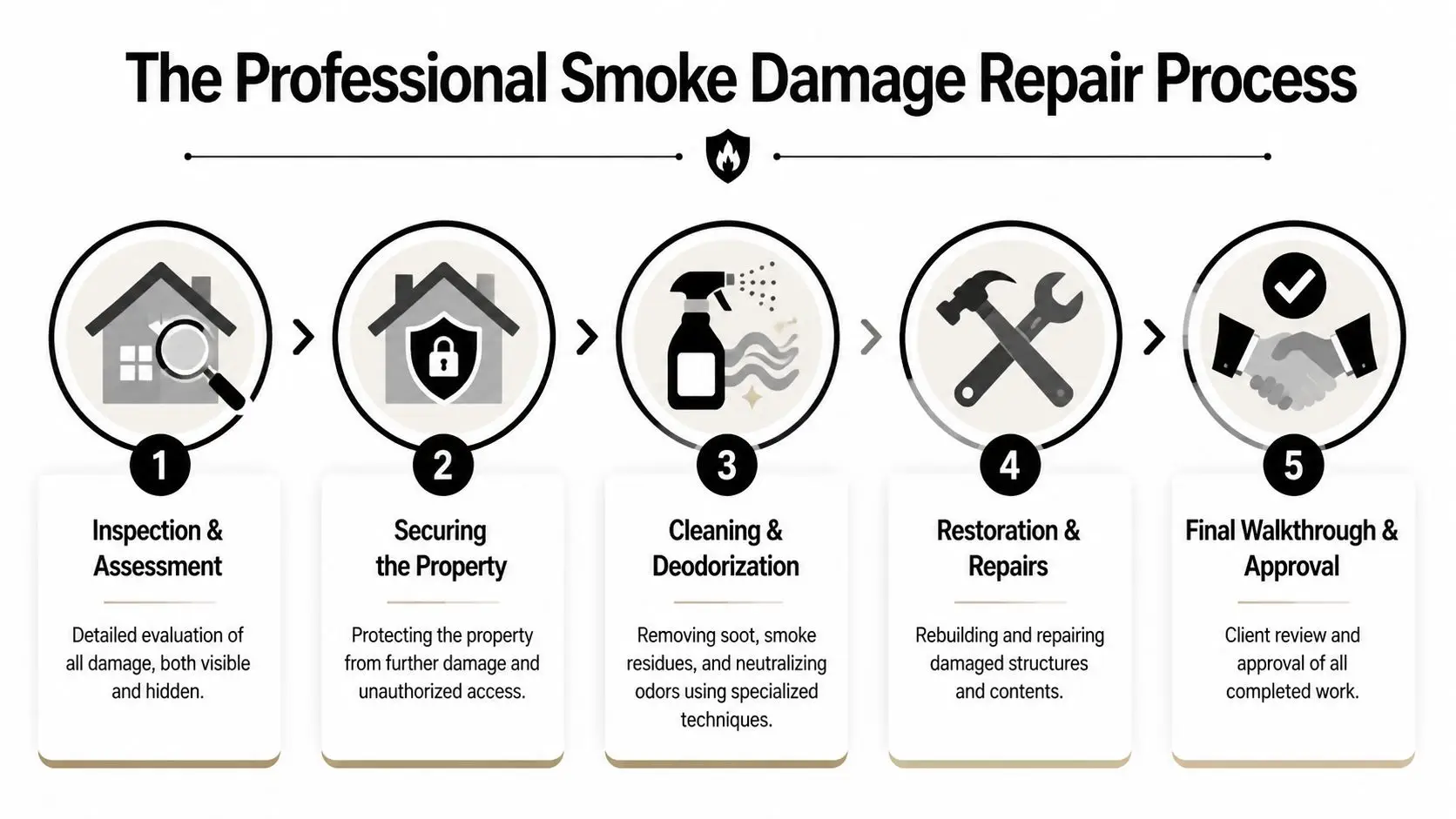
Professional smoke damage repair follows a sequence. That matters because the wrong step at the wrong time can lock in odor, smear soot, or miss hidden contamination. A proper job is less like housekeeping and more like a controlled reset of the affected areas.
The industry framework is detailed in the ANSI/IICRC S700 fire and smoke damage restoration standard. It calls for a scientific approach that includes categorizing smoke residues, selecting the right alkaline cleaners for neutralization, decontaminating HVAC systems with HEPA-filtered negative air machines, and using methods like dry ice blasting to achieve verifiable cleanliness.
Inspection and assessment
The first job is figuring out what happened inside the house. Technicians inspect visible damage, but they also trace smoke movement into less obvious areas such as closets, cabinets, returns, and cavities.
This stage answers practical questions. What burned? How far did smoke travel? Which materials are salvageable? Where is odor likely hiding? Without those answers, cleaning becomes guesswork.
Securing the property
If windows, doors, roofing, or exterior openings were damaged, the structure needs to be stabilized and secured. That may involve board-up or tarping so the home isn’t exposed to weather, pests, or unauthorized entry.
This step also protects the restoration work itself. A house can’t be properly cleaned if outside debris, heat, or moisture keeps re-entering the building.
Soot and residue removal
Many homeowners often underestimate the skill involved. Dry soot, oily soot, and corrosive residues don’t all respond to the same product or technique.
Professionals may use HEPA vacuuming, specialty sponges, controlled wiping methods, or media cleaning depending on the surface. On some non-porous materials, dry ice blasting can remove residue without introducing moisture. On walls, the wrong method can smear soot deeper into the finish, which is why DIY attempts often create patchy staining. If you want a closer look at surface-specific issues, this page on how to clean soot from walls explains why wall cleaning is rarely as simple as it looks.
Cleaning, deodorization, and HVAC attention
Odor removal isn’t just making the house smell fresher. It means removing or neutralizing the particles causing the odor. That can involve HEPA-filtered negative air machines, thermal fogging, ozone treatment in appropriate conditions, and targeted cleaning of contents and structural materials.
HVAC work is especially important in Phoenix homes. If smoke entered the duct system, cleaning surfaces alone won’t solve the problem. For homeowners who want a plain-language overview of the benefits of professional duct cleaning, that resource is useful because it explains why duct contamination affects both comfort and indoor cleanliness after an event like this.
Odor that returns when the air conditioner kicks on usually points to hidden contamination, not a failed deodorizer.
One local option homeowners may consider is Restore Heroes, an IICRC-certified restoration company serving the Phoenix metro area. In practice, firms in this category inspect the structure, isolate affected zones, clean smoke residues, address duct contamination where needed, and coordinate the repair sequence with the broader fire restoration work.
Restoration and final walkthrough
Once cleaning is complete, repair work begins. That may include sealing affected surfaces, replacing unsalvageable materials, repainting, rebuilding damaged assemblies, and checking that the home is ready for normal occupancy again.
The final walkthrough matters because smoke damage repair isn’t finished just because the black residue is gone. The home should be reviewed for remaining odor, missed staining, and any areas where smoke spread was broader than first expected.
Estimating Smoke Damage Repair Costs and Timelines
Most homeowners ask two questions right away. How much is this going to cost, and how long will it take? The honest answer is that smoke damage repair has a wide range because the job changes dramatically based on what burned, how far the smoke traveled, and how thoroughly residue settled into materials.
According to 2025 HomeAdvisor cost data summarized here, complete fire and smoke remediation can range from $3,098 to $51,243. The same source notes soot removal at $2,000 to $6,000 and smoke damage restoration per room at $200 to $1,200, with timelines ranging from a few days for minor odor issues to several weeks for severe structural fire damage.
What changes the estimate
A smoke damage estimate usually rises or falls based on a handful of factors:
- Size of the affected area: A contained room is different from smoke that traveled through the entire house.
- What burned: Synthetic materials often leave more difficult residues than ordinary paper or unfinished wood.
- How porous the materials are: Drywall, insulation, upholstery, carpet, and unfinished wood absorb odor differently.
- HVAC involvement: If ducts and air handling components were affected, the cleaning scope gets larger.
- Water from firefighting efforts: Wet materials may need separate drying and removal steps before smoke work can be completed.
Why one room doesn’t always mean one-room pricing
A kitchen fire may start in one place, but the estimate often reflects where smoke went, not just where flames were. If soot settled inside bedroom closets, on HVAC registers, or in attic-adjacent areas, the repair scope expands.
That’s why an on-site inspection matters more than online averages. A reliable estimate should be based on room conditions, residue type, material testing when needed, and a realistic repair sequence. If you want a general breakdown of what influences pricing, this page on fire damage restoration costs gives a homeowner-friendly overview.
A low estimate can sound comforting at first. If it ignores hidden contamination or odor sources, it usually becomes more expensive later.
Why timelines vary so much
A lighter smoke event may involve focused cleaning and deodorization. A more severe event can include demolition, drying, HVAC cleaning, sealing, reconstruction, and coordination with insurance. The timeline grows when the project includes both visible fire damage and smoke spread into concealed spaces.
For homeowners, the best expectation is this. The cleaner and more complete the assessment, the more predictable the schedule becomes.
Navigating Insurance and Choosing a Certified Contractor
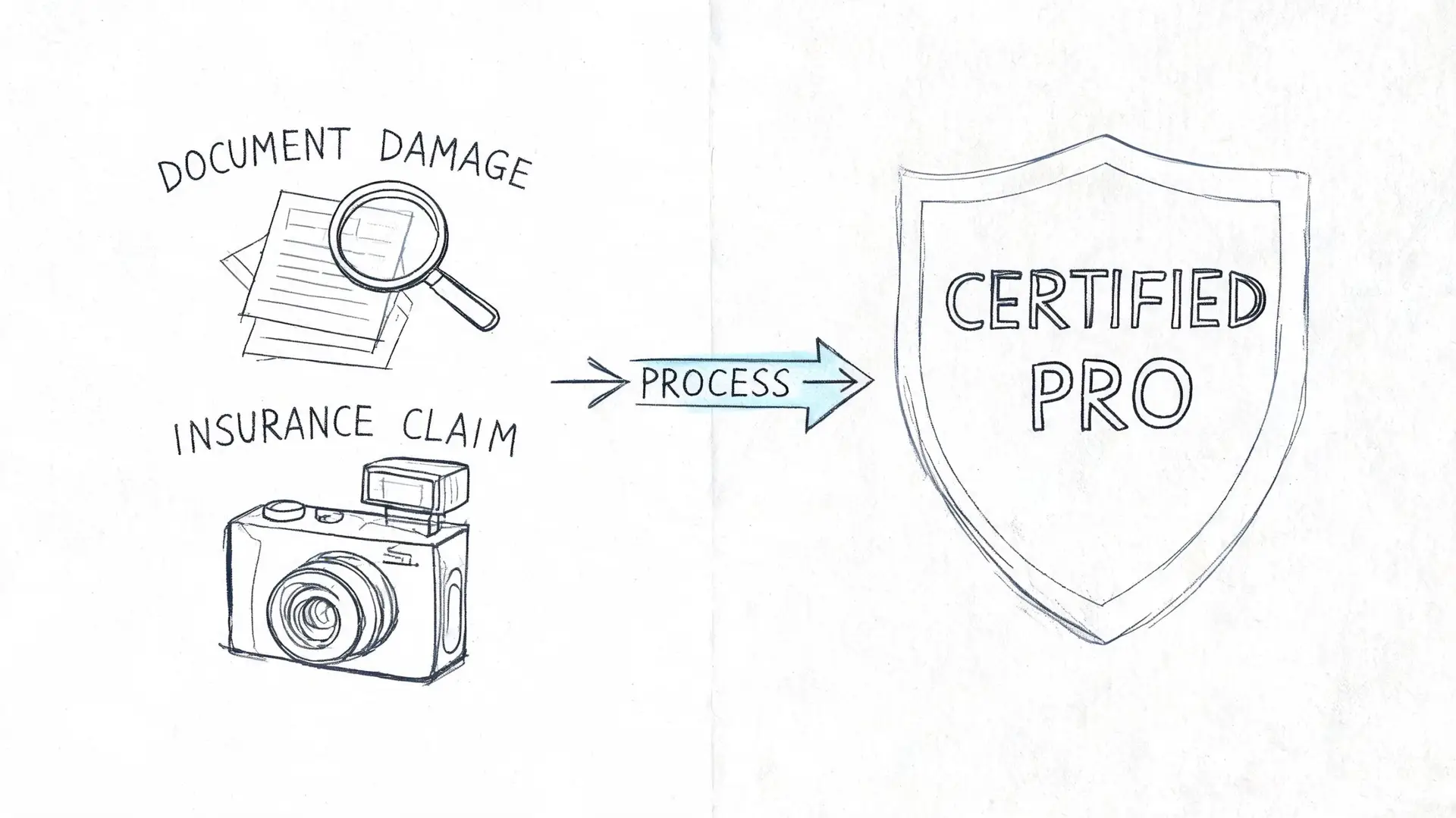
Insurance paperwork often feels like a second disaster. You’re trying to remember what was in each room while also making decisions about cleanup, temporary living arrangements, and repairs. A calmer approach is to treat the claim as a documentation exercise.
Start by photographing the affected areas before anything significant is moved, unless safety requires otherwise. Include wide shots and close-ups. Capture ceilings, vents, appliances, cabinets, contents, and transitional spaces such as hallways where smoke traveled.
What to tell your insurer
Keep your notes simple and factual. Describe where the fire started, which rooms show smoke or soot, whether the HVAC was running, and whether you smell smoke beyond the burn area. If the claim process feels unfamiliar, this guide on how to file a homeowners insurance claim is a useful reference for organizing your next steps.
For condo owners, policy details can get more layered because building coverage and unit coverage may overlap in confusing ways. Even though it’s written for another market, the overview on Property damage condo insurance NY helps illustrate the kinds of questions condo owners should ask about structure, interior finishes, and responsibility splits.
Why certification matters more than a quick quote
Smoke damage repair isn’t only about cleaning. It can involve structural judgment, cavity inspection, and evidence-based repair planning. According to this article on fire damage inspection and structural assessment, professional assessment of structural elements uses a nominal char rate of 1.5 inches per hour to quantify fire exposure. An IICRC-certified firm can use that information, along with tools like borescopes for cavity inspections, to create a precise repair plan that supports insurance documentation and verifies structural integrity.
That’s a major reason to hire beyond price alone. A contractor who only talks about deodorizing may miss hidden char, concealed soot migration, or compromised framing connections. A contractor who understands both cleaning science and structural implications can speak more clearly to your adjuster.
Ask a contractor how they inspect hidden spaces, how they document damage, and how they decide between cleaning and replacement. Their answer tells you a lot.
A short video can also help you understand how professionals approach documentation and claim-related restoration decisions:
A practical contractor checklist
When comparing companies, look for these basics:
- IICRC certification: It shows the firm follows recognized restoration standards.
- Proper licensing and insurance: You want a contractor who is qualified to work in occupied homes.
- Local Phoenix experience: Desert conditions, heavy A/C use, and attic heat affect how smoke behaves here.
- Clear documentation practices: Good notes and photos help support the insurance process.
- A defined scope of work: You should understand what they’re cleaning, what they’re testing, and what they recommend replacing.
A careful contractor won’t rush you into a vague yes. They’ll explain what they found, what they need to verify, and how the repair plan matches the actual damage.
Your Path to Recovery Starts Now
Smoke damage repair feels overwhelming when you’re standing in the middle of it. The good news is that the path forward is usually clearer once the home is assessed properly. Safety comes first. Then documentation. Then a methodical cleanup and repair plan that addresses what you can see and what you can’t.
For Phoenix homeowners, the HVAC piece deserves extra attention because smoke can linger in ductwork and reappear when cooling systems cycle on. The right repair process doesn’t just chase odor. It removes contamination, protects materials, and helps you make better decisions with your insurer and contractor.
Small repairs often follow restoration, too. For example, if windows were opened, screens were removed, or exterior cleanup left minor damage behind, a local Phoenix window screen service can help with that final layer of getting the home comfortable again.
You don’t need to solve the whole problem today. You only need to take the next correct step.
If you need help evaluating smoke damage in your Phoenix-area home, Restore Heroes provides 24/7 disaster restoration services for fire, smoke, water, and related property damage. A prompt professional assessment can help you understand the scope of cleanup, document conditions clearly, and move toward a safe, organized recovery.