
A tenant improvement is ready to start. The flooring crew opens a section near an older wall line. Someone notices brittle mastic, aged ceiling material, or pipe insulation that doesn't look right. Work stops. The contractor wants direction. Tenants want to know whether the area is safe. Ownership wants to know how bad the delay will be.
That moment is where many Phoenix facility managers first learn that commercial asbestos removal is a business continuity issue, not just an environmental one. The questions come fast. Can work continue in another part of the building? Who needs to be notified? How do you document decisions? What should you budget for containment, testing, and downtime?
Commercial properties sit at the center of this problem. The commercial segment accounted for 38.4% of the global asbestos abatement services market in 2024, driven by offices, schools, and public buildings with asbestos in insulation, flooring, and ceilings, according to Grand View Research's asbestos abatement services market report. That tracks with what facility teams see on the ground. Older buildings keep getting renovated, re-tenanted, re-roofed, and retrofitted. Every one of those projects can uncover hidden asbestos-containing materials.
If you're dealing with a suspect material during renovation, the first priority is control. Stop disturbance, restrict access, and treat it like a hazardous condition until proper identification is complete. If the issue overlaps with broader contamination or emergency cleanup concerns, it helps to understand how hazardous cleanup services are typically handled so your response stays organized from the first call.
Your Renovation Just Hit an Asbestos Problem
In Phoenix, this usually starts in a very ordinary way. A retail suite is being refreshed between tenants. An office is replacing old VCT flooring. A school support building is upgrading HVAC lines above a drop ceiling. Nobody planned for asbestos that morning, but once suspect material is disturbed, the job changes immediately.
What the first hour should look like
The best facility managers I've worked with don't improvise here. They do three things fast:
- Stop the work: Don't let a well-meaning trade keep scraping, drilling, or cutting.
- Isolate the area: Limit traffic, especially in occupied commercial space.
- Document what happened: Note the location, activity, and who was present.
That response matters because asbestos problems get worse when people treat them like a minor punch-list item. A flooring adhesive issue can become an occupancy issue if dust gets tracked through a corridor. A pipe insulation problem in a mechanical room can turn into a schedule problem if other trades were stacked behind that work.
Practical rule: The cheapest mistake is the one you stop in the first ten minutes.
Why commercial owners keep running into this
Commercial buildings are constantly being altered. Suites turn over. Systems age out. Roof penetrations get added. Plumbing failures open walls. That's why the issue shows up so often in this building category, especially in properties built before modern asbestos restrictions took hold.
For a new facility manager, the key mindset is simple. Don't think of asbestos as a rare catastrophe. Think of it as a known legacy risk in older buildings that needs a calm, procedural response. That approach lowers liability, protects occupants, and keeps the project team from making the next bad decision under pressure.
Understanding Asbestos Risks in Commercial Buildings
Asbestos isn't dangerous because it exists in a building. It becomes dangerous when building activity releases fibers into the air. That's the distinction many owners miss.
Older commercial buildings can contain asbestos in places that don't stand out during day-to-day operations. Common locations include pipe insulation, surfacing materials, ceiling systems, flooring products, mastics, roofing components, and wall assemblies. In a quiet, undisturbed condition, some of those materials may sit in place for years without immediate incident. Renovation, maintenance, demolition, vibration, water damage, or poor repair work is what changes the risk.
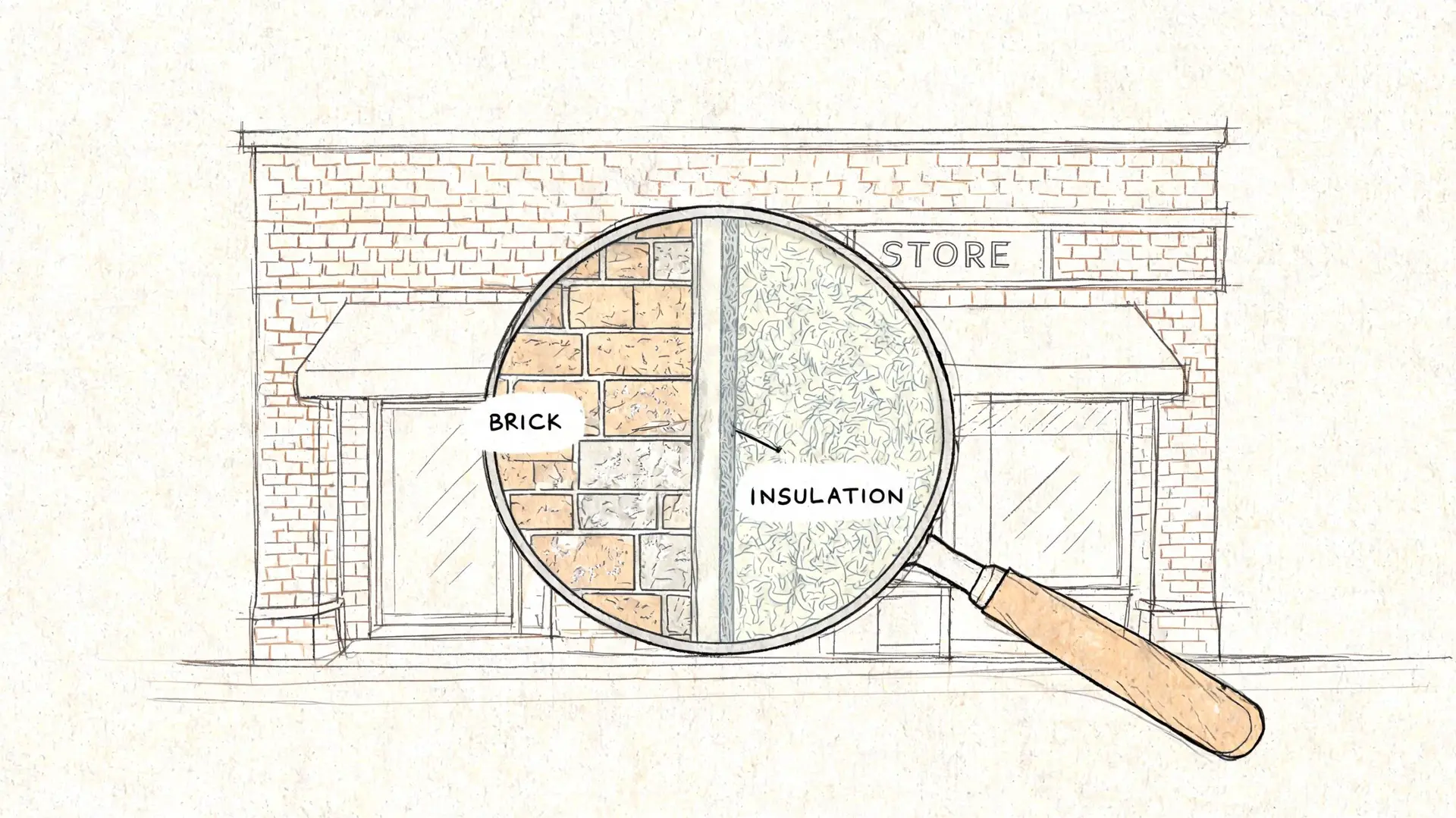
Friable and non-friable matter for different reasons
A useful field distinction is friable versus non-friable material.
Friable asbestos-containing material can crumble under relatively light pressure. Think of old thermal insulation or sprayed surfacing material. Once disturbed, it can release fibers more easily. This is the material category that tends to drive the strictest controls and the most concern.
Non-friable material is more tightly bound. Floor tile, roofing, and some wall products often fall into this bucket. That doesn't make it harmless. It means the risk profile depends more on condition and disturbance. Intact material is one thing. Grinding, cutting, sanding, or demolition is another.
A good rule in older commercial space is this. If a material is damaged, dusty, or being removed, don't rely on appearance alone.
Where facility managers should pay attention
In commercial properties, asbestos risk often shows up in predictable zones:
- Mechanical systems: Pipe wrap, boiler insulation, and older HVAC components.
- Tenant improvement areas: Flooring, mastic, wallboard systems, and ceiling materials.
- Roof and exterior work: Roofing systems, mastics, and penetrations.
- Back-of-house spaces: Storage rooms, utility chases, maintenance areas, and above-ceiling cavities.
The liability side is straightforward. You owe a duty of care to employees, tenants, visitors, and contractors. If a project team disturbs suspect material without proper controls, the exposure issue isn't limited to the person holding the tool. It can affect adjacent occupants, janitorial teams, vendors, and anyone moving through shared air or common areas.
What doesn't work
What fails most often is casual decision-making. A maintenance team cuts into old wallboard because “it's probably fine.” A flooring subcontractor assumes one wing matches another. A property owner relies on an old report that didn't cover the renovation footprint.
Commercial asbestos removal starts long before removal. It starts with disciplined identification, smart work stoppage decisions, and treating uncertainty as something to verify, not something to guess through.
Navigating Asbestos Regulations in Arizona
The regulation stack can feel messy until you sort it by function. In practice, Phoenix commercial owners need to think in three layers. EPA rules deal with emissions and project triggers. OSHA and ADOSH focus on worker protection. Arizona-level processes govern notice, documentation, and how the job gets executed locally.
That hierarchy helps when you're trying to answer practical questions such as who needs to be told, what controls are required, and whether the material type changes the scope of work.
Classification drives the whole job
One of the most important distinctions in commercial asbestos removal is job classification. Class I work involves removal of thermal system insulation and surfacing asbestos-containing material, while Class II covers materials such as wallboard, floor tile, and roofing, as outlined in Los Angeles County asbestos removal specifications.
That distinction affects almost everything that follows:
- Containment design: Higher-risk material requires more rigorous enclosure and negative air controls.
- Crew qualifications: Contractor certifications and worker training need to match the class of work.
- Air monitoring and documentation: Sampling and records become more demanding as the hazard level rises.
- Schedule impact: Higher-control work usually means more setup, more protection, and less flexibility.
If you're a facility manager, you don't need to become the regulator on site. You do need to know enough to challenge a vague proposal. “Asbestos removal” is not one uniform task. The material category changes containment, sequencing, and cost.
Arizona compliance is also a permit and records problem
In Phoenix, asbestos issues often overlap with larger renovation permitting and inspection workflows. When project paperwork is already under pressure, one compliance miss can spill into another. If your broader renovation file is messy, guidance on managing home service permit violations is useful as a reminder of how quickly documentation gaps become a real project problem in Arizona.
For property teams, the practical compliance checklist usually includes:
- Pre-work identification: Confirm whether suspect material is ACM before allowing disturbance.
- Scope matching: Make sure the contractor's plan fits the material class and the occupied nature of the building.
- Notification discipline: Don't assume the contractor's verbal assurance covers the owner's obligations.
- Site controls: Regulated work areas, sealed openings, and negative air aren't optional details.
- Record retention: Keep plans, sampling records, manifests, and clearance records in a retrievable file.
Commercial owners dealing with broader hazardous material issues often benefit from understanding how hazmat cleanup services are coordinated in Phoenix because asbestos abatement rarely exists in a vacuum. Older buildings may have water intrusion, smoke residue, lead concerns, or tenant-safety communication issues at the same time.
Compliance works best when one person owns the paper trail from discovery through clearance.
What experienced managers do differently
They don't ask only, “Is the contractor licensed?” They ask, “Is the proposed work classification correct, does the containment match the material, and is the documentation package strong enough to defend later?”
That's the difference between checking a box and managing risk.
The Commercial Asbestos Removal Workflow
Once asbestos-containing material is confirmed, the job moves into a controlled sequence. Good abatement work looks methodical from the outside because it is. If the site feels rushed, loosely organized, or casually accessed, something is wrong.
Early in the project, I tell new facility managers to judge the process by order. You should be able to see where the dirty zone starts, how people move through it, and how the contractor prevents contamination from leaving the work area.
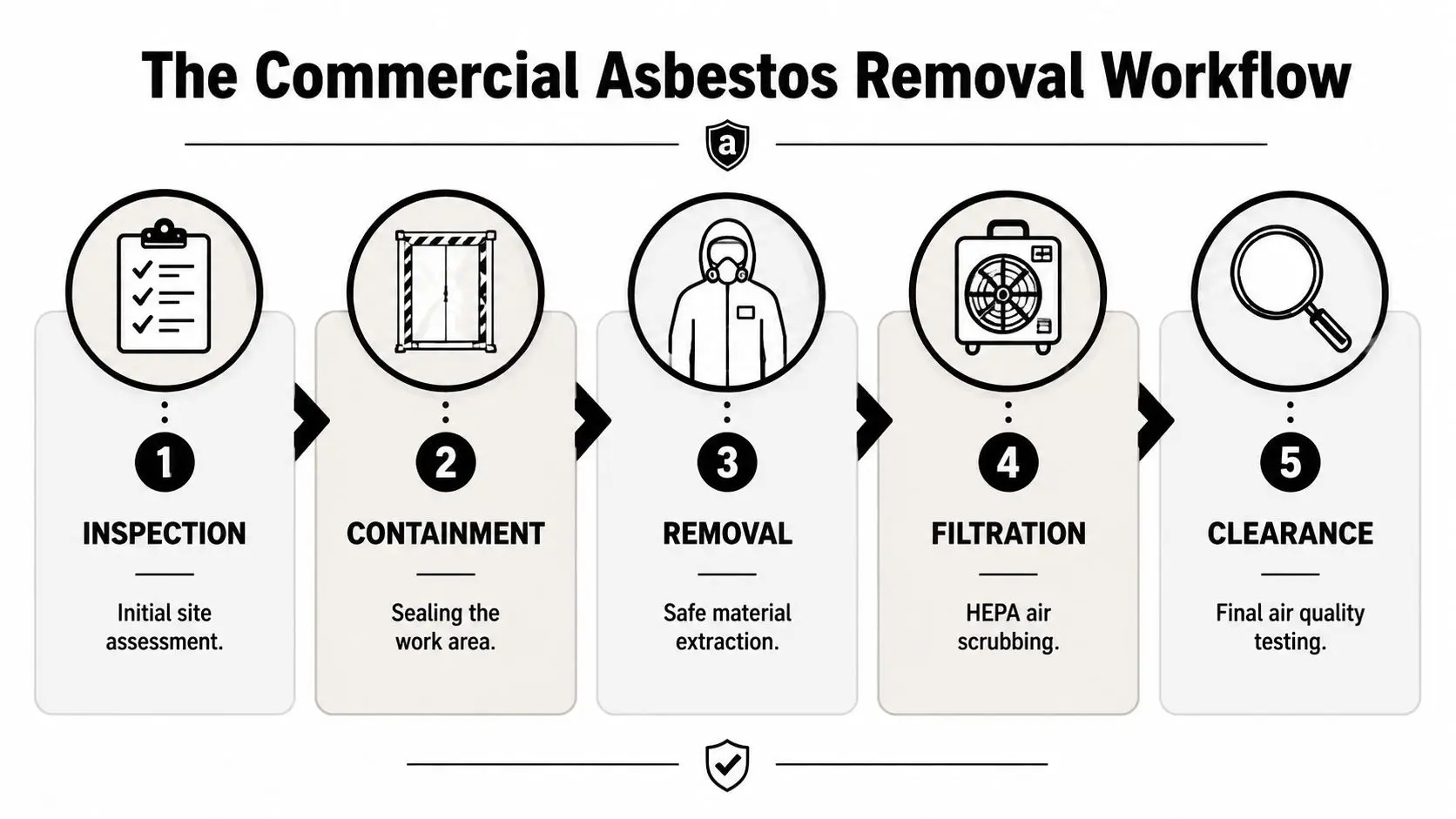
Step one through step three on site
The first phase is planning and site prep. The contractor reviews the identified materials, defines the regulated area, and sets the containment boundaries. Doors, windows, penetrations, and HVAC openings that connect to the work zone are addressed so fibers don't migrate into occupied space.
Next comes negative air containment. Commercial projects commonly use enclosed work areas with HEPA-filtered negative air machines. The goal is simple. Air should move into the containment, not out of it. That containment remains in place while removal and cleaning are underway.
Then the actual removal begins. Materials are typically wetted before handling, because dry disturbance is exactly what you want to avoid. Workers remove, bag, and secure waste under the controls set in the work plan.
For a broader view of how specialized contractors handle damage, contamination, and recovery work in occupied buildings, this overview of what a restoration company does gives useful context around containment, safety sequencing, and operational coordination.
The decontamination stages are why timelines stretch
A lot of owner frustration comes from expecting the visible removal to be the whole job. It isn't. A standard abatement procedure includes initial wet cleaning, removal of the first plastic barrier, a mandatory waiting period of at least twelve hours, then a second cleaning, while negative pressure stays operational until final clearance, according to an example asbestos abatement specification.
That mandatory waiting period matters. It's one reason a seemingly small commercial asbestos removal project can still occupy part of a schedule for several business days.
Here's the process in plain terms:
Inspection and confirmation
Suspect materials are identified and the abatement plan is tied to the actual site conditions.Containment build-out
The contractor seals the work area, establishes controlled access, and starts negative air systems.Wet removal and waste handling
ACM is wetted, removed carefully, and packaged for compliant transport and disposal.Cleaning and staged barrier removal
Surfaces are cleaned, portions of containment are removed in sequence, and the waiting period is observed.Final clearance activities
The area stays under control until visual and air-clearance requirements are satisfied.
A short visual helps if you're explaining the workflow to ownership or tenants:
What a facility manager will notice during the job
The biggest operational impacts are usually access restriction, noise from air equipment, sealed openings, and trade sequencing delays. You may lose use of nearby rooms even if the contamination is limited to one area. You may also need to re-route maintenance staff, janitorial service, or vendors around the enclosure.
Keep one written log for the whole event. Site restrictions, tenant notices, contractor updates, and clearance timing should all live in the same file.
That habit saves time later when someone asks why the schedule slipped or when a future buyer wants to understand what happened.
How to Qualify an Asbestos Abatement Contractor
Most owner-side problems in commercial asbestos removal start before the first containment sheet goes up. They start when someone hires the wrong contractor, or hires the right contractor without asking the right questions.
A polished proposal doesn't tell you much by itself. What matters is whether the contractor can explain the hazard, classify the work correctly, control the site, document the process, and communicate clearly with an occupied commercial property team.
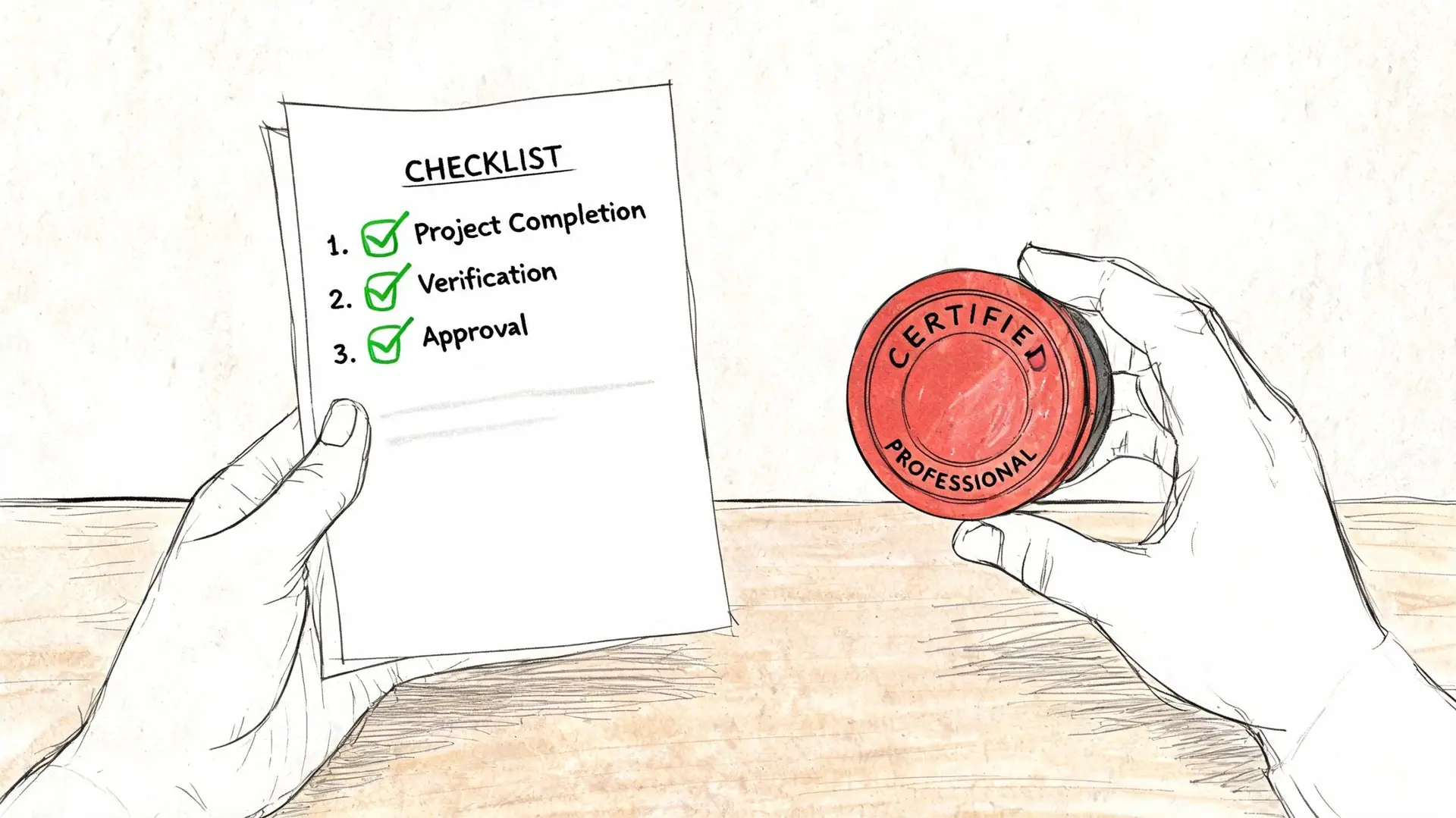
What to verify before award
Use a vetting checklist. Not a gut feeling.
- Licensing and accreditation: Verify that the firm and its field supervisors hold the credentials required for the scope of asbestos work being proposed.
- Insurance: Ask for proof of coverage that addresses pollution and asbestos-related exposure, not just general liability.
- Project-specific plan: Require a written work plan showing containment, negative air, decontamination, waste handling, and clearance approach.
- Occupied-building experience: Commercial office, retail, healthcare, education, and industrial environments create coordination demands that small residential-style operators may not handle well.
- Safety history and communication: Ask how they document daily activity, incidents, air monitoring coordination, and owner updates.
Questions that reveal whether they actually know the work
Don't ask, “Can you handle this?” Every bidder will say yes. Ask questions that force specifics:
- How are you classifying this material and why?
- What openings will you seal, and how will you protect adjacent occupied areas?
- Who performs final clearance and how independent is that party?
- What's your plan if the scope expands after demolition starts?
- How will waste move through the building without crossing public paths?
If the answers are vague, you've learned something important.
Borrow standards from contractor management programs
Even if you're managing an Arizona property, it's worth looking at how formal contractor prequalification systems work in other regulated environments. Resources on 2026 Cm3 compliance for Australia are useful because they show how mature organizations evaluate contractor competency, documentation, and risk controls before work starts. The geography is different. The management discipline is highly relevant.
Owners also make better decisions when they compare specialist vendors in adjacent restoration categories. This guide to choosing a water damage restoration contractor is useful for one reason. It reinforces the same procurement principle that applies here: certifications matter, but job planning, communication, and documentation matter just as much.
The best contractor interviews feel less like sales calls and more like pre-job coordination meetings.
That's what you want. Calm specifics. Clear paperwork. No shortcuts disguised as efficiency.
Budgeting for Commercial Asbestos Abatement
Most owners don't need a perfect budget on day one. They need a defensible range and a clear understanding of what is driving it. That's how you avoid under-scoping the project or accepting a bid that looks cheap because key controls were left out.
In major U.S. markets, typical abatement costs can range from $10 to $30 per square foot, and project pricing often breaks down into inspection at 10 to 15 percent, containment and setup at 20 to 30 percent, removal at 50 to 60 percent, and disposal and testing at 10 to 20 percent, based on Construction Executive's overview of safe commercial asbestos removal practices. For Phoenix properties, the same source notes that desert climate can increase wetting agent needs by 15 to 20 percent.
That range is a budgeting tool, not a promise. The actual number depends on material type, condition, access, building occupancy, and how much infrastructure has to stay operational during the work.
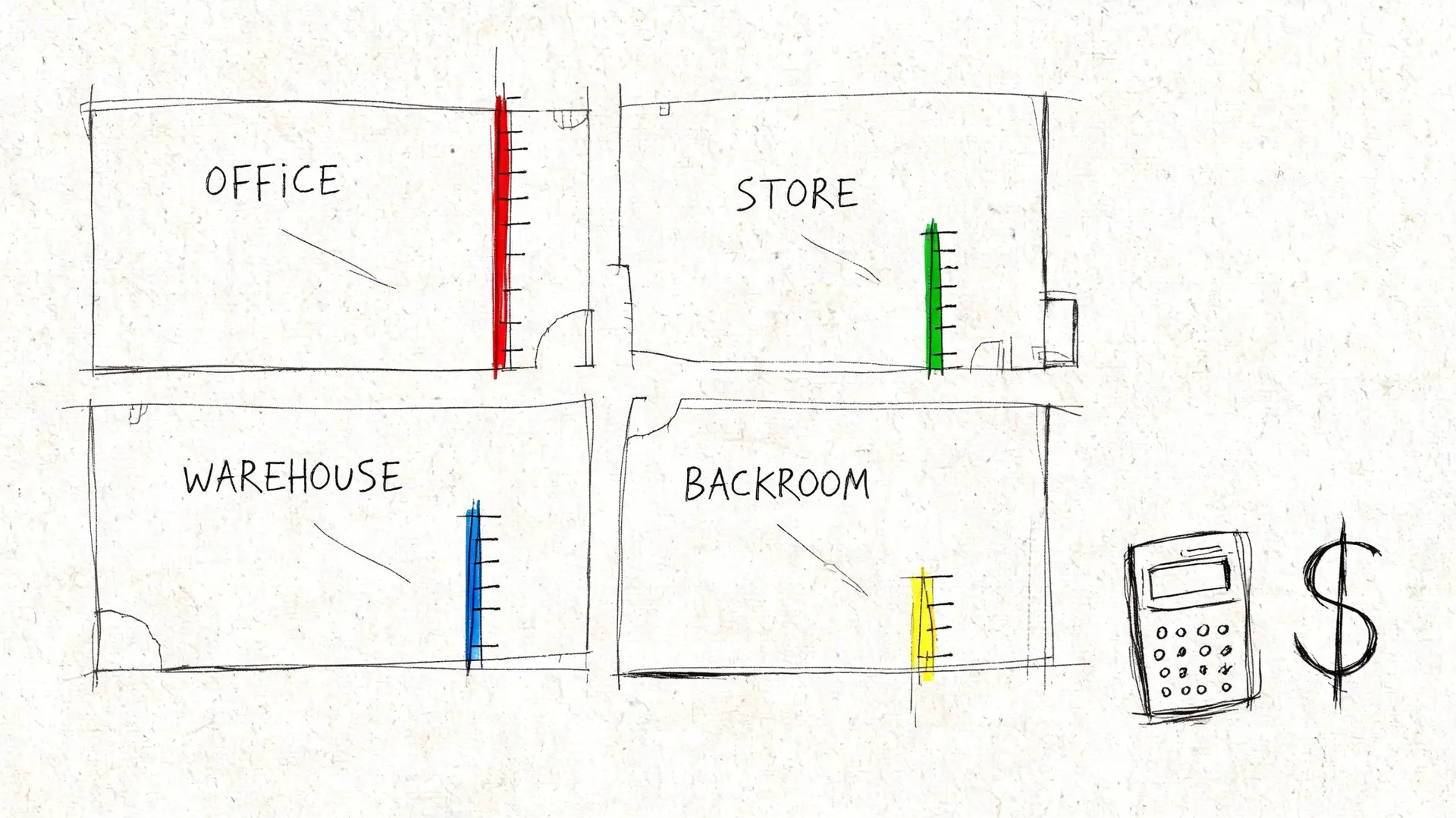
What pushes cost up or down
A floor tile project in a vacant suite doesn't behave like pipe insulation removal above an occupied medical office. The same square footage can carry very different labor, containment, and after-hours coordination demands.
Here's a practical budgeting view:
| Cost Factor | Description | Impact on Price |
|---|---|---|
| Material type | Thermal insulation and surfacing materials usually require stricter controls than more durable building products | Higher-risk materials usually increase setup and labor cost |
| Material condition | Damaged, deteriorated, or debris-producing material requires more careful handling | Poor condition tends to raise containment and cleaning effort |
| Accessibility | Tight ceiling plenums, shafts, rooftops, and occupied tenant areas complicate work | Difficult access usually increases labor time and coordination cost |
| Occupancy | Active business operations limit work windows and circulation paths | Occupied buildings often require more phasing and protection |
| Containment scope | The larger the regulated area, the more barrier work and negative air equipment are needed | Broader containment pushes setup costs higher |
| Disposal and testing | Waste packaging, transport, manifests, and clearance testing add to the total | These costs rise with project size and complexity |
| Phoenix climate effects | Dry conditions can increase wetting requirements | More wetting support can raise consumable and labor needs |
Costs outside the removal line item
A lot of budgets fail because they only capture the abatement contractor's proposal. The full owner-side cost picture may also include schedule delay, after-hours security access, tenant communication, temporary relocation, MEP shutdown coordination, and patch-back or reconstruction after the asbestos work is complete.
If your team already uses digital takeoff or proposal tools for capital work, roundups of the best tools for contractor estimates can help standardize scope comparison across bidders. That matters because two asbestos proposals can look similar while excluding very different things.
Property managers also benefit from comparing asbestos budgeting discipline to other remediation categories. For example, guidance on how mold remediation costs are usually structured is a useful reminder that containment, testing, and post-work verification often carry a large share of total project cost in environmental work.
A smarter way to review bids
Don't ask only, “Which number is lowest?” Ask these instead:
- Does the proposal define the exact material and area being addressed?
- Does it clearly include containment, negative air, cleaning, disposal, and clearance support?
- Does the work window fit the occupancy reality of the building?
- What assumptions would trigger a change order?
That review process won't make asbestos inexpensive. It does make the budget more predictable.
Post-Removal Verification and Future Outlook
The job isn't finished when the last bag leaves the site. It's finished when the area is verified for re-occupancy and the records are complete enough to protect the owner later.
For commercial properties, I want a closeout file that answers four questions without guesswork. What material was removed? Where exactly was it? How was it handled and disposed of? What evidence shows the area was cleared properly? If those answers are scattered across emails and jobsite photos, the file isn't done.
What should be in your closeout package
At minimum, the owner should expect organized documentation for:
- Final visual verification
- Air clearance results
- Waste shipment and disposal records
- Daily logs or final report describing the work area and methods used
- Any notifications, plans, or revisions tied to the project
This isn't paperwork for paperwork's sake. It protects the asset. Years later, during refinancing, sale, tenant dispute, insurance review, or another renovation, that file may be the only clear record of what happened behind a wall or above a ceiling.
Save the abatement closeout package in the same system as permits, life-safety reports, and roof warranties. Future managers need to be able to find it fast.
New tools are changing early project planning
The front end of commercial asbestos removal is starting to improve. Emerging trends for 2026 include AI-driven predictive asbestos detection and drone-assisted inspections, and an EPA pilot in Arizona reported 35% faster pre-abatement surveys using AI imaging on pre-1990 structures, according to this discussion of asbestos removal technology trends.
For Phoenix owners, that matters most in survey speed and access. Older hotels, office buildings, schools, and industrial sites often have hard-to-reach roofs, shafts, and mechanical zones. Better detection tools won't replace licensed judgment or proper abatement. They can improve planning, reduce surprises, and help owners sequence capital projects with less disruption.
The big takeaway is simple. Good asbestos management doesn't end with safe removal. It ends with verified clearance, durable records, and a smarter plan for the next renovation.
If you're dealing with a suspected asbestos issue alongside water, fire, mold, or other contamination concerns in a Phoenix commercial property, Restore Heroes can help you stabilize the situation, coordinate the right response, and keep the site safer while you work through the next steps.