
A lot of people search what are remediation services when they're standing in a wet hallway, smelling smoke in the kitchen, or staring at a wall that suddenly looks wrong. In that moment, the technical terms don't help much. You want to know what happens next, what needs to be removed, and whether your home can be made safe without turning the whole place into a construction zone.
That's where remediation comes in. It's the part of the job that stops the problem, removes the hazard, and gets the property to a safe, stable condition. Sometimes that's the whole job. Sometimes it's the first phase before repairs and rebuilding begin.
What Remediation Services Mean for Your Property
You come home and hear water running. A supply line under the sink has failed, the cabinet is soaked, and water has reached the baseboards in the next room. Or maybe a small grease fire filled the kitchen with smoke, leaving soot on surfaces you didn't even realize smoke could reach. In both cases, the first need isn't paint, new cabinets, or cosmetic repairs. The first need is to stop ongoing damage and make the area safe.
That's the simplest way to understand remediation. Remediation is the emergency response and hazard-removal side of property damage work. It deals with contamination, moisture, smoke residue, unsafe materials, and conditions that can keep getting worse if nobody acts quickly.
A useful analogy is medical care. If restoration is like rebuilding strength after an injury, remediation is like stabilizing the patient first. You stop the bleeding, reduce the immediate risk, and create conditions where recovery is possible.
Remediation and restoration aren't the same thing
People often use the words interchangeably, but they solve different problems.
| Service | Main purpose | Typical result |
|---|---|---|
| Remediation | Remove hazards and stop further damage | Safe, dry, contained, sanitized property |
| Restoration | Repair and rebuild damaged finishes or structures | Property looks and functions like it should again |
That difference matters because not every loss needs both. A clean water leak caught early may need extraction, drying, and monitoring, but no rebuild. If you're also dealing with hidden fungal growth, this guide on solutions for facility mold growth can help you understand why damage behind trim and walls sometimes needs more than surface cleaning.
If you want a broader view of how these emergency services fit together, it helps to read what a restoration company does, because remediation is usually one part of that larger response.
Practical rule: If the immediate question is “How do we make this safe right now?” you're probably talking about remediation.
This isn't some vague repair niche. Remediation is a recognized global service category in the United Nations classification system, and the U.S. addressable market is estimated at about $15.3 billion, with the broader global environmental remediation market projected to reach $233.62 billion by 2033 according to the United Nations classification reference summarized with market context. That should reassure you that this is an established professional field, not a made-up label contractors use during emergencies.
The Four Main Types of Property Remediation
Most homeowners don't need a textbook definition. They need to know which kind of problem they have. Property remediation usually falls into four practical categories.
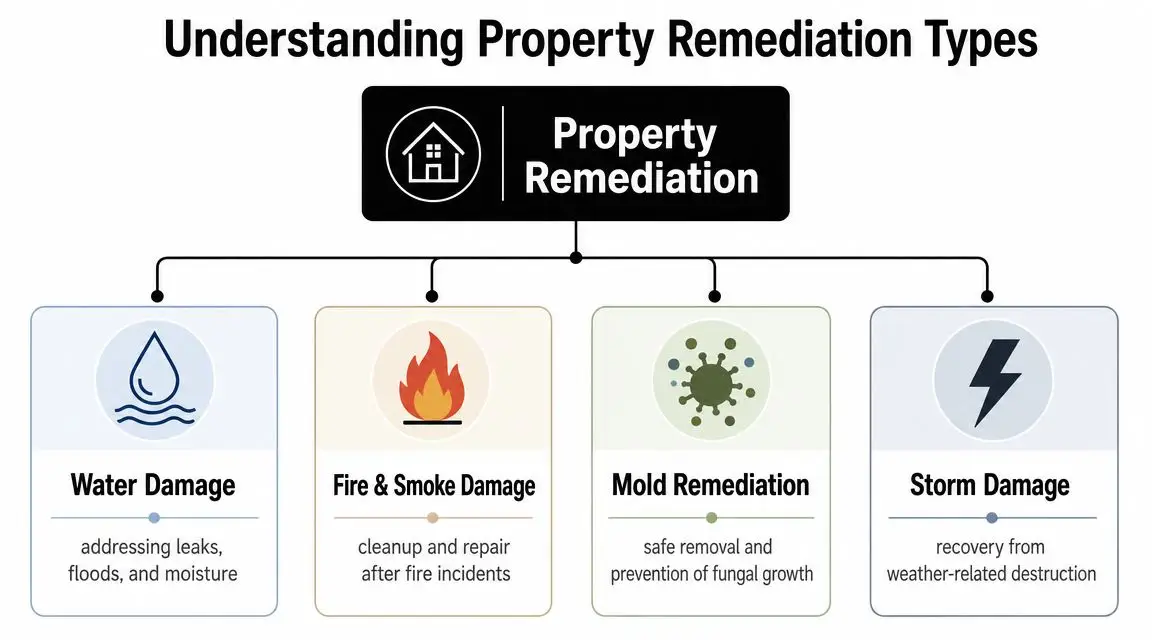
Water damage remediation
This is the one people see most often. A burst pipe, appliance leak, roof leak, or overflowing fixture can send water into flooring, drywall, insulation, and cabinets.
The goal isn't just to mop up what you can see. Crews usually focus on:
- Stopping the source so water isn't still feeding the loss
- Extracting standing water with pumps or portable extractors
- Setting drying equipment such as air movers and dehumidifiers
- Removing unsalvageable material when wet contents or building parts can't be safely dried
- Monitoring moisture until affected areas reach a stable condition
If water sits too long, the job can shift from simple drying to contamination control and material removal.
Mold remediation
Mold remediation is less about “spraying something on it” and more about containing contaminated areas and preventing spread. That matters because disturbing mold without control measures can move spores into other rooms.
A typical example is a slow leak behind a vanity or inside a wall cavity. The stain on the drywall might look small, but the actual growth may extend farther than the visible mark.
Crews often use containment barriers, negative air equipment, selective demolition, cleaning, and post-cleanup verification steps before the area is considered ready for normal use.
Visible mold is only part of the problem. Hidden moisture is usually the reason it came back in the first place.
Fire and smoke remediation
After a kitchen flare-up or electrical fire, homeowners often notice the obvious damage first. The harder part is smoke migration. Soot and odor can settle well beyond the room where the fire started.
This type of remediation may include debris removal, soot cleanup, odor treatment, air scrubbing, and removal of materials that can't be cleaned safely. Smoke residue isn't all the same, so the cleanup method depends on what burned and where the residue traveled.
Biohazard and trauma remediation
This category covers sewage backups, bodily fluid contamination, and other biologically unsafe conditions. These jobs require a different level of containment, sanitation, waste handling, and worker protection.
For homeowners, the biggest takeaway is simple: don't treat biohazard cleanup like ordinary janitorial work. If you need a closer look at this category, biohazard remediation company services show what specialized cleanup usually involves.
Here's the part that confuses many people. A storm can trigger several categories at once. Wind-driven rain might create water damage, which later turns into mold. A fire might leave both smoke contamination and water from suppression efforts. That's why good remediation isn't one-size-fits-all. It matches the hazard in front of you.
The Remediation Process Step by Step
When people feel overwhelmed, a clear sequence helps. Most remediation jobs follow a pattern, even though the tools and scope change from one loss to another.
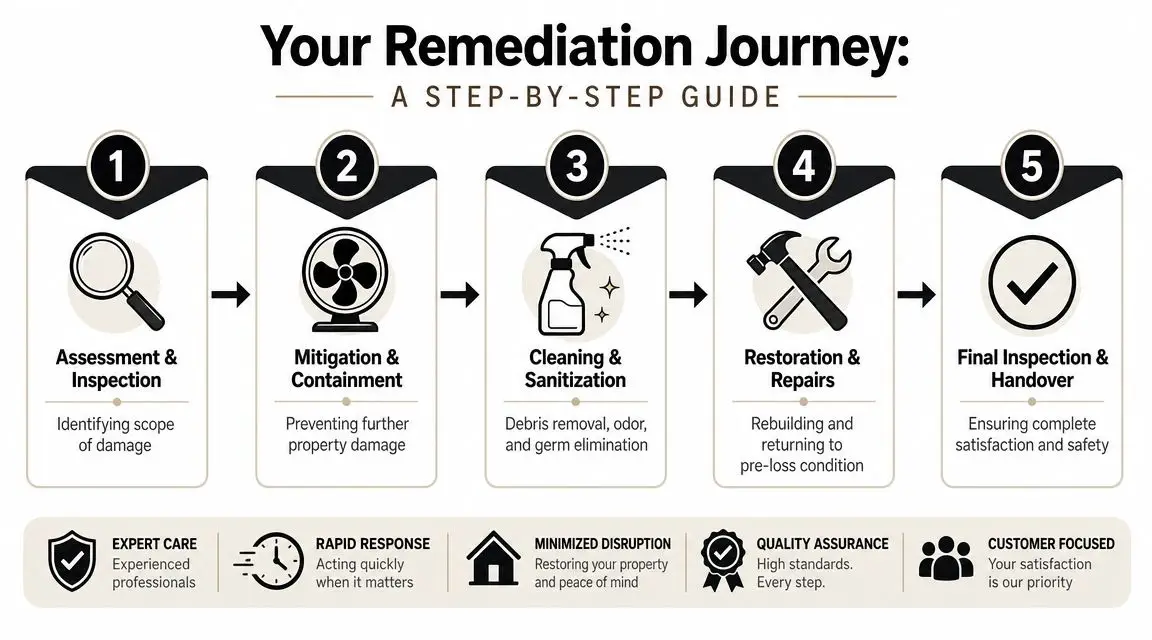
Inspection and damage mapping
The first step is figuring out what happened, where it spread, and what the risks are. That sounds basic, but it's where many bad decisions begin. If someone skips proper inspection, they may dry the surface while leaving wet insulation, smoke residue in cavities, or contaminated material hidden behind finished walls.
A careful inspection usually looks at the source of loss, affected materials, visible damage, hidden spread, and occupant safety concerns. In some situations, technicians also separate salvageable materials from those that need removal.
Containment and stabilization
Once the scope is known, the next move is to keep things from getting worse. That might mean shutting off water, isolating a room with containment barriers, protecting unaffected areas, or setting up air filtration equipment.
Think of this step as putting a lid on the problem. If contamination or moisture can keep moving, the final cost and disruption usually rise with it.
For water losses, you can compare this phase with the early work described in water damage restoration, where stopping spread and beginning structural drying often matter more than immediate cosmetic repairs.
Active cleanup and removal
This is the part most homeowners picture when they hear the word remediation. Crews remove contaminated debris, extract water, clean residues, sanitize affected areas, and use equipment designed for the hazard involved.
But professional remediation isn't just visible cleaning. It often follows a structured sequence that includes a remedial action plan, treatment methods matched to the contaminant, and confirmation steps before the property is considered safe, as described in site remediation guidance.
That “matched to the contaminant” idea matters. Different hazards behave differently.
| Problem | Common response |
|---|---|
| Trapped moisture | Extraction, controlled drying, moisture monitoring |
| Mold-contaminated materials | Containment, selective removal, filtration, cleaning |
| Smoke and soot | Residue-specific cleaning, odor treatment, filtration |
| Bio-contamination | Controlled removal, sanitation, regulated disposal |
Here's a useful walkthrough if you want to see the process in visual form:
Drying, verification, and the handoff point
The difference between remediation and restoration becomes practical with a remediation project, which aims to leave the property safe, dry, clean, and stable. That does not automatically mean every wall finish, cabinet panel, or flooring section is back in place.
Sometimes the job ends here. If a leak was caught early and materials dried properly, no rebuild may be needed. Other times, remediation creates the clean starting point for reconstruction. For example, drywall may be removed during mold control, but replacing that drywall belongs to restoration.
If the hazard is gone and the structure is stable, remediation may be finished even if the room still needs repair work.
That's why demolition isn't always the goal. Good remediation removes only what can't be safely cleaned, dried, or preserved. The point is to make smart, informed decisions, not to tear out more than necessary.
Why Professional Certifications and Safety Matter
When people are stressed, it's tempting to judge the job by what they can see. The room smells better. The stain is gone. The debris has been bagged up. But a finished-looking room and a safely remediated room aren't always the same thing.
The main risk in property damage is often what stays behind. Hidden moisture can support recurring mold growth. Fine soot can remain in porous materials and HVAC pathways. Sewage or other bio-contaminants can leave unsafe residue if disposal and sanitation aren't handled correctly.
What a professional should be thinking about
A qualified remediation contractor should approach the loss as a safety problem first, not a cosmetic one. That means asking questions like:
- What is the actual hazard and how far has it spread?
- Which materials can be saved and which must be removed?
- What containment is needed so the cleanup doesn't spread contamination?
- How will air quality be managed while work is underway?
- What verification will show the job is complete enough for reoccupancy?
Those questions are why certifications matter. Training frameworks such as IICRC standards help technicians use a repeatable method instead of guessing. You don't want a contractor deciding by feel whether the subfloor is dry enough or whether odor treatment alone is enough after smoke exposure.
What finished should look like
A complete remediation job often includes more than cleanup labor. It may involve containment, air filtration, regulated waste disposal, and clearance testing to confirm that hazards like mold spores or bio-contaminants have been removed before people return, as explained in this overview of post-cleanup verification and safe reoccupancy.
That gives you better questions to ask when you're hiring:
- Certification: Are the technicians trained for this type of loss?
- Safety plan: How will they contain the affected area?
- Documentation: Will they record moisture, cleaning steps, or disposal details?
- Verification: How will they determine the space is ready for use again?
A contractor who talks only about tearing out materials, but not about containment and verification, is leaving out the part that protects your household.
Professional safety practices also protect your belongings. A crew that isolates work areas, uses proper filtration, and removes waste correctly is less likely to turn one damaged room into a whole-house problem.
Navigating Costs and Insurance Claims
Most property owners ask two questions right away. How bad is this going to get, and will insurance help? Both questions are reasonable, and neither has a one-size-fits-all answer.
Remediation costs and timelines depend on what happened, how long it went unnoticed, what materials were affected, and whether contamination is involved. Clean water from a supply line is different from sewage. Wet drywall behaves differently than wet hardwood. A smoke odor limited to one room is different from soot spread through cabinets, contents, and ductwork.
What tends to change the scope
A small loss can become a much larger project if response is delayed. Moisture moves into hidden spaces. Odor settles into porous materials. Contamination can spread when people start cleaning without containment.
Common scope drivers include:
- Source of damage: Clean water, contaminated water, smoke, mold, or biohazard
- Affected materials: Carpet, pad, drywall, insulation, wood, cabinetry, contents
- Hidden spread: Damage behind walls, under flooring, inside cavities, or in nearby rooms
- Access needs: Whether crews can dry and clean in place or need selective demolition
- Documentation needs: Photos, moisture records, disposal paperwork, and adjuster communication
How the insurance side usually works
Start by documenting what you see. Take photos and short videos before major cleanup begins, if it's safe to do so. Save notes about when the issue was discovered, what emergency steps were taken, and which rooms or materials seem affected.
Then contact your carrier and begin the claim. If insurance language feels confusing, this plain-English guide on how insurance claims work can help you understand the basic flow without adding more stress.
A remediation contractor often helps by documenting site conditions, describing emergency mitigation work, and communicating with the adjuster about scope. If you're preparing for that process, these water damage insurance claim tips can help you organize the details insurers typically ask for.
Keep a simple file with photos, claim numbers, emails, invoices, and notes from phone calls. That record often helps more than people expect.
It also helps to separate two ideas in your mind. Emergency mitigation and final rebuild may be handled as related but distinct parts of the claim process. That's normal. The first priority is usually preventing more damage and addressing safety issues. Finish materials and reconstruction discussions often come later.
How to Choose the Right Remediation Partner
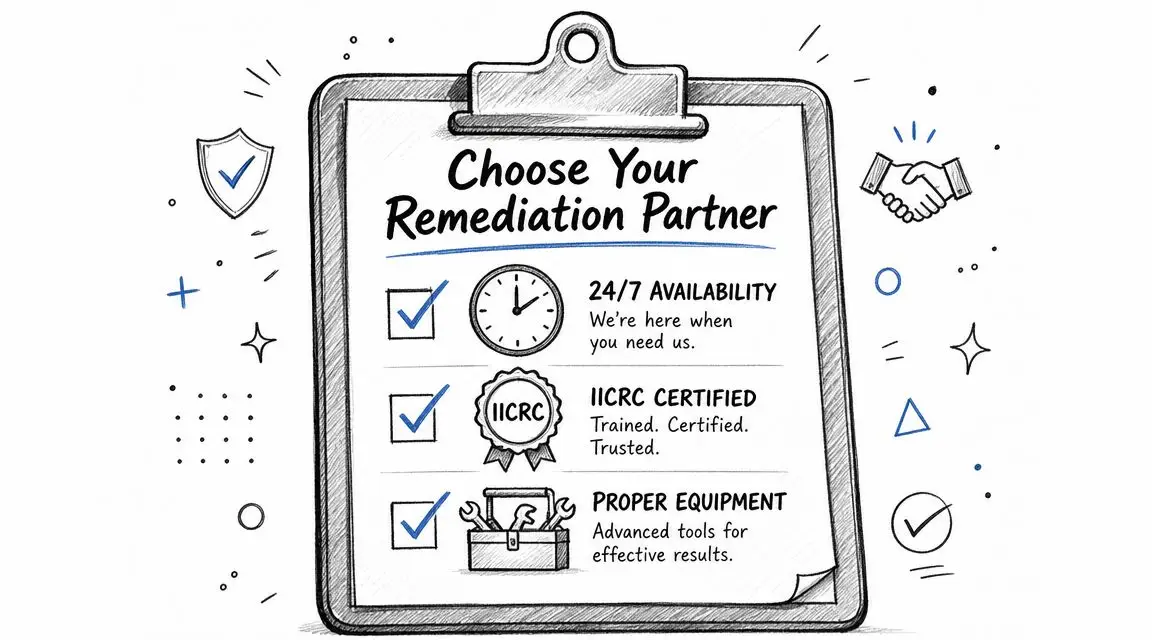
When you're hiring under pressure, a short checklist beats a long sales pitch. The right company should make the next steps clearer, not more confusing.
What to look for first
Start with the basics that affect safety and response time:
- Fast availability: Damage keeps moving if nobody shows up promptly.
- Relevant certification: Ask whether the crew is trained for water, mold, smoke, or biohazard work.
- Licensing and insurance: You want a contractor operating legitimately and carrying the right protections.
- Clear scope explanation: They should tell you what they plan to remove, dry, clean, or test, and why.
- Insurance coordination: A company that can document conditions and speak with adjusters can reduce friction.
Questions worth asking on the first call
Not every good contractor sounds polished on the phone, but they should be able to answer practical questions directly.
Try asking:
- What should I do right now before your crew arrives?
- Will you inspect for hidden spread, not just visible damage?
- How do you decide what can be saved?
- Do you provide documentation for insurance?
- What happens if the job needs rebuilding after remediation ends?
Those answers tell you a lot. You're listening for calm, specific guidance. Not vague promises.
One example in the Phoenix area is this water damage restoration contractor, which outlines how a provider may handle emergency response, drying, cleanup, and insurance coordination. That kind of service model is useful to compare against other local options when you're evaluating companies.
A good fit feels organized, not dramatic
The best remediation partner usually does three things well. They respond quickly, explain the plan in plain language, and document the work carefully. They also know when remediation alone is enough and when the property needs to move into a larger restoration phase.
If you remember one thing, make it this. Remediation is about returning your property to a safe condition first. Once that's done, you can make better decisions about repairs, rebuilding, and next steps without guessing.
If you need help sorting out water, mold, fire, or biohazard damage, Restore Heroes is one option for Phoenix-area property owners who want an IICRC-certified team to assess the situation, explain the remediation scope clearly, and coordinate with insurance while the property is being stabilized.