
If you're reading this because you found dark water around a toilet, a floor drain, or the base of a shower, slow down for a moment and treat it as a safety problem first. In Phoenix homes, a sewage backup can start as what looks like a plumbing mess and turn into a contamination event fast, especially when water has moved under baseboards, into carpet, or through a bathroom into nearby rooms.
Homeowners often lose time asking the wrong first question. They ask, "Can I clean this up myself?" The better question is, "Is this still a simple overflow, or has it crossed into a biohazard emergency?" That decision affects who should enter the area, what gets thrown out, what can be cleaned, and how much damage you prevent in the next few hours.
Your First Steps During a Sewage Emergency
When sewage is involved, the first job isn't cleanup. It's protecting people.
Use this checklist in order:
Stop the source if you can do it safely. Shut off the fixture, stop water use in the home, or have someone avoid flushing toilets, running showers, or starting laundry. If a clogged main line is the issue, continued water use can push more contaminated water back into tubs, showers, and floor drains.
Keep everyone out of the affected area. That includes kids, pets, older adults, and anyone with a weakened immune system. Sewage-contaminated water shouldn't be treated like a routine spill.
Avoid direct contact. Don't step into it barefoot. Don't let contaminated water touch your skin if you can avoid it. If it splashed onto clothing, bag those items and wash up thoroughly.
Shut off power to the affected area if it's safe to reach the panel. Water and electricity are a dangerous combination. If you can't do this safely, wait for qualified help.
Open windows if conditions allow. Ventilation helps, but don't use fans that could spread contamination from the affected space into clean parts of the house.
Do not start mopping it through the home. That spreads contamination. Keep the affected area isolated as much as possible.
Do not use your household vacuum. It isn't built for contaminated solids or sewage water.
Call the right type of help. If you're unsure whether the event is minor or hazardous, compare your situation to this guide on how to clean up after a toilet overflow. It helps separate simple overflows from true sewage events.
Practical rule: If contaminated water touched flooring beyond the immediate bathroom area, came from a drain or sewer line, or sat long enough to soak materials, treat it as a professional cleanup issue.
When to leave the area immediately
Leave and wait for help if you notice any of these conditions:
- Electrical risk: Water near outlets, extension cords, appliances, or a garage conversion with added wiring.
- Broad contamination: Water moved into carpeted hallways, bedrooms, closets, or HVAC areas.
- Strong sewer gas or heavy odor: That can signal a bigger line problem and makes staying inside more difficult.
- Vulnerable occupants present: Babies, older adults, or anyone who may be more affected by exposure.
Understanding the Dangers of Sewage Water
A lot of homeowners hear the phrase Category 3 water and tune out because it sounds technical. The simple version is this. It's not ordinary water damage. It's contaminated water that should be treated more like a hazardous spill than a wet floor.
That difference matters because the danger isn't only what you see on the tile. It's what gets into the air, into porous materials, and onto surfaces people touch later.
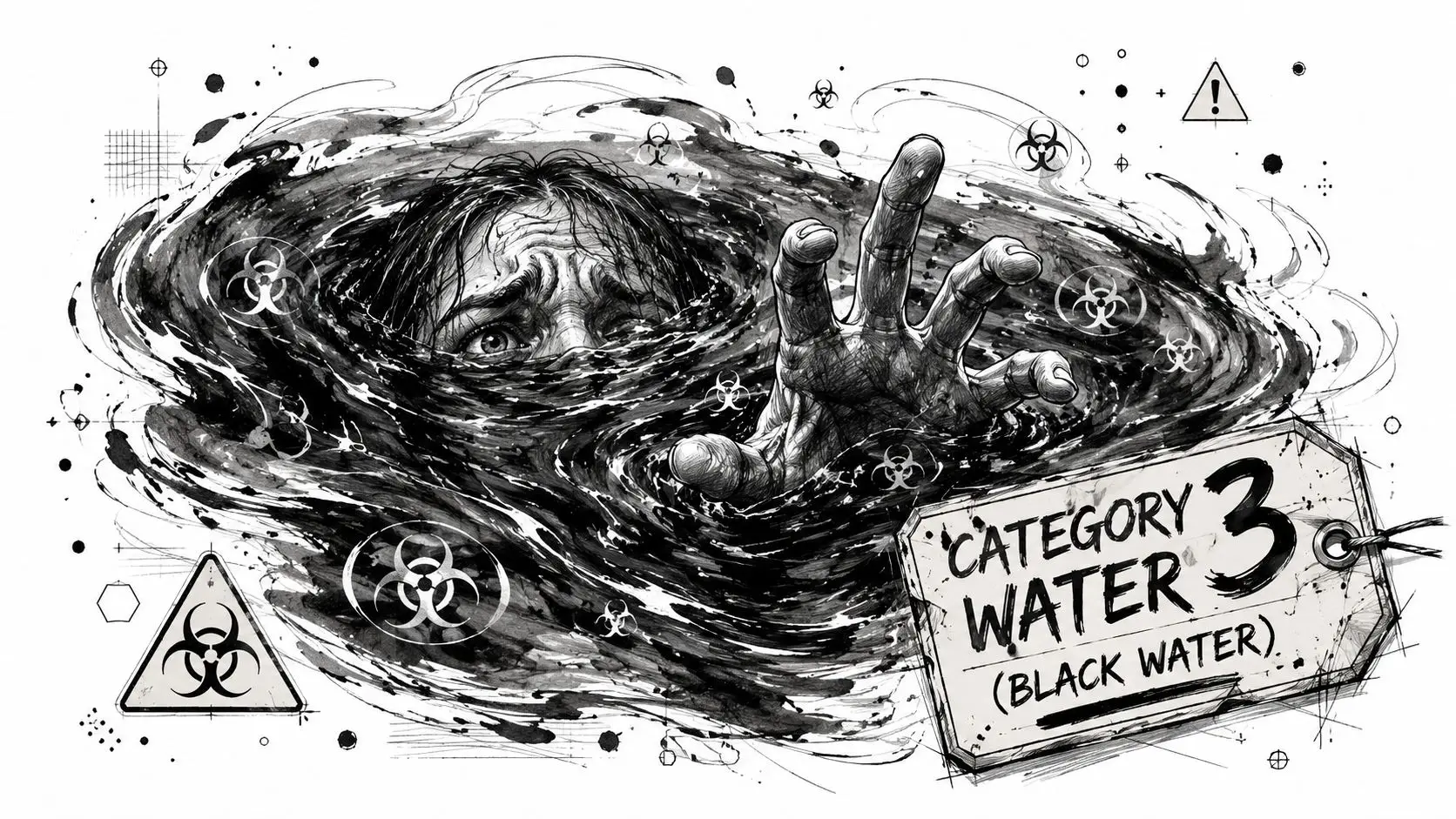
Public-health guidance says sewage-contaminated water can carry pathogens, and official cleanup guidance emphasizes avoiding contact, ventilation, and protective gear rather than treating all backups as routine water damage, with special concern after accidental contact for toddlers, older adults, and immunocompromised occupants, as outlined by the Green Bay sewer and basement backup guidance.
Why black water is different
A clean supply-line leak and a sewage backup don't follow the same playbook.
| Water situation | Main concern | Typical response |
|---|---|---|
| Clean water leak | Moisture damage | Drying, monitoring, selective removal |
| Sewage backup | Contamination plus moisture damage | Containment, extraction, disposal, disinfection, drying |
With sewage, the issue isn't just getting the floor dry. It's stopping exposure and preventing contaminated material from staying in the house.
The hidden problem in Phoenix homes
Phoenix houses often use a mix of tile flooring in common areas and carpet in bedrooms or adjacent living spaces. That creates a false sense of safety. Homeowners see tile and think the mess stayed on the surface, but sewage can run under baseboards, wick into drywall edges, soak tack strips, and migrate under floating floors or into the backing of nearby carpet.
In slab-on-grade homes, water may also settle in low spots and stay trapped longer than people expect. In a two-story home, an upstairs toilet backup can affect ceilings, wall cavities, and insulation below.
If you're not sure what Category 3 contamination means in practical terms, this overview of Category 3 water damage is a useful baseline.
Sewage odor isn't the only warning sign. Materials can stay contaminated even after the visible water is gone.
When exposure is the bigger issue than cleanup
A stressed homeowner usually focuses on the floor first. I understand that. But with sewage, the first serious decision is often about people, not materials.
Watch accidental exposure more carefully when the person involved is:
- A toddler or child: Hand-to-mouth contact happens fast.
- An older adult: Recovery can be harder if they're already dealing with health issues.
- Someone immunocompromised: Lower exposure thresholds often matter more.
- Anyone splashed in the face or near the eyes and mouth: That changes the urgency of cleanup and follow-up.
The Professional Sewage Remediation Process
When a professional crew handles sewage backup cleanup services correctly, the job follows a sequence. Skipping steps is how contamination gets left behind, odors linger, or materials get dried without being properly decontaminated.
A competent team doesn't just "clean it up." They assess, isolate, remove, sanitize, dry, verify, and only then move toward repairs.
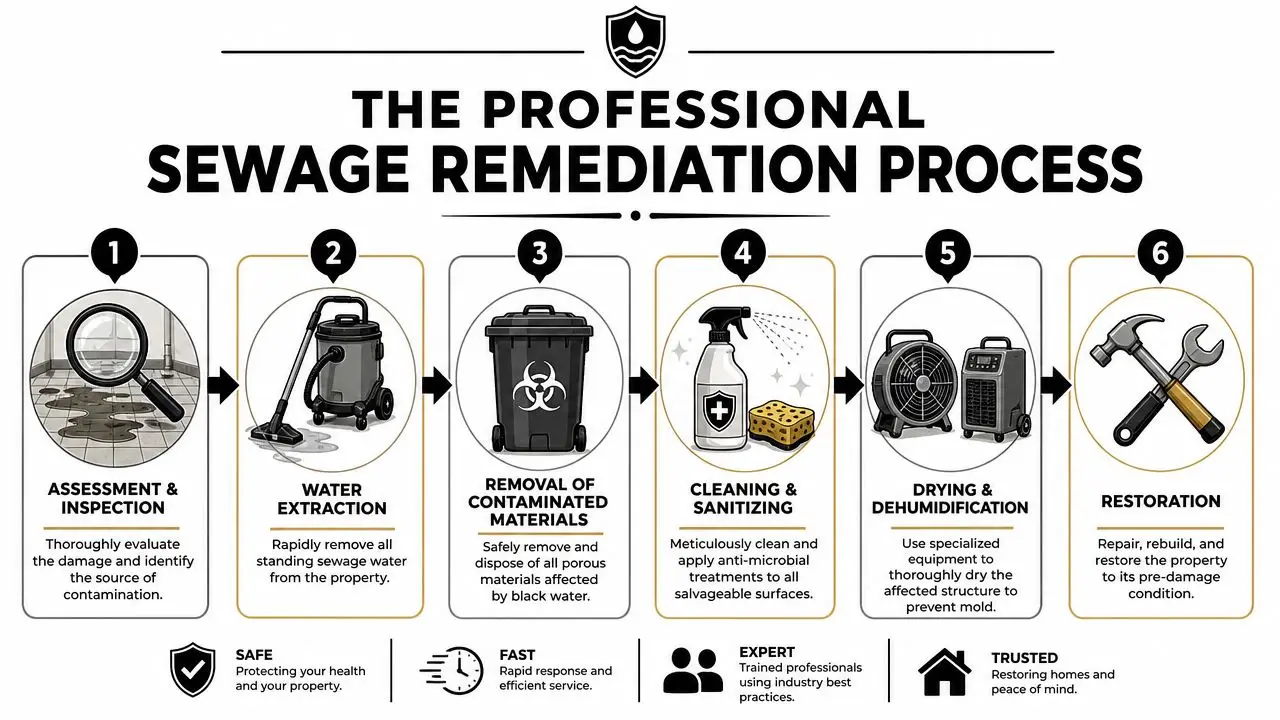
Assessment and safety setup
The first part of the job is figuring out where the contamination started, where it traveled, and what materials it touched. On a Phoenix property, that often means checking not only the bathroom or laundry room, but also hallway transitions, adjacent closets, garage entries, and any rooms downhill from the original spill path.
Crews usually start with:
- Source confirmation: Toilet overflow, main sewer line backup, shower drain backup, or another entry point.
- Safety review: Electrical hazards, slip hazards, sewage spread, and whether occupants should stay out.
- Material triage: What can be cleaned, what likely has to be removed, and what needs closer inspection.
Containment is part of this early stage. Effective sewage remediation uses isolated work zones, HEPA air scrubbers during cleaning, EPA-registered antimicrobial agents on hard surfaces, and monitored drying with industrial equipment until moisture targets are met, as described in this explanation of the sewer backup restoration process.
Extraction and removal
DIY efforts usually go wrong because the technical sequence is critical. Contaminated water should be removed with wet extraction or solids-rated pumps, not standard water vacuums that clog on debris, and porous materials such as carpet, padding, insulation, and drywall typically need removal when they have been wetted by Category 3 sewage because contamination can migrate into the substrate and can't be reliably disinfected in place, according to Advanced Drying and Restoration guidance on sewage backup emergency response.
In plain terms, if sewage soaked into carpet pad, the lower edge of drywall, insulation, or similar porous material, trying to save everything often creates a second problem later.
Common removals include:
- Carpet and pad: Especially when saturation spread beyond a very limited edge exposure.
- Drywall cuts: Usually at the affected lower section where contamination wicked upward.
- Insulation: If wall cavities took on contaminated moisture.
- Baseboards and trim: Sometimes salvageable, sometimes not, depending on material and exposure.
Field judgment matters: A floor can look "mostly dry" and still require demolition because the contamination went where your eyes can't confirm.
A homeowner who wants to understand how mitigation differs from rebuilding can review what a restoration company does. It helps explain why cleanup and reconstruction are related, but not identical.
Cleaning and structural drying
After removal comes detailed cleaning of salvageable structural surfaces. This usually includes hard-surface cleaning, disinfectant application, equipment decontamination, and controlled drying. The drying phase is more technical than commonly expected.
Crews use tools such as:
- HEPA air scrubbers to help control airborne particulates inside containment
- Air movers to create directed airflow across wet structural surfaces
- Industrial dehumidifiers to pull moisture from the air and materials
- Moisture meters to monitor progress rather than guessing
- Recovery tanks and extraction tools that also need decontamination to avoid cross-contamination
A short video can help you visualize how the process typically unfolds in the field.
Odor, verification, and handoff
Sewage odor doesn't always disappear the same day the visible mess is removed. Smell can linger in trapped moisture, in contaminated materials that haven't been removed yet, or in spaces where air movement carried particulates.
Before a job transitions toward repairs, a solid contractor should be able to explain:
- What materials were removed
- What surfaces were cleaned and treated
- What equipment is running and why
- How moisture is being monitored
- When the structure is dry enough for reconstruction
For contractors trying to build a more reliable emergency pipeline, the operational side matters too. Teams that want to never miss restoration leads often build intake systems that capture urgent calls quickly, which is important in sewage work because delayed response usually means more demolition and more health risk. Restore Heroes is one Phoenix-area option homeowners may encounter for this type of emergency mitigation, alongside other local restoration firms that handle sewage, drying, and biohazard cleanup.
Costs and Insurance for Sewage Cleanup
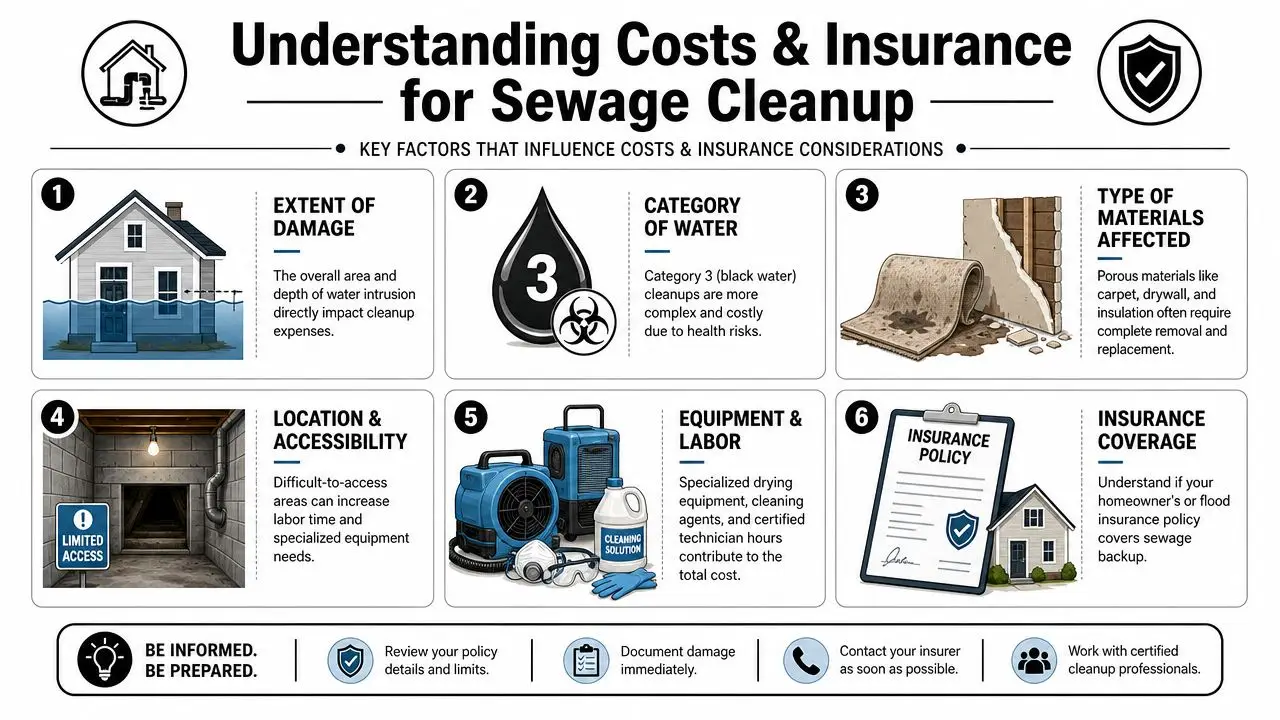
The first number homeowners want is the total. I understand that. In a sewage loss, though, the actual answer depends less on the puddle you can see and more on what the contamination touched, what has to be removed, and how hard the structure is to dry and document.
Industry estimates often place professional sewage cleanup and restoration in the low thousands for smaller incidents, with much higher totals when the loss spreads through multiple rooms or requires major demolition and rebuild. This breakdown of sewage backup cleanup costs gives a useful range, but no online chart can price your home as accurately as an on-site inspection.
What changes the price
In Phoenix, I watch four things first. How far the sewage traveled. What materials absorbed it. Whether it got into concealed spaces. Whether the event stayed a plumbing problem or crossed into contamination control and structural drying.
A backup limited to a small tile bathroom is usually far less expensive than one that reaches carpeted bedrooms, base cabinets, drywall, or a garage conversion. Many Phoenix homes have slab-on-grade construction, tile in main living areas, and drywall partitions that wick moisture fast. In older ranch homes and some block homes with interior framed walls, that can mean more selective demolition than a homeowner expects. During monsoon season, indoor humidity also slows drying, which can add equipment time and labor.
Common cost drivers include:
- Affected material type: Non-porous surfaces may be cleanable. Carpet pad, insulation, swollen cabinets, and contaminated drywall often are not.
- Containment and labor: A single bathroom cleanup is different from setting containment, protecting clean areas, and moving crews through an occupied home.
- Hidden moisture: Water under flooring, behind baseboards, or inside wall cavities increases drying time and inspection work.
- Access and layout: Tight toilet rooms, second-story bathrooms, and furnished spaces take longer to mitigate safely.
- Reconstruction needs: Mitigation and rebuild are often separate scopes, even when one company can coordinate both.
Insurance depends on cause, coverage, and records
Coverage is not automatic. A carrier may pay very differently for an interior drain overflow, a sewer line backup, storm-related entry, or long-term neglect. Some policies cover sudden and accidental discharge but limit or exclude sewer backup unless you added that endorsement.
Good documentation helps the claim stand up under review. Insurers and property managers often ask for:
- Photos before work starts and after removal
- Moisture readings and drying logs
- Material lists showing what was affected
- Disposal records for contaminated contents and debris
- Notes showing why porous materials were removed instead of surface-cleaned
In this situation, records become critical. A room can look clean and still leave major questions if no one documented what was removed, what was salvaged, and how the contractor confirmed dry conditions before repairs.
If you want a local pricing breakdown before you talk with a mitigation company or adjuster, this page on sewage backup cleanup cost in Phoenix can help set expectations.
What to do in the first 24 hours
Homeowners can help their claim without getting in the crew's way.
Take clear photos before moving belongings. Write down when you first noticed the backup and which fixtures were involved. Save receipts for hotel stays, fans, disposable protective gear, or emergency supplies if your carrier tells you those may qualify. Do not throw out major damaged items until they are photographed and your adjuster or contractor has noted them, unless they create an immediate health hazard.
One more practical point. If a contractor hands you a one-page price with no notes, no moisture readings, and no material list, expect problems later. The invoice that gets paid fastest is usually the one backed by organized field records, photos, and a scope that matches the actual contamination. For restoration companies trying to improve call volume, this simple guide to more home service leads explains the marketing side, but from the homeowner side, the primary priority is choosing a firm that documents the job well enough to support the claim.
How to Choose a Certified Cleanup Contractor in Phoenix
At 9 p.m. during a monsoon storm, a homeowner calls because a toilet overflowed in the hall bath and dark water reached the baseboards in two rooms. The first question is not price. It is whether the company on the phone treats this as a biohazard loss or as a basic water extraction job.
That distinction matters in Phoenix. A slab-on-grade home with tile, carpet transitions, and block walls can let contaminated water travel farther than it first appears. If the backup came from one fixture and stayed contained, a plumber may solve the source problem. If sewage reached flooring, baseboards, cabinets, or more than one room, the job has moved into professional remediation.
What to look for before you authorize work
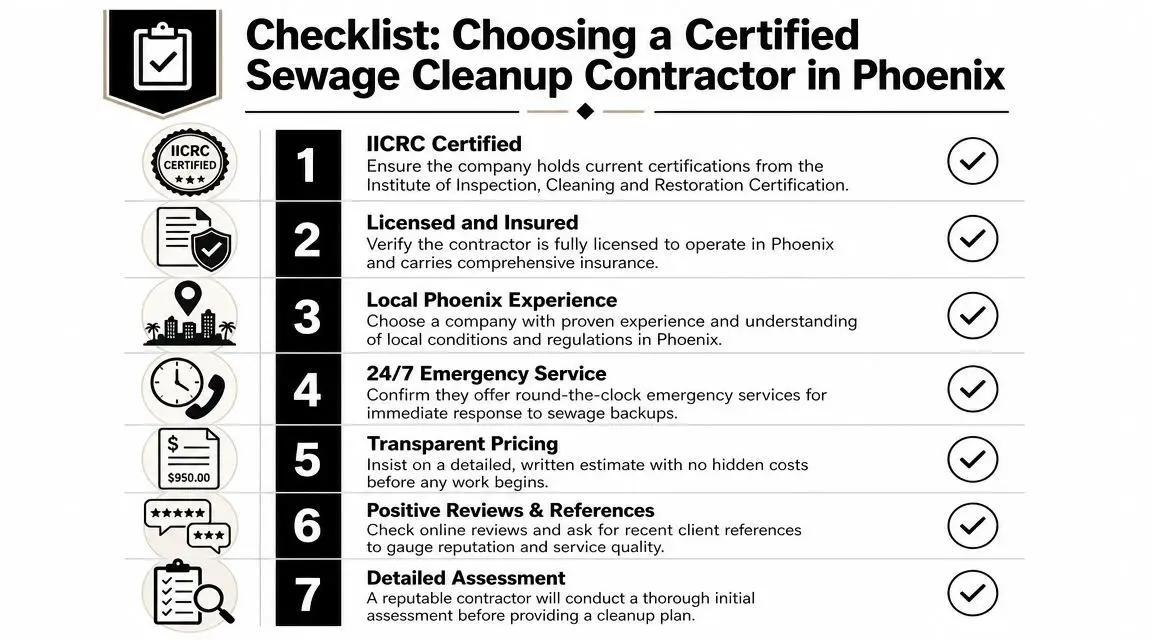
Start with training and scope discipline. Ask whether the crew has current IICRC training for water damage and contamination-related cleanup, whether they carry Arizona licensing and insurance where required, and whether sewage losses are a routine part of their field work. A company that mainly handles minor clean-water leaks may not be set up for containment, demolition decisions, and disposal documentation.
Then listen to how they describe the job. A qualified contractor should explain what must be removed, what may be cleaned, how they isolate affected areas, and how they confirm dry conditions before repairs begin. If the answers stay vague, keep calling.
Use this screening list on the first call:
- Current restoration training: Ask what certifications apply to sewage and contaminated water losses.
- Arizona business credentials: Verify license status, insurance, and local service area.
- Actual sewage remediation experience: Ask how often they handle Category 3 losses, not just water extraction.
- Containment plan: They should be able to explain how they keep affected areas from cross-contaminating clean rooms.
- Documentation process: Look for photo records, moisture readings, material lists, and disposal records.
- Coordination with plumbers: If the line is still blocked or backing up, mitigation alone is not enough.
- Familiarity with Phoenix homes: Slab construction, block assemblies, older sewer lines, and monsoon-related surcharging all affect the plan.
Questions that separate a real remediation contractor from a general cleaner
Ask direct questions and listen for direct answers:
- How do you decide which materials are unsalvageable after a sewage backup?
- What barriers or engineering controls do you use to limit spread?
- How do you document the loss for an insurance adjuster?
- Who checks the drying progress, and what readings do you record?
- What do you do if the plumbing problem is still active when the crew arrives?
Good contractors answer those without irritation. They also understand a hard truth homeowners often hear too late. Some materials can be cleaned. Some need to be cut out and discarded because sewage reached porous surfaces or got under finished materials. The contractor should be able to explain those trade-offs room by room.
One more practical filter helps. Be cautious with any company that gives a firm price over the phone for a sewage loss, promises that everything can be saved, or pushes reconstruction before contamination and drying are documented. In this type of job, speed matters, but clear records matter too.
If you're comparing providers, this guide to choosing a water damage restoration contractor is a useful starting point.
For contractors reading from the business side, local reputation still shapes who gets the first call in an emergency. This simple guide to more home service leads gives a practical overview of how local visibility affects emergency-service demand without turning the topic into a marketing pitch.
Phoenix-Specific Sewage Backup Considerations
Phoenix homes don't all fail the same way, and local conditions matter more than generic advice suggests.
During monsoon season, heavy rain can expose weaknesses in municipal systems, private sewer lines, yard drainage, and older cleanout assemblies. A homeowner may first notice the problem as bubbling at a toilet or water appearing in a shower pan, even though the actual issue is farther down the line.
Common local scenarios
In older parts of Phoenix, Mesa, and Tempe, aging drain lines can become part of the story. Homes with older cast iron or clay components may be more vulnerable to line deterioration, root intrusion, or partial collapse. In those cases, cleanup alone isn't the full answer. The source problem also needs diagnosis by a plumber or sewer specialist.
Arizona hard water can contribute to stubborn buildup inside plumbing systems over time. That doesn't automatically cause a sewage backup by itself, but it can add to slow-drain conditions and make a marginal line perform worse.
Why home construction changes the cleanup
Many Valley homes are slab-on-grade. That changes how water spreads and where moisture hides. It can move room to room across hard flooring, slip beneath baseboards, or settle at transitions between tile and carpet.
Block construction also changes drying behavior compared with framed assemblies in other parts of the country. Some materials dry predictably. Others hold moisture in ways homeowners don't notice until odor or deterioration starts later. In Phoenix, the outside heat doesn't solve indoor contamination. It just makes fast, controlled indoor response more important.
Sewage Cleanup FAQs for Arizona Properties
Can I stay in my house during the cleanup
Sometimes yes, sometimes no. It depends on where the contamination spread, which rooms are affected, whether the area can be isolated, and who lives in the home. If sewage reached main living areas, multiple bathrooms, HVAC-related spaces, or rooms used by young children or medically vulnerable occupants, temporary relocation may be the safer choice.
Are my belongings salvageable
Some are. Non-porous items usually have a better chance than porous ones. Hard plastics, metal, and some sealed surfaces may be cleanable. Items that absorbed sewage, such as certain soft goods or heavily contaminated paper goods, are much harder to return to a sanitary condition.
How long will the smell last
That depends on whether all contaminated material was removed, whether the structure was fully dried, and whether odor has entered cavities or contents. A lingering sewage smell usually means one of three things. Moisture remains, contaminated material remains, or the source problem isn't fully resolved.
What if the backup came from a city line
Document everything and contact the city and your insurer promptly. The cause of loss affects how claims and reimbursement discussions proceed. Keep photos, notes, and contractor records organized from the start.
When is it no longer a plumbing problem and clearly a biohazard emergency
Use a simple decision rule. If the water came from a drain, sewer line, toilet with waste, or any source you can't confirm as clean, treat it as hazardous. If it touched porous materials, spread beyond one easy-to-isolate area, or sat long enough to soak into finishes, it has moved out of the DIY category.
If you're dealing with sewage in a Phoenix home and need a calm next step, Restore Heroes handles sewage cleanup, structural drying, and contamination-focused mitigation for residential and commercial properties across the Valley. The most useful first move is usually a professional inspection that identifies the source, maps the spread, and tells you what needs removal, cleaning, drying, and documentation before the damage gets harder to control.