
You notice it when the house is otherwise quiet. The AC kicks on during monsoon season, and a faint musty smell comes out of a vent. Or maybe you wipe a little moisture off a window and think, "That's odd. This is Phoenix."
That reaction is common. People assume desert heat protects a home from mold. Outside, the air often feels dry. Inside, though, Phoenix homes run hard air conditioning, stay tightly sealed, and go through sharp swings in humidity during storms. That combination creates small wet zones behind walls, around ducts, under sinks, and near cold surfaces. Those wet zones are where mold starts.
If you want to know how to prevent mold growth in Phoenix, the answer isn't just “keep things clean.” It's controlling moisture fast, understanding where condensation forms, and catching the hidden leaks that dry-climate homeowners often miss until the smell shows up.
Why Mold Is a Hidden Threat in a Dry Climate
A typical Phoenix mold problem doesn't start with a flooded room. It starts with something easy to dismiss.
A bathroom supply line drips inside a hot wall cavity. An AC register sweats during a humid stretch. A closet on an exterior wall feels stuffy all summer. Nothing looks dramatic, so the issue sits there. By the time someone notices paint lifting, warped baseboards, or that musty odor near an air vent, the moisture problem has usually been active for a while.
Dry outside doesn't mean dry inside
Phoenix creates a false sense of safety. Homeowners see sun, low rainfall, and dusty yards, so mold feels like a coastal or basement-state problem. But modern homes trap cooled air indoors, and cooled air meeting hot, humid air creates condensation risk.
That's why I treat desert homes as microclimate buildings. One room can be dry while a duct boot, pipe chase, or laundry wall stays damp enough for growth. The danger isn't broad humidity across the whole house all year. It's the repeated wetting of hidden materials.
Practical rule: In Phoenix, mold usually follows the coldest surface and the least visible leak.
Why local timing matters
Monsoon season changes the equation. The house still runs AC, but now the outdoor air carries more moisture. If that air gets into wall cavities, attics, return chases, or around poorly sealed penetrations, condensation risk rises quickly.
That's why generic mold advice often misses the mark here. It tells people to watch for obvious water damage. In Phoenix, the more realistic problem is slow moisture accumulation from HVAC condensation, roof vulnerabilities after storms, and plumbing leaks hidden inside heat-stressed building cavities.
If the house smells off, if a vent stains repeatedly, or if one corner always feels damp when the AC is running, don't assume it will dry on its own. It often won't.
Understanding Mold Triggers in Your Arizona Home
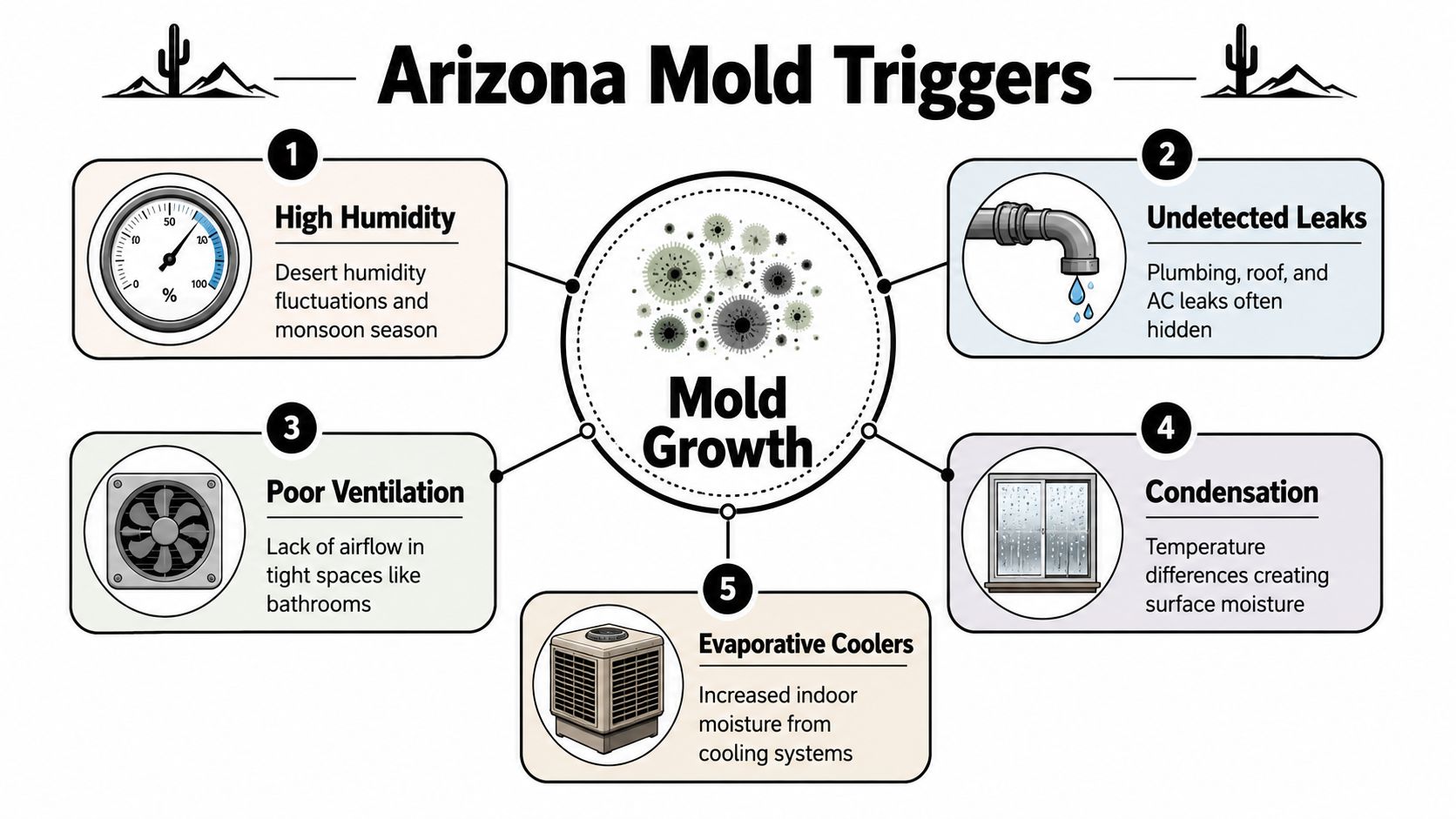
Phoenix mold prevention starts with knowing where moisture comes from. In this climate, the biggest triggers are often mechanical, hidden, and tied to temperature differences inside the house.
The five triggers I see most often
- HVAC condensation: Cold supply air meets hot surrounding air. Moisture forms on ducts, boots, coils, or nearby framing.
- Slow plumbing leaks: Small drips under sinks, behind showers, or in slab-adjacent supply lines stay hidden longer than major breaks.
- Monsoon humidity: Short seasonal spikes put stress on sealed homes, especially where air leaks let humid outdoor air enter.
- Poor ventilation: Bathrooms, laundry rooms, and closets hold moisture when air can't move out.
- Evaporative cooling setups: In homes that use or used swamp coolers, added indoor moisture can create trouble if transition areas aren't managed well.
The invisible leak problem
The leak that causes the most trouble is often the one nobody sees. A pipe can drip inside a wall for days or weeks before any stain appears on the finished surface. In high-heat climates like Phoenix, a dripping pipe behind a wall may not show visible signs for weeks, yet the trapped moisture can reach the critical 18% moisture content for structural mold growth in under 24 hours, according to the EPA mold course chapter on hidden moisture risks.
That detail matters because many homeowners still think they have a full two-day cushion before mold becomes a concern. In practice, the response window can feel shorter when heat, insulation, and wall construction trap moisture where you can't see it.
If you suspect a concealed leak, don't rely on touch or smell alone. A proper inspection often needs moisture mapping, thermal imaging, and access testing. If you're chasing a recurring mystery stain or odor, this guide to leak detection services helps explain where hidden water tends to travel.
Musty odor without a visible source usually means the moisture problem is behind, below, or above the surface you're checking.
Why HVAC systems cause desert mold
Air conditioning doesn't create mold by itself. Poor moisture management around the system does.
When ducts run through hot attics or wall cavities, any insulation gaps, disconnected joints, or air leaks can create sweating. I also see trouble around supply boots where cold air hits warmer ceiling material, especially during monsoon months. Condensation at one register may look minor, but repeated wetting can affect drywall, framing, insulation, or dust buildup around the vent.
A simple way to think about it is this:
| Trigger | What happens | Why it matters |
|---|---|---|
| Cold surfaces | Moisture condenses from humid air | Repeated wetting starts hidden growth |
| Hidden drips | Water stays inside cavities | Materials may stay damp without visible staining |
| Tight construction | Moist air gets trapped | Drying takes longer in enclosed spaces |
The Arizona version of mold prevention isn't just leak repair. It's moisture-path control.
Controlling Humidity and Improving Home Ventilation
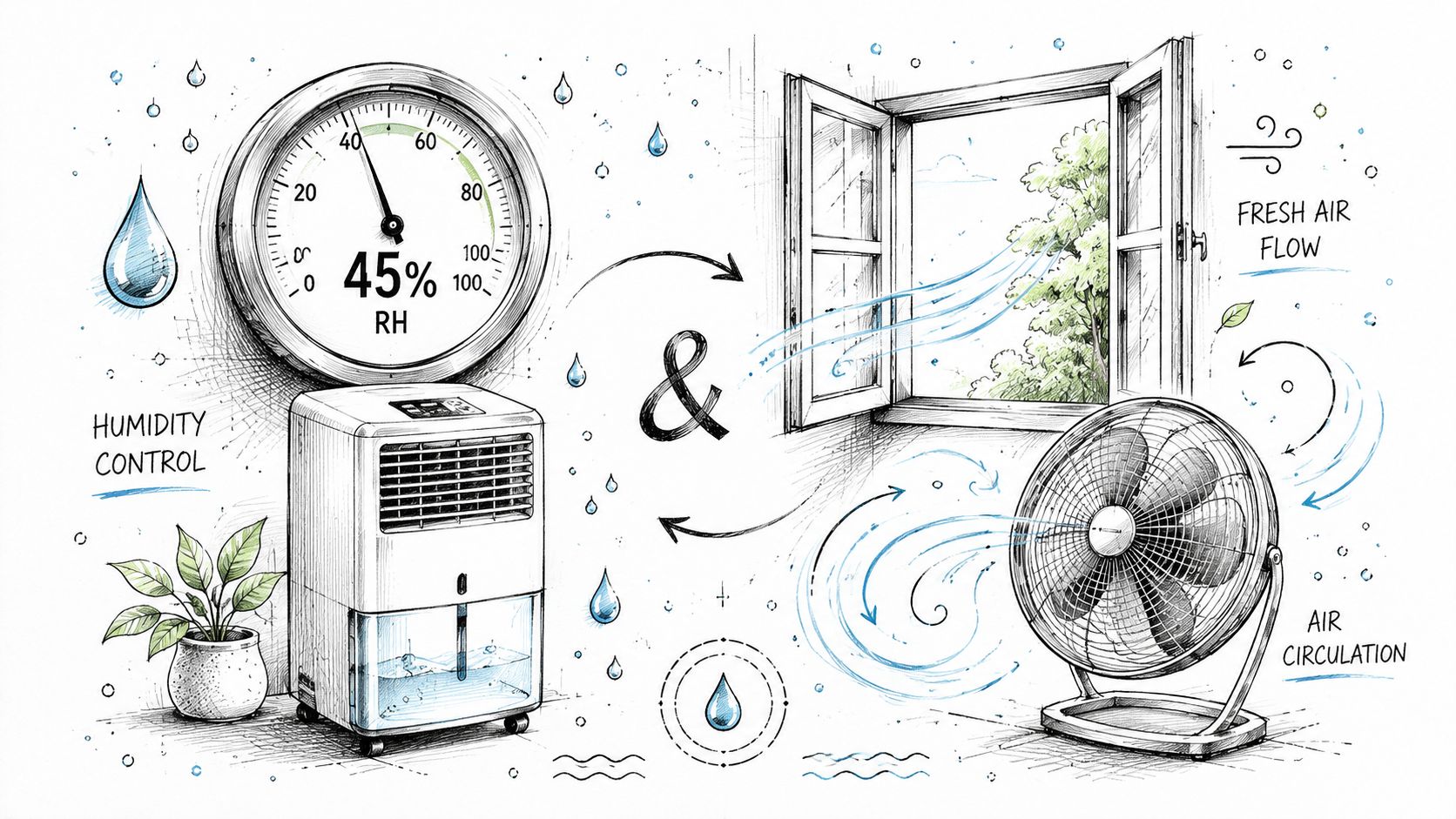
If there's one habit that does the most to prevent mold, it's controlling indoor moisture before materials stay wet long enough for growth. The EPA states that the most critical factor in preventing mold is moisture control, and if wet or damp items are dried within a 24 to 48 hour window, mold will not grow in the majority of situations. The same EPA guidance recommends keeping indoor humidity between 30% and 50% to suppress growth in homes, which you can review in the EPA moisture and mold guide.
What to aim for every day
Humidity control works best when it's boring and consistent. Use a hygrometer, check it in the rooms that tend to feel stale, and pay attention during monsoon swings.
Focus on these habits:
- Keep humidity in range: Aim for 30% to 50% indoors. If a room regularly feels damp, confirm it with a meter instead of guessing.
- Run bath fans after showers: Keep the fan going long enough to clear steam, not just while you're in the room.
- Use the kitchen exhaust: Boiling water and cooking add more moisture than one might expect.
- Open up furniture spacing: Don't press large furniture tightly against exterior walls if that area already runs cool or stale.
- Watch closets and enclosed storage: These spaces trap still air and can hold odor before visible growth appears.
AC settings and airflow matter
A lot of Phoenix moisture problems come down to airflow patterns. One common issue is leaving the HVAC fan running constantly. In many homes, that can keep moving moisture back across surfaces instead of letting the system complete a normal cooling and drainage cycle.
Check these points around the house:
- Bathroom exhaust fans: Dust buildup can cut performance. Clean the grille and confirm the fan is exhausting outside.
- Laundry rooms: Dryer vent restrictions can dump humidity indoors.
- Attics: Blocked vents hold heat and moisture where ducts already struggle.
- Closets: If a closet smells stale, it may need airflow improvement rather than another odor product. This practical guide on venting a closet covers the common fixes.
Air freshener covers odor. Ventilation changes the conditions that caused it.
Roof and exterior moisture still count
Phoenix doesn't get constant rain, but roof debris, clogged drainage paths, and storm-driven entry points still matter. Water intrusion often starts at the envelope and then shows up inside much later. If you've noticed staining near ceilings, parapets, or exterior wall lines, it helps to review professional roof cleaning advice for Arizona so debris and organic buildup don't hold moisture where the roof should be shedding it.
For homeowners asking how to prevent mold growth without turning the house into a science project, the answer is straightforward. Measure humidity, move damp air out, and don't ignore recurring condensation. Those three habits solve more Phoenix mold issues than sprays ever will.
Your Room-by-Room Mold Prevention Checklist
The most reliable prevention plan is a repeatable inspection routine. Walk the same areas monthly, and check them again after storms, plumbing work, or HVAC service. The point isn't to become paranoid. It's to spot moisture while it's still a moisture issue.
If you want a more detailed field list, this mold inspection checklist is a useful companion for home and rental-property walkthroughs.
Home Mold Prevention Checklist
| Area | Inspection Point | Recommended Action / Frequency |
|---|---|---|
| Kitchen | Under-sink supply lines and drain connections | Check for slow drips and damp cabinet floors monthly |
| Kitchen | Refrigerator water line and ice maker connection | Inspect for kinks, looseness, or hidden seepage every few months |
| Kitchen | Dishwasher edges and kickplate area | Look for swelling, staining, or odor after cycles |
| Bathroom | Caulk and grout at showers and tubs | Repair cracks and gaps when they appear |
| Bathroom | Exhaust fan airflow | Clean dust buildup and confirm venting is working regularly |
| Bathroom | Toilet base and supply valve | Check for rocking, seepage, or recurring floor moisture |
| Laundry Room | Washer hoses and shutoff valves | Inspect for bulges, drips, or corrosion |
| Laundry Room | Dryer vent path | Clear restrictions so humid air exits outside |
| Laundry Room | Floor around appliance pans | Recheck after heavy laundry days or any overflow |
| Attic | Duct insulation and vent connections | Look for sweating, loose joints, or staining during hot months |
| Attic | Roof penetrations and storm entry points | Inspect after monsoon events |
| Crawl Space | Ground moisture behavior and barrier condition | Review installation approach if the space smells damp or enclosed |
| Closets | Exterior-wall corners and stored items | Leave breathing room and check for musty odor regularly |
What matters most in kitchens and baths
Kitchens and bathrooms hide slow failures well. A cabinet floor can feel dry on top while the underside is dark and swollen. A shower wall can look fine while moisture is escaping through failed caulk at the edge.
Use your senses in a specific order:
- Smell first. Musty odor often appears before staining.
- Look low. Baseboards, cabinet bottoms, and flooring transitions show moisture early.
- Touch for change. Soft trim, loose tile, or bubbled paint usually means water has been there more than once.
The Phoenix crawl space trade-off
Generic advice often says, “Install a vapor barrier and you're done.” That can be too simplistic in Arizona.
In arid regions like Arizona, an improperly installed, non-permeable vapor barrier in a crawl space can trap the soil's natural moisture (10-15%), preventing evaporation and forcing it into the home's structure, which can actively cause mold, as described by Georgia CAES guidance on preventing mold in your home.
That's the vapor barrier paradox. A product meant to block moisture can create a moisture trap when it's wrong for the space or installed incorrectly. In Phoenix, crawl space strategy has to match the structure, airflow, and actual moisture behavior under the home.
If a crawl space smells worse after being “sealed up,” the fix may have trapped moisture instead of solving it.
Don't skip the small rooms
Laundry rooms, hall closets, and utility chases create more mold calls than many living rooms do. They're enclosed, warm, and easy to ignore. A monthly five-minute check in those areas is usually more valuable than deep-cleaning visible tile.
After a Water Leak Your First 48 Hours
When a leak happens, the goal changes from prevention to speed. You're trying to keep wet materials from crossing the line into active mold growth.
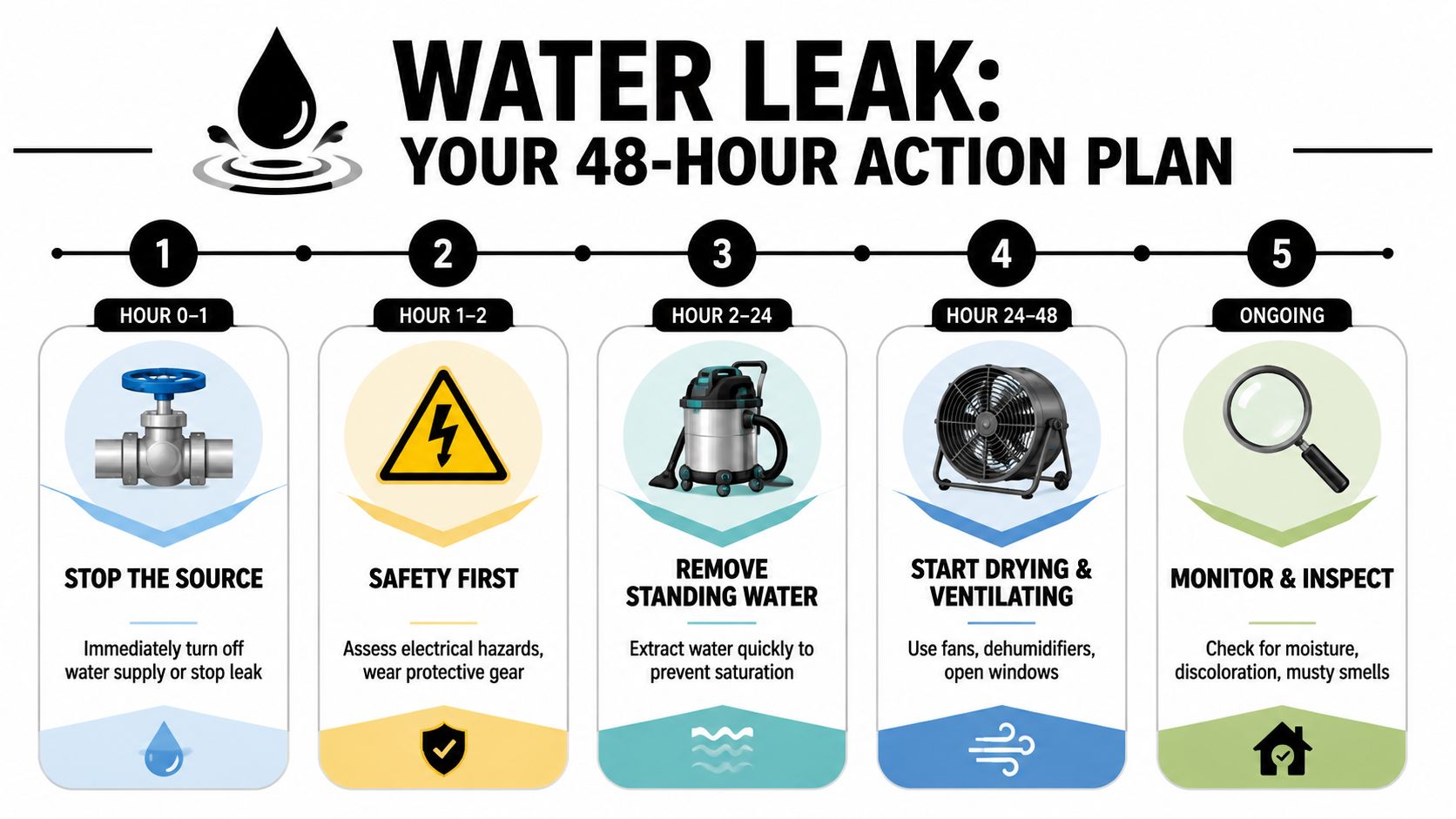
The key threshold is simple. If wet or damp materials are dried within 24 to 48 hours after a leak or spill, mold will not grow in most cases, according to this guidance on summer humidity and rapid drying.
Start with a visual plan.
What to do first
A clean response beats a rushed one. Work in this order:
- Stop the source. Shut off the fixture valve, appliance supply, or main water line if needed.
- Make the area safe. If water is near outlets, cords, or equipment, treat electrical hazards seriously.
- Remove standing water. Use mops, towels, or a wet-dry vacuum.
- Move wet items out. Rugs, boxes, cushions, and small furniture hold moisture against floors and walls.
- Start controlled drying. Use fans and dehumidification to pull moisture out of the air and materials.
For readers who want a visual walkthrough of the drying mindset, this video is useful:
What not to do
Bad decisions in the first day create bigger remediation work later.
- Don't wait to see if it dries naturally: Hidden cavities and padding rarely dry evenly on their own.
- Don't leave wet contents in place: Furniture legs, cardboard, and fabric slow evaporation.
- Don't assume surface-dry means fully dry: Subfloors, drywall bottoms, and insulation often stay wet longer.
- Don't ignore the source: Drying the symptom without repairing the leak sets up a repeat loss.
When outside help makes sense fast
Some leaks are manageable with immediate cleanup. Others need a plumber and a drying crew right away. If the water source is active and you can't isolate it, local emergency plumbing matters. For readers who want an example of what rapid plumbing response looks like, Boerne emergency plumbing services show the kind of urgent intervention that stops continued water release before drying can even begin.
If materials are saturated, if water moved under flooring, or if the wet area extends beyond what household fans can handle, professional drying is usually the safer move. This overview of water damage mitigation explains how extraction, drying equipment, and moisture checks work together after a leak.
The first 48 hours decide whether you're handling a water incident or a mold incident. Treat that window like an emergency, even if the leak looks small.
When to Call a Certified Mold Remediation Pro
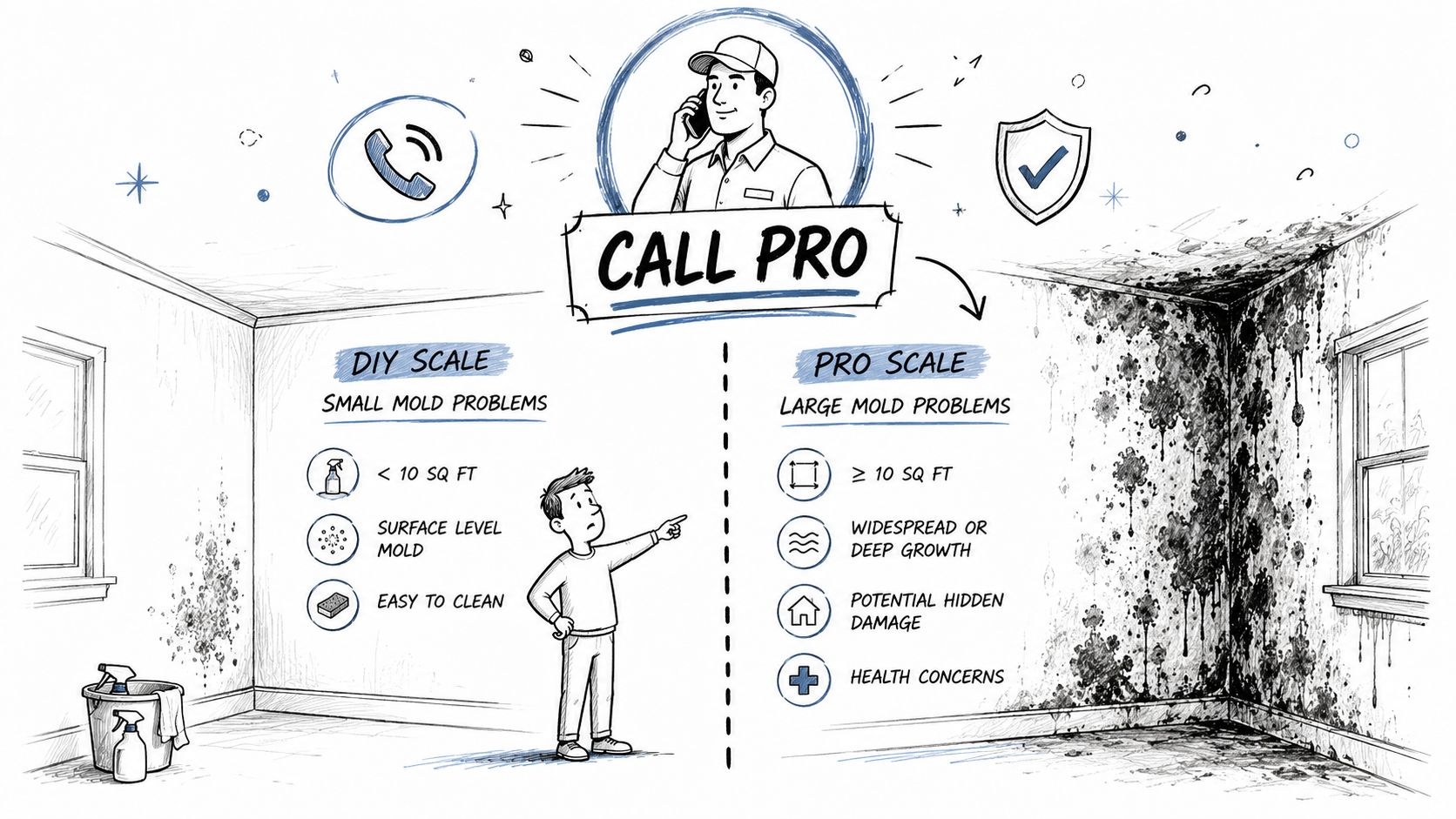
DIY cleanup has limits. A homeowner can wipe condensation off a window, dry a minor spill, or clean a small hard surface correctly. But once mold gets into porous material, HVAC pathways, or hidden framing, casual cleanup usually turns into spread.
Bleach is not a cure-all
A lot of homeowners still reach for bleach first. That can be appropriate only in narrow situations on hard, non-porous surfaces, and even then the safety rules matter. The CDC says a bleach solution for hard surfaces should be no more than 1 cup of household laundry bleach in 1 gallon of water, and bleach must never be mixed with ammonia. The same CDC guidance also notes its poor performance on porous materials, which is one reason professionals often use purpose-built products and removal methods instead. See the full CDC mold cleaning guidance.
That's the practical line. If the growth is on painted drywall, wood trim, subflooring, insulation, or inside a wall cavity, wiping the surface may leave the actual problem in place.
Signs you're beyond DIY
Call a certified remediation pro when any of these are true:
- The mold keeps coming back: Recurrence usually means the moisture source wasn't solved or the affected material stayed contaminated.
- The HVAC system is involved: Ducts, boots, coils, and returns can spread contamination beyond one room.
- The source was dirty or uncertain: Water from backups, storm intrusion, or long-hidden leaks needs a more careful response.
- Materials are breaking down: Swollen drywall, soft wood, delaminating cabinets, and persistent odor usually indicate deeper impact.
A qualified company should be able to explain containment, air handling, material removal, and moisture verification in plain language. Certifications matter. So do licensing, insurance, and a clear remediation scope.
Adjacent damage often needs a different specialist
Mold often appears alongside finish damage. Hardwood floors are a good example. If the moisture event has affected wood flooring, it helps to understand the repair side too. This guide on fixing water damaged wood floors gives a solid overview of what flooring professionals evaluate after saturation.
For homeowners comparing service options, this directory of mold removal companies near me can help you understand what to ask before authorizing work. Restore Heroes is one local option in Phoenix that provides mold-related inspection and remediation services along with water damage response.
The mistake I see most often is waiting because the mold “doesn't look that bad.” Visible growth is only one part of the problem. The primary concern is whether the structure is still wet, whether spores have been disturbed, and whether the source has been corrected.
If you're dealing with a musty smell, a recent leak, or recurring moisture around vents and walls, Restore Heroes can help you assess the problem, identify hidden water sources, and determine the right next step for your Phoenix property.