
You just opened a wall in an older Phoenix home and found material that doesn't belong there, or maybe a ceiling texture, floor tile, or pipe wrap has you second-guessing everything. Don't start with demolition guesses or a price hunt. Start with control, testing, and a hard check on whether the company in front of you is licensed to touch asbestos in your state.
What to Do the Moment You Suspect Asbestos
A homeowner in a 1970s Phoenix ranch usually notices the problem in one of two ways. They either uncover a dusty insulation layer behind drywall, or they spot a familiar suspect material, such as floor tile, popcorn ceiling texture, attic insulation, or HVAC tape. The right move is the same either way, stop disturbing it.
Do not sand, scrape, sweep, or vacuum with a regular shop vac. That kind of cleanup spreads fibers instead of containing them. If the material is already broken, keep people away from the room, shut the door, and keep pets out too. If the HVAC system could pull air through the area, shut it off until an inspector has sampled the material.
Practical rule: if you can leave the material untouched, you've already reduced the risk far more than any quick DIY cleanup would.
Visual clues matter less than people think. You cannot identify asbestos by appearance alone, and you should not treat every old material as if it's confirmed asbestos. The safe assumption is simple, treat the area as suspect until a qualified inspector samples it.
For a homeowner trying to get grounded fast, the first call should be to a trusted local testing workflow, not a demolition crew. A practical starting point is Restore Heroes' asbestos removal and testing overview, which fits the right order of operations, inspect first, decide second.
Keep the room closed, keep kids out, and don't drag trash bags through the house. If the disturbance was minor, a one-day wait for proper sampling is usually far safer than a rushed cleanup by someone who is guessing. If the material was heavily broken up, treat it as urgent and get an accredited inspector on-site as soon as possible.
Sampling and Inspection Before Any Removal Work
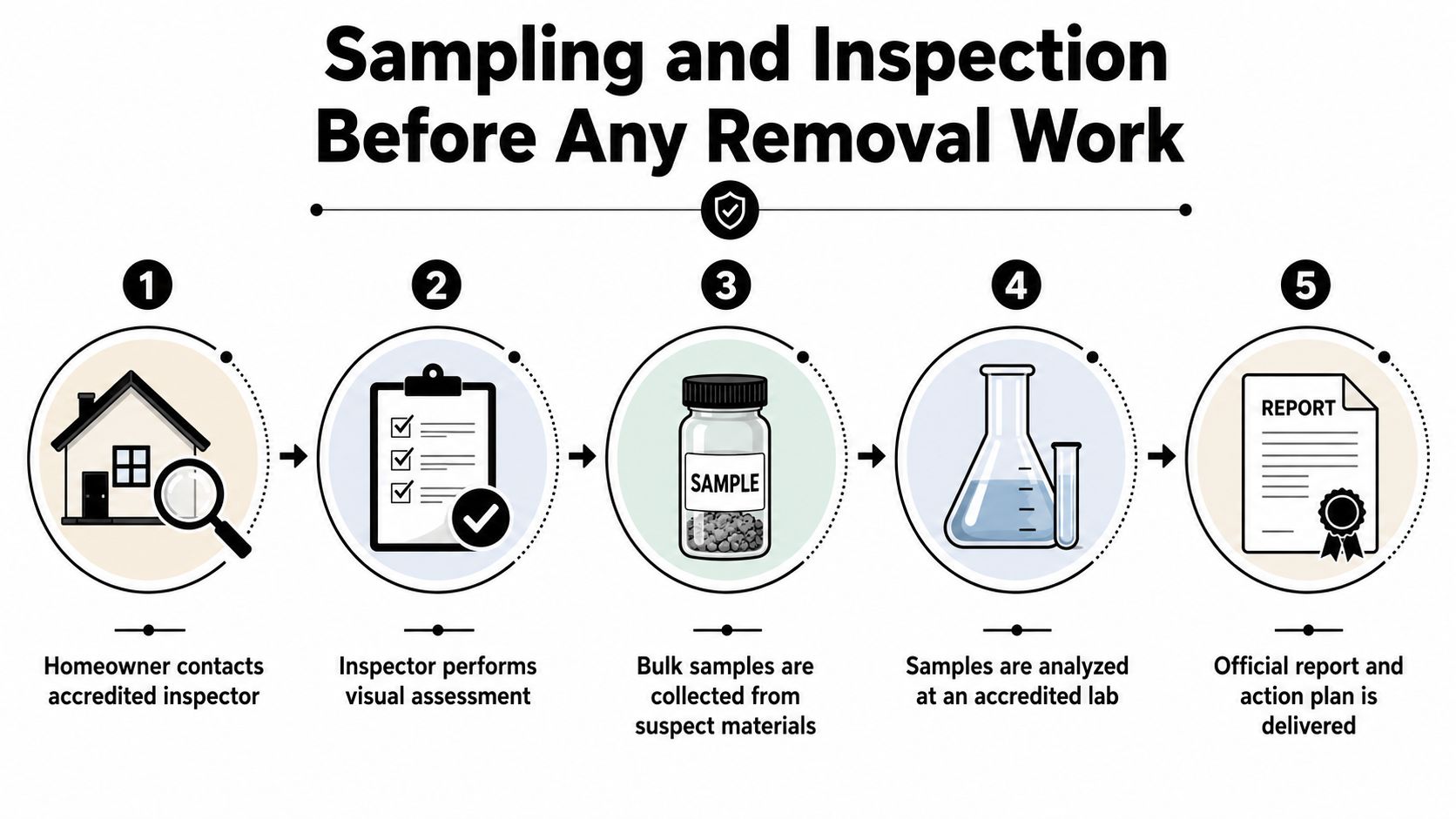
The sampling step is where good contractors separate themselves from salespeople. A real inspector doesn't guess, and a real report doesn't start with removal. It starts with a visual assessment, then careful bulk sampling, then lab analysis, then a written recommendation based on what was found.
What a proper inspection looks like
An accredited inspector should take a minimal-disturbance sample from the suspect material, seal it correctly, and send it to a qualified lab. That lab report, often read through polarized light microscopy, tells you whether the sampled material contains asbestos and how to frame the next step. If the material isn't sampled, nobody should be talking confidently about removal scope.
Rule of thumb: if the same company is pushing hard for demolition before testing, slow the conversation down.
Homeowners should also separate sampling, inspection, and abatement in their head. Inspection identifies the material. Sampling confirms it in the lab. Abatement removes or controls it under a containment plan. Mixing those roles can create conflicts, especially in rental properties or multi-unit buildings where documentation matters downstream.
If you want a clean read on indoor conditions before work starts, review air quality testing guidance from Restore Heroes while you're lining up the inspector. That keeps the process focused on evidence, not assumptions.
Do not accept vague wording like “probably asbestos” as a final answer. If the result is unclear, damaged, or inconsistent with the visible material, ask for re-sampling. The point is to confirm the scope before anyone writes a removal bid.
Before the inspector arrives, keep the area closed off, don't move furniture through the space, and don't let anyone vacuum the dust. A calm, contained site gives you better sampling and a cleaner report.
How to Verify a Contractor Before You Sign Anything
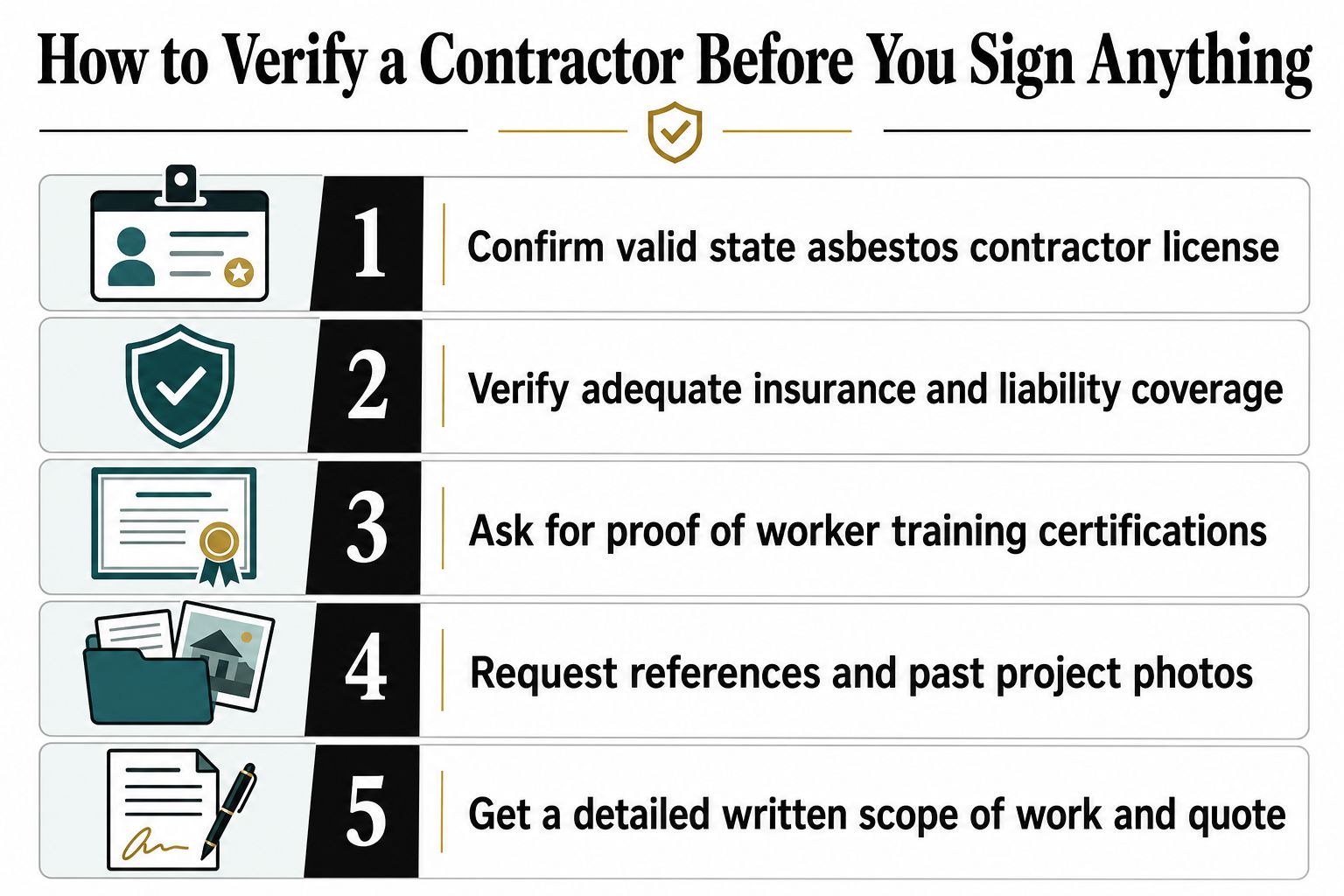
A nearby listing proves nothing. A homeowner can search for an asbestos company near me and still end up with a contractor who is not allowed to do the work, is out of date on paperwork, or is trying to sell removal before they have earned that conversation. Distance is not a qualification, and a polished website does not replace a valid registry entry.
Verify the company in the official registry before you talk price. California's registrants database tracks fields like registration number, CSLB number, employer/DBA, restrictions, location, expiration, and phone, which is the kind of paper trail you want before anyone steps onto the job. Massachusetts publishes a current contractor list with 205 licensed asbestos contractors as of 05/01/2026, sorted by town and company name with license number, expiration date, address, city, state, zip, and phone. North Carolina's professional directory shows role-specific credentials, including Asbestos Supervisor, Asbestos Worker, and Asbestos Inspector, each with an accreditation number and an expiration date. Wisconsin's certified company list is another example of a formal state-maintained roster.
For Phoenix-area owners, the process is simple. Ask for the exact registration or accreditation that matches the job, not a broad claim that they “do asbestos.” Then verify the status in the relevant state registry before you sign any proposal.
Ask for three things in writing
- Current authority to work. Get the license, registration, or accreditation tied to the exact job type.
- Scope-specific paperwork. If the contractor is only licensed for removal, they should not present themselves as the inspector.
- Expiration dates. If the credential is expired, stop the process.
If you want a better model for screening contractors, use HomeProBadge's guide to find truly trustworthy home pros as a reference for what solid vetting looks like in any trade.
Direct advice: do not let “closest” beat “verified.” A registered contractor one town over is safer than an unverified listing next door.
The difference between a sampling firm, an abatement crew, and a consultant matters. If the person bidding the removal also wrote the test report, ask how they keep the scope objective. If they get defensive, you already have your answer.
Phoenix owners should also ask about the paperwork that goes with local permitting and job records. If the contractor cannot explain how the job will be documented, how the permit trail is handled, and who is responsible for the work, they are not ready for your project. Before you sign, confirm they are bonded and insured and can show it in writing.
Comparing Quotes Without Falling for the Lowest Price
A cheap asbestos bid usually looks attractive because it leaves out the expensive parts. No enclosure. No third-party clearance. No proper hauling. That's not savings, that's a shortcut with a cleanup bill attached.
A real quote should read like a controlled project, not a one-line estimate. You want scope, containment, labor, disposal, and clearance spelled out in plain English. If those items are missing, the bid is incomplete.
| What a Real Asbestos Abatement Quote Should Include | Why It Matters | Red Flag If Missing |
|---|---|---|
| Scope of work | Defines exactly what gets removed and what stays in place | Vague language like “as needed” |
| Containment setup | Keeps fibers from spreading beyond the work zone | No mention of plastic, sealing, or isolation |
| Negative-air HEPA filtration | Helps keep contaminated air under control | “Ventilation” only, with no filtration detail |
| Labor hours and crew size | Shows whether the crew is sized for safe work | Flat labor charge with no staffing detail |
| Waste disposal manifest | Proves debris was handled and tracked properly | No disposal paperwork or hauling detail |
| Third-party air clearance | Confirms the area is ready for re-entry | Contractor says clearance isn't necessary |
| Post-removal restoration | Clarifies what gets repaired after abatement | Scope stops at demolition, no rebuild plan |
The strongest comparison is not price, it's consistency. Ask each bidder the same five questions, then compare the answers side by side. What material are you removing. Who is doing the clearance. How is waste documented. What's excluded. What changes the price after you see the site.
If you want a residential-specific starting point, Restore Heroes' residential asbestos abatement page is the kind of service description that should help you think in terms of scope, not just headline cost.
Some upsells are real. Extra containment for a tight attic crawl space can make sense. So can additional restoration if hidden damage is uncovered. But scope creep is common, so don't authorize add-ons without a written explanation.
What Happens During the Actual Abatement Work
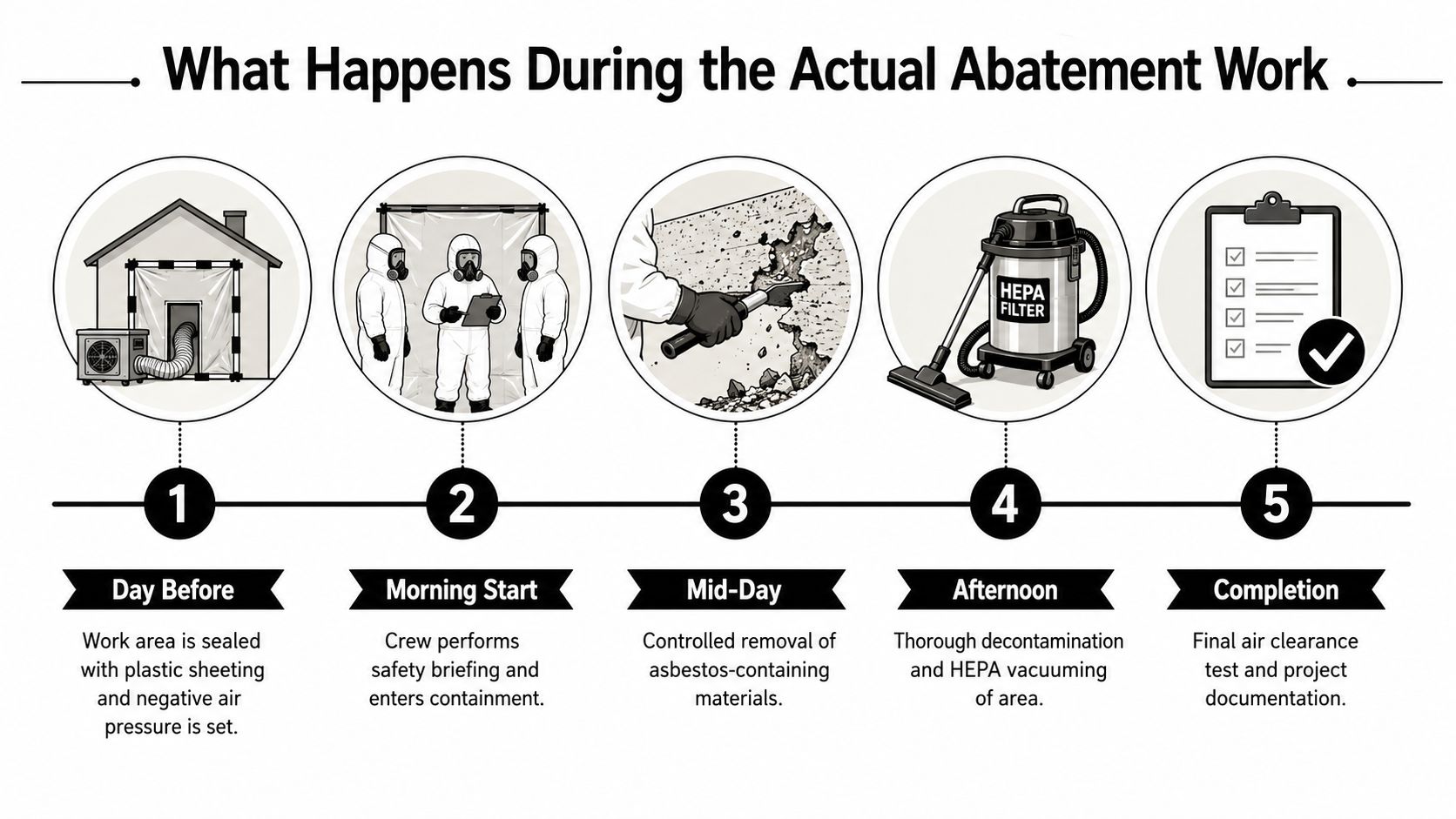
A good crew makes abatement look controlled. The room gets sealed with plastic sheeting and tape, HVAC pathways get isolated, and negative-air HEPA filtration goes in before anyone touches the material. That setup keeps fibers from drifting into the rest of the house.
What you should see on site
The crew should arrive in full protective gear and treat the contained area as the only work zone. During removal, they should use wet methods so the material stays damp and less likely to go airborne. When debris comes out, it should go straight into sealed packaging for transport, not across open floors.
After removal, the job is not done until the space gets a real decontamination pass with HEPA vacuuming and wet cleaning. A third party should then handle visual clearance and final air sampling before anyone goes back in. If the company skips outside clearance, treat that as a failed process, not a small omission.
Good work is quiet work. You should see containment discipline, not dust clouds and improvisation.
Phoenix homeowners should expect disruption while the containment stays in place. The AC may need to be shut off, people often relocate during the active portion of the job, and the work area should stay closed until the final paperwork is complete. A small residential job can move fast if the scope is simple and the crew is organized, but no honest contractor should promise a clean timeline before seeing the site.
If you want an operational example for a larger property, commercial asbestos removal procedures show how a tighter jobsite controls access, waste handling, and clearance steps under pressure. That same discipline is what you should demand in a house.
For a fast first-contact check, talk to a voice AI for customer if you want to see how quickly a company handles questions and scheduling. It does not replace a site visit, but it does show you how the company responds when you press for clear answers.
The post-removal report should show what was removed, how it was contained, and which clearance step was completed. If that paperwork is thin, do not let anyone call the room finished.
Understanding Costs, Disposal, and Local Phoenix Rules
Asbestos pricing moves around because the job itself changes from house to house. Material type, square footage, accessibility, occupancy, and clearance requirements are the big drivers. A flat number given sight-unseen is usually a sales tactic, not a real estimate.
Disposal is where some bad operators cut corners. Waste needs to be bagged, sealed, documented, and transported to the right disposal site with the right records. If the contractor can't explain the manifest process, you should assume the paperwork will be weak too.
Phoenix owners should also pay attention to the local permit side of the job. A useful reference point for permit-related planning is 2024 permit requirements Arizona, especially if your project touches renovation timing or inspection sequencing. If something feels off, ask what the contractor expects from city or county notifications before work begins.
Practical takeaway: pricing is the result of scope, access, and compliance. It is not something a serious contractor should guess from a phone call.
Do not compare bids by total alone. Compare whether the quote includes removal, hauling, clearance, and restoration. A lower price can mean fewer safeguards, and that's not a bargain in an asbestos job.
Your Quick-Reference Checklist and Final Questions
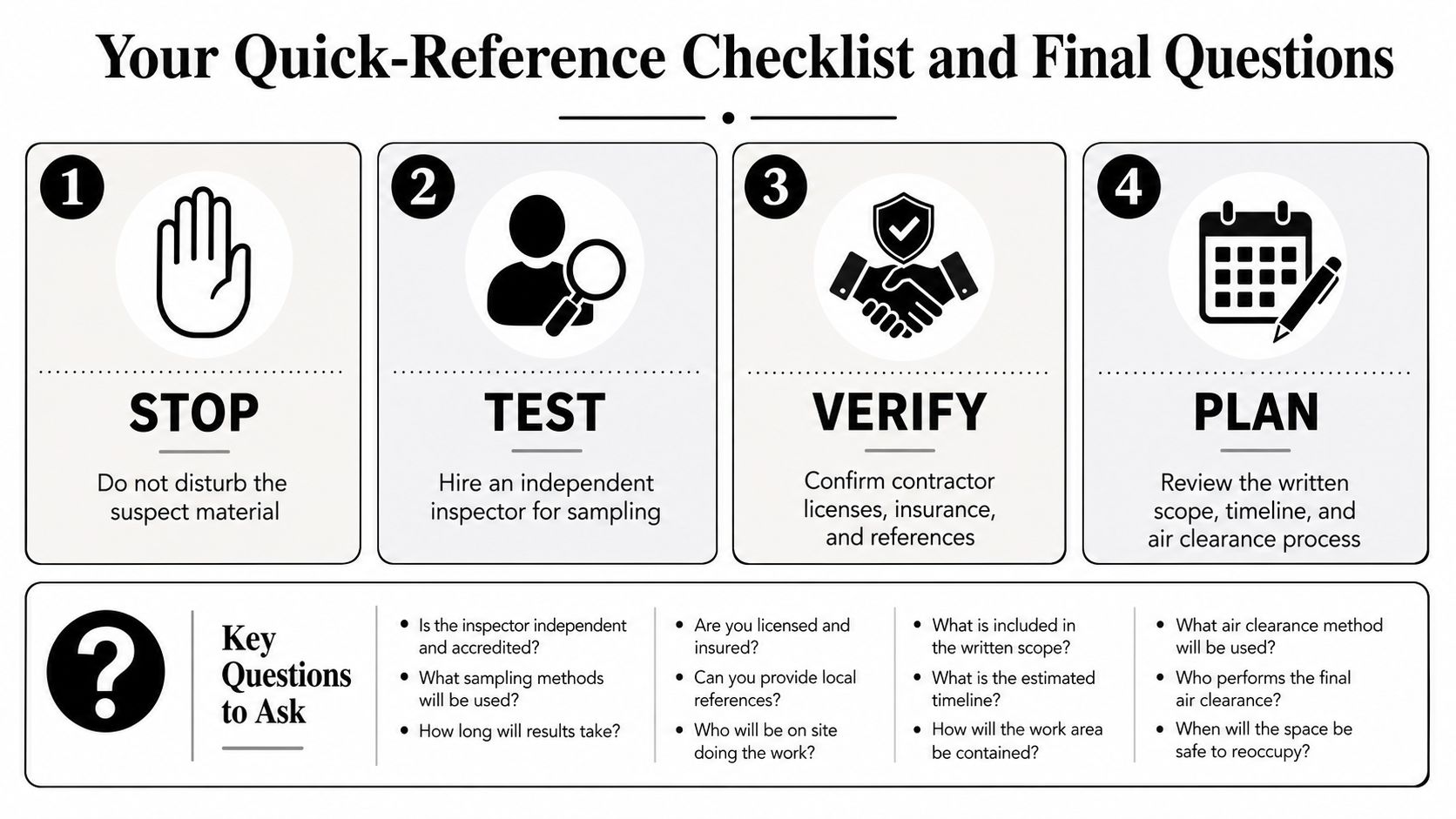
Use this order every time. STOP disturbing the material. TEST with an independent inspector. VERIFY the contractor in the relevant registry. PLAN the scope, timeline, and clearance paperwork before anyone starts work.
If you're a Phoenix homeowner asking how fast a real response should be, the honest answer is simple, fast enough to secure the site and schedule inspection, not fast enough to skip verification. If you're asking whether insurance typically covers asbestos work, don't assume anything without reading your policy and talking to the carrier. If you're handling a rental property, tenants should be told only what they need to stay out of the work area and avoid disturbing materials. If a contractor cannot produce current credentials, stop the conversation.
A few questions worth asking on every call:
- What registry can I use to verify your authority?
- Who performs the sampling, and who performs the removal?
- What gets cleared before re-entry?
- What documentation will I receive when the job is done?
No one can promise a specific price or timeline sight-unseen, and that's exactly why documentation matters. If a contractor won't put the scope, credentials, and clearance process in writing, keep looking.
If you want a local team that understands how stressful this feels, Restore Heroes can help you get the right first steps in motion for asbestos-related property issues in the Phoenix metro area. Visit Restore Heroes to connect with a crew that can help you move from uncertainty to a documented plan.