
A family member calls from the driveway because they can't go inside. The house smells wrong, the lights are still on, and nobody knows how long the person had been gone before anyone found them. In that moment, the biggest question is usually not about cleaning. It's about what's safe, what's damaged, and what happens next.
Understanding Unattended Death Cleanup
A Phoenix-area homeowner might walk into a property expecting a simple tidy-up, only to find a scene that needs far more than soap and elbow grease. When a death goes undiscovered, the job becomes unattended death cleanup, a form of biohazard remediation that deals with decomposition, contamination, and the materials that can't be safely salvaged. For a plain-language overview of how these situations are handled with care, Cremation.Green on homicide victim care shows how specialized death-scene support is discussed in related settings.
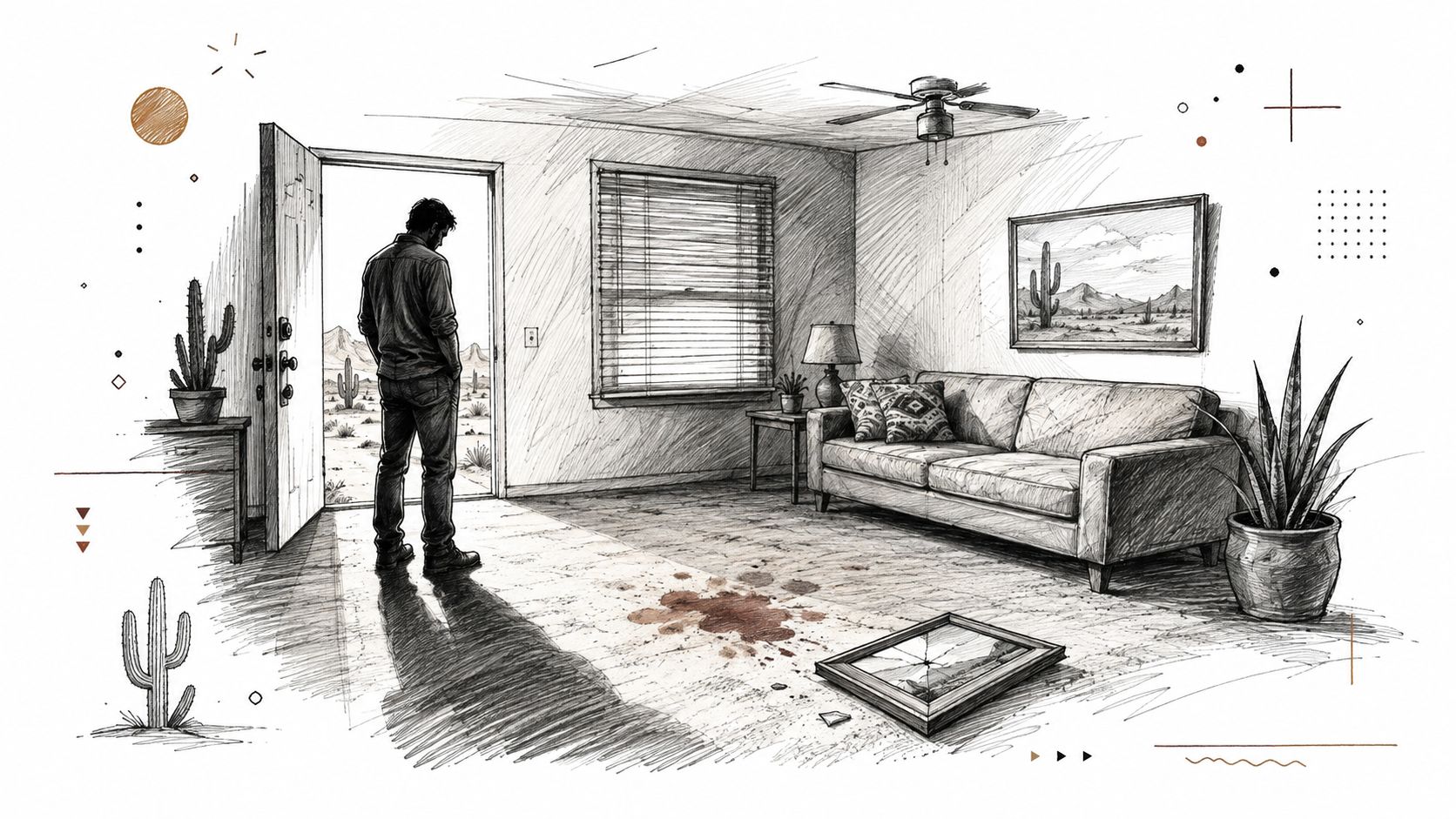
A practical way to think about it is this, the home is no longer being cleaned for appearance alone. It has to be made safe for people to enter, work in, and eventually live in again. That's why a company offering biohazard remediation services has to look beyond the visible mess and treat the scene as a contamination problem.
What the term really means
Unattended death cleanup is the safe, thorough cleaning, sanitizing, and restoration of a place after someone dies and isn't found right away. That delay matters because decomposition doesn't stay neatly in one spot. Fluids, odor, and biological residue can move into surfaces that look untouched at first glance.
Families often get caught off guard. A room may appear to need only surface cleaning, but the hidden damage can be much deeper. That's why trained technicians, specialized equipment, and strict protocols are part of the process, not extras.
Practical rule: if the scene involves blood, body fluids, odor, or unknown exposure time, treat it as a biohazard problem, not a housekeeping task.
A reputable provider will also document the work carefully, because the scene often involves more than one decision maker, a homeowner, a landlord, an executor, or an insurer. The goal isn't just to clean what's visible. It's to return the property to a condition that can be used again without guessing about what's still hiding in the structure.
Health Risks and Biological Hazards
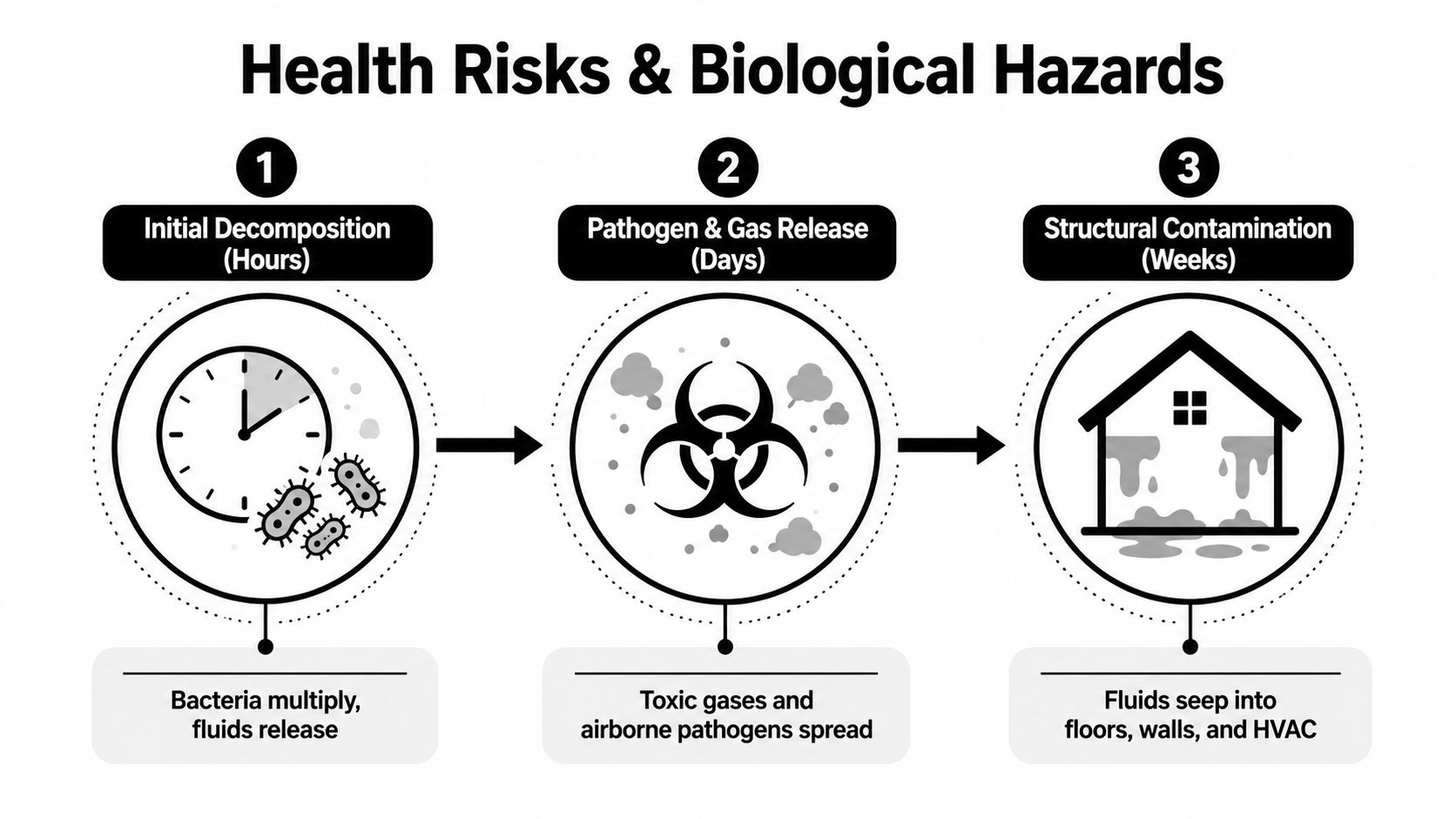
A scene can look still and empty while the hazards keep moving through the house. Decomposition starts quickly, and one source notes that it can begin within hours of death, creating pathogens, toxic gases, and contamination that can reach flooring, walls, and other structural materials 360haz. That is why this work is handled like a biohazard event, not a standard cleaning visit.
Why the spread is so hard to see
Decomposition fluids can move through a home the way spilled oil seeps into a crack in concrete, except the material inside a house is often more absorbent and the contamination is biological. The fluids can soak into porous finishes, then travel into drywall, subfloor, adjacent rooms, and HVAC pathways. That is why a contamination map comes first, and why the cleanup plan has to account for what is hidden behind surfaces biocleanersdirectory.com. Odor is often only the first clue.
That invisible spread is why household cleaners are the wrong tool. A product from under the sink may improve the smell for a moment, but it does not make the area safe to occupy. Professional remediation relies on controlled containment, industrial-grade products, and protective gear because the job is about limiting exposure as much as removing visible residue.
What the health risk looks like
The danger is not limited to the person doing the scrubbing. Anyone who enters a contaminated space too early can be exposed to residue, aerosols, or particles carried on shoes, tools, and clothing. That is why scene control matters, and why professionals set up barriers before removal begins instead of cleaning first and hoping the rest sorts itself out.
For homeowners trying to understand how hidden contamination can spread beyond the surface, the concerns discussed in Nares Law Group mold exposure offer a helpful comparison. The difference is that unattended death scenes can involve bloodborne-pathogen exposure as well as odor and decomposition residue.
A room can look empty and still be unsafe if fluids have reached porous materials.
If the scene includes carpeting, furniture, or wall cavities with visible or suspected contamination, the safest assumption is that the damage extends beyond the top layer. That is why professional crews do not just wipe and leave. They assess, contain, remove, disinfect, and verify.
For readers comparing service types, body fluids cleanup is often the category that overlaps most directly with this work, since decomposition residue has to be treated as a hazardous material problem. The key point is simple. If the contamination cannot be fully controlled, it cannot be safely ignored.
Legal and Insurance Considerations
A family can be dealing with grief, police access, and insurance questions at the same time, which makes this part feel harder than the cleanup itself. The property may need to remain closed until investigators release it, and professional biohazard remediation is commonly required before the home can be treated as safe for reoccupation crimescenecleanupbusiness.com. In practice, law enforcement, medical examiners, and the cleanup crew each handle a different piece of the process before restoration can begin.
Who does what first
Police or investigators usually secure the location first and decide when it can be released. After that release, the property owner or authorized representative can arrange cleanup. Until that point, removing materials too early can interfere with the official process and create avoidable problems.
Insurance usually comes into play after the scene has been documented. A homeowner or property manager may need proof of what was removed, what was disinfected, and what had to be discarded. That paperwork matters because biohazard work often includes disposal, demolition, and restoration steps that an adjuster needs to see clearly.
The records should read like a simple timeline. Who released the scene, who entered it, what was taken out, and what was left in place all help explain the claim later.
What to ask for from the cleanup company
A reputable company should provide decontamination and disposal records, plus a clear summary of damaged materials and any areas that were repaired. Those documents help show the difference between a surface cleaning and a true remediation job, which is often the part homeowners find hardest to track. If you are also handling claim paperwork, a guide on how to file a homeowners insurance claim can help you keep the documents organized while the property is being stabilized.
You do not need to become a legal specialist to handle this correctly. You do need to keep the sequence straight, from official release to contractor access to final documentation. If a dispute comes up later, that paper trail can make the difference between a clear claim review and a confusing one.
Practical rule: do not throw away damaged items before they are photographed and listed if you expect insurance to review the loss.
For landlords and estate executors, the same records can matter during turnover or property transfer. The scene has to be handled as both a health issue and a documentation issue. Skipping either one can leave gaps that are hard to fix after the cleanup is finished.
How the Professional Cleanup Process Works
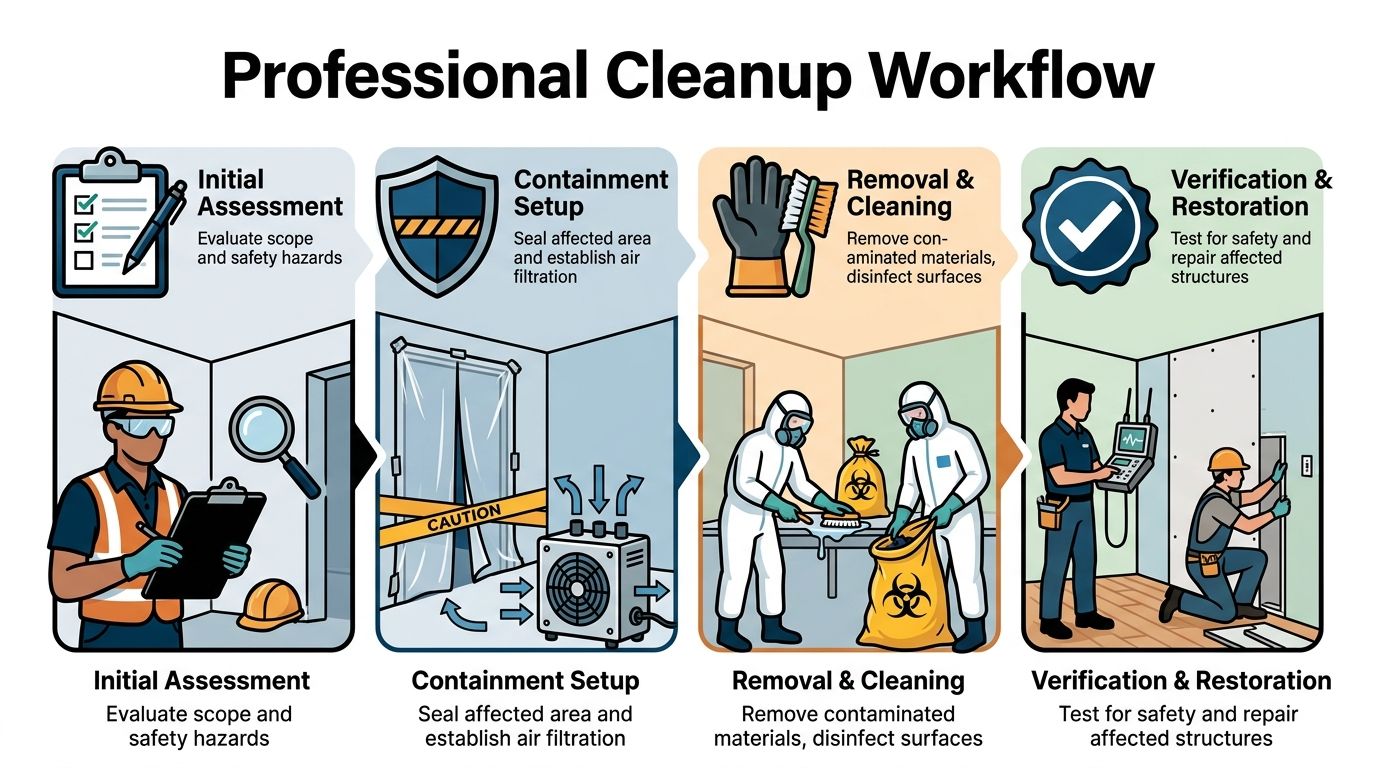
A homeowner may see one room that looks affected, but the restoration crew has to find the full path of contamination before anything is touched. The work begins with a scene assessment, using protocol before supplies. Technicians look at where the contamination starts, how far it traveled, and which materials can still be saved. That mapping matters because decomposition fluids can move deeper into the structure than the eye can tell.
Step 1, containment and controlled access
Before any removal begins, the affected area is isolated with plastic sheeting and negative air pressure so contaminants and odor stay out of clean parts of the home pdqfirewaterdamage.com. This setup is practical, not cosmetic. It keeps the crew from carrying the problem into hallways, vents, or neighboring rooms.
Once containment is set, the team can work room by room without spreading residue across the property. Homes with shared air paths or open layouts need this control even more, because contamination does not stop at a doorway. The scene is treated like a contained work zone until each area has been cleared.
Step 2, removal versus replacement
In general, porous materials that absorbed fluids, such as blood-soaked carpet, padding, damaged drywall, furniture, and sometimes subflooring, are removed rather than cleaned puroclean.com. If a material has soaked up decomposition fluids, surface disinfection usually cannot reach everything inside it. The stain on top is often only part of the problem.
Non-porous surfaces, like sealed surfaces that have not been penetrated, may be cleaned and disinfected instead of replaced. The deciding factor is absorption. A material that has taken in fluids often becomes a removal item, while a material that stayed intact may remain in place and move into the restoration phase.
Some items can be saved, but anything that cannot be made biologically safe has to come out.
Step 3, disinfection and deodorization
After removal, the remaining surfaces are cleaned with industrial-grade disinfectants. Then deodorization begins, often with ozone machines or hydroxyl generators, because odor can point to residue that still needs attention biocleanersdirectory.com. The goal is to remove the source of the smell, not hide it.
That difference matters for homeowners trying to judge whether the property is ready. A room can smell fresher and still not be safe to use. The work has to make the space usable again, not just more pleasant for a short time.
For a closer look at this stage, a decontamination process overview shows how technicians verify that treated areas are no longer carrying visible residue or lingering contamination.
Step 4, restoration and verification
The final stage restores the damaged areas to a pre-incident condition as closely as possible biocleanersdirectory.com. That can include new drywall, flooring replacement, trim work, and final inspection. In some cases, the company also documents the job through a formal decontamination process so the property owner has a record of what was treated and what was rebuilt.
For a Phoenix property owner, the workflow is easier to follow when it is laid out in order, assess, contain, remove, disinfect, deodorize, restore, verify. Each step solves a different part of the problem. The first step finds where the contamination went, the middle steps remove and neutralize it, and the last step puts the home back together in a way that supports safe use again.
Safety Do-Nots During Cleanup
Don't enter the scene without proper PPE. The risk is not just disgust, it's exposure. Anyone who starts moving items around without gloves, respirator protection, and contamination control can spread the problem to their own clothes, vehicle, and other parts of the property.
Don't use bleach or household disinfectants as a substitute for professional biohazard products. They're not designed to make a decomposition scene biologically safe. Don't remove contaminated porous materials without containment either, because that can push residue into hallways, vents, and adjoining rooms.
Don't skip deodorization because the odor is still there for a reason. Lingering smell often means the source hasn't been fully addressed. Family members sometimes try to save time by tossing items quickly, but rushing usually makes the restoration larger, not smaller.
Choosing a Certified Cleanup Company
Not every cleanup company is equipped for unattended death scenes. The first credentials to look for are IICRC and ABRA, because the source material describes them as evidence of protocol compliance in biohazard handling and disposal huusobio.com. If a company can't explain its training, disposal process, or safety approach in plain language, that's a red flag.
| Credential | What it shows |
|---|---|
| IICRC | Training and standards in cleaning and restoration work |
| ABRA | Biohazard recovery protocol awareness and handling discipline |
What else to verify
Look for licensing, bonding, insurance, emergency availability, and actual experience with trauma scenes. A company that handles water damage or general cleaning isn't automatically prepared for decomposition cleanup. Ask who will document the work, who handles disposal, and whether the team works with insurers when needed. If you need a broader contractor checklist, bonded and insured contractor is a useful reference point.
You can also ask whether the company has a clear process for containment, disinfection, deodorization, and restoration. The answers should sound specific, not rehearsed. If the representative talks only about “deep cleaning” and never mentions biohazard controls, keep looking.
Green flags and red flags
A strong provider explains the difference between removable and replaceable materials, offers a documented scope, and answers questions without pressure. A weak one avoids specifics, won't discuss disposal, or promises to “make it look like nothing happened,” which is not the same as making it safe.
A reliable company should help you understand the work, not leave you guessing about the safety of your own property.
For Phoenix-area property owners, one option among certified restoration providers is Restore Heroes, which handles trauma and biohazard cleanup along with coordinated remediation work. The value of any provider comes down to whether they can do the job safely, document it properly, and restore the structure responsibly.
Estimated Costs and Project Timelines
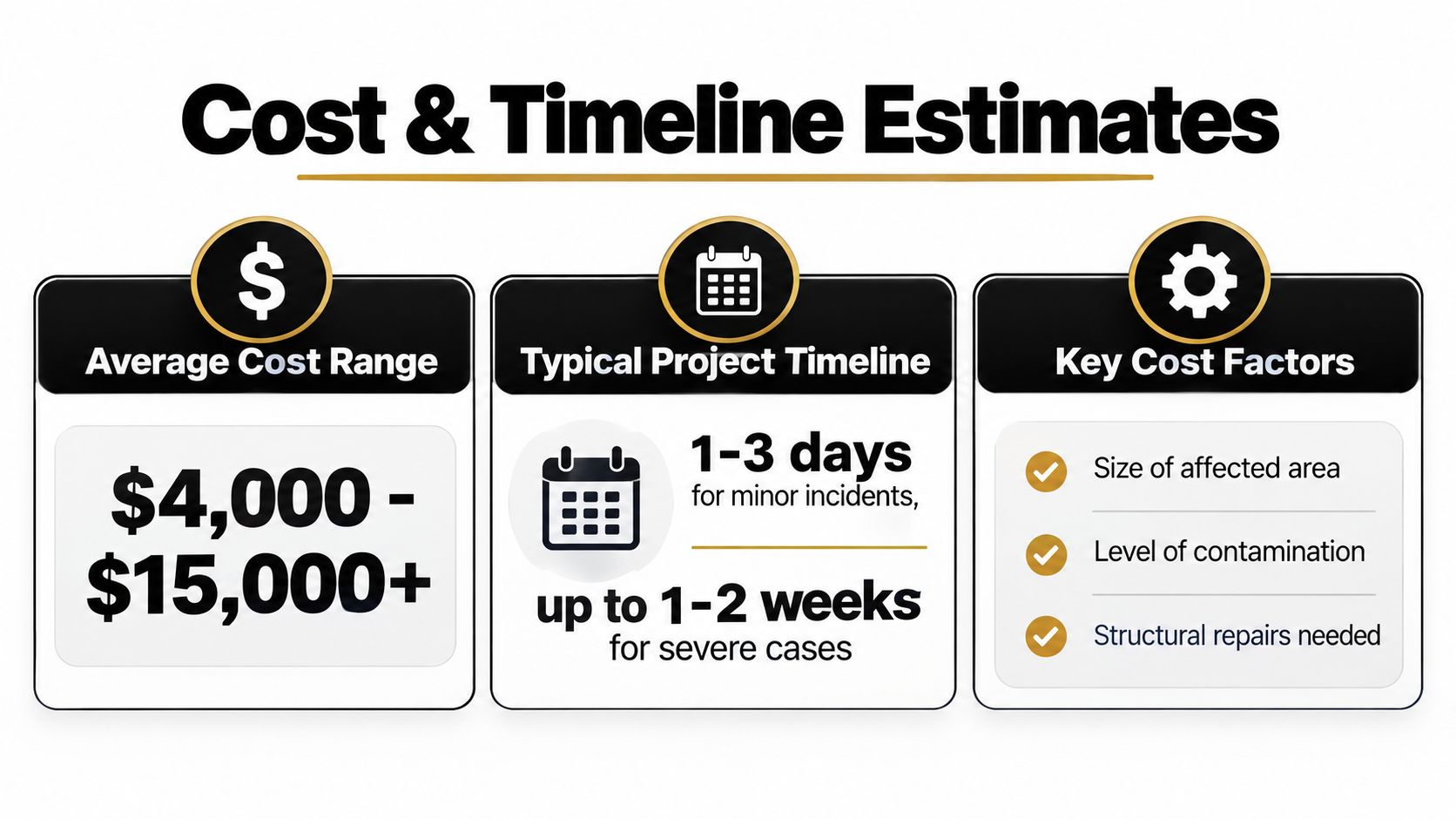
A family may start with a simple question, then learn that unattended death cleanup is rarely a flat fee job. The price changes with what the scene has touched, how much has to be removed, and how much rebuilding is needed after contamination is cleared. Industry guidance places many jobs in the mid-thousands, while severe cases can rise much higher once structural materials have to come out.
The reason is straightforward. A technician is not just wiping surfaces. They may need to remove porous items, cut away damaged drywall or flooring, and then disinfect the exposed structure so the home is safe to use again. That is why a quote based on a phone description alone is usually only a rough starting point.
What changes the scope
The final price depends on the size of the affected area, how many rooms are involved, how far contamination has spread, and whether flooring, drywall, or subflooring has to come out. A small spill on a hard surface is one kind of job. A scene that has soaked into carpet pad, baseboards, or framing is closer to surgery on the house, because the hidden layers often hold the contamination after the surface looks finished. Structural repair always adds complexity because it turns a cleanup job into a restoration job.
Time works the same way. A standard cleanup can be completed in a relatively short window, while severe cases involving demolition and restoration take much longer. The more the scene has spread into hidden materials, the more steps the crew has to complete before the property is ready. Moisture, odors, and residue can also travel farther than people expect, which is why trained teams follow infection control procedures during containment, removal, and final clearance.
For readers who want a related look at sanitation workflow, infection control procedures offers another way to think about disciplined hazard control in a professional setting. The common thread is simple, safety comes from process, not shortcuts.
What to do next
Document the scene if you can do so safely, contact a certified cleanup company, and keep other people out of the affected area until the property has been assessed. Do not try to sort through belongings first. The cleanup team needs to see the scene as it is so they can decide what gets removed, what gets disinfected, and what has to be rebuilt.
If you're dealing with an unattended death in the Phoenix area, Restore Heroes can help with biohazard cleanup, decontamination, odor removal, and restoration coordination. Visit Restore Heroes to speak with a local team that understands how to handle the scene carefully, document the work, and move the property toward safe use again.