
The phone rings after midnight, or you wake up to the smell of wet drywall and panic sets in. Maybe it's a monsoon leak in Mesa, a burst supply line in Gilbert, or smoke rolling through a Chandler kitchen after a small fire that got bigger fast. In that moment, you're not thinking about industry terms, you're thinking about stopping the damage, protecting your family, and figuring out who to trust.
That's where the elements of restoration matter. They give a stressed homeowner a workable order for chaos, so the response isn't guesswork, and the job doesn't drift into avoidable damage, health risks, or claim problems. In a Phoenix home, that structure has to account for heat, hard water, monsoon moisture, smoke, and the paper trail insurers expect to see.
What Homeowners Face When Disaster Hits a Phoenix Home
A homeowner in Phoenix often discovers damage at the worst possible moment, after a storm blows through, or after a water heater lets go while everyone's asleep. The first reaction is usually the same, check the floor, check the walls, and then start asking what got soaked, what can be saved, and what needs to stop right now. In neighborhoods from Ahwatukee to Scottsdale, that often means dealing with heat outside and hidden moisture inside at the same time.
The first minutes are about control, not perfection
Practical rule: stop the spread first, then sort out the paperwork. That usually means shutting off the water source if it's safe, moving valuables away from wet areas, and keeping people out of rooms with visible damage.
A burst pipe or monsoon seepage can make a house feel suddenly smaller. Furniture needs to move, power may need to stay off in affected areas, and soft goods can start absorbing moisture fast. If you're trying to figure out what to do while you wait, a guide on cleaning and wrapping furniture can help you think through what needs protection while items are moved out of harm's way.
Homeowners also need to think about what they'll have to prove later. Photos, timestamps, and notes matter because the job is not just about drying a room, it's about showing what happened and why the response was necessary. If you want a local emergency response path, this resource on emergency water damage help in Phoenix is the kind of page people usually look for when the situation is unfolding in real time.
Why a framework matters so quickly
Without a structure, people tend to jump straight to visible fixes. That can mean painting over a stain, throwing a fan in a hallway, or hauling out wet carpet without checking what's still trapped inside walls or under cabinets.
A restoration framework prevents that scramble from turning into a bigger problem. It keeps the work tied to a sequence, what's damaged, what's urgent, what must dry, what must be documented, and what has to be repaired later. That order is what separates controlled recovery from expensive rework.
The Core Elements of Restoration Explained Simply
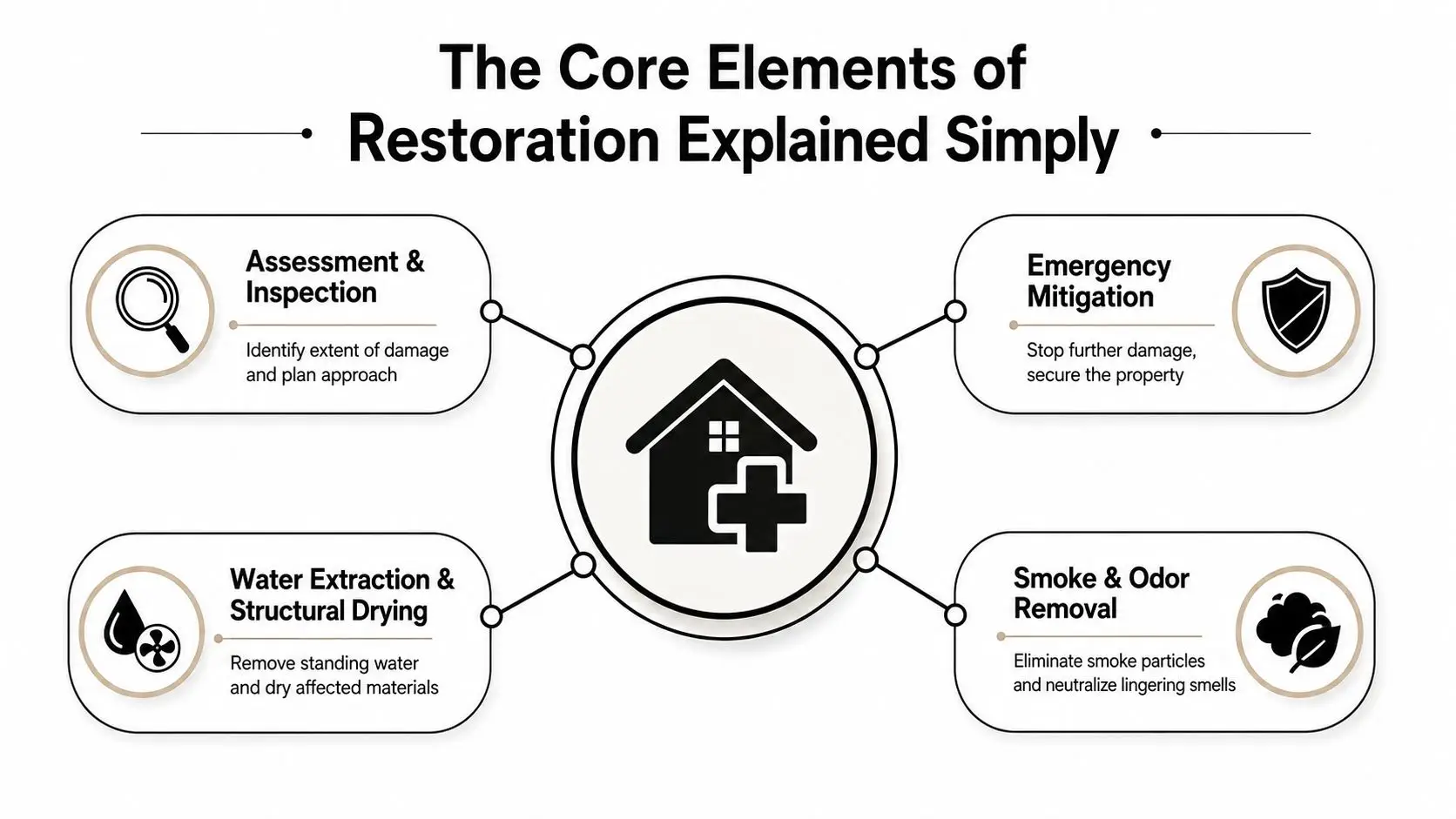
A homeowner in Phoenix may first see a damp baseboard, a smoke stain, or a musty cabinet corner and assume the problem is small. In restoration work, the visible spot is only the starting point. The job follows a clear sequence, much like a clinician checking what is injured, stopping the harm from spreading, treating the active problem, and then helping the building return to normal. Professional water-damage work is guided by the IICRC S500, which organizes the process around microbiology, psychrometry and drying technology, equipment selection, structural restoration, HVAC restoration, and documentation and risk management (IICRC S500).
Start with assessment and emergency mitigation
The first step is to understand how far the damage reached. Crews check the obvious areas, then look into places homeowners usually cannot see, such as wall cavities, cabinets, crawl spaces, and the spaces under flooring. Water, smoke, and contamination often spread beyond the first stain, so a careful assessment shapes every decision that follows, from equipment to demolition to the amount of repair work needed.
Emergency mitigation comes next. That means the immediate work that keeps the property from getting worse, such as board-up, extraction, containment, or securing the home so weather, moisture, or exposure does not add another layer of damage. In the Phoenix metro, that can also mean quick protection against dust, heat, and sudden monsoon weather while crews wait for the next step.
Then comes extraction, drying, and cleaning
Water extraction removes standing water, but it does not finish the job. The target is equilibrium moisture content, because materials that still hold too much moisture can keep feeding microbial growth and material breakdown even when the surface looks dry. A drywall panel can feel fine to the touch while the back side is still wet.
Psychrometry handles the drying conditions. It is the controlled use of temperature, humidity, and air movement so materials dry in a predictable way instead of in a rushed or uneven pattern. In Phoenix, that matters because hot air can feel dry while hidden moisture remains inside baseboards, wall cavities, or cabinets. Odor control and sanitation often happen during this phase too, especially after smoke or contaminated water.
A room can look finished long before it is actually stable.
If a homeowner wants a plain-language overview of how crews handle that sequence on site, what a restoration company does is a useful companion to this process.
Repair comes after the building is safe
Once the affected area is dry and clean, the structural repair phase can begin. That may mean replacing drywall, trim, insulation, or flooring, then moving into reconstruction so the space works again. If the job involved household contents, protection and packing matter too, which is why some homeowners also need help with cleaning and wrapping furniture while the building work is underway.
This final stage is easier to understand if you compare it to fixing a car after an accident. You do not repaint the panel before the frame is checked. In the same way, restoration teams finish the drying, cleaning, and documentation first, then repair the parts of the home that can safely be rebuilt.
How the Elements Change by Disaster Type
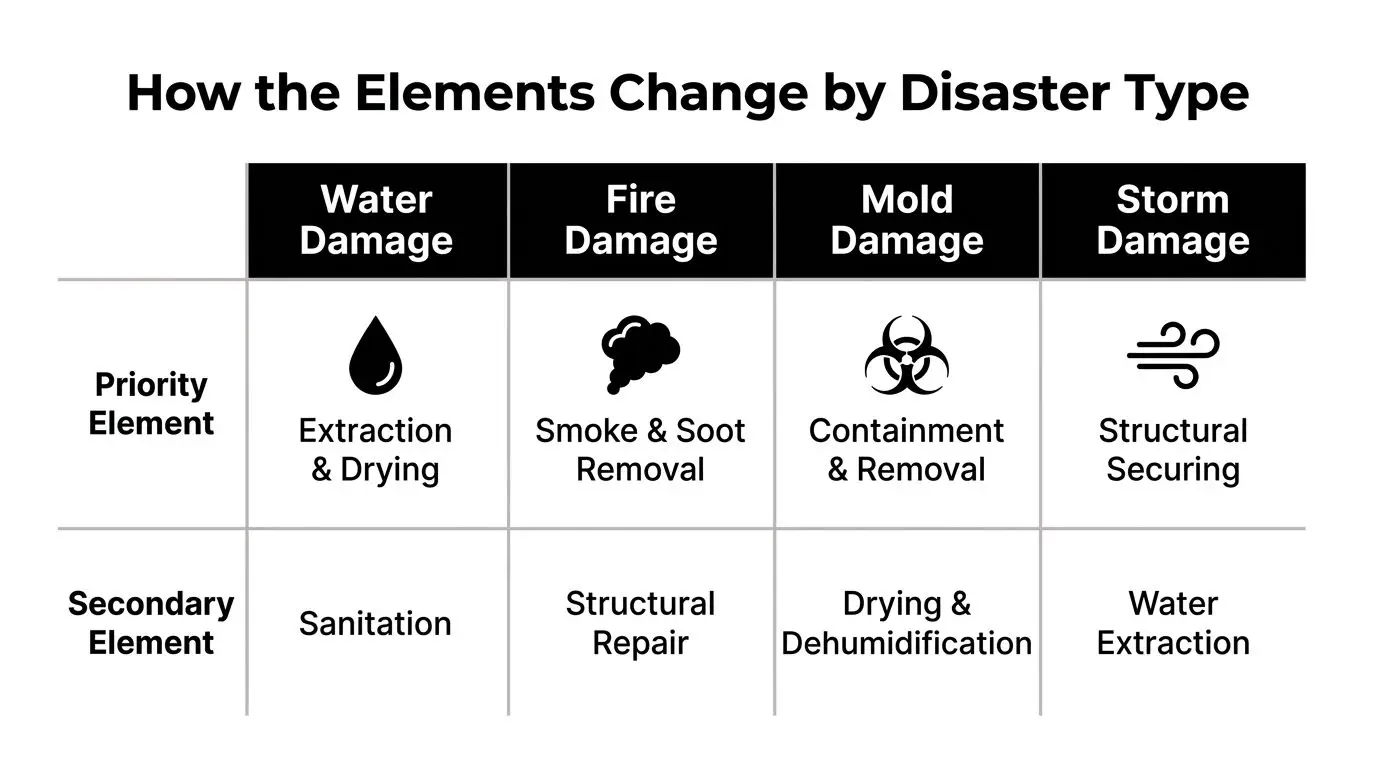
The basic framework stays the same, but the order shifts with the damage. A slab leak in Phoenix does not call for the same first move as a kitchen fire, and a mold issue does not begin with the same tools as a storm-broken window. The elements of restoration adapt to the loss instead of forcing every job into one pattern.
Water damage pushes drying to the front
With burst pipes, appliance leaks, and monsoon flooding, the first priority is usually water extraction and structural drying. Water does not stay politely where it started. It moves under flooring, into cabinets, and behind walls, which is why a small-looking leak can become a much larger job.
Sanitation often follows because floodwater and pipe failures can leave residue, odors, and material contamination. In Phoenix homes with tile, wood-look flooring, or carpet over slab, the cleanup plan also has to account for moisture trapped at transitions and base plates. Hot, dry air can speed the surface dry-down, while hidden moisture still lingers in the building materials.
Fire damage changes the order
Fire damage starts with safety, but the visible soot is only part of the job. Smoke can move through HVAC pathways, so odor control and cleaning often matter as much as the surfaces people can see. Structural repair usually comes later, after contamination is controlled and damaged materials are removed.
The process often feels like peeling back layers. First the unsafe and dirty materials come out, then the space is stabilized, then the rebuild begins.
Mold damage is usually secondary
Mold often follows water, so the earlier water event matters as much as the visible growth itself. The first question is usually containment, then removal of affected materials, then drying and dehumidification so the same spot does not keep feeding the problem. If the moisture source stays active, the mold returns.
Phoenix homeowners also run into a common confusion here. A room can seem dry on the surface while humidity in a wall cavity or cabinet keeps the conditions right for mold to keep spreading. That is why certified teams document moisture readings and conditions, not just what the room looks like.
Biohazard work is its own category
Trauma and biohazard cleanup are different because the priority is exposure control. The elements still include assessment, containment, sanitation, and removal, but the health and regulatory stakes are higher. That is not a job for the same approach you would use on a wet hallway or a smoky kitchen.
Certified documentation matters here too, especially when insurance or health requirements are part of the file. In this category, the work has to be both clean and clearly recorded so the next step, whether that is repair, inspection, or clearance, can move ahead without avoidable delays.
A Realistic Restoration Timeline From First Call to Final Walkthrough
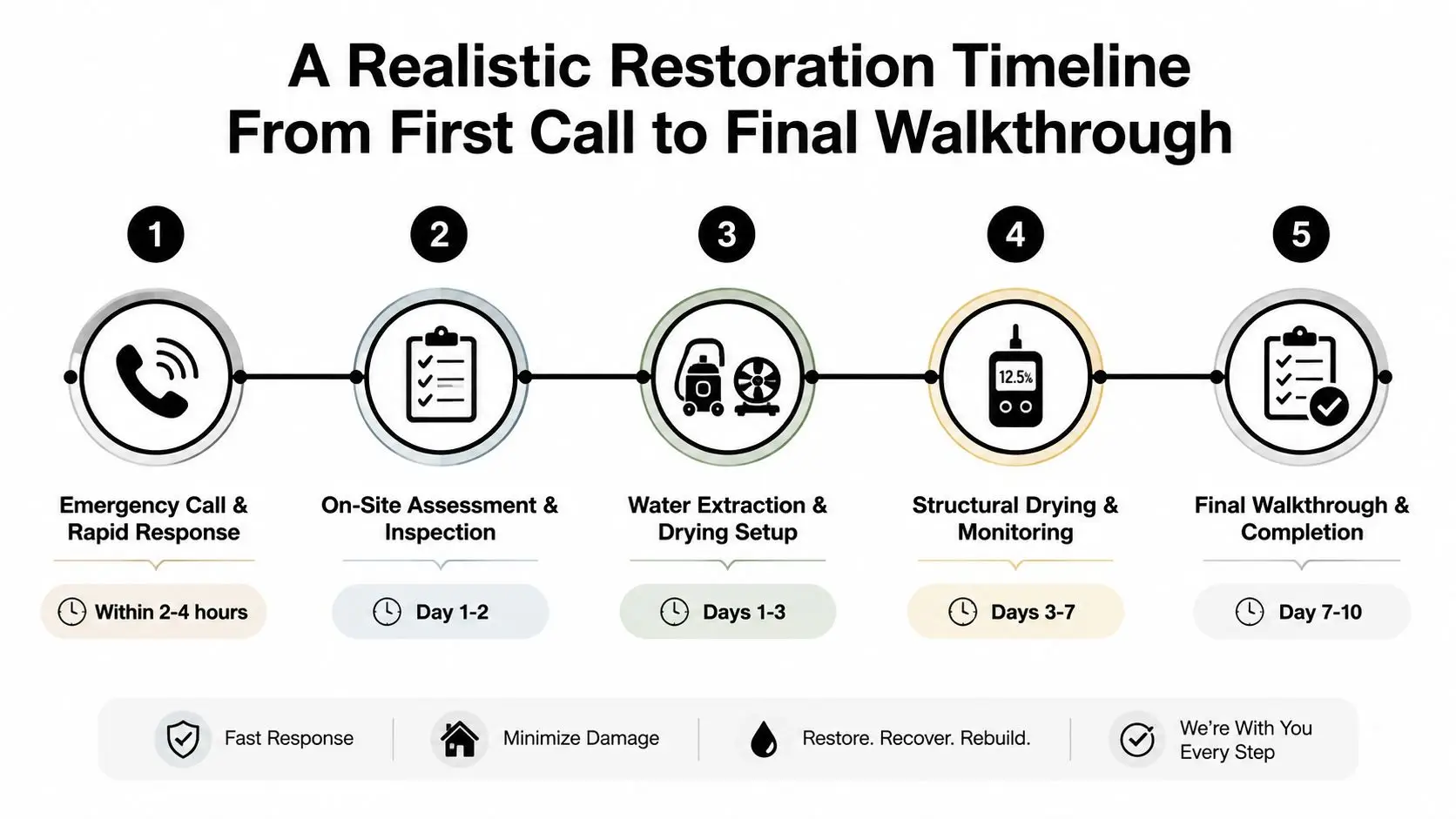
Most homeowners want one honest answer first, how long is this going to take? The practical answer is that emergency work starts fast, and the later phases depend on how deep the damage went, what materials were affected, and whether hidden moisture or soot is still present. A simple leak and a multi-room flood don't move on the same clock.
The early stages happen quickly
The first call should trigger a rapid response, because delays let damage spread. Once a crew arrives, the first day or two usually focus on inspection, photos, moisture mapping, and the setup needed to stabilize the space. That's also when homeowners should avoid wiping out evidence that shows how the loss began.
Drying is not a guessing game
The middle of the job is where a lot of people get impatient. Fans, dehumidifiers, and monitoring equipment may run for several days, but the point isn't just to make a room feel better, it's to bring materials back to a safe moisture condition and verify that they stay there. Turning off equipment early because the air feels dry can leave moisture trapped where you can't see it.
Do this instead: ask for clear readings and progress updates, then let the numbers guide the next step.
Repairs come after the system is stable
Once drying and cleaning are complete, repair work begins. Small jobs may move quickly from there, while larger losses can stretch much longer depending on demolition, material lead times, and reconstruction needs. A homeowner can speed things up by answering calls promptly, approving scopes, and keeping damaged areas accessible.
You can read a plain-language overview of the pace and phases in how long water damage restoration takes, which helps set expectations before the first truck even arrives.
Insurance Coordination as a Critical Element of Restoration
A broken pipe in a Phoenix home can turn into two separate jobs fast. One is the physical cleanup, the other is the insurance file that proves what happened and why the work was necessary. If the paperwork does not line up with the loss, the claim can slow down even when the repairs are straightforward.
Documentation has to match the work
The first records matter most because they show the condition before cleanup changes the scene. Photos, moisture maps, equipment logs, and written notes help explain why walls were opened, why drying equipment stayed in place, and why certain materials could not be saved. In Phoenix, that record matters even more because hot, dry air can make a room feel finished while moisture is still trapped in flooring, drywall, or cabinets.
A homeowner dealing with a burst pipe can also benefit from practical guidance like the burst pipe repair tips from Voyager Plumbing, because what happens in the first hour often affects how much of the home needs restoration later.
What homeowners should do right away
The first day sets the tone for the claim. Take photos before major cleanup begins, keep receipts for emergency purchases, and avoid permanent repairs until the adjuster has had a chance to review the damage. Temporary protection is fine if the home is unsafe, but the original condition should stay visible where possible.
If you are filing a claim, a clear walkthrough like how to file a homeowners insurance claim can help you keep the steps organized while you document the loss.
Why certified contractors help the claim move
A certified restoration contractor can speak to the adjuster in the same language the claim file needs, with scope notes tied to field conditions rather than guesswork. That kind of documentation helps show why specific rooms were opened, why some materials were removed, and why drying or cleaning had to continue after the surface looked better. It does not force an insurer to approve every line item, but it gives the claim a clearer trail to follow.
That difference matters when a home has hidden damage from a leak, a monsoon intrusion, or heat that speeds up surface drying before the structure is dry. A contractor who understands insurance documentation can keep the file organized while also protecting the home itself, which is the balance most Phoenix homeowners need during a stressful loss.
Warning Signs That Mean You Need a Professional Restoration Team
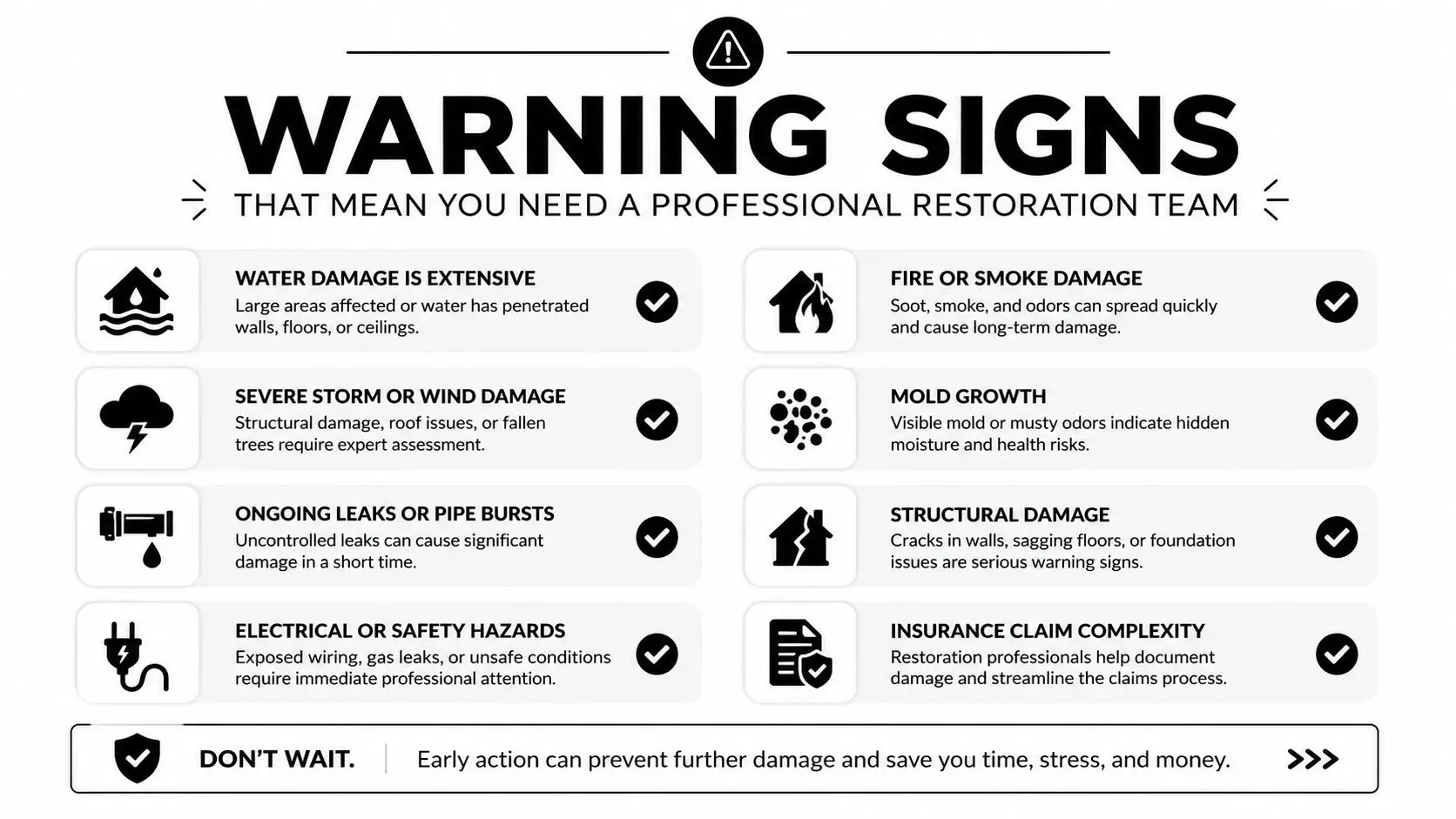
Some cleanup jobs are too risky to handle as a weekend project. The warning signs are usually easy to spot once you know what matters, but people often delay because they hope the problem will dry out, fade, or stop smelling on its own. That delay is where the health risk grows.
Some conditions are not DIY territory
Visible mold over a large area, sewage contamination, standing water that has already sat too long, smoke odor that won't leave after basic cleaning, and any trauma or biohazard scene are all signs you need a certified team. Those situations can involve microbial exposure, soot residue, or bloodborne pathogen concerns, and incomplete cleanup can leave the home unsafe for children, older adults, and anyone with respiratory issues.
Why waiting makes the job harder
Water intrusion doesn't stay polite. It can move into wall cavities, under flooring, and into insulation before the surface ever looks serious. Smoke also lingers in porous materials, so a room can seem usable while the odor source is still embedded in trim, ductwork, or contents.
Clear rule: if contamination, sewage, or biohazard is involved, stop and bring in trained help.
The hidden cost of cutting corners
DIY cleanup often fails at the invisible parts of the job, moisture inside framing, contamination in HVAC pathways, or residue that keeps causing odors. That's why certified restoration crews use containment, drying verification, sanitation, and documentation together instead of treating the problem as a surface cleanup.
If the issue is beyond basic mopping or wiping, that's usually the point where professional assessment makes more sense than another round of home remedies.
Phoenix-Specific Considerations and Why Local Certified Teams Matter
Phoenix changes the restoration playbook in ways out-of-town crews often underestimate. Summer heat speeds up some surface drying, but it also makes hidden moisture harder to judge by feel alone. Monsoon storms can push water where it doesn't belong, and hard water leaves mineral residue that can complicate cleanup after a flood or leak.
Local conditions shape the job
A home in Chandler or Scottsdale may need different attention than a cooler, wetter market because temperature swings, slab construction, and mineral buildup all affect how damage spreads and how repairs hold up. That's one reason restoration is best handled by a team that understands local homes, local weather, and local insurer expectations. In a Phoenix setting, a water damage restoration contractor should know how heat, humidity, and building materials interact on a real job site.
Why certification matters here
The IICRC S500 framework gives crews a common language for drying, documentation, microbiology, HVAC concerns, and structural restoration (IICRC S500). In practice, that means the work is tracked instead of guessed, and the homeowner gets a clearer record of what was dried, cleaned, or replaced.
Local crews can keep the process steadier
Licensed, bonded, and insured teams that work in the Phoenix metro are usually more familiar with monsoon timing, slab leaks, soot migration, and the way local carriers handle claims. They're also more likely to spot when hard-water deposits, heat, or hidden airflow issues will affect the repair plan. That kind of familiarity doesn't make the job easier, it makes the decisions more accurate.
Restore Heroes offers water damage restoration, fire and smoke restoration, mold remediation, and trauma and biohazard cleanup in the Phoenix metro, and those are the kinds of services that fit the situations covered above. For a homeowner, the value is having one crew manage assessment, mitigation, drying, sanitation, and repair coordination without forcing you to juggle the whole process alone.
If you're dealing with damage right now, don't try to guess your way through the first day. Visit Restore Heroes to get help with assessment, mitigation, drying, and cleanup from a local team that works through the full restoration process with clear documentation and steady communication.