
The most common advice after a small fire sounds sensible. Open the windows, wipe the counters, wash what smells, and sleep in your own bed if the walls look clean. That advice can miss the main problem. Fire and smoke damage isn't only what burned. It's also fine particles, soot film, and chemical residues that moved on air and settled in rooms the flames never reached. A home can look normal at breakfast and still need a careful look before anyone moves back in.
Why Clean Walls Can Still Mean Fire and Smoke Damage
It's the morning after a kitchen flare-up in a Phoenix ranch home. A pan fire scorched the range hood and one cabinet. The living room, two rooms away, looks fine. The paint is white, the sofa isn't blackened, and a neighbor says to air it out and move on.
That living room may still hold smoke. Hot air rises and travels fast, carrying soot through doorways, down hallways, and into the return air grille. When the air cools, particles settle on horizontal surfaces first, but they also cling to walls, blinds, and the tops of picture frames. You might not see a film until you wipe a white cloth across a shelf and it comes up gray.
What clean looking actually misses
Fire and smoke damage has layers. Burned drywall is obvious. Settled soot is less obvious. Odor trapped in carpet pad, drapes, and insulation is harder still, because those materials can release the smell again when the afternoon heat rises or the air conditioner runs. A quick wipe changes how a surface looks. It doesn't tell you what's inside soft materials or the duct system.
If you're deciding whether painted walls can be cleaned or need more work, it helps to understand how soot is cleaned from walls without spreading it before you wet a sponge and smear residue into the paint. Dry soot and oily soot behave differently, and the wrong first pass can make a later cleaning harder.
Home fires aren't rare events. NFPA fire loss data for home structure fires reports an estimated 329,500 home structure fires in 2024, about 23% of all reported fires, causing 2,920 civilian deaths, which was 75% of all civilian fire deaths, and 8,920 civilian injuries, also 75% of the total. Those fires caused about $11.4 billion in direct property damage, or 62% of the national total, and a home structure fire was reported every 96 seconds, according to the same source.
Those totals show scale. They don't predict your house. They measure direct property damage across the country, and they don't indicate the extent of damage, remediation results, insurance coverage, or pricing for any individual loss.
A room that looks wiped down has passed a visual test, not a contamination test. Those are different questions.
What you need to judge is closer to home. Which materials burned, where did the air carry the smoke, who will be breathing in those rooms, and what's hiding in the HVAC system, attic, and soft furnishings? If you can answer those four things, even roughly, you can tell the difference between a small cleanup you can start yourself and a loss that needs a certified crew before anyone sleeps there.
Don't let a white wall make that decision for you. Let the pathway of the smoke, the materials it touched, and the people who live there make it.
How Fire Smoke and Soot Move Through a House
Think of smoke as a dirty fog that follows air. It doesn't respect the boundary of the room where the fire started. It moves toward cooler rooms, open doors, ceiling gaps, and any fan or duct that's pulling air.
The diagram below sorts a typical loss into four parts you can picture in your own home.
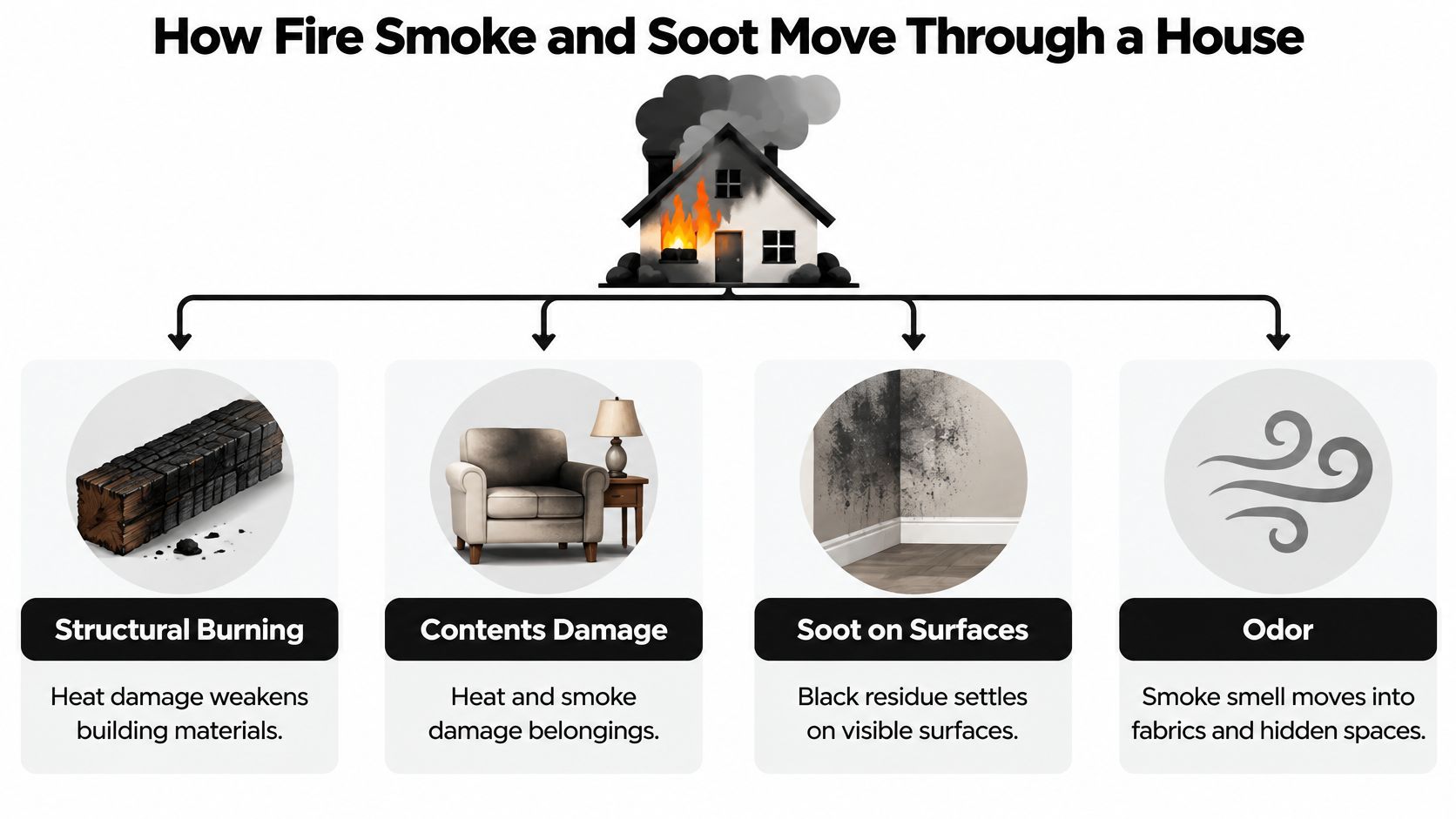
From the burned room outward
Start with structural burning. In a bedroom fire, heat chars framing, melts outlet covers, and weakens drywall near the flames. That damage is local and visible, and charred material often has to come out rather than be cleaned.
Next is contents damage. Heat can warp a dresser across the room without burning it. Smoke can penetrate the clothes inside it. Electronics, plastics, and synthetic furniture are a special concern because when they burn or melt, they can leave residues that discolor finishes and cling to porous items nearby. A plastic laundry basket that softened in the heat doesn't look like a contamination source, but it can be one.
Then comes soot on surfaces. Soot is the film you find on kitchen cabinets down the hall, on ceiling fan blades, and inside a closed pantry. It's often heaviest high in a room and on cooler surfaces like exterior walls and windows. Hard, nonporous surfaces such as sealed stone counters may wipe cleaner than unfinished wood, matte paint, or fabric, which tend to hold residue in tiny pores.
Where the smell hides
Odor is the fourth layer, and it's the one homeowners underestimate. Odor isn't just in the air. It's in materials that absorbed smoke and now release it slowly. Carpet pad, upholstery foam, attic insulation, and the dust inside ductwork can all act as reservoirs. That's why a house can smell fine in the morning and smoky by late afternoon.
- Return air grilles and ducts: If the system ran during or after the fire, it may have distributed particles to every room it serves.
- Attic insulation: Smoke that reached the attic hatch or recessed lights can settle into insulation above ceilings that look untouched.
- Closets and drawers: Closed spaces trap smoky air against clothing and cardboard, which absorb odor readily.
- Wall cavities: Smoke entering through outlet openings or plumbing gaps can leave residue where no wipe can reach.
The cost pattern behind these hidden layers is visible nationally. U.S. Fire Administration residential fire statistics show estimated residential fire property loss rose from about $8.9 billion in 2014 to $11.3 billion in both 2022 and 2023, even as fire counts fluctuated. One reason individual losses can be costly is that the work rarely stops at the visibly burned material.
As you walk your own house, sort what you find by material, not by room. Sealed tile in a smoky bathroom may be cleanable. The bath towels, the fabric shower curtain, and the dust on top of the water heater in the same room are separate questions. That material by material habit is what keeps you from cleaning the same shiny counter three times while the actual source sits in the vent above it.
Health Risks After the Smoke Clears
A home can look untouched and still hold smoke pollution. Smoke is a mix of gases and particles, not just an odor. The haze may disappear while fine particles remain in household dust, fabrics, or other materials.
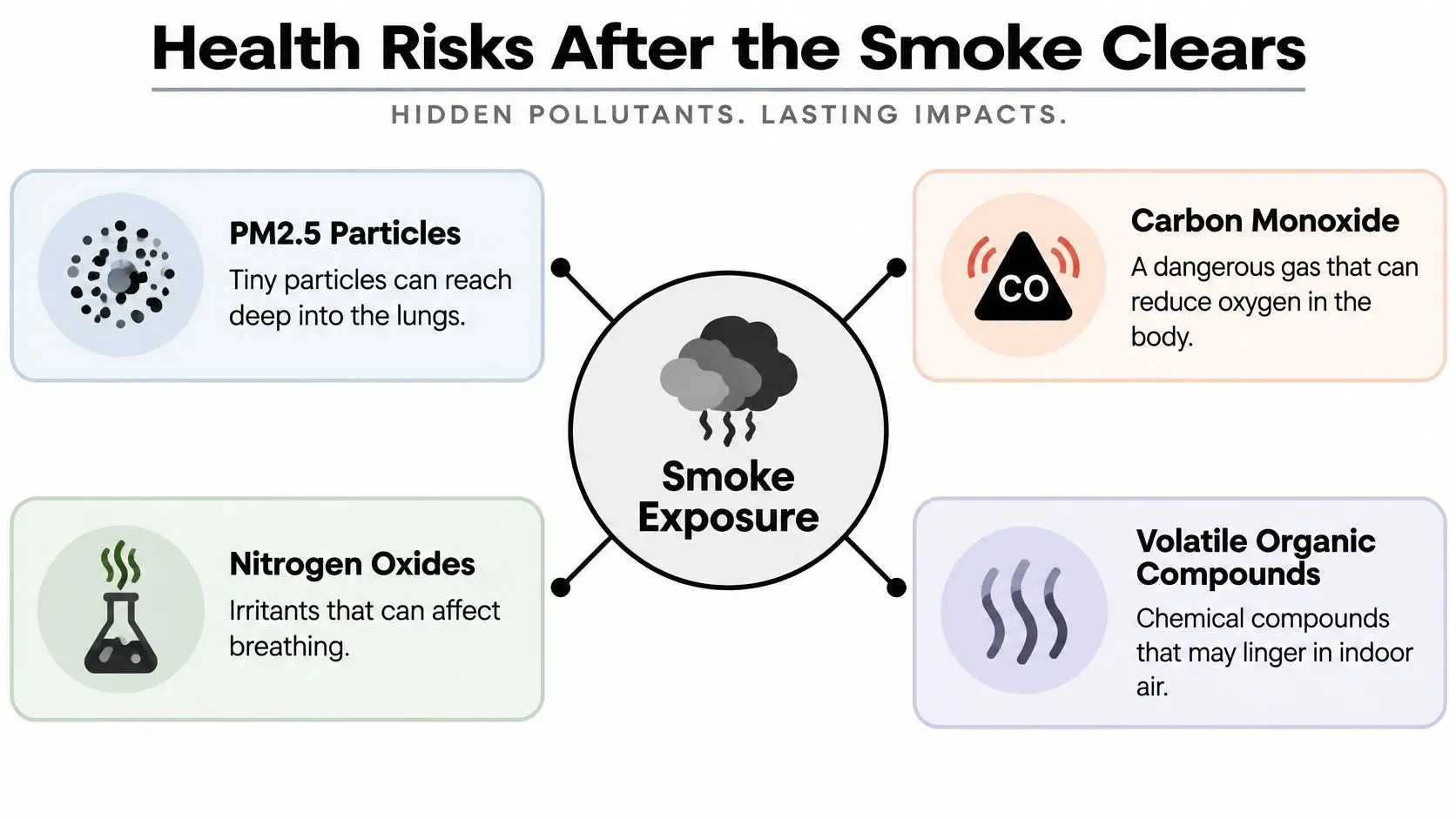
The infographic shows four common pollutants associated with smoke exposure and their effects on people.
Why particle size matters
One pollutant of concern is PM2.5. The EPA's guidance on wildland fire smoke and health describes PM2.5 as particles generally no greater than 2.5 micrometers, small enough to travel deep into the lungs. Smoke can also contain carbon monoxide, nitrogen oxides, volatile organic compounds, polycyclic aromatic hydrocarbons, and particulate matter.
Fine particles can stay suspended in indoor air, pass through gaps in a building, or travel through HVAC systems. Others settle into dust and become airborne again when someone walks across a carpet or opens a closet. Cleaning a table addresses residue on that surface, not particles in duct dust or a rug nearby.
That difference matters from room to room. A bedroom that was closed during the fire may have a different exposure pattern from a living room served by a running HVAC system. Neither a clean-looking wall nor a faint odor can confirm what remains in the air or settled on belongings.
Smoke exposure can cause eye irritation, coughing, headaches, wheezing, reduced lung function, bronchitis, and aggravated asthma. More serious cardiovascular effects are also possible, according to the EPA guidance. Symptoms deserve attention, but this is not medical advice, and cleaning products do not by themselves prove a home is safe.
Who should be most careful
Some household members may be more affected by smoke exposure:
- Children: Their smaller airways and greater air intake relative to body size can increase concern.
- Older adults: Existing heart or lung limits may make smoke harder to tolerate.
- Pregnant people: Smoke exposure calls for extra caution.
- People with heart or lung disease: Irritants can aggravate asthma and heart conditions.
- People with heavy exposure: Cleaning soot for hours without protection can increase what a person breathes in.
If someone in your household falls into one of these groups, use a more cautious standard before returning. A healthy adult who notices only a faint odor cannot judge whether a toddler's bedroom or an older relative's suite is ready.
For more on how smoke affects the airways, read how fire smoke can affect your lungs. If you are considering filtration, ventilation, or ongoing monitoring after cleanup, indoor air quality services can help explain how HVAC-based air cleaning fits into a home. Filtration alone does not remove residue trapped in furnishings or insulation.
Inspect what may remain in each room, including its contents and air pathways. Appearance is only one clue, not a safety test.
Moving Back When the House Did Not Burn
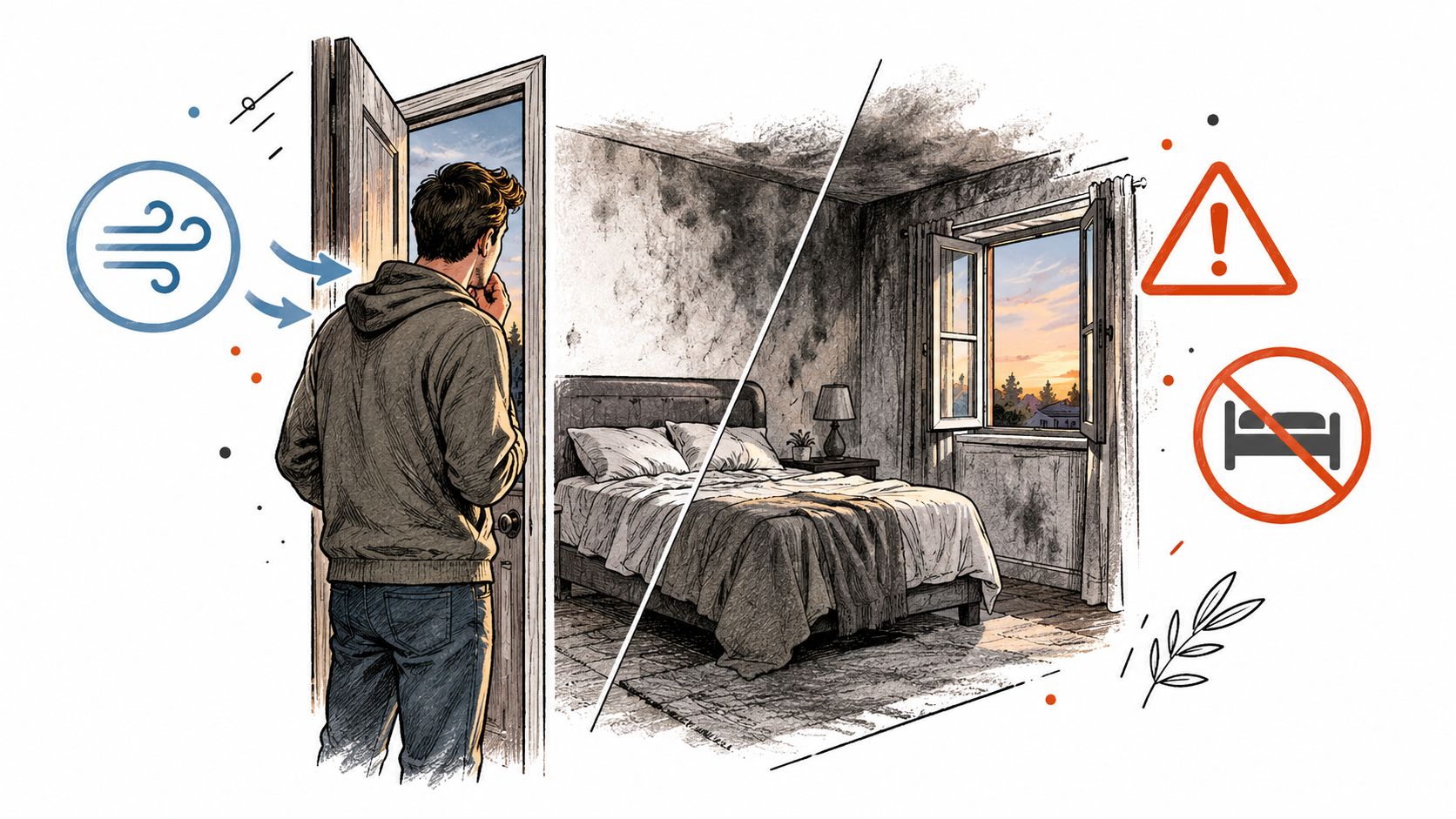
A home can be unsafe to occupy even when no flame reached it. A neighbor's garage fire, a wildfire near Phoenix, or a fire in a nearby unit can leave smoke residue indoors while the walls remain standing. Opening the windows may clear some odor, but it does not show whether residue remains in furnishings, vents, or closed rooms.
Visible fire damage is easier to recognize. In an unburned home, the lack of obvious damage can make a quick return seem reasonable.
What recent post fire findings changed
Research by the UCLA Fielding School after the 2025 Los Angeles wildfires found that some indoor volatile organic compounds were significantly higher during the post fire period than while fires were burning, especially in uninhabited homes within burn zones. In a study of 50 Los Angeles homes, most measured VOCs were up to 10 times higher indoors than outdoors, and benzene exceeded the U.S. EPA cancer risk screening level in 42% of homes, according to the UCLA research summary.
After the Marshall Fire, more than half of surveyed residents reported headaches, coughs, sore throats, or itchy eyes six months later in homes that were not directly burned, according to the same summary. The homes were not charred, yet a walkthrough did not reveal all the contamination.
Smoke compounds can settle on walls, ceilings, and furnishings, then move back into the air. Heat can increase that release. A house that smells mild on a cool morning may smell strongly of smoke on a hot afternoon after being closed up. The odor can return from residue already inside, rather than from new smoke entering.
This short video shows a fire-damaged interior up close. It offers a useful contrast between visible damage and contamination that may be harder to spot.
A cautious return home check
These signs do not individually prove that a home is unsafe or ready for occupancy. Together, they can help you decide whether to arrange a professional assessment before moving back.
- Odor that returns after ventilation: Air the house when outdoor air is good, close it, then check later. A returning smell may point to residue in materials or belongings.
- Film on windows and mirrors: Smooth glass can show settled residue that is easy to miss on textured walls.
- Dust at supply registers: Gray or black dust near vents may indicate that the HVAC system carried smoke.
- Smoky closets, attic, and garage: These enclosed spaces can retain odors that are less noticeable in open rooms.
- Symptoms that track the house: Headaches or itchy eyes that ease outdoors and return inside deserve attention, particularly for children or anyone with asthma.
Use a final walkthrough checklist for a restored home to guide a room-by-room review, and record what you find. If several clues appear together, consider having a professional assess porous belongings and the air system before anyone sleeps there. Waiting to see whether the smell fades leaves your household to judge the risk through continued exposure.
Why Smoke Hits One Room and Skips Another
A house can escape the flames and still need a careful smoke inspection. Smoke does not spread evenly from the fire; pressure differences, gaps, open doors, and mechanical systems guide it through a building. Distance from the fire is only one clue.
Research on indoor PM2.5 concentrations during California wildfire events found that levels inside homes nearly tripled during wildfire events. The study also found lower infiltration in newer buildings and homes using air conditioning or filtration. Those findings describe the homes studied, not every Phoenix house. They do show why a clean-looking room may still need checking.
Pathways beat distance
A newer, tightly sealed Phoenix home may resist smoke entering through small gaps. If smoke comes in through a fresh-air intake or an open garage door, however, the same sealed structure can hold it inside. Older, leakier homes may let smoke in more easily, while also allowing some air to escape. Neither pattern proves a home is clean. They show that different buildings can trap or release smoke in different ways.
Room layout matters, too. A bedroom with its door closed may have less direct air movement than a hallway connected to the living room. But smoke can still enter through gaps, ceiling openings, or a shared air system. Check the route, not just the room's distance from the fire.
A shop that remains open during a smoke event may repeatedly bring in outdoor air through its front door. Its rooftop unit may also draw in smoky air. In a multifamily building, shared corridors, elevator shafts, and a neighbor's open door create pathways that residents cannot control.
Where Smoke Gets In and What to Check First
| Pathway | Typical clue | Check first |
|---|---|---|
| HVAC fresh air intake | Smoky smell strongest when the system runs | Intake damper position, filter, and dust at registers |
| Attic hatch and recessed lights | Odor in rooms below the attic, worse in heat | Insulation near the hatch and ceiling penetrations |
| Garage entry door | Laundry room or hall by the garage smells first | Door seal, stored boxes, and the wall shared with the garage |
| Open interior doors | Rooms in a line from the fire are worse than rooms off the path | High surfaces and soft goods along that air route |
| Shared corridor or party wall | One unit affected, its neighbor barely notices | Corridor-facing walls, entry closet, and bathroom exhaust paths |
Use the table to choose where to look first: the HVAC system, attic, garage connection, and soft belongings. An air purifier may lower airborne particles in the room while it runs, but it cannot remove residue from duct dust, insulation, or a sofa cushion. A clean counter does not confirm that those less visible reservoirs are clean.
Check the pathway, not the distance. A closed door, a running fan, or an open intake can help explain where smoke traveled.
If one bedroom smells clean and the next does not, note the difference. It may help an assessor trace how air moved through the house and decide which rooms and materials need closer inspection. A room-by-room check is more useful than assuming smoke stopped at the doorway.
First Steps That Limit Further Damage
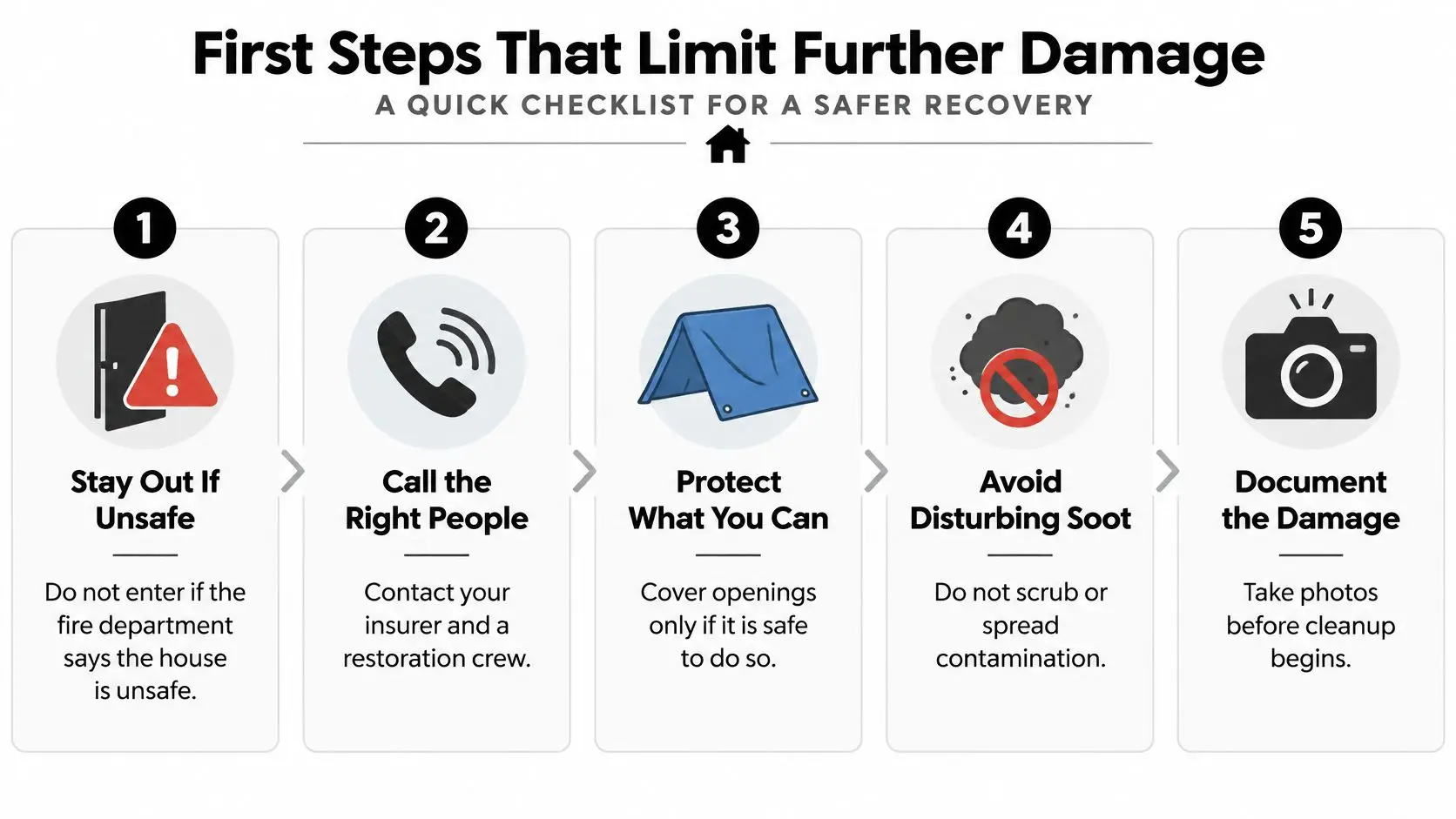
A room can look untouched and still carry smoke residue. The first hours are for protecting people, limiting new contamination, and recording what happened, not trying to restore the whole house yourself.
Safety first, then source control
Wait for the fire department to clear the home before entering. Fire can leave weak floors, damaged wiring, gas concerns, and downed utilities that are difficult to assess safely. Keep children and pets away from soot, and discard food that was left exposed to smoke.
If fire or firefighting opened the roof or an exterior wall, rain and wind can cause further damage. Temporary coverings may be needed. A storm damage roof inspection can help document roof condition after an opening, before repairs begin.
While outdoor air is smoky, keep doors and windows closed. If your HVAC system has a fresh-air option, close its outdoor intake to avoid drawing more smoke inside. When outdoor air improves, airing out the home can help clear smoky air. Check conditions first: ventilation during smoky weather can bring outdoor smoke into rooms that were less affected.
Gentle cleaning that doesn't spread residue
Smoke residue does not stop at the room where a fire occurred. EPA guidance on cleaning surfaces exposed to smoke says every surface exposed to smoke may need cleaning, including walls, floors, windows, baseboards, doors, frames, cabinets, and furniture. It also notes that washable curtains, rugs, covers, and bedding can be laundered, and carpets need cleaning.
For hard surfaces, use diluted soap and water with light pressure. Soot can smear, and hard scrubbing may push oily residue into paint or grout. Dry sweeping can lift settled particles back into the air. Clean gently, replace dirty water often, and stop if a surface is porous, matte, or looks worse as you work. That change can signal that the material needs a different cleaning method.
Avoid running an ozone generator in an occupied home. Ozone generators are not recommended for smoke odor remediation. If one is used, the EPA smoke cleaning guidance says a remediation professional should operate it, and the space should remain unoccupied during use and for a designated period afterward. A household machine can add a hazard rather than solve the source of the odor.
Document before you discard
Before items are moved or cleaned, photograph each room, including rooms that appear unaffected. Record residue on high surfaces, vent and filter conditions, and damaged belongings where they sit. Photograph serial plates on appliances and electronics, too. Make a simple list of each item, its room, and the damage you can see.
These steps do not guarantee a particular cleanup result or settle an insurance claim. They help protect people, limit further damage, and preserve a clear record for the adjuster and restoration team. Once the immediate safety steps and documentation are done, leave broader cleaning and assessment to qualified professionals.
How to Choose Fire and Smoke Damage Cleanup
Not all cleanup offers mean the same thing. Three homeowners can each hire help after the same fire and get three very different jobs, at three different depths. Knowing the difference before you sign anything protects you more than any single product or machine.
Three levels of work compared
A wipe and deodorize job cleans visible surfaces and treats the air for odor. It can suit a very light, brief smoke exposure on mostly hard surfaces. Its weakness is sequence. Deodorizing before residues are removed can trap odor sources under a temporary improvement, and the smell returns when the treatment fades or the weather warms.
A partial clean of visible rooms goes further. The crew cleans walls, ceilings, floors, and contents in the rooms that look affected. That works when smoke stayed in those rooms. It fails when the HVAC system, attic, or a shared wall carried residue beyond the rooms on the work order, because those untreated reservoirs keep feeding odor into cleaned space.
A full restoration sequence starts with assessment, then containment where needed, source removal of burned or heavily contaminated material, cleaning of surfaces and contents, attention to the HVAC pathway, deodorization after source removal, and reconstruction where materials can't be saved. Porous contents get individual decisions. Some upholstery and clothing can be cleaned by specialists. Some carpet pad, insulation, and unfinished wood can't reasonably be returned to a clean state and are better replaced.
Deodorizing is a finishing step, not a first step. If a quote leads with fragrance or a machine and skips source removal, ask what's being left behind.
What to ask any Phoenix contractor
- How will you assess rooms that look clean: A serious answer mentions HVAC pathways, attic access, and porous materials, not just a visual scan.
- What gets cleaned, what gets removed, and why: You want material by material reasoning you can follow.
- How will you keep soot from spreading during work: Containment and careful handling protect unaffected areas.
- What documentation will you give my insurer: Photos, scope notes, and contents lists should be part of the job.
- Who decides whether a material is salvageable: Expect a joint conversation involving you and the adjuster, informed by the restorer's findings.
In the Phoenix metro, one option is Restore Heroes, a licensed, bonded, insured, and IICRC certified restoration company offering 24/7 response, free onsite inspections, and a sequence that covers assessment, mitigation, odor removal, and sanitation, with documentation for insurers and communication through the job. If you want to understand what that credential involves before you call anyone, read what an IICRC certified restoration company does and use it as a benchmark for the questions above.
Two cautions apply to any company you interview. Accepting insurance isn't the same as a promise of coverage. Coverage, scope, and cost depend on your policy and the specifics of the loss, and no contractor can guarantee what an insurer will pay. Likewise, no honest crew can promise a particular result or timeline before they've assessed concealed spaces. A contractor who guarantees everything on the phone is telling you something. Listen to it.
Your goal isn't to find the cheapest spray or the fastest promise. It's to find a crew whose sequence makes sense, whose scope matches how smoke moved through your building, and who's willing to explain trade offs in plain words before work begins.
Prevent the Next Fire and Take the Next Step
Prevention splits into two jobs that people often blur together. One keeps a fire from starting in your building. The other limits smoke that arrives from somewhere else. A Phoenix home needs habits for both.
Structure fire prevention
Test smoke alarms and replace dead batteries instead of removing a chirping unit. Keep exits clear, especially the path from bedrooms. Stay in the kitchen while food fries or broils, clean the dryer lint trap every load, and keep flammables away from water heaters and garage heat sources. Space heaters need clear space around them and a shutoff habit when you leave the room.
For readers comparing alarm standards across countries, UK smoke alarm grades explained outlines how another system classifies alarms, which can sharpen the questions you ask about your own detectors even though Arizona requirements differ. Use a structured review such as a fire safety inspection checklist for homes to walk your kitchen, laundry, garage, and bedrooms on a schedule instead of relying on memory.
Smoke intrusion preparation
Regional wildfire smoke and a neighbor's fire call for different moves. Know how to close your HVAC fresh air intake before you need to. Keep a properly sized room air cleaner that emits little or no ozone for the room where vulnerable family members sleep. Replace HVAC filters after a smoke event rather than shaking them out. Decide in advance who checks on an older parent in a separate unit, because shared corridor smoke can affect one apartment and spare the next.
Small commercial spaces should add an occupancy plan. Decide who can close intakes, who communicates with tenants or customers, and what conditions trigger a closure. That decision is easier made on a calm Tuesday than during a smoky afternoon with a full waiting room.
Your next step depends on what you found
If your walkthrough turned up soot film, a returning odor, dust at the registers, or symptoms that track the house, arrange an onsite inspection with a local certified restorer rather than waiting to see whether the smell fades. Those clues point to reservoirs that ventilation won't empty.
If the space is clear, the HVAC pathway checks out, and everyone feels well, you're in prevention territory. Work the checklist, keep your claim photos and lists organized in one folder, and note the date you changed filters and aired the house. That record helps if odor shows up weeks later in the heat.
Either way, keep expectations honest. An inspection and a conversation with your insurer clarify your options. They don't guarantee payment, timing, or a return to any particular condition, and anyone who suggests otherwise is overselling. What they give you is a decision based on what your building shows, which is the only basis worth trusting.
If soot, returning odor, or smoke in your vents has you unsure whether your Phoenix home is ready to occupy, Restore Heroes offers 24/7 emergency response and free onsite inspections for fire and smoke damage across the Phoenix metro. A certified technician can assess burned and unburned areas, document the loss for your insurer, and explain your cleanup options in plain language before any work begins.