
The call usually comes when a homeowner is overwhelmed. A toilet has overflowed and backed dark water into two rooms. A family has discovered a loss in the home and does not know what they are allowed to touch. A garage corner has animal waste, strong odor, and stains that keep coming back after repeated scrubbing.
In Phoenix, those first few minutes matter. Heat speeds up odor release and can make contamination feel worse. During monsoon season, moisture can push sewage, organic waste, and hidden contamination into flooring, drywall, and baseboards.
Biological clean up is not about making a room look better. It is about making it safe enough to occupy again. That means stopping exposure, controlling spread, removing contaminated materials when needed, disinfecting correctly, and verifying that the work reached the affected surfaces.
When Disaster Strikes Your Home
A homeowner walks into the laundry room before sunrise and sees black water at the door threshold. The smell is immediate. A few feet away, a box fan is running because someone thought drying it out would help.
That is a common first instinct. It is one of the quickest ways to move contamination into the air and to nearby rooms.
Another version happens after a traumatic event. Family members want to help. They reach for paper towels, bleach, trash bags, and old clothes. They are trying to take control of a hard moment. But blood, bodily fluids, and other potentially infectious materials do not stay where you can see them. They wick into grout lines, tack strip, subfloor seams, and porous materials.
The first five minutes should stay simple.
- Keep people out: Close the door or block access if you can.
- Do not touch or sort items: Leave affected materials where they are.
- Shut off air movement: Turn off fans in the room and avoid moving contaminated air through the house.
- Protect pets and children: Keep them far from the area.
- Call for the right kind of help: If water is involved, emergency response for contaminated flooding and backups is different from routine drying. Homeowners dealing with an urgent overflow or intrusion can start with emergency water damage support.
Practical tip: If you are not sure whether the situation counts as biological clean up, treat it as if it does until a trained technician says otherwise.
Panic leads people to clean first and think later. A better approach is to pause, isolate the area, and avoid turning one room into a whole-house problem.
Understanding Biological Clean Up
A Phoenix homeowner realizes what biological clean up means only after a sewage backup sits in August heat for a few hours, or monsoon runoff pushes contaminated water into a garage and then into adjoining rooms. In Arizona, time and temperature change the job fast.
Biological clean up is the controlled removal, decontamination, and disposal of hazardous biological material. That includes blood, bodily fluids, sewage, animal waste, and other organic contamination that can carry pathogens or make a home unsafe to occupy.
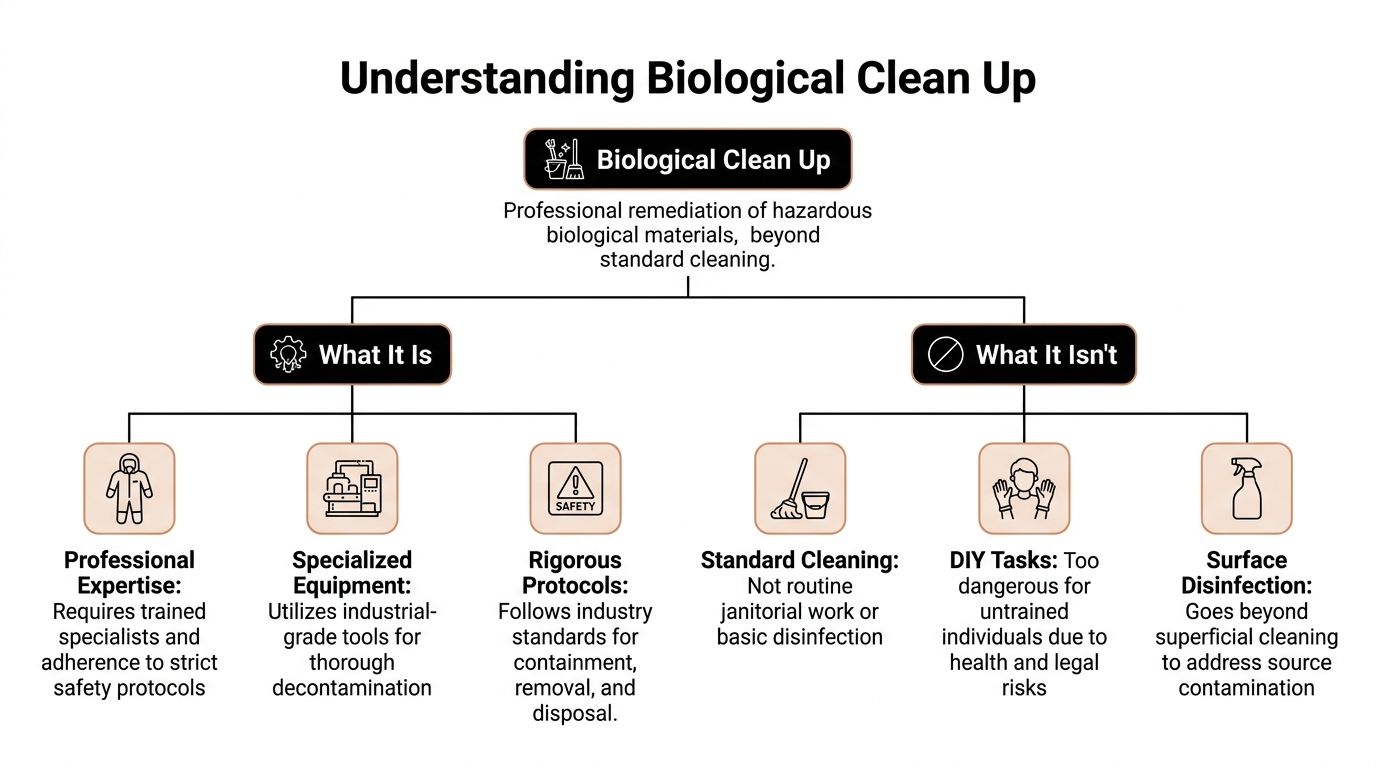
It is closer to controlled decontamination work than routine house cleaning
The job is to identify affected materials, control exposure, remove what cannot be salvaged, clean and disinfect what can be saved, and confirm the area is ready for normal use again.
That standard matters in Phoenix homes. High heat can intensify odors and speed organic breakdown. Monsoon humidity can push contamination deeper into porous materials and make enclosed areas harder to dry after sewage or fluid loss. What looks limited on the surface can spread into pad, subfloor seams, drywall edges, and base assemblies.
A proper response starts with inspection and contamination mapping. Technicians determine where potentially infectious material traveled, set containment, choose PPE, remove unsalvageable porous materials when needed, clean and disinfect structural surfaces, and document the work. Homeowners comparing service types can review what a trained biohazard remediation company is expected to handle before they authorize work.
What counts as biological contamination
Homeowners are surprised by what belongs in this category.
- Trauma scenes: Blood and tissue can reach cracks, textiles, and concealed edges.
- Sewage intrusions: Black water affects more than the visible wet area and requires removal of porous materials.
- Animal waste: Rodent droppings, urine, and nesting debris create exposure and odor problems that standard janitorial cleaning does not fix.
- Unattended death conditions: Decomposition affects surfaces, absorbent materials, and indoor air conditions in ways that require specialized handling.
One of the biggest misunderstandings is the word “sanitized.” A room can smell better and still be unsafe. Surface spraying does not solve contamination that has penetrated carpet pad, grout, insulation, drywall paper, or unfinished concrete.
There is a practical insurance question. Coverage depends on the source of the loss, the policy language, and how quickly the damage was reported. Homeowners sorting through that side of the problem can start with understanding insurance coverage for water damage and mold.
For a homeowner, the takeaway is straightforward. If the situation involves bodily fluids, sewage, or hazardous organic matter, treat it as remediation work and isolate the area until trained help can assess it.
The Hidden Dangers in Your Home
A Phoenix homeowner walks into a bathroom after a sewage backup, mops the floor, opens a window, and assumes the room is under control. Hours later, the air feels better, but the contamination problem has not been solved. In Arizona, heat speeds odor release, and monsoon humidity can hold moisture in walls, grout, and flooring longer than people expect.
The hidden danger is penetration.
A surface can look clean while contamination remains in carpet backing, under vinyl seams, inside grout lines, behind baseboards, and in the lower edge of drywall. In homes that sit closed up through triple-digit heat, that trapped material can break down faster and produce stronger odor. During monsoon season, added humidity can slow drying in shaded rooms and enclosed cavities, which increases the chance that a biological loss turns into a moisture and microbial problem.
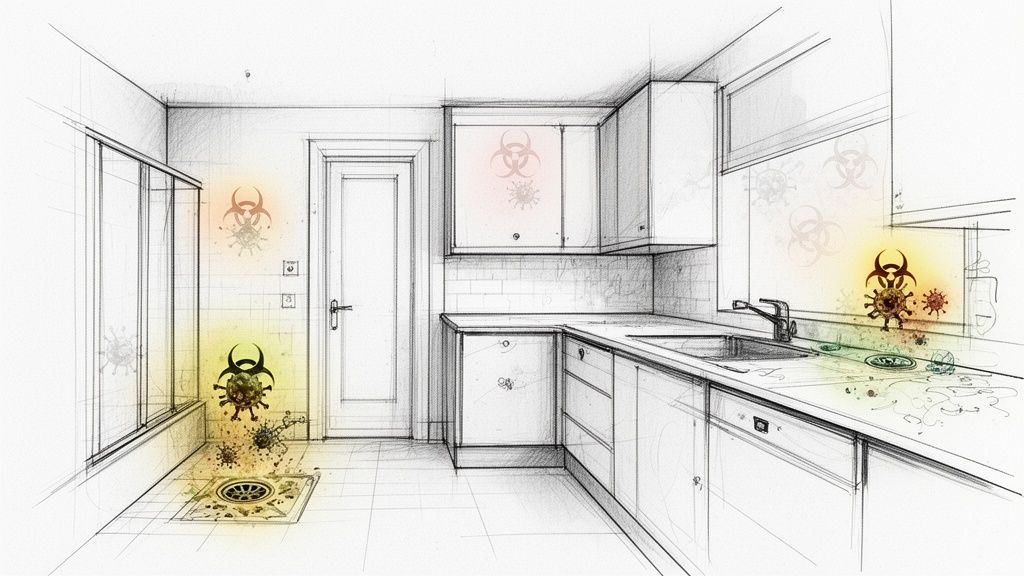
Contamination is often present beyond the visible area
Homeowners focus on the stain, the spill, or the room where the event happened. The primary concern is where material traveled after the first impact. Foot traffic, cleaning attempts, absorbent finishes, and airflow can spread contamination farther than the eye can track.
That matters for health and for scope. Blood, sewage, and other potentially infectious materials are handled as exposure hazards even when only a light residue is visible. Needle-related items, drain overflows, and waste contamination create a different level of risk than routine housekeeping, especially if children, older adults, or pets are still moving through the home.
Why common building materials make cleanup harder
Porous materials hold what they absorb. Carpet pad, insulation, unfinished wood, paper-faced drywall, particleboard cabinetry, and some concrete surfaces can all retain contamination below the wipeable surface. Once that happens, surface disinfectant alone is rarely enough.
Arizona homes present a few trade-offs that homeowners should know. Air conditioning helps control indoor temperature, but it can circulate odor and fine particulates if the affected area is not isolated properly. Slab-on-grade construction can hide moisture at the floor line. Older homes with additions, cooled garages, or below-grade storage areas may develop secondary growth after a water-related biohazard event. If that part of the problem applies to your property, this guide to dangerous molds in basements explains how hidden moisture can keep causing trouble after the visible water is gone.
Key takeaway: A better smell does not confirm a safe room. Clearance depends on proper removal, cleaning, and verification, not odor alone.
The cost questions can become part of the cleanup problem
Delays happen because a homeowner is trying to figure out coverage before authorizing work. That is understandable, but waiting can increase material loss in Phoenix heat or after a monsoon intrusion. If you are sorting through exclusions, reporting timelines, or mold-related disputes, this resource on understanding insurance coverage for water damage and mold can help you ask better questions before you speak with your carrier or adjuster.
Common Scenarios Needing Professional Remediation
Some homeowners hesitate because they think biological clean up only applies to crime scenes. In practice, the calls are broader.
Trauma and loss inside the home
After a fall, medical emergency, self-harm, or violent event, contamination can spread well beyond the obvious area. Blood moves through seams, under furniture, into subfloor joints, and sometimes into adjacent rooms during foot traffic.
The hard part for families is that the emotional urgency pushes them toward immediate cleanup. The technical reality points the other way. The area needs controlled access, careful removal of affected porous materials, and a structured disinfection plan.
Unattended death conditions
These jobs are different from a standard trauma scene. Time changes everything.
Odor compounds build up. Insects may be present. Fluids can affect flooring, walls, furniture, and the structural assembly beneath them. In Phoenix, heat can intensify conditions inside closed homes, especially during summer power interruptions or when blinds and windows trap solar heat.
Sewage backups and monsoon-related intrusions
This is one of the most common residential biohazard situations in Arizona. A blocked drain line, toilet overflow, storm-related backflow, or floodwater intrusion can move contaminated water through multiple rooms quickly.
People ask if drying alone will solve it. It will not. The problem is not only moisture. It is contaminated moisture.
When wastewater is involved, the response often falls under category 3 water damage, which requires a much stricter approach than ordinary clean water loss. Materials may need to be removed, not dried.
Animal waste, infestations, and neglected spaces
A single pet accident is not the same as a long-term contamination issue. Repeated urine saturation, rodent droppings, bird waste, and hoarding conditions create a different level of hazard. The odor source sits below the visible surface, and standard deodorizers mask it.
That is also why some projects overlap with mold work. Once organic waste and moisture have had time to sit, microbial growth can become part of the job. Homeowners comparing remediation approaches may find it helpful to review how other contractors explain professional mold removal so they can see the difference between source removal and basic cleaning.
Why DIY Cleanup is a Dangerous Mistake
A Phoenix homeowner finds a sewage overflow after a monsoon storm, wipes up the visible mess, runs a fan, and bags what looks ruined. By the next day, contamination has tracked into the hallway, the room smells worse, and the heat has accelerated what was a health problem.
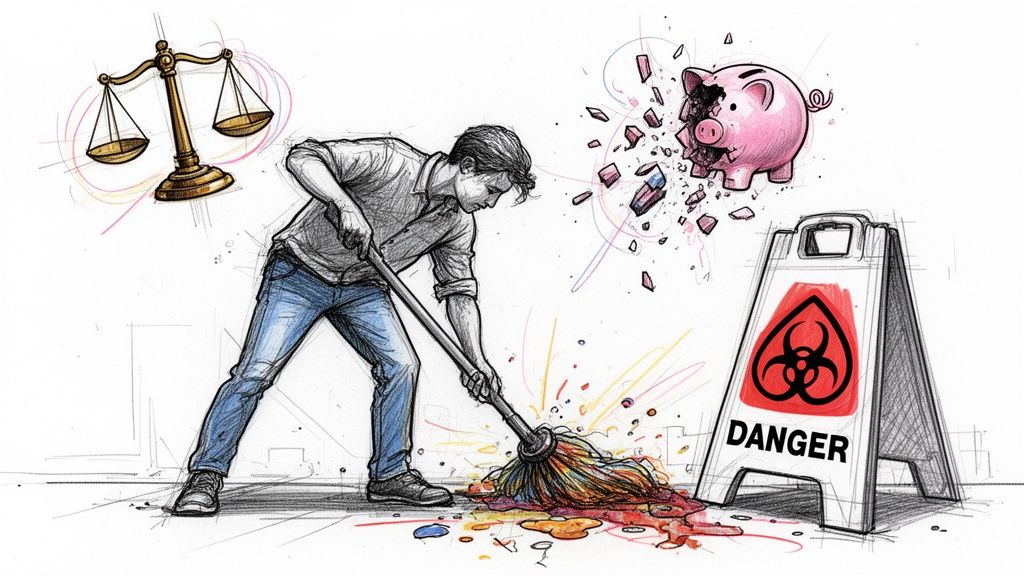
That is the mistake. Homeowners clean what they can see and miss what spread during the cleanup itself.
A mop, bleach, and contractor bags may remove obvious material from the surface. They do not isolate the work area, control foot traffic, or confirm which contents can be cleaned and which must be discarded. In Arizona, high indoor temperatures can intensify odor and bacterial activity quickly, especially if the HVAC system keeps running and moves air through the house.
Store-bought cleaning is not remediation
Retail disinfectants are made for routine household cleaning. Biological clean up involves exposure control, material evaluation, and disposal practices that go beyond wiping a surface.
Trained crews work in defined zones. PPE is selected for the hazard, contaminated items are bagged and removed in a controlled way, and the area is treated to reduce spread during the job. Homeowners are not expected to perform the work at that level. That gap is why DIY cleanup creates a larger loss.
Cross-contamination happens fast
One trip into the room is enough to carry contamination to a doorknob, a phone, a faucet handle, or the washing machine.
This is a common outcome after attempted self-cleanups. Someone steps into the affected area wearing regular shoes, picks up a trash bag, adjusts the thermostat, then walks through the house without realizing what has transferred. In Phoenix homes, ceiling fans and AC airflow can add another layer of trouble if contaminated moisture or particulates are disturbed during cleanup.
Wet vacs are another common mistake. They are not built for every biohazard condition, and using one on sewage can spread contamination into equipment and nearby areas. Homeowners who want a clearer picture of why the process has to be stricter can review this overview of professional hazardous clean up services.
The emotional cost is real
Families start with good intentions. They want to take back control, protect privacy, or avoid having strangers in the home.
In trauma scenes, the cleanup itself can leave a lasting mark. The memory of the event becomes attached to the act of cleaning it. I have had homeowners tell me they were managing well until they tried to handle the room themselves. After that, sleeping in the house, using the bathroom nearby, or even walking past the door became harder.
Protecting mental health is part of protecting the household.
Disposal errors create new problems
Waste handling is where many DIY jobs break down. Items saturated with blood, sewage, or other potentially infectious material cannot always be set out with ordinary trash. Some materials have to be packaged, transported, and discarded in a controlled manner based on the type and extent of contamination.
The risk does not end when the bag leaves the room. Improper disposal can expose family members, cleaning staff, waste handlers, and future occupants. In hot weather, delays make that worse. Bagged waste left in a garage, side yard, or trash area can degrade and create odor and leakage issues that were avoidable from the start.
The Restore Heroes Remediation Process
Homeowners feel better once they know what the process looks like. Biological clean up should be orderly, documented, and clear from the first call to the final walkthrough.
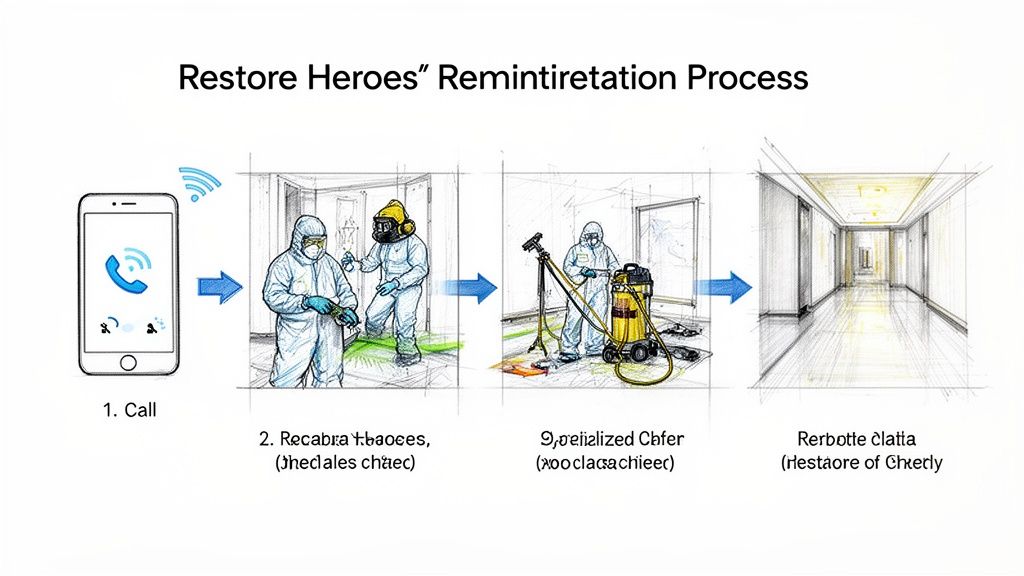
Step one is control, not speed for its own sake
The first priority is to understand what happened, who has been exposed, and whether the area can be accessed. That starts with a call intake, basic scene details, and instructions to limit entry.
Once on site, the crew identifies visible contamination, likely spread paths, affected materials, and immediate safety concerns. In a trauma scene, that may include flooring transitions, nearby furniture, and wall surfaces. In a sewage event, it may include moisture migration beyond the visible water line.
The work area gets isolated
Containment prevents a bad room from becoming a bigger loss.
Technicians set barriers, control access, and use negative air or other engineering controls when the situation calls for it. PPE is selected to match the exposure risk. That may include nitrile gloves, full-body suits, respirators at the required level, and face protection, based on the contamination profile described in the applicable standards.
A clean work zone and a contaminated work zone are kept separate. That sounds simple, but it is one of the most important parts of the entire job.
Removal comes before fine cleaning
If porous material has been penetrated, trying to “save” it at all costs makes the cleanup worse. Carpet pad, drywall, soft furnishings, insulation, and certain contents may need removal if contamination has gone beyond the cleanable surface.
Crews then clean remaining structural surfaces with the appropriate chemistry and method. Homeowners notice the difference between a restoration crew and a basic cleaning service. The work is slower, more methodical, and more focused on edges, seams, underside surfaces, and transition points.
Odor treatment has to address the source
Professional remediation may use enzymatic digesters that break down organic bio-loads, substantially reducing odors, along with ATP bioluminescence testing to confirm molecular-level cleanliness and verify surfaces are within an acceptable light unit threshold depending on the protocol (advanced decontamination tools and ATP testing).
That matters because odor treatment alone can mislead people. Fogging, ozone, or sealing methods have a place, but source removal and cleaning come first. If the contamination remains in the material, the smell returns.
Important: A room that smells better is not necessarily a room that has been remediated.
Documentation matters more than most homeowners expect
A proper file may include photographs, work notes, PPE logs, product use records, and cleaning verification results. That documentation helps with communication between the homeowner, property manager, carrier, or adjuster.
The process should include a clear conversation about contents. Some items can be cleaned. Some can be isolated for owner review. Some are unsafe to keep. Homeowners deserve plain language on that point, especially when personal belongings carry emotional value.
One option for Phoenix-area homeowners needing this kind of response is Restore Heroes, which provides biohazard remediation as part of broader disaster restoration work. The key question is not the brand name. It is whether the crew follows a true remediation process with containment, removal, cleaning, and verification rather than surface-level disinfection.
Final clearance is about confidence, not guesswork
At the end of the project, the homeowner should understand what was removed, what was cleaned, what testing or verification was used, and what conditions support re-entry. If rebuilding is needed after demolition, that should be explained separately from decontamination so there is no confusion about what phase has been completed.
A good cleanup leaves less uncertainty. That is one of the biggest practical benefits of doing the work correctly.
Phoenix Biohazard Issues and Solutions
A Phoenix homeowner may leave for a weekend, lose power during extreme heat, or come home after a monsoon storm to find sewage backup in a bathroom or laundry room. In Arizona, those first few hours matter more than many people expect.
Heat changes the response window
Closed homes in Phoenix heat up quickly. That speeds odor development, increases occupant stress, and can push contamination deeper into porous materials if the scene is left untreated. A delay that might seem manageable in a milder climate can turn into additional tear-out here.
The practical rule is simple. If there is blood, sewage, human waste, or decomposition-related contamination, restrict access right away, keep pets and children out, and call for guidance the same day if possible.
Monsoons create mixed-loss conditions
During monsoon season, homeowners deal with more than standing water. Storm runoff, drain backups, and sewer intrusion can enter at the same time, which changes the safety plan. Water extraction alone does not address biological contamination.
That distinction matters in Phoenix because wet materials sit in high heat after the storm passes. Drywall, baseboards, insulation, and cabinets can hold contamination even after the visible water is gone. If the source involved sewage or outside runoff of unknown quality, the area needs to be treated as contaminated until a qualified crew evaluates it.
Outdoor contamination around the property needs a controlled response
Phoenix properties see biohazard problems outside the main living space. Fence lines, alleys, side yards, detached garages, and vacant-lot borders may contain sharps, human waste, drug paraphernalia, or contaminated debris. Heat, sun exposure, and dust do not make those materials safe to handle.
Homeowners should not start with a trash bag and gloves from the garage. The immediate steps are to keep people away from the area, avoid mowing or sweeping anything that could spread contamination, and arrange for proper removal if sharps or bodily fluid contamination are present.
What to do first in a Phoenix home
Start with control, not cleanup. Close off the affected area as much as possible, turn off HVAC serving that space if contamination could enter the system, and avoid touching contents until the source is identified.
If the event followed a storm, document where water entered and whether toilets, floor drains, or sinks backed up. If the house has been closed up in summer heat, tell the remediation company that before they arrive. It helps them prepare for odor, material condition, and PPE needs.
Arizona conditions are hard on buildings and hard on people making decisions under stress. A calm, early response means a safer project and a narrower repair scope later.
Frequently Asked Questions About Bio-Recovery
How do I know the air is safe to breathe again
Air safety depends on the type of contamination and how the cleanup was performed. A reliable answer comes from the remediation process, not from a quick sniff test. If the job required containment, filtration, odor treatment, or verification testing, ask what methods were used and what conditions support re-entry.
Can I stay in the house during biological clean up
Sometimes yes, sometimes no. It depends on where the contamination is, whether the area can be isolated, and whether work will affect shared HVAC pathways, hallways, bathrooms, or bedrooms. In a small, well-contained area, partial occupancy may be possible. In a sewage or trauma event affecting core living space, temporary relocation is the calmer option.
What happens to contaminated personal belongings
Each item gets evaluated based on material, contamination level, and whether it can be cleaned safely. Hard, non-porous items have a better chance of being restored. Porous materials are harder because contamination can move inside them and remain after surface treatment.
If something has sentimental value, tell the crew early. That does not guarantee it can be saved, but it helps the decision happen carefully.
Is the service discreet
Professional crews understand the sensitivity of these jobs and work to limit unnecessary attention. Homeowners should ask how arrival, access, and communication will be handled. Discretion matters most in trauma scenes, unattended deaths, and occupied neighborhoods where family privacy is a concern.
Is the area safe for children and pets afterward
That decision should be based on completion of the remediation steps and the crew’s re-entry guidance. Children and pets are more likely to contact floors, lower surfaces, corners, and contents, so those areas need to be addressed thoroughly. If any area remains under repair or awaiting reconstruction, keep access restricted until that phase is complete.
Will odor always go away
Not always with one method, and not always immediately. The outcome depends on how far organic material affected the structure. Odor control works best when the source has been removed, the remaining surfaces have been cleaned correctly, and the right treatment is applied to the material involved.
Should I take photos before anything is touched
Yes, if you can do it without entering an unsafe area. Photos from a doorway can help document conditions for insurance, property management, or later questions about contents. Do not move items to get better pictures.
What should I do right now while waiting for help
Keep people out, turn off fans in the affected area, avoid handling contaminated items, and make a note of what happened and when you discovered it. If sewage, blood, needles, or bodily fluids are involved, do not try to start with household cleaners.
If you are facing a sewage backup, trauma scene, or other hazardous contamination issue in the Phoenix area, Restore Heroes is one local option for professional restoration support. Ask direct questions about containment, removal of porous materials, cleaning methods, verification, documentation, and how the crew will help you make the home safe to enter again.