
You take a sip from a bottle that’s been sitting in the car, on a nightstand, or at the bottom of a gym bag. The water tastes off. You look inside and see a slimy ring, dark specks, or a fuzzy patch near the cap. Your stomach drops.
That reaction makes sense. A lack of information about what happens if you drink moldy water often leads to immediate fear of the worst-case scenario. In many cases, one accidental sip won’t turn into a major medical emergency for a healthy adult. But it also isn’t something to shrug off, especially if symptoms start, if the water source is questionable, or if the person who drank it is more vulnerable.
A calm response helps. Stop drinking it, pay attention to symptoms, and think about where the contamination came from. A dirty reusable bottle is one thing. Water from a flood-affected home, a damaged pipe, or a musty tap is a very different concern.
That Sinking Feeling After a Sip of Moldy Water
The most common moment is ordinary. You grab a reusable bottle you meant to wash yesterday. Or last week. Maybe you refill the same tumbler every day, but you don’t always scrub the lid, straw, or rubber seal. Then one sip tells you something isn’t right.
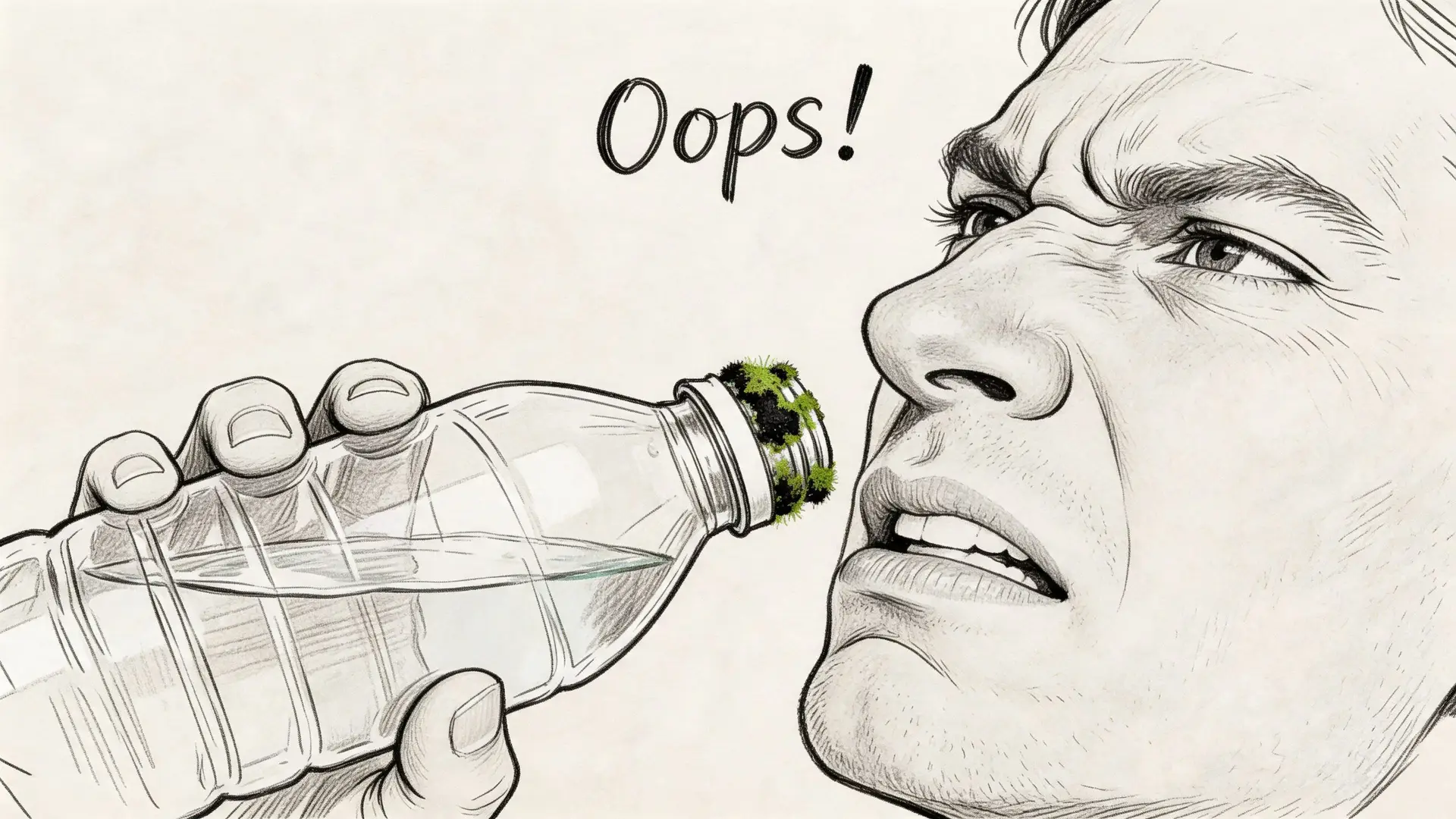
In that moment, panic usually makes things worse. People often wonder if they’ve poisoned themselves, if mold can grow inside the body right away, or if they need the ER immediately. Those are fair questions, but the answer depends on three things: how much you drank, what kind of contamination was present, and your health status.
For many healthy people, the first issue is short-term irritation. The stomach and throat may react to contaminated water with nausea, cramps, or a bad taste that lingers. Other people notice coughing, congestion, or itchy eyes instead. If someone already has asthma, allergies, or a weakened immune system, the same exposure can hit much harder.
First principle: treat moldy water as contaminated water, not just dirty water.
That distinction matters. Mold isn’t only a stain or smell. It can involve spores, toxins, and slime-like buildup that protects growth inside bottles, caps, straws, plumbing, and standing water.
Understanding the Hidden Dangers in Moldy Water
When people hear “mold,” they usually picture black or green spots. That’s only the visible part. The primary concern is what may be mixed into the water even when growth looks minor.
Mold spores and mycotoxins
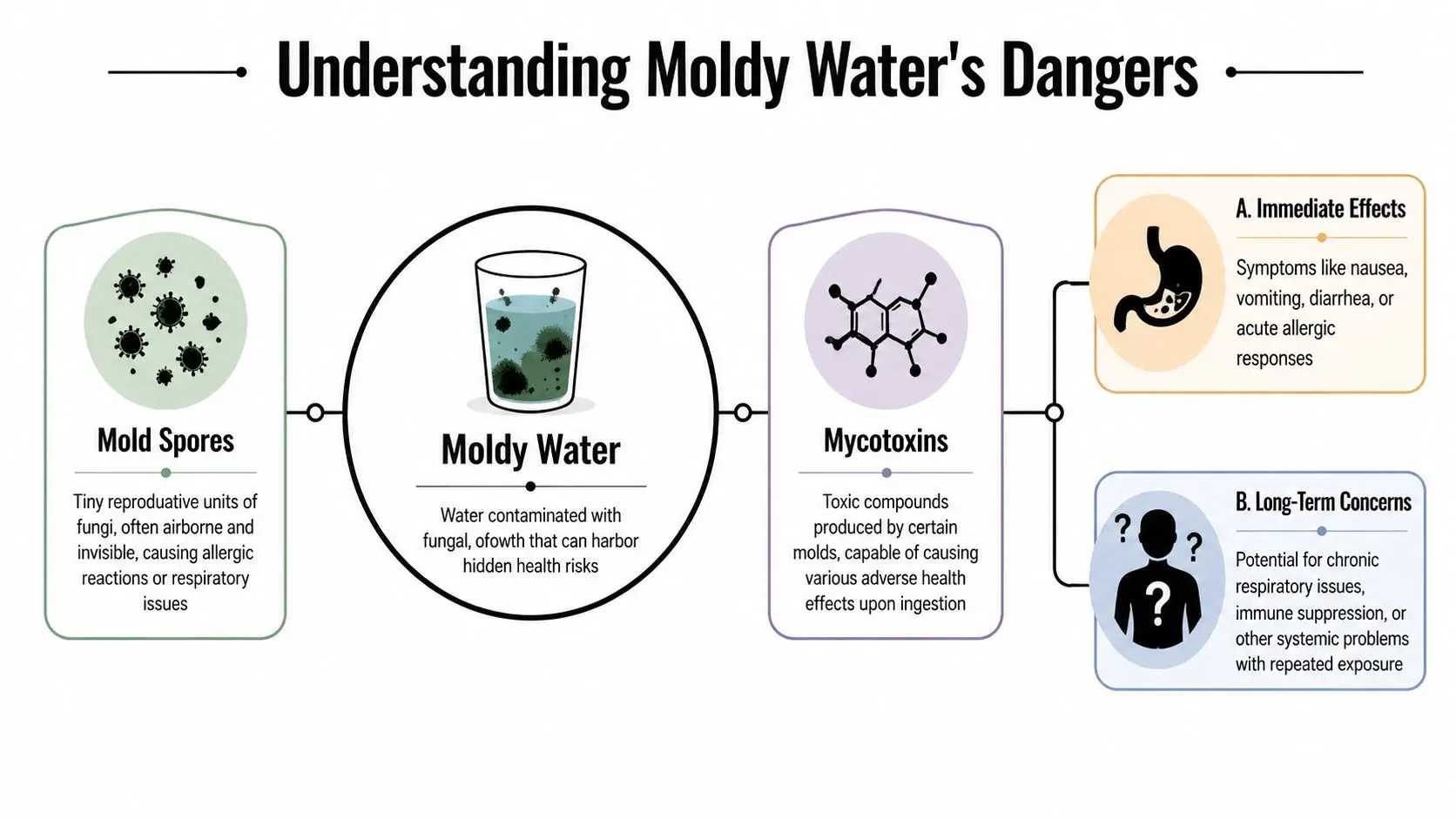
Mold spores are tiny reproductive particles. A simple way to think of them is as microscopic seeds. You may not see them, but they can still be present in contaminated water. Once swallowed, they can irritate tissues in the mouth, throat, stomach, or intestines.
Mycotoxins are toxic substances produced by some molds. Not every mold makes them, and not every exposure leads to serious harm, but they’re one reason moldy water shouldn’t be ignored. These substances can trigger inflammation and other body reactions even when visible mold seems limited.
The CDC’s mold health guidance notes that drinking moldy water introduces fungal spores and potential mycotoxins directly into the gastrointestinal tract, triggering an inflammatory cascade. The same guidance also explains that in immunocompromised people, certain molds such as Aspergillus can spread systemically and cause invasive fungal infections, with mortality rates up to 50 to 90 percent in some patient groups.
Why bottles get slimy
Many readers assume mold only grows as fuzzy spots. In real life, contamination often starts as a slick film. That film is called a biofilm. Think of it as a shield or sticky neighborhood where microbes can cling to a surface and protect each other.
Reusable bottles are perfect places for this. They stay damp. Lids and straws trap residue. Rubber gaskets hold moisture. Add warm temperatures, and growth becomes much more likely.
A few examples people miss:
- Flip-top lids hide buildup underneath the mouthpiece.
- Straw caps collect slime inside narrow channels.
- Bottle seals stay wet after rinsing and never fully dry.
- Pitchers and dispensers may look clean but still harbor growth along seams.
If the contamination started after a leak, overflow, or sewage-related event, the risk picture is broader than bottle hygiene. Water damage can involve bacteria, debris, and other harmful contaminants. That’s one reason severe household contamination is treated differently from routine cleaning, especially in situations tied to category 3 water damage.
Moldy water can look clear, smell faintly musty, or only leave a strange aftertaste. You can’t rely on appearance alone.
Immediate Health Effects and Likely Symptoms
The most likely effects after drinking moldy water are short-term symptoms involving the stomach, airways, or an allergic-type reaction. The exact response varies from person to person. Some people feel nothing. Others notice symptoms within hours.
The CDC’s drinking water facts and statistics estimate that at least 1.1 million people in the U.S. get sick annually from germs in drinking water, which affects about 1 in every 300 people. That figure isn’t specific to mold alone, but it shows why contaminated water deserves attention. The same CDC material lists common acute symptoms such as nausea, vomiting, diarrhea, and stomach cramps.
Stomach and intestinal symptoms
This is often the first pattern observed. The digestive tract is usually the first system to react because the contaminated water goes straight there.
Common possibilities include:
- Nausea that starts as queasiness or a sour feeling in the stomach
- Stomach cramps that feel like tightening, pressure, or churning
- Vomiting if the stomach becomes strongly irritated
- Diarrhea or loose stool later the same day
For a healthy adult with a small accidental exposure, these symptoms are often mild and pass. If they become severe, keep going, or involve dehydration, the situation changes.
Throat, sinus, and breathing symptoms
People get confused here because they assume drinking mold only affects the stomach. It can also irritate the upper airway.
You might notice:
- Sore throat
- Coughing
- Nasal congestion
- Sinus irritation
- Wheezing, especially if you already have asthma
This overlap happens because contaminated water can contact the mouth and throat directly, and some people react strongly to mold exposure in general. If black staining or growth is also present in walls, ceilings, or HVAC areas, it’s worth learning more about toxic black mold on drywall, since source conditions matter.
Skin, eye, and headache symptoms
Some reactions look less like food poisoning and more like allergy or irritation.
A person may develop:
| Symptom type | What it may feel like |
|---|---|
| Itchy eyes | Watery, irritated, or stinging eyes |
| Headache | Dull pressure or a foggy feeling |
| Skin rash | Itching, redness, or irritated patches |
| General malaise | Feeling “off,” tired, or unsettled |
A simple timeline
Most healthy adults who react will usually notice symptoms fairly soon, often within hours to a day. That doesn’t mean every symptom appears at once. One person may only get cramps. Another may first notice a scratchy throat and later feel nauseated.
Watch for progression: mild nausea that improves is different from vomiting that escalates, breathing that gets tighter, or symptoms that don’t settle down.
A bad taste by itself doesn’t prove a dangerous exposure. But if the water was visibly moldy, had standing contamination, came from a flood-affected area, or triggered multiple symptoms, take it seriously.
Long-Term Risks and Vulnerable Populations
The harder cases are usually not the dramatic ones. They are the ones where a person drinks from the same questionable source over and over, feels "off" for weeks, and never realizes the water may be part of the pattern.
Repeated exposure changes the risk
A single accidental sip and months of low-level exposure are different situations. The first may cause nothing, or a short-lived stomach reaction. The second can keep reintroducing mold fragments, irritants, and in some cases mycotoxins into the body.
That repeated contact works like a slow drip from a ceiling leak. One drop may not seem important. Daily exposure can create a larger problem that is harder to trace back to its source.
This is one reason people miss the connection. Chronic exposure does not always look dramatic. It may show up as recurring sinus congestion, coughing, headaches, stomach upset, or feeling worse in one building than another. Those symptoms have many possible causes, so the pattern matters as much as the symptom itself.
Why some people react more strongly
Susceptibility is not equal.
Research discussed in this review of mold exposure and the HLA-DR gene suggests that some people with certain HLA-DR gene variants may have more difficulty clearing biotoxins after mold exposure. In plain language, two people can share the same environment and have very different outcomes. One may recover quickly. The other may have longer-lasting symptoms after repeated exposure.
That does not mean a gene variant guarantees illness. It means genetics can change the body's tolerance, which helps explain why mold-related complaints sometimes seem inconsistent from person to person.
Who should be more cautious
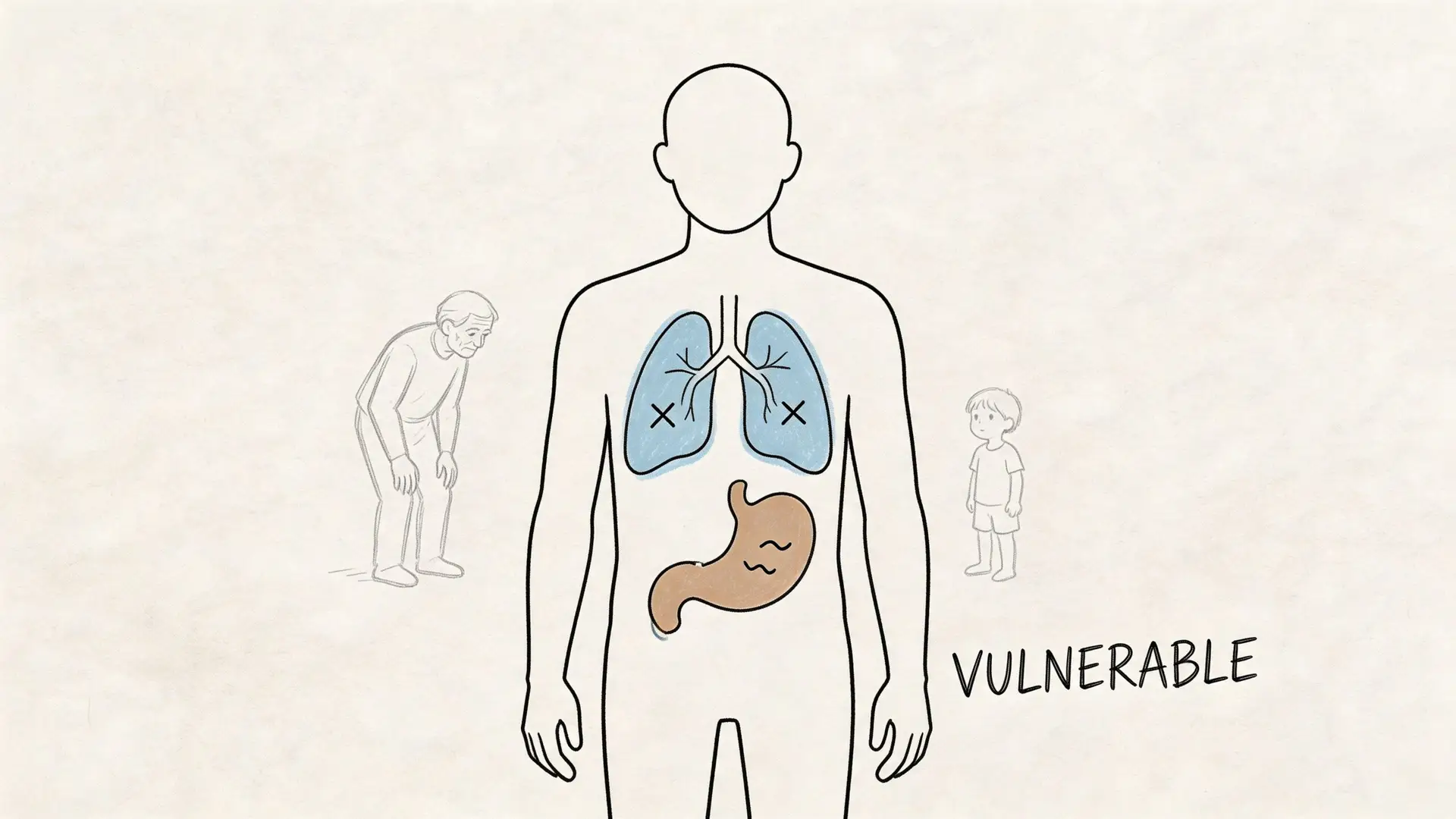
Some groups deserve a lower threshold for concern because their bodies have less room for error or a higher chance of complications.
Infants and young children
Their airways and immune systems are still developing, so ongoing exposure in a damp home deserves prompt attention.Older adults
Dehydration, breathing strain, and recovery from illness can be harder on the body.People with asthma, allergies, or chronic sinus problems
Mold exposure can aggravate the airway and make an existing condition less stable.Immunocompromised people
This group has the highest concern for infection and should contact a medical professional sooner rather than later.People with repeated exposure at home or work
The bottle is not always the actual source. Plumbing issues, water damage, and hidden microbial growth can keep exposure going.
The building may be the real source
In Phoenix, this point matters more than many homeowners realize. After monsoon moisture, roof leaks, plumbing failures, or flood events, mold can spread beyond drywall and framing into areas tied to water use. A glass of contaminated water may be the visible clue, while the actual problem sits in damp materials, affected plumbing zones, or biofilm inside neglected fixtures.
Municipal systems can also become more vulnerable after climate stress, service disruption, and heavy runoff events. Public utilities monitor water quality, but aging infrastructure and post-storm conditions can still create situations where contamination concerns deserve closer attention at the property level.
If a home has known water damage, sewage backup, or organic contamination around plumbing, the right response may involve both medical guidance and a professional biological cleanup for contaminated water damage and affected materials.
Chronic symptoms are easy to dismiss
Long-term exposure often gets mistaken for unrelated everyday problems. A person may blame pollen, poor sleep, stress, or a sensitive stomach. Sometimes that is true. Sometimes the home or workplace is adding a constant irritant load.
Watch for patterns such as symptoms that improve when you leave the building, return after using a certain tap or bottle, or keep recurring after leaks and dampness were never fully corrected.
If symptoms keep returning, get medical advice. If you are unsure where to go, this guide can help you understand urgent care vs ER. Just as important, investigate the source. Ongoing exposure is often a building problem as much as a health problem.
Your Immediate Action Plan After Ingestion
If you’ve just drunk moldy water, keep your response simple. The goal is to reduce further exposure, watch for meaningful symptoms, and get medical help when the situation calls for it.
Step one stop drinking it
Put the container down. Don’t take another sip to “check” if it tastes bad again.
Dump the water and set the bottle, cup, or container aside. If the source may matter later, such as a tap after flooding or a cup filled from a questionable plumbing line, it’s reasonable to note where the water came from.
Step two rinse and reset
Rinse your mouth with clean water. You don’t need to panic-clean your whole digestive tract. Just clear the taste and stop the exposure.
Then drink safe water in small amounts if you feel okay. If you already feel nauseated, go slowly.
Step three monitor what happens next
Pay attention to what your body does over the rest of the day.
Track:
- Digestive changes such as nausea, cramping, vomiting, or diarrhea
- Breathing symptoms like coughing, wheezing, throat tightness, or shortness of breath
- Allergic-type reactions including rash, itchy eyes, or facial swelling
- Who was exposed because a child, older adult, pregnant person, or immunocompromised person may need quicker medical advice
Step four know when to seek care
Call a medical professional promptly if symptoms are strong, worsening, or happening in a high-risk person. Seek urgent help right away for difficulty breathing, severe vomiting, fainting, or signs of dehydration.
If you’re unsure where to go, this plain-language resource can help you understand urgent care vs ER based on symptom severity.
Practical rule: mild symptoms that improve are different from severe symptoms, breathing problems, or anything that escalates.
Step five address the source
If the contamination came from more than a dirty bottle, don’t stop at symptom monitoring. A musty refrigerator dispenser, sink line, flood-affected plumbing area, or contaminated cleanup scene may need professional attention, especially if the event involved unsanitary water. Situations with bodily fluids, sewage, or dangerous contamination can overlap with issues covered in biological clean up.
How to Prevent Mold in Your Home Water Sources
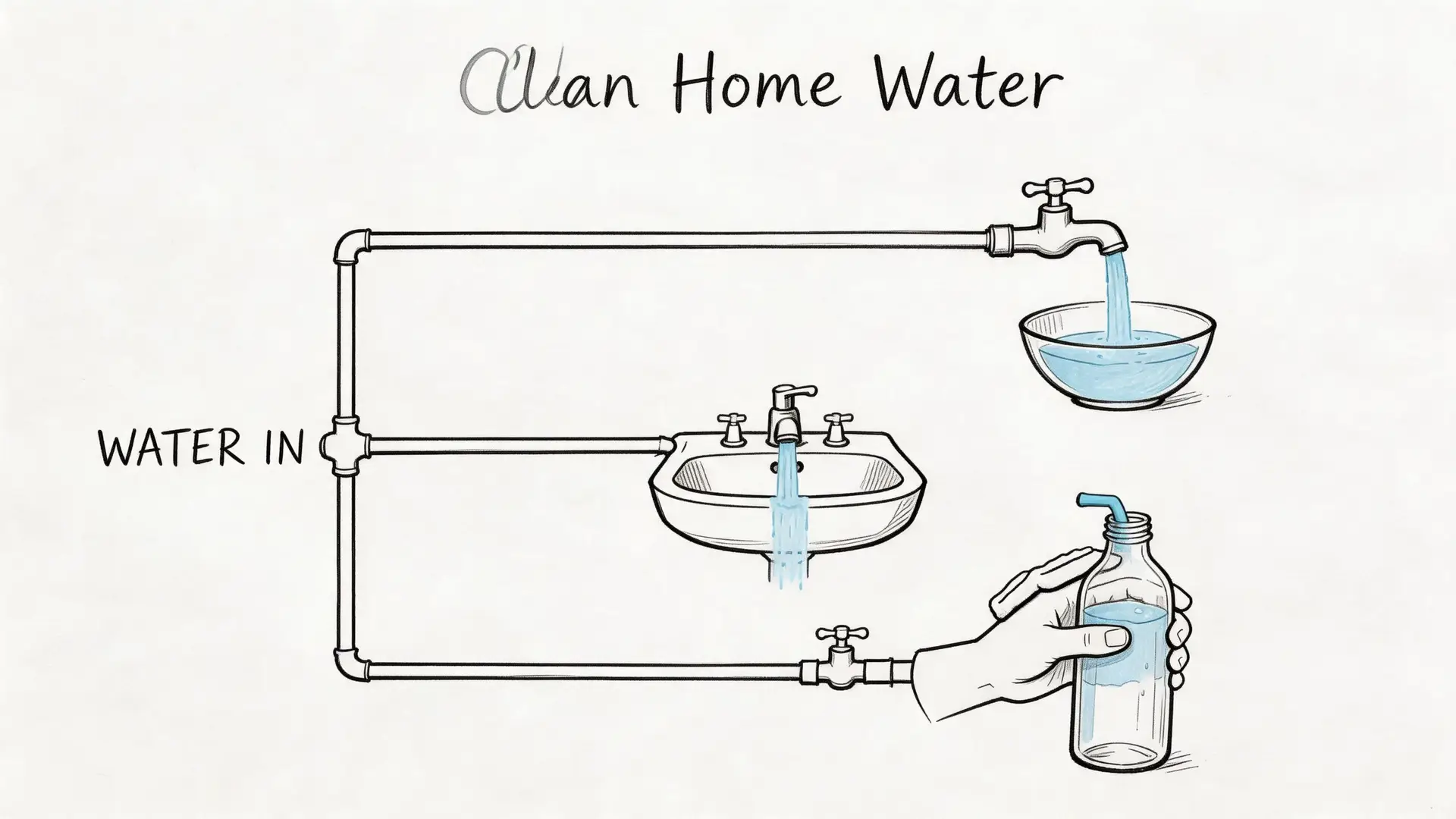
Prevention works best when you think beyond the bottle. The bottle matters, but so do the cap, straw, sink area, plumbing, appliances, and any place water sits too long.
Start with the containers you touch every day
Reusable bottles need more than a quick rinse. Lids, straws, bite valves, and silicone seals hold residue and stay damp.
A practical routine looks like this:
- Disassemble the bottle and remove straws, seals, and cap inserts.
- Wash with hot, soapy water and use a bottle brush for the interior.
- Scrub the lid underside because that’s where slime often starts.
- Air-dry fully before reassembly so moisture doesn’t stay trapped.
This same principle applies to coffee equipment, travel mugs, and machines with hidden water paths. If you use pod brewers, this guide for Keurig owners gives useful cleaning ideas for the water-contact parts people often miss.
Don’t ignore taps and plumbing after storms or leaks
Bottle contamination is familiar. Home water systems are easier to overlook.
The risk rises after monsoon events, pipe leaks, backup incidents, or standing water around the property. A projected 2025 trend discussed in this video summary on post-flood mycotoxin concerns highlights that a USGS study noted mycotoxin levels in 15 percent of U.S. surface waters post-floods, which is especially relevant for areas like Phoenix during monsoon season.
That doesn’t mean every tap becomes dangerous after a storm. It does mean flood-related contamination deserves more caution than most homeowners assume.
What to check around the house
Use your senses first. You’re not diagnosing species. You’re looking for conditions that support contamination.
| Area | What to watch for |
|---|---|
| Kitchen sink | Musty smell, slime near aerators, low-use faucets |
| Refrigerator dispenser | Off taste, stale line water, neglected filters |
| Bathroom taps | Discolored flow after disuse, odor from drains nearby |
| Under sinks | Damp cabinets, warped panels, hidden leaks |
| Water bottles and pitchers | Cloudiness, film, odor, residue under seals |
Home maintenance matters here. Quick cleanup after a leak is far safer than letting damp materials sit.
If your home has had recent moisture issues, this video gives homeowners a useful visual refresher on prevention basics before small problems turn into persistent ones.
Phoenix homes need a weather-aware routine
Phoenix is dry much of the year, which can make people underestimate mold. Then monsoon season arrives, roofs leak, coolers drip, AC lines back up, or a small plumbing issue sits unnoticed behind a wall.
That pattern is why prevention has to connect personal habits with property habits:
- clean the bottle
- check the faucet
- replace neglected filters
- inspect under sinks
- dry wet areas quickly after storms or leaks
If your property has already taken on water, this flood-related mold prevention guide is a useful next step for reducing the chance of hidden growth spreading into water-contact areas.
When to Call Mold Remediation Professionals in Phoenix
You wipe down a sink, replace a bottle, or toss a cup that sat too long in the car. Those are surface problems. A home with moisture inside walls, cabinets, flooring, HVAC components, or plumbing cavities is a different category because the water source can keep feeding microbial growth long after the visible spots are gone.
That distinction matters if the concern is moldy water. The water you drank may be the clue, not the whole problem.
The clearest decision point is water damage
This is the rule I stress most as an IICRC-certified professional. If a leak, overflow, storm intrusion, or plumbing failure left building materials wet for more than a short period, bring in trained help. Mold can begin developing quickly on damp materials, and the larger risk is often hidden moisture, not the stain you can see.
A house works like a sponge with layers. Drywall paper, insulation, subflooring, cabinet backs, and framing can hold moisture out of sight. Homeowners usually clean the exposed surface and assume the issue is over. If the material underneath is still damp, the problem keeps going.
Signs DIY may not be enough
Call for professional help if one or more of these apply:
- You had a burst pipe, roof leak, appliance leak, slab leak, or flood event and materials did not dry promptly.
- A musty odor keeps returning after cleaning.
- The issue seems to involve more than one area of the home.
- Someone feels worse at home and better elsewhere, especially with respiratory irritation, headaches, or sinus symptoms.
- You suspect hidden moisture behind walls, under flooring, inside cabinets, or around HVAC equipment.
- Tap water changed in smell, taste, or appearance after a storm or plumbing event and the source is unclear.
- You have a family member with asthma, immune suppression, or unusual sensitivity to mold exposure, including people who may react more strongly because of underlying susceptibility.
That last point is often missed. Some people recover from a brief exposure with little trouble. Others seem to have lingering symptoms after repeated low-level exposure. This article’s bigger concern is not just one bad sip. It is the pattern of chronic contact with a damp indoor environment that keeps affecting water-contact areas, air quality, and daily health.
What a certified remediation team actually does
A proper remediation visit is part investigation, part correction. The team looks for where moisture started, where it traveled, and what materials stayed wet long enough to support growth. That usually includes moisture mapping, inspection of concealed areas when indicated, containment, removal of damaged materials when needed, drying, cleaning of affected surfaces, and post-remediation verification steps.
Surface cleaning only solves surface contamination.
If the odor keeps coming back, there is usually a reason. Common examples include wet drywall behind a vanity, damp insulation near a pipe chase, growth under flooring after a slow leak, or contamination in a plumbing-adjacent cavity. In Phoenix homes, evaporative coolers, condensate lines, roof penetrations, monsoon-driven leaks, and slab plumbing issues can all create that kind of hidden reservoir.
Why this matters in Phoenix
Phoenix is dry until it is not. A monsoon storm can push water into roof assemblies, wall cavities, garages, and low-slope transitions in a matter of hours. After that, heat can mislead homeowners into thinking everything dried on its own. The outer surface may feel dry while enclosed materials still hold moisture.
Municipal systems can also face added stress after climate events, infrastructure disruptions, or localized contamination concerns. That does not mean the public water supply is broadly unsafe. It means storm-related moisture and plumbing disturbances can create conditions where a home-level investigation makes sense, especially if musty water concerns started after a specific event.
If you need local evaluation for a wider building issue, start with a provider experienced in moisture diagnosis, not just visible cleanup. This guide to mold removal companies near me is one way to compare local options. Look for an IICRC-certified team that addresses water source control, drying, containment, and verification, not just spray-and-wipe treatment.
Frequently Asked Questions About Moldy Water
Can boiling moldy water make it safe to drink
Boiling may kill some living organisms, but it doesn’t solve every concern tied to moldy water. The bigger issue is that contaminated water may contain irritants or toxins that you don’t want to ingest even if heat has affected the mold itself.
If water is visibly moldy, musty, or connected to a contaminated source, the safer move is to discard it and address the source. Don’t treat boiling as a reliable shortcut.
What are the signs of mold in a bottle besides black spots
People often expect obvious fuzzy patches, but many bottles show earlier warning signs first.
Look for:
- a slimy film on the inside wall
- an earthy or musty smell
- cloudy water
- residue under the lid, straw, or rubber seal
- a strange off taste
The lid assembly is often dirtier than the bottle body. If you only inspect the inside cylinder, you can miss the actual source.
Is one accidental sip really dangerous for a healthy adult
Often, one small accidental sip in an otherwise healthy adult leads to no symptoms or only mild short-term stomach irritation. But “probably mild” isn’t the same as “always harmless.”
Take it more seriously if:
- the person is immunocompromised
- the water came from a flood, damaged plumbing, or another unsafe source
- symptoms begin and worsen
- exposure may have happened repeatedly, not just once
If your home has had leaks, musty water, or recurring dampness, don’t focus only on the sip. Focus on the source.
If you’re in the Phoenix area and suspect mold contamination after a leak, flood, plumbing issue, or persistent musty odor, Restore Heroes can help you evaluate the problem and understand the next remediation steps. An IICRC-certified inspection can help you determine whether you’re dealing with a simple cleaning issue or a larger moisture and mold problem inside the property.