
A pan flares up fast. One second you're heating oil, answering a text, or helping a child with homework. The next second, flames are climbing out of the skillet and your brain is screaming for any fix that feels immediate.
If you searched grease fire what to do, you probably need calm instructions right now, not vague advice. That's what matters. A grease fire can stay small and controllable, or it can turn into a house fire in seconds depending on how you react.
Your First Seconds in a Kitchen Fire Emergency
The first job is simple. Stop panic from choosing for you. Grease fires are dangerous, but they're also a common kitchen emergency with a clear response.
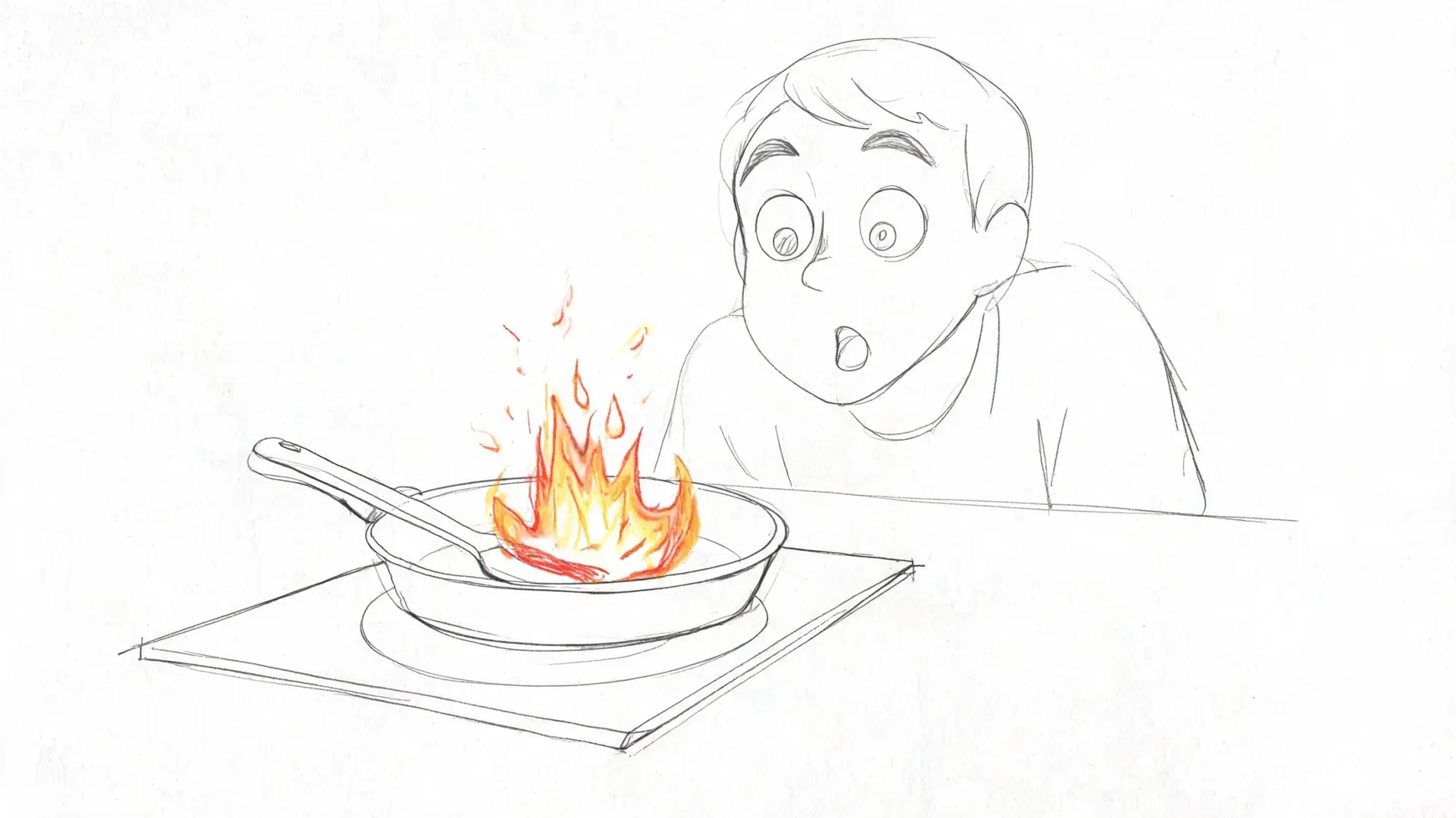
According to the U.S. Fire Administration cooking fire guidance, cooking is the leading cause of home fires and home fire injuries, with an estimated 170,000 such fires occurring in 2021 alone. The same guidance notes that the National Fire Protection Association says cooking oil or grease is the primary material ignited in nearly half of these incidents.
That matters for one reason. You are not dealing with a rare, bizarre accident. You are dealing with a known type of fire that responds well to a few specific actions and very badly to the wrong ones.
What to do first
When flames appear in a pan, act in this order:
- Stay at the stove if the fire is still small and contained in the pan.
- Turn off the burner immediately if you can do it without reaching through flames.
- Get a metal lid or baking sheet ready.
- Tell everyone nearby to step back.
- If the fire is already spreading, get out and call 911.
Small, contained fire in the pan. Try to smother it.
Fire spreading beyond the pan. Leave.
If you're in Phoenix and the fire leaves smoke, soot, or water from firefighting behind, a water and fire restoration team is the kind of help people often need after the emergency ends.
How to Safely Extinguish a Small Grease Fire
If the flames are still contained in the pan, cut off the fire's air supply and let the heat die down. That is the safest home response.
Use a metal lid or baking sheet
A small grease fire usually goes out fastest when you cover it with metal and leave it alone.
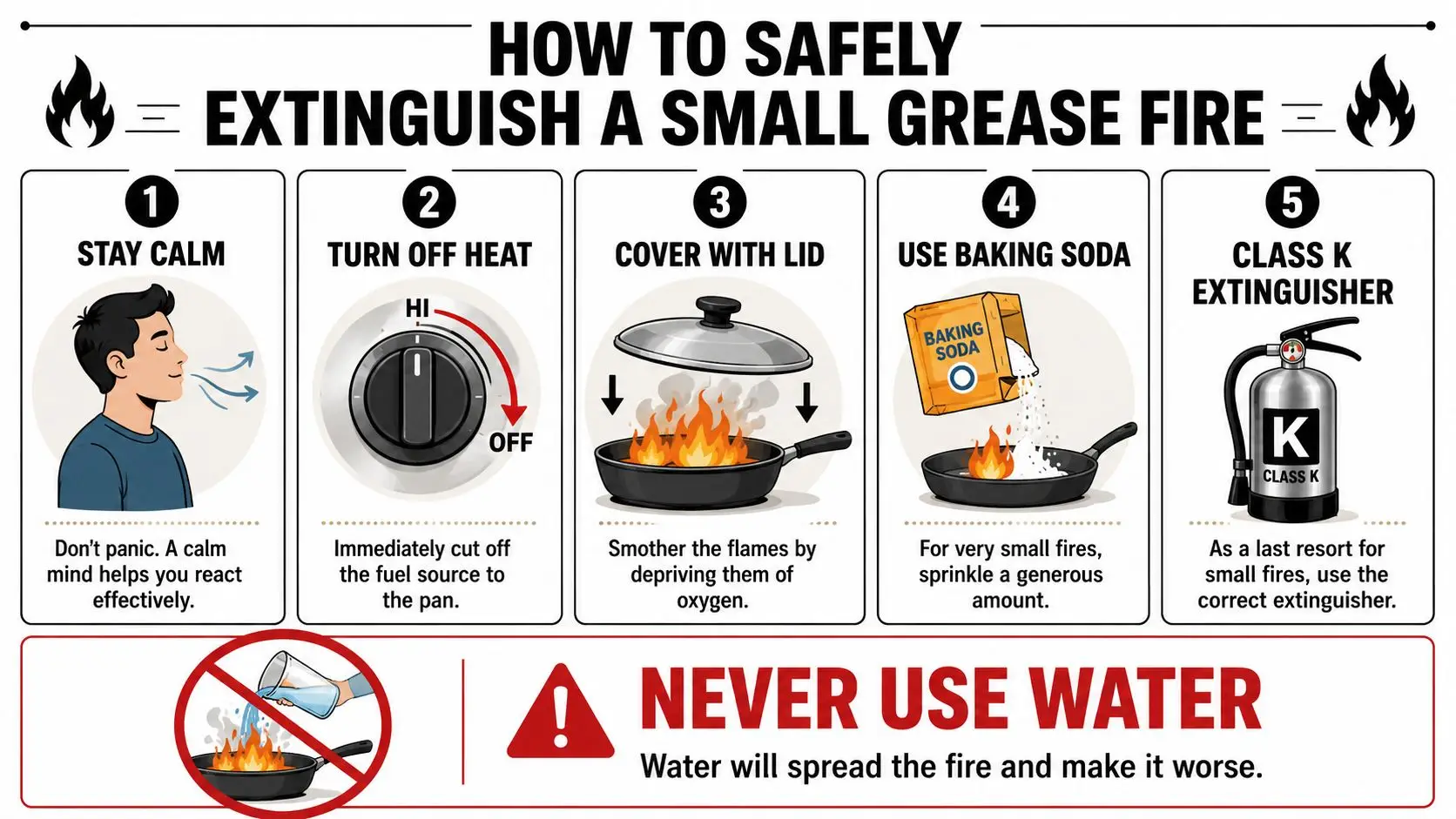
RTI's grease fire guidance explains why this works. A metal lid creates an airtight seal and removes the oxygen the flames need.
Handle it in this order:
- Turn off the burner if you can reach the controls without putting your arm over the flames.
- Slide a metal lid or baking sheet over the pan from the side. A controlled slide is safer than dropping it straight down.
- Seal the whole pan. Any gap can keep the fire alive.
- Keep the cover in place. Do not lift it to check after a few seconds.
- Leave the pan alone until it is completely cool. Hot grease can flare up again the moment air gets back in.
One mistake causes a lot of repeat flare-ups. People uncover the pan too early because the flames look gone. The fire may be out, but the oil can still be hot enough to reignite.
Here's a quick visual walkthrough:
Use baking soda only on a very small fire
Baking soda is a backup option for a minor surface flare-up, not a fix for a growing pan fire.
The same guidance notes that it often takes far more baking soda than people expect to suppress more than a tiny flame. A light shake from the box is rarely enough.
Use it only in a narrow set of conditions:
| Situation | Good choice | Why |
|---|---|---|
| Flames are small and low | Baking soda can help | It can smother fire at the oil's surface |
| You have enough baking soda ready | Use it | A token sprinkle usually fails |
| Fire is climbing above the rim | Do not rely on it | The fire is already beyond a simple kitchen response |
Do not substitute baking powder. It does not work the same way.
Use a fire extinguisher only if you know how
A Class K extinguisher is designed for cooking oil and grease fires. Use it only when the fire is still small, you have a clear exit behind you, and you know exactly how to operate it.
If your kitchen fire involves an appliance, outlet, or wiring concern, the response changes. Read this guide to learn how to put out electrical fires so you do not treat two different fire types the same way.
After any kitchen fire, prevention matters, but cleanup matters too. Soot residue, smoke odor, and hidden contamination on cabinets, walls, and vents can linger long after the flames are gone. Before you cook there again, use this fire safety inspection checklist to assess the space and decide whether you need professional fire damage cleanup.
Critical Mistakes That Make Grease Fires Worse
Most grease fire injuries don't happen because the first flame appears. They happen because someone reacts on instinct.
Cooking fire statistics compiled here note that unattended cooking is the cause of nearly 90% of kitchen fires, and many become much worse when people try to move the pan or throw water on it.
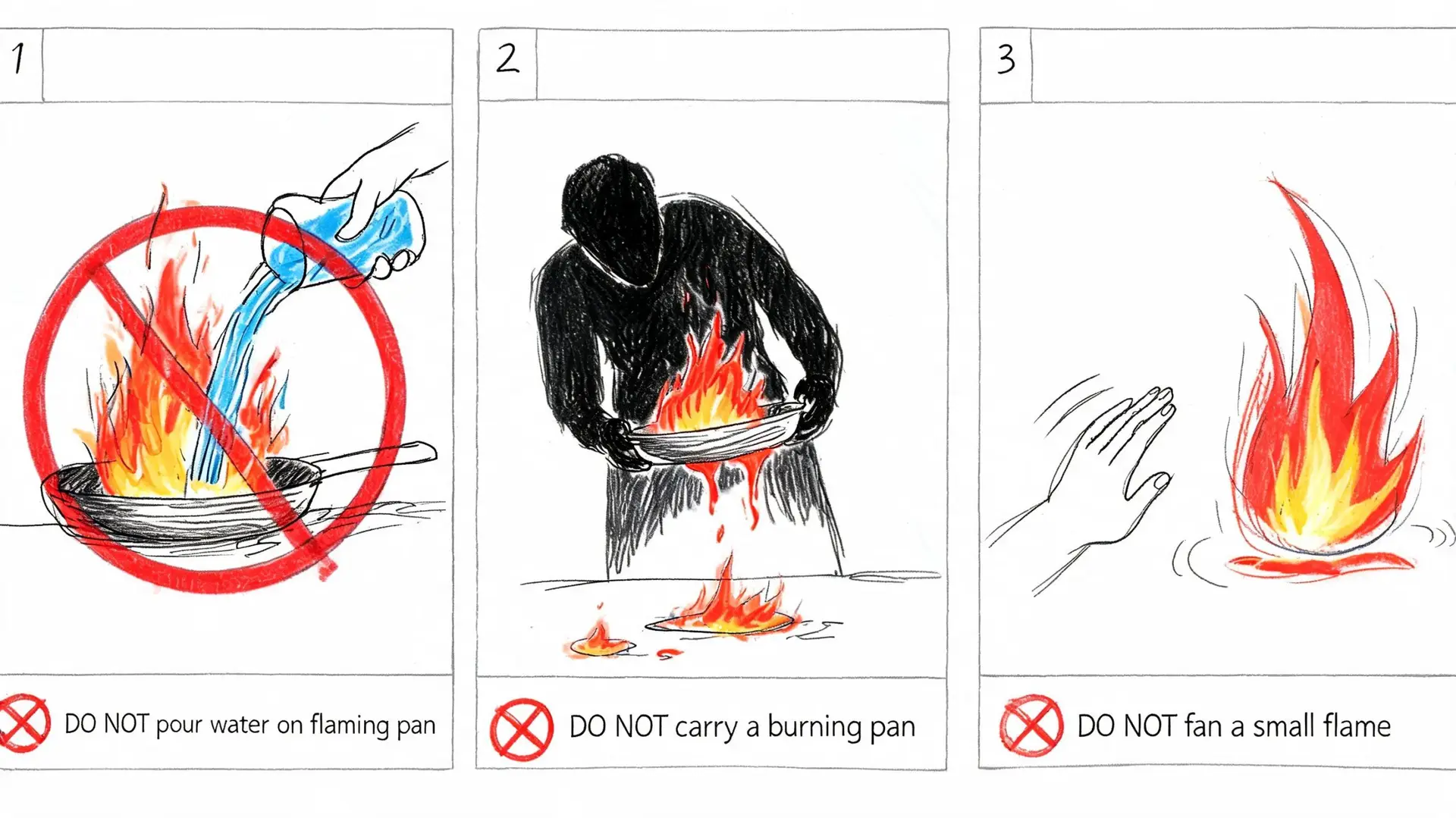
Never use water
This is the worst mistake.
Water hits burning oil, drops below the grease, flashes into steam, and blasts burning oil outward. What started in one pan can suddenly hit your backsplash, cabinets, shirt, hands, and floor.
People think water cools fire. That instinct is deadly with grease.
Don't carry the pan
A burning pan feels movable until it isn't. The second hot oil sloshes over the edge, the fire is no longer contained. Now it's on your hand, the stove, the floor, or all three.
If you remember only one sentence, remember this: a grease fire that stays in the pan is a problem; a grease fire that leaves the pan is an emergency.
Don't use flour, sugar, or a wet towel
These are common panic moves. They are bad ones.
- Flour is not a fire suppressant: It can ignite.
- Sugar is not a fire suppressant: It can feed the problem.
- A wet towel is still water: It can create the same violent reaction you were trying to avoid.
- A dish towel or apron can catch fire: Fabric doesn't safely smother grease flames.
Don't fan it
People wave oven mitts, towels, or baking sheets without meaning to. More airflow gives the fire what it wants. Controlled covering works. Fanning does the opposite.
If a fire spread leaves smoke and soot damage behind, this overview of the fire damage restoration process helps explain what cleanup usually involves after the immediate danger ends.
When to Evacuate and Call 911 Immediately
Some kitchen fires are no longer yours to solve. Recognize that point early.
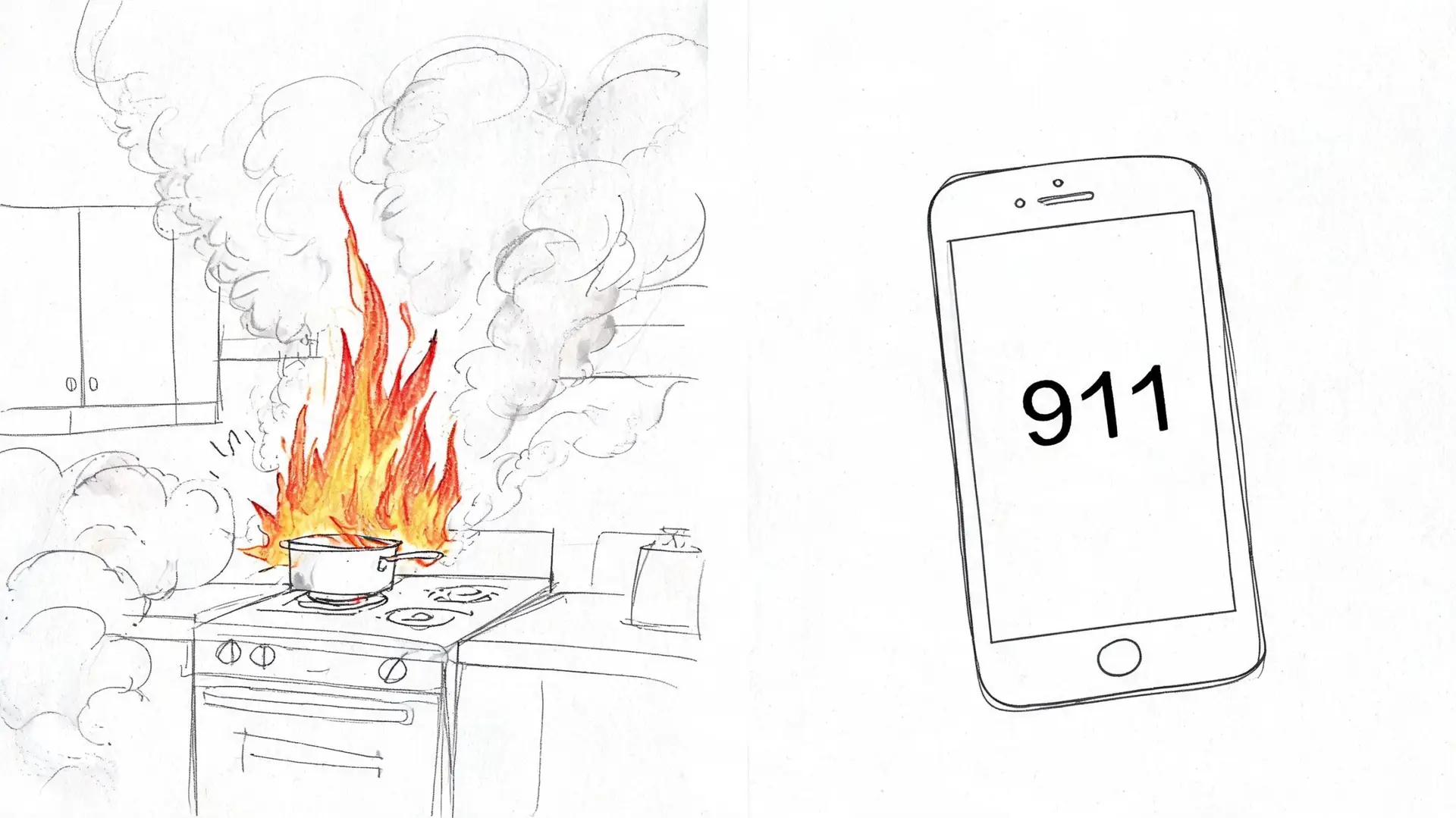
Leave if the fire is doing any of these things
Get out immediately if:
- Flames have reached cabinets or the wall
- The fire has spread off the stovetop
- The room is filling quickly with thick smoke
- You can't approach the stove safely
- Your first smothering attempt failed
- Anyone in the home is confused, trapped, or not moving toward the exit
Once you leave, stay out. Don't go back for pets, paperwork, or cookware.
Why professionals handle larger grease fires differently
The right suppression tool matters once a grease fire grows. Harrisburg's grease fire document explains that Class K fire extinguishers use a wet chemical agent that both cools the grease and creates a soap-like barrier, called saponification, to prevent reignition. That's the professional standard in commercial kitchens and what firefighters use when the fire has moved beyond what a homeowner can safely control.
If you need to ask whether the fire is too big, treat it as too big.
Keep communication simple
In an emergency, people waste time yelling half-instructions across the house. Use direct words: “Out now.” “Front door.” “Call 911.” That's it.
For households and property managers who want better emergency coordination, this article from Overton Security on effective property communication offers useful ideas for planning alerts and response routines before a crisis.
After any serious house fire, this what to do after a house fire checklist can help you handle the next decisions in order.
After the Fire Is Out The Crucial Next Steps
Most grease fire articles fail people at this point. They stop at “put the flames out” and leave you staring at a smoky kitchen, a blackened pan, and a smell that won't leave.
That's a mistake. Extinguishing the fire is only the first half of the problem.
First, make the area safe
Before you touch anything:
- Confirm the burner is off
- Leave the pan covered until it is completely cool
- Keep children and pets out of the kitchen
- Open windows only if doing so doesn't spread soot through the home
- Don't turn your HVAC system on if heavy smoke or oily residue is present
Why grease fire cleanup is different
A grease fire doesn't leave behind ordinary dust or simple ash. It leaves oily soot. That residue sticks to painted walls, upper cabinets, vent hoods, ceiling surfaces, light fixtures, and inside nearby gaps where ordinary wiping won't reach.
ADT's grease fire safety guidance points out a critical gap in most online advice. Many resources explain suppression but don't address post-fire cleanup, even though oily soot can penetrate surfaces and HVAC systems, causing persistent odors and damage that consumer cleaning products can't properly remediate.
That matches what homeowners discover the hard way. The smell keeps returning because the contamination is still there.
What not to do during cleanup
Don't make the damage harder to remove.
- Don't scrub dry soot aggressively: You can smear it deeper into porous surfaces.
- Don't repaint over odor: Paint traps a problem; it doesn't solve it.
- Don't wash everything with one all-purpose cleaner: Grease soot often needs targeted cleaning methods.
- Don't ignore the vent hood and surrounding cabinets: They collect residue fast.
If smoke residue is visible, this guide on how to clean soot from walls is a helpful starting point for understanding what can and can't be handled safely.
Homeowners comparing cleanup options may also find this overview of restoration services after a fire useful because it explains the kind of work often needed once smoke and soot have spread beyond the pan area.
For Phoenix-area homes with visible smoke staining, sticky residue, or odor that lingers after the fire is out, Restore Heroes is one local option that handles fire and smoke damage cleanup, including decontamination and odor removal.
Frequently Asked Questions About Grease Fires
Can I use a wet towel instead of a lid
No. A wet towel introduces water to burning oil and can worsen the fire. A dry fabric towel can catch fire. Use a metal lid or baking sheet.
Is the pan ruined after a grease fire
Sometimes yes, sometimes no. Don't decide while it's hot. Let it cool completely first. If the pan is warped, badly scorched, or the handle is damaged, replace it.
What kind of extinguisher belongs in a kitchen
For grease fires, Class K is the proper type. That's especially important in commercial cooking spaces. In a home, many people also keep a general household extinguisher nearby, but it should never replace learning the correct response for hot oil.
Should I run the range hood after a grease fire
Not right away if there's heavy oily smoke. The hood and ducting can collect contamination, and airflow can move residue around. Wait until the area is safe and you understand how much smoke spread occurred.
If a grease fire left smoke, soot, or odor in your home, Restore Heroes can help assess the damage and handle professional fire and smoke cleanup in the Phoenix area so the problem doesn't linger after the flames are gone.