
At 2 a.m., a failed supply line can turn a quiet Phoenix office into an operational problem before the first employee arrives. Water may be spreading above ceiling tiles, a server room may be at risk, and tenants may already be asking whether they should report for work. A small electrical fire creates a different chain of decisions, with smoke, soot, odor, and damaged equipment extending beyond the visible burn area.
Commercial property damage restoration is therefore a business-continuity decision, not just a cleanup task. The right response protects people, limits secondary damage, supports insurance documentation, and helps you decide which areas can remain open safely. This guide explains the process, core services, timing, budget drivers, phased occupancy, and contractor selection for Phoenix-area properties, including what to look for from a provider such as Restore Heroes.
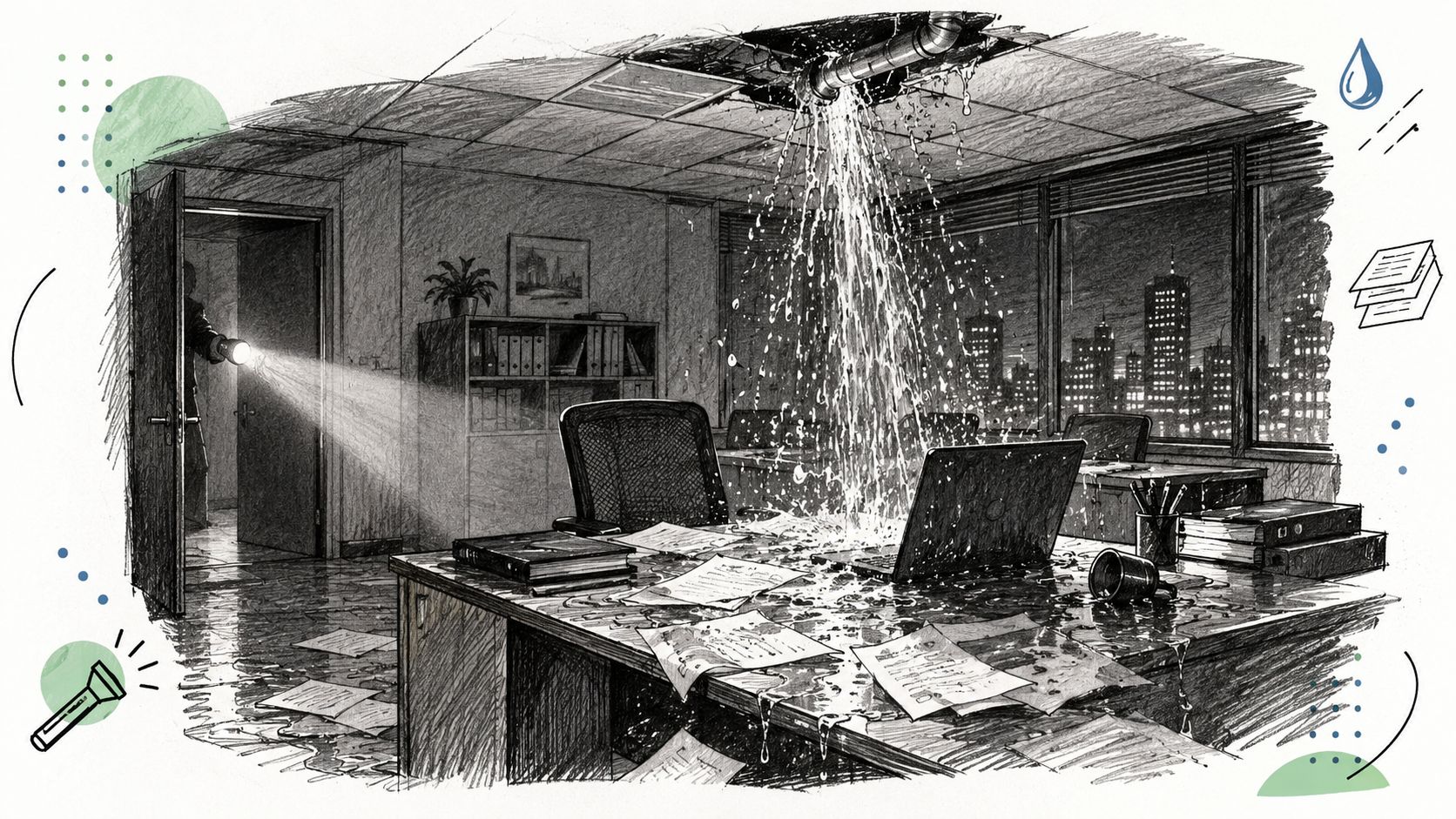
If a plumbing failure is still active, isolate the source only when it's safe and arrange qualified help. A property manager who needs urgent pipe or fixture assistance can call for commercial plumbing emergencies while preparing the restoration response. Once the source is controlled, restoration turns the emergency into a managed sequence of assessment, mitigation, drying, cleaning, repair, and verification.
When Commercial Damage Threatens Your Business Operations
A burst pipe rarely affects only the room where it started. Water can move through ceiling cavities, insulation, wall assemblies, flooring, and electrical pathways. In a multi-tenant building, one affected suite may interrupt neighboring businesses, shared corridors, elevators, or building systems.
The first question isn't “How do we make the ceiling look normal?” It's “What must happen now to keep people safe and preserve essential operations?” That means identifying electrical hazards, securing unstable areas, protecting inventory and records, and separating unaffected occupants from active work zones. A clean-looking floor doesn't prove that moisture has left the subfloor or wall cavity.
The operational decisions come first
A property manager may need to decide whether employees can enter, whether tenants should use another entrance, and whether sensitive equipment should be relocated. Those decisions depend on conditions such as standing water, airborne particles, odor, damaged finishes, indoor humidity, and the location of the affected systems.
Commercial restoration also involves communication. Tenants need clear information about restricted areas, expected work activity, temporary partitions, noise, odor control, and changes to access. Owners and facility teams need records that explain what happened, what was removed, what was dried, and why an area is ready for its next use.
Practical rule: Keep people away from uncertain areas until a qualified professional has assessed safety. Visual inspection alone can't confirm that a commercial building is dry or suitable for occupancy.
The timeline can vary widely. A contained loss may allow phased occupancy while one zone is treated, while concealed moisture, smoke migration, contamination, or structural damage may require broader restrictions. The purpose of a professional response is to create an evidence-based path back to normal operations, not to promise an arbitrary reopening date.
That path starts with understanding what restoration includes and how each phase supports the next.
What Commercial Property Damage Restoration Really Means
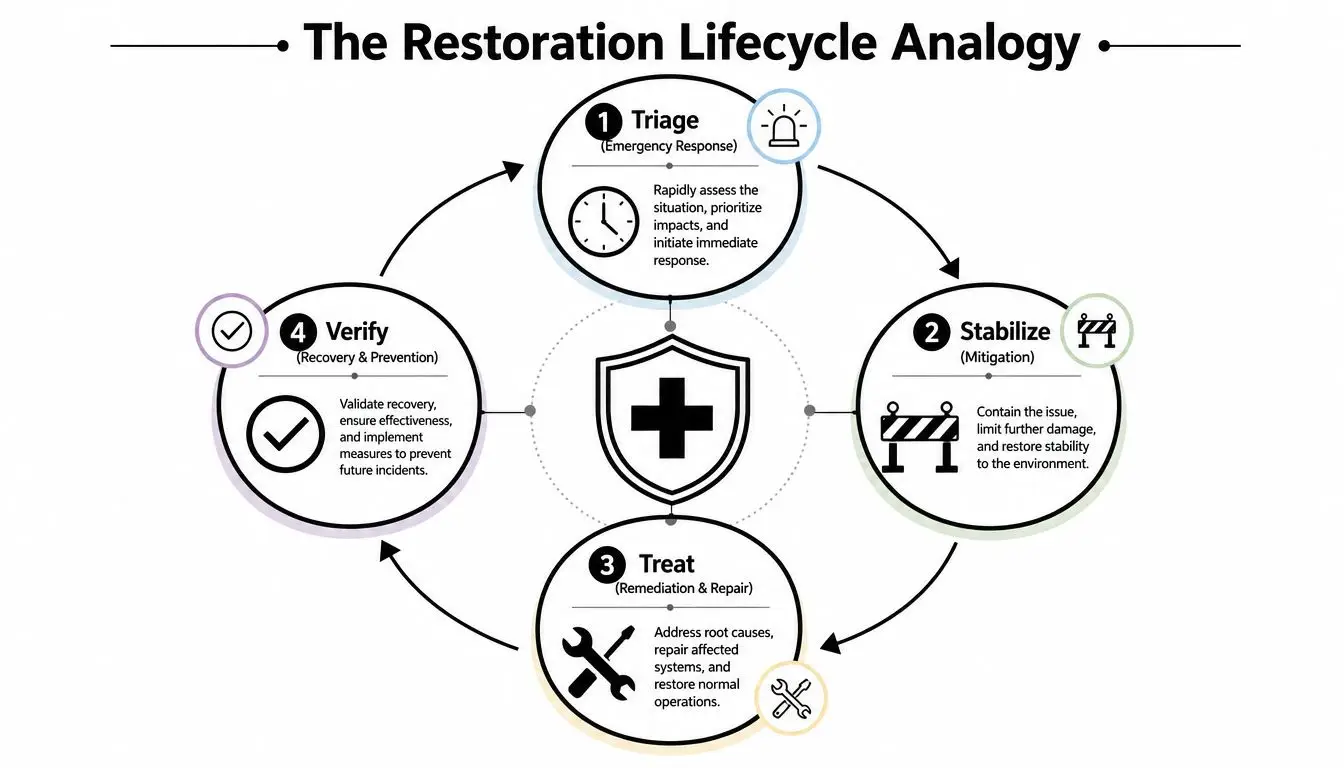
Think of restoration like emergency medicine. A medical team first triages the patient, stabilizes immediate threats, treats the underlying condition, and verifies recovery. A restoration team follows the same logic for a building.
Triage means identifying the source, immediate hazards, affected areas, and business-critical assets. Stabilization, often called mitigation, stops active damage and limits spread. This may involve water extraction, temporary protection, controlled access, moving contents, or isolating contaminated areas.
Treatment, or remediation and repair, addresses the damage that remains. Technicians clean materials, remove unsalvageable contents, dry structural assemblies, control odor, and coordinate repairs. Verification checks whether the property has reached the defined condition for the next phase, including documented moisture readings and a review of remaining work.
Why commercial buildings need a different plan
A home may have one decision-maker and a limited number of rooms. A commercial property can contain tenants, employees, customers, inventory, records, machinery, shared mechanical systems, and areas with different occupancy requirements. The response must account for access routes, work-hour restrictions, code considerations, tenant coordination, and the financial effect of taking a space offline.
That's why restoration shouldn't be judged by appearance alone. A wall can look dry while moisture remains behind it. A room can smell clean while smoke residue has entered porous materials or ventilation pathways. Professional work uses measurements, controlled procedures, and records to support decisions.
The Institute of Inspection, Cleaning and Restoration Certification was founded in 1972 by Ed York as the International Institute of Carpet and Upholstery Cleaning, or IICUC, and later expanded into broader restoration standards and certifications. By 2025, it had grown to more than 53,000 active certified technicians and over 6,000 Certified Firms worldwide, reflecting the formal structure surrounding professional restoration.
Property managers can also use a practical building owners guide to roof restoration when roof leakage or storm exposure is part of the loss. For a broader comparison of operating environments, review this guide to commercial versus residential restoration. The central idea remains simple. Restoration returns affected materials and contents toward their pre-loss condition through measured steps, not visual guesswork.
How the Commercial Restoration Process Works End to End
A well-managed project behaves like a connected chain. Each step produces information or conditions needed for the next one, so skipping a phase can create confusion later.
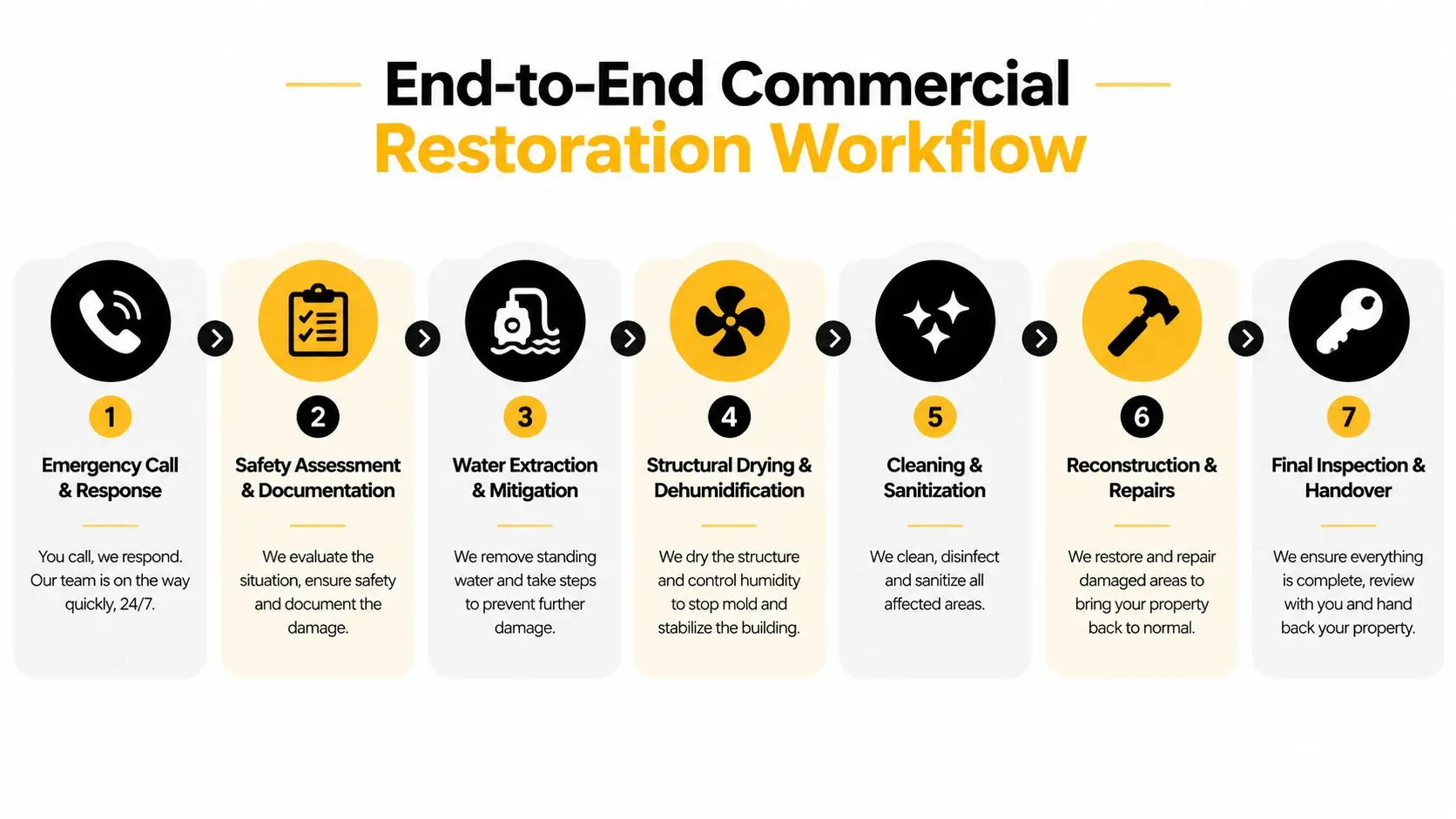
1. Emergency response and safety assessment. The team identifies the active source, electrical and structural hazards, access limits, and areas that need isolation. Technicians document visible conditions with photographs, notes, moisture maps, and affected-content records. This initial record helps owners, occupants, contractors, and insurers work from the same facts.
2. Extraction and immediate mitigation. Standing water is removed, vulnerable contents are relocated when appropriate, and damaged areas are separated from unaffected spaces. In a fire loss, the equivalent early work may include securing openings, removing debris hazards, controlling smoke movement, and addressing water left by suppression activities.
3. Moisture mapping and structural drying. Technicians check floors, walls, ceilings, insulation, and other assemblies with moisture meters. They compare affected materials with unaffected reference materials in the same building to establish a drying goal. Psychrometric readings, which track relationships among temperature, humidity, and moisture in the air, help the team evaluate whether the environment supports continued drying.
Documentation drives better decisions
4. Cleaning, sanitization, and odor control. The treatment depends on what caused the damage. Water losses may require cleaning and sanitizing. Fire losses may require soot removal, air filtration, and odor treatment. Suspected mold requires containment and a controlled remediation approach rather than just covering a stain with paint.
5. Repair planning and reconstruction. Once the affected areas are sufficiently dry and cleaned, the project can move into controlled repairs. That may include replacing damaged finishes, repairing drywall and flooring, restoring ceilings, or coordinating specialized trades. A project manager should distinguish mitigation work from reconstruction so the owner understands what has been done and what remains.
6. Daily monitoring and communication. Drying equipment works best when technicians check conditions and adjust the plan. Daily readings, equipment changes, photographs, and work notes create a record of progress. The property manager can use that record to update tenants, coordinate access, and discuss the claim with an adjuster.
7. Final verification and handover. The team reviews moisture results, cleaning status, remaining repairs, odor conditions, affected contents, and occupancy restrictions. A final walk-through should answer a practical question: what evidence supports moving people or inventory back into the area?
The ANSI/IICRC S500 standard is the internationally recognized, ANSI-accredited standard for professional water damage restoration in residential, commercial, and institutional buildings. It addresses procedures, precautions, psychrometric methods, drying technology, and documentation practices used to return affected materials and contents toward pre-loss condition. For a property manager, that means the project should be explainable through readings and records, not only through a completed-looking surface.
Restore Heroes presents its commercial water damage restoration service as a managed process that includes assessment, mitigation, structural drying, and communication with stakeholders. Any provider you consider should explain who manages each phase and how you'll receive updates.
Core Services Every Property Manager Should Understand
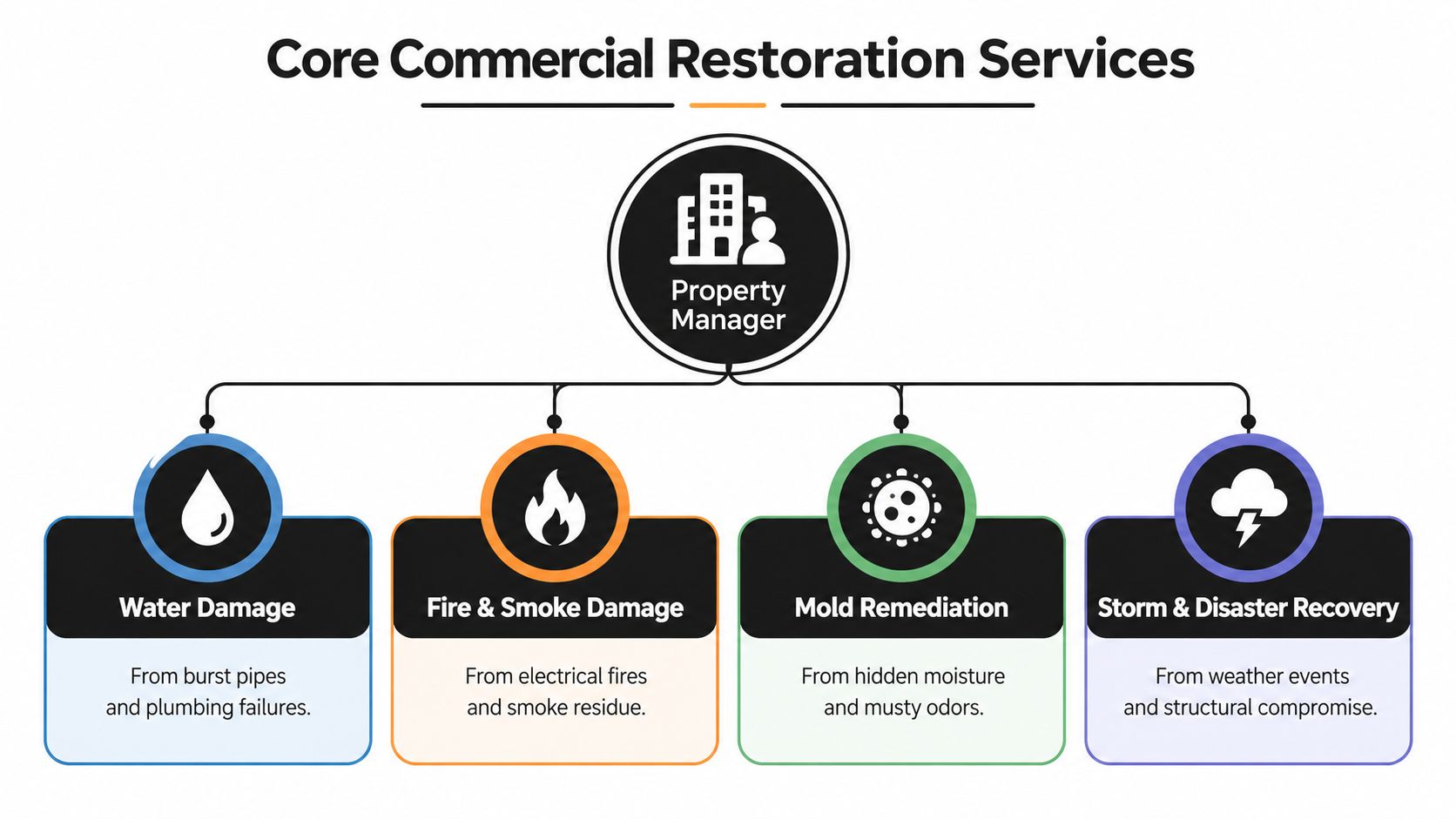
Different damage types create different risks, even when the visible symptom looks similar. A wet carpet after a plumbing failure isn't managed like soot after an electrical fire, and a musty odor shouldn't be treated as proof of mold without a proper assessment.
Water damage
Water restoration addresses the source, extraction, drying, cleaning, and protection of affected materials. A failed pipe may spread clean water quickly, while a sewer backup or other contaminated source creates additional health and containment concerns. Commercial teams also need to consider stock, documents, electronics, mechanical rooms, and shared building systems.
Porous materials deserve immediate attention.
Drying window: Porous materials in water-damaged commercial buildings should be dried within 24 to 48 hours. The EPA's commercial mold remediation guidance states that materials wet for more than 48 hours require consultation with mold-growth guidance, and mold growth may still have occurred even when materials are dried within that period.
Fire and smoke damage
Fire restoration includes more than removing charred materials. Smoke and soot can affect surfaces, contents, equipment, and air-handling pathways beyond the room where flames were visible. Water used during fire suppression may create a separate drying project, while odor can remain in porous finishes and furnishings.
A professional assessment should separate structural damage from cleanable residue and identify items that need specialized handling. Property managers may also need temporary barriers, controlled access, and tenant updates while cleaning continues. Restore Heroes describes commercial fire damage restoration as part of its emergency restoration offering.
Mold remediation
Mold concerns often begin with a musty smell, recurring staining, or moisture discovered behind a wall or under flooring. Those signs don't establish the full extent of the problem. A qualified team should identify the moisture source, control the affected area, use appropriate containment, and remove or clean materials according to the conditions found.
The building's history matters. A recent leak, chronic roof intrusion, HVAC condensation, or hidden plumbing problem may require different corrective work. Repainting without correcting moisture leaves the underlying issue unresolved.
Storm and biohazard recovery
Phoenix properties can face storm-related roof intrusion, wind-driven rain, flooding, and debris impacts during severe weather. Storm recovery may combine water extraction, structural protection, contents handling, and repair coordination.
Trauma and biohazard cleanup is different again. It requires specialized decontamination, controlled handling of affected materials, and attention to privacy and occupant safety. Property managers shouldn't ask regular maintenance staff to manage this type of loss without suitable training and equipment.
Timelines Cost Drivers and What Affects Your Budget
Restoration duration depends on the building and the damage, not just the size of the visible stain. Water class, material porosity, affected square footage, chamber volume, contamination level, equipment selection, access restrictions, and reconstruction scope can all change the schedule.
Commercial drying is engineered toward a moisture target rather than an arbitrary number of days. Technical guidance tied to IICRC practice describes setting a drying goal from unaffected reference materials in the same building, then using moisture meters and psychrometric readings to confirm that affected materials have returned to the target range. Chamber volume and water-loss class influence dehumidifier sizing, while material type affects airflow and dehumidification capacity. See the technical drying guidance for the measurement-based framework behind these decisions.
A small, accessible area with limited absorption may move quickly. Moisture trapped in wall cavities, insulation, concrete assemblies, or layered flooring may require more monitoring and equipment adjustments. Contamination can add containment, cleaning, disposal, and safety requirements. Reconstruction begins only after the mitigation conditions support it, so an early repair estimate shouldn't be mistaken for a complete project timeline.
Downtime should shape the work plan
One commercial-downtime guide estimates 3 to 7 days for small clean-water events, 2 to 6 weeks for large commercial water losses, 2 to 4 weeks for contained fire damage, and 3 to 12 months for major structural fire losses. These are planning ranges, not guarantees. Hidden damage, permitting, materials, tenant needs, equipment lead times, and insurer decisions can extend or compress an actual project.
| Damage Type | Key Drivers of Duration | Operational Planning Note |
|---|---|---|
| Small clean-water event | Absorption, affected rooms, access, and drying verification | Consider temporary relocation of the affected team while adjacent areas remain open |
| Large commercial water loss | Building systems, concealed moisture, equipment capacity, and reconstruction | Divide the property into zones and communicate access changes by area |
| Contained fire damage | Soot migration, odor, suppression water, and equipment cleaning | Protect unaffected suites while assessing shared HVAC and circulation paths |
| Major structural fire loss | Structural work, design, permitting, reconstruction, and contents decisions | Prepare for extended relocation and maintain a documented tenant communication plan |
Phoenix heat can change evaporation conditions, but higher outdoor temperatures don't replace controlled drying. A hot space may still contain moisture in assemblies, and uncontrolled airflow can move odor or contaminants into occupied areas. The safer approach is to measure, adjust, and verify.
For mold-related moisture concerns, use a provider that can explain containment and verification through commercial mold remediation rather than treating odor or staining as a cosmetic issue.
Choosing an IICRC Certified Contractor and Navigating Insurance in Phoenix
A pipe failure occurs after business hours. By morning, the contractor's first decisions can affect both the building and the workday: which areas close, which teams can remain onsite, and how clearly the claim is documented. Choose a provider that can connect technical restoration with business continuity.
Ask whether the company is licensed, bonded, insured, and IICRC certified. Confirm its emergency availability, onsite assessment process, documentation standards, and project management structure. The right contact should coordinate mitigation, repairs, tenants, and insurers while explaining decisions in language your team can use.
Ask how emergency work is separated from reconstruction. A clear answer should identify the records you will receive, the readings technicians will take, the equipment choices they will explain, and when they will request approval for added work. Restore Heroes describes itself as a licensed, bonded, insured, and IICRC-certified Phoenix-area provider with 24/7 availability, onsite inspections, and management of restoration phases. Verify those points during selection, and require a written scope.
Build the claim record as the work progresses
Photograph conditions before moving contents when safety permits. Record the source, affected rooms, equipment status, inventory impacts, tenant notices, access restrictions, and business interruption effects. Request moisture maps, daily readings, equipment logs, photographs, estimates, change documentation, and a clear separation between completed and pending work.
Commercial water-loss severity can differ by policy category. Verisk's January 2026 update reported that commercial property water-loss severity was up 5% year over year, while businessowners' severity was down 7%, as summarized in this commercial restoration and insurance overview. Detailed records help you discuss reserves, business interruption, equipment downtime, and scope with the adjuster. For practical preparation, review guidance on commercial property insurance claims.
Phoenix conditions require local planning. Extreme heat can affect materials and indoor humidity management. Monsoon storms can bring roof leaks, wind-driven rain, flooding, and debris. Ask how the provider will protect occupied areas, install temporary partitions, control odors, and respond across Phoenix, Mesa, Gilbert, Scottsdale, Chandler, or another part of the metro area.
Before signing, confirm who can approve emergency actions, how often updates will arrive, which tests or readings support drying completion, and how tenant communications will be handled. Review coverage, exclusions, and change-order terms. No contractor can guarantee insurance coverage, pricing, or a specific reopening date. Use phased occupancy decisions based on documented conditions, not assumptions about whether a space feels dry.
Your Commercial Restoration Checklist and Next Steps
A property manager can prepare for a loss with a short, practical response plan:
- Protect people first: Restrict unsafe areas and avoid electrical or structural hazards.
- Stop the source: Contact the appropriate plumbing, fire, utility, or building-system professional when it's safe.
- Call restoration support quickly: Early extraction, containment, and assessment can limit secondary damage.
- Document conditions: Take photographs, note affected suites and contents, and preserve records for the claim.
- Plan phased occupancy: Separate safe, unaffected zones from active work areas and communicate access changes clearly.
- Track the project: Request moisture maps, readings, equipment records, photographs, and scope updates.
- Verify before reoccupancy: Confirm that drying, cleaning, odor control, repairs, and safety reviews are complete.
The best commercial restoration plan connects emergency action with business continuity. It gives people a safe path through the building, gives tenants useful information, and gives owners a defensible record of how the property returned toward its pre-loss condition.
If you manage a Phoenix-area property, review your emergency contacts before a loss occurs and identify who can authorize mitigation after hours. When damage happens, choose a qualified local provider based on documented capability, communication, and a clear scope, not pressure or an unverified promise.
Restore Heroes provides 24/7 commercial restoration support for water, fire and smoke, mold, and trauma or biohazard incidents, with assessment, mitigation, drying, sanitation, and insurance communication managed as one coordinated process. Visit Restore Heroes to review the available services and request a local assessment for your Phoenix-area property.