
Active mold remediation usually takes 1 to 5 days for most residential jobs, but the full project often runs 1 to 3 weeks once drying, clearance testing, and repairs are included. A small bathroom issue can wrap up fast, while a larger structural job can stretch well beyond the cleanup phase.
If you're reading this with a musty smell in one room, a wet baseboard, or black spotting around a bathroom wall, you probably want one thing more than anything else: a realistic timeline. You need to know whether this is a same-week disruption or a project that changes where your family sleeps, how long equipment runs, and when repairs start.
That's the part many homeowners don't hear clearly enough. The visible mold is only one piece of the schedule. The bigger driver is usually how long the material stayed wet before anyone caught it.
Realistic Timeline Expectations for Homeowners
A typical call starts after someone pulls a nightstand away from the wall, opens a vanity, or notices staining near a vent. The first question is almost always the same: how long is this going to take, and are we talking about cleanup time or the point when the room is usable again?
Those are two different timelines.
For many homes, the containment, removal, and cleaning phase is relatively short. The longer part is often waiting for the structure to dry enough for verification and repairs to proceed. As noted in industry timeline guidance for mold restoration, some projects wrap up quickly, while others stretch out once drying, clearance, and reconstruction are part of the schedule.
The active work clock
This is the portion homeowners see. A crew isolates the work area, sets negative air, removes unsalvageable material, cleans affected surfaces, and bags debris for safe disposal. In a small, accessible area, that work can move fast.
What slows it down is usually not the visible growth. It is what stayed wet, how far that moisture traveled, and whether wall cavities, subfloors, or insulation are still holding it.
The full project clock
The full project runs until moisture levels are back where they need to be, any requested post-remediation verification is complete, and rebuild can start. Cleanup can look finished before the job is ready to close.
I tell homeowners to ask one direct question when comparing estimates: are you quoting labor days on site, or total elapsed time until the area is dry, cleared, and ready for repairs?
That distinction matters. A bathroom wall with limited demolition may only need a brief remediation visit, but if the leak sat long enough to soak framing or adjacent materials past that early 24 to 48 hour window, the drying and verification side of the job usually controls the calendar.
For Phoenix-area homeowners, mold damage restoration services usually include source control, drying, cleaning, and follow-up steps that affect when a room can be used normally again.
Why Moisture Duration Matters More Than Visible Size
Homeowners usually judge severity by what they can see. A patch the size of a dinner plate feels smaller than a whole ceiling stain, so it seems like it should take less time. In practice, that's not always how it works.
The more useful question is: How long were the materials wet?

The EPA says mold prevention depends on drying water-damaged materials within 24–48 hours, and if wet or damp areas are dried in that window, mold usually will not grow, according to the EPA guide on mold, moisture, and your home. The CDC makes the same window practical for homeowners and says that if a flooded home was not dried within 24–48 hours, mold growth should be assumed in its homeowner mold guidance.
Wet time changes the scope
Think about drywall like a sponge with a paper face. The surface may look dry. The cavity behind it may still be holding moisture. That hidden saturation is what turns a short cleanup into a longer remediation and drying job.
A small leak discovered the same day can stay in the “dry it, clean it, verify it” category. A much smaller stain from a leak that sat unnoticed for days can mean opening walls, removing porous material, and keeping containment up longer. The patch you see on the outside doesn't tell you what happened inside the assembly.
That's also why structural drying services matter so much in mold work. Dehumidifiers, air movers, and moisture tracking are not side tasks. They often control the actual schedule.
Practical rule: When you're trying to estimate duration, ask when the area got wet before you ask how ugly it looks.
The EPA also notes that cleanup isn't finished until the underlying moisture problem is fully fixed. If the source is still active, or if framing and sheathing are still wet, a crew can remove visible mold and still not have a completed job.
A short visual explanation helps if you want to see why moisture control drives the process:
What works and what doesn't
What works:
- Fast action after a leak: Drying started quickly gives crews a better shot at limiting demolition.
- Moisture mapping: Meter readings, thermal imaging, and cavity checks help define real scope.
- Source repair first: If the leak, condensation issue, or intrusion point remains, the clock keeps resetting.
What doesn't:
- Judging by color alone: Dark spotting can be minor, and faint staining can hide deeper damage.
- Waiting to “see if it dries out”: Delay often turns salvageable material into removal.
- Treating surface mold as the whole problem: On porous material, surface cleaning doesn't answer what's happening underneath.
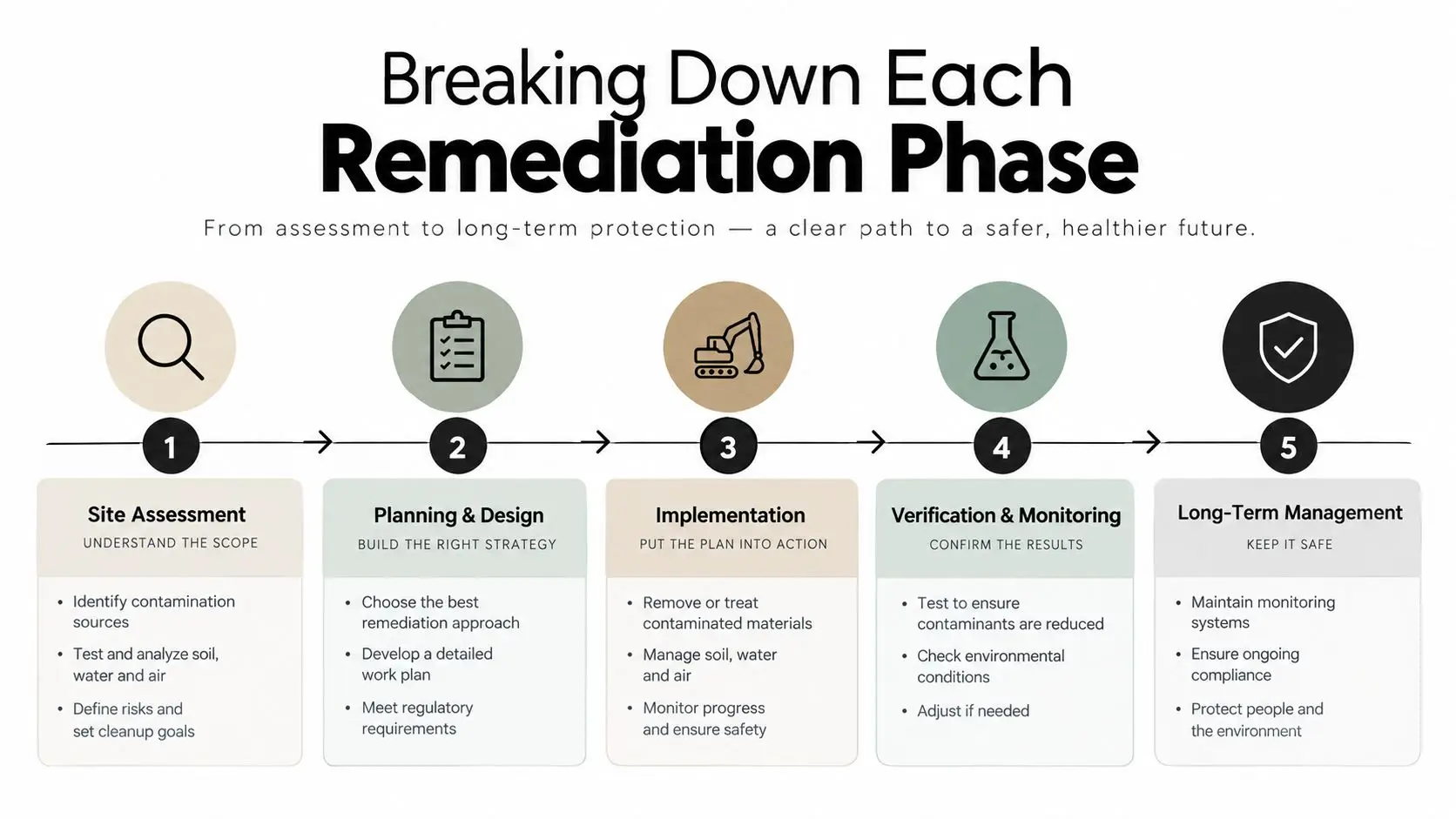
Breaking Down Each Remediation Phase
A mold job can look stalled even when the crew is right on schedule. Day one may involve meters, containment planning, and opening small test areas. The longest stretch often comes after that, while materials dry and readings come down.
Inspection and moisture mapping
This phase sets the schedule. If the area was wet long enough for growth to start, the question is not how bad the staining looks. The question is how far the moisture traveled into drywall, framing, insulation, flooring, or wall cavities.
A proper inspection includes visual review, moisture meter readings, and checks beyond the obvious surface. On a bathroom loss, for example, we usually test baseboards, the opposite side of the wall, flooring edges, and any room that shares that plumbing line. A quick wall stain can turn into a larger job if the sill plate or subfloor is still reading wet.
Straightforward cases move fast. Complicated ones take longer because the crew is defining what is affected and what can still be saved.
Containment and removal
Once the wet footprint is clear, the crew isolates the work area and removes damaged materials that cannot be cleaned in place. That usually means porous materials with sustained moisture exposure, such as drywall, insulation, carpet pad, or particleboard components.
Containment takes time because it protects the rest of the house. Technicians set poly barriers, establish negative air, and create a controlled path for debris. In a small laundry room, that setup is simple. In a kitchen tied into cabinets, toe kicks, flooring transitions, and nearby living space, removal slows down because access is tighter and clean finishes need protection.
This is also where the earlier 24 to 48 hour moisture window shows up in the schedule. Materials that stayed wet longer are more likely to need removal instead of cleaning, which adds labor, debris handling, and more drying time.
Structural drying
Drying is often the longest phase, and it is the one homeowners underestimate. Once damaged materials are out, the room can look halfway finished even though the job is still in the middle.
Air movers and dehumidifiers run while technicians track moisture in framing and subflooring. Those readings matter more than the calendar. If studs and sheathing respond quickly, the project stays on track. If moisture levels flatten out, crews may need to open additional areas, adjust equipment, or address a source that was not fully corrected.
Quiet does not mean idle. It usually means the crew is waiting for materials to reach an acceptable dry standard before clearance or rebuild can start.
Clearance and verification
After cleanup and drying, the project still needs a closeout check. Sampling itself is usually quick. Lab turnaround, scheduling, and any re-cleaning if something misses the mark can add time.
If you want to understand what that checkpoint covers, post-remediation verification explains how the cleaned area is evaluated before rebuild or normal use resumes.
Homeowners often want this step rushed. It should not be. Closing a job before the area is dry and clean enough just creates callbacks and delayed reconstruction.
Reconstruction
Reconstruction starts only after the moisture issue is corrected, damaged material is removed, and the area passes closeout standards. This phase can be short, like replacing a small drywall section and repainting one wall. It can also take much longer if the job involves cabinets, trim carpentry, flooring transitions, texture matching, or multiple trades.
From a scheduling standpoint, remediation and reconstruction are related but separate. The mold work ends when the area is dry, clean, and verified. The rebuild timeline depends on finish materials, trade availability, and how much was opened to get the wet material out.
Timeline Estimates by Project Scale
If you want a rough planning tool, size categories help, as long as you don't confuse them with the whole story. The EPA's remediation guide uses a size split of less than about 10 square feet, 10–100 square feet, and more than 100 square feet in the EPA-based standards summary for mold remediation practice. Larger areas usually require more containment and cleanup measures, which naturally affects duration.
Here's the simplest way to think about it.
Mold remediation timeline by project size
| Project Scale | Square Footage | Active Remediation | Drying & Testing | Total Elapsed Time |
|---|---|---|---|---|
| Small | Less than about 10 sq ft | Often a single day to a few days | Drying and verification can extend the schedule | Often 2 to 5 total days |
| Medium | 10 to 100 sq ft | Commonly several days | Drying and testing add time before closeout | Often 5 to 10 days |
| Large | More than 100 sq ft | Multi-day containment and removal | Drying, clearance, and repairs take longer | Often 2 to 4 weeks |
Those total elapsed ranges come from neutral restoration guidance on what to expect during mold remediation, which also notes that larger jobs involving multiple rooms or HVAC-related contamination can extend to 1–3 weeks or more before acceptable moisture readings and clearance are reached.
How to use the table without fooling yourself
A bathroom under the EPA small-job threshold can still become a longer project if the leak traveled into insulation, framing, or flooring. On the other hand, a somewhat larger visible area on a hard surface may move faster if the materials underneath stayed dry.
That's why cost and time conversations often overlap. If you're comparing scopes, what mold remediation can cost usually tracks with the same factors that affect duration: containment level, demolition depth, drying time, and rebuilding needs.
Hidden Factors That Extend or Accelerate Work
Two homes can show similar staining and still land on completely different schedules. The difference usually sits behind the wall, under the flooring, or inside the approval process.
Material type and access
Drywall, insulation, carpet pad, and other porous materials usually create longer jobs than hard, easy-to-clean surfaces. A leak under a vanity can be a short project if the wet area is open and accessible. The same leak behind built-in cabinets or inside a wall cavity is slower because crews have to expose the damage before they can dry or remove it properly.
Concrete and tile also behave differently than paper-faced drywall and wood trim. One may tolerate cleaning and drying. The other may require selective demolition if it stayed wet too long.
HVAC involvement and hidden spread
Once contamination involves supply registers, return cavities, or connected air pathways, containment and cleaning become more sensitive. The visible patch in one room may only be the starting clue.
EPA guidance for schools and commercial buildings emphasizes responding to water damage within 24–48 hours, and independent guidance similarly highlights reducing excess moisture within 48 hours to prevent mold growth in the NIH moisture and mold remediation SOP. In real homes, that means hidden spread gets more likely when detection is late.
Insurance and decision delays
Not every delay is technical. Adjuster review, scope approval, and decisions about what gets rebuilt now versus later can add days even when the remediation crew is ready. That's especially true when homeowners want to save finishes, compare estimates, or wait for a third-party opinion before opening a wall.
If the property may be sold, disclosed, or evaluated during or after the work, it also helps to understand how buyers and sellers handle it. This guide on Arizona mold disclosure and home sale gives useful context on the real estate side.
Fast authorization helps. Fast drying helps more. A signed scope does not make wet framing dry any faster.
What can speed things up in Phoenix
Phoenix conditions can help when crews catch the issue early and control the interior environment well. Arid outdoor conditions can support drying. Late discovery still causes the same core problem: once porous materials stayed wet long enough, the job gets longer no matter what the weather is outside.
When homeowners ask what one practical lever they still control after discovery might be, it's often the drying setup and access. Dehumidification process details are worth understanding because equipment placement, closed containment, and daily monitoring shape the schedule more than cosmetic appearance does.
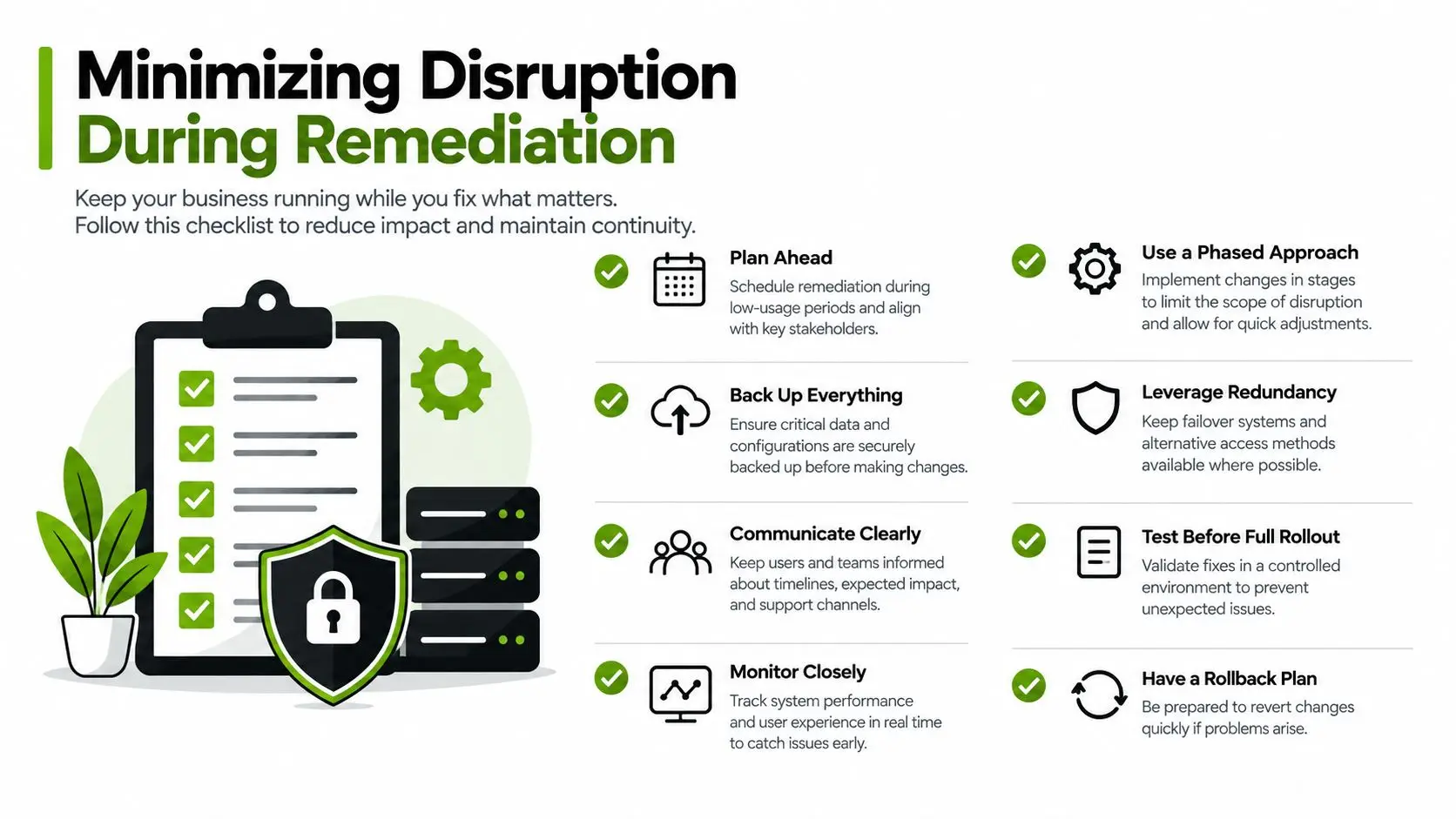
Minimizing Disruption During Remediation
Once the job starts, homeowners usually want to shorten downtime without cutting corners. You can help the process move cleaner by making the work area easier to access and by keeping decisions from stalling progress.
Before the crew arrives
- Document the condition: Take photos of visible growth, staining, and any known leak source before demolition starts.
- Clear a path: Move small belongings, rugs, and breakables away from the affected zone so containment can go up without extra handling delays.
- Plan for pets and kids: Negative air machines, air scrubbers, and open work areas are easier to manage when the traffic around them is reduced.
During the job
A short daily check-in helps more than one might realize. Ask what milestone the crew is waiting on that day. Sometimes it's moisture reduction. Sometimes it's lab results. Sometimes it's a repair decision from plumbing, roofing, or another trade.
One practical tool for homeowners is to keep a simple list with three lines: what was removed, what still needs to dry, and what must happen before rebuild. That keeps everyone aligned when the house is noisy and routines are off.
For the living side of recovery, indoor conditions matter after the visible work is done too. If you're trying to improve the environment once cleanup is complete, this overview of home air quality is a helpful next read.
After remediation
Don't treat “the mold is gone” and “the project is over” as the same sentence. Re-occupancy depends on the cleaned area being dry, any verification requirement being satisfied, and the space being ready for normal use again.
If you're comparing contractors, ask direct questions:
- What ends your remediation phase
- Who verifies dryness or clearance
- What repair work is separate from cleanup
Those questions cut through most timeline confusion.
Restore Heroes handles mold remediation, structural drying, and post-loss cleanup for Phoenix-area homes and buildings, with the process centered on moisture control instead of surface appearance alone. If you need a realistic timeline for your situation, visit Restore Heroes to review services and request help based on the actual source, spread, and drying needs of the property.