
Homeowners insurance generally doesn't cover biohazard cleanup as its own category; payment usually depends on a covered, sudden peril and the policy's limits and exclusions. Advice that crime-scene cleanup is usually covered skips the question that matters most: what caused the damage, and which policy provision applies?
Blood on carpet, sewage in a bathroom, and contamination after an unattended death can all require specialized cleanup. But an insurer won't necessarily treat them alike. For Phoenix-area homeowners, the practical starting point is the event that caused the contamination, not the name of the cleanup service.
The Short Answer on Biohazard Cleanup Coverage
You're looking at stained flooring, contaminated bathroom walls, soot-covered cabinets, or a room where someone died. The immediate concern is making the home safe. The insurance question is narrower: did an insured event cause physical damage that requires this work?
Think of the mess as smoke and the underlying cause as fire. Describing the smoke tells an adjuster what's left behind; identifying the fire tells them where to begin evaluating coverage. Calling work biohazard remediation doesn't, by itself, establish a covered claim.
A sudden plumbing failure, theft, or another covered event may create a pathway for necessary removal, cleaning, and restoration. That doesn't mean every proposed service belongs in the covered scope, or that the insurer will reimburse the full invoice.
Practical rule: Report what happened first, then describe what it damaged and what contamination remains.
Separate the emergency from the coverage decision
Keeping people away from contamination and addressing an immediate hazard are different decisions from authorizing complete reconstruction. Don't enter an unsafe room just to collect evidence, and don't leave an active emergency unattended while waiting for an insurance letter.
When it's safe, preserve evidence of the source and affected materials. A photograph showing where water escaped may help more than a close-up of a stained floor alone.
Start your claim file with a plain sentence: a pipe failed, someone broke into the home, or contamination was discovered after a death. If you don't know the cause, say so rather than guessing. An accurate account gives the insurer something to investigate; a cleanup label doesn't answer the coverage question.
Common Cleanup Situations and Likely Pathways
How common biohazard situations usually reach a policy
| Situation | Typical cause of loss | Coverage pathway to check | Often left unpaid |
|---|---|---|---|
| Fire soot or smoke residue | Fire | Resulting cleanup as part of covered property damage | Deductible, amounts above limits, and excluded damage |
| Blood or fluids after burglary or vandalism | Theft or vandalism | Dwelling materials if that crime peril is covered | Intentional acts by an insured; contents unless a named peril applies |
| Unexpected death in the home | A sudden event rather than neglect | Resulting damage to flooring, drywall, or subfloor if a covered cause applies | Gradual decomposition, delay, or neglect |
| Sewage from a sudden pipe break | Sudden plumbing failure | Resulting water and contamination damage | Gradual seepage, wear, and maintenance |
| Sewage backup through a drain | Water backup, often excluded unless endorsed | Backup or discharge endorsement | Losses with no applicable endorsement |
| Mold after a one-time leak | Sudden covered water, then mold | Limited mold or fungi wording if the water event is covered | Long-term moisture, humidity, and neglect |
| Floodwater contamination | Rising surface water | A separate flood policy, not the homeowners form | Damage excluded by the standard homeowners flood exclusion |
| Meth residue, hoarding, or pests | Pollution, infestation, or neglect | Rarely a listed covered peril; review applicable exclusions | Pollution, infestation, and maintenance-related losses |
The Insurance Information Institute's guide to covered disasters identifies typical insured events such as fire, lightning, windstorm, hail, theft, and certain sudden plumbing failures, while distinguishing exclusions involving maintenance, neglect, infestation, mold, and flood. That distinction explains why cleaning after a covered fire may be considered with the property damage, while cleaning an unsanitary room may not be.
Similar contamination, different entry points
Two bathrooms can have equally contaminated flooring but different claims. In one, a pipe suddenly breaks and releases wastewater. In the other, sewage backs up through a drain. The first calls for review of sudden plumbing-discharge wording; the second calls for the backup endorsement, if one exists.
Don't describe both as water damage. Tell the adjuster where the water came from and how it entered the room. Our explanation of homeowners insurance and sewage backup can help you distinguish those questions.
An unexpected death also requires more information than the fact that bodily fluids are present. The circumstances, timing, damage to building materials, and exclusions all matter. Discovery after a death isn't an automatic approval or an automatic denial.
Use the table as a question list
Crime-related contamination can affect both fixed building materials and movable belongings. Don't assume that a decision about the subfloor also resolves the claim for a mattress or sofa.
Circle the row that best describes your situation, then compare it with your declarations, policy form, and endorsements. The table identifies a possible route to coverage, not a promise that the route is available in your contract.
How Adjusters Trace the Cause of Loss
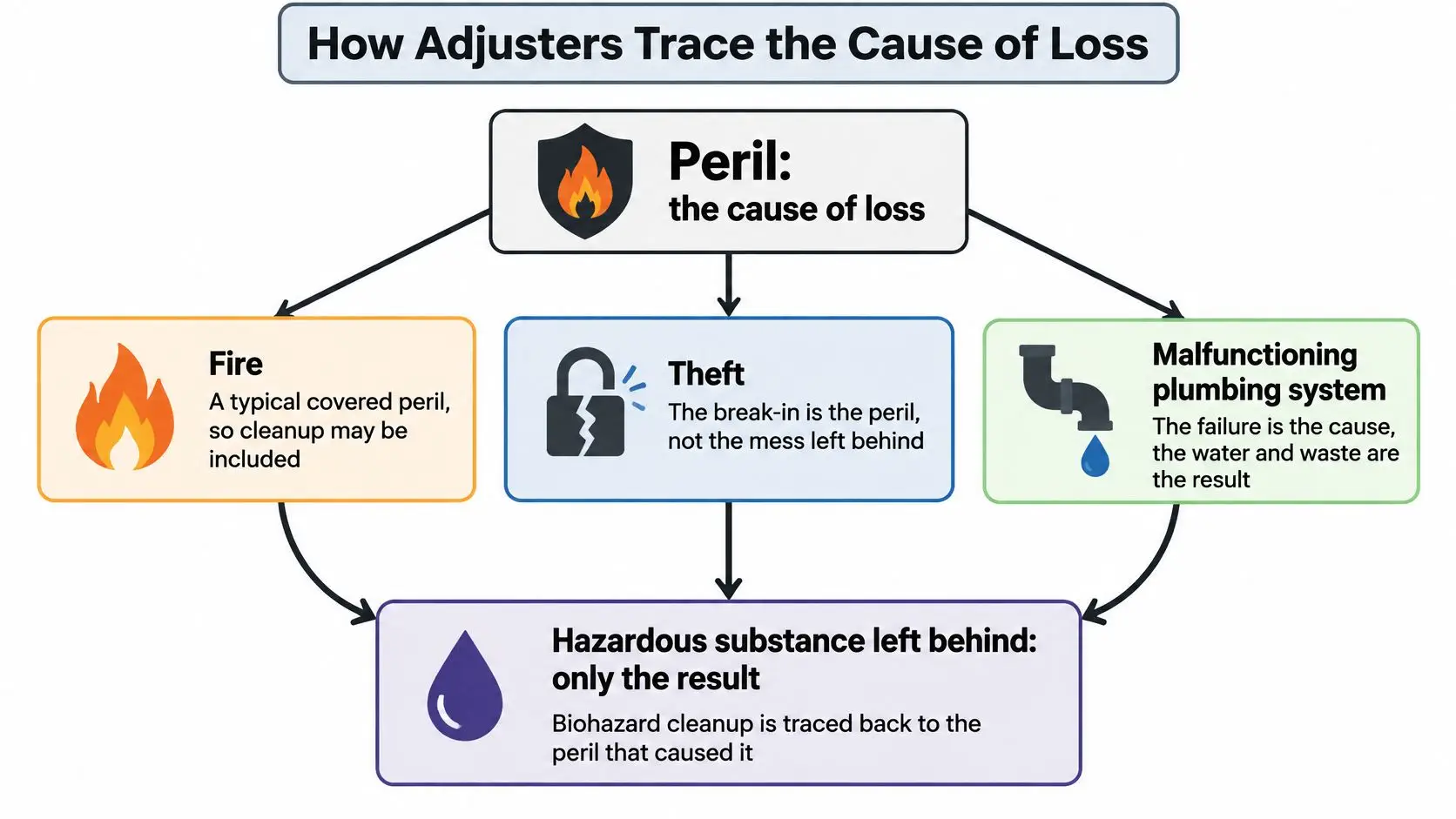
A peril is the cause of loss, not the hazardous material left behind. Ready.gov's property-insurance guide uses events such as fire, theft, and malfunctioning plumbing systems to explain that framework.
This diagram separates the initiating event from its aftermath.
Follow the cause through the contract
- Identify the dominant proximate cause. This means identifying the event that set the loss in motion. Describe the break-in or plumbing failure rather than stopping at blood or contaminated water.
- Check the applicable property coverage. On a common HO-3-style form, dwelling protection is generally open perils, meaning direct physical loss is covered unless excluded. Personal property often requires a specifically named peril.
- Test the exclusions. Neglect, pollution, wear and tear, or an intentional act by an insured may change the outcome even when physical damage is obvious.
The Insurance Claims Info guide to trauma and hazardous-material cleanup describes this cause-based analysis and the distinction between broader dwelling protection and named-peril contents coverage. It also emphasizes that the adjuster, not the cleanup contractor, determines the insurer's coverage position.
A burglary example
Say someone breaks into a home and leaves blood on carpet and subflooring. The adjuster investigates the burglary as the initiating event and evaluates the contaminated building materials as resulting damage. A furniture claim needs its own review under the personal-property provisions.
Now consider a similar-looking stain associated with a long-running leak. The color or cleaning difficulty doesn't make it equivalent to the burglary loss. Evidence of gradual seepage changes the cause analysis and may bring different exclusions into play.
Before remediation, write down what you know about the initiating event and what remains uncertain. Keep the contractor's observations separate from assumptions about coverage.
For an additional explanation of the coverage question, this video offers another format.
Policy Details That Can Limit or Add Payment
Pull together the declarations page, full policy form, and every endorsement. The declarations summarize coverage, but they don't contain every definition or exclusion that may affect cleanup.
Policy items that change a biohazard claim
| Policy item | Question to ask | How it can change payment |
|---|---|---|
| Open perils or named perils | Is the dwelling covered unless excluded, and are contents named-peril only? | The structure and belongings can be treated differently |
| Deductible | Which deductible applies to this loss? | That amount comes off before any insurer payment |
| Debris removal | Can necessary pollutant or hazardous-material cleanup follow a covered loss? | Specialized cleaning may be part of the loss rather than a separate category |
| Sublimits | Is mold, fungi, or pollutant cleanup capped? | Payment can stop well below the dwelling limit |
| Water backup endorsement | Is drain, sump, or sewer backup endorsed? | Backup is often excluded without it |
| Flood exclusion | Did rising surface water cause the contamination? | A standard homeowners form generally doesn't pay; a flood policy might |
| Pollution, neglect, or intentional acts | Does an exclusion override the cause? | The claim can be denied even if the home is badly contaminated |
Ask which limit applies to which work
A dwelling limit isn't necessarily the amount available for every component of remediation. A separate mold or pollutant sublimit may apply to particular tasks, while a deductible affects the insured share of the loss.
Ask the adjuster to identify the wording, not just give a verbal estimate of payment. For mold-related work, compare the insurer's explanation with the questions in our guide to homeowners insurance and mold coverage.
Debris-removal provisions deserve a specific question too. Necessary removal after an insured event may be evaluated differently from an independent request to clean an existing hazardous condition.
A large coverage limit on the declarations page doesn't establish that every cleanup task falls under that limit.
Keep flood and backup separate
The Arizona Department of Insurance and Financial Institutions identifies typical covered causes such as fire, wind, rain, snow, lightning, and hail, while explaining that rising-surface-water flooding is excluded from virtually all standard homeowners and renters policies. Separate flood insurance is needed for that peril.
That distinction matters during a Phoenix monsoon. Rain entering through covered storm damage, surface water flowing into a doorway, and sewage backing up through a drain shouldn't be treated as interchangeable descriptions.
Landlords should also ask about vacancy restrictions, tenant-caused damage, and ownership of contaminated belongings. Request a written explanation that separates cleanup, reconstruction, and personal property, rather than accepting a single unexplained total.
The Same Mess With Different Outcomes
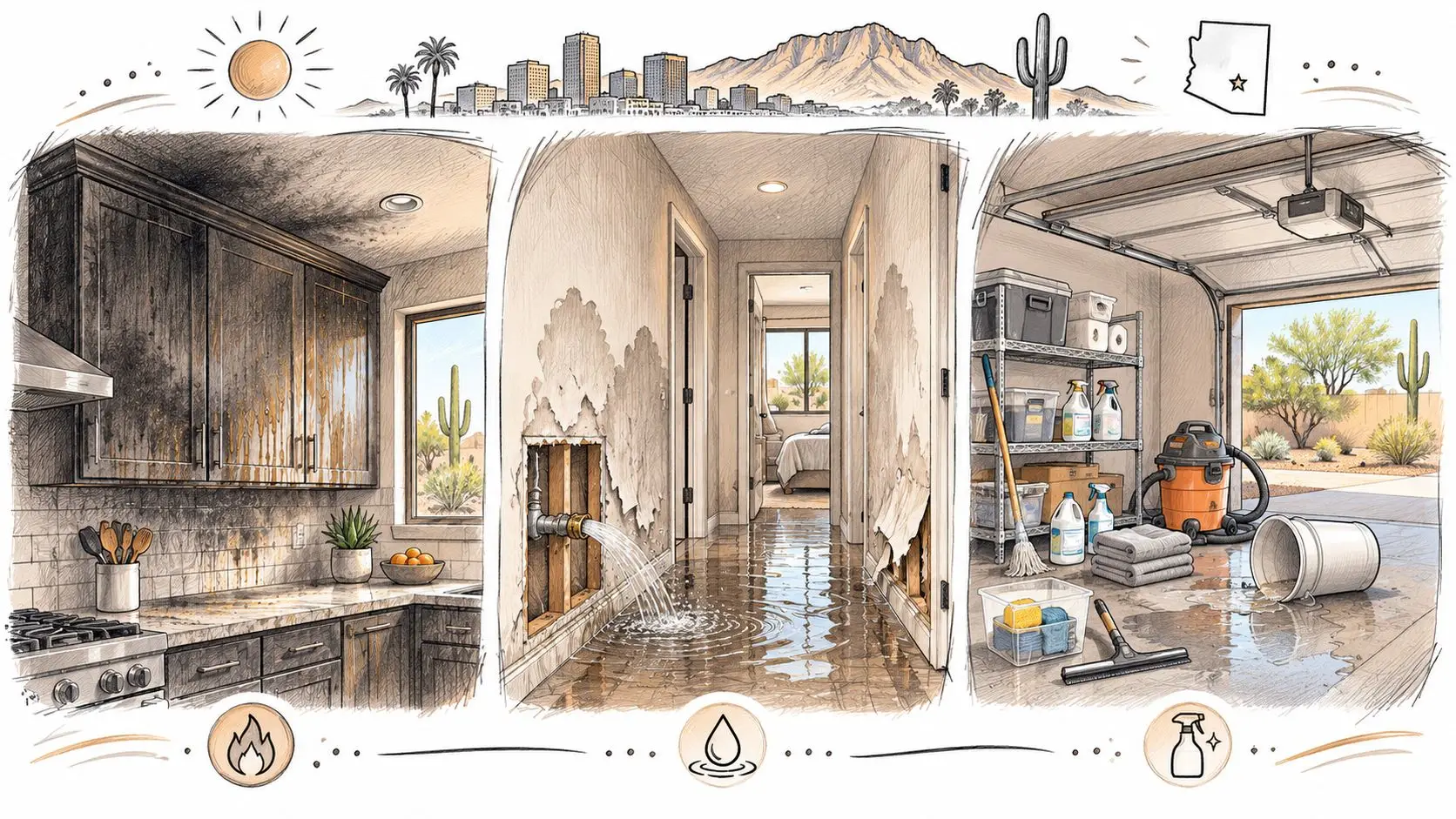
Consider these hypothetical Phoenix-area situations. Each involves a home that needs professional attention, but the coverage questions begin in different places.
The illustration shows distinct restoration situations, not interchangeable insurance claims.
A kitchen fire leaves contaminated cabinets
A cooking fire leaves soot and protein residue across cabinets and nearby surfaces. The homeowner submits the cleaning scope with the fire-damage claim, identifying the affected materials and the proposed treatment.
The relevant question isn't whether the contractor calls part of the work specialized cleaning. It's whether those tasks are necessary consequences of the covered fire and fall within the insurer's accepted scope. Optional improvements and unrelated cleaning need separate treatment.
Overnight water has a disputed source
A homeowner finds dirty water after a plumbing failure overnight and initially describes it as sewage. Inspection is needed to distinguish a failed supply line, a damaged waste pipe, and drain backup. A supply line doesn't ordinarily carry sewage, so the description shouldn't substitute for identifying the actual source.
If the source is a sudden covered plumbing failure, the drying and sanitation scope may receive consideration. If inspection instead reveals a slow leak or backup without applicable coverage, the same odor and wet flooring may produce a different decision.
Monsoon water entering from outside creates another distinction. The homeowner should document its entry point rather than assuming it belongs with an indoor washer-discharge claim.
A crime scene affects carpet and subfloor
After a burglary, contamination reaches beneath the carpet. The homeowner separates removal of fixed flooring from cleaning or replacing movable belongings and asks the insurer to evaluate each portion.
A broad assurance about crime-scene coverage would skip potential intentional-act, pollution, and contents issues. The BioCleaners Directory insurance-coverage guide highlights these gaps, including questions involving suicide, unattended death, sewage, mold, methamphetamine residue, hoarding, and infectious-disease contamination.
An unattended death discovered promptly and decomposition discovered after a long interval also shouldn't receive an assumed identical outcome. Timing is relevant evidence, but it doesn't replace the contract review.
Match your account to the event that caused the loss, then ask which provision applies and which expenses remain outside it.
For rental properties, keep the building claim distinct from the tenant's belongings. Vacancy and tenant conduct may require additional review; neither ownership nor responsibility should be guessed from the location of the contamination.
How to Document a Biohazard Claim
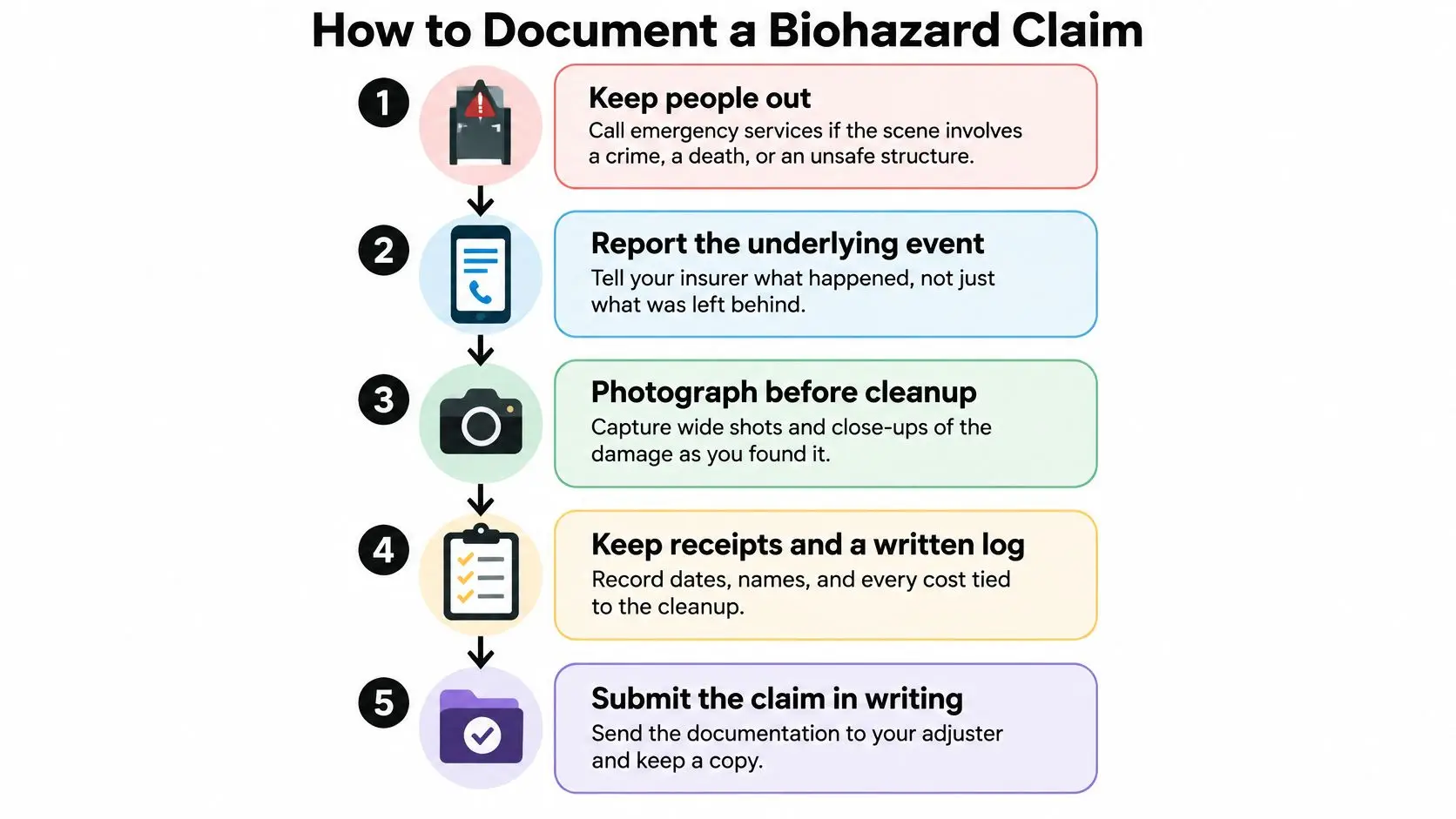
Build a file that lets the adjuster understand what happened, what was affected, and what work was necessary. Evidence collection must never require entering a dangerous scene.
The infographic summarizes the documentation flow; the checklist adds the records needed for a more complete file.
Keep the records in a usable sequence
Keep people out. Contact emergency services for a crime, death, or unsafe structure. Don't enter a restricted scene or disturb materials before responding authorities permit access.
Report the underlying event promptly. Tell the insurer what you know and ask what it needs preserved. Save the claim number, adjuster's contact information, and instructions so you can distinguish an insurer's request from a contractor's recommendation.
Photograph and record video only when safe. Capture room-wide views, affected materials, and the apparent source before non-emergency removal. Wide views establish location; close-ups show the condition of individual items.
Separate building materials from belongings. List carpet, drywall, cabinets, and subflooring apart from furniture, clothing, and other contents. That organization helps the adjuster evaluate the appropriate coverage without mixing the categories.
Request the coverage position in writing. Ask for the identified peril, applicable deductible, sublimits, and exclusions. If the investigation is unfinished, request written confirmation of what remains unresolved rather than treating an initial conversation as approval.
Obtain an itemized written scope. Separate emergency cleanup, material removal, disposal, and reconstruction. A scope should identify the room, material, proposed task, and reason for that task so disagreements can be addressed line by line.
Preserve supporting records. Keep invoices, disposal manifests, moisture or contamination notes, and available police or incident reports. Manifests document what was removed; observations and reports help explain why the work was proposed.
Resolve preservation needs before disposal. Don't discard evidence the insurer still needs without discussing it. If emergency removal is necessary for safety, prioritize official safety directions and document the condition and reason for removal as safely as possible.
Track payments and open questions. Record what you paid, what the insurer allowed, and what remains disputed. Save submitted files and delivery confirmations so you know which documents the adjuster received.
Make the file easy to review
Use folders labeled incident, photographs, scope, invoices, and insurer correspondence. Keep original image files rather than only compressed copies embedded in messages.
Our insurance claim documentation guide can help you organize that record. A complete file supports review, but it doesn't convert an excluded event into covered damage.
When Insurance Pays Only Part of the Bill
First identify the reason for the gap. A deductible, excluded task, sublimit, and disagreement over necessary work are different problems, and each calls for a different response.
If the disagreement concerns removal methods or quantities, compare the contractor's scope with the adjuster's estimate. For The Public Adjusters, Inc.’s discussion of disputed abatement scope in claims is a useful resource for framing questions about hazardous-material removal. A scope dispute isn't the same as a determination that the underlying event is excluded.
Check assistance without assuming eligibility
Crime-victim compensation may help with eligible expenses, but it isn't a universal substitute for insurance. The Texas Crime Victims' Compensation Program, for example, permits reimbursement to eligible providers for crime-related biohazard cleanup after applicable homeowners or renters insurance is unavailable or exhausted, while excluding structural repairs and replacement of stolen or damaged property.
That's a Texas example, not an Arizona benefit determination. Phoenix homeowners should contact the applicable Arizona program and establish its current requirements before relying on assistance.
- Confirm sequencing. Ask whether an insurance denial or exhaustion letter is required.
- Separate eligible expenses. Identify direct cleanup, reconstruction, and replacement belongings individually.
- Check application requirements. Ask about deadlines, eligibility, documentation, payment caps, and whether payment goes to the provider or applicant.
Keep the insurer's letter and itemized invoices together. Our guide to crime-scene cleanup costs can help you understand the scope questions behind an estimate without treating it as a reimbursement commitment.
Don't authorize work on the assumption that a public program will cover the balance. Obtain the program's requirements before counting on assistance, and plan for expenses that may remain your responsibility.
Confirm Coverage Before You Authorize Full Cleanup
Before authorizing non-emergency work, get a decision you can compare with the proposed scope. A verbal statement that the claim looks covered isn't enough to identify your financial responsibility.
Use this final check:
- Cause of loss. Can you describe the initiating event accurately in a sentence?
- Policy provision. Has the insurer identified the applicable clause or exclusion?
- Written position. Is the answer approval, denial, partial coverage, or still under investigation?
- Unpaid scope. Which cleanup, reconstruction, and personal-property expenses remain outside the accepted claim?
If the wording is difficult to follow, our guide to reading a homeowners insurance policy can help you locate the relevant parts. Ask whether the insurer considered each applicable endorsement and whether a deductible or sublimit explains the shortfall.
Make the authorization deliberate
If you disagree, identify the exact task or provision in dispute and request another review with supporting documentation. Keep unresolved items open in your records rather than assuming silence means acceptance. Immediate safety measures may still be necessary while that review continues.
At Restore Heroes, we accept all insurance companies, and we're IICRC certified, licensed, bonded, and insured. Acceptance of an insurer doesn't establish coverage or mean its settlement will match an invoice.
Before work begins, clarify the written scope, billing arrangements, and your responsibility for amounts the insurer doesn't pay. The decision to proceed should rest on documented needs and understandable terms, not an expectation of guaranteed reimbursement.
We offer a free onsite estimate and a free inspection, with 24/7 availability through our contact form or by calling 480-690-5277. For help assessing a Phoenix-area biohazard cleanup scope while you seek your insurer's written coverage position, visit Restore Heroes.