
When you’re frantically searching for "fire damage restoration near me," the first few hours after the blaze has been put out are absolutely critical. The single most important thing to remember? Stay out. Do not re-enter the property until the fire department gives you the official all-clear. What you do—and don't do—in these initial moments can dramatically affect your entire recovery journey.
Your Immediate Action Plan After a House Fire
The aftermath of a fire is a whirlwind of shock and confusion. Your gut instinct may be to run inside and see what's left, but that's one of the most dangerous things you can do. The building's structure could be compromised, there might be live wires hanging loose, and the air is thick with toxic soot and smoke particles that pose a serious health risk.
Your top priority is safety, period.
Once you know everyone is safe and accounted for, the next step is to get the ball rolling on recovery. This means two things: communication and documentation. Call your insurance agent right away. They can walk you through the first steps of the claims process and tell you what they need from you.
Securing Your Property and Documenting the Scene
From a safe distance, pull out your phone and start taking pictures and videos. Get every angle of the outside of your property. Zoom in on the roof, the windows, the siding—document everything. This initial evidence is valuable for your insurance claim.
While you should never go back inside, you do need to secure the property from the outside. One way to do this is to call a professional restoration company for emergency board-up and tarping services. This protects your home from the weather, keeps animals out, and deters potential looters.
To help you stay organized during this stressful time, here’s a quick checklist of what to prioritize.
Immediate Post-Fire Action Checklist
This simple table breaks down the first essential steps you need to take once the fire is out.
| Action Item | Why It's Critical | Who to Contact |
|---|---|---|
| Confirm Safety | Your well-being is the top priority. The structure may be unstable. | Fire Department / Emergency Personnel |
| Call Your Insurance Agent | Initiates the claims process and provides guidance on next steps. | Your Insurance Company |
| Document All Damage | Provides visual proof for your insurance claim. | Do this yourself (from a safe distance). |
| Secure the Property | Prevents weather damage, vandalism, and further loss. | A certified restoration company (like Restore Heroes) |
| Contact a Restoration Pro | Starts the mitigation process to prevent secondary damage like mold. | IICRC-certified local professionals |
Following these steps methodically can bring a sense of control to a chaotic situation and set you up for a smoother recovery.
"One of the most overlooked challenges after a fire is the secondary damage caused by water from firefighting efforts. Addressing this moisture within the first 24-48 hours is crucial to prevent mold growth and further structural issues."
Getting a qualified restoration team on-site fast is important. They don't just secure the building; they start the critical work of mitigating ongoing damage. For an excellent, in-depth look at navigating this process, this What to Do After a House Fire: A Practical Recovery Guide is a fantastic resource.
Mitigating Ongoing Damage
You might not realize it, but soot and smoke residue are highly acidic. They can cause permanent staining and corrosion in just a matter of hours. On top of that, all the water used to fight the fire creates the perfect breeding ground for mold and can lead to structural rot.
A professional assessment can help stop these problems from getting worse. While you're waiting for help to arrive, you can start learning about one of the most stubborn post-fire issues by reading our guide on how to remove the smoke smell from a house. Moving quickly is the best way to protect your property—and your health.
What to Expect From the Fire Restoration Process
Once you've made that crucial call for help, a highly organized and professional process can kick into gear. It's so much more than just a simple cleanup; think of it as a methodical system designed to safely bring your property back to its pre-fire condition. The journey really begins the moment a certified restoration team steps onto your property.
Their first order of business is typically a comprehensive inspection and damage assessment. Trained technicians will carefully walk through your home or building, looking for more than just the obvious burn marks. They’re trained to spot the hidden effects of smoke, soot, and even the water damage left behind by firefighters. This initial look-see is absolutely critical for mapping out a solid restoration plan and getting the right documentation ready for your insurance claim.
After the assessment, the immediate priority shifts to securing your property from any further harm. This usually involves a few key actions:
- Boarding up windows and doors to keep the property secure and protected from the elements.
- Tarping the roof if it's been damaged, which prevents rain from getting in and creating a whole new set of water-related problems.
- Removing standing water with powerful pumps and vacuums to get the drying process started as fast as possible.
This graphic breaks down the first, most important things you need to do right after a fire.
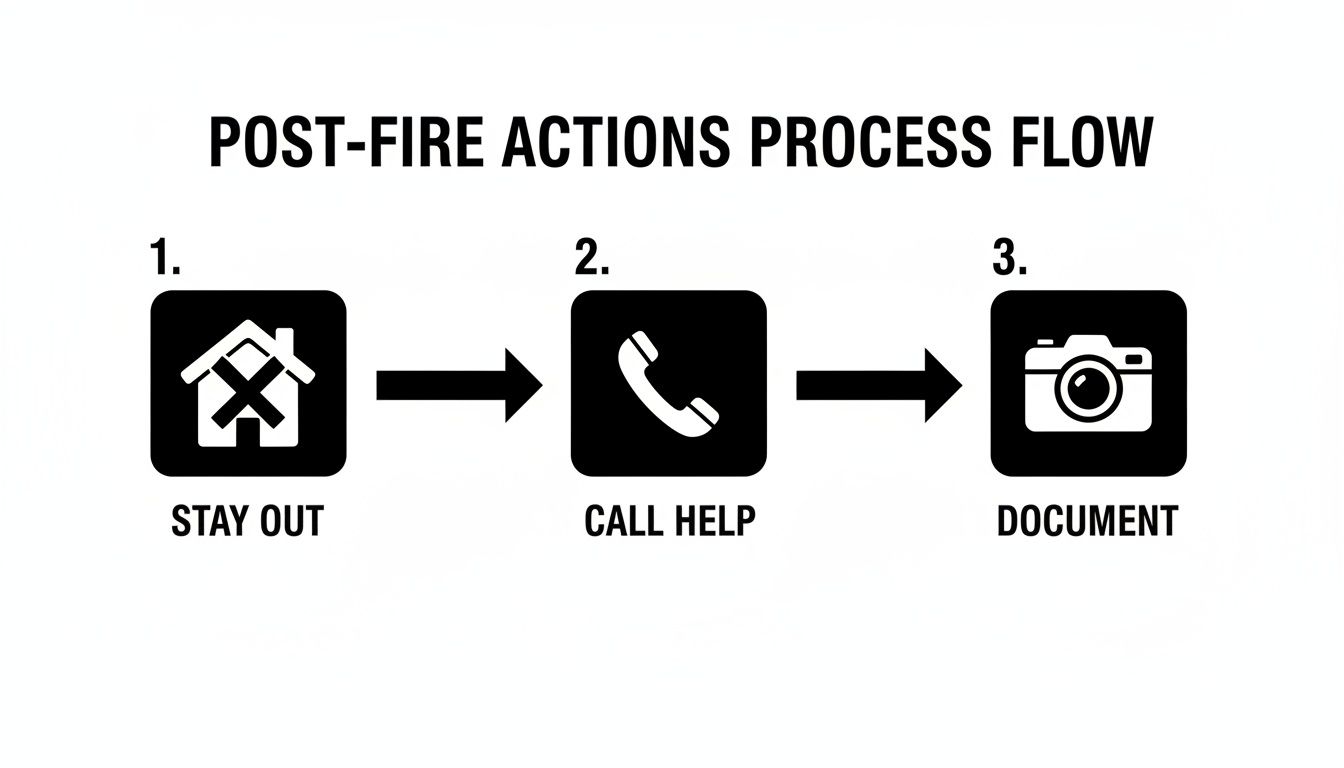
The message is clear and simple: stay out to stay safe, call in the professionals right away, and start documenting everything you can.
From Soot Removal to Getting Rid of the Smell
With your property secured, the real deep-cleaning work begins. Smoke and soot are nasty—they're incredibly invasive and acidic, and they can corrode and permanently stain just about anything if not treated quickly and correctly. This is where the pros use specialized tools of the trade, like HEPA vacuums and chemical sponges, to carefully lift that residue from walls, ceilings, and other surfaces without causing more damage.
At the same time, they're tackling what is often the most persistent reminder of a fire: the smell. That smoke odor has a way of seeping deep into porous materials like wood, drywall, and fabrics.
A professional crew doesn't just cover up the smell with air fresheners. They use advanced equipment like thermal foggers or ozone generators to help eliminate odor molecules. This is an effective way to help ensure that smoky smell doesn't make an unwelcome return on the first hot day of summer.
The need for these specialized skills is growing. The U.S. fire damage restoration market is expected to jump from $8 billion in 2025 to $15 billion by 2033, a trend fueled in large part by the rising frequency of wildfires. When you see events like the $2 billion in insured losses from the 2021 Denver Marshall Fire, you understand why having certified, experienced pros in fire-prone states like Arizona is more important than ever.
A Real-World Phoenix Scenario
Let's look at a situation we see all the time: a kitchen grease fire in a Phoenix home. The flames char the cabinets and melt appliances, but the damage doesn't stop in the kitchen. Smoke and soot travel through the HVAC system, coating walls and furniture in other rooms with a greasy film. Then, the water from the fire hoses soaks the kitchen and living room floors.
A professional restoration team would come in and immediately start extracting the water, setting up high-powered air movers and dehumidifiers. They’d then painstakingly clean soot from every surface, clean out the air ducts, and use deodorization technology to help the home smell fresh again, not like a stale campfire. This is the kind of detailed, systematic approach that defines the entire fire damage restoration process.
Working With Your Insurance Company After a Fire
Dealing with your insurance company after a fire is often a stressful part of the entire ordeal. It can feel overwhelming, but a bit of knowledge and preparation goes a long way.
Your first move, once the fire department gives you the all-clear, is to call your insurance agent. This one phone call officially starts your claim, assigns you a claim number, and sets the entire recovery process in motion.
From there, your insurer will assign a claims adjuster to your case. This person is their representative, and their job is to visit your property and evaluate the damage from the insurance company's point of view.
Preparing for the Insurance Adjuster
The adjuster's visit is a make-or-break moment for your claim. You’ll want to be ready with your initial photos and videos of the damage, along with a list of your most pressing questions.
This is where having a professional fire damage restoration company on your side can be a huge advantage. A restoration professional can meet the adjuster on-site to walk them through the property. They often speak their language, using the same industry-standard software to create a detailed scope of work. This gets everyone on the same page from day one and helps avoid disagreements down the road.
If the firefighting efforts also caused significant water damage, you might find our guide with water damage insurance claim tips helpful.
Understanding Key Policy Terms
As you dig into your policy paperwork, you may see terms like "loss of use" or "additional living expenses" (ALE). Don't gloss over this—it's a critical part of your coverage. ALE is designed to pay for things like a hotel or rental home, meals, and other essentials when you can't live in your house.
A critical piece of advice: You should not accept a final settlement offer from your insurance company until after a professional restoration team has done a complete assessment. An adjuster’s initial offer might not see the hidden smoke damage behind walls or the long-term effects of water used to put out the fire.
You should document everything. Start a notebook or a file on your computer and log every single conversation with your insurance company—note the date, time, who you spoke with, and what was said.
You'll also need to start the painstaking process of creating a home inventory list. This is your proof of what you lost.
- Tackle it one room at a time: List everything you can remember, from the big-ticket items like TVs and sofas down to clothes and kitchen gadgets.
- Get specific: For each item, jot down the brand, model, and roughly how old it was.
- Show, don't just tell: Match your list with the photos and videos you took of the damaged items.
It’s a tedious, emotional task, but a detailed inventory is the single best tool you have to help you get a fair settlement for your personal belongings.
How to Choose the Right Fire Restoration Company
Googling "fire damage restoration near me" can feel like staring into a void. You’re hit with a wall of options at a time when you're already stressed and overwhelmed. How do you cut through the noise and find a team you can actually trust to put your home back together?
Making the right choice here is critical—it sets the tone for your entire recovery process. It’s about more than just picking the first company that answers the phone. You need to look for a few key things that separate the real pros from everyone else.
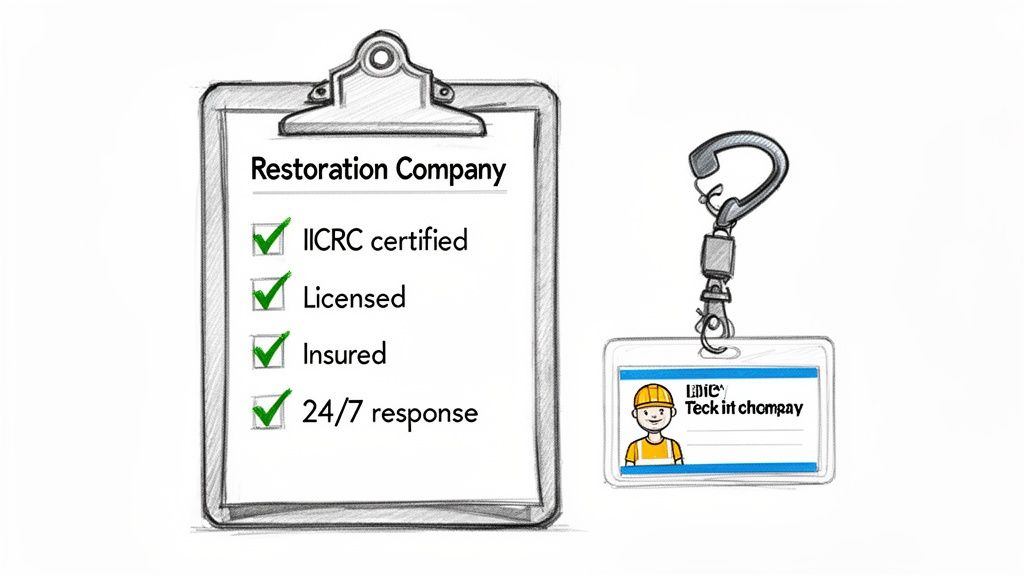
Look for IICRC Certification and Proper Credentials
Here's the first non-negotiable: consider hiring a company that is IICRC-certified. The Institute of Inspection, Cleaning and Restoration Certification (IICRC) is the organization that sets the global standards for our industry. If a company is certified, it means their technicians have actually been trained and tested on the right techniques and safety protocols for handling fire, smoke, and water damage.
Beyond that, any legitimate contractor must be fully licensed and insured. Don't be shy about asking to see proof of their liability insurance and workers' compensation. This is what protects you if someone gets hurt on your property during the job.
Why a 24/7 Immediate Response is Non-Negotiable
After a fire is put out, the clock starts ticking. Soot is corrosive and can cause permanent damage in just a few hours. And the water used to fight the fire? That can lead to a serious mold problem in as little as 24 to 48 hours.
When a company says they offer a 24/7 response, they need to mean it. Ideally, they should have a team on-site and ready to work shortly after you call, no matter the time of day.
This immediate response is crucial for a few reasons:
- Securing Your Property: They’ll board up broken windows and tarp the roof to protect your home from the elements or intruders.
- Stopping Secondary Damage: Getting the water out and drying everything quickly is the only way to stop mold in its tracks.
- Saving Your Belongings: A fast response can be the difference between restoring your personal items and having them declared a total loss.
A professional crew gets the urgency. Any delay or excuse about getting to you is a huge red flag and a good sign of what their service will be like down the road.
The need for these specialized services has created a massive industry. The U.S. disaster restoration market is expected to grow from $22.2 billion in 2024 to $31.51 billion by 2030. While this means there are plenty of certified pros out there, it also means you have to be careful about who you hire.
Red Flags to Watch Out For
Knowing what to avoid is just as important as knowing what to look for. Be skeptical of anyone using high-pressure sales tactics or trying to get you to sign a contract before they've even done a proper inspection. A real professional will give you a detailed assessment and estimate, taking the time to answer your questions.
Another major warning sign? Demanding a huge payment upfront. A reasonable deposit is one thing, but asking for the full amount before the work is done is unacceptable. Remember, fire and water damage often go hand-in-hand, and a certified water damage restoration contractor will have the expertise to handle both issues without putting you under financial pressure.
What to Expect: Restoration Costs and Timelines
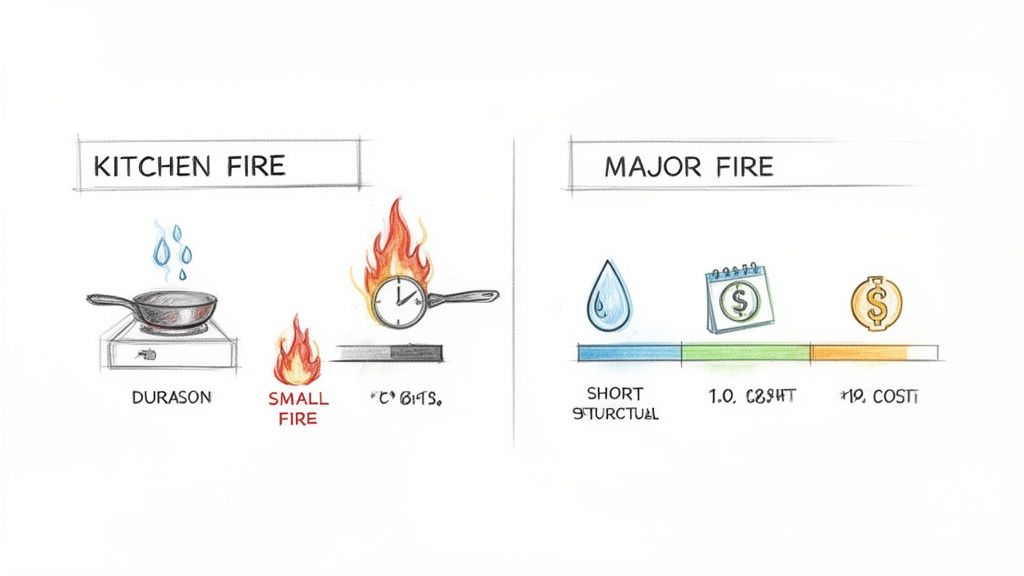
After a fire, two questions immediately jump to mind: "How long will this take?" and "How much will it cost?" The honest answer is, it depends. Every fire is different, so there's no single price tag or timeline.
However, we can look at the factors that drive the scope of the project. The size of your property, the intensity of the blaze, the type of smoke residue, and the extent of water damage from putting the fire out all play a massive role. A small, contained kitchen fire is a completely different ballgame than a structural fire that rips through multiple rooms.
Factors Influencing Restoration Timeline and Scope
To give you a clearer picture, let's look at how a project can change based on the severity of the fire. A minor incident might just need some deep cleaning and minor repairs, but a major fire often means a full-blown reconstruction project.
| Influencing Factor | Minor Fire (e.g., small kitchen fire) | Major Fire (e.g., multi-room structural fire) |
|---|---|---|
| Primary Damage | Confined to a small area with soot and smoke residue. | Widespread structural damage; compromised walls, floors, and roof. |
| Water Intrusion | Minimal water damage, likely from a fire extinguisher. | Extensive water saturation from high-pressure fire hoses. |
| Typical Timeline | A few days to a couple of weeks. | Several weeks to many months. |
| Main Activities | Soot and smoke cleaning, deodorization, minor repairs. | Full demolition, structural rebuild, system (HVAC, electrical) replacement. |
As you can see, the complexity and timeline can escalate dramatically. This is why a professional, on-site assessment is the crucial first step for any "fire damage restoration near me" project. It sets the foundation for everything that follows.
How Costs Are Professionally Estimated
So, how do we put a number on all of this? Reputable restoration companies and insurance carriers don't just guess. They use industry-standard software to promote fairness and accuracy.
The most widely used tool is Xactimate. It contains a massive database of up-to-date, localized costs for materials and labor. This means the estimate you get reflects the real-world market rates in our area for everything from a gallon of smoke-sealing primer to the labor for rebuilding a wall.
The software helps us create a detailed, line-by-line scope of work. It’s not just a lump sum; it’s a transparent breakdown of every single task needed to bring your property back to its pre-fire condition.
Pro Tip: If you want to understand what you're looking at, an Xactimate codes guide can be a real eye-opener. It helps translate the technical jargon in your estimate so you know exactly what you’re paying for and why.
Ultimately, a trustworthy restoration professional will walk you through a detailed, itemized estimate after they've thoroughly inspected the damage in person. This document becomes the roadmap for the entire project, getting you, our team, and your insurance company on the same page right from the start.
Your Local Partner for Fire and Smoke Damage
Going through a fire is something no one ever wants to experience, but you absolutely don't have to face the aftermath by yourself. When you start searching for "fire damage restoration near me," you're not just looking for a cleanup crew. You're looking for an experienced partner who can help you put the pieces back together and restore your sense of normalcy.
In these situations, time is your enemy. The faster you act, the more damage you can prevent, and choosing the right team from the very beginning is the most critical decision you'll make.
A professional crew doesn't just clean up the mess; they bring a calm, methodical process to an overwhelming situation. This starts with having IICRC-certified technicians—that’s the gold standard in the restoration world—who know exactly how to handle the job safely and effectively.
What Sets a Great Restoration Partner Apart
So, what makes a restoration company truly stand out? A few things are non-negotiable.
First, a genuine 24/7 immediate response. A fire doesn't care about business hours, and neither should your restoration team. You need someone who picks up the phone at 2 AM on a weekend and gets moving right away, not a service that just takes a message.
Experience with insurance companies is another big one. An experienced partner knows the ins and outs of working with all the major carriers. They speak the language of adjusters, understand the required documentation, and can help make your claim process go much more smoothly. You can see more about how we handle fire and smoke damage services and support homeowners through every step.
Finally, a local team just gets it. For those of us in the Phoenix metro area—whether you're in Mesa, Gilbert, Scottsdale, or Chandler—having a local partner means they can get there faster and are genuinely invested in helping their neighbors recover.
Choosing a restoration company is a huge decision. You want a team that communicates clearly, gives you a detailed plan after seeing the property, and treats your home with the respect it deserves—as if it were their own.
Your home is more than just a building; it's where your life happens. Getting it back to the way it was requires a combination of technical skill, professional dedication, and a bit of human compassion. Your recovery begins the moment you call the right people.
When you need professional help right now, Restore Heroes is here for you 24/7. We provide a no-obligation onsite inspection for homeowners throughout the Phoenix area. Call us, and let's start the recovery process together. https://www.restoreheroesaz.com