
A house fire leaves people with two emergencies at once. The first is obvious: smoke, soot, water, broken openings, and rooms that no longer feel safe. The second is quieter but just as stressful: trying to make smart decisions while you're tired, shaken, and already thinking about insurance, temporary housing, and whether anything can be saved.
That's where a clear plan helps. Fire damage restoration in Scottsdale usually isn't one single cleanup job. It's a chain of decisions about safety, stabilization, hidden damage, documentation, and repair scope. If you understand that chain early, you're less likely to lose time, miss claim details, or approve work that doesn't match the actual damage.
Your First Steps After a Fire in Scottsdale
You get back to the property after the fire department clears the scene, and the pressure starts immediately. The windows are broken, the house smells like smoke, water is still sitting in parts of the floor, and your insurance carrier wants details you may not have yet. The first job is not to solve everything. It is to protect the house, document the loss, and avoid decisions that make the claim or the cleanup harder.
What to do in the first 24 hours
Wait for official clearance: Do not re-enter until the fire department says it is safe. After a fire, the risks are often structural instability, exposed wiring, sharp debris, and air contamination that is not obvious from the doorway.
Secure the structure: Temporary board-up and roof tarping come early for a reason. They reduce weather exposure, trespassing, theft, and more interior damage while the claim and restoration scope are still being sorted out.
Call your insurance carrier: Open the claim right away, even if the full damage picture is still unclear. Ask for the claim number, the adjuster's name, the best contact method, and whether emergency mitigation needs pre-approval or only documentation.
Document before moving anything: Take wide shots, close-ups, and a slow video walkthrough. Photograph burned areas, soot spread, smoke staining, standing water, damaged contents, and any openings in the structure. Good documentation helps with both visible damage and the hidden issues that often show up later, such as moisture behind baseboards or smoke spread into closets and return vents.
Arrange emergency mitigation: In practice, this early stabilization work often starts the same day or the next and may continue for several days, depending on access, utility conditions, and how much firefighting water is still in the home. Typical first tasks include board-up, water removal, debris control, and setting up drying equipment. The goal is to stop additional loss while creating a clean record for the insurance file.
Practical rule: Do not wipe soot with household cleaners or run a shop vacuum over fire residue. I have seen well-meaning cleanup efforts smear oily soot deeper into paint, stone, and fabric, which can raise cleaning costs and make item restoration less likely.
What helps and what usually backfires
Homeowners often feel pressure to start clearing things out. Slow down enough to make each step defensible to the adjuster.
- Helpful: Secure openings, photograph every room, and keep damaged items in place until they are documented.
- Helpful: Start a simple claim log with names, dates, phone numbers, and what each person approved or requested.
- Risky: Throwing away contents before the carrier or restoration team has a chance to inspect them.
- Risky: Turning the HVAC system back on before smoke and soot contamination have been assessed.
- Useful: Asking the mitigation company to separate emergency work from repair estimates so you can see what protects the property now versus what belongs in the rebuild scope.
If you need a practical reference while making calls and taking photos, keep this what to do after a house fire checklist open as you work. For a broader look at post-fire recovery steps, that guide is useful because it organizes the early priorities in plain language.
The Fire Damage Restoration Process Explained
Fire restoration works a lot like medical care. First comes triage. Then stabilization. Then treatment. Then repair. Problems start when people treat a fire loss as if it's just cleaning, because smoke, soot, and firefighting water often spread beyond the visibly burned area.
Phase one is triage and stabilization
The first visit should answer basic questions. Is the structure safe to enter? Are there active leaks? Are there open rooflines, shattered windows, or compromised doors? Has soot spread into unaffected rooms? Is there trapped moisture under flooring or inside wall assemblies?
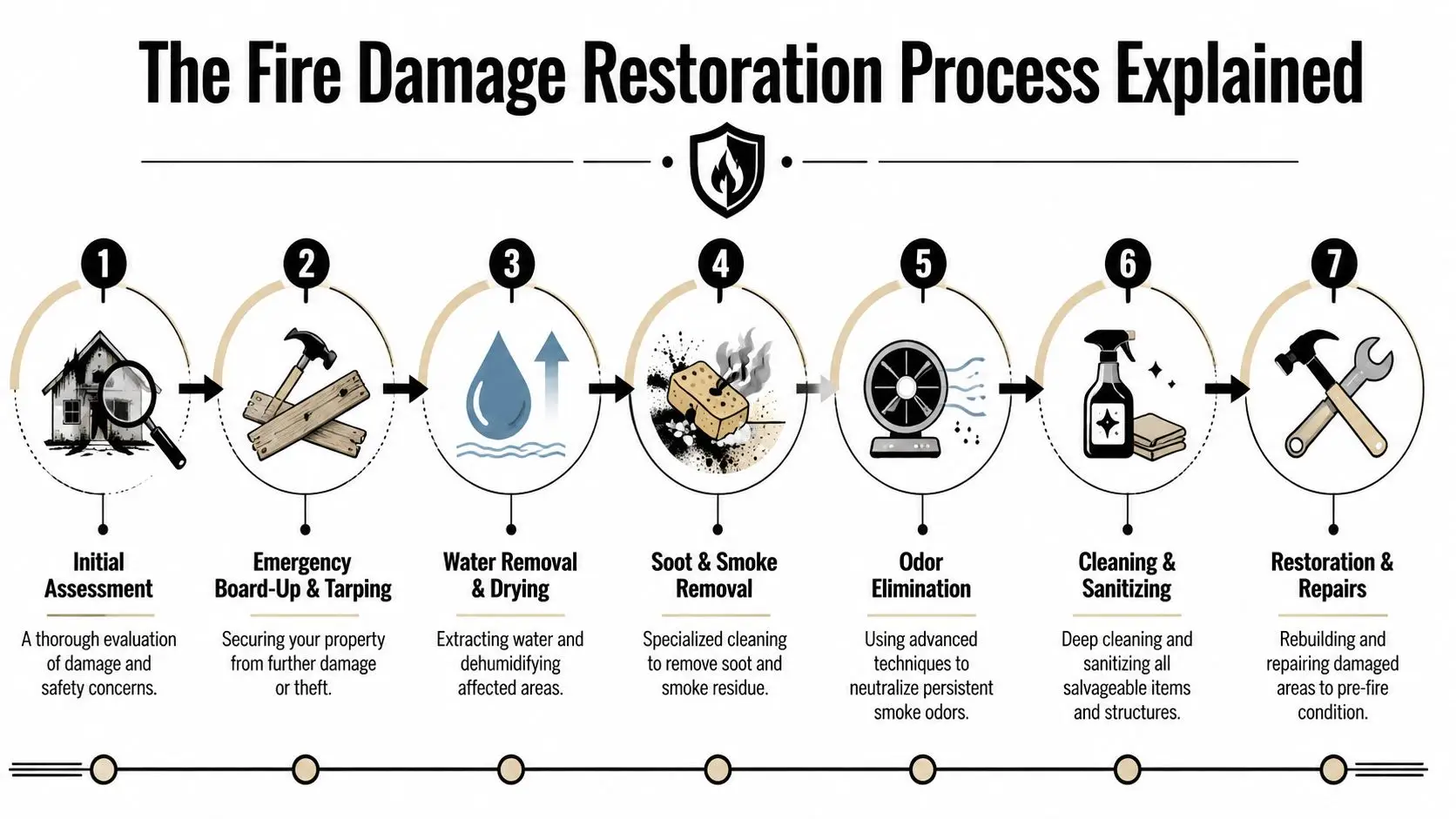
During stabilization, crews usually focus on actions that stop the property from getting worse:
- Board-up and tarping: Keeps weather, animals, and unauthorized entry out.
- Water extraction: Removes firefighting water before it soaks deeper into wood, drywall, insulation, and cabinetry.
- Debris control: Clears unstable or heavily damaged materials that block safe access.
- Initial moisture control: Starts the drying plan, not just the visible cleanup.
This stage is not the rebuild. It's the part that protects the rebuild from becoming larger and more expensive than it needs to be.
Phase two is residue removal and controlled cleaning
Soot is not just dirt. Different fires create different residues, and each one behaves differently on paint, metal, natural stone, upholstery, and finished wood. Dry soot can smear. Wet soot can stain extensively. Acidic residues can continue damaging surfaces if they sit.
A professional workflow usually separates the job by material type and contamination level. Walls may need dry cleaning methods first. Hard contents may need specialized cleaning. Electronics often need careful evaluation because soot can infiltrate vents and internal components. If you're trying to understand why household wiping methods can make things worse, this guide on how to clean soot from walls shows why technique matters.
Fire damage restoration in Scottsdale often succeeds or fails on sequencing. Dry the structure too late, and materials deteriorate further. Clean soot the wrong way, and you drive it deeper into finishes.
Phase three is odor work, systems cleaning, and repair planning
Smoke odor doesn't disappear because a room “looks better.” Odor lingers in porous materials, insulation, textiles, framing, and HVAC pathways. That's why deodorization is usually its own step, not a final spray at the end of the job.
HVAC systems deserve special attention because they can move contamination into areas that seem untouched. In some homes, ductwork needs its own inspection and cleaning plan. For homeowners trying to understand that side of the job, this resource on duct cleaning in Scottsdale explains why air distribution systems can't be treated as an afterthought after smoke exposure.
Phase four is restoration and reconstruction
Mitigation stops the spread of damage. Restoration puts the property back together. That can mean replacing drywall, insulation, cabinets, trim, flooring, paint systems, and sometimes major structural components.
Scope control matters. If the mitigation phase was rushed or under-documented, the rebuild team may discover hidden smoke, corrosion, or moisture later. Good project management keeps those discoveries tied to documented damage categories so the repair phase doesn't become a string of surprises.
Typical Timelines and Costs in the Phoenix Area
The morning after a fire, homeowners in Scottsdale usually want two clear answers. How long until the house is livable again, and how much is this likely to cost? The honest answer is that timelines and pricing follow the scope of smoke spread, water intrusion, demolition needs, and rebuild complexity more than the size of the flame front you saw.
A kitchen fire that looks contained can still turn into a longer project if smoke moved through cabinets, wall cavities, or the HVAC system. A visibly worse fire can sometimes move faster if the damaged area is limited and the rebuild scope is straightforward. That is why early numbers are often provisional. Good contractors and adjusters refine them as documentation improves and hidden damage is confirmed.
What affects the timeline
In the Phoenix area, emergency board-up, site safety, and initial stabilization often happen within the first few days. Full restoration can stretch into weeks or longer once drying, cleaning, odor treatment, contents work, and reconstruction are all part of the file, as noted earlier in the Scottsdale rebuilding guide.
Several issues usually control the schedule:
- Smoke migration: Damage rarely stops at the burn room. Residue can spread into closets, attics, adjacent rooms, and air pathways.
- Water exposure: Firefighting water can soak subfloors, insulation, cabinets, and lower wall cavities, which adds drying and monitoring time.
- Salvage versus replacement decisions: Cleaning a smoke-affected cabinet set takes a different amount of time than removing and replacing it.
- Scope approval: Insurance review, updated estimates, and permit requirements can slow the handoff from mitigation to rebuild.
- Material availability: Custom cabinetry, specialty flooring, and matched finishes often add lead time after cleanup is complete.
Estimated Fire Restoration Phases and Timelines
| Restoration Phase | Typical Estimated Duration |
|---|---|
| Emergency stabilization | 1 to 3 days |
| Detailed assessment and scope writing | Several days |
| Water removal and drying | Several days to a few weeks |
| Soot, smoke, and odor treatment | Several days to a few weeks |
| Reconstruction and final repairs | Several weeks or months |
Those phases also overlap less than homeowners expect. Drying may need to finish before parts of the cleaning plan are finalized. Odor treatment may continue after demolition reveals contamination behind finishes. Rebuild work often waits on insurance sign-off for items that were not visible on day one.
What costs tend to look like
Cost ranges in Scottsdale are wide because fire losses are really a stack of separate jobs. Mitigation, contents handling, specialty cleaning, demolition, odor treatment, and reconstruction may all be billed under the same claim, but they are different cost buckets.
One Scottsdale-focused resource places minor fire damage repairs in the tens of thousands, while major structural rebuilds can climb into the high six figures in this Scottsdale house fire cost overview. That spread matches what we see in the field. The biggest pricing swings usually come from hidden smoke contamination, the amount of water used during suppression, and how much of the home needs to be rebuilt instead of cleaned.
If framing, electrical runs, HVAC components, or multiple finish layers were affected, the project often shifts from mitigation into reconstruction planning. That changes both budget and claim strategy.
For homeowners reviewing estimates, the better question is not why one total is higher. Ask what is included, what is excluded, and what is still listed as pending inspection or supplemental approval. This breakdown of fire damage restoration cost is useful for separating mitigation, contents, demolition, and rebuild charges so you can compare proposals and discuss them with your adjuster from a stronger position.
Navigating Insurance Claims for Fire Damage
The insurance side of a fire loss often turns into a documentation problem. Visible burn damage is easy to understand. Hidden smoke contamination and water migration are harder to prove unless someone records them early and clearly.
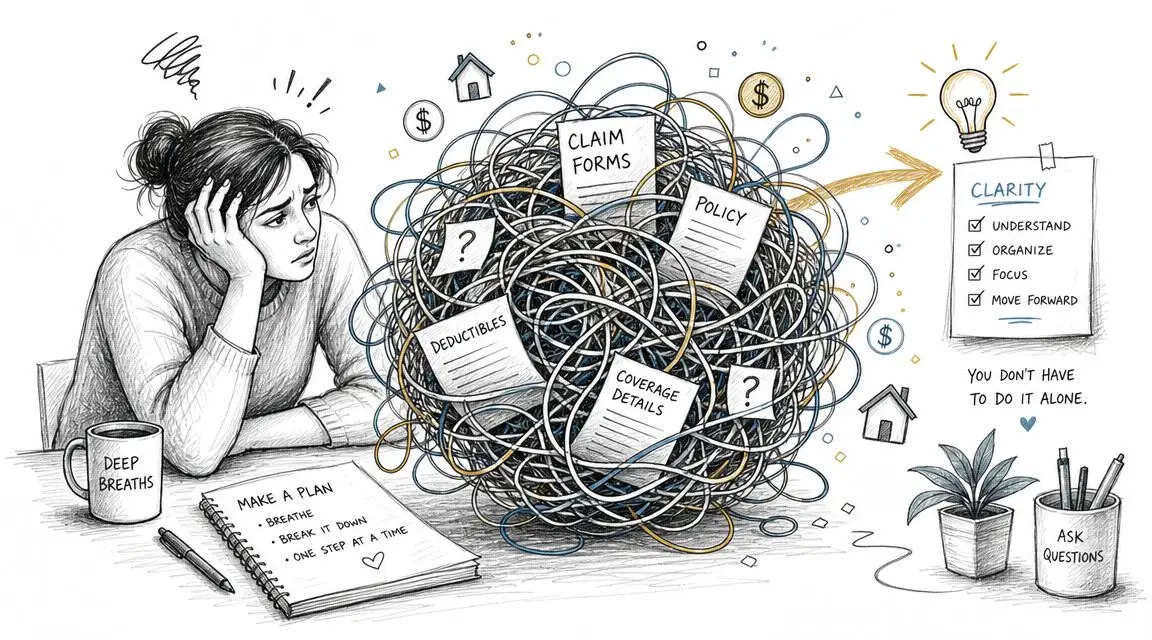
A key challenge in Scottsdale claims is that hidden smoke and water contamination can be worse than the visible damage, and even small fires can create serious problems in HVAC systems and wall cavities, which makes detailed professional assessment important for a complete claim, as noted in this Scottsdale restoration services overview.
What to document before cleanup changes the scene
Photographs matter, but the best claim files aren't just photo albums. They show categories of damage with enough context that an adjuster can follow the loss logically.
Collect evidence in layers:
- Start wide: Photograph each room from multiple corners.
- Then go tight: Capture soot deposits, smoke staining, warped trim, blistered paint, wet flooring edges, damaged contents, and cabinet interiors.
- Show hidden pathways: Vents, returns, attic access points, closets, and areas adjacent to the fire room.
- Track water separately: Note where firefighting water pooled, dripped, or spread.
- Keep a loss log: Write down dates, names, phone numbers, and what each person said.
This is one of the biggest claim mistakes I see in practice: homeowners document “fire damage” as one category, but the actual job often includes smoke damage, soot damage, water mitigation, odor treatment, and rebuild work as separate scopes.
How to work with the adjuster without losing control of the claim
Your adjuster's role is to evaluate the claim under the policy. Your role is to present a complete, organized record of the loss. Those are not the same job.
Ask direct questions:
- What has been approved so far
- What documentation is still needed
- Whether hidden contamination requires specialist review
- How temporary repairs and mitigation invoices should be submitted
If you need a primer on the process itself, this guide on how to file a homeowners insurance claim is a practical starting point.
After the initial claim is opened, this overview can help you think through the communication side of the process:
Hidden damage deserves its own paper trail
The most overlooked losses after a fire are the ones homeowners can't easily see. Smoke in ductwork. Soot in cabinets that were closed at the time of the fire. Moisture behind baseboards or inside wall cavities. Odor that remains because porous materials were not fully addressed.
The cleaner the paperwork, the stronger the claim. Separate burn damage, smoke contamination, water intrusion, and contents loss instead of rolling everything into one vague description.
A restoration contractor can support the claim by documenting scope, materials affected, moisture conditions, and cleaning versus replacement decisions. That doesn't guarantee any coverage result, but it gives the claim a factual structure.
Why Local Experts and IICRC Certification Matter
At 10 p.m., after the fire department leaves, many homeowners are making a hiring decision while the house still smells like smoke and wet drywall. That is a hard time to sort good restoration guidance from a polished sales pitch. The right company should bring two things to the table right away. Technical discipline and documentation that helps keep your insurance claim organized.

Why certification matters in real-world work
IICRC certification means the crew has been trained on recognized standards for cleaning, drying, demolition, and contamination control. For a homeowner, that shows up in very practical ways. A trained team is more likely to isolate affected areas correctly, test for moisture before closing walls, and explain why one material can be cleaned while another should be removed.
That matters for the claim too.
After a fire, the dispute is often not about the obvious damage. It is about the hidden damage and whether it was documented clearly enough to support cleaning, sealing, replacement, or continued odor treatment. A qualified restoration contractor should be able to show readings, photos, material conditions, and scope notes that separate smoke residue, water intrusion, and reconstruction needs. That does not decide coverage, but it gives the adjuster a cleaner file to review.
Why local experience changes the plan
Scottsdale homes are not built one way. A single-story ranch with accessible attic space is a different project from a newer two-story home with tight chases, custom cabinetry, and open-concept smoke spread. Local crews tend to recognize the finishes common in the area, the drying challenges that come with firefighting water in our climate, and the permit and trade coordination issues that can slow the job once demolition starts.
Speed still matters, but judgment matters just as much. Fast demolition can reduce odor and secondary damage. It can also create avoidable rebuild costs if materials were removed before they were tested or documented. Homeowners should ask who writes the scope, who takes moisture readings, who decides what can be cleaned, and who sends that information to the insurer.
If you want a practical screening framework, this guide to finding the right water damage restoration contractor in Phoenix is useful because many fire losses also involve large amounts of suppression water.
One Phoenix-area option is Restore Heroes, a licensed, bonded, insured, and IICRC-certified restoration company that handles fire and smoke cleanup in the metro area. The company name matters less than the standard of work. Any contractor you hire should be able to explain the sequence, document hidden damage, and keep mitigation records clear enough that your claim does not become harder to sort out later.
Prevention deserves some attention too. Home hardening, defensible space, and exterior material choices can reduce future risk, especially for properties near natural desert areas. This guide to fire-resistant Arizona landscaping is a useful starting point if you want to review that side of the picture after the immediate cleanup is under control.
Your Post-Fire Recovery Checklist
Recovery goes better when you manage it like a project, not a series of rushed phone calls. Keep one folder, one notebook, and one running list. That simple system reduces missed details and conflicting instructions.
Keep this list where you can find it fast
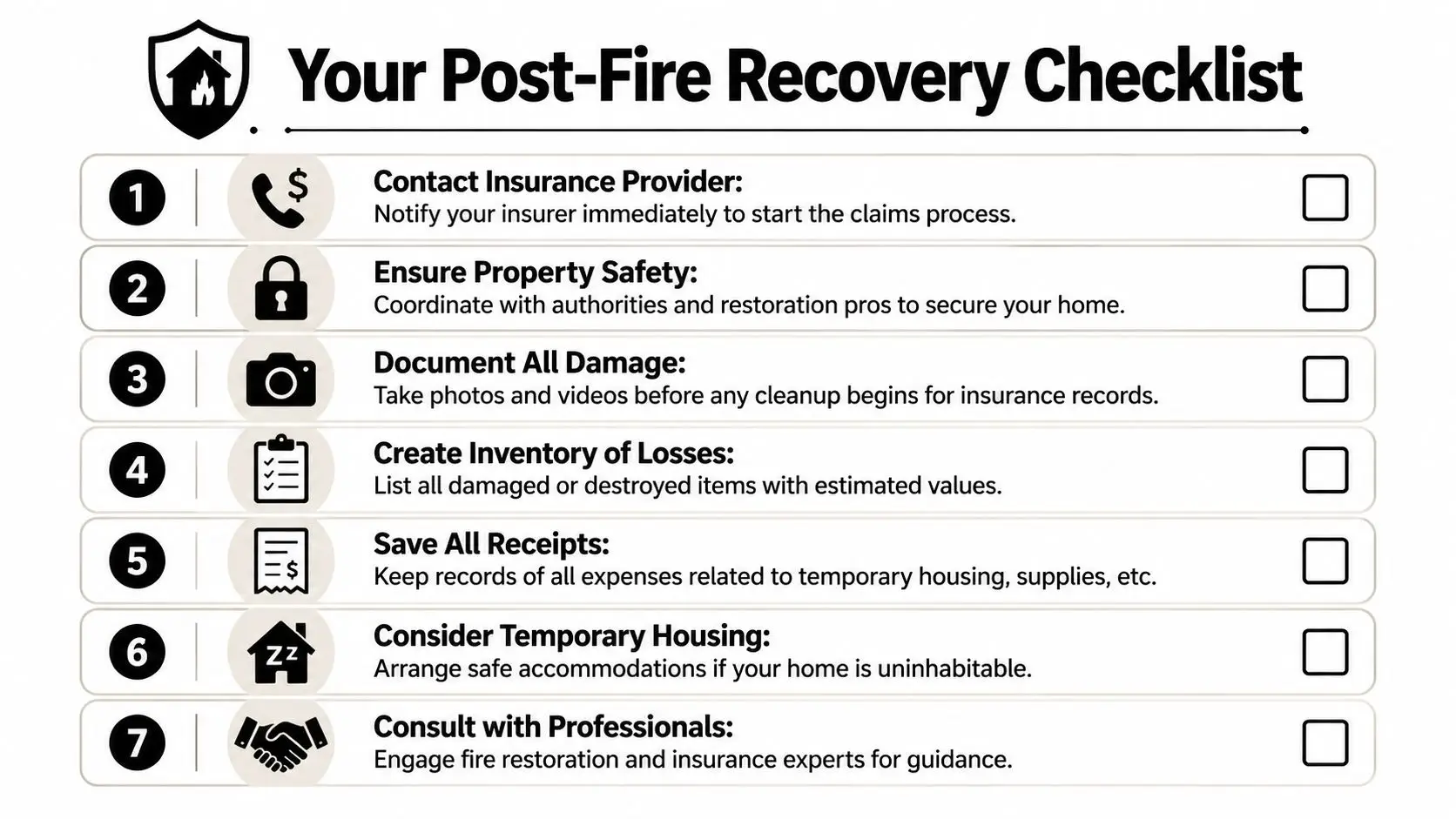
- Confirm safe access: Only enter areas cleared by the proper authorities or your restoration team.
- Open the insurance claim: Save the claim number and adjuster contact information in your phone and on paper.
- Create a damage folder: Store photos, videos, emails, invoices, and inspection notes in one place.
- List damaged belongings: Go room by room. Don't rely on memory later.
- Save every receipt: Temporary lodging, pet boarding, clothing, meals, and emergency supplies may all need documentation.
- Track conversations: Note the date, time, name, and next step after each call.
- Protect utilities and accounts: Ask whether electric, gas, internet, alarm, and autopay settings need temporary changes.
Don't overlook the personal side of recovery
People often focus so hard on the house that they forget the practical life details around it. If you're displaced, confirm school transportation, prescription access, mail forwarding, and pet arrangements early. Those details create stress when they're handled late.
Recovery gets easier when every decision has a home. One notebook for calls. One folder for documents. One checklist for next actions.
After the immediate crisis passes, many homeowners also start thinking about future risk reduction around the property. For that longer-term planning, this guide to fire-resistant Arizona landscaping offers useful ideas about defensible exterior choices.
Frequently Asked Questions About Fire Restoration
What evidence should I collect in the first 24 hours to avoid claim disputes?
Collect wide and close-up photos, a full video walkthrough, notes on odor and soot spread, images of vents and returns, and pictures of any standing water or wet materials. Document contents before moving them. Keep a written communication log from the first call onward.
Can smoke damage be worse than the burned area looks?
Yes. A small contained fire can still send smoke and fine residue into adjacent rooms, cabinets, closets, and HVAC pathways. That's why visible burn patterns don't always reflect the true scope of cleanup.
Is it safe to stay in part of the house?
Sometimes, but that decision should be based on actual site conditions, not convenience. Structural safety, air quality, electrical condition, and contamination spread all matter. If crews are still stabilizing the property, limited occupancy often creates more risk and more confusion.
Can furniture, clothing, and personal items be saved?
Some can. The answer depends on heat exposure, soot type, odor absorption, and material sensitivity. Hard surfaces and some textiles may be recoverable with the right cleaning process. Items with deep heat damage, heavy contamination, or persistent odor may not be practical to restore.
Do I have to use the contractor my insurer suggests?
You can ask questions and compare options. The key is choosing a company that documents thoroughly, communicates clearly, and separates mitigation from rebuild scope. The better the records, the easier it is to discuss the claim on its actual merits.
Should I throw away damaged items right away?
Usually not until they're documented, unless they create a safety issue. Once an item is discarded without records, it becomes much harder to support that part of the claim.
If you need help sorting out the next step, Restore Heroes handles fire and smoke restoration across the Phoenix metro area, including Scottsdale. They can inspect the loss, document mitigation needs, and help you understand the difference between emergency stabilization, hidden damage assessment, and the longer rebuild process so you can move forward with a clearer plan.