
Minor smoke-and-soot cleanup can take a few days to two weeks, moderate residential restoration often takes two to four months, and severe structural fires may require three to six months or more, with large multi-story losses sometimes reaching six to twelve months or longer. A widely cited average is about four months, but severity, insurance approval, permitting, and trade availability determine where a particular Phoenix property falls within that range.
If you're standing outside your home after the fire department has left, the uncertainty can feel almost as difficult as the damage itself. You may see blackened cabinets, wet flooring, broken windows, or smoke staining, yet you can't tell whether you're facing days of cleaning or months of rebuilding.
The most useful answer to “how long does fire restoration take” isn't one fixed deadline. Restoration runs on several connected clocks, including emergency stabilization, drying, contents handling, smoke cleaning, odor treatment, reconstruction, and final inspection. A property may become safe for limited re-entry before every wall, cabinet, and finish has been restored.
What to Expect Right After the Fire Is Out
Consider a Phoenix kitchen fire contained to the cabinets and one wall. The flames are out, but the home may still have smoke residue, suppression water, damaged electrical components, and openings that expose the interior to weather or intrusion. The first task isn't choosing paint colors or replacing cabinets. It's securing the property and determining what can safely happen next.
A restoration team typically begins after the fire department releases the property for appropriate work. Technicians assess visible and hidden damage, identify hazards, protect openings with board-up or tarping, and document conditions for the property owner and insurer. Industry guidance describes this sequence as including emergency dispatch, safety assessment, stabilization, water extraction, soot evaluation, contents inventory, structural cleaning, HVAC decontamination, drying, and deodorization, as outlined in this fire restoration services process.
The first clock is about safety
Emergency stabilization may happen the same day as the fire, but that doesn't mean restoration is complete. Crews may need to remove standing water, protect undamaged rooms, isolate unsafe areas, and prevent additional exposure to smoke residues or weather.
Smoke and combustion residues can continue etching, staining, and penetrating materials for 24 to 72 hours after suppression, according to this fire damage restoration guide. Prompt professional assessment matters because surfaces can become harder to clean while the property waits.
Practical rule: A home that looks stable from the street may still require professional clearance before you enter, clean belongings, or turn on building systems.
Safe for re-entry is not fully restored
Your household might be allowed to enter a limited, unaffected area while other rooms remain sealed or under active work. That distinction affects temporary housing, pet care, school routines, and decisions about retrieving medications, documents, or clothing.
Re-entry depends on safety conditions, not on whether the house looks tidy. Before visiting, follow the fire department's instructions and ask the restoration professional which spaces are accessible. For a practical checklist of immediate actions, use this what to do after a house fire checklist.
The emotional adjustment can be significant. Instead of waiting for one final date, ask which clock is running now, what must be completed before the next phase, and whether the property is safe for limited use. Those questions turn a vague wait into a sequence you can track.
How the Fire Restoration Process Unfolds Phase by Phase
Fire restoration works much like recovery after surgery. A doctor first stabilizes the patient, then monitors healing, treats complications, and only later completes rehabilitation. Restoration professionals follow the same logic with a building. They secure the structure first, control water and moisture, clean contamination, and rebuild only after the underlying conditions are understood.
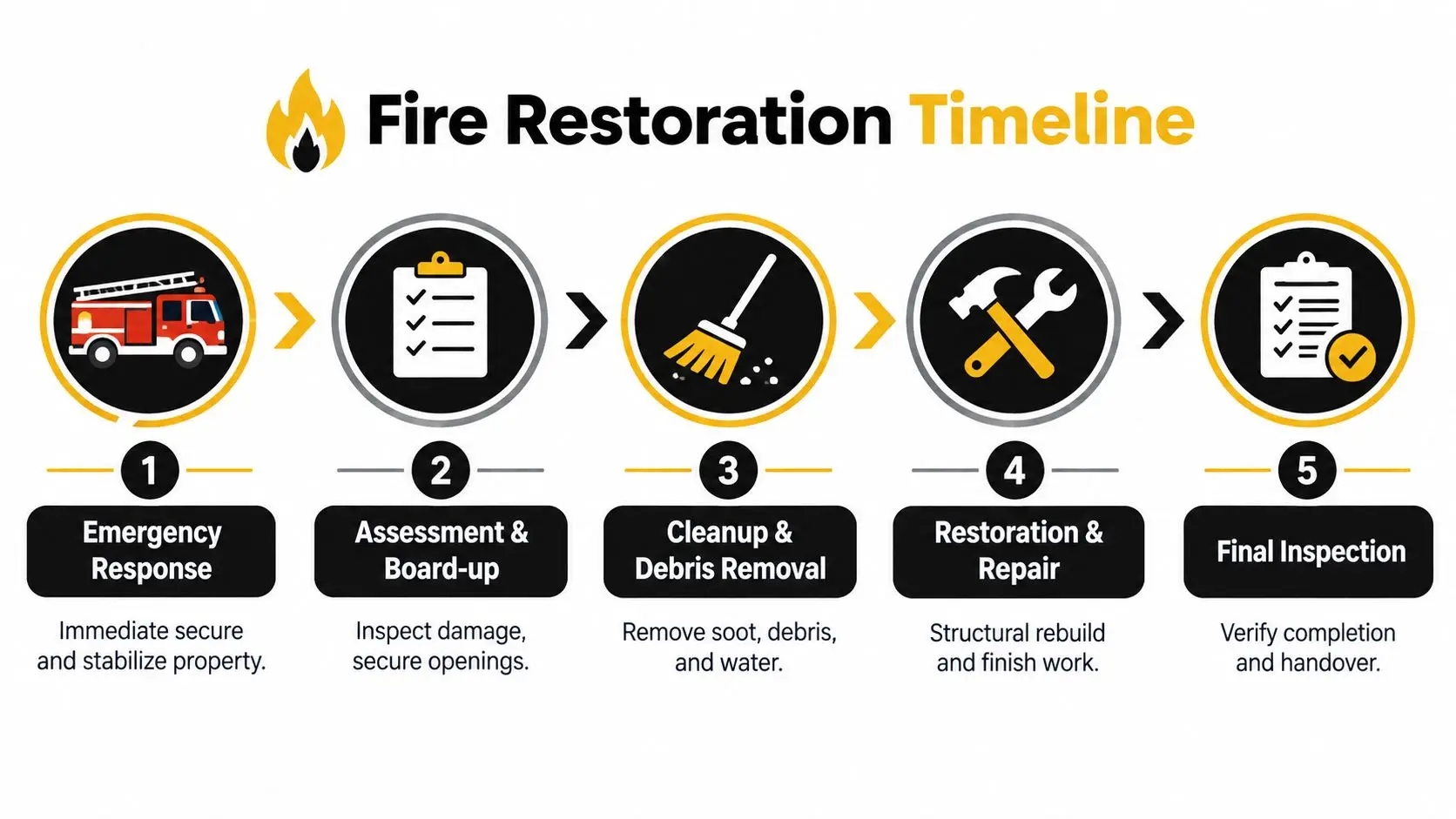
Emergency response and assessment
The opening phase includes dispatch, hazard evaluation, board-up, tarping, and immediate stabilization. The team identifies burned, smoke-affected, and water-affected areas, while the property owner and insurer begin documenting the loss.
This phase may happen within hours, but its purpose is limited. It prevents further damage and establishes a safe working environment. It doesn't represent the entire restoration schedule.
Water extraction and structural drying
Firefighting water often creates a second restoration problem. Extraction removes accessible water, while air movement and dehumidification help bring building materials back to established reference moisture levels.
Structural drying commonly takes about two to ten days, depending on class and severity, according to this fire damage restoration timeline. Technicians measure materials rather than running equipment for a convenient period. Closing walls before moisture targets are reached can trap moisture, extend reconstruction, and increase secondary mold risk.
Smoke, soot, contents, and odors
After moisture control, crews address soot and smoke residues across surfaces, contents, and sometimes HVAC systems. Salvageable belongings may be inventoried and packed out for specialized cleaning. Damaged materials may require controlled demolition before deeper cleaning can begin.
Odor treatment is separate from ordinary wiping. Smoke particles can settle into porous materials, insulation, fabrics, and air-handling components, so professionals select methods based on the affected materials and contamination.
Demolition, reconstruction, and inspection
Demolition removes materials that cleaning can't restore or that pose a safety concern. Reconstruction then replaces structural components and finishes, followed by inspection and handover.
The fire damage restoration process may look linear on paper, but discoveries can send a project back to assessment or cleaning. That's why an early estimate is a planning tool, not a guaranteed completion date.
Why Some Homes Take Weeks and Others Take Months
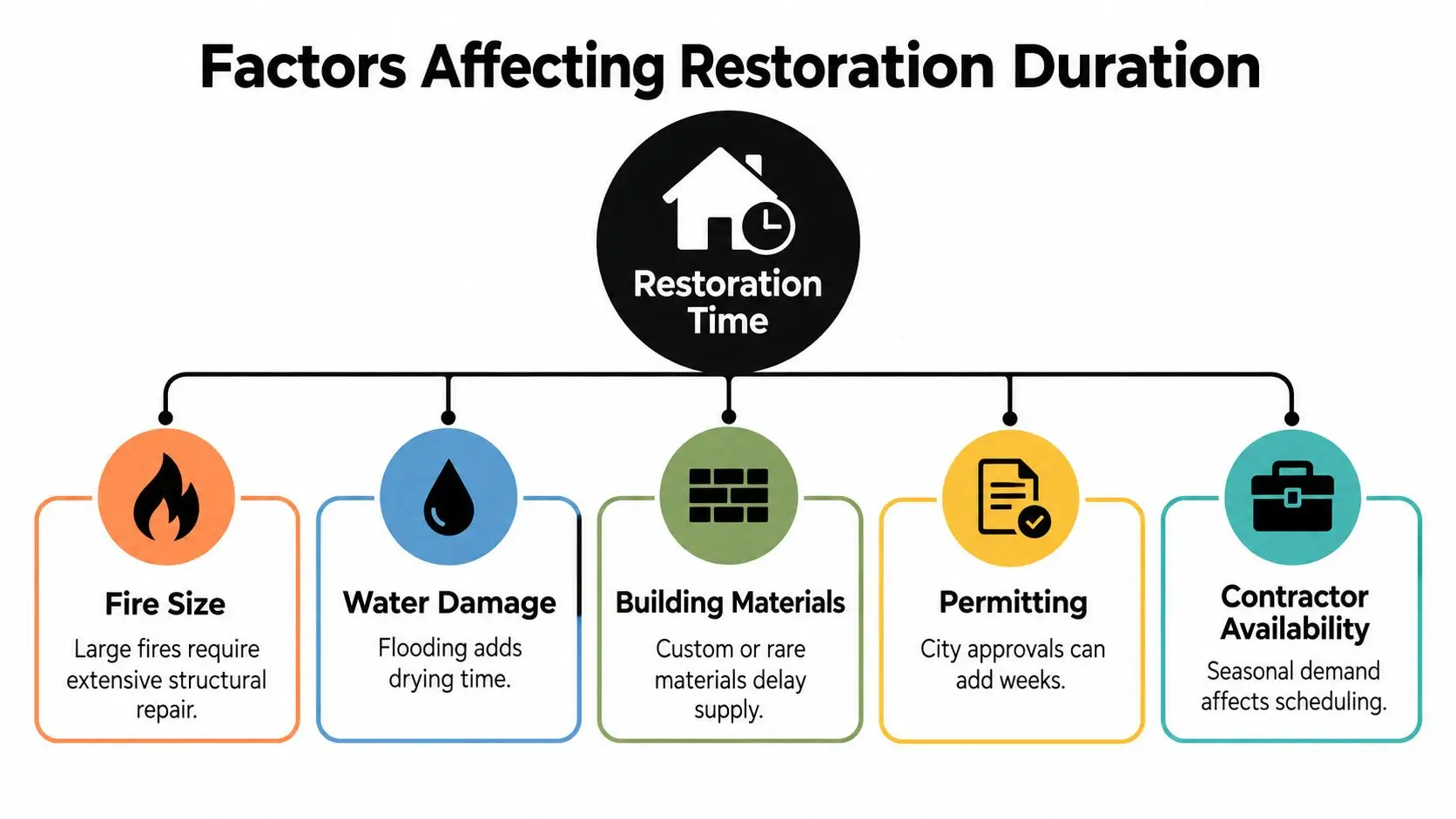
Two properties can experience fires on the same day and follow very different schedules. The visible burn area is only one factor. Fire intensity, smoke movement, suppression water, hidden damage, building materials, contents, insurance decisions, and permitting all shape the final duration.
The condition of the structure
A small fire may leave cabinets and one wall damaged while the rest of the building remains structurally sound. A larger fire can affect framing, roofing, electrical systems, insulation, plumbing, and multiple floors. Structural review, hazardous-material abatement, engineering, and permits add work before reconstruction can proceed.
Smoke can also travel beyond the flame area. A contained fire may still require cleaning in adjacent rooms, contents handling, or HVAC decontamination if air movement carried residue through the home.
Water changes the sequence
Suppression water can soak flooring, drywall, insulation, framing, and contents. Drying must reach appropriate reference levels before crews close assemblies or install new finishes. The work may feel slow because technicians are waiting for measured conditions, not because the project has stopped.
Rushing the drying phase can create a longer rebuild. Moisture hidden behind a finished wall is harder to find and correct than moisture measured before closure.
Administrative and supply delays
Insurance approval and trade scheduling often control the tail end of a project. The work may be technically ready, but reconstruction can wait while the scope is reviewed, permits are issued, or qualified trades and materials are scheduled.
Custom finishes, unusual materials, electrical inspections, asbestos or lead abatement, and changes discovered during demolition can also expand the scope. Homeowners can influence some delays by reporting promptly, preserving records, and responding to document requests, but they can't control every external dependency.
Typical Timelines for Small Medium and Large Fire Losses
A comparison helps translate broad ranges into recognizable situations. The categories below are examples, not promises for any individual home. A fire that appears small may still involve smoke throughout the house or substantial water damage, while a larger-looking event may leave some areas restorable.
| Loss Size | Typical Scope | Estimated Timeline |
|---|---|---|
| Small or contained | Smoke and soot cleanup, or a kitchen fire limited to cabinetry and one wall | A few days to two weeks for minor cleanup; a contained kitchen fire may take one to two weeks |
| Medium residential | Moderate damage, selective demolition, drying, cleaning, contents work, and selective reconstruction | Often two to four months end to end; moderate projects with selective reconstruction may run two to six weeks for active restoration work, with approvals and scheduling extending the total |
| Large or severe | Whole-structure damage, major structural repair, extensive contents loss, engineering, permitting, or abatement | Severe structural fires commonly take three to six months or more; a whole-structure fire in a multi-story commercial building may take six to twelve months or longer |
The first row often surprises homeowners. Minor smoke and soot cleanup may finish in a few days to two weeks, but that shorter range assumes limited structural impact and manageable contents. Odor, HVAC contamination, hidden residue, and suppression water can move the project beyond a simple surface cleaning.
A moderate residential loss usually contains several connected scopes. Crews may stabilize the building, dry materials, remove damaged sections, clean soot, treat odor, document contents, and coordinate selective reconstruction. One industry timeline places assessment in days one through five, cleaning and deodorization in days ten through forty-five, and structural repair and final inspection from week three through week twenty-six or longer, depending on the project source timeline.
Large losses add structural review, engineering, permitting, extensive demolition, and a greater number of trades. The project completion timeline can therefore extend well beyond the period when the property first becomes secure.
Use the table to locate your situation by scope, not by appearance. Ask whether structural systems, water-damaged materials, contents, HVAC equipment, and permits are involved. Those answers usually explain the range better than the size of the soot mark.
How Insurance and Approvals Fit Into the Timeline
Physical restoration and administrative restoration run side by side. A contractor can assess damage and begin emergency mitigation, but reconstruction often depends on an agreed scope, documented contents, insurer review, and required city approvals.
Start with a usable record
Take photographs and videos only when the property is safe to enter. Keep receipts for emergency expenses, record conversations with the insurer and restoration professionals, and maintain a simple timeline of inspections, estimates, approvals, questions, and decisions.
Contents require careful documentation. Inventory should distinguish items that may be cleaned from items that are damaged beyond restoration. Avoid discarding belongings unless safety rules require removal, and ask how the insurer wants non-salvageable contents documented.
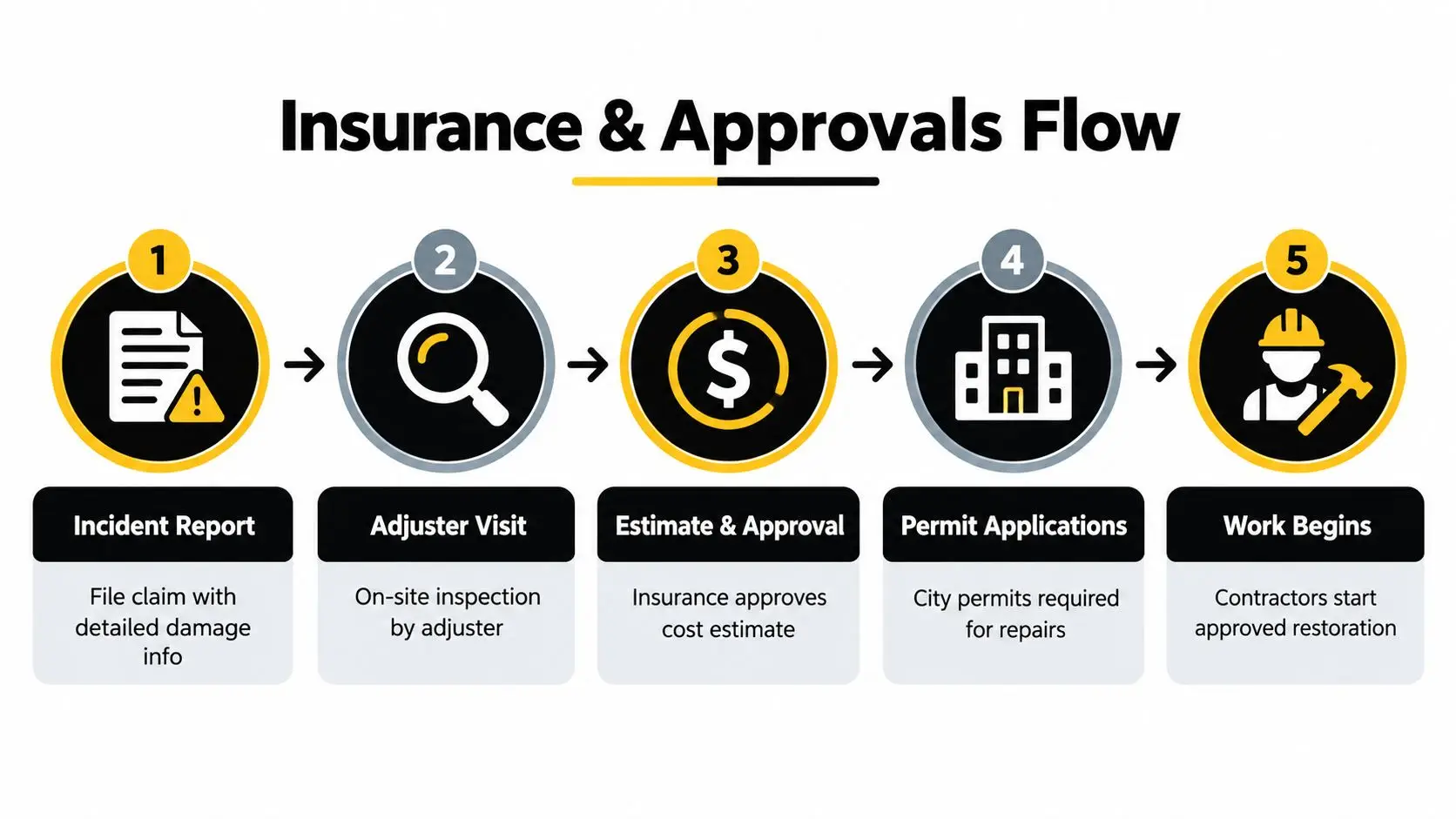
Understand the approval sequence
A typical administrative path includes:
- Incident report: The homeowner reports the loss and provides available damage information.
- Adjuster inspection: The insurer reviews the property and compares observed conditions with the claim.
- Estimate and scope review: The parties examine proposed cleaning, demolition, drying, repair, and replacement work.
- Permit coordination: Required plans and applications move through the appropriate local process.
- Construction scheduling: Trades begin approved work when the site, scope, permits, and materials are ready.
Keep communication concrete
Ask who owns each next action. For example, ask whether the adjuster needs an updated inventory, whether the contractor has submitted a revised estimate, whether a permit application is complete, and which items remain unresolved.
Insurance approval speed and trade scheduling can add the longest tail to the project. The fire damage insurance claims guide can help you organize questions, but your policy language and claim circumstances control coverage decisions. No restoration company can guarantee approval, payment, or a fixed completion date.
What Phoenix Homeowners Should Plan For During Restoration
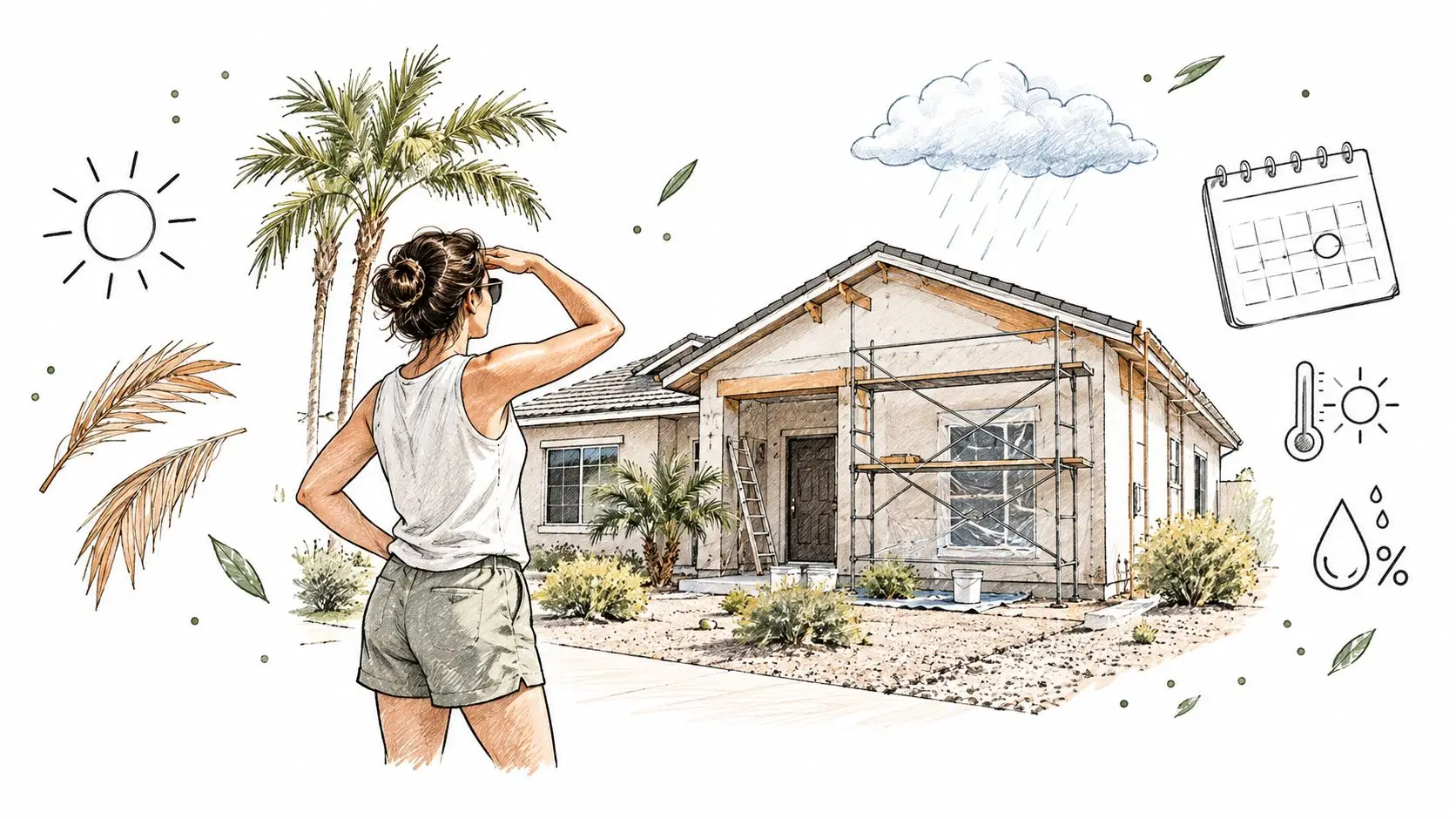
Phoenix weather creates a planning environment that changes across the year. Extreme heat can affect work conditions, access, materials, and temporary living arrangements. Monsoon humidity can introduce additional moisture concerns during an otherwise dry season, especially when the building envelope has openings or drying equipment must operate in affected areas.
These conditions don't automatically determine the schedule. They do make site protection, measured drying, secure temporary openings, and coordination with inspectors more important. Local permitting can also affect reconstruction, particularly when the project involves structural changes, electrical work, mechanical systems, or other work requiring review.
Plan around use, not just completion
A property may be safe for partial use before final restoration ends. One room might remain accessible while another is sealed, cleaned, dried, or rebuilt. Commercial operators may phase work around unaffected areas, while landlords and property managers may need to plan for tenant relocation, access control, and habitability decisions.
Ask for a clear explanation of:
- Accessible areas: Which rooms can be entered, and under what conditions?
- Temporary housing: How long should your household plan to stay elsewhere?
- Contents handling: Which belongings need pack-out, cleaning, storage, or documentation?
- Business continuity: Can operations continue in an unaffected area, or is relocation more practical?
- Weather protection: How will openings, equipment, and exposed materials be protected?
Faster triage and specialized smoke and odor-control tools can help address early conditions, but they don't remove insurance, permitting, inspection, or scheduling bottlenecks. Treat the property as a changing worksite and update your living or operating plan as each phase is completed.
Planning Your Next Steps With Realistic Expectations
The most reliable mindset is to stop searching for one finish date and start tracking the active phase. A small loss can still take weeks once drying, contents, odor treatment, and approvals are included. A severe loss can take months because structural repair, inspections, permits, and finish work must follow the earlier technical stages.
Your next steps should be practical:
- Protect safety first: Follow fire department instructions and don't enter restricted areas.
- Document conditions: Photograph damage when safe and preserve receipts, inventories, estimates, and communication records.
- Ask phase-based questions: Find out what has been completed, what is being measured, and what must happen before the next phase.
- Plan temporary use: Arrange housing, pet care, medication access, contents storage, or business continuity around restricted areas.
- Track approvals: Keep a written record of adjuster reviews, scope decisions, permits, inspections, and trade scheduling.
For a clearer discussion of how scope affects planning, review this guide to fire damage restoration cost. Pricing and coverage aren't guaranteed by a timeline, and neither is a specific completion date. A professional inspection is the right way to replace a broad range with a property-specific plan.
Restore Heroes can assess fire, smoke, and suppression-water damage, coordinate mitigation, structural drying, odor removal, sanitation, and insurance documentation for Phoenix-area homes and commercial properties. Visit Restore Heroes to request an inspection and discuss the next practical step for your property.