
Black film on the firebrick, a gray-black ring on the hearth, and a dusty smell hanging in the room usually show up right after a fire you thought burned normally. Most homeowners grab a spray bottle and a stiff brush. That's the move that often makes the mess bigger.
Soot doesn't behave like ordinary dirt. It lifts easily into the air, it settles onto nearby furniture, and porous brick holds onto it deeper than the surface stain suggests. In Phoenix homes, especially with older masonry fireplaces, I see people turn a manageable cleanup into a room-wide soot spread because they scrub too soon, clean while the firebox is still warm, or soak brick until the residue pushes deeper into the pores.
The better approach starts with diagnosis, not product shopping. If you're searching for a soot cleaner for fireplace use, the first question isn't which bottle works fastest. It's whether you're dealing with simple firebox soot, chimney-related creosote, or smoke residue that has moved beyond the fireplace opening and into the room. If the staining has spread outside the immediate surround, this kind of smoke damage to house cleanup needs a broader plan than spot scrubbing.
Introduction to Soot Cleaner for Fireplace Safety
A common scene goes like this. The fire is out, the room looks mostly fine from a distance, then daylight hits the surround and you notice black haze on the brick face, dark residue on the metal trim, and loose soot sitting on the floor of the firebox. The temptation is to attack all of it at once with water and elbow grease.
That usually backfires. Wetting loose soot too early turns ash into a smear, and sweeping dry soot sends fine particles across the room. The larger issue is health and scope, not just appearance.
The most important early call is identifying what the residue actually is before choosing a cleaner.
The gap in most consumer advice is diagnosis. A public health focused overview on whether soot is dangerous notes that the underserved question isn't how to wipe visible soot, but how to tell whether the residue is simple fireplace soot, creosote, or a broader smoke contamination problem affecting walls, HVAC, textiles, and indoor air. That same source explains that post-fire soot can contain PM2.5, VOCs such as benzene, and carcinogenic compounds, and symptoms can include coughing, wheezing, chest tightness, headaches, and nausea.
What a safety-first cleanup really means
For homeowner-level fireplace cleanup, the job is limited to the fireplace face, firebox opening, hearth, and nearby hard surfaces if the residue is light and contained. It does not mean full chimney sweeping, and it does not mean treating every black deposit as a DIY cleaning project.
A practical sequence works better than a miracle cleaner mindset:
- Identify the residue before picking a chemical
- Contain the area before disturbing soot
- Choose the gentlest effective cleaner for the surface
- Stop when the residue points to a larger problem
That sequence prevents the two failures I see most often: over-cleaning delicate materials and underestimating contamination spread.
Understanding Soot Cleaner Options for Fireplaces
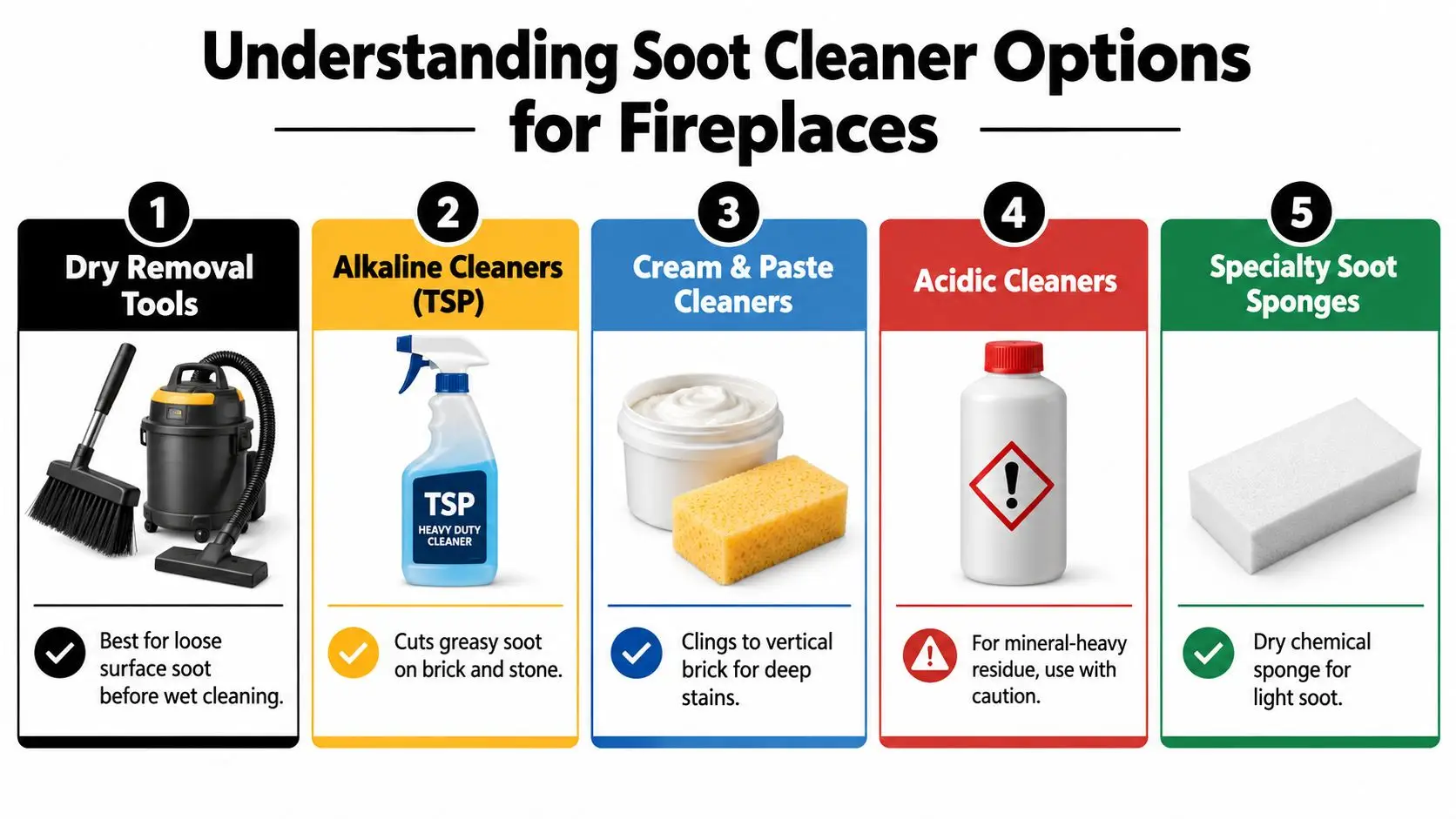
A good soot cleaner for fireplace work depends on where the residue sits and what the surface can tolerate. Loose dry soot on firebrick needs a different approach than oily film on a surround, and both are different from deposits inside the flue.
Cleaner categories and where they fit
Dry removal tools come first. That means a vacuum with a brush attachment and suitable filtration, plus soft agitation where needed. Dry removal isn't glamorous, but it prevents the common mistake of turning fine soot into black slurry.
Alkaline cleaners are usually the workhorse for masonry. They're better suited for greasy soot film and embedded staining on brick or stone than general-purpose household sprays.
Creams and paste cleaners help on vertical surfaces because they cling instead of running. That matters on a fireplace face where liquid runoff can streak soot downward.
Specialty soot sponges are useful for light surface transfer on nearby hard finishes. They're a dry-cleaning tool, not a deep masonry cleaner.
Flue additive powders belong in a separate category. A safety data sheet for one soot-removal product describes these materials as formulated to vaporize in the chimney and transform soot deposits into brushable ash, and the packaging shows they're sold in 1- and 2-pound tubs with directions measured over 4 to 10 successive fires depending on whether the chamber is closed or open. The same source also points to occupational exposure concerns, with NIOSH respirator guidance for chimney sweeps working around respiratory hazards, which is a good reminder that soot cleaning isn't casual dusting. See the product safety details in this soot remover powder data sheet.
If you want to compare tools before buying supplies, a curated professional cleaning supply catalog can help you sort by task instead of guessing from retail labels.
Soot cleaner types compared for fireplace use
| Cleaner Category | Best For | Surface Notes | Caution |
|---|---|---|---|
| Dry Removal Tools | Loose soot before any wet cleaning | Safe starting point for brick, metal, and hearth surfaces | Weak filtration can blow soot back into the room |
| Alkaline Cleaners | Greasy soot film and masonry staining | Better for unpainted brick and many stone surrounds | Test first on painted finishes and decorative surfaces |
| Cream and Paste Cleaners | Vertical brick stains and spot treatment | Less runoff, better dwell on porous faces | Don't let residue dry hard on the surface |
| Specialty Soot Sponges | Light dry soot on surrounding finished surfaces | Useful on nearby walls in limited cases, similar to methods used in cleaning soot from walls | Not enough for deep fireplace brick staining |
| Flue Additive Powders | Soot deposits in venting systems between brushings | Intended for combustion systems, not face brick cleaning | They don't replace inspection and physical sweeping |
Practical rule: Match the cleaner to the residue and the surface, not the label that promises the fastest result.
How to Prepare Your Fireplace for Safe Soot Cleaning
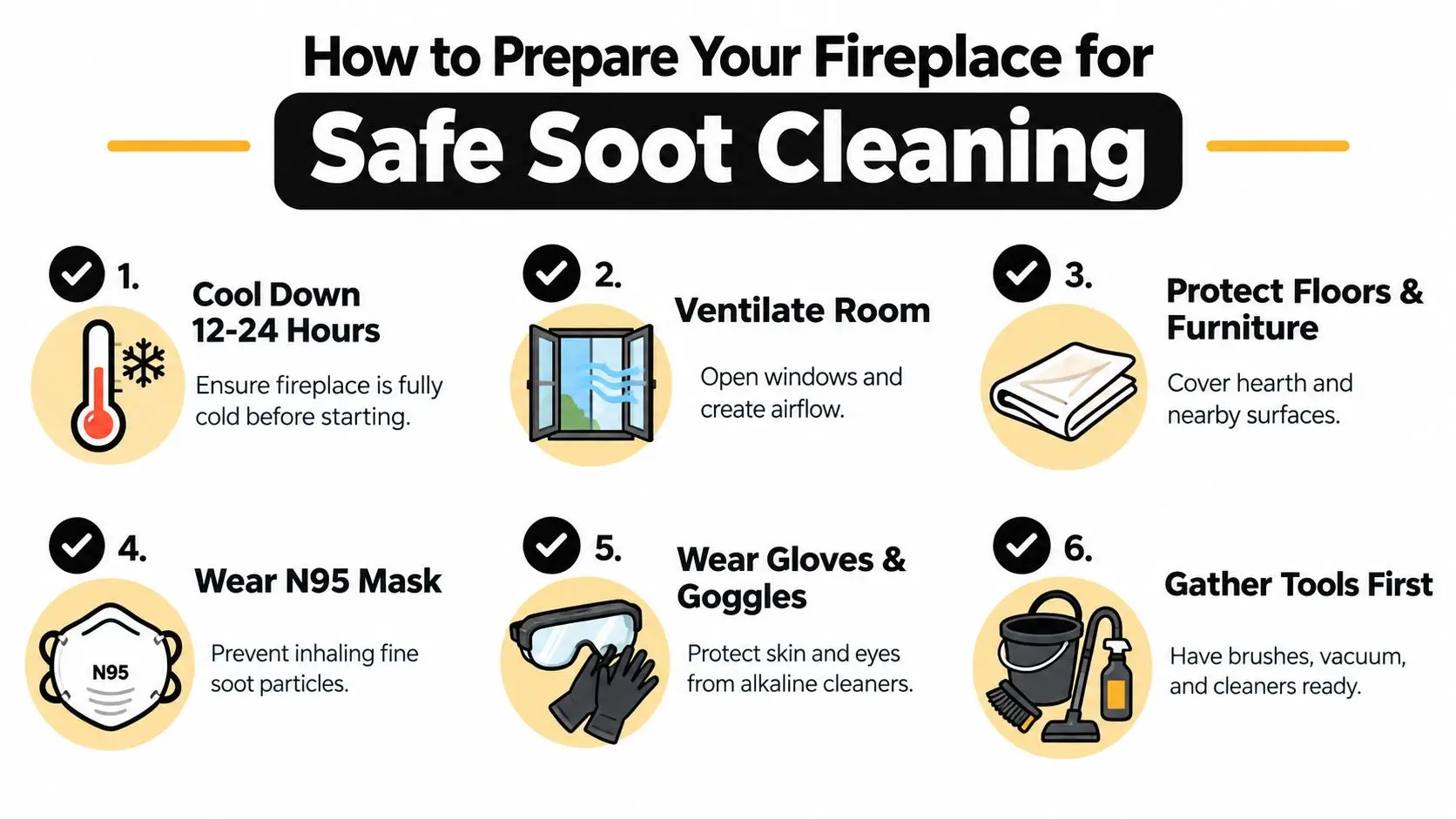
Preparation decides whether the cleanup stays inside the fireplace area or spreads into the room. Most of the labor is simple. Cool down, isolate, protect, and capture loose soot before any liquid touches the masonry.
The setup that prevents a bigger mess
Independent cleaning guidance recommends waiting at least 12 hours after the last fire so the masonry is fully cold, ventilating the room, wearing an N95 mask and gloves, and removing loose soot with a brush-attached vacuum before applying any wet cleaner. That workflow reduces airborne redeposition and helps keep ash from turning into sludge on porous brick, as outlined in this fireplace soot cleanup guide.
Open nearby windows. Protect the hearth, adjacent flooring, and any furniture in the fallout zone. If there are decorative items on the mantel, move them before you start. Fine soot travels farther than expected.
A lot of smoke and soot remediation problems start with overconfidence. If the residue is limited to the fireplace opening and surrounds, homeowner cleaning may be reasonable. If the area shows broader residue spread, this starts to overlap with fire damage cleaning methods rather than ordinary fireplace maintenance.
What not to do
A long-standing fireplace manual offers two old-school instructions that are still smart today. It advises covering the firebox opening with a damp sheet before brushing, then vacuuming loosened soot instead of sweeping it. It also warns against pouring chemical fireplace or chimney cleaners onto a hot fire. Both points appear in this fireplace manual with soot cleanup guidance.
Use that mindset before you begin:
- Don't clean warm masonry because heat can change how cleaners behave and can lift more soot into the air.
- Don't use a standard household vacuum if it lacks suitable filtration for fine particulate.
- Don't saturate brick or mortar because excess water drives residue deeper and slows drying.
If loose soot isn't captured first, every later step gets dirtier and less effective.
Quick readiness check
Before you move to scrubbing, make sure these basics are true:
- The firebox is fully cold
- The room is ventilated
- Floors and nearby furnishings are covered
- Mask, gloves, and eye protection are on
- Loose soot has been vacuumed, not swept
- Clean rinse water and towels are ready
How to Clean Soot From Fireplace Brick and Surrounds
Once the loose soot is out, the goal changes. Now you're lifting what's bonded to the surface without scratching the material or driving residue deeper into it.
Start with the least aggressive wet method
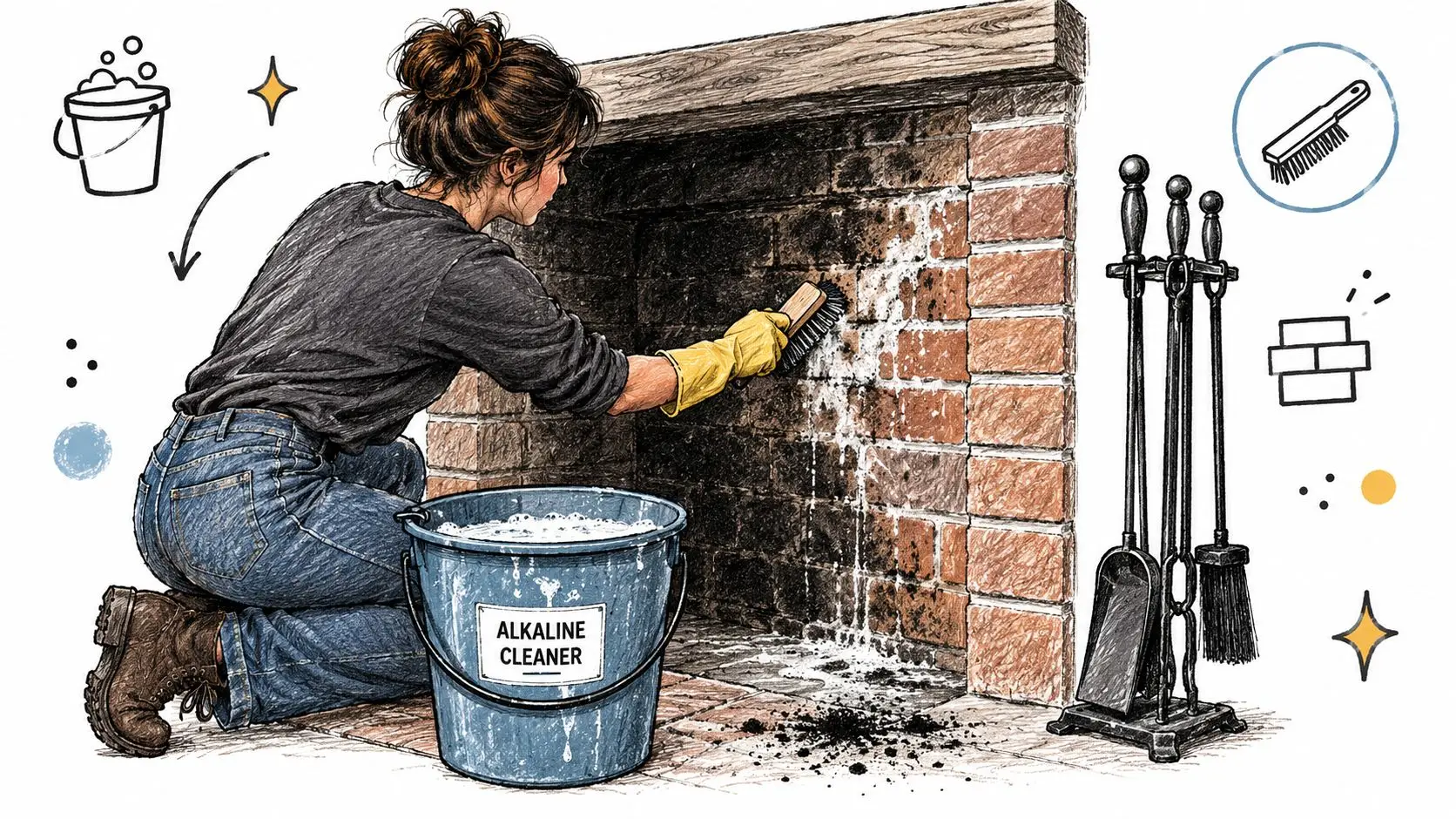
For stubborn soot on fireplace brick, cleaning guides commonly point to trisodium phosphate (TSP) mixed at about 1/2 cup per gallon of warm water, or a baking soda and cream of tartar paste left on the stain for 5 to 10 minutes before brushing. The same guidance recommends working in small sections from top to bottom, scrubbing with a stiff nylon or plastic-bristled brush, and doing at least two rinse cycles on masonry. Those details are summarized in this fireplace soot cleaning method.
That top-to-bottom pattern matters. If you start low and push dirty rinse water downward later, you can restain areas you already cleaned.
A reliable sequence looks like this in practice:
- Lightly dampen first so the cleaner spreads evenly instead of soaking in at one hot spot.
- Apply to a small section rather than the full fireplace face.
- Let it dwell briefly so the chemistry can loosen the soot.
- Scrub with controlled pressure using nylon or plastic bristles.
- Rinse thoroughly, then rinse again.
Surface-specific judgment matters
Unpainted brick can usually tolerate more agitation than painted brick, decorative finishes, or fireplace glass. Mortar joints and recessed brick faces trap soot deeper, so they often need repeat passes even when the flat brick face cleans up quickly.
If you have painted brick, soft stone, or an older surround with fragile finish, don't chase perfection in the first pass. Aggressive scrubbing can leave a cleaner-looking but physically damaged surface. The same caution applies to fireplace glass and metal trim.
For adjacent tiled hearths, soot often settles into grout lines and textured edges. Cleaning may overlap with some of the same care used in tile and grout restoration, especially when residue has settled into recessed joints rather than staying on the tile face.
Clean for removal, not speed. The right pass is controlled, not forceful.
Paste method for spot stains
The paste approach works well where black staining stays after the general alkaline wash. Apply the baking soda and cream of tartar paste directly to the stubborn area, let it sit within that 5 to 10 minute window, then brush and rinse. This helps on localized darkening around the opening where smoke curls out during startup.
Here's a visual walk-through of the kind of hand-cleaning motion and sectioning that helps on masonry surrounds:
Drying matters too. Blot and wipe residue away rather than flooding the wall. Let the brick dry naturally with airflow in the room. If a stain lightens but doesn't disappear, a second controlled pass is reasonable. If the surface starts to abrade, smear, or shed finish, stop there.
What works and what usually doesn't
What tends to work
- Small sections with patient agitation
- Two rinses on masonry so cleaner residue doesn't stay behind
- Repeat passes on mortar joints where soot collects deepest
What tends to fail
- Over-wetting the brick
- Wire brushes on delicate finishes
- Trying one strong cleaner on every material around the fireplace
If this residue responds to cleaning but keeps returning unusually fast, the problem may not be on the face of the fireplace at all.
When Soot Means Creosote or Wider Smoke Contamination
A fireplace face can look like a simple soot cleanup while the bigger issue sits inside the venting system or has already spread through the room. That's where homeowners lose time. They clean the visible black marks, but the hazard remains.
Reading the residue correctly
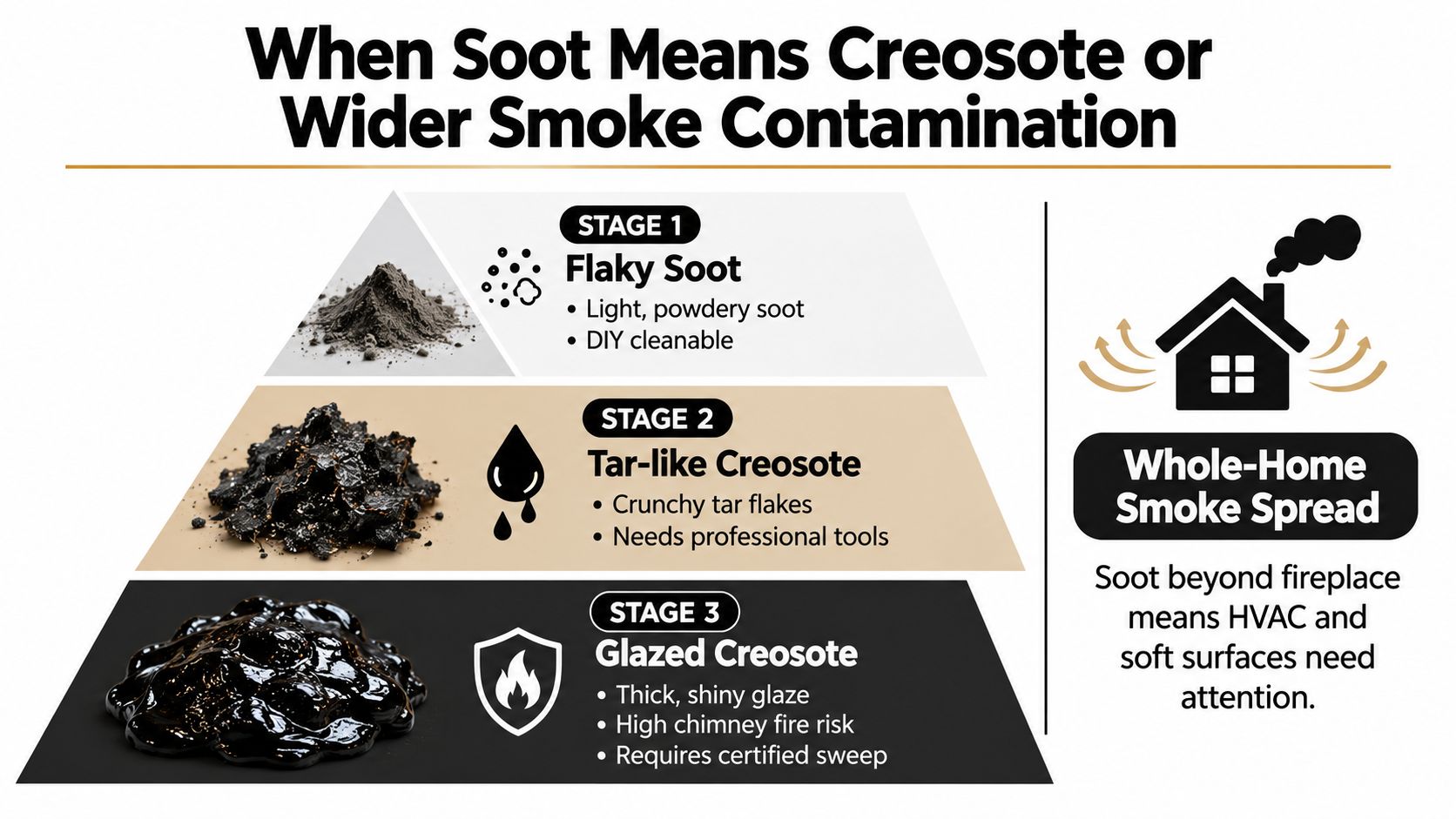
Creosote is often described in three stages. Stage 1 is dry, flaky soot. Stage 2 is harder, tar-like buildup. Stage 3 is glazed, dense, shiny deposit that resists standard brushing and raises fire risk, as described in this creosote stages overview.
That progression changes the decision. If what you're seeing is flaky and limited, surface cleaning may be enough for the visible area. If deposits are tar-like or glossy, brushing the fireplace face doesn't address the hazard.
Inspection triggers and stop points
The Chimney Safety Institute of America says masonry fireplaces should be swept at 1/8 inch of sooty buildup, and sooner if any glazed creosote is present, because that amount can create a chimney fire that damages the chimney or spreads to the home. NFPA 211 is widely summarized as calling for annual chimney inspection, with sweeping when inspection finds 1/8 inch or more of soot or creosote, or any glazed creosote, as noted in this summary of chimney inspection and cleaning thresholds.
Those are practical stop points for DIY work. If buildup meets that threshold, the task has moved beyond choosing a soot cleaner for fireplace brick.
Signs the problem is bigger than the fireplace opening
Look beyond the firebox if you notice any of these conditions:
- Residue on nearby walls or ceilings
- Smoke odor in textiles or adjacent rooms
- Dark transfer around supply or return vents
- Persistent irritation when soot is disturbed
- Glossy chimney deposits instead of dry surface soot
If soot has moved into the room or HVAC pathways, the job may require containment, HEPA filtration, and targeted remediation. In that situation, a qualified restoration contractor or certified chimney professional is the right next call. For homeowners comparing signs, this broader issue often lines up more with soot from fire damage conditions than a basic fireplace cleanup.
Keeping Your Fireplace Cleaner Longer and Knowing When to Get Help
Clean fireplaces stay cleaner when the burn is cleaner. That sounds obvious, but it matters more than the product choice. Burn seasoned wood, make sure airflow is adequate, and don't let residue sit for long periods where it can work deeper into brick and joints.
The main habit that keeps soot from spreading is containment. A fireplace manual's long-standing guidance says to avoid dry sweeping because it spreads soot through the room, to cover the firebox opening with a damp sheet before brushing, to vacuum loosened soot instead of sweeping it, and not to pour chemical fireplace or chimney cleaners onto a hot fire. The same manual also recommends professional chimney sweeping if there's any doubt about doing the job safely, which reinforces the idea that soot cleanup is a controlled task, not casual wiping. Those points appear in this historical fireplace cleanup guidance.
A simple maintenance mindset
Keep the decision process in order:
- Assess first so you know whether it's soot, creosote, or broader smoke spread
- Document what you see if staining has extended beyond the hearth area
- Ventilate and contain before disturbing residue
- Use the gentlest effective cleaner for the exact surface
- Bring in qualified help when deposits are glazed, widespread, or tied to the chimney system
For Phoenix homeowners, the smartest move is usually the calm one. Clean what is clearly safe to clean, and stop when the residue suggests a firebox problem has become an indoor air or chimney problem.
Restore Heroes handles fire and smoke damage cleanup across the Phoenix area, including soot residue, containment, HEPA-focused cleaning approaches, and deeper remediation when the mess goes beyond the fireplace face. If your fireplace soot has spread into nearby rooms, soft contents, or HVAC pathways, visit Restore Heroes to see whether your situation calls for surface cleaning, smoke cleanup, or full restoration.