
You step into the kitchen and your sock comes up wet. There's a puddle beside the dishwasher, but the cabinet underneath the sink feels damp too. Before you grab towels or switch on a fan, you need to answer a more important question: Where did the water come from, and is it safe to approach?
LA water damage can start with a hidden plumbing leak, a winter storm, or contaminated runoff. The right response isn't always to dry everything immediately. Start by identifying the source, protecting people, and deciding whether the problem needs ordinary drying or controlled cleanup.
Where LA Water Damage Usually Starts
Most household water problems fit into six practical source groups. The source decides your first move, even when the visible result is the same wet floor.
Use the table to choose an initial action, not to diagnose concealed damage. Water can travel along framing or beneath flooring before appearing somewhere else.
Common Water Damage Sources in Los Angeles Homes
| Source | Typical Trigger | How Fast It Spreads | First Action |
|---|---|---|---|
| Supply line or fitting | Aging copper, flexible hoses, water heater fittings | Hours to days inside walls | Shut the local supply valve |
| Appliance leak | Dishwasher, washer, refrigerator ice maker | Slow, often unnoticed for days | Turn off the appliance and its water valve |
| Roof or window leak | Winter storms, failed flashing | Spreads through ceilings during a storm | Place buckets, move contents, call a roofer |
| Storm runoff or street flooding | Low-lying blocks and canyon areas | Can rise within minutes | Stay out of standing water; cut power from a dry location if water reaches outlets |
| Sewer backup | Blocked lines, tree roots, heavy rain | Quick, with contaminated water | Keep people out; call a plumber and a restoration company |
| Air conditioner condensate line | Clogged drain line or full drain pan | Gradual, often on ceilings and closets | Shut off the unit; have the drain line cleared safely |
Supply fittings can leak behind cabinets or inside walls without leaving an obvious puddle. A warm floor, stained baseboard, or unexplained sound of running water deserves investigation. Dishwasher and refrigerator hoses can release water beneath appliances, where a quick glance won't reveal it.
Roof leaks are equally misleading. A ceiling stain doesn't prove the roof opening is directly overhead, because water can follow rafters before dripping. Don't climb onto a wet roof or stand beneath a bulging ceiling.
Match the repair to the source
A plumber repairs a failed pipe or sewer obstruction. A roofer handles flashing and roof openings. Restoration technicians address the wet building materials after the source is controlled.
For a comparable plumbing-and-appliance overview, our water damage guidance for Surprise homeowners explains familiar household leak scenarios, although local storm conditions differ from Los Angeles.
Practical rule: Clear water isn't proof of clean water. Identify its origin before touching it or moving equipment through it.
Match what you see to the table, take the safe first action, and get immediate help for sewage, electrical exposure, active flooding, or unstable ceilings.
Seasonal Water Risks Across the Los Angeles Year
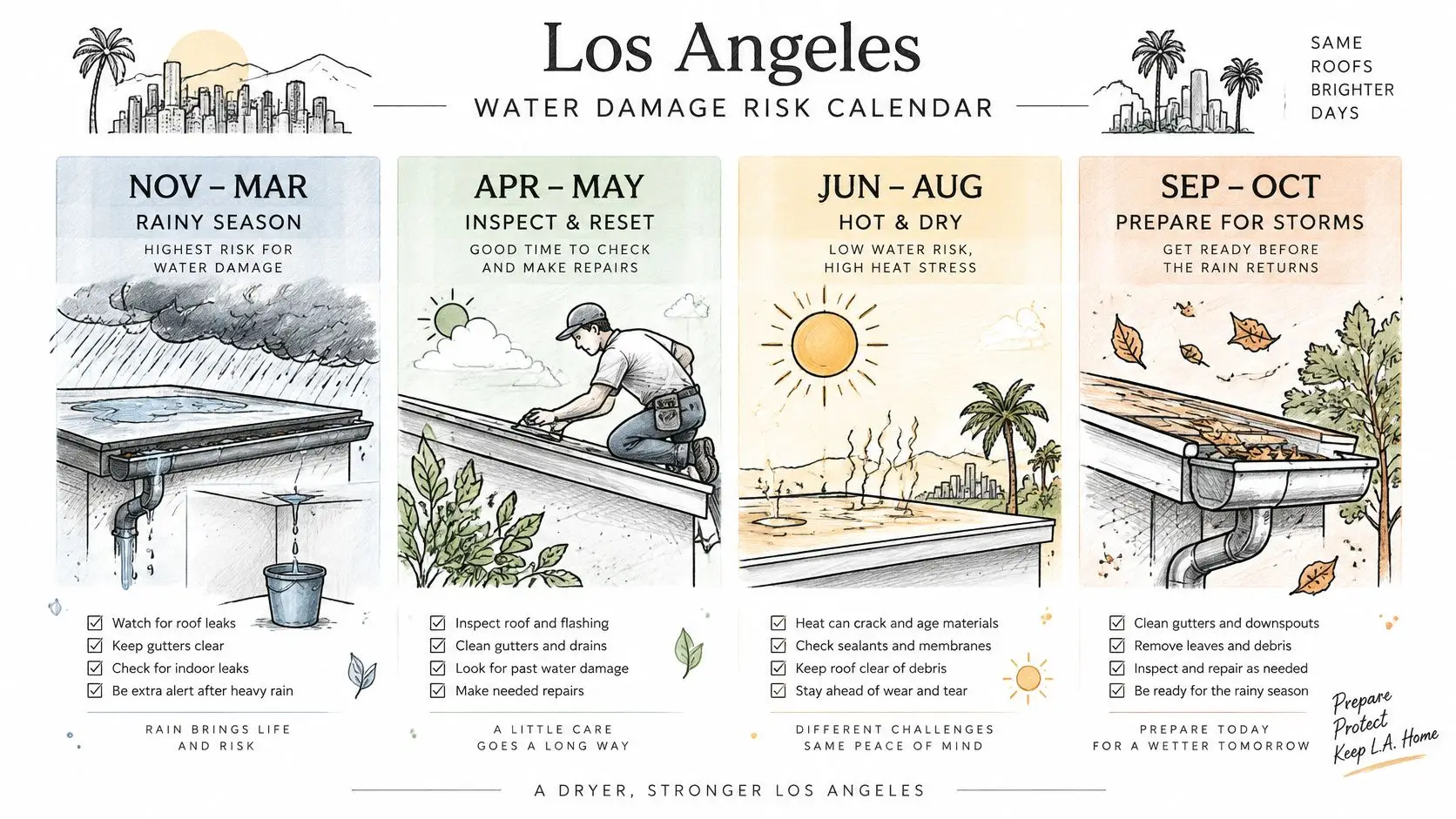
Los Angeles homeowners should prepare for both storm-season intrusion and warm-weather equipment leaks. Roughly November through March, pay particular attention to roofs, window seals, gutters, yard drains, and runoff routes.
Use this calendar to organize preventive maintenance before trouble starts.
The City of Los Angeles Urban Flooding Annex records that five days of storms in 1938 dropped more than 10 inches of rain on Los Angeles and damaged or destroyed more than 6,000 homes; it also identifies later flood years including 1969, 1980, 1993, and 1995, and state and federal disaster declarations following the January–February 2005 storms.
That history matters because flooding isn't only a plumbing problem. Street drainage, uphill runoff, and access restrictions can affect an entire neighborhood, leaving homeowners unable to reach or protect individual buildings.
Seasonal Water Risks and Pre-Season Checks
| Season | Main Risk | Action Before It Starts |
|---|---|---|
| November to March | Storm flooding, roof and window leaks, sewer backups | Inspect roof and gutters before the first storm; clear drains; test sump pump |
| June to September | AC condensate overflow, water heater failure, irrigation runoff against foundations | Inspect AC drain lines before summer; check water heater fittings |
Summer preparation looks different. Check the condensate pan and drain connection around your cooling equipment, particularly when equipment sits above a ceiling or beside a closet. Have irrigation adjusted so sprinklers don't repeatedly wet siding or leave water against the foundation.
Water heaters need attention throughout the year, not just in summer. Look for moisture at fittings, corrosion around connections, and water collecting in the drain pan.
For a visual supplement to your seasonal preparation, use the video below.
Schedule roof and gutter inspection before major rain, drain clearing and sump-pump testing before winter, and AC drain inspection before summer. Properties below burned hillsides also need the contamination precautions described under post-fire runoff.
How to Stop the Damage in the First 48 Hours
Safety comes before saving flooring. The CDC's floodwater safety guidance warns that flooded buildings can present electrical shock, fire, and explosion hazards, and advises calling an electrician when reaching the main switch would require entering standing water.
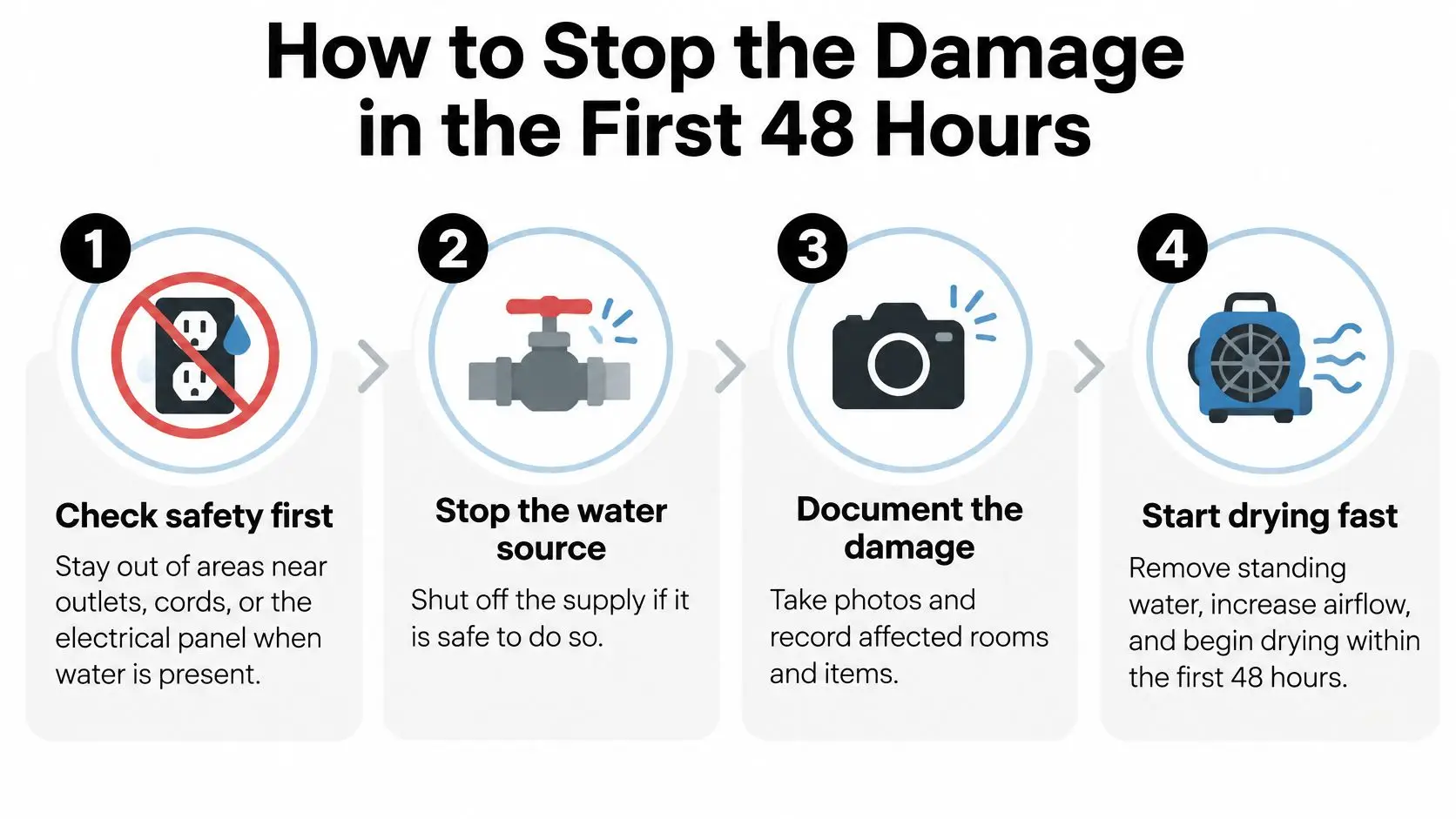
This emergency checklist shows the priorities at a glance.
Follow a safe emergency sequence
Check the room before entering. Water near outlets, extension cords, appliances, or the electrical panel makes entry unsafe. Keep children and pets away, and don't walk beneath sagging ceilings.
Disconnect power only from a safe, dry location. Use the main breaker or fuse panel when you can reach it without crossing water. Don't operate a wet appliance, use electrical tools while standing in water, or assume rubber boots make electrical contact safe.
Address gas hazards. Turn off natural gas or propane only where you can do so safely. If you smell gas or suspect a leak, leave the building and contact the utility or emergency services from outside.
Stop the incoming water. Close the appliance valve, fixture shutoff, or main water valve for a plumbing release. Don't force a seized valve or attempt an outdoor repair during dangerous flooding.
Document before moving things. Take timestamped photographs and video of the source, affected rooms, water level, and damaged belongings. Make an item list and keep receipts for emergency supplies and services.
Remove water and separate wet contents when conditions are safe. Use water-extraction equipment appropriate for the job, not a household vacuum. Move clean-water-soaked rugs, cushions, and cardboard out of enclosed spaces, and place furniture on suitable blocks rather than leaving legs on wet flooring.
Improve airflow only when contamination isn't suspected. Open windows when outdoor conditions support drying, and direct safe airflow outdoors. Don't aim fans across sewage, suspect mold, or dirty flood deposits.
Contact your insurer and qualified restoration help. Explain the source, rooms affected, and any electrical or contamination concerns. Request an assessment promptly rather than waiting for visible staining to spread.
Begin drying without skipping assessment
The EPA's moisture guidance recommends drying wet materials and affected areas within 24–48 hours to prevent mold growth in most cases, while also correcting the underlying moisture source. That's a response target, not a promise that everything can be saved.
Our explanation of water damage mitigation distinguishes stopping further damage from the repairs that follow.
Act on the safe tasks now. Waiting for a complete repair plan can leave wet assemblies untreated, but rushing into an unsafe room can create a much more serious emergency.
Clean, Gray, Black Water and Post-Fire Runoff
Water from a broken supply pipe and water from a backed-up toilet call for different responses. Water category describes contamination risk, not color or smell. Start by identifying the source, then choose the right cleanup approach.
Rainwater that has not touched surfaces may be relatively clean. Once it flows across a roof, street, burned hillside, or sewage-contaminated area, treat it as potentially contaminated. For more detail on Category 3 water damage and cleanup, consider how both the water source and the materials it reaches affect the assessment.
Water Categories and What Each Means for Cleanup
| Category | Common Source | Cleanup Implication |
|---|---|---|
| Clean water (Category 1) | Broken supply line, fresh rain before it touches surfaces | May be dried in place when addressed promptly and verified with moisture readings |
| Gray water (Category 2) | Dishwasher, washing machine or aquarium overflow | Can contain microbes and detergents; porous materials may need removal |
| Black water (Category 3) | Sewage backup, floodwater, post-fire runoff | Contaminated; porous materials and many contents usually need removal and professional handling |
Use these categories as a starting point, not a guarantee. What the water originally contained, what it touched, and how long it sat can change the cleanup needs. Even a clean-water leak may call for more than surface drying if it soaks dirty carpet or reaches concealed materials.
For sewage or dirty floodwater, carpet pad, insulation, and saturated drywall often need removal rather than deodorizing. Accessible hard surfaces may be cleaned with hot water and detergent as part of a controlled cleaning and disinfection plan.
Post-fire runoff needs a separate assessment
After the 2025 Eaton Fire, rain on burned hillsides sent debris, ash, and soot into surrounding areas. Runoff from a fire-damaged area can carry residues into yards and buildings, so don't assume it is equivalent to ordinary rainwater.
Drywall, insulation, belongings, and HVAC components may need a contamination assessment before anyone decides what can remain. Drying removes moisture; it does not show whether a surface or item is free of sewage, chemicals, or fire residue.
Use this decision path:
- Evacuation ordered: Leave by the designated route. Don't stay to photograph damage.
- Utilities can be reached safely: Arrange a safe shutoff without entering floodwater or approaching damaged equipment.
- Conditions can be documented safely: Photograph deposits and affected spaces without handling debris.
- Re-entry is restricted: Wait for official clearance, then arrange a building and contamination assessment.
Don't restart an HVAC system exposed to contaminated water until it has been inspected. Airflow through affected equipment can spread contamination beyond the original wet area.
Drying, Mold and When to Call a Professional
A fan and a mold test aren't a complete restoration plan. Effective drying requires air movement, dehumidification, and measurements inside the affected assembly, not just a floor that feels dry.
The EPA's brief guide to mold and moisture recommends drying clean-water-affected materials within 24–48 hours. Carpet backing, wall cavities, and subflooring still need inspection because a dry exposed surface doesn't prove those layers have dried.
Verify the building, not just the surface
A technician can use a pin-type moisture meter to check wood or drywall and compare affected areas with unaffected material. A thermal camera can help locate temperature differences worth investigating, but it doesn't independently prove that a wall is wet or dry.
Air movers encourage evaporation; dehumidifiers remove the resulting water vapor. The EPA's mold course describes moisture control and drying measures that work together rather than treating fans as a standalone solution.
Don't reinstall flooring or close a wall just because the equipment has run overnight. Ask for readings that show the affected layers have reached appropriate, stable drying targets.
Mold testing isn't the first decision
CDC/NIOSH guidance states that there are no health-based standards for indoor mold concentrations and doesn't recommend routine air sampling for mold evaluations; the CDC's mold cleanup guidance also cautions against fans once mold has begun growing because airflow can spread contamination.
Visible growth and persistent dampness already justify correcting the moisture problem. Testing may be useful when a qualified assessor has a specific question to resolve, but a numerical result shouldn't substitute for inspecting the building.
People with asthma, allergies, or weakened immunity should avoid moldy cleanup areas. Anyone performing suitable cleanup needs respiratory, eye, and skin protection appropriate to the task.
Decide whether the space is usable
For property managers, active sewage, uncontrolled mold contamination, or a vulnerable occupant warrants arranging an alternative space while conditions are assessed. Don't treat a closed bedroom door as adequate containment when workers must remove contaminated material through occupied rooms.
For belongings, separate washable hard items from absorbent materials. A soaked upholstered chair, a contaminated mattress, and a washable metal shelf present different salvage questions. Avoid discarding valuable art or heirlooms before getting specialist advice, unless keeping them creates an exposure hazard.
DIY or Professional Help by Situation
| Situation | DIY Usually Reasonable | Call a Professional |
|---|---|---|
| Small clean-water spill dried promptly | Yes, with safe airflow and a dehumidifier | Call if moisture stays in walls or floors |
| Wet carpet or rug from clean water | Yes, remove or lift it for drying | Call if padding or subfloor stays wet |
| Mold patch under about 10 square feet on a hard surface | Sometimes, after source correction and with protection | Call if growth is hidden or smells musty |
| Mold patch over about 10 square feet | No, use this as a conservative rule of thumb, not a legal threshold | Yes, controlled professional remediation |
| Sewage or floodwater on porous materials | No | Yes, removal and cleanup by professionals |
| Electrical equipment or outlets in water | No | Yes, licensed electrician before power returns |
| Occupant with asthma, allergies or weakened immunity | Occupant should stay out of cleanup | Arrange professional handling and alternative accommodation as needed |
What Insurance Covers After Water Damage
The water source helps determine which policy may apply. Standard homeowners insurance and flood insurance address different events, so a wet room alone doesn't establish coverage.
A sudden plumbing release should be reported with the facts about the failed component and when you discovered it. Street runoff requires a different coverage discussion. Don't describe every incident as a flood without explaining how water entered.
FEMA's flood-insurance guidance explains that the National Flood Insurance Program generally requires a qualifying flood, such as surface water from rainfall, storm surge, or an overflowing body of water. Sump-pump overflow or sewer backup is generally excluded unless caused by a qualifying general flood condition.
Basement coverage has important limits
Even when a flood qualifies, the location and type of damaged property matter. Under NFIP basement rules:
- Potentially covered equipment: Furnaces, water heaters, electrical components, sump pumps, washers, dryers, food freezers, and portable air-conditioning units may qualify, subject to policy terms.
- Generally excluded finishes and belongings: Finished walls, floors, ceilings, carpeting, furniture, and many other contents generally don't qualify.
Don't assume that coverage for a basement water heater also covers the finished room around it. Likewise, a neighbor's successful claim doesn't establish coverage under your policy.
Build a usable claim record
Keep a folder containing photographs taken before cleanup, the plumber's explanation of the source, mitigation invoices, and drying records. Add an inventory describing damaged items, their condition, and any supporting purchase information.
Retain damaged property for inspection when it's safe and practical. If contaminated items must be removed, photograph them thoroughly and ask the insurer how it wants disposal documented. Keep written notes of claim conversations and confirm important instructions by email.
Our overview of whether insurance covers water damage can help you organize questions before speaking with an adjuster. Review your declarations, deductibles, endorsements, and exclusions rather than relying on a general description of coverage.
Keep the decisions separate: Emergency mitigation addresses the property's condition. The insurer's coverage review addresses payment under the policy.
No contractor can promise that a claim will be paid. The policy terms and insurer's claim determination control the payment decision, and you can request a written explanation of that determination.
Choose a Qualified Restoration Contractor
Choose a company that can explain what's wet, what's contaminated, and how it will verify progress. A fast callback is useful, but it isn't evidence of technical qualifications.
Use a checkable hiring list rather than relying on reassuring language:
- Verify the California license: Use the California Contractors State License Board lookup to confirm the license matches the contracting business and proposed work.
- Check insurance and bonding: Obtain current documentation and confirm the business name matches your agreement.
- Confirm technician credentials: Ask who will supervise the project and whether the technicians hold relevant IICRC certification. Our IICRC-certified restoration company overview explains the role of that credential.
- Get a written scope: Require affected areas, initial moisture readings, proposed equipment, removal work, and drying targets.
- Request monitoring records: Obtain drying logs and daily reports, including changes to equipment or the scope.
- Clarify insurer communication: Establish who sends documentation and who answers the adjuster's questions.
- Compare written estimates: Obtain at least two where the emergency allows, without delaying essential stabilization.
Separate call handling from field response
Some contractors use a contractor answering service from SkipCalls to receive calls while crews are working. Confirm whether you're speaking with dispatch, an answering representative, or the technician responsible for assessing your property.
Ask for the expected assessment time and the name of the person coordinating the job. A recorded message or booking confirmation isn't confirmation that drying equipment is on its way.
Watch for pressure to make a large upfront payment, guaranteed insurance coverage, promised outcomes before inspection, or refusal to provide a written scope. Estimates can change when concealed damage is discovered, but changes should be explained and documented.
Call your insurer today, obtain the contractor's written scope, and confirm when assessment and necessary drying will begin. For an LA property, verify that the contractor serves your location.
Restore Heroes offers water extraction, structural drying, and contamination-related restoration services in the Phoenix metro area. If you're managing an affected Arizona property, visit Restore Heroes to describe the water source and request an assessment; for a Los Angeles property, use this checklist to select qualified local help.