
You step onto the curb as the fire truck pulls away. The smoke has thinned, but the front door is blackened, water runs across the floor, and a familiar room looks strangely unfamiliar. Your first instinct may be to go inside for medication, documents, or a few things you hope can be saved.
That urgency is understandable. But what happens to a house after a fire unfolds in stages, and the first stage is not cleanup. It's making sure the building is safe, recording what was damaged, and deciding what can be handled without spreading soot or creating new hazards. For Phoenix homeowners, heat, dust, HVAC use, and water from firefighting can all affect the recovery plan.
The sequence is manageable when you take it one decision at a time: official safety clearance, documentation and insurance contact, stabilization and drying, assessment of smoke and residue, salvage decisions, cleaning, odor treatment, and repair. You don't need to solve the whole house today. You do need to avoid rushing into it.
The First Hours After the Fire Truck Leaves
After the crew leaves, the house may look quiet, but the scene is still unsettled. A ceiling can be wet and sagging, a wall may hide damage behind its surface, and smoke residue may have reached rooms untouched by flames. Firefighting water can also affect floors, belongings, and building materials.
The hardest part may be resisting the urge to retrieve things. A phone charger or family photo can feel urgent, but a building that looks stable may still have unsafe floors, walls, utilities, or air. Wait for fire officials to say it's safe to enter. If responders leave utilities shut off, don't turn them back on yourself.
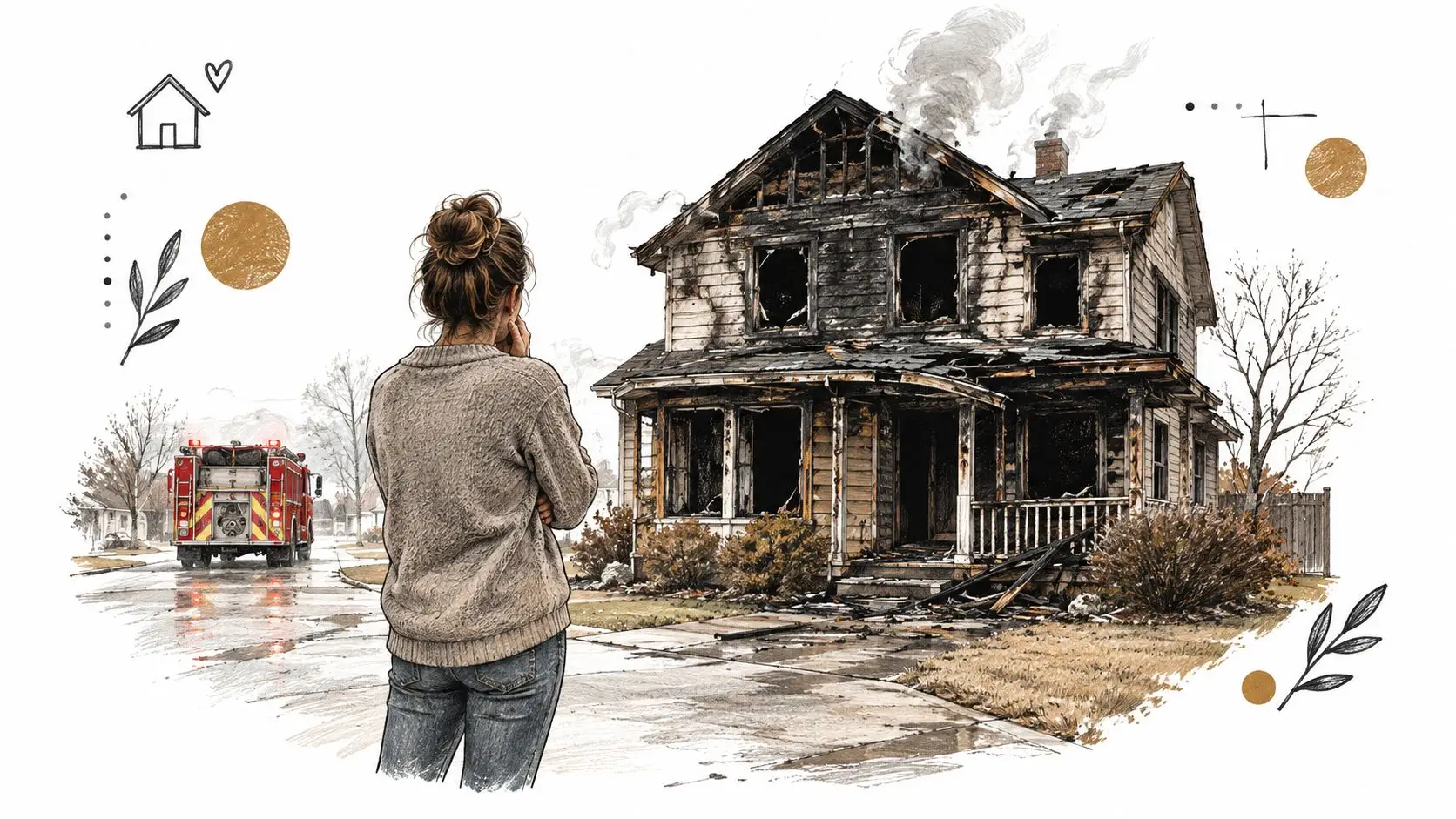
Once officials allow access, think of the next actions as separate decisions, not one giant cleanup job. Photograph the damage before anything is moved. Contact your insurer and ask what they need before cleanup begins. Then arrange assessment and any urgent steps to protect the structure from further exposure. If openings need temporary protection, emergency board-up services can help secure damaged parts of the building while the next steps are organized.
A typical recovery path moves from safety checks and utility control to documentation, removal of unsafe materials, drying, soot and smoke cleaning, odor treatment, then repair or reconstruction. The order matters. For instance, cleaning before documenting can make it harder to show what was damaged, and running an affected HVAC system can spread residue.
For now: Stay outside until authorities clear the building. The first useful action is often to pause, call your insurer, and make a plan for safe access.
Why You Cannot Re-enter Until Officials Clear the Building
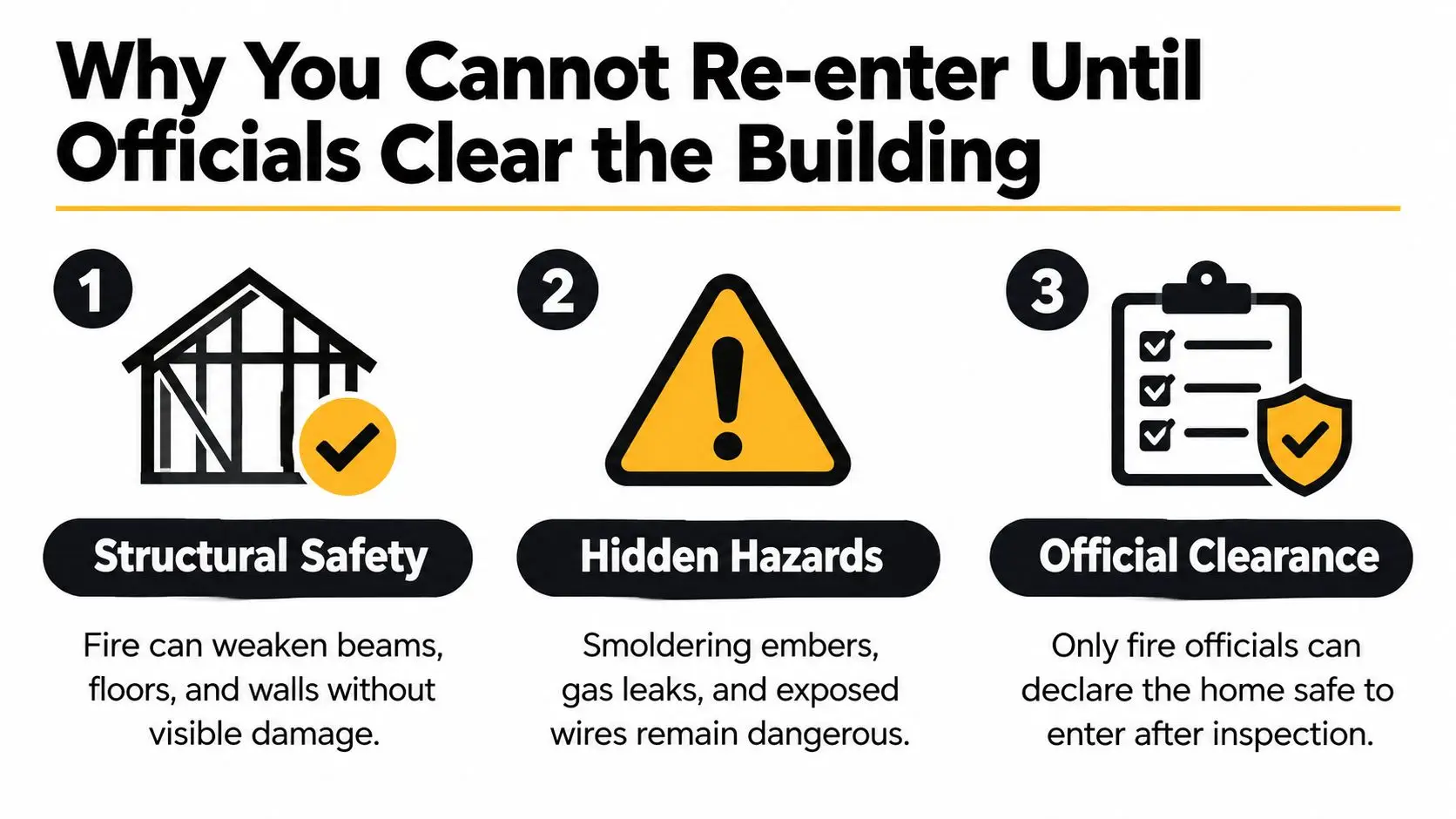
A house doesn't need to be visibly collapsed to be dangerous. Fire can weaken floors, walls, and ceilings, while heat and water can damage utilities. A stable-looking hallway isn't proof that it can safely carry your weight.
The U.S. Fire Administration advises residents not to re-enter after a fire until the fire department confirms the building is safe. Floors and walls may appear stable while remaining structurally dangerous, and responders may shut off gas, electricity, or water if those services aren't safe to leave connected. The agency's post-fire guidance makes official clearance the first gate, not a judgment call based on appearance.
What clearance does, and doesn't, mean
Fire officials assess immediate hazards and determine whether entry is allowed. Depending on the damage, structural stability may also need review by a qualified professional. Utility companies may need to assess their systems before service is restored. Don't attempt to turn gas back on yourself or energize questionable electrical equipment.
Structural clearance is different from indoor-environment clearance. Permission to enter doesn't automatically mean smoke residues, ash, or contaminated materials have been removed. Those concerns require a separate assessment before the home is treated as ready for normal use.
Use this order:
- Wait for the fire department's direction. If officials say the home is unsafe, stay out.
- Follow utility instructions. Leave disconnected services alone until the relevant utility or qualified professional says they can be restored safely.
- Ask what access is allowed. If officials permit entry for a limited purpose, follow their conditions and avoid touching debris or damaged systems.
- Arrange further assessment. Structural and indoor-environment questions may require different qualified professionals.
This may feel like a delay when you're anxious to retrieve belongings. It's a protective boundary. Re-entry happens when the right people have assessed the relevant hazards, not when the home looks familiar from the sidewalk.
Documenting Damage Before Anything Gets Moved
Once access is allowed, document the scene before cleanup changes it. Take photos and video of every affected room, the exterior, visible openings, water damage, and damaged contents. Work methodically rather than trying to capture everything in one quick walk-through.
Then make a room-by-room inventory. Include what an item is, where it was, its visible condition, and any identifying details you can find, such as a model number or receipt. Don't throw away borderline belongings just because they smell smoky or look stained. Record them first, then ask your insurer how they want the item handled.
For a useful way to think about a systematic inspection, this guide on how to review rooms meters and repairs offers a checklist-style approach to recording conditions. Fire documentation has additional needs, but the same habit helps: move room by room and write down what you can verify instead of relying on memory.
Coordinate records with your insurer
Contact your insurer promptly to open a claim and ask what documentation they require before mitigation or disposal begins. Policies and claim processes differ, so get instructions specific to your situation. Keep notes of calls, names, dates, and any guidance you receive.
A restoration assessment can help describe visible fire, smoke, and water impacts, but it doesn't replace your own inventory or the insurer's review. Arrange a fire damage assessment and save the report with your photos and claim documents.
Phoenix homeowners may face several people asking questions while they're still processing what happened. Keep a shared folder or notebook for photos, lists, receipts, and conversations. Good records give you and your insurer a clearer starting point for deciding what needs cleaning, repair, or replacement.
What Smoke and Soot Actually Do to a House
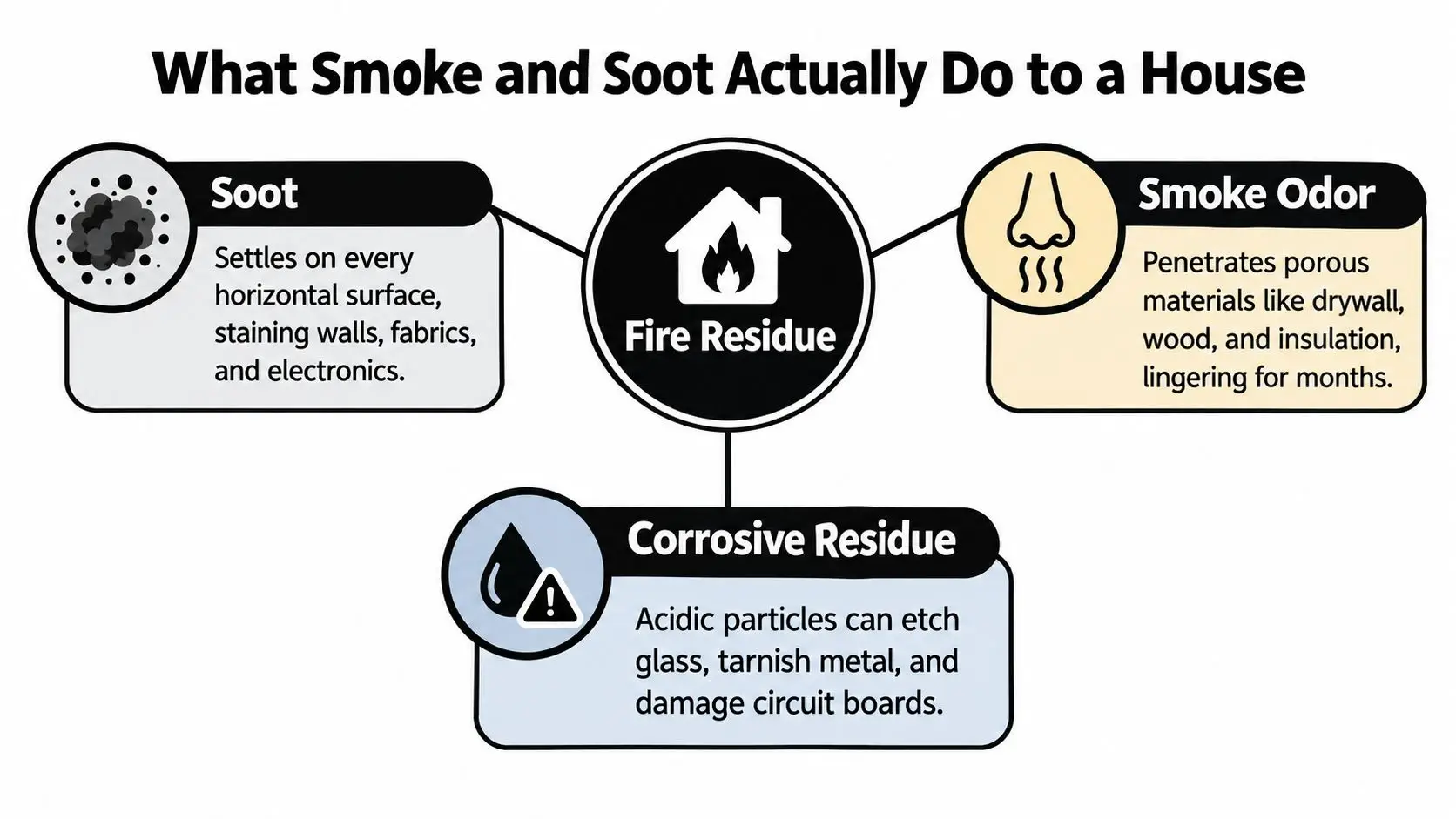
Flames are only one part of the damage. Smoke carries particles and combustion by-products through openings and airflow pathways, then soot settles on surfaces. That's why a bedroom that never burned can still have residue on a dresser, window ledge, or electronics.
Think of smoke like ink dropped into water. It doesn't stay neatly inside the room where it started. Air movement, pressure changes, and open pathways can carry it through a home. FEMA identifies staining, odor, soot or ash deposits, metal corrosion, and plastic deterioration as forms of smoke damage. Residues can affect electrical equipment, HVAC components, fasteners, and appliances. FEMA's homeowner guide to smoke damage also notes that smoke odor can indicate that combustion by-products have moved beyond visibly burned rooms.
Three problems that overlap
Soot can settle far from the fire. Horizontal surfaces collect residue, even when walls and furniture look mostly unchanged. A wipe test can help identify soot or ash, but it isn't a substitute for a full assessment.
Residue can damage equipment. Corrosive particles may affect metal parts and electrical components without producing an obvious mark right away. Don't assume an appliance or panel is safe because it still looks intact.
Porous materials can hold smoke. Materials such as carpet, upholstery, and insulation can absorb odor and residue. Cleaning only the room where the flames were visible may leave sources behind elsewhere.
The HVAC system deserves special attention. Smoke may reach filters, ducts, and equipment, then spread residue when the system runs. Don't restart an affected system until it's been assessed as safe to operate. Cleaning the visible soot is only part of the work; professional soot cleanup can address contamination on surfaces and help identify areas that need further attention.
This is why a fire-damaged house needs a whole-home view. The burn area tells you where flames reached. It doesn't tell you where smoke traveled, where water settled, or which materials and systems need evaluation.
The Hidden Second Disaster Inside Homes That Look Fine
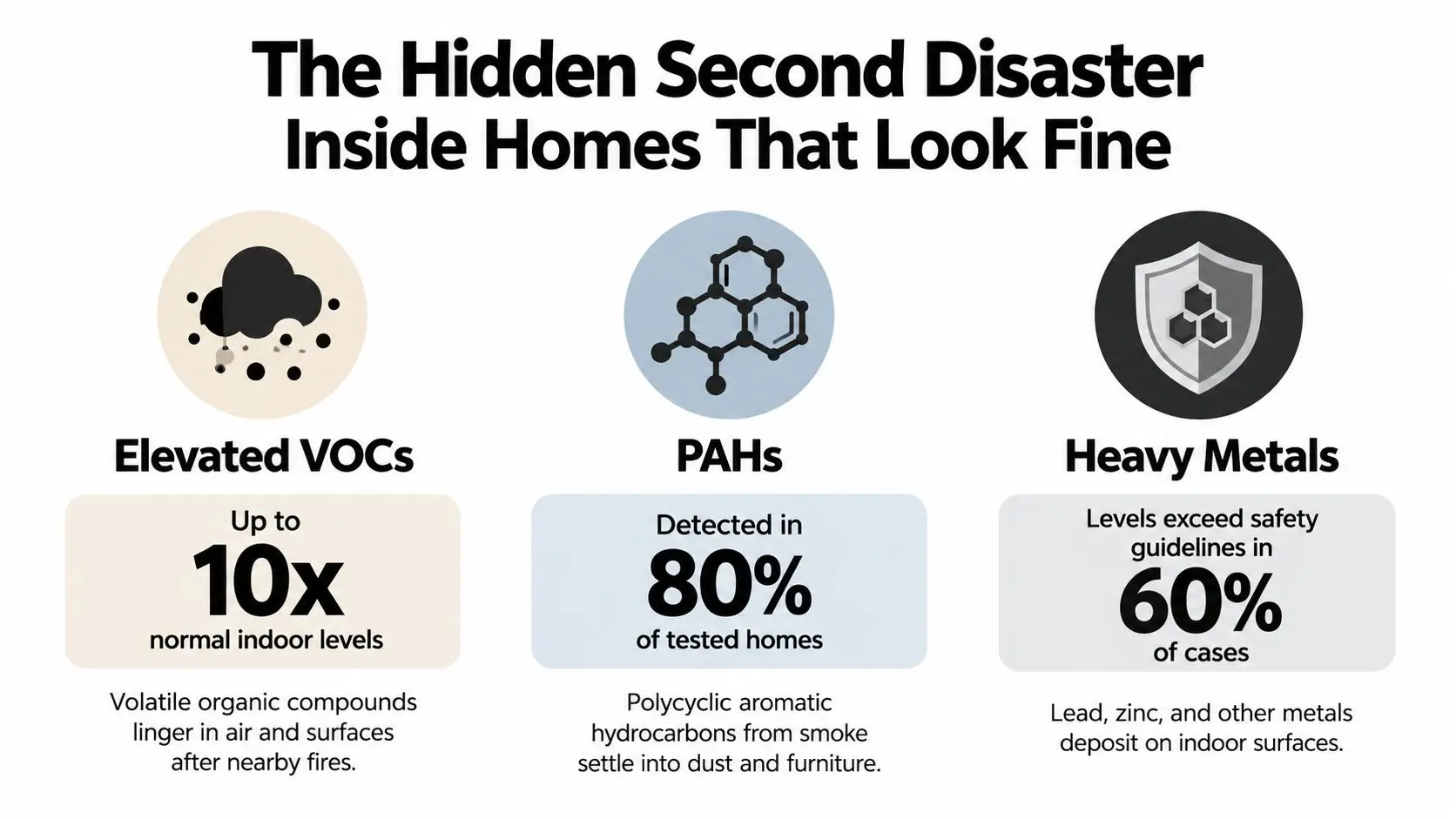
A standing house isn't automatically a clean house. After the 2021 Marshall Fire, researchers found high levels of volatile organic compounds, polycyclic aromatic hydrocarbons, and metals inside homes that were still standing. Six months later, 55% of surveyed residents reported at least one symptom they attributed to fire exposure, including itchy eyes, headaches, dry cough, sneezing, or sore throat, according to research summarized by the University of Colorado Boulder.
That evidence doesn't mean every fire-damaged home has the same indoor conditions. It does show why visible damage and smell aren't reliable clearance tests. A fading odor doesn't prove that all affected surfaces or materials are clean.
Separate structural safety from indoor conditions
First, follow officials' direction on whether the building is safe to enter. After that, treat indoor conditions as a separate question. A qualified restoration or environmental assessment can help evaluate smoke-affected materials, settled ash, and HVAC pathways before cleaning or occupancy decisions are made.
This distinction matters in Phoenix, where dust, heat, and HVAC use can complicate how settled residue moves through a home. If a system may be contaminated, don't run it to cool the house. Keep people out of affected areas while the appropriate professionals advise on safe access and next steps.
The research findings aren't a home-testing checklist, and symptoms alone can't identify a specific contaminant. If someone feels unwell after exposure, move to a safe place and seek medical advice as appropriate. If the house has persistent odor or visible residue, ask for further evaluation rather than relying on air freshener or a quick wipe.
The video below provides another perspective on smoke-related indoor conditions after fire.
Stabilization, Water Removal, and Structural Drying
Firefighters may use water to stop the fire, leaving wet materials behind. Water can also enter through a damaged roof, broken windows, or compromised pipes. If the building and its contents aren't dried, moisture can create a secondary mold risk and delay repair.
The first goal is to limit additional damage. Once officials allow the work and the hazards have been assessed, professionals may cover roof openings or secure exterior gaps so weather doesn't add to the problem. Water is then removed from affected areas, and drying equipment is selected for the materials and conditions.
Why drying comes before rebuilding
A wall can feel dry on the surface while moisture remains inside. Replacing finishes too soon can trap dampness behind new materials. Restoration professionals can measure moisture and continue drying until the affected structure is ready for repair.
HVAC equipment shouldn't be treated as automatically safe. The EPA says to use a high-efficiency filter only if the system is safe to operate, and recommends professional help when the system has been affected, hazardous materials or structural damage are present, or the work is beyond the homeowner's ability. EPA ash-cleanup guidance supports checking the system before using it. For drying equipment and airflow concerns, water-damage drying fans may be part of a professional mitigation setup, but the equipment must match the conditions.
Drying is not a cosmetic step. It protects the repairs that come after it.
Avoid moving wet, soot-covered debris before its condition has been documented and assessed. That can spread residue and complicate decisions about contents. A measured drying plan takes patience, but rushing it can create hidden problems that only appear after finishes are back in place.
Deciding What to Salvage, Clean, or Discard
Salvage decisions depend on what an item is made of, what it was exposed to, and whether it can be cleaned thoroughly. A hard surface and a padded one don't hold residue in the same way. Water and firefighting chemicals can also change the decision.
Use a staged approach rather than clearing the house out immediately:
- Hard, nonporous items: Some metal, glass, and other hard surfaces may be cleaned if they haven't been damaged by heat or chemicals. Ask before wiping anything that needs to be documented.
- Porous belongings: Upholstery, mattresses, carpet, clothing, and similar materials can absorb smoke and odor. Their condition and ability to be cleaned need assessment before you decide whether to keep them.
- Building materials: Drywall, insulation, and other materials may need removal if contamination or water damage can't be safely addressed through cleaning.
- Borderline items: Photograph them, note their condition, and ask your insurer how to proceed before discarding them.
Aggressive cleaning isn't always the safest first move. Dry sweeping can send particles into the air, and using a contaminated HVAC system can carry residue into other rooms. Research after the Marshall Fire found ash in 65% of intact homes and fire-related odors in 61% of homes one week after the event; the same report notes that smoke-affected materials can remain indoor sources after the emergency has passed (research reporting on post-fire indoor conditions).
If belongings will be moved to a clean area for evaluation, keep them separate from items still in the affected home. Protective furniture covers can help protect items during an ordinary move; this overview of Furniture Protectors For Moving explains their general use, though they don't remove fire residue or make contaminated belongings safe.
Make the decision after documentation and assessment: clean, replace, or monitor. Deodorizing an item without addressing residue in its material may leave the source in place.
Odor Removal and the Final Push to Move Back In
Smoke odor can linger because the source is still present. Fragrance may cover the smell for a while, but it doesn't remove residue from a porous surface, duct, or hidden area. Effective odor treatment follows the cleanup, not the other way around.
The practical sequence is to locate smoke-affected materials, clean or remove what can't be restored, and then treat remaining surfaces as appropriate. Sealing may be considered for affected surfaces after cleaning. Specialized equipment can be part of deodorization, but it isn't a substitute for removing the source. For a plain-language overview of removing smoke smell from a house, focus on the distinction between treating odor and eliminating what causes it.
Confirm the home is ready for normal use
Before moving back, coordinate the final checks with the right people. Electrical systems need appropriate inspection, and the utility should determine when gas service can safely be restored. Have the HVAC system evaluated, and replace filters or arrange duct cleaning when recommended. A walkthrough with the restoration team and insurer can help confirm what work is complete and what still needs attention.
Don't rush ash cleanup on your own. The EPA recommends an N95 respirator, gloves, long sleeves, long pants, shoes, and socks for ash cleanup. Children, older adults, and people with heart or lung disease shouldn't participate. Avoid dry sweeping and leaf blowing because they can disperse fine particles; EPA indoor-air guidance for ash cleanup explains these precautions.
There isn't one timeline that fits every house. Assessment and drying may take days, cleaning and deodorizing may take weeks, and reconstruction can extend over months, depending on the damage and the work required. Ask the restoration team what remains, what decision is holding up progress, and whether a delay points to an unresolved safety, moisture, or contamination issue.
Moving back in should follow completed work and appropriate safety checks, not just a quieter smell or a fresh coat of paint. A clear list of open items makes that final decision easier.
Restore Heroes handles fire and smoke restoration work in the Phoenix area, including assessment, cleanup, drying, odor removal, and repair coordination. If your home has been affected by fire, contact Restore Heroes to discuss the damage and the next safe steps.