
The fire trucks have left. The smell is still in the air. Your kitchen, garage, bedroom, or whole living area looks unfamiliar. You’re standing in a home you know well, but right now it feels like a jobsite, a hazard zone, and an insurance file all at once.
Most Mesa homeowners in this moment ask the same questions. Is it safe to go inside? What should I touch? What do I photograph? How bad is the smoke damage if the flames only hit one room? And how much is this going to cost?
That confusion is normal. Fire loss creates several problems at the same time. You may have burned materials, smoke residue, water from firefighting, weakened surfaces, contaminated air, and a claim to manage while your family needs a place to sleep tonight.
Recovery gets easier when you break it into stages. That’s what this guide does. It walks through fire damage restoration mesa az in plain language, the way an experienced restoration professional would explain it on site to a stressed homeowner who needs clear answers, not jargon.
The Unthinkable Happened What Now
A Mesa family might start the day like any other. Someone leaves for work, someone’s packing lunches, and then a stove flare-up or garage fire changes everything. By afternoon, the fire department has cleared the scene, the windows are open or boarded, and everyone is trying to make sense of what’s left.
The first reaction is often shock. The second is the urge to start cleaning.
Don’t rush into cleanup yet.
Fire damage is rarely limited to what looks black or burned. Smoke travels. Soot settles in places you won’t notice at first. Water from suppression can move into baseboards, insulation, and subfloors. Even when one room took the flame damage, the rest of the house may still need careful evaluation.
You’re also not alone in dealing with this kind of loss. Structural fires account for over 30% of all reported U.S. fires, contributing to $23.2 billion in losses in 2023 according to fire damage restoration data for Mesa and the Phoenix area.
That matters for one reason. There is a real recovery path, and professionals follow it every day.
If you need a calm first-read resource before making calls, What to Do After a House Fire: A Practical Recovery Guide is a helpful overview written for people in the middle of this exact situation. For a simpler action list you can save on your phone, this after a house fire checklist is also useful.
First principle: treat the property like a damaged system, not just a dirty room.
A fire affects safety, air quality, surfaces, contents, and paperwork. Once you see it that way, the next steps become much clearer.
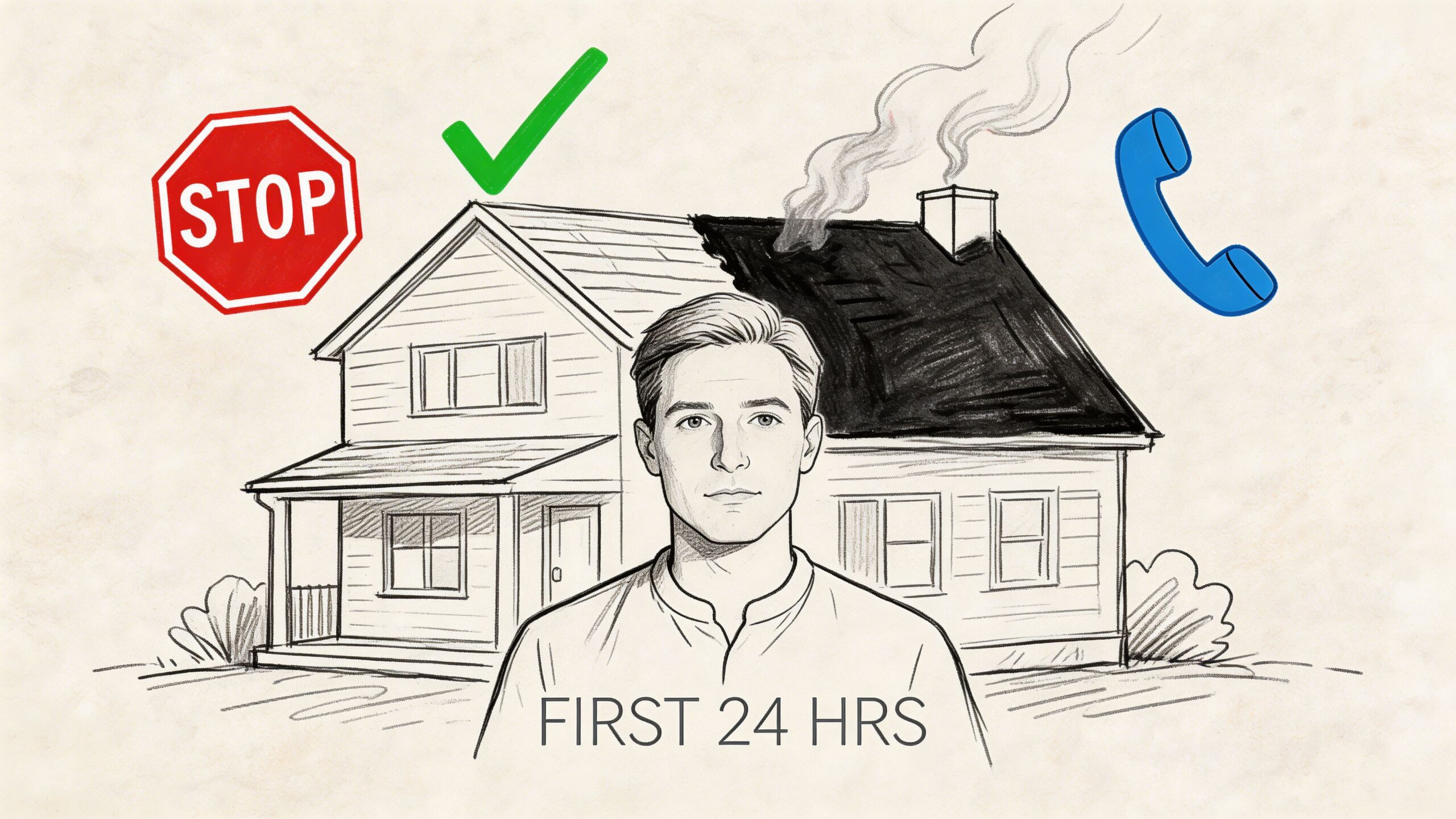
Your First 24 Hours After a Fire Safety and First Steps
The first day is about protection, not progress. You’re protecting people first, then the structure, then the claim.
Start with safety clearance
If the fire department or utility company hasn’t cleared the home for entry, stay out.
That includes quick trips for medicine, clothes, or documents unless officials say it’s safe. A room can look stable and still have hidden heat damage, loose drywall, unsafe wiring, or contaminated air.
Do these steps in order
- Confirm re-entry status
Ask fire personnel or the proper authority whether limited entry is allowed and which areas are off-limits. - Call your insurance carrier
Open the claim early. Ask what emergency mitigation steps they want documented. - Document before moving things
Take wide photos first, then closer photos of soot, burned areas, damaged contents, water lines, and affected rooms. - Secure the structure if needed
Broken windows, roof openings, and damaged doors need temporary protection from weather and unauthorized entry. - Arrange temporary living needs
Focus on medications, chargers, essential clothing, pet supplies, and a place to stay. - Start a simple claim log
Write down who you spoke with, when, what they said, and what they requested.
What not to do
Some common actions make restoration harder.
- Don’t wipe soot with household towels. You can grind it deeper into paint, stone, grout, and fabric.
- Don’t turn utilities back on yourself. Fire can damage wiring, gas lines, and appliances.
- Don’t run the HVAC system. If smoke entered the ductwork, the system can spread contamination to clean areas.
- Don’t throw away heavily damaged items too early. They may need to be documented for the claim.
Mesa homeowners often want to know what professionals do after that first call. This short video gives a useful visual overview before crews arrive.
Keep one folder for everything
Use your phone notes app, a paper notebook, or a cloud folder. Just keep everything together.
Include:
- Claim details: claim number, adjuster name, policy contact info
- Photos and videos: before any cleanup begins
- Receipts: hotel, meals if covered, emergency purchases
- Contractor documents: inspections, scope notes, mitigation records
If you can only do three things on day one, make them these: stay safe, photograph everything, and stop further damage.
That sequence prevents a lot of avoidable trouble later.
The Fire Damage Restoration Process Explained
Homeowners see the result of restoration. They don’t see the logic behind it.
A proper fire job follows a sequence because each stage affects the next one. If a crew skips water extraction, soot cleaning can fail. If they skip HVAC isolation, smoke can keep circulating. If they clean before documenting, insurance questions get harder.
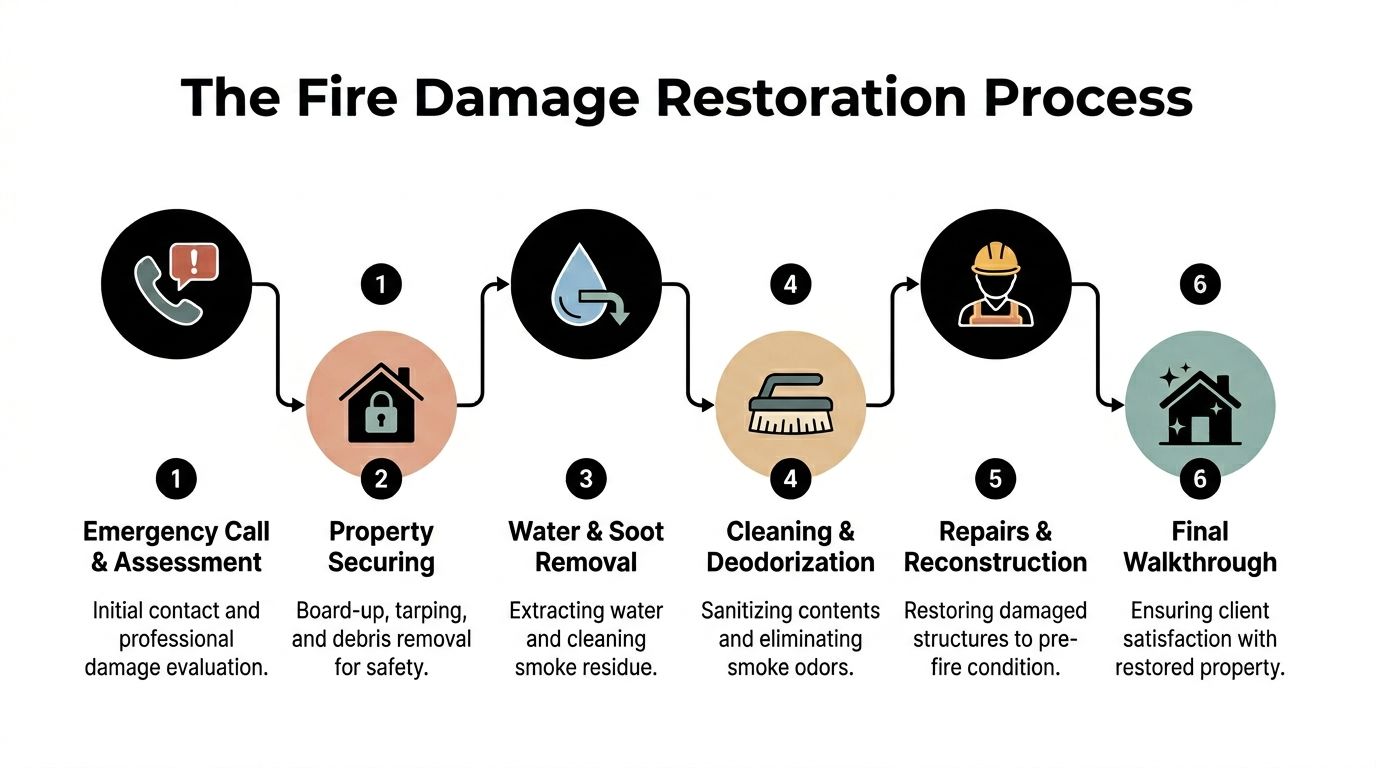
For a service-page version of this workflow, this overview of the fire damage restoration process matches the same order professionals use in the field.
Inspection comes before cleaning
The first job is to answer four questions.
- What burned?
- Where did smoke travel?
- Where did firefighting water go?
- What materials are salvageable?
A good inspection is more than a walk-through with a flashlight. Technicians check visible damage, odor spread, water intrusion, and likely hidden contamination behind cabinets, inside cavities, and around HVAC returns.
In plain terms, they’re drawing the map before doing the work.
Emergency stabilization protects what’s left
After inspection, crews usually secure the property. That may include board-up, roof tarping, debris removal, or setting containment around unsafe sections.
This stage doesn’t make the house pretty. It makes the house controllable.
Without stabilization, wind, heat, dust, rain, or unauthorized entry can add damage that wasn’t caused by the original fire.
Water removal is often the forgotten part
Homeowners usually focus on black residue and burned framing. But many fire losses include a second event, water damage from suppression.
Water can soak drywall, insulation, cabinets, flooring, and subfloors. If that moisture sits, materials swell, warp, or support microbial growth. That’s why extraction and drying usually happen early.
Soot removal is specialized work
This is a step many people underestimate.
Soot is not the same as ordinary dirt. It behaves more like an oily, acidic contaminant that smears easily and clings to surfaces. According to Lotus Services AZ’s fire restoration process guide, soot particles can have pH levels as low as 2.0 and can make metal fixtures and HVAC systems corrode up to 10 times faster than normal if they aren’t professionally removed within 48 hours.
That’s why a professional doesn’t just grab all-purpose spray and a rag.
Think of soot like a black fingerprint powder mixed with acid. If you wipe it the wrong way, you push it deeper into paint, wood grain, upholstery, and textured surfaces. If it stays too long, it can etch and corrode.
Different soot needs different methods
Not all smoke residue cleans the same way.
A dry, powdery residue on a painted wall may respond to dry cleaning sponges or HEPA vacuuming before wet cleaning starts. A greasy residue from a kitchen fire often needs more aggressive chemistry and technique. Electronics, stone, metal, and fabric each require different handling.
A careful crew tests before cleaning broad areas. That avoids turning a salvageable item into a replacement item.
On-site rule: the wrong cleaning method can do more harm than the fire did on that surface.
Cleaning contents is part of structural restoration
Many homeowners ask whether contents cleaning is separate from the house work. In practice, they overlap.
Soft goods, hard contents, furniture, dishes, decor, and documents may need sorting into categories such as:
- clean on site
- pack out for specialty cleaning
- non-salvageable
- hold for insurance review
This sorting matters financially as well as emotionally. If crews mix everything together too early, it becomes harder to document what can be restored and what should be replaced.
Smoke odor removal is not just “spray and leave”
Lingering odor means smoke particles are still present somewhere.
That “somewhere” may be insulation, framing, porous finishes, attic spaces, cabinets, or ductwork. Real deodorization usually combines source removal with cleaning and targeted odor treatment. If the source remains, the smell often returns when the house heats up in the afternoon.
Mesa homes can be especially tricky because dry conditions let fine particles settle deep into porous materials, and homeowners often restart cooling systems early because of the heat.
HVAC contamination deserves its own conversation
This is one of the most overlooked parts of fire damage restoration mesa az.
If smoke reached the return air system or ductwork, the HVAC can act like a delivery system for soot and odor. You clean one room, turn the system on, and the smell comes back. Homeowners then assume the cleaning “didn’t work,” when the problem is hidden inside the air system.
A proper approach may involve:
- shutting the system down until assessed
- checking supply and return ducts for residue
- cleaning components affected by smoke
- replacing filters at the right stage
- verifying that cleaned spaces aren’t being re-contaminated
This is also a health issue, not only a comfort issue. Smoke residue moving through vents can keep irritating sensitive occupants long after visible cleanup.
Repairs and reconstruction come after mitigation
Mitigation means stopping further damage and removing contamination. Reconstruction means rebuilding what cannot be saved.
That may include drywall replacement, insulation replacement, trim, cabinets, paint, flooring, or structural carpentry depending on the severity of the loss. Some jobs are mostly cleaning with minor repair. Others require partial or major rebuild work.
Homeowners often get confused because they expect demolition to mean “the house got worse.” In reality, selective demolition is often what allows the rest of the house to be saved.
The final walkthrough should feel specific
By the time the project nears completion, the house should not just look cleaner. It should make sense to you.
Ask direct questions:
- What was cleaned versus replaced?
- Was the HVAC system affected?
- Which materials were removed because they couldn’t be restored?
- Are there areas that may still need specialty trades or follow-up repairs?
One option Mesa homeowners may consider is Restore Heroes, which provides fire and smoke cleanup in the Phoenix metro area, including assessment, mitigation, drying, soot cleanup, and odor removal.
A good final walkthrough should answer practical concerns, not just end with “looks good.” You want to understand what was done, why it was done, and what to watch for after re-occupancy.
Understanding Restoration Costs and Timelines in Mesa
This is usually the hardest part to ask about, because no two fires behave the same way.
A small stovetop flare-up with light smoke in one room is different from a garage fire that pushes smoke through the attic and water through adjacent walls. That’s why estimates vary so widely. Scope drives price.
According to Mesa fire restoration cost guidance, typical fire damage restoration in Mesa ranges from about $4,000 for minor smoke issues to over $20,000 for larger losses involving multiple rooms and structural repairs. The same source notes that quick professional response can reduce total costs by 20% to 30% by limiting secondary damage.
Estimated Fire Damage Restoration Costs in Mesa AZ
| Damage Level | Typical Scope of Work | Estimated Cost Range |
|---|---|---|
| Minor | Limited smoke damage, one room, light soot cleanup | $4,000 to $8,000 |
| Moderate | Multiple rooms affected, water extraction, odor removal, broader cleaning | $10,000 to $20,000 |
| Severe | Structural repairs, major demolition, reconstruction, full restoration | Over $25,000 to $50,000 |
For a more detailed breakdown of local pricing variables, this page on fire damage restoration cost is a useful companion.
Why one estimate is higher than another
The biggest cost drivers are usually not what homeowners expect.
Smoke type matters
Dry soot, wet smoke, oily kitchen residue, and protein smoke each clean differently. Some wipe off. Others embed into porous materials and require removal or specialty treatment.
Water damage changes the scope
If firefighters used a lot of water, the drying plan can become a project of its own. Wet insulation, cupped flooring, and saturated lower walls all add labor and materials.
Hidden contamination takes time to find
Odor inside cabinets, residue in ductwork, soot in insulation, and damage above ceilings don’t always show up in the first five minutes. A thorough inspection often expands the full scope.
Rebuild work is a separate cost layer
Cleaning is one phase. Reconstruction is another. Once drywall, trim, cabinets, or framing need replacement, the project moves from mitigation into repair trades.
Cost mindset: the visible burn area is only one part of the invoice. Smoke spread, water intrusion, and reconstruction often determine the final total.
Timelines depend on phase, not just size
Homeowners often ask, “How long until we’re back home?” The honest answer depends on what stage takes the longest.
A lighter smoke loss may move quickly if materials are salvageable and no major rebuild is needed. A larger loss can stretch because drying, demolition, specialty cleaning, approvals, and reconstruction all need to line up in order.
Instead of asking only for one finish date, ask for phase dates:
- mitigation start
- demolition completion
- drying completion
- cleaning completion
- rebuild start
- final walkthrough target
That gives you a much clearer picture of real progress.
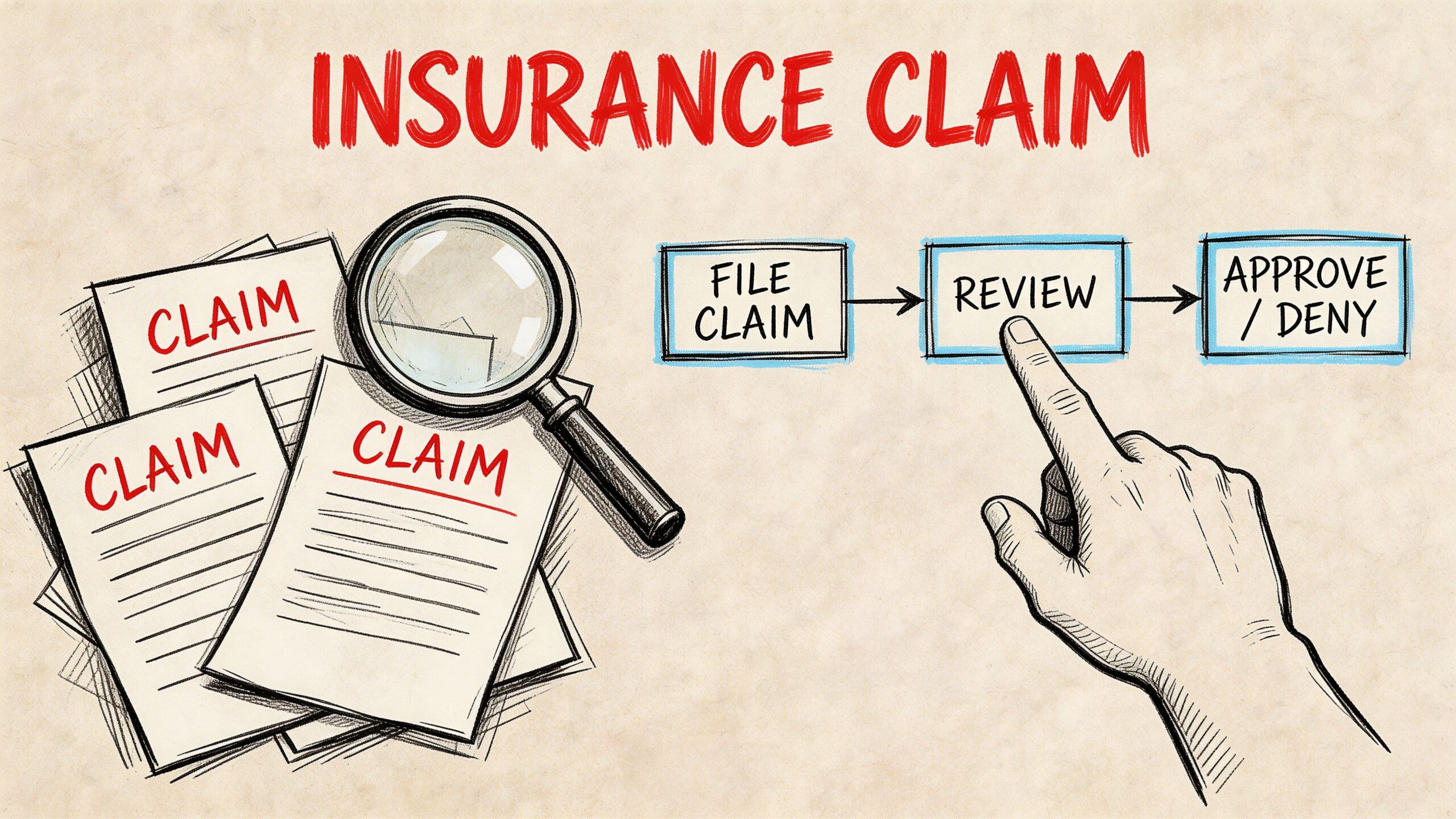
Working with Insurance for Your Fire Damage Claim
Insurance stress doesn’t usually come from opening the claim. It comes later, when the scope of damage becomes a debate.
The problem is simple. Fire damage rarely stops where the flames stopped. A homeowner sees smoke in the hallway, odor in the closets, and soot inside vents. An adjuster may initially focus on the burn room and visible repairs. The gap between those two views is where many disputes begin.
In the Phoenix metro area, about 35% of fire damage claims are initially contested or underpaid, often because of disagreements over soot migration or reconstruction scope, according to Arizona Restoration Specialists’ fire damage overview.
Documentation wins arguments before they start
A strong fire claim is built on specifics.
Not “the whole house smells like smoke.”
Better is: photos of soot on supply vents, notes on odor spread by room, pictures of water lines on drywall, lists of affected contents, and professional scope notes that explain why each area needs cleaning, removal, or sealing.
That detail matters most in soot-only or smoke-heavy claims, where the home may not look severely burned to someone who wasn’t there right after the loss.
Prepare for the adjuster visit like an inspection
Walk the property slowly. Point out all affected areas, not just the obvious ones.
Focus on:
- Air movement paths: hallways, returns, vents, closets
- Porous materials: insulation, carpets, upholstery, unfinished wood
- Water impact: swollen baseboards, wet drywall bottoms, buckled flooring
- Contents: clothing, bedding, electronics, furniture, children’s items
If you already keep a household item list, that helps. If you don’t, this home inventory checklist template can help you organize what was affected before memories blur.
Common claim friction points in Arizona
Not every disagreement is dramatic. Many are quiet scope reductions.
Soot spread gets minimized
Smoke can travel farther than the visible burn pattern suggests. That’s especially true with HVAC involvement and open floor plans.
Odor work gets treated as optional
It isn’t optional if the source remains in porous materials or the air system.
Reconstruction line items get trimmed
Insurers and contractors may differ on what must be removed to access damaged areas safely and cleanly.
Bring photos, room notes, and your communication log to every major claim conversation. Memory gets less reliable as the week gets more stressful.
For homeowners trying to understand the policy side before discussions escalate, this article on whether homeowners insurance covers fire damage lays out the basic coverage questions to ask.
Why professional paperwork matters
Insurance companies respond to documentation that ties damage to scope. That means room-by-room notes, itemization, measurements, moisture records where water is involved, and clear reasoning for cleaning versus replacing.
You don’t need to become a claims expert overnight. You do need records detailed enough that someone who never visited your house can understand why the work is necessary.
That’s what keeps a fire claim from turning into a guessing contest.
Why IICRC Certification Is Non-Negotiable
When people hear “IICRC-certified,” they sometimes think it’s just a badge on a website.
It’s more useful than that. It tells you the company has formal training in accepted restoration methods, terminology, and job standards. In fire work, that matters because bad technique can lock in damage instead of removing it.
Certification shows up in small decisions
A trained technician knows that soot isn’t cleaned the same way on every surface.
They understand when to HEPA vacuum first, when dry sponges are safer, when wet cleaning would smear contamination, and when a material is too compromised to save. They also understand containment, documentation, and how to reduce cross-contamination during cleanup.
Those sound like technical details. They are. But they affect things homeowners notice right away:
- whether walls stain back through paint
- whether odor returns after the AC runs
- whether metal components keep corroding
- whether the insurer gets the kind of paperwork needed to evaluate the claim
Safety is part of craftsmanship
Fire restoration is not just cleaning. It involves contaminated residues, unstable materials, possible electrical hazards, and often water-damaged assemblies.
A certified firm is more likely to treat the project as a safety job and a building-science job, not just a janitorial job. That difference matters in homes with children, older adults, pets, or anyone sensitive to poor indoor air.
Certification doesn’t remove every risk. It does reduce the chance that someone will use the wrong method on the wrong material.
Insurance conversations go smoother with recognized standards
Insurers, adjusters, and contractors may disagree on scope, but recognized technical standards give everyone a common language.
That helps when discussing:
- what soot cleaning method was appropriate
- why certain materials required removal
- why HVAC cleaning was necessary
- why odor treatment had to go beyond surface cleaning
For a homeowner, that translates into less confusion. You’re not relying only on opinions. You’re relying on trained judgment tied to industry standards.
Your Mesa Fire Recovery Checklist and Next Steps
After a fire, the best next step is usually the simplest one. Stop trying to solve the whole project at once.
Use this checklist as your reset point.
Immediate checklist
- Wait for clearance: Don’t re-enter until officials say it’s safe.
- Photograph first: Capture every room, every damaged item, and every visible water mark before cleanup.
- Open the claim: Start the insurance process early and keep the claim number handy.
- Protect the home: Board broken openings and prevent weather exposure if needed.
- Shut down HVAC use: Don’t circulate smoke through the duct system.
- Create one log: Record names, dates, promises, and next steps from every call.
- Ask for a detailed scope: You want room-by-room explanation, not vague summaries.
- Separate cleaning from rebuilding: Understand what can be restored and what must be replaced.
- Get help with soot questions: If you’re unsure what safe cleaning looks like, this guide on how to clean soot from walls explains why the wrong method can make stains and residue worse.
Questions worth asking a contractor
- Was the HVAC system checked for contamination?
- Which items are salvageable, and why?
- What needs immediate mitigation versus later reconstruction?
- How will you document the work for the insurance file?
- Which areas should my family avoid even after initial cleanup?
Recovery after a house fire is rarely quick, but it is manageable when each step has a purpose. Safety first. Documentation next. Then controlled cleanup, informed decisions, and careful rebuilding.
Frequently Asked Questions About Fire Restoration
Can I clean smoke damage myself if the fire was small
Usually, only very limited surface dusting in clearly safe, unaffected areas makes sense for a homeowner. Once soot is present, DIY cleaning often smears residue, damages finishes, and misses hidden contamination.
That’s especially true for painted walls, ceilings, cabinets, fabric, electronics, and vents.
Why does the house still smell like smoke if the burned room was cleaned
Because odor means particles are still somewhere.
That “somewhere” is often porous material or the HVAC system. According to AZ Total Home Restoration’s fire damage information, a 2023 IICRC study found that about 70% of fire-affected homes retain noticeable smoke odors if the HVAC system isn’t professionally cleaned, and that can increase asthma-related risks by up to 40% in dry climates like Arizona.
Can furniture and clothing usually be saved
Sometimes yes, sometimes no.
Hard, non-porous items often have a better chance. Soft goods depend on how much smoke they absorbed, what burned, how quickly cleaning started, and whether residue reached deep fibers or padding. The right answer usually comes after sorting and testing, not guessing.
Why is soot such a big deal if it looks like black dust
Because it doesn’t behave like ordinary dust. It clings, smears, and can keep damaging surfaces if left in place. It can also move through the home in ways that aren’t obvious at first.
Should I replace my HVAC filters after a fire
Yes, but filter replacement alone usually isn’t the full answer if smoke entered the system. Filters catch some particles. They don’t clean contaminated duct surfaces, coils, or other affected components.
If you need help making sense of a fire loss in Mesa or anywhere in the Phoenix area, Restore Heroes is a local option for 24/7 fire and smoke damage response, inspection, mitigation, cleanup, and insurance-facing documentation. The most useful first step is usually a professional assessment that tells you what’s unsafe, what’s salvageable, and what should happen next.